
The Woman in the Window (1944)
Essay
The Woman in the Window
On Fritz Lang’s slippery noir about the power of images and dreams in the American police state.
The Woman in the Window plays at Metrograph as part of Neuro-Noir from Saturday, November 7.
Share:
HERE IS THE WAY FRITZ LANG tells it, in a story as thematically and rhythmically exact—and therefore suspicious—as his films. In 1933, Joseph Goebbels called Lang into his office and asked him to become head of the German film industry. The request came directly from Hitler himself: “The Führer saw your film Metropolis [1927] and announced, ‘That’s the man who will give us the national socialist film!’”Lang left Berlin for Paris that evening. One French film later (Liliom, 1934), he arrived in America to direct the whitewashed anti-lynching drama Fury (1936) for MGM. From 1936 to 1956, he directed 22 independent and studio productions (for every major studio except for Disney)—mostly noir, some war films about Nazi spies, a splash of Westerns, and even a swashbuckling picture. Each was more gruelling than the last. Lang entered Hollywood with Nazism still very much on his mind. The emigré grammar he developed in Hollywood—a mixture of Expressionist geometry, economic starkness, and violent impulses—is equally sleek and clunky, pulsating with the conviction that evil does exist. After all, he had just been invited to indulge in its spoils.
In his 1976 book-length essay The Devil Finds Work, James Baldwin writes that Fritz Lang’s “grasp of the texture of American life is still extremely weak: he has not really left Germany.” Sometimes, like in the case of You Only Live Once (1937), the Austrian director’s projection of Germany onto America gives way to a “genuine indignation” that Baldwin could not imagine coming from a white American. As actual neo-Nazism sinks deep into the most visible parts of American culture, in cheap disguises like Dr. Mabuse, the extant resemblance between the two countries is harder to conceal with the trimmings of American bipartisanship. I must admit that Lang’s bitterness towards the American state and its people—which François Truffaut deemed the reason for Lang’s commercial failure in America—has aged into something mysteriously reasonable. But in a Lang film, fairness usually marks the entrance of a trap.
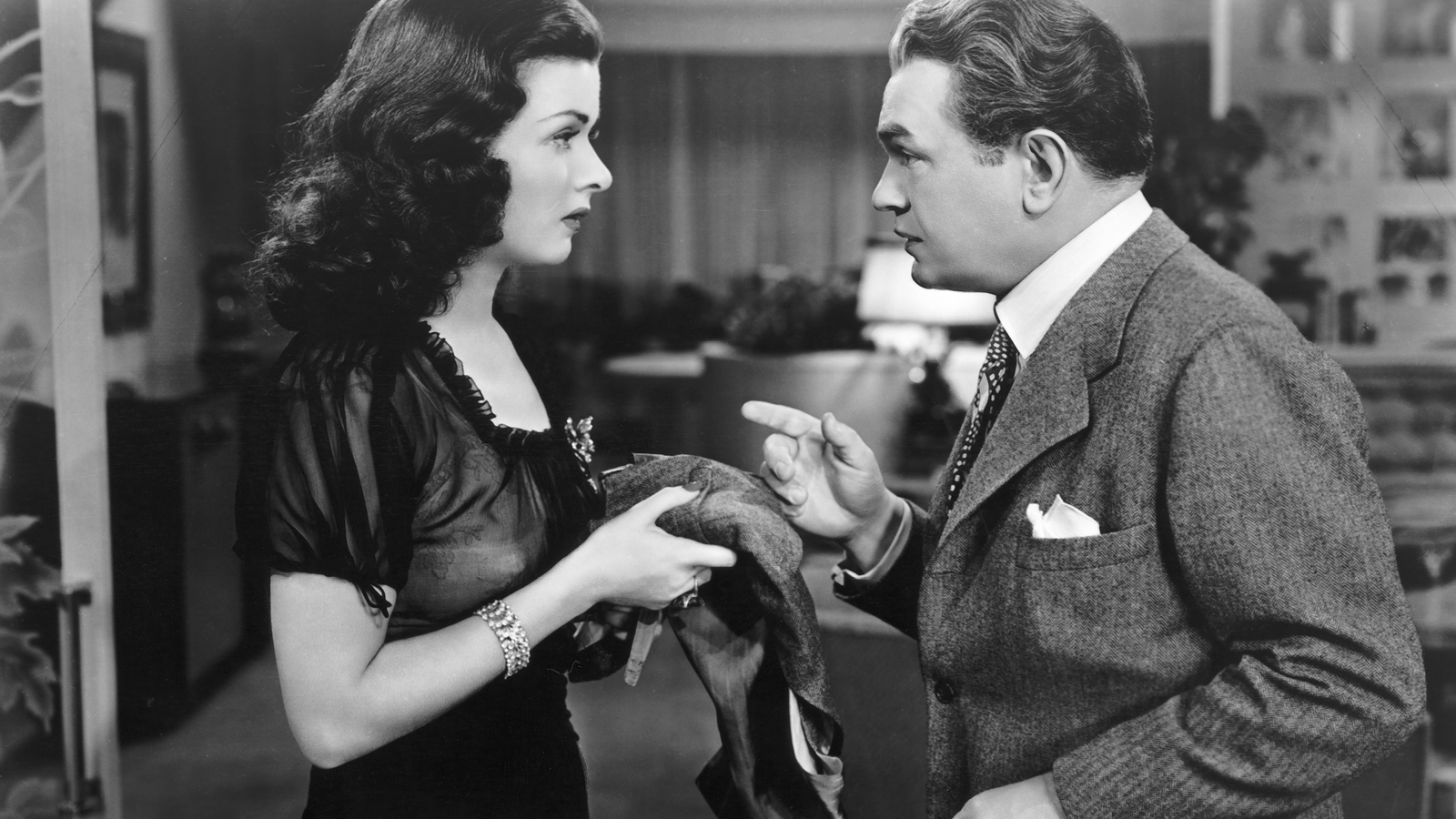
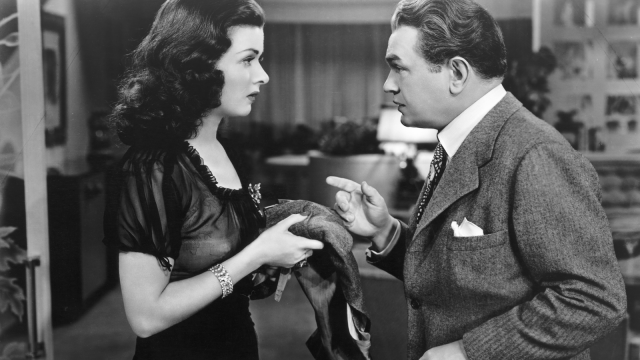
A noteworthy hit during a tumultuous time, The Woman in the Window (1944) is still so considerably minor that it warrants no mention from either Truffaut or Baldwin. Nevertheless, the film is a key example of Lang’s incidental innovations as a genre filmmaker—both despite and because of his Hollywood confines. Since it contains so little panache, The Woman in the Window serves as the perfect prototype to illustrate Lang’s fluency in Hollywood mechanics, as well as his ability to draw out darker perversions from between the lines of a thin screenplay and a studio’s dull wishes. From The Grapes of Wrath screenwriter Nunnally Johnson’s screenplay, an adaptation of J. H. Wallis’s 1942 novel Once Off Guard, Lang extracts his own persisting obsession. The film begins like the introduction to a psychoanalytic case study. The subject is assistant psychology professor Richard Wanley (Edward G. Robinson). His condition is the unmet desire at the center of an argument he makes during a lecture on homicidal impulses. Behind the nuanced claim that there are degrees of culpability between the man who kills in self-defense and the man who kills for gain, Wanley exhibits a fixation on murder—committing it, getting away with it, living with the knowledge that it was justified. Lang eliminates the possibility for any counterarguments by briskly fading to black.
The Woman in the Window (1944)
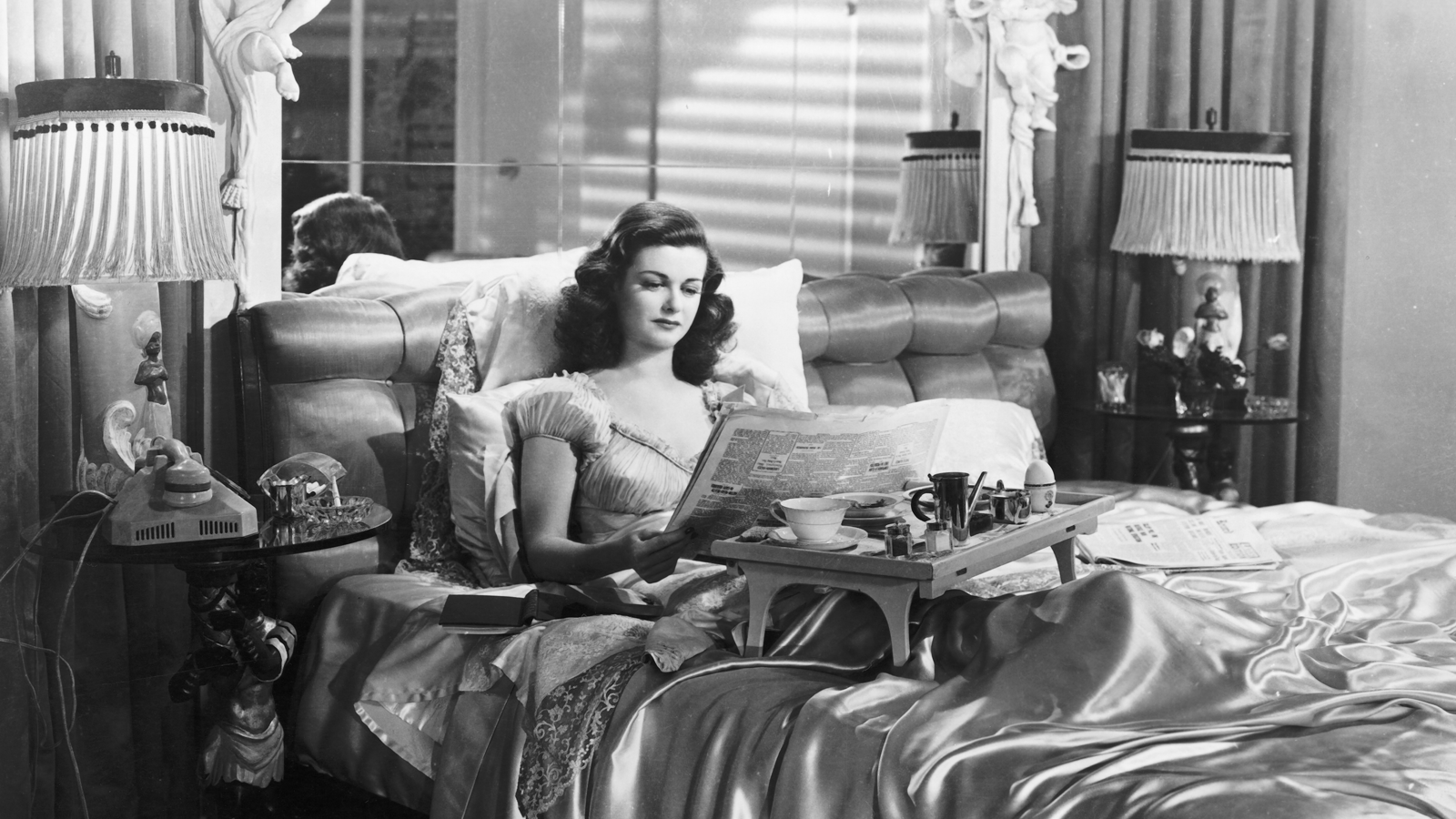
From there the film pushes Wanley to face the instinct he has unknowingly released. His nondescript wife and kids depart. He kisses them goodbye and strolls across New York City until he arrives at a club. By the entrance hangs a painting of a beautiful woman. While gabbing with his fellow middle-aged buddies about the painting, Wanley insists his age precludes him from a night any more hedonistic than one cigar and a few drinks. After falling asleep, he wakes up at exactly 10:30 PM and heads outside to drunkenly admire the painting. Alice (Joan Bennett) emerges behind him. Adorned in feathers and glittering sequins, she looks like a fantastic bird of prey. Wanley is stunned to find that the woman in the painting has become flesh.
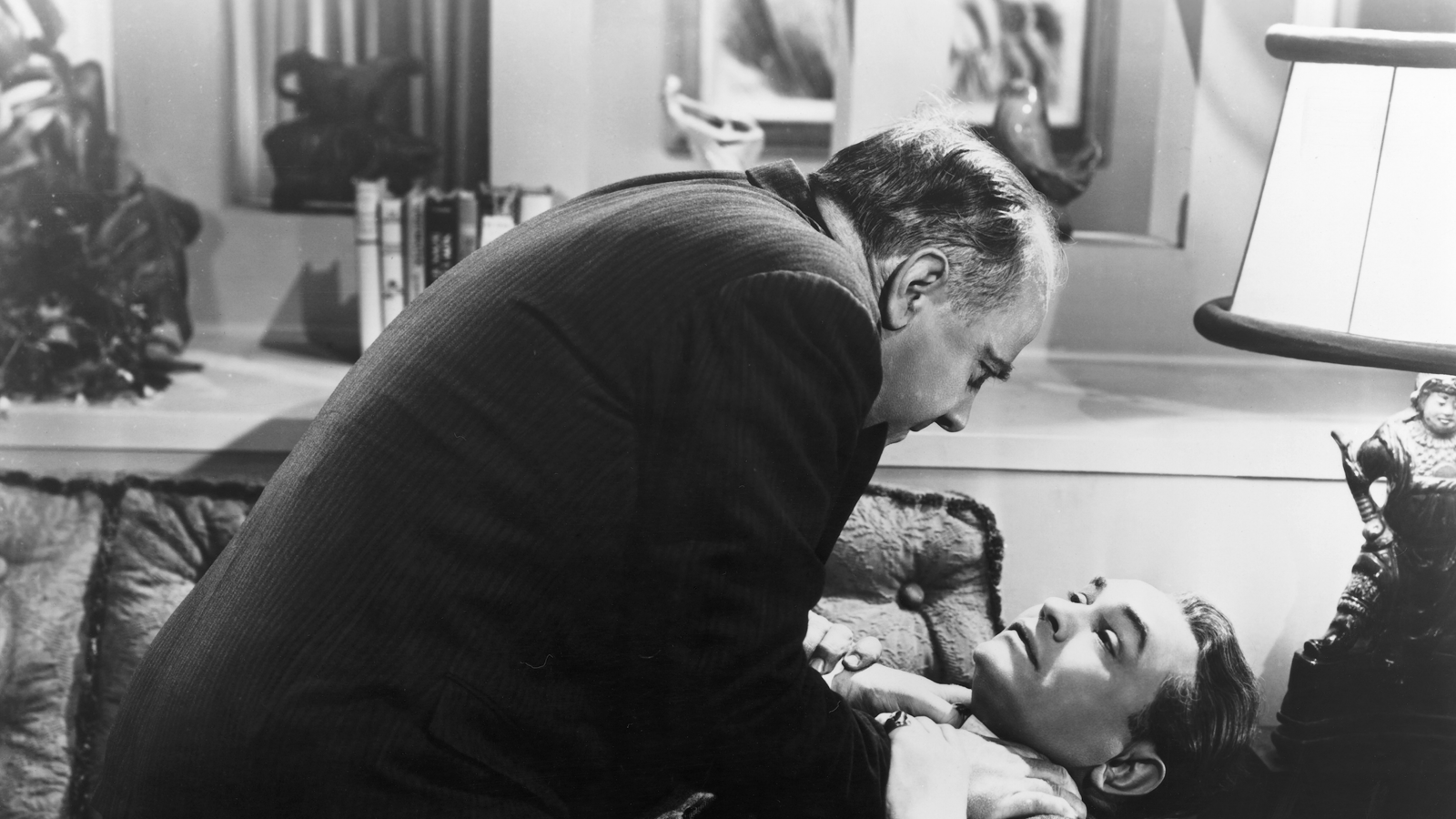
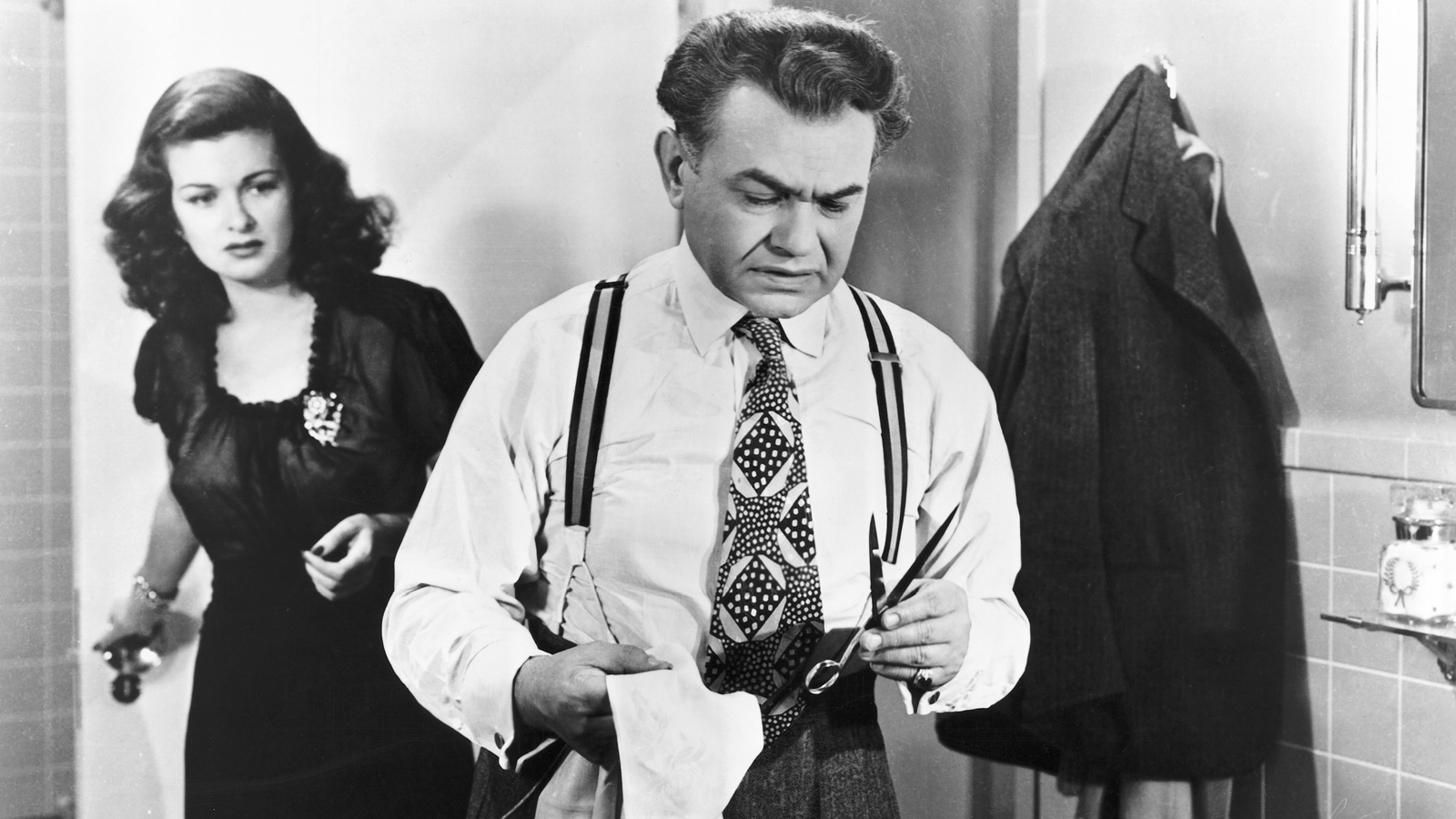
In an incidentally apt metaphor for sex, Alice invites the professor to her apartment to look at more paintings of her, with her. Their rendezvous is interrupted when an angry man barges in and starts strangling Wanley, who kills the man with a pair of scissors. By the third or fourth stab, the difference between murder as self-defense and murder for self-gain becomes murkier. How much does it matter that a man who yearns to kill suddenly must? Wanley insists he and Alice must act fast to destroy the evidence. With the enthusiasm of a hobbyist (not the precision of an expert), he articulates in vivid detail how they will hide the body and the fact that they ever met at all. Alice is little more than her picture. Played by Bennett with wide eyes and slow, calculated movements, she exists to react with just enough scrutiny for Wanley to push his risky plan further. Updates provided by Wanley’s friend, a loose-lipped district attorney (Raymond Massey), reveal Wanley made several crucial mistakes as a novice murderer. But there is still a possibility that the police are too incompetent to catch up, and Wanley becomes increasingly certain he must take the risk rather than turn himself in. After all, there is little to no chance the pair will be treated with grace. Alice is skeptical, but Wanley reminds her of the world they inhabit: “You don’t want to go to the chair, do you?”
If Alfred Hitchcock structures his plots around the moving parts of multiple schemes, Lang constructs his from within impenetrable systems, where Promethean schemes either sink or swim. Whether one believes in Wanley’s innocence, the brutality of the American police state elicits sympathy for Wanley’s plight. An officer asks Wanley if he is Polish after chiding him for not turning on his headlights. Lang draws out the suspense by indulging our distrust of the law and teasing out the complexity of Wanley’s character. Robinson’s quickened speech and the way he ever so slightly raises his brows at the mention of new evidence or the possibility of buying more time for himself suggests deep pleasure. The boy scout who discovers the body and promises to share the money with his brother does seem kinder than Wanley. The disclosure that the victim was a Wall Street mogul with a particularly bad personality suggests he won’t be missed. And the poison ivy infection on Wanley’s hand itches with divine retribution, a much gentler sentence than prison. The investigation shifts its attention to the victim’s bodyguard Heidt (Dan Duryea), a former cop with a criminal background. Our relief is undercut by the cynical view that the condition for one man’s freedom is another man’s condemnation. Someone must be punished.
The Woman in the Window (1944)
The events of The Woman in the Window transpire in the pockets of the city where secrets reside, suffocated by trees and shadows. The streets are pristine, the crowds are hushed, and the rain is as thick as a curtain. The camera dollies through these smooth surfaces at the pace of a crawl. When Heidt arrives to blackmail Alice and Wanley, he observes that Alice’s apartment is so clean that a murder must have taken place. But the same observation applies to every other room in the film. The textureless America of the film is as cold and unnerving as the paintings of Philip Guston, whose thick brush strokes blur the line between skin, steel, and KKK masks, between organic and manmade structures. With much of the novel’s pulp removed, the film reaches a level of literalism that pushes its central devices into the symbolic realm. The eroticism of Wanley’s fantasy is rooted in there being no difference between the picture and the real, the person and the object and the means to an end. Hays Code-friendly euphemisms make clear that the victim is Alice’s john, mired in his own shame and obsession but willing to pay for her loyalty. Beyond sex and money, the best Wanley can offer her is freedom from sex work and the state through the death of the client and an escape from imprisonment.
Johnson tailored the character of Wanley to suit Robinson, who enjoyed the novel and considered the script “one of the most perfect scripts I have ever been associated with.” In his autobiography, Robinson describes mostly staying quiet to avoid the “violent and accusatory anti-communist talk” among the cast, as he was then a prominent supporter of war relief efforts in the Soviet Union. The role of Alice had previously gone from Ida Lupino to Merle Oberon. But after Oberon’s departure to London, Joan Bennet (who starred in Lang’s 1941 first anti-Nazi thriller Man Hunt) got the part. Completing the triangle was Dan Duryea, who had just worked with Lang on Ministry of Fear (1944). Robinson, Bennett, and Duryea would reunite to play the three leads of Scarlet Street (1945), the first title of Lang and Bennett’s short-lived independent production company Diana Productions. As was the case with all Lang projects, the director was tough on the cast and crew. Biographer Patrick McGilligan notes that Robinson was mostly spared, and the actor would intervene on behalf of the others to little lasting effect. But Lang exerted extreme control over Bennett’s blocking with frequent finger snaps. He pestered the Scottish actor Edmund Breon, who plays Wanley’s friend Dr. Barkstane, to such a humiliating degree that Johnson worried the crew may enact revenge on his behalf. Lang was also furiously fastidious about everything from gestures to makeup. He sketched exteriors and interiors based on locations in New York, then recreated the city on soundstages—the same method used by Stanley Kubrick for Eyes Wide Shut (2001), one of few descendants to really reckon with Lang’s tangled mess of crime, fear, desire, and punishment.
In the original novel and Johnson’s screenplay, the film ends with Wanley poisoning himself after Alice’s failed attempt to kill Heidt. Worried about the depiction of suicide going against the Hays Code, studio executives insisted on a new ending: Wanley wakes up. Johnson, who already resented Lang for diluting the screenplay’s overtly humorous tone, refused to comply. Lang agreed. The result is one of the most famous and most difficult shots of Lang’s oeuvre. Wanley’s telephone rings with the good news: Heidt has been shot to death by the police. But Wanley is already dead. Then the camera pulls back. Wanley wakes up in the club, Song of Songs still in hand. Lang accomplished this trick with a breakaway robe for Robinson, a “second set inside of the first one” (according to McGilligan), many stagehands, and no cuts. He is alarmed and relieved to find that the ominous faces in his dream were the bellboys and valets of the club—a decision made by Lang to dilute the tackiness, and one he acknowledged was an unconscious copy of The Cabinet of Dr. Caligari (1920). The painting thankfully lies dormant, but another woman approaches Wanley and asks for a light. This time, he resists the temptation and runs in the opposite direction, towards fidelity and fatherhood. Slavoj Žižek’s 1989 reading of the film posits that Wanley’s dream implicates each of us: “In our unconscious…we are all murderers.” Lang maintained a simpler position, staunchly insisting that Wanley is not guilty at all—the dream is just a dream.
The Woman in the Window (1944)
Throughout his life Lang, who became a US citizen in 1939, held onto his view of America as a democracy where the hero need not be a Nietzschean superman—unlike Germany, who he believed was far more deserving of the nuclear bomb than Japan. But The Woman in the Window gives voice to an idea very American in its equal measures of faith in democracy and pessimism about humanity’s capacity to uphold it: to dream is a right and one of few domains of real privacy and freedom. Jean-Luc Godard’s film-critical intervention in Contempt (1963), which stars Lang as guiding light and warning for Michel Piccoli’s struggling screenwriter, is to point the finger directly at the director. What about the artist who dreams of murder, and gets away with each staging? Is he innocent? Should he really be free? By this point, Godard was likely aware of the rumors about the suicide of Lang’s first wife Lisa Rosenthal, about how long he took to call the police and how the act was done with his revolver, and how oddly silent Lang was on the subject for someone so adept at storytelling. Godard’s answer is an ambivalent and humble admission. The punishment reserved for the artist—Lang, stuck in a disappointing retirement, and Godard, pressured to commercialize and follow in Lang’s footsteps—is the treacherous path he has chosen for himself, and all of the guilt and resentment he will continue to accrue along the way.
The Woman in the Window was a box office hit, a much-needed one for Lang to stabilize his Hollywood reputation. Critics, however, latched onto the ending as a cheap cop-out. But Lang’s compromise continues to haunt the medium because in fascistic times we dream dangerously, sometimes dreams do come true, and our faith in this slim possibility grows more desperate by the day. Brian De Palma’s lurid neo-noir Femme Fatale (2002) twists and inverts Lang’s ending several times over to match his own restlessness as an alienated Hollywood director in post-9/11 America: a woman awakens from the dream of her death to the suicide of her own doppelgänger. She is the only witness, and the only one who can restore a sense of worth to her life. In one of many instances, Lang wrote a rather impassioned defense of the ending of the Woman in the Window in 1948. The essay, titled “Happily Ever After,” details Lang’s rejection of the logical ending as “a tragedy for nothing, brought about by an implacable fate.” Implicit in the argument is Lang’s sympathy for the American people and the endings he feels they deserve, based on his understanding that the American concept of wickedness is more concrete and immediately dangerous than fate. He also acknowledged a different motive to the Los Angeles Times: “ A million more dollars in receipts.” This is how conscious surrender becomes a winning move: self-defense as self-gain.

Share:
Recommended
- The Woman in the Window
 On Fritz Lang’s slippery noir about the power of images and dreams in the American police state.
- The Curse of Frankenstein: To Victor, The Spoils
 The Old Dark House smash that rang in Hammer’s postwar horror new wave.
- Kogonada
 On the filmmaker’s observational portraits of time and space.