
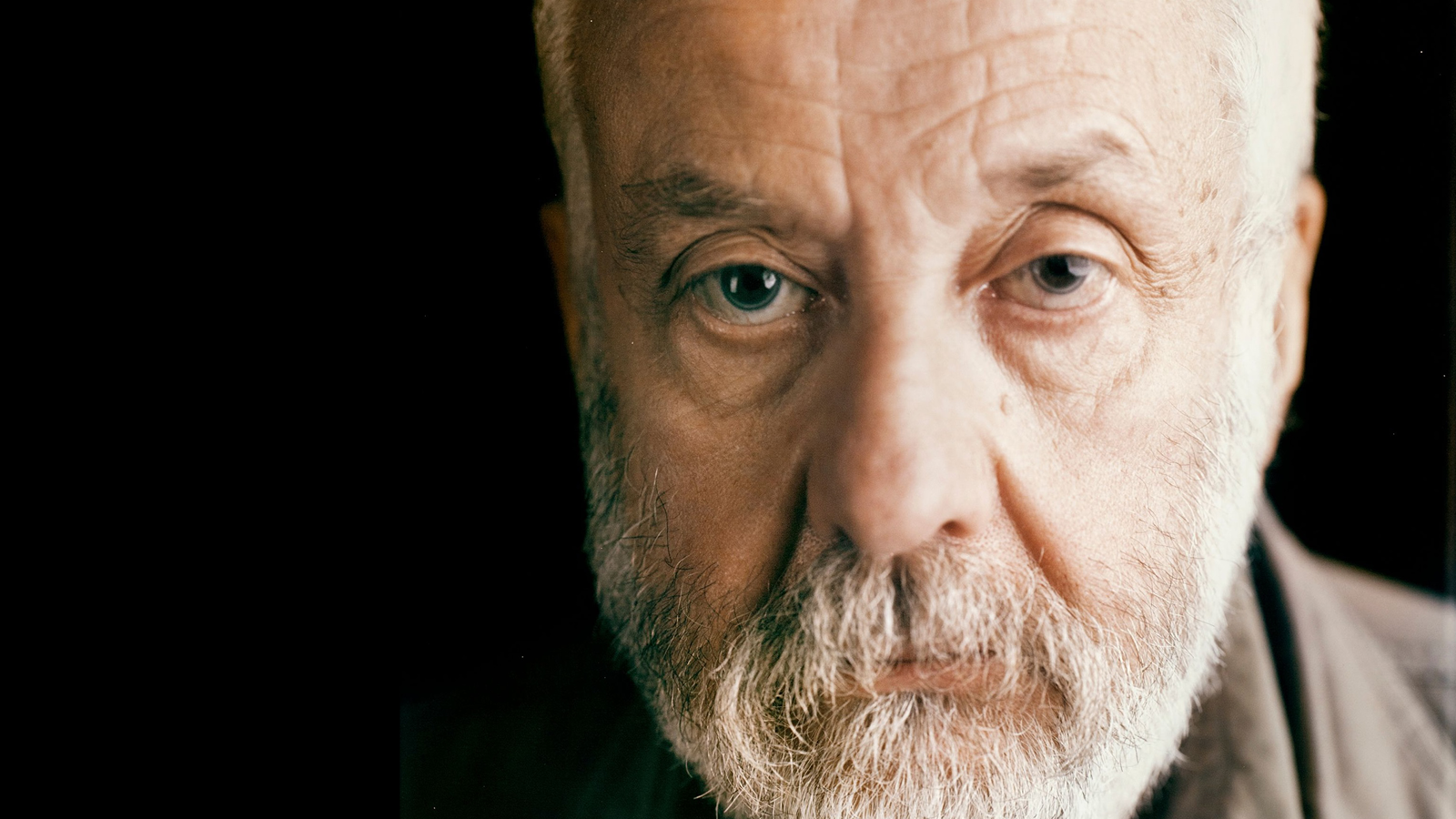
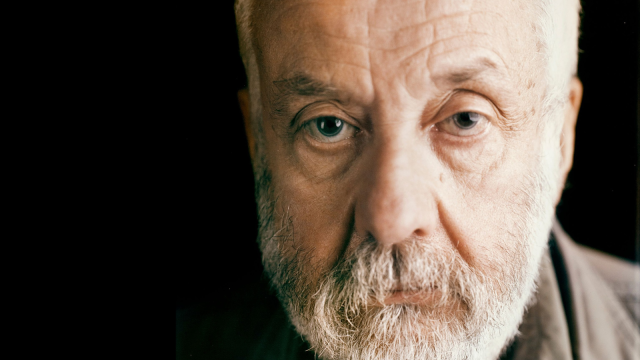
Mike Leigh, photograph by Myrna Suarez.
Interview
Mike Leigh
An interview with the director about Tender Loving Care, his latest and maybe last film, his working method, and the pleasures of the job.
Secrets & Lies (1996) screens at Metrograph from Saturday, November 21, as part of All Happy Families Are Alike.
Share:
IN THE WORLD OF Mike Leigh’s films, which reflects that in which we live about as much as any films can be said to, you have to take the rough with the smooth. His 17th feature for theatrical release, Tender Loving Care (2026), which opens in NYC next month, may on the surface appear a more palatable proposition than his last, Hard Truths (2024), built around a majestically abrasive performance by Marianne Jean-Baptiste. The central characters in Tender Loving Care do their level best to look after one another, to be gentle, to step gingerly, to “do little harm.”
Those seeking soothing bromides, however, would do well to turn their attention elsewhere; among other things, the film reflects on the fact that even those of us fortunate to find a modicum of happiness on this earth must inevitably leave it behind—if we’re “lucky,” after watching those we love depart in advance of us, for the longer you last the more you lose—and that life, for a great many, is not exactly a bowl of cherries. Its final image, the coda to Leigh’s body of work if indeed he retires from filmmaking as he’s suggested is likely after Tender Loving Care, is a close-up of a nameless drifter on the streets of London, his expression… not accusatory, exactly, but hardly one of wistful resignation.
Born in 1943 and raised in Salford, Greater Manchester, Leigh was a young man during a heroic age for the arts in the United Kingdom, when a new postwar social mobility, spurred in no small part by the Education Act passed the year after his birth, was injecting the cultural scene with an infusion of talent from the working- and lower-middle classes. In today’s post-Thatcher, post-New Labour era, in which the rising stars of Albion come with double-barreled names straight out of Evelyn Waugh and ancestry traceable to Burke’s Peerage, that prole art threat may appear dimly distant, but throughout the years, Leigh has remained fiercely present, unreconciled, truculent.
His method, in place from his first film, 1971’s Bleak Moments, consists of developing characters, dialogue, and scenarios in close collaboration with his performers. This suggests a kinship with cinema’s great naturalists, John Cassavetes and Maurice Pialat, though the oft-exaggerated personalities that people his films put him closer to William Hogarth or Honoré Daumier than the Kitchen Sink School. He has at times been accused of grotesquerie, but it seems today only that he has been gifted—or cursed—with an unusually acute awareness of the outlandish shapes into which men and women are increasingly being twisted by an indifferent society. He shows little interest in the appurtenances of mediated, screentime-addled 21st-century life in his work, but the range of neurotics, isolates, and emotionally stunted souls who populate them makes clear the symptoms accompanying the digital revolution are nothing new, and that the process of colonizing and toxifying people’s inner lives and alienating them from one another and themselves has been persistent and ongoing. Leigh’s films often have humble, homely settings, but the stakes in them are high: all or nothing, to borrow the title of one of the finest. As John Berger in his writing, Leigh in his dramas for television and cinema returns to a crucial quandary: how to live in hope when there are so very many reasons for despair? There are perhaps greater English filmmakers, but I know of none whose work is so thrillingly, palpitatingly alive.
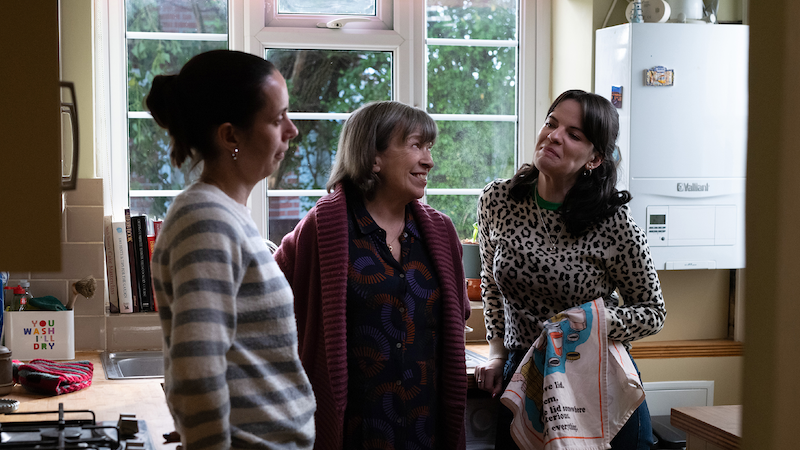
Tender Loving Care (2026)
Tender Loving Care, I hasten to add, is no exception to this. The principal players— Kate O’Flynn, Alice Bailey Johnson, Marion Bailey, and Paul Jesson—have all worked with Leigh in the past. O’Flynn and Johnson are Amy and Rosie, social workers of long acquaintance and former roommates reunited in co-habitation after Amy has broken off with her boyfriend. Bailey and Jesson are Amy’s aging parents, Birdie and Geoff; the long years they’ve shared would seem to have been about as harmonious as could be reasonably desired, but they appear vaguely troubled by the prospect that their daughter will not have the fortune they’ve had, while Amy and Rosie, in their professional roles, are in regular contact with people who’ve seen practically no good turns from life whatsoever, members of the capitol city’s vast horde of walking wounded.
Tender Loving Care is, it may be said, a film in which signs of deterioration are everywhere: the fraying of the social safety net, the atrophy of the aging mind and body. It is also—and this should come as no surprise to those who know Leigh’s work—very funny and enormously compassionate, confronting the void not with abjection and despair, but with an admiration for the human capacity to persevere, to offer one another a little light in the dark. I couldn’t very well ask Leigh how, exactly, he strikes the precarious balance he does here, but I did, via Zoom, manage to put a few other questions to him. —Nick Pinkerton
NICK PINKERTON: I wanted to ask about social workers as subjects in your films, because this isn’t the first time they’ve featured: there are the ones who Eric Richard’s character in Home Sweet Home (1982) has to deal with, concerning his daughter; Lesley Manville’s character in Secrets & Lies (1996), helping Marianne Jean-Baptiste find her birth mother; and now the two women at the center of Tender Loving Care—a movie I admire very much, by the by. Presumably you’ve had to do your due diligence when taking on these subjects, and observe something of the reality of the profession; how’ve you seen the vocation change over the years?
MIKE LEIGH: If I’m honest about it, how much it’s changed hasn’t really occurred to me, other than the fact that it is tough, and in some ways it’s only gotten worse. Funding—certainly in the UK—is a problem, though in principle, it’s the same-old-same-old, you know? I mean, when you see the social worker in Secrets & Lies you referred to, she’s very helpful, she’s very practical… but she’s in one hell of a hurry to move on to the next thing. The way she’s behaving is entirely sympathetic but she’s running before she can walk! And that is a requirement of this particular profession. As Amy says when she’s counselling the younger social worker, “The pressure’s always on us.” I’ve looked at social workers on a number of occasions, as you say, but for me, it’s looking at the needs of people.
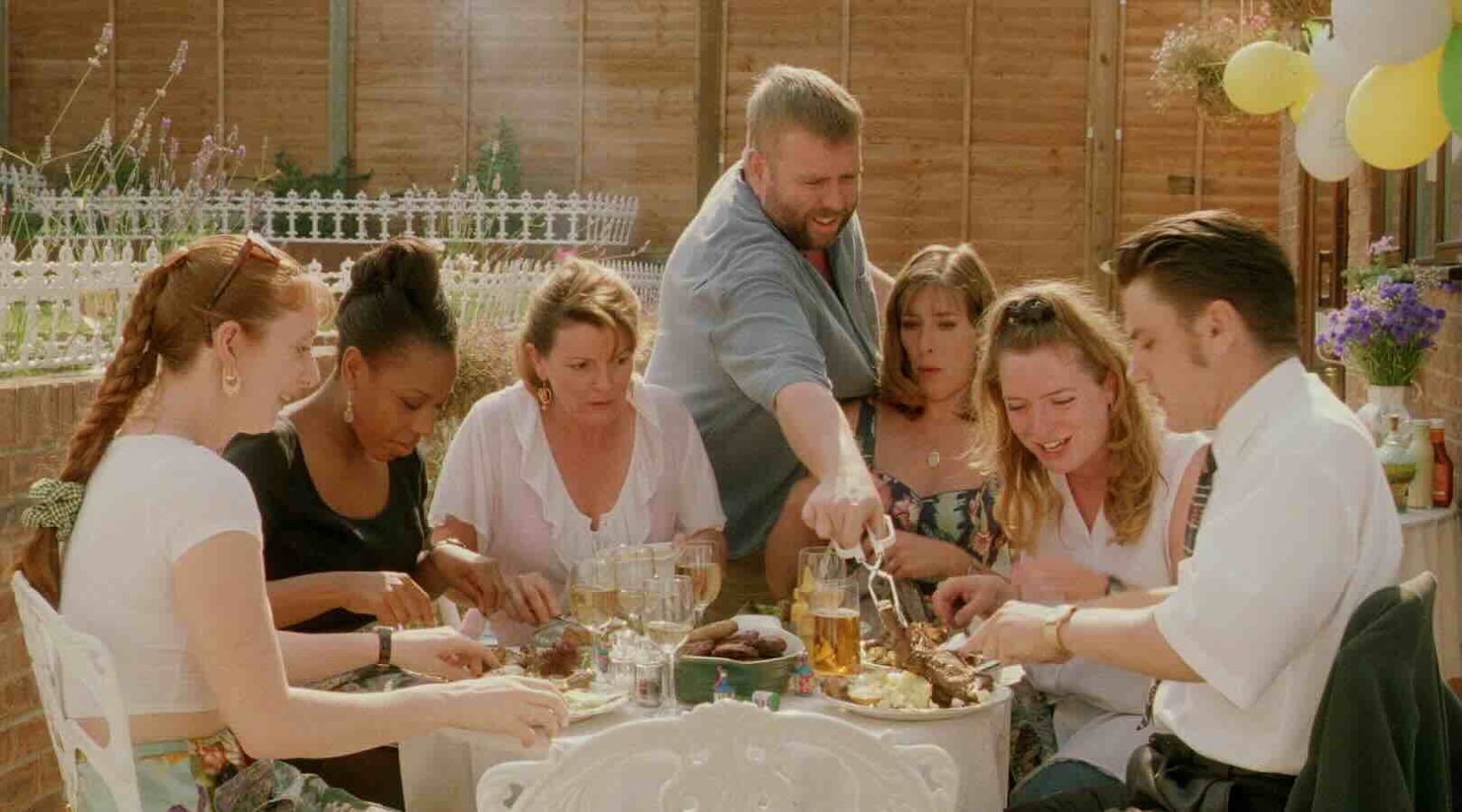
Secrets and Lies (1996)
NP: I found it interesting, looking at Home Sweet Home again, where you have a sense, at least demographically, that these social workers are cut from a different cloth: people who were students in the early ’70s, ex-hippies, maybe…
ML: It’s true that the portraits of the two social workers in Home Sweet Home are a very long way… [laughs] from those of Amy and Rosie in Tender Loving Care. In a way they’re comic characters, and Home Sweet Home was saying something about pretentious university graduates being catapulted into that alien world. And that is a far cry from what I’m talking about in the latter film; I concede that. It’s a different kind of statement, a different perspective on that world.
NP: Of course. I didn’t mean to imply you were ever one to work in terms of “representative samples” rather than individuals. Something I thought about while watching Tender Loving Care was the famous words of our great American statesman Ronald Reagan, spoken in 1986: “The nine most terrifying words in the English language are ‘I’m from the government and I’m here to help.’” This is often cited as though it’s incredibly witty, though… is it actually so terrifying? Certainly preferable to “I’m from the government and I’m here to put you in a forced labor camp.”
ML: Yes! And that tells us more about Ronald Reagan than it does about the nature of social work.
NP: Many times throughout your filmography, you’ve worked with actors in bit roles a few times before centering them—for example, David Thewlis in The Short & Curlies (1987) and Life is Sweet (1990) before getting the main attraction part in Naked (1993)… In Tender Loving Care, there’s Kate O’Flynn and Alice Bailey Johnson, both of whom have some experience working with you… Were there particular qualities that made you think, “Oh, there’s a movie in these two… There’s a special dynamic here”?
ML: From the outset, with both Kate and with Alice, I’ve always known they could do such things. What it’s really about is when you find the thing that tells you, “Okay, now let’s get around to it.” There are actors I’ve worked with in the past in smaller roles, who I still have on the list of “About time we got around to them.” It’s simply that. It’s not that I’ve suddenly thought, “Oh, they’ve got better and now they’re qualified.” Kate and Alice could’ve done this way back when, it’s just that… I’m afraid it’s as banal as that; it’s just about finding time to put everybody in, really.
NP: So much of what is compelling in the movie is the incredible chemistry they have; they’re like a music hall double-act who’ve been together for ages…
ML: Yeah, and what you may find interesting is that they, the two actresses, had never met each other before we started working on this, even though I know both of them very well indeed. But they clicked, and the characters clicked. And it’s all about the characters, really.
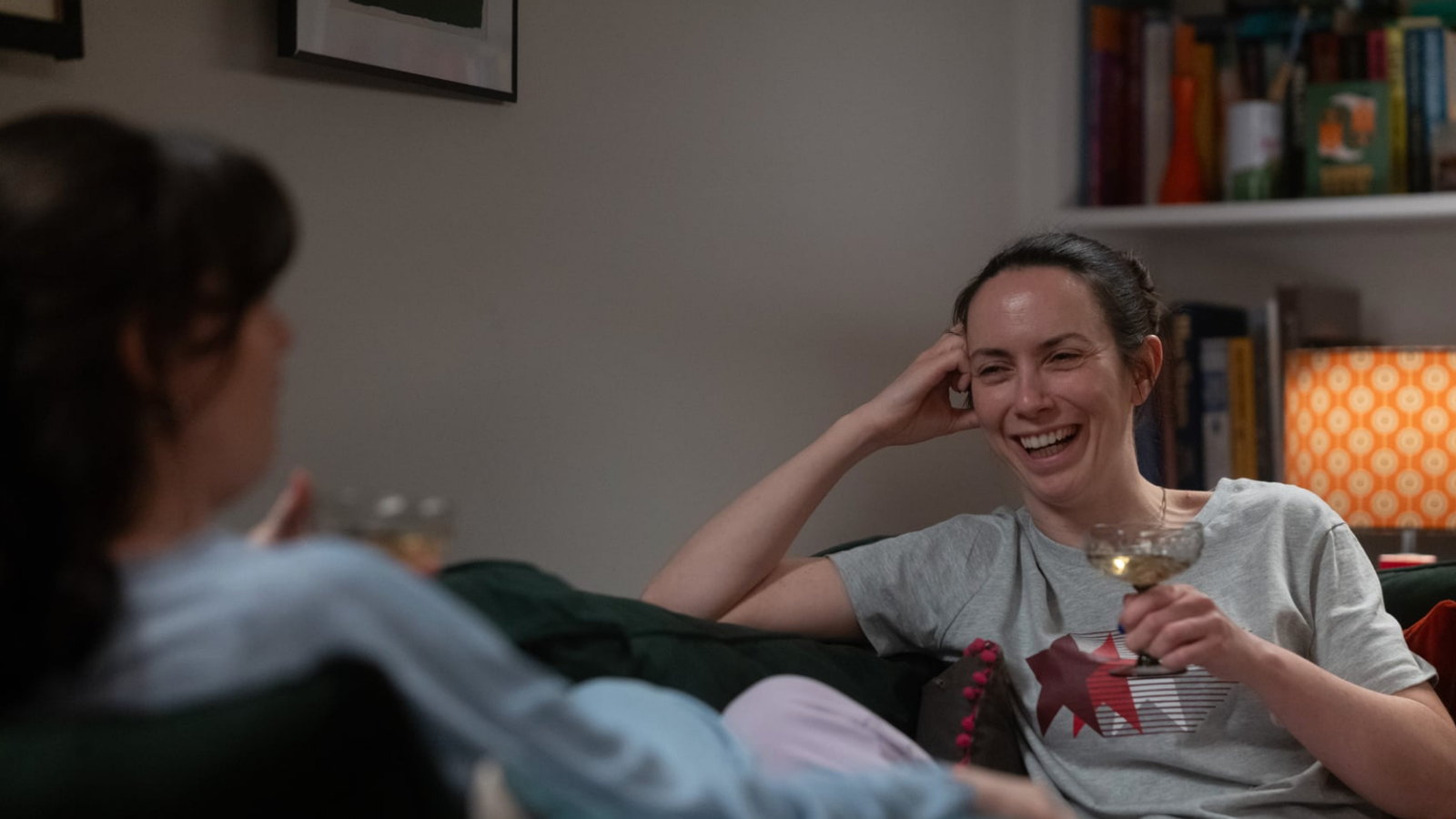
Tender Loving Care (2026)
NP: So often when films are introducing longtime friends you get a tossed-off line like, “Oh, we’ve been best friends for 15 years!” Who says something like that? Whereas with them you see that shared time in the way they play off one another…
ML: When you say that, I mean… [chuckles] …you could be referring to a whole bunch of aspects of what I try to do. I mean, how many thousands of marriage relationships have you seen on-screen, being played by actors who only just met on the first day of shooting? The fact is I spend with my gang huge amounts of time before we get around to shooting, developing the characters and the relationships so that they’re absolutely rock solid in every aspect and in every particular. It’s about it being organic and truthful and three-dimensional and all those things.
NP: Not only does that show in the characterizations, but also in the way characters negotiate spaces—both familiar and unfamiliar ones. I love watching, for example, the way Marion Bailey and Paul Jesson share the kitchen in Tender Loving Care, the way they accommodate each other, the sense of long, intimate understanding of their shared space, everything in it and where it goes. Or the way Ruth Sheen’s character treats her houseplants like members of the household in High Hopes (1988). When does that come into your process?
ML: Well, first what we do is, in the preparatory period—in the case of this film it was about three months—we hire an empty floor of an office block, for example, where we have simulated rooms with different sort furniture and so on. And having created the characters in principle, and their interrelations, while we’re doing that, we collaborate with the costume designer, the makeup designer, and particularly with the production designer, so that we’re all talking the same language concerning the spaces we’ll be dealing with, the period, the details, the furniture that would be there. It’s all done collaboratively so that then the production designer—who in this case is Jane Brodie—can create the environment. We then are able to go to the locations and work for a while with nobody there, embodying the characters in these spaces, their spaces. And it comes together and it’s completely organic. Everything we do in all these films of mine, every scene is very precise, but has come out of improvisations that we’ve scripted through rehearsal, but starting with improvisations in all cases. And what you refer to is part of it: everything in that kitchen was there, and not randomly; it wasn’t like in so many movies where an art department has just sort bunged things in on some vague premise. That time spent acclimatizing and getting organically embedded in the location is part of the process.
NP: Your films often consist of discrete but connected narrative threads that encourage a study of contrasts… In Tender Loving Care it seems to me what unifies the film’s various threads is a focus on different kinds of caregiving: institutional, parental/filial, that which exists between romantic partners and friends. As someone who, I know, says you find your films in the making, was there something you were searching for when putting these elements in play?
ML: Well, what you’re saying is accurate, but it’s more a feeling than a kind of, as it were, an intellectual or schematic catalogue of intention. It’s a feeling about things that informs the choices I make in building the characters with the actors, and the premise of what the thing is going to be about, and so on.
NP: Schematic isn’t a word I would use, no. You have too much of a defined sense of these different individual consciousnesses for that. Nothing is cut and dried. One scene that sticks out is the confrontation between Amy and the woman who has had two children put in foster care, which I don’t think would exist in a movie that was simply about the everyday heroism of foster care workers.
ML: Well obviously that particular client, or victim, or whatever you call her, has been through it before. She had a bad experience previously, and Amy is trying to deal with it, trying to get through to her, trying to say, “No, no, I’m on your side…” But, you know, she’s defensive, she’s frightened, she’s paranoid, she’s annoyed, all of those things. The woman is obviously intelligent enough to know what’s going on, but at the same time is in denial; Amy’s job is to handle things by the book—sympathetically, if possible, by the rules, such as they are, but she has to deal with it. It’s complex.
Interestingly enough, that scene is unique in all of my films. Nowhere in any of my previous films is there a scene that was improvised on camera, but when it came to that scene, and I had them improvising, it seemed proper for them, appropriate for what’s going on, so we actually did a lot of improvisation on camera and Lucy [Bristow], the cinematographer, did it handheld, which is something else I’ve never done at all. But it seemed right for the tensions in that scene, and I think that helps it considerably.
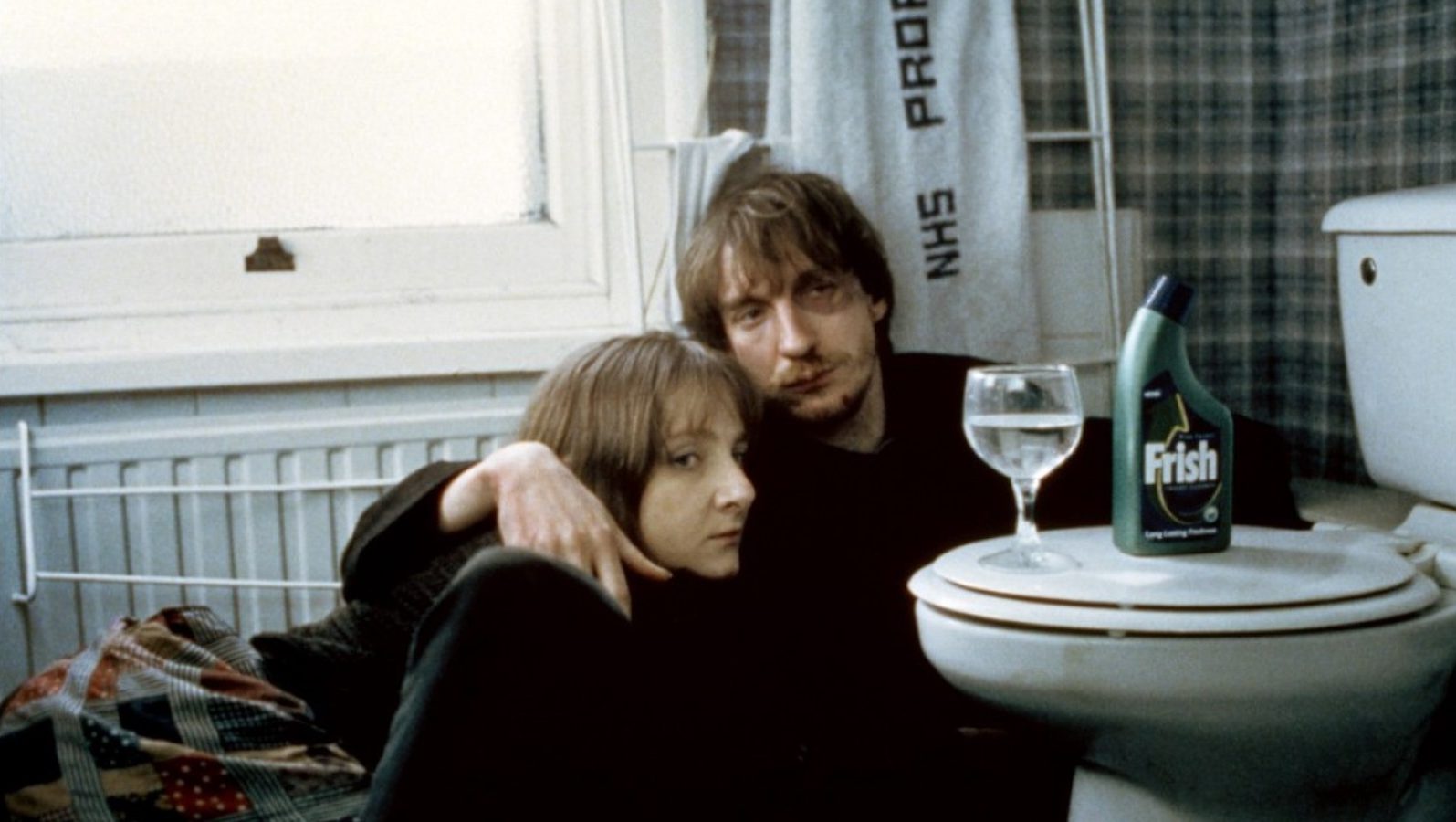
Naked (1993)
NP: Talking of Lucy Bristow: did you have any particular visual references you discussed with her before shooting? Your films are much more visually distinct, from one to the next, than I think is sometimes credited. The restaurant kitchen scenes in Life is Sweet seem to me pure Vermeer, and though Naked doesn’t look like Blake, it feels somehow Blakean…
ML: No, and you know what—I’ve talked about Vermeer in the past, but I think I was always talking about my first film, Bleak Moments, where we did talk about Vermeer. Obviously, when we were going to shoot Mr. Turner (2014), Dick Pope, the cinematographer and I, we thought about paintings and all of that. But usually there’s no conscious set of visual references in my films, and certainly not in this one. It’s a matter of just being very direct and sympathetic to what’s going on.
NP: It’s remarkable to see in your films spaces that actually look like everyday spaces. Which is odd; it’s unusual how unusual that is.
ML: For me, you know, it’s about people and it’s about place. And not just interior spaces; wherever. That’s what film is about, what filmmaking is about. When Amy discovers this woman lying on the ground in the middle of a park on a beautiful sunny day, and approaches her, concerned, and the woman tells her, “Fuck off,” because she’s communing with nature… it’s about place, it’s about place in relation to the character. That’s all.
NP: This is perhaps a difficult-to-impossible one to answer but: if you’re an artist who is particularly, if not exclusively, interested in representing the working or middle classes, and you have any degree of success in doing that, this success has a tendency to remove you, to some degree, from the very people you’re representing. And I don’t feel that remove in your work. Watching Tender Loving Care I thought: “How does he know these people so well? How does he keep up that connection? How has he kept himself from getting cut off?”
ML: Well, [chuckles] it’s a fair question. But it’s not, as far as I’m concerned, an issue or a problem. I mean, you do it. I live in the real world, I don’t live in a remote castle; I interreact with the world; I’m a parent and I’ve got grandchildren and all that. Of course, you could say, “Oh, well it’s easy to say that, but you’re a bloody filmmaker!” Well, yeah, okay, I am. But I have—artists have to live with the limitations of the fact that we’re artists; that’s just the way it is. There isn’t really an answer to what you’re talking about; it’s about getting on with it, really.
NP: The relationship between the painter and his father in Mr. Turner is very interesting in this regard: this guy who routinely does the rounds with his high-born patrons then sits at table with his ex-barber father…
ML: Yes, I haven’t only dealt with working-class and lower middle-class people across the spectrum of my films. If you take Topsy-Turvy (1999), for example, which is as important, for me, as any of my other films… Or, indeed, Peterloo (2018)—we even see the monarch in Peterloo. As far as I’m concerned, the real point about this is that they’re all people.

Peterloo (2018)
NP: I feel compelled to tell you I regard Peterloo as one of the great films of the 21st century, and its almost complete failure to play on any cinema screens in the United States an unspeakable travesty.
ML: Well, thank you. I’m glad you think that. I think it, too. The truth is that Amazon Studios, who were new on the block when they backed it, backed it enthusiastically and never interfered with it, and they were very encouraging throughout the time we made it and when we finished it. But then they really didn’t put their effort into flogging it and, as you say, it pretty well sank without a trace in the United States. It was a ridiculous tragedy.
In an ideal world, the movies we make would be in cinemas for sustained lengths of time, and people would be able to go and see them in the cinema. But of course, the distributors that handle the kind of independent films that we know are important are up against, always up against, horrendous commercial pressures and yielding space to the big movies, the commercial stuff. If a film can last more than a certain number of weeks out there then it’s good news, you know? And I’ve had a lot of disappointing—I mean, Hard Truths, for example, was critically very well received, but in most places it didn’t really live as long as we’d have liked it to. But this is what we’re up against. It’s tough.
NP: Something I felt while looking at your films again: they’re very critical of contemporary society, but not, on the whole, doomy or fatalistic. We see several examples of people who do manage—as we know is true in life—to be more or less happy… but this is a matter of personal resources, not something the world gives you. A line pursued by a lot of pundits and politicians that if your life isn’t going well, it’s your fault, whereas in your films I feel like happiness is the fluke—a “needle in a haystack” chance, as Birdie puts it—in a world that isn’t particularly set up to serve people’s needs. And in a world where happiness is a scarcity, it can almost be a rebuke—which you feel in the concluding note of Tender Loving Care, or that of Another Year (2010).
ML: Well, I agree. I agree with all that. But I’m not sure what you’re asking me.
NP: Oh, dear. How about this… There’s a line spoken by Phil Davis’s character in High Hopes, something to the effect of, “I’m not afraid of getting old, I’m afraid of getting bitter.” And your films do not seem to me the films of a bitter man. So: how does one withstand the temptation of succumbing?
ML: That’s a good question. I mean, I don’t know… Apart from anything else, the fact that we’re having a conversation about all the films I’ve made, and been able to make … I have, in the end, been lucky; I have not made a single film that was interfered with by anybody. I’ve been allowed to—thanks to various flukes, and despite many rejections and disappointments—nevertheless, I’ve been elevated and motivated by the fact that I’ve been able to do what I wanted to do, how I wanted to do it, and to look at society, and in a way celebrate society. Look, if—and it’s not difficult to imagine this—if I had found myself up against endless brick walls and rejections, and simply years had gone by since I made a film, seven, eight, nine, 10 years, and when finally I’m making a film I know I won’t make another film for another 12 years, all that, which happens to some filmmakers… then I think I would be profoundly bitter! And we wouldn’t be having this conversation! But I’m not. Not only have I been able to do my work, but doing it is very, very enjoyable because of the way I work with people: it’s always harmonious, it’s always a gas, it’s always a delight, it’s always stimulating, and I’m talking about pre-production, production, and post-production. And I get very good responses from people; I had a standing ovation two weeks ago at the Royal Festival Hall in London when we screened at the London Film Festival; a very large venue, packed to the gallery. So, I mean, I would have no excuse for being bitter.
But apart from anything else, the more important answer really is that I am endlessly turned on by people.

Share:
Recommended
- Mike Leigh
 An interview with the director about his latest and maybe last film, and the pleasures of the job.
- Gunvor Nelson
 On the exhilarating and deeply expressive work of the painter-turned-experimental filmmaker.
- Zawe Ashton Honors Lorraine O’Grady
 On the boundary-defying conceptual artist whose craft inspired the next generation.