
Essay
Gunvor Nelson
On the exhilarating and deeply expressive work of the painter-turned-experimental filmmaker.
Gunvor Nelson’s Personal Cinema plays at Metrograph from Saturday, November 21.
Share:
“I WANTED IT TO BE like diving into water, not knowing what you would find,” is how Gunvor Nelson once described the free-flowing experience of watching one of her films. Nelson, who died last year in the Swedish harbor town of Kristinehamm where she was raised, was talking specifically about her sensuous Moon’s Pool (1973), a prismatic celluloid dance of naked bodies swimming and twirling, alone and coupled, that was filmed entirely underwater. But the words apply to her entire filmography, encompassing around two dozen intricately handcrafted experimental films and videos, most of which were made while she lived in the Bay Area.
Indeed, water suffuses Nelson’s films, as she frequently turns her camera towards not only oceans but bathtubs, swimming pools, harbors, streams, and rain. She loved the kaleidoscopic visual effects she could achieve with water, including reflection, refraction, and distortion, and she was drawn to water’s fluidity—both literally and artistically—allowing for wavering, unstable images. The key to Nelson’s work is that the films are expressionistic—taking us inside her mind and her artistic outlook (she was trained as a painter)—while her interior landscapes remain grounded in the reality of physical landscapes. Simply put, she blends surrealism with realism.
Born in Stockholm in 1931, Nelson moved to California at age 22 to study painting and art history, before relocating to San Francisco, where she taught at the San Francisco Art Institute and made films for nearly 30 years. In San Francisco, she became part of the burgeoning experimental scene, hanging out with filmmakers including Bruce Baillie, Chick Strand, and her future husband Robert Nelson. (The group would go on to play a key role in the formation of Canyon Cinema in 1961). Gunvor was quickly drawn to the formal possibilities of the medium. As she said at an early screening of her work, “I was a painter and right now I feel like film has so many more possibilities. More aspects to it… like sound, time, drama, as well as the visual image.”

Schmeerguntz (1966)
Nelson threw everything, including the kitchen sink, into her 16mm debut Schmeerguntz (1966), named after a favorite nonsense word of her father’s, meaning an overstuffed sandwich. Made with her friend Dorothy Wiley—the first of five films on which the pair would collaborate—the frenetic 13-minute film is a rapid-fire collage of archival and new footage, inspired by the gap between the idealized views of feminine beauty and domestic bliss sold in TV commercials and the messy reality of life as a young mother, where the sink is filled with dirty dishes while babies soil diapers and toilets clog.
Gleefully disheveled, the film was quickly embraced as a feminist satire, a label Nelson found reductive. She wanted to make films that were personal and not easily categorizable. Working with Wiley again, she followed Schmeerguntz with another film with a nonsensical title, Fog Pumas (1967), that caroms between chase scenes, domestic brawls, cityscapes, a visit to a natural history museum, the recurring appearance of a dwarf, and a cacophonous array of musical cues. (One of the hallmarks of Nelson’s films is the complexity of their soundtracks.) A layer of dread permeates, sparked by a mother’s terror when she sees the words “TOO BAD” spelled out in her bowl of alphabet soup. Though drawing on real dreams, “Once we started, the movie just made its own dream,” said Nelson. This is an apt description for nearly all of her films, which often feel like elegantly modulated improvisations.
A case in point is Frame Line (1983), the first in a series of freehand collage films, made during visits to Sweden, in which filmmaking techniques are mashed with gestures from painting. Nelson cuts between close-up shots of artworks mid-creation and fragmentary images of her home country which feel like travelogues filmed by a space alien with a 16mm camera. As the filmmaker James Irwin has observed “The precision of her editing gives even the most arbitrary image a persuasive inevitability.”

Natural Features (1990)
Throughout the following decade, Nelson introduced even more dazzlingly complex forms of animation and image manipulation into her work. Natural Features (1990) incorporates hundreds of still photographs, images layered over multiple planes of glass, altered by the application of watercolors, with objects such as padlocks, toy boats, and pieces of newspaper added on top. Old Digs (1993), one of her other most beautiful films, was made in the year she returned to live in Sweden. As she films what seems to be an old family home, the soundtrack offers a purposely indistinct murmur of voices, from a gathering of kinsfolk, evoking the past as a vivid blur.
Nelson’s work often draws on her family life, particularly the ties and tensions between mothers and daughters. Selected by the Library of Congress for the National Film Registry preservation in 2019, the short My Name is Oona (1969) is at once a lyrical and unsentimental portrait of childhood, making incantatory use of her nine-year-old daughter Oona’s name on its mesmerizing soundtrack. Fourteen years later, Red Shift (1983) is a quasi-narrative hybrid that features staged scenes in which Oona and Nelson’s mother “perform.” The action, lying somewhere between fiction and documentary, unfolds over two different time periods, filmed at Nelson’s childhood home in Kristinehamm.

My Name is Oona (1969)
Close attention (yes, painterly) is paid to telling details: the wrinkled skin on an older woman’s thighs as she puts on stockings, the play of light through a curtain, the ghostly aura of an empty room in a family house. Everything is tactile in Nelson’s work; the touch of a hand is an intimate gesture that recurs through Red Shift. Another shorter work made eight years later also features Nelson’s mother: the starkly beautiful five-minute Time Being (1991)—one of Nelson’s only silent films—which lovingly records her mother in a hospital bed, flowers placed on the windowsill behind her, in the days before her death.
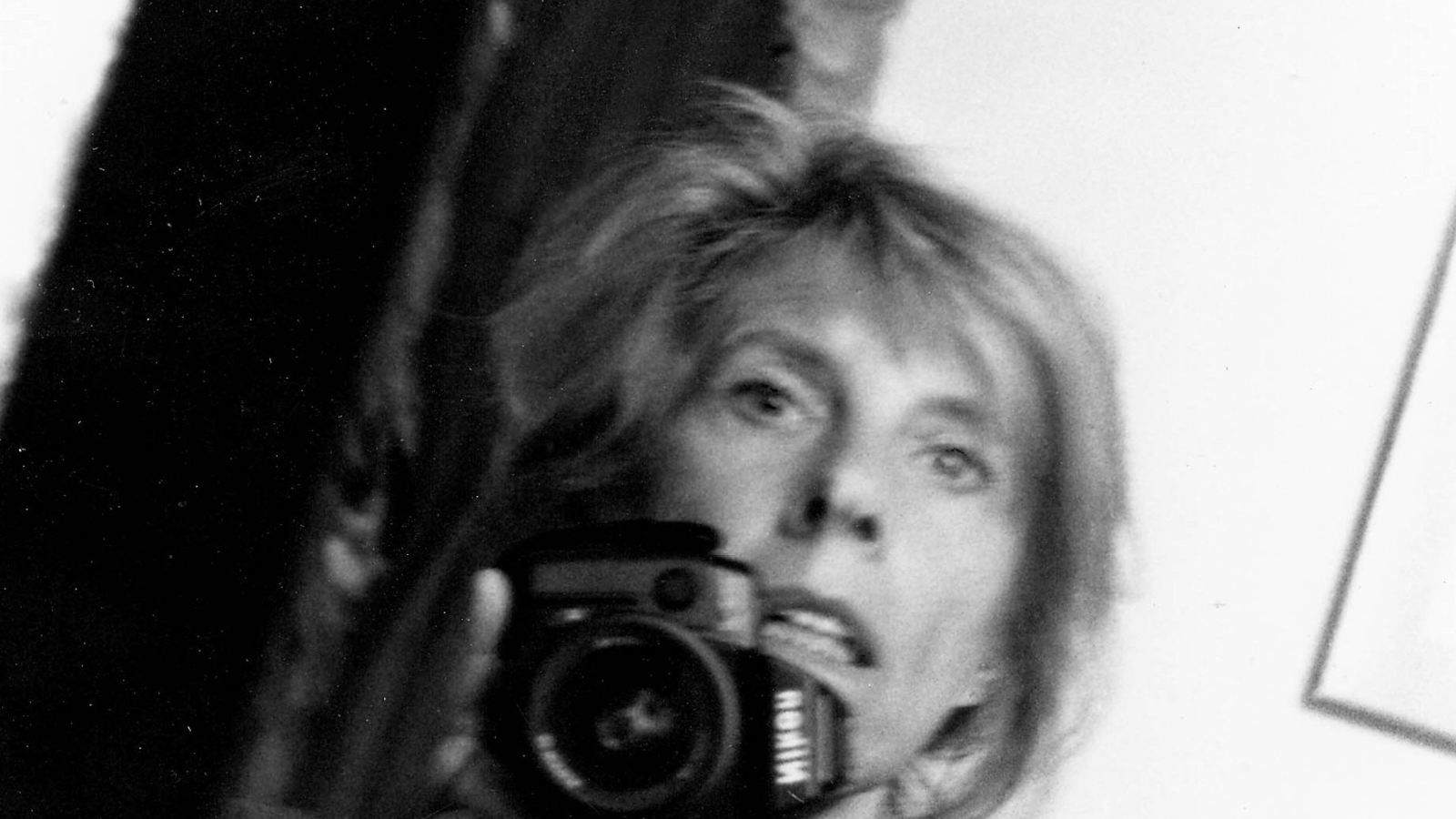
These films are, of course, autobiographical, but Nelson’s interest is more phenomenological than psychological, asserting the way that she directly experiences the world. To call her films “personal” is not to say they are confessional, or solipsistic. They look outwards, endlessly drawing poetry from life around her. Towards the end of her career, after moving back to Sweden in 1993, Nelson turned from 16mm to video. Her 2003 work Trace Elements is a simple, yet stunning study of light and color, shot in her studio. Artist and camera locked in a kind of dance through the space, with Nelson playfully pointing the camera at her own shadow. Her face is unseen but her spirit and personality is magnificently present in every frame, as it is in all of her work.

Share:
Recommended
- Gunvor Nelson
 On the exhilarating and deeply expressive work of the painter-turned-experimental filmmaker.
- Zawe Ashton Honors Lorraine O’Grady
 On the boundary-defying conceptual artist whose craft inspired the next generation.
- No Concessions!
 An excerpt from cartoonist Nathan Gelgud’s latest satirical serial.