
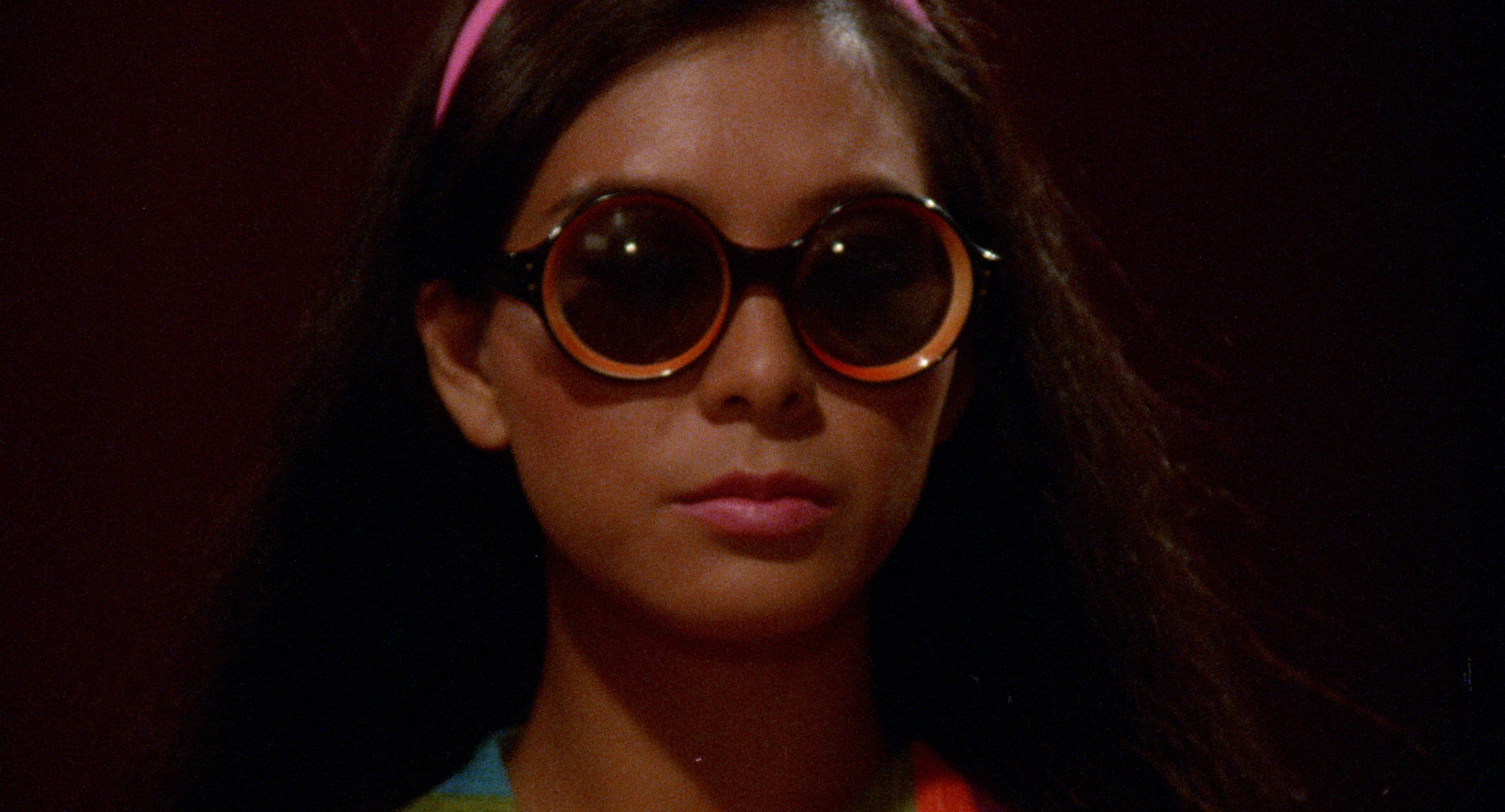
My Name Ain’t Suzie (1985)
Essay
My Name Ain’t Suzie
On Angie Chen’s newly restored rebellious portrait of womanhood and sex work in late ’50s Hong Kong.
My Name Ain’t Suzie plays at Metrograph on Saturday, July 18.
Share:
IN 1960, HOLLYWOOD FIXED THE “Far East” in popular imagination with The World of Suzie Wong. Adapted from Richard Mason’s novel and directed by Richard Quine, it was a consummate product of its era: an exotic romance between an American painter (William Holden) and a bar girl (Nancy Kwan) working in Hong Kong’s red light district. Kwan played Suzie with a tremulous charm that made her a star, and, in the way of such things, a symbol—the “Chinese Bardot,” she was called—as the film codified an unfortunate fantasy of Asian femininity, organized around Western desire.
Twenty-five years later, Angie Chen made a picture that began, essentially, as a rebuke. Born in Shanghai, raised in Hong Kong and Taiwan, and trained in film in the United States, Chen had become the first female director at Shaw Brothers Studio with her debut Maybe It’s Love (1984), a murder mystery in the vein of Rear Window (1954). Her second feature, My Name Ain’t Suzie (1985), bluntly declares its argument in the title, and more obliquely, in its first images. The windshield of a car at night, neon city lights sliding across the glass in reverse—beyond serving as an aesthetic surface for the opening credits—all announce this particular portrait as a refraction, a sign that this will not be a straight reading.

My Name Ain’t Suzie (1985)
This sequence places the film in forthright conversation with the earlier Hollywood film, which opens with the white male gaze made literal: Holden’s protagonist draws a portrait of Suzie from a distance, turning the act of looking into an exercise in possession. The World of Suzie Wong sketches its heroine in fantasy, where she emerges as a desired object: to be rescued and shaped into something acceptable for the white savior who loves her. When she’s not serving as his muse, Suzie is little more than an emotional companion to Holden’s character and is made to internalize his shame about sex work. Her own interiority is besides the point. But Chen returns Shui-Mei (Patricia Ha)—pointedly resisting the kind of legibility a name like “Suzie” was designed to evoke—to history. Rather than a romance, Chen’s film is a study of labor and a profile of a woman who understands that her value is being extracted from her, and who found, within those constraints, ways to be herself anyway.
My Name Ain’t Suzie begins in the countryside, with Shui-Mei, the daughter of a poor fishing family, eating pineapple cake and drinking soda pop, cream still on her upper lip. She is assaulted offscreen, though not before she tells the boys that a girl’s first time is worth at least $100, already alert to the economics of sex. When her cousin asks what’s wrong, Shui-Mei flips her expression into a practiced smile and returns to work. Chen paints the scene as a training lesson, not melodrama: the world will not pause for the girl’s pain, and she learns quickly that she cannot either. It is under these conditions of brutal pragmatism that Auntie Monroe (Bettie Ting Pei), the local brothel owner, offers a way forward, one in which, as she puts it, “even the dumbest girls can barely lift their gold-lined arms in a year.”
Where Hollywood supplied a postcard-like vision of Hong Kong (Holden surveying a scene of smiling paddy workers and gleeful children darting through the frame), Chen adopts the visual language of Shaw Brothers—known for its wuxia pictures—in its taste for heightened theatricality and physical confrontation. On New Year’s Eve, what begins as a catfight between Shui-Mei and a fellow bar girl escalates until sailors flying across the streamer- and Santa-bedecked room; the scene has the kinetic, almost brawny energy of a kung fu film, transposed into a brothel. The city becomes a stage of competing excesses.
Chen is attentive to the textures of brothel life, lingering on the moments in between sex work, conveyed with the intimate trappings of girlhood: perfume bottles with butterfly stoppers, purple squeeze-bulb atomizers, the ritual application of nail polish; cheongsams and feather boas sourced from vintage stock. Within this world, the women carve out small pockets of diversion, moments that feel almost briefly like play. They roll cherries delicately in their mouths, instructed to repeat, “No money, no honey.” In front of vanity mirrors, putting on their faces, they gossip about their customers with an inventive and comic vulgarity, referring to the men and their organs in terms of shellfish, categorizing and diminishing them with their words. It is a minor but real act of linguistic reclamation, a way of taking control of a position otherwise defined by their bodily vulnerability.

My Name Ain’t Suzie (1985)
Another way of taking control: Shui-Mei becomes pregnant and, in a decision rendered with the same unsentimental clarity that governs so much of her life, self-administers an abortion to avoid being cast out (pregnant women remind sailors of their mothers, the madame says). The act is an inversion of the death of Suzie’s child, who dies tragically in a mudslide, conveniently clearing the obstacle to romance. The child’s death solves the problem of illegitimate pregnancy for the white suitor, who can now propose. For Shui-Mei, the loss is not symbolic but real, the cost of a woman trying to survive in a world that gives her very few options.
Had Shui-Mei had the child, the result might have been Jimmy. Played by Anthony Wong in his screen debut—cast because of autobiographical resonance, as Wong himself is the son of an English serviceman and a Chinese mother—Jimmy is a mixed-race man trying to track down the white father who abandoned him. Scorned by other Hong Kongers (in one brutal scene, they hold him at knifepoint and quite literally try to force him to eat shit), he drifts through the city in search of belonging. His relationship with Shui-Mei begins when she overhears a sailor claim to know his father’s whereabouts, and soon they are stealing kisses by the water’s edge. Ironically, the lead she passes along ultimately takes him away from her: when it proves true, Jimmy leaves to find his father, leaving Shui-Mei behind with nothing but their initials tattooed below her collarbone, inside a heart above her own.
Jimmy’s presence is, among other things, a reckoning with the actual legacy of the Suzie Wong romance: what happens after the white soldiers leave, to the children who remain? Angry and fatherless, Jimmy is defined by this absence. In his wallet, he keeps a photograph of the missing man, alongside one of James Dean. For the Hong Kongers, identity is assembled from borrowed cinematic fragments and Western icons. This condition is not limited to men: Auntie Monroe, after all, has fashioned herself after Marilyn, and Shui-Mei experiments with a painted mole on her cheek after the famous blonde siren, too.
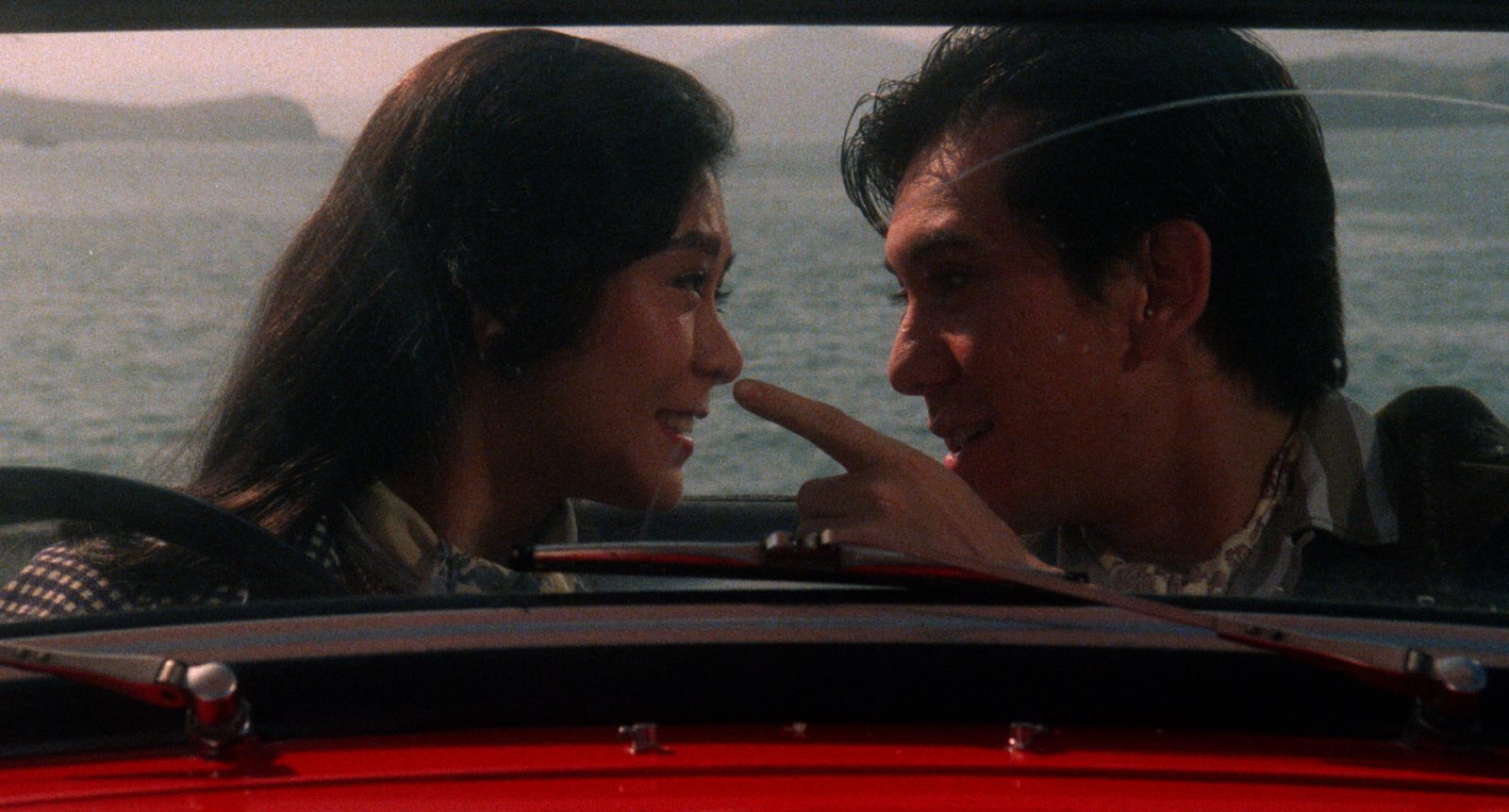
My Name Ain’t Suzie (1985)
Spanning nearly three decades, My Name Ain’t Suzie offers no explicit temporal markers, apart from changing appearances. Hair and clothing shift with the decades, from A-line skirts and cardigans to mini-dresses and furs, barretted poodle cuts and cheongsams to voluminous blowouts and sequined thongs; the clientele, too, evolves from uniformed sailors to scruffy hippies. There is a particularly deft, comic montage of Shui-Mei and her cousin, after working the streets, being arrested, fingerprinted, and released, each cycle ending in a different outfit.
What the film is tracking, beneath the costume changes and the comic arrests, is something closer to a gangster arc or a rags-to-riches story, except that for a woman, riches never quite arrive on the same terms. Thrown out of the brothel when her relationship with Jimmy provokes too much jealousy, Shui-Mei works the streets independently before saving enough to open her own massage parlor. The ascent is precarious, governed by debt and territorial violence—when she pays protection money to the wrong faction, the consequences arrive via brass knuckles. It is only when she joins forces with another woman, the lesbian Yong Wing (Deanie Ip), that she finds safety and, it’s implied, companionship. Shui-Mei otherwise remains principally married to her business. Towards the end, she lazes in the sun as a new generation of girls arrives, painting their nails, a private band playing somewhere just out of frame, just for them. It is not triumph exactly, but it is not tragedy either: the image of a woman who has negotiated the terms of her own endurance without rescue, and without redemption.
My Name Ain’t Suzie, newly restored, arrives as a film that has waited four decades for the audience it was denied. Effectively suppressed after creative disagreements with the studio, Chen’s unglamorous chronicle of sex work never received the international circulation its ambitions warranted. Shui-Mei, at least, would not have been surprised by the delay.

Share:
Recommended
- Genevieve Yue’s Trains
 On the offbeat pleasures of the train in Genevieve Yue’s new book.
 - Yuliya Solntseva
 On the actress-turned-filmmaker’s unsung authorship.
 - Futures and Pasts: Socrates
 Rossellini’s one-of-a-kind approach to the costume drama, and his 1970 film on the last years of the Athenian truth-seeker.