
Interview
Meeting Otar Iosseliani
A newly translated interview with the titan of Georgian cinema, from Cahiers du cinéma, November 1979.
Otar Iosseliani: Fables of Modern Life opens at Metrograph on Saturday, August 8.
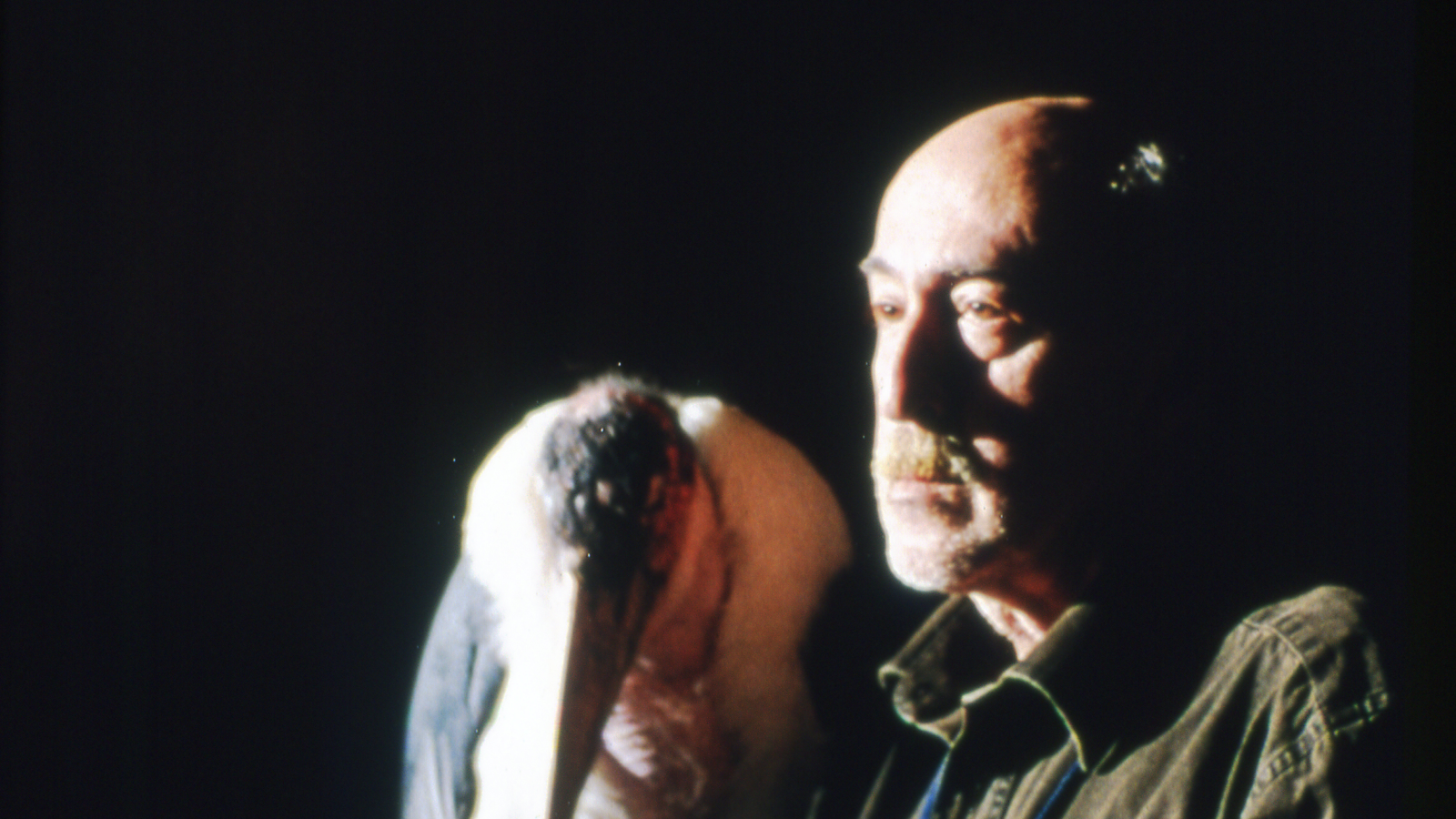
Farewell, Home Sweet Home (1999)
Share:
This interview by Serge Daney and Serge Toubiana, with the collaboration of Pascal Aubier, was first published in Cahiers du cinéma, no. 305, November 1979. It has been translated into English for the first time by Andy Rector on the occasion of the zine Otar Iosseliani: A Georgian Suite, published by Cinema Guild Press, and has been excerpted here with their permission. To read the full interview, pick up a copy at Metrograph during screenings of our 10-film retrospective, Otar Iosseliani: Fables of Modern Life. Zines will later be available to purchase via Cinema Guild’s website.
GEORGIAN FILMMAKER OTAR IOSSELIANI HAS just passed through Paris for a tribute held in his honor during the first week of October at the Cinémathèque française where two of his three films were shown: Once Upon a Time There Was a Singing Blackbird (1970) and Falling Leaves (1966). His latest film, Pastorale (1975), was missing: despite being programmed by the Cinémathèque, the print was blocked by the Soviet authorities for reasons all the more absurd given that the film has already played in Moscow cinemas for four months. Let’s say it simple and plain: there are no valid, logical, rational, comprehensible reasons for the Soviet film authorities to continue vetoing this film, which many foreign critics were able to see—in an outskirts theater—during the last Moscow Film Festival. The fact that said authorities have offered no explanation for their actions is clear proof that this censorship stems from an absurd (cultural) policy. Unless, that is, the veto can be explained on artistic grounds: Otar Iosseliani’s captivating films do not at all belong to the minor genre of “literary adaptation” (let’s not forget that in the U.S.S.R. the watchword socialist realism is still very much in force, with literature being the dominant art, and cinema slotted far behind it, with films often having to serve grand literary texts) but rather to a complete cinematic practice, to a perfectly mastered poetic and musical style. Iosseliani films everyday life (in Tbilisi, where he lives) and his cinema does not embellish reality (we’re far from a hagiographic cinema here); on the contrary, he caresses reality, traces its contours, and follows its movement and musical tempo. The forthright tone of his cinema gives us a full-force poetic realism worthy of the name, and establishes Iosseliani as a leading filmmaker today. —Serge Toubiana
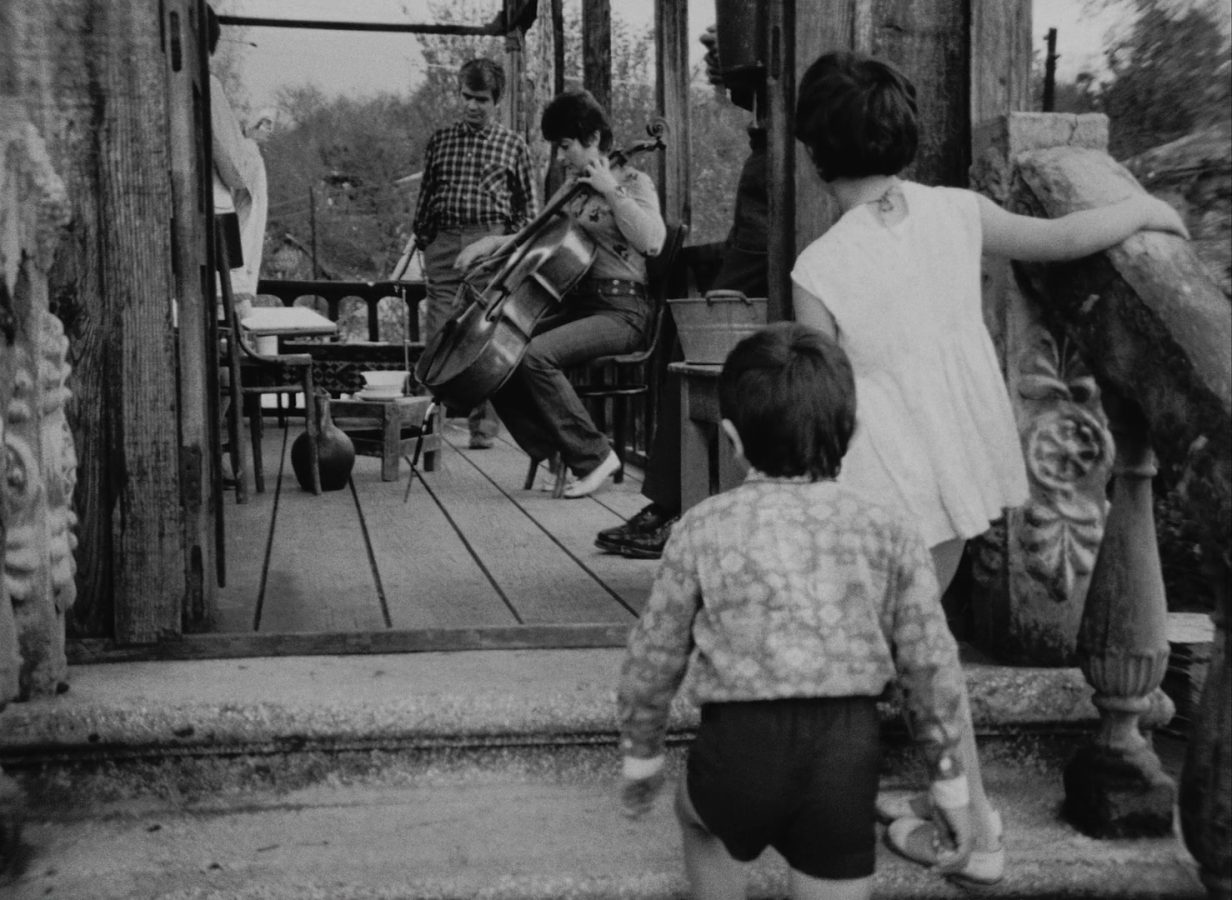
Pastorale (1975)
CAHIERS DU CINÉMA: You once said in an interview that there is a myth around Georgian cinema, what did you mean?
OTAR IOSSELIANI: Georgians are known as a people who are, in theory, nonchalant. In reality, they try to understand life and its mysteries: we can’t get anything out of this world, we arrive naked, we leave naked, we must always part with objects, with wealth, with money. It’s more pleasant to give than to take, and, by living together, we share in the sadness that comes from understanding this phenomenon. We sit around a table and regret that time passes, that we do nothing. We know there’s nothing to do.
The only important thing is to be polite, not to disturb the people around you; they are already disturbed by the fact that they are alive. Why fight? To keep your land, to keep your way of life, your culture. Georgia, which was mainly Christian since the fourth century, was surrounded by Muslim giants: Persia, Turkey, the North Caucasus. It should have been swallowed up immediately, but it resisted until the beginning of the nineteenth century. All alone. At that time, we had 800,000 inhabitants. It was becoming increasingly difficult. That’s why we negotiated a mutual protection pact against the Muslims with Orthodox Russia. All of a sudden, Tsarism sought to profit from this opportunity and colonized Georgia. They killed the entire royal family, bought off the aristocracy, deposed the bishops and patriarchs of the Church, colonized the ancient Georgian Church, older than the Russian Church—a difference of six centuries—and turned it into a provincial, Russified church. Currently, the Georgian Church has regained its sovereignty, and Georgia is gradually recovering its culture and its language, but unfortunately, some things are lost forever.
Georgian filmmakers have greatly exploited the exoticism of their country. In their films, there was singing, politeness, cheerfulness, and nonchalance; they focused solely on the form without seeing the essence of the Georgian spirit and mentality. These directors have a great deal of talent, but they never confronted a serious problem. Only Giorgi Shengelaia and his brother Eldar, Merab Kokochashvili, Rezo Chkheidze, and Lana Gogoberidze acted differently, and it ends there. But they served as an example; the generation of young directors.
That’s why it was so important for me and my colleagues to fight to have Pastorale shown. It’s a film, made within the cultural institutions, where I tried to address certain moral questions of everyday life. We couldn’t say anything against the veto, and finally the film was released in Moscow. To get a film like mine released, you have to expend three years of energy, but in the end, it works.
For example, Andrei Konchalovsky’s second film after The First Teacher (1965), The Story of Asya Klyachina (1966), was fantastic. They didn’t want it released. Yet, two years of struggle from Andrei would’ve sufficed, and the film would’ve been released. Instead, he wanted to turn around and shoot new films immediately, to impress the film stock (A Nest of Gentry [1969], Uncle Vanya [1970], etc.), and then regain his strength to fight for Asya. But afterwards, as we all know, it’s the Rubicon, we don’t cross it. We’re talking about struggle here. But against whom, against what, are we struggling? About that, we know precisely: bureaucrats, civil servants everywhere in the world who embody the “petty-bourgeois spirit.” They can’t love us. It’s almost normal. But in our country, civil servants are supposed to defend things like humanism, progress, goodwill, peace—noble, generous things. So we can, though it sometimes takes a long time, always argue and reason with these civil servants logically. In the end, they have to give in.
Pirosmani (1969) is another example, a wonderful film. How many years did it take to get it released? Two years. Giorgi Shengelaia is weary too, but today he’s still making honest films, and Tarkovsky is the same.
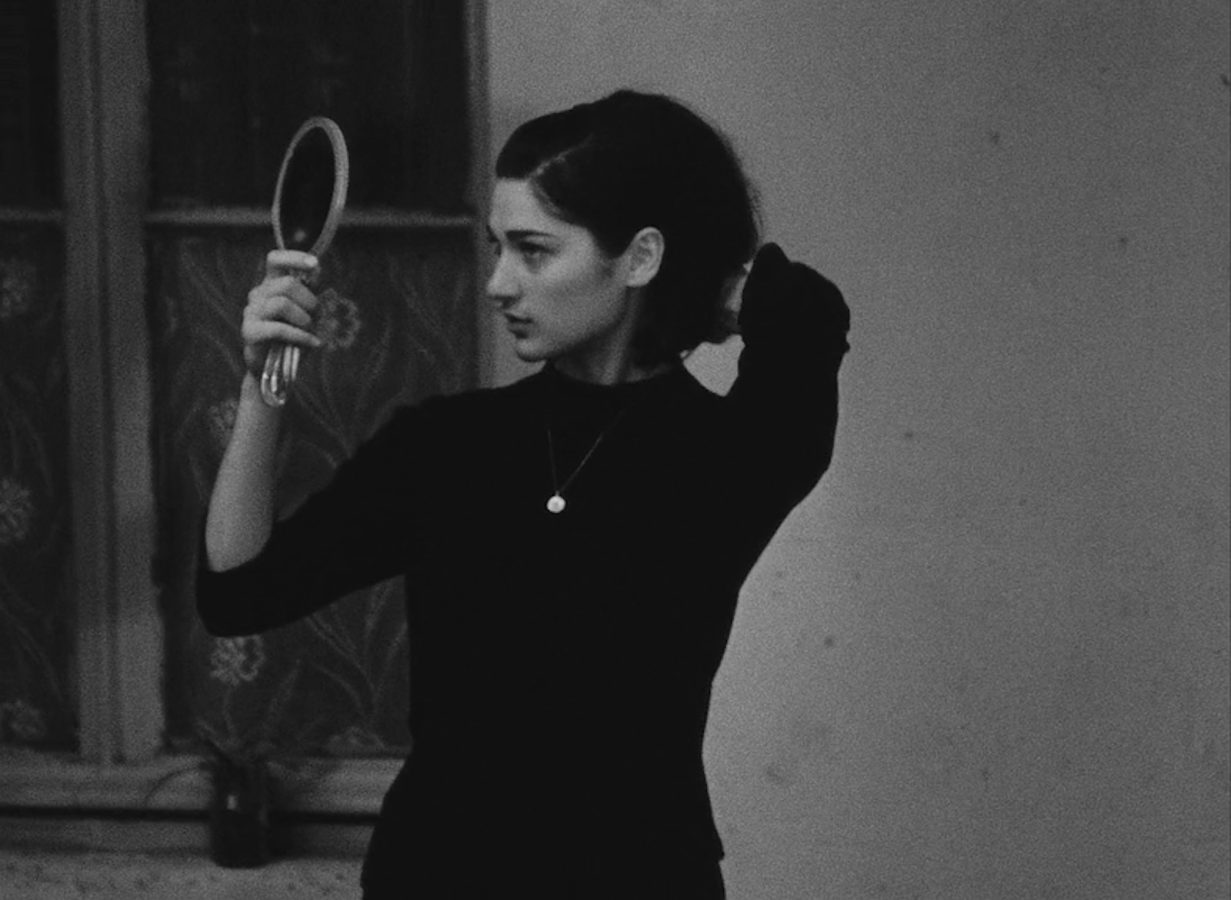
Falling Leaves (1966)
CAHIERS: Not being familiar with the situation, one might think that the authorities want to prevent filmmakers from shooting their films as a way to harass the filmmaker himself. But from what you’re saying, it doesn’t seem the authorities are preventing you from making films, but rather trying to divert your work, to make it minor. For me, this is a revelation, because in fact, there is no censorship.
IOSSELIANI: Censorship, in cinema, is in my opinion quite reasonable; it’s forbidden to make pornographic films, it’s forbidden to make hurtful films, it’s forbidden to be inhuman—it’s censorship, quite simply, but from there you can choose your path. Being a whore, orthodox, lying and saying that where we live is some heaven on earth, that there are no problems, that’s bad propaganda: a country without problems is a dead country. And we live where we live. I’ve discovered that France is no paradise either, not at all. Things are bad in France, perhaps where I live is better, perhaps… I don’t know. I think it’s better in the sense that relationships between people are without inhibitions. We don’t bother ourselves with “You’re richer than me, you’re an idiot, or not an idiot.” Idiots stick together, honest people stick together, people who work with their hands are always honest, there’s no struggle to be ten times richer than the next man. When you talk to someone, you know in five minutes who they are; life experience gives us this ability. If you don’t want to have a relationship with someone, you don’t have to pretend to like them for the sake of your own success; you can always choose confrontation and still hold hopes of winning. In France, the balance of power is different, and that kind of hope is slim. From this perspective, our way of life in Georgia suits me better because it frees me from a lot of false problems. In my opinion, in France, people work like crazy from morning till night to have lunch and dinner, to sleep and wake up, to work like slaves. And in your film industry, for example, knowing who to have lunch or dinner with is also a big deal; it means that life is lost, wasted.
I don’t think you can create heaven on earth, even if you only had to kill one person to achieve it. The people are sinners. But if you don’t want to bother with this nonsense, you need to face your real problems, the real problems of life. From this perspective, Georgian cinema is legendary. The avant-garde and all that, it’s false. In this immense country that is the Soviet Union, there are maybe only five directors who try to follow the path they’ve chosen, Panfilov for example, who is very good, a very honest man; Tarkovsky, he’s a pure artist, but circumstances have pushed him to make films about History, the past, stories set in the clouds, or fantasy; he never touched on the contemporary. With The Mirror, a little. It’s a quality film [film de qualité] and at the same time it has a thought that exists, that pulsates, there are ideas, ideas well articulated, and that’s very important. But we can’t ask everyone to deal with current events, everyone has their own method. Panfilov tried to make a wonderful satire with I Wish to Speak (1975). We can talk about it as such, we can discuss it, but I can’t talk with featherbrains, that’s just not an option for me.
This is an excerpt from the zine Otar Iosseliani: A Georgian Suite, published by Cinema Guild Press. Limited copies will be available for free at Metrograph and available for purchase via Cinema Guild’s website afterwards, here. Comprised of newly translated interviews, criticism and poetry, past publications include texts by and about João César Monteiro, Luc Moullet and Shinji Sōmai.

Share:
Recommended
- Yuliya Solntseva
 On the actress-turned-filmmaker’s unsung authorship.
 - Futures and Pasts: Socrates
 Rossellini’s one-of-a-kind approach to the costume drama, and his 1970 film on the last years of the Athenian truth-seeker.
 - The Illiac Passion
 On the most elaborate of Gregory Markopolous’s modern myths.