
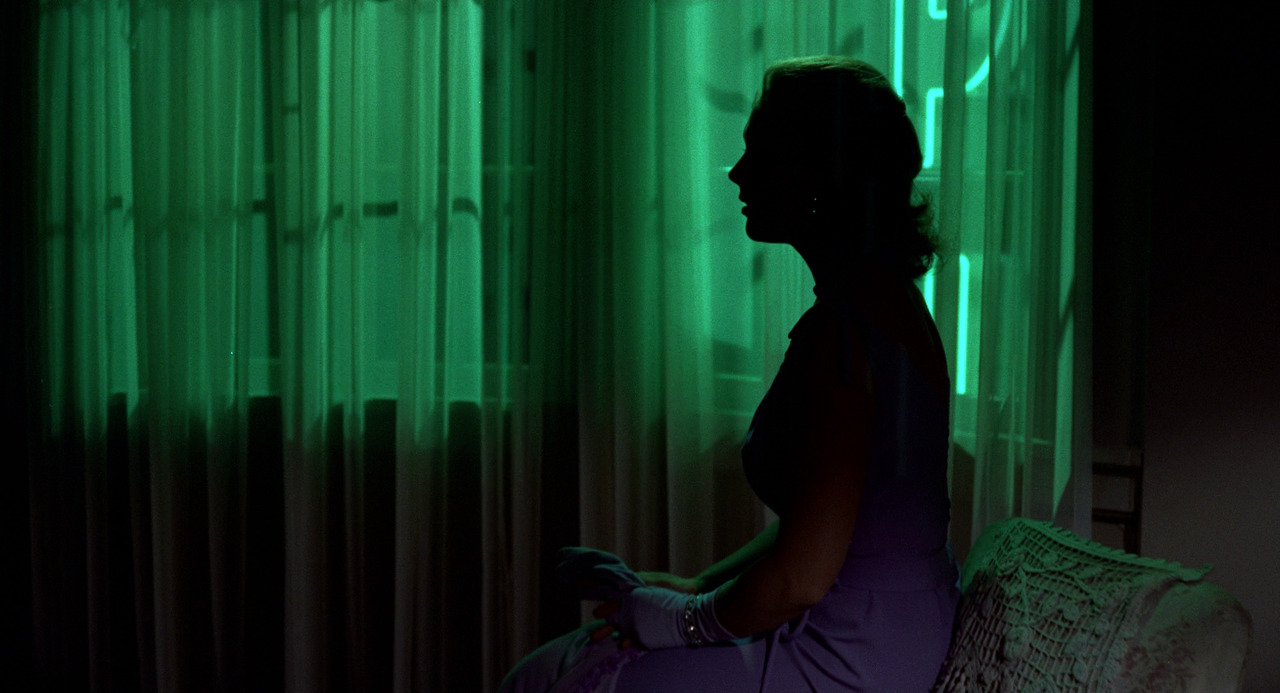
Vertigo (1958)
Essay
In Her Shadow
On women who haunt women.
In Her Shadow, a 10-film series exploring the haunting phenomenon of the female double, opens at Metrograph on Friday, July 31.
Share:
ONE OR TWO THINGS ABOUT the ghost: they are disruptive, usually desperate. They test the borders of the corporeal and invite the living to translate their mysteries, to give language to what has gone untold. This is what the troubled boy medium of The Sixth Sense (1999) discovers, and why the cursed VHS in Ringu (1998) and its 2002 American adaptation must eternally be reshared (the vengeful girl-poltergeist is unmoved by the mere discovery of her grave). The ghost often attracts storytellers (in the forenamed cases, a psychologist and journalist respectively) and children, but is perhaps most drawn to women, never more than when the departed is a woman herself. (It is worth noting here, the “madwoman in the attic”—the quintessential female double—was not just the heroine’s monstrous shadow, but her author’s.)
In and out of cinema, dead women dominate the market, which turns such hauntings into a peculiar theater of gender. (Consider the outsized influence certain late blondes still command in the West—Marilyn Monroe, Princess Diana, Carolyn Bessette—women who haunt women; of course, not men, who can dismiss them as shallow fixations even though, culturally speaking, they represent phantoms of femininity entwined with the masculine: siren, wife, etc.) Put another way, the female specter is a sociological phenomenon. With her storied affinity for ancient houses or crumbling dynasties, she testifies to quotidian gendered violence.
Alfred Hitchcock may seem an unlikely trailblazer in the arena of domestic horror. Stylistic continuity between his British and Hollywood efforts aside, he first arrived at the ideas that popularly define his corpus in his 1940 adaptation of Daphne du Maurier’s novel Rebecca, his earliest American film. Famously, Rebecca is not the heroine of the tale that bears her name. The memory of her, scrupulously preserved by housekeeper Mrs. Danvers (Judith Anderson), is enough to beleaguer the diffident new Mrs. de Winter (Joan Fontaine), who fancies their husband Maxim (Laurence Olivier) remains in love with his dead bride. Death elevates Rebecca to omniscience. There are no photos or portraits, only vestiges of her, namely an elaborate “R” on bedsheets, pillows, correspondence, and various other household items that announce her lasting dominion. Mrs. Danvers convinces Mrs. de Winter to dress up as one of Maxim’s ancestors, seen in a painting wearing an extravagant floral gown; except Rebecca had done the same just the year before. Much to Maxim’s chagrin, Danvers recreates Mrs. de Winter in the image of his lost wife, who otherwise, never falls subject to any gaze (not even in a Hitchcock picture). But nor does she free herself from the blinkered anecdotes of the living, this being the supreme ambition of a ghost. The account that survives belongs to Maxim, who could be forgiven for either intentionally (novel) or accidentally (Hays-censored film) killing Rebecca: promiscuous manipulator, incestuous adulterer, and—most unforgivable—bisexual.
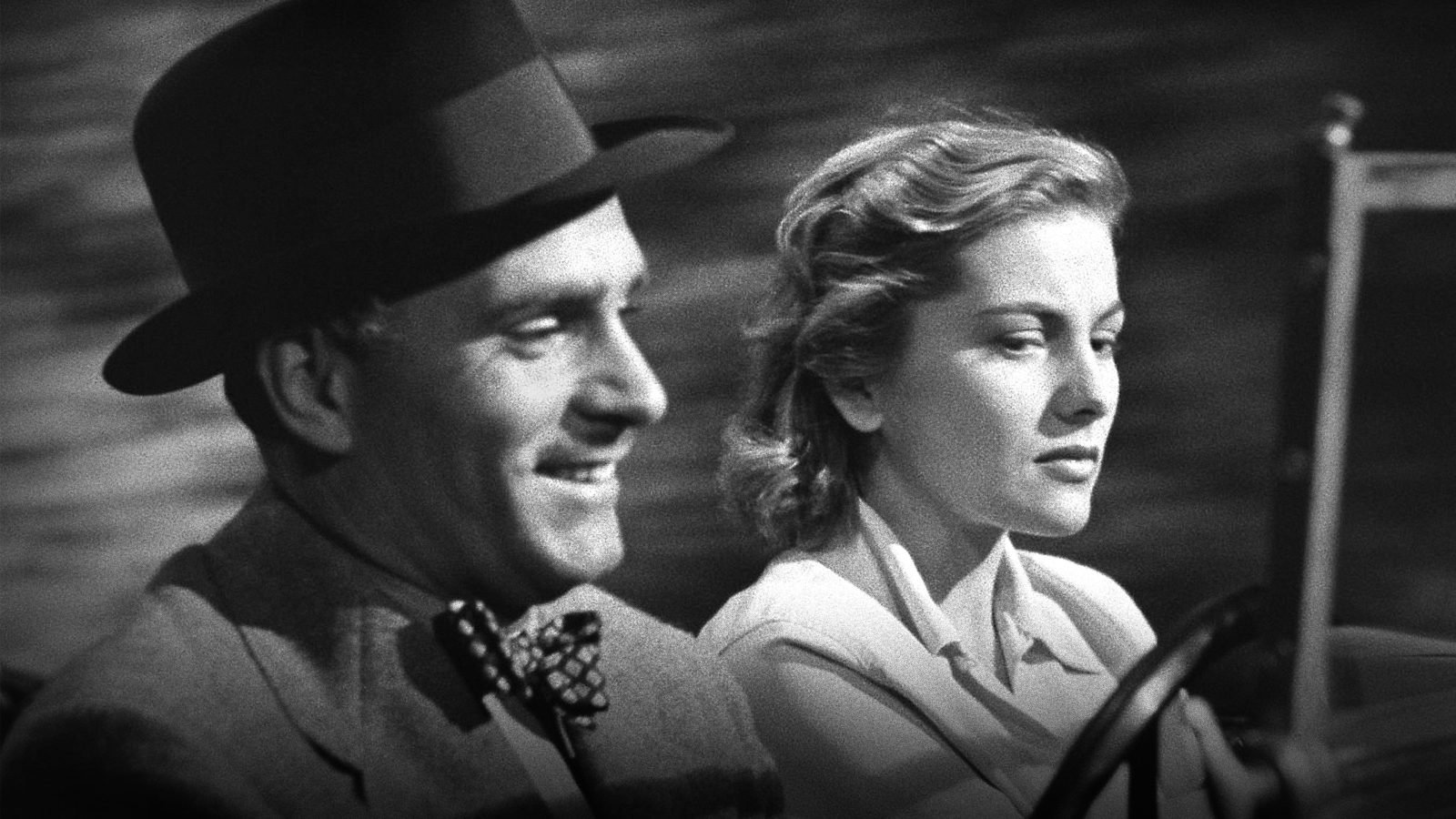
Rebecca (1940)
We might crudely divide the female double onscreen into two major, often intersecting categories that trace their modern roots to du Maurier’s tale: 1) queer, a sign of “insanity” sure to doom at least one of the offending women, e.g. Single White Female (1992), Mulholland Drive (2001), Black Swan (2010); and 2) maternal hauntings, literal or symbolic, largely prophetic because the heroine must strive to escape her ancestor’s fate. (In Kim Jee-woon’s 2003 horror A Tale of Two Sisters, for instance, a girl is literally smothered by her mother’s dead body.) It did not take this long to register the sweep of Rebecca’s prestige—Hitchcock himself recycled the premise a year later in 1941’s Suspicion, also starring Fontaine—and by the mid-’40s a respectable parade of like-minded parables had emerged. Notable among them, George Cukor’s Gaslight (1944), where Charles Boyer drives Ingrid Bergman mad; The Uninvited (1944)—which emphasized its kinship to Rebecca in Paramount’s marketing—about a seaside mansion, home to no less than two ghosts (one lesbian/evil, the other fertile/Romani) battling for the soul of a pretty heiress; and in The Two Mrs. Carrolls (1947), Barbara Stanwyck marries Humphrey Bogart, afflicted with the troublesome habit of slowly poisoning his wives.
The real model for this “endangered brides” cycle is Jane Eyre, of which Rebecca is a frank reincarnation (the in-demand Fontaine would also play the eponymous governess—Mrs. de Winter’s literary foremother—in the 1943 production of Charlotte Brontë’s opus). Jane’s template is even older. In the French folktale “Bluebeard,” an ingénue, orphaned in some retellings, weds an aging aristocrat whose house harbors a sinister secret. The young bride explores and finds a trail of dead women.
The publication of Du Maurier’s novel accompanied the ascent of “hard-boiled” detective stories, so women’s horror found a surprising companion in the noir (notice the Gothic also compels its heroines to become investigators). But the noir was taken seriously at once, for all its neurotic male anxieties around women’s (sexual) independence during the war years. The unsentimental rogue longs to put the duplicitous femme back in her place. More likely, he kills her. This is precisely what the “gaslight films” fear: Suspicion, Secret Beyond the Door (1947), The Two Mrs. Carrolls, the superior Stanwyck vehicle Sorry, Wrong Number (1948), Sleep, My Love (1948), et. al. traffic in women’s ambivalent romance with the domestic. After all, the house is the undisputed realm of women—metonymically the female body, as both patriarchal asset and emblem of motherhood—but men reign there. Manderley must burn because Rebecca still rules it, even from the grave. Whether hers by rights, home is the place where women are captive to the designs of their charming, murderous husbands. Survey this roster of brutes—Olivier, Bogart, Cary Grant, Michael Redgrave, Burt Lancaster!—all the more effective because viewers, like their imperiled wives, can’t help loving them.
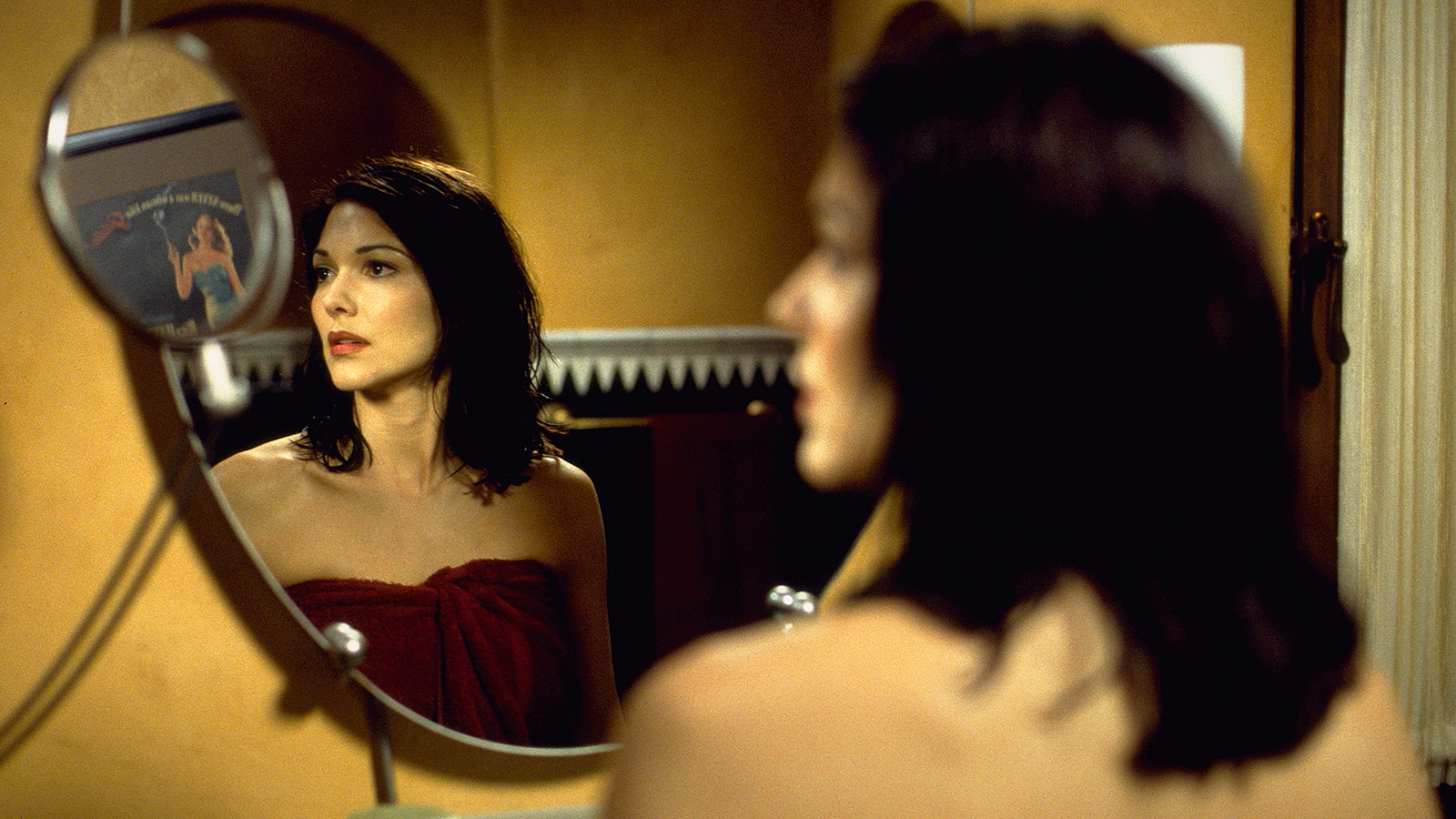
Mulholland Drive (2001)
The genre hinges on this core seduction: how much women will embrace their lives as property, or their complicity in their own subjectivity. The literary Gothic belongs to what has been described as “mass-produced fantasies for women” and its cinematic scion implicates no one so much as the spectator, who may or may not revel in her own victimhood. (One could trace an unbent line from the Gothic to the popularity of true crime.) Post-sexual revolution and Vietnam, morbidly dubbed the “golden age of the serial killer,” the ’70s found little need to reform this generic DNA. Indeed, the same postwar conditions (paranoid men, women’s booming sexual autonomy) enshrined its relevance. The disavowed analog, dead or unseen, reliably heralds destruction. Shadowy doubles abound in Sisters (1972), The Stepford Wives (1975), and (though not quite horror, based on a real murder) Looking for Mr. Goodbar (1977), tales of doomed rebellion against the bourgeois-capitalist family, a ghostly echo of their ’40s forebears.
Fitting, given his affection for twinships, that the ’70s also boasts a spate of films from Brian De Palma flagrantly devoted to Hitchcock. A sprawling genealogy unites Sisters and Carrie (1972) as heirs to Psycho (1960) and Marnie (1964) respectively, but De Palma’s most faithful homage is Obsession (1976). New Orleans businessman Michael Courtland (Cliff Robertson) wanders Italy mourning his wife Elizabeth and their daughter, killed in a botched kidnapping some 16 years earlier, when he encounters Sandra Portinan (Geneviève Bujold), the spitting image of his dead wife. He commits himself to restoring Elizabeth, curating Sandra’s wardrobe and hairstyle into an eerie facsimile as they prepare to marry. By their own admission, De Palma and Paul Schrader, who co-authored the screenplay, borrowed liberally from Vertigo (1958). In Hitchcock’s film, Kim Novak playing, so we believe, Madeleine Elster (born Judy Barton), is “possessed” by the painting of her lookalike ancestor, formerly mistress to a powerful rich man who discarded her after their child was born. “He kept the child and threw her away,” a bookshop historian tells Jimmy Stewart’s Scottie. If mother and daughter are twinned, there always exists in these intergenerational affairs the rumblings of incest. Take Maxim, who prizes his new wife’s innocence above all else, and tells her as much, “It’s a pity you have to grow up.”
Scottie and Michael, meanwhile, are suspended in time. Living doesn’t interest them. Even more than the women, mired in the shadow of the dead, these men are in love with ghosts. Their lovers become mannequins for their frustrated Pygmalion drives (see Hitchcock’s own offscreen propensities): a grotesque exercise in necrophilia. What can come of such sterile unions? Scottie rejects the intimacy Judy tries to offer him by truly knowing her; he can only fuck “Madeleine” (who does not really exist), and Michael marries his own daughter, whose death, it turns out, was faked.
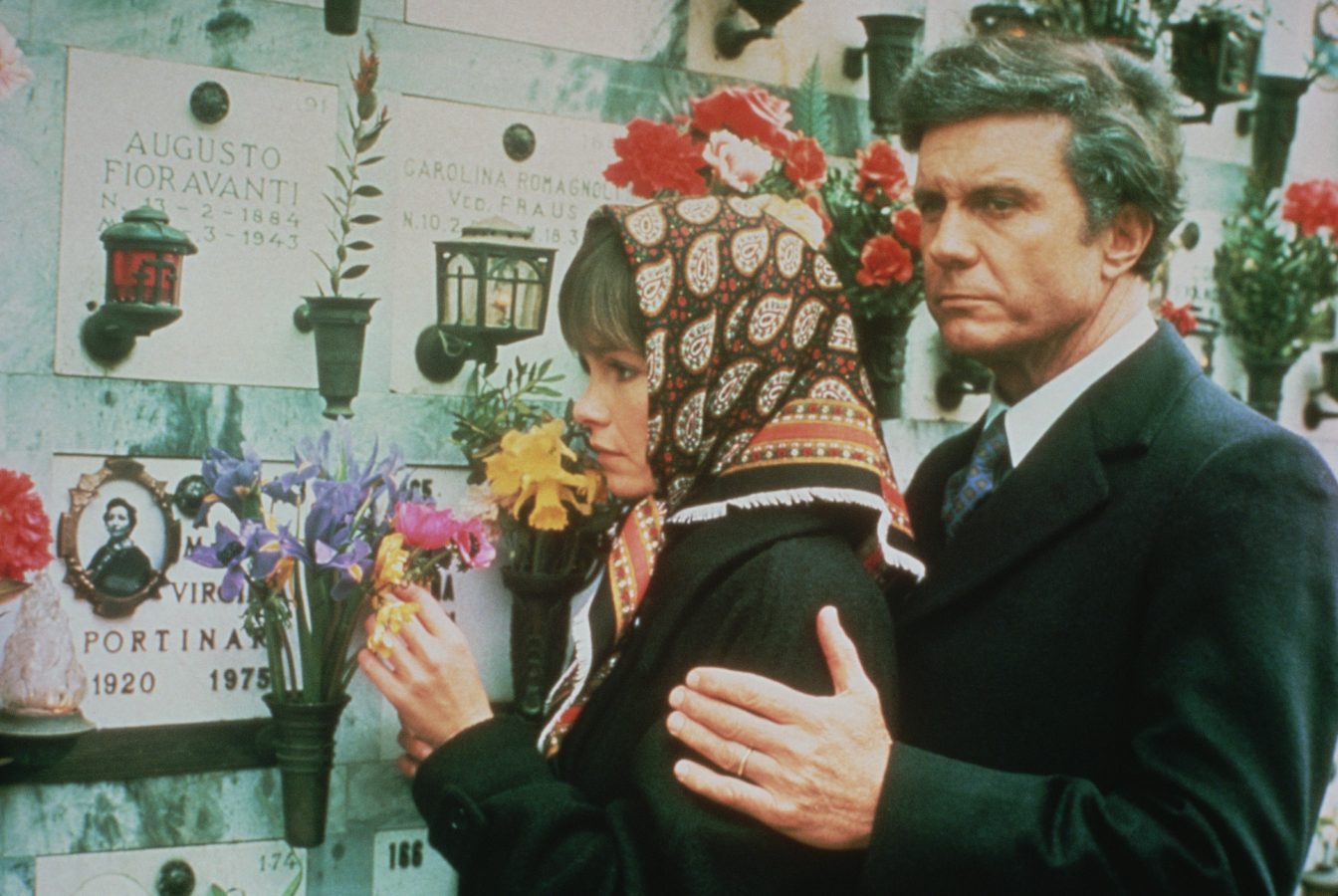
Obsession (1976)
Incest is an institutional pillar of the Gothic because these narratives are principally family melodramas and thus concern themselves, thematically and biologically, with inheritance. The superlative horror cinema of Mexican filmmaker Carlos Enrique Taboada, Even the Wind is Afraid (1968) and Blacker Than Night (1975), conceives of this both legally and spiritually: the living owe the dead. This generally seems to distinguish the American WASP rendition from nearly everywhere else in the world, including the ethnic Catholic countries, where a healthy regard for the paranormal prevails.
This is true, too, of the Black Gothic tradition. In Kasi Lemmons’s miraculous debut feature Eve’s Bayou (1997), our protagonist and narrator, middle child Eve Batiste (played as a girl by Jurnee Smollett), is named for her slave ancestor, who also christens the titular all-Black Louisiana parish where they live. It soon becomes clear that young Eve inherits clairvoyance from this same forebear, as does her thrice-widowed aunt Mozelle (Debbi Morgan), with whom the girl shares a striking physical resemblance. In the prologue, Eve’s confession of patricide locates us in the “summer [she] killed her father” and we learn, true to the Gothic form, that the philandering Louis Batiste (Samuel L. Jackson) may be capable of sexually abusing his eldest daughter. Among the many doublings young Eve enjoys, including her namesake, her aunt, and the conjure woman Elzora (Diahann Carroll), there is also her Biblical counterpart: the first woman and mother—creator, like the Batistes’ progenitor matriarch, and destroyer—who rebelled against the ultimate Father, marked here by the child’s fraught affinity with snakes and the row of red apples that appear behind her at the very moment she betrays Louis.
As the genre evolved, so did its perimeter. The matron supplants the virgin bride—take The Others (2001), The Orphanage (2007), Under the Shadow (2016)—but the ideological project of this fiction persists: how the corrosive tension that pollutes the nuclear family invariably reproduces the national (un)consciousness.
Perhaps American filmmakers (De Palma, Larry Cohen, John Carpenter, M. Night Shyamalan, etc.) so loyally turn to Hitchcock because his domestic noirs wed all the raw materials: voyeurism, sexual perversion, the woman’s image as fetishized object, the depravity tucked away in otherwise ordinary enclaves. Beneath the natural splendor, there simmers a squalid wickedness, coalescent with the erotic. It is worth noting that the third of his “guilty men” triptych, following Rebecca and Suspicion, is 1943’s Shadow of a Doubt (among his earliest films actually set in America; quaint Santa Rosa, CA), where teenage Charlie is doubled not with another woman, but her namesake uncle (Joseph Cotten), a serial killer of wealthy widows. Their incestuous attraction goes unnoticed by Charlie’s mother—more of a mother than sister to Uncle Charlie (curious, in light of his misogyny and the objects of his homicidal rage)—so he can seduce his niece into silence after she discovers his murderous appetite, lest she “destroy” her family with these revelations. For all his on and offscreen foibles, Hitchcock captured nothing so well as the enemy within.
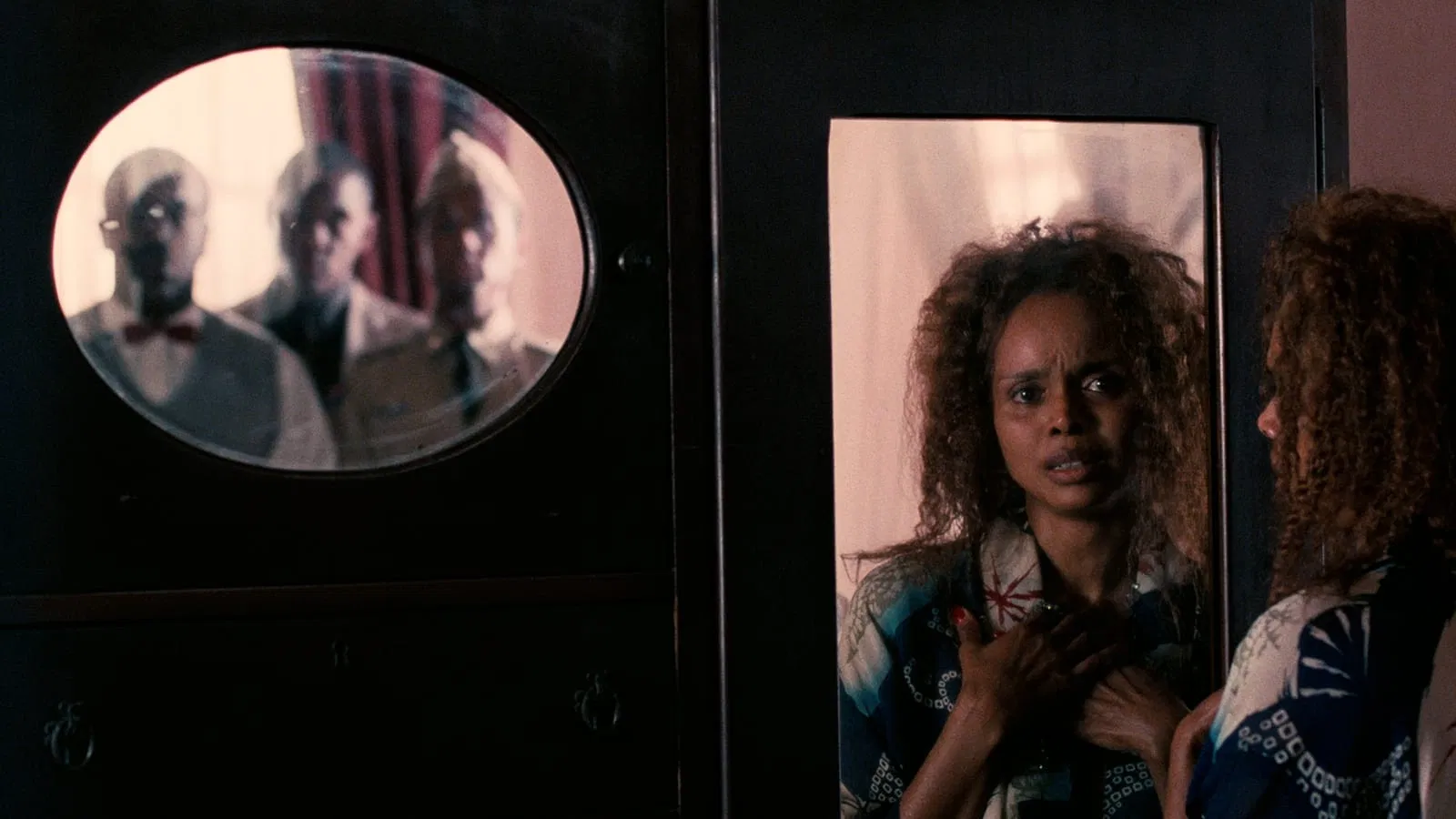
Eve’s Bayou (1997)
Apropos, Robert Zemeckis’s What Lies Beneath (2000) adopts Rebecca’s classical formula with a central inversion. Far from an inexperienced bride, middle-aged housewife Claire Spencer (Michelle Pfeiffer) hears voices around the house; doors open on their own and a stranger’s pallid reflection surfaces in the bath. A gruff Harrison Ford as her professor husband Norman (yet another tribute and omen) responds with exasperation. With her daughter away at college and Norman so consumed with work, Claire often finds herself alone in their stately, lakefront property. She worries that her husband “doesn’t see” her—scholar Tania Modleski considers “a woman’s efforts to get the man she loves to look at her” a foremost Hitchcockian convention—but she sees herself everywhere: the film is almost entirely populated by white, flaxen women. When her amber-haired neighbor Mary Feur (Miranda Otto) abruptly disappears, Claire publicly accuses Warren Feur of killing his wife. But her suspicions betray a cruel irony: all along, her own husband could not be trusted. Claire discovers Norman had an affair with a missing student, Madison Frank (Amber Valletta).
Woman-with-a-mirror imagery usually contains narcissistic implications; in some ways, the queer double films also punish their protagonists for the sin of “vanity.” But while Zemeckis’s film derides the suburban obsession with surfaces, for Claire, the mirror (her many look-alikes included) exposes all that she could not for years bear to face. Alternatively, Norman’s narrow tastes disturb us, in no small part because the much younger Madison so eerily resembles Claire and by proxy her daughter (his stepdaughter), who is around the same age.
If the ingénue of the previous decades must free herself of the maternal cycle (symbolically or otherwise), to elude her fate—repetition, the dreaded uncanny—then the matriarch (again, often figuratively) must confront her own subconscious desire to liberate herself from the confines of motherhood. In a departure from his verismo character studies, John Cassavetes ventures into psychological thriller with Opening Night (1977), about aging actress Myrtle Gordon (Gena Rowlands, obviously) shaken by the freak death of an adolescent fan, fatally struck by a car. Apparitions of this young blonde girl stalk Myrtle, due to star in a Broadway production called The Second Woman, as she plunges into nervous collapse and dipsomania. Her teen dead ringer aside, Myrtle actually has much in common with the “father of American independent cinema” himself, notoriously a heavy drinker. On the play’s inaugural outing, her raw, inebriated performance reveals traces of Cassavetes’s own soulful artistry, the touch of madness and delirious creativity. We nearly forget the phantom girl, the lurking mortality, that shepherds this tale.
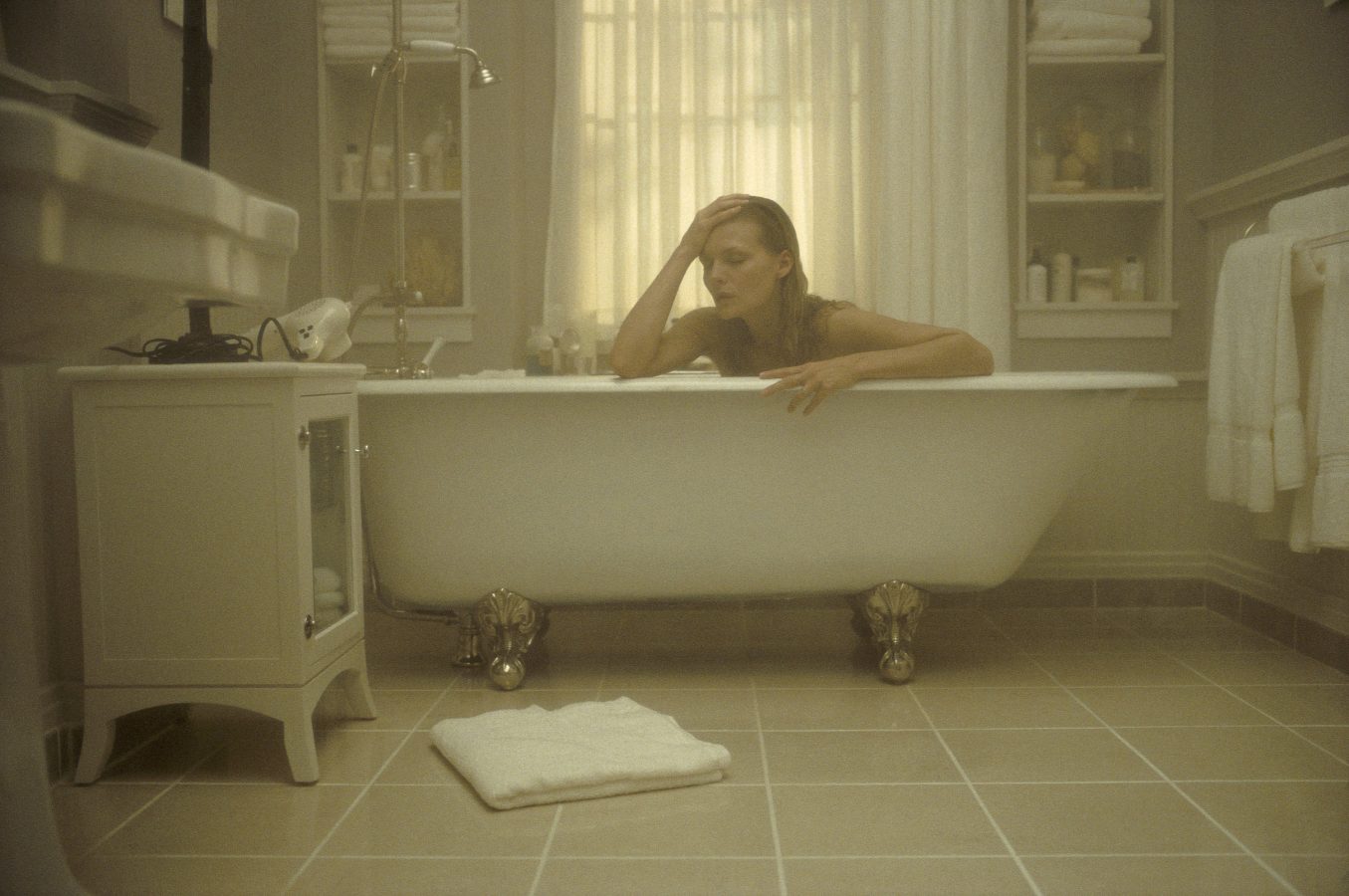
What Lies Beneath (2000)
Cassavetes, his wife’s most admiring portraitist, so often cast her in psychic crisis that she could cleverly trade on her legacy as a madwoman-in-the-attic type for other directors. Take her wry turn in The Skeleton Key (2005), heir to yet another Jane Eyre retelling, Jacques Tourneur’s masterpiece I Walked With a Zombie (1943). Hospice nurse Caroline (Kate Hudson) arrives at an antebellum Louisiana mansion, tasked by its proprietor Violet Devereaux (Rowlands) to care for her ailing husband (John Hurt). In the classical Southern way, Violent seems to live comfortably with the ghosts that occupy her house: Mama Cecile (Jeryl Prescott) and Papa Justify (Ronald McCall), Hoodoo practitioners who were, it turns out, brutally lynched by their white employers. The attic is “their room” although Violet demonstrates a bizarre faculty with the room’s magic, too. Her ostensible “double” Caroline disguises an even wittier twist that attests to a neglected truth: if any spirit truly haunts the American consciousness, it is the captive Black maternal, as bound to its lavish, pre-war manors as the Mammy, fictionally the American household’s long-suffering embellishment.
The Gothic made a natural import for the South, with its rotten past, because this framework is most inclined to accommodate its moral decay: ghosts, madness, incest, the grotesque, etc. (Schrader sets his 1982 remake of Tourneur’s Cat People in New Orleans, where brother and sister were-panthers can only safely have sex with each other.) Black women writers have made native architects of this mode, given its innate preoccupation with bondage and sexual violence. (The Mammy, for instance, safely launders the reality of these women’s experiences in white households, during and after slavery, where they were frequently subject to rape and coercion.) In some ways, their efforts in the genre mark the culmination of its promise.
Steven Spielberg’s adaptation of Alice Walker’s The Color Purple (1985) goes frankly where Rebecca and Jane Eyre cannot—still clinging to fantasies of patriarchal acceptance—when the abused and battered Ciely (Whoopi Goldberg) falls in love with Shug Avery (an electric Margaret Avery), the cherished former lover of her sadistic husband Mister (Danny Glover). Beloved (1998), adapted from Toni Morrison’s novel by, among others, actress Akosua Busia (who co-starred in The Color Purple) and directed by Jonathan Demme, may or may not have suffered under the unwieldy celebrity of its lead actress, Oprah, but this gripping tale takes the form’s conventions to their zenith: fleeing enslavement, a desperate woman slits the throat of her baby daughter (better dead than slaves) only for the wrathful infant poltergeist to return from the dead as a grown woman (Thandiwe Newton), who rapes her mother’s lover (Glover again) and becomes pregnant herself, sealing their embittered twinship.
Beloved elegantly collapses the genre’s centuries-old conviction. If the doppelgänger is already a harbinger of death, then whosoever encounters the wraith has a map to the past and an expression of her worst suspicions. History is a nightmare our heroine is obliged to rehearse until the wound is finally marked, named, felt: embodied in the present.

Share:
Recommended
- Yuliya Solntseva
 On the actress-turned-filmmaker’s unsung authorship.
 - Futures and Pasts: Socrates
 Rossellini’s one-of-a-kind approach to the costume drama, and his 1970 film on the last years of the Athenian truth-seeker.
 - The Illiac Passion
 On the most elaborate of Gregory Markopolous’s modern myths.