
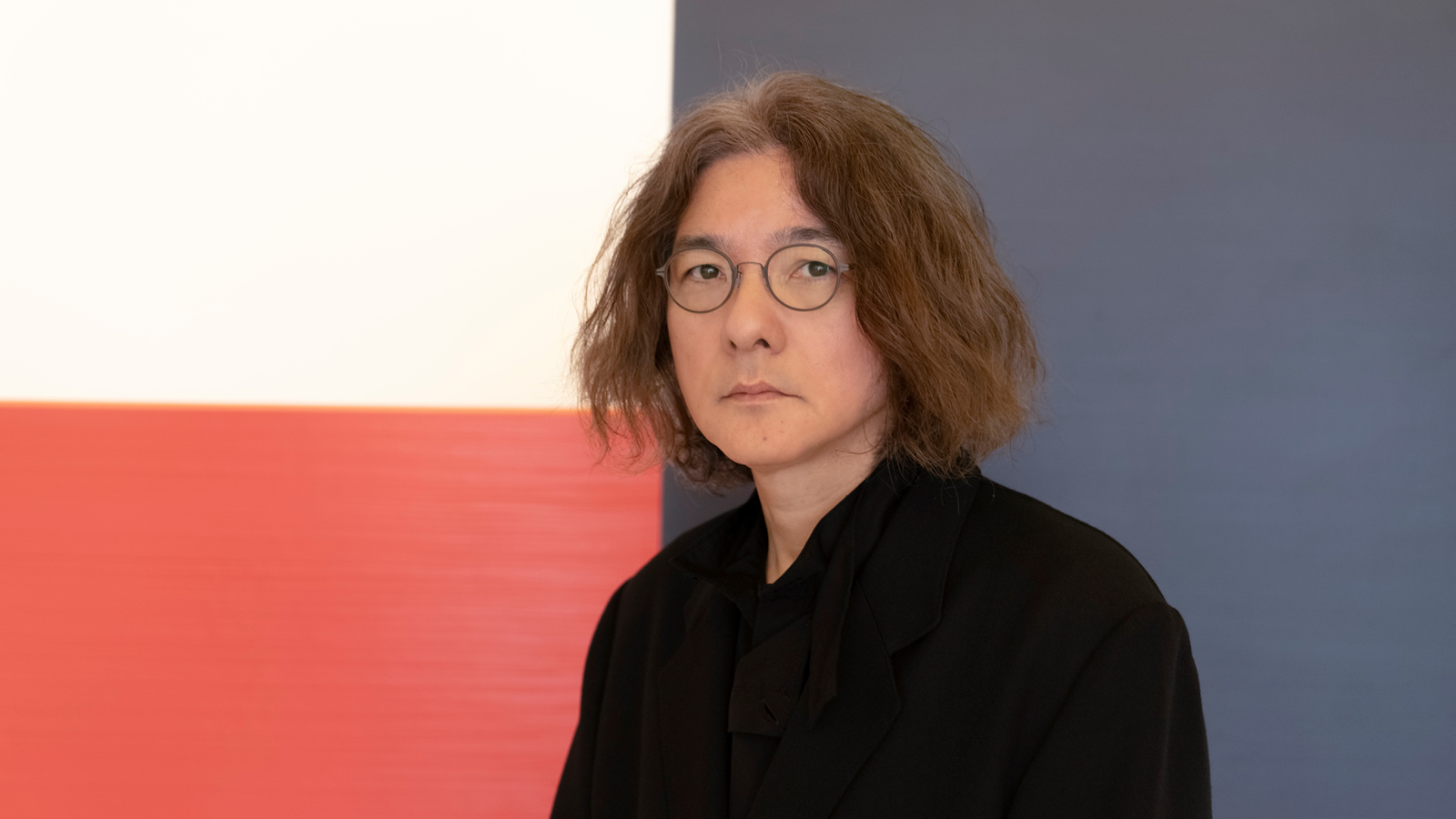
Shunji Iwai, photo courtesy Rockwell Eyes
Interview
Shunji Iwai
A discussion with one of the premier pop poets of the dawning digital era.
The World at Full Volume: The Cinema of Shunji Iwai opens at Metrograph on Friday, June 5.
Share:
FOR MORE THAN THREE DECADES, Shunji Iwai has crafted rapturous films that invite deep reflection on intertwining emotions: alienation and love, desperation and angst. So palpable are the inner realities of his characters that his films become intimate examinations of contemporary existence. The Japanese filmmaker started his career making television dramas. His debut feature, Love Letter (1995), was to have the same fate, but after plans fell through, he quickly rewrote the story from a black-and-white, Ozu-inspired drama to something more expansive. (Iwai would fulfill his Ozu ambitions on a Moonriders music video shortly after). The secret to Iwai’s success, as he sees it, is this desire to embody the headspace of his youth, be it the way small locales can feel grand and sweeping as a child, or the sense of freedom one may feel when making art at a young age. Ahead of Metrograph’s mini-retrospective of Iwai’s works, including the newly restored Love Letter, we spoke via Zoom to discuss his formative childhood experiences, the impact of filmmakers Shōichirō Sasaki and Shūji Terayama, and his approach to directing actors. —Joshua Minsoo Kim
JOSHUA MINSOO KIM: I know you were born in Sendai. What are some formative memories you have of that place?
SHUNJI IWAI: I grew up in Sendai, but I actually moved around [different parts of the city] about five times as a child. I was initially living right near the train station, so it was in the downtown area, but after that I moved around quite a bit. Most of my memories are from the place where I lived from 1st grade to 10th grade—it was a very peaceful countryside, and I remember these vast rice fields.
JMK: Where was this?
SI: It was a [neighborhood in Sendai] called Onoda, which translates to “big rice field.” [Laughs]
JMK: Did you spend a lot of time in nature, whether by yourself or with your friends? And how did being around these rice fields shape who you are?
SI: Outside of school, I’d say that only 10% of my free time was spent with friends. The other 90% of my free time was spent alone, exploring the forests or going into rice fields and catching shrimps, crabs, and frogs.
JMK: Do you think these experiences shaped the way you approach art? Do you see a through line between these experiences and the artist you are today?
SI: Actually, I lived for a year in Osaka when I was five years old; I had been going to a kindergarten in Sendai, but then I learned that we’d be moving to Osaka in the fall. The next kindergarten I would’ve been enrolled in—in Osaka—was completely full, so I spent six months basically not going to school and not doing very much at all. I remember that time being very impactful on me. Even after I started elementary school, it was really hard for me to get used to life with all these other children; I remember playing alone a lot. I was also born into the television generation—we had a TV since the time I was born. I watched things like Ultraman and Tetsuwan Atomu [aka Astro Boy] and other anime. I remember being immersed in those worlds, in the world of television, from a very young age.
I’m also of the generation where there were door-to-door salesmen who would come to sell children’s encyclopedias. My parents thought that’d be great for me and bought me a set. I remember loving them. There were also other kinds of educational books I’d get from family friends and relatives—things like geography books—and the majority of my education came from these outside sources more so than from school. I think I learned at a higher level through those things. I think my experience then, in Osaka, and the experience of growing up in nature around Sendai, are at the core of who I am as an artist.
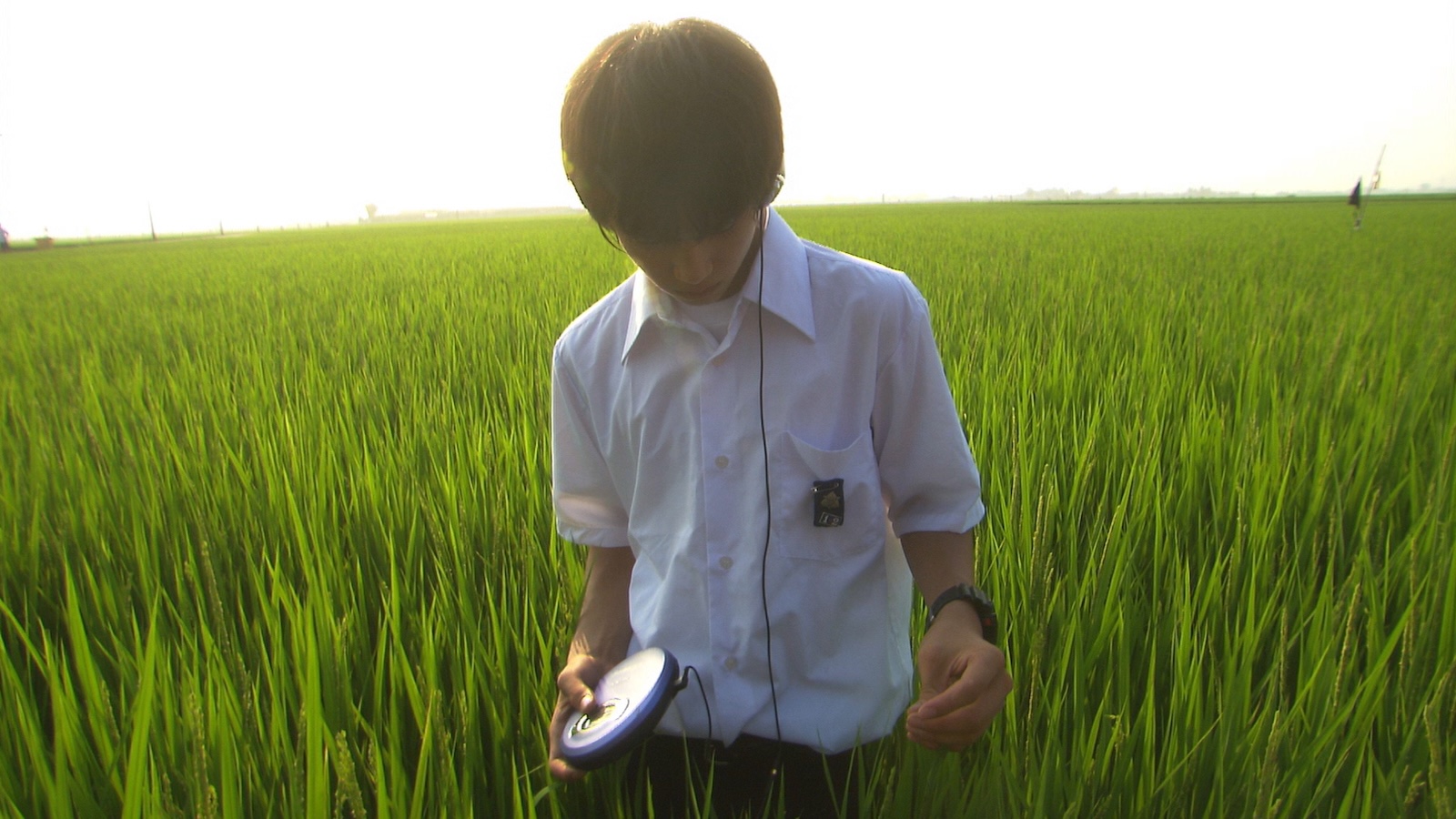
All About Lily Chou-Chou (2001)
JMK: You mentioned that you were part of the television generation. It’s hard for me to watch your films and not think of the works of, for example, Shōichirō Sasaki. Was he a filmmaker you were watching in the 1970s? He made a film called Dream Island Girl (1974) that I really love. And I’m wondering if you could speak to [Japanese public broadcaster] NHK productions and what they meant to you, as I see a lot of their DNA in your work.
SI: My first encounter with Shōichirō Sasaki’s work was in junior high school. It was a film called Akai Hana (1976), which was based on a Yoshiharu Tsuge manga. And then I watched Four Seasons: Utopiano (1980) when I was in 12th grade. There was also the River series (1981-1984), and I watched that trilogy. I definitely think his unique style of expression influenced me. As far as the film you mentioned, Dream Island Girl, I didn’t get to watch that until I was an adult.
JMK: Can you pinpoint what you felt was unique about his filmmaking? What did he do that other filmmakers weren’t doing?
SI: There’s a lot to say, but I think about how he takes fictional stories but then shoots them in the style of documentary—they live in between these worlds of narrative and documentary filmmaking. I also think about his unique use of music, and how he films people among things like rivers, among nature. He mixes these elements together, and I find the result to be quite similar to [the work of] someone like Terrence Malick.
JMK: Was there a moment when you realized you needed to be a filmmaker yourself? Did something spark that for you? I know you started out in the industry making TV dramas.
SI: I first thought that I wanted to become a filmmaker when I was in 12th grade. When I went to university, I wanted to try making movies and, while I was a student there, I made 8mm films. I think that my motivation started there, at least in terms of my ambitions to become a filmmaker. Once I joined the industry, I didn’t know the scope of how I wanted to work or how far I wanted to go, but I did feel that filmmaking was the medium that suited me and how I wanted to express myself. It was only when I was 30 that I started to feel confident that I could make a film.
My transition from making television dramas to filmmaking went quite smoothly—my first film was Love Letter. My goal was always to reclaim the kind of freedom that I had when I was a university student and to approach filmmaking that way. Because I was already working on a commercial level and not making independent films, it could be quite difficult to do that, but that motivation has never changed. And throughout my career, I’ve been able to maintain the expressive freedom I had when I was younger.
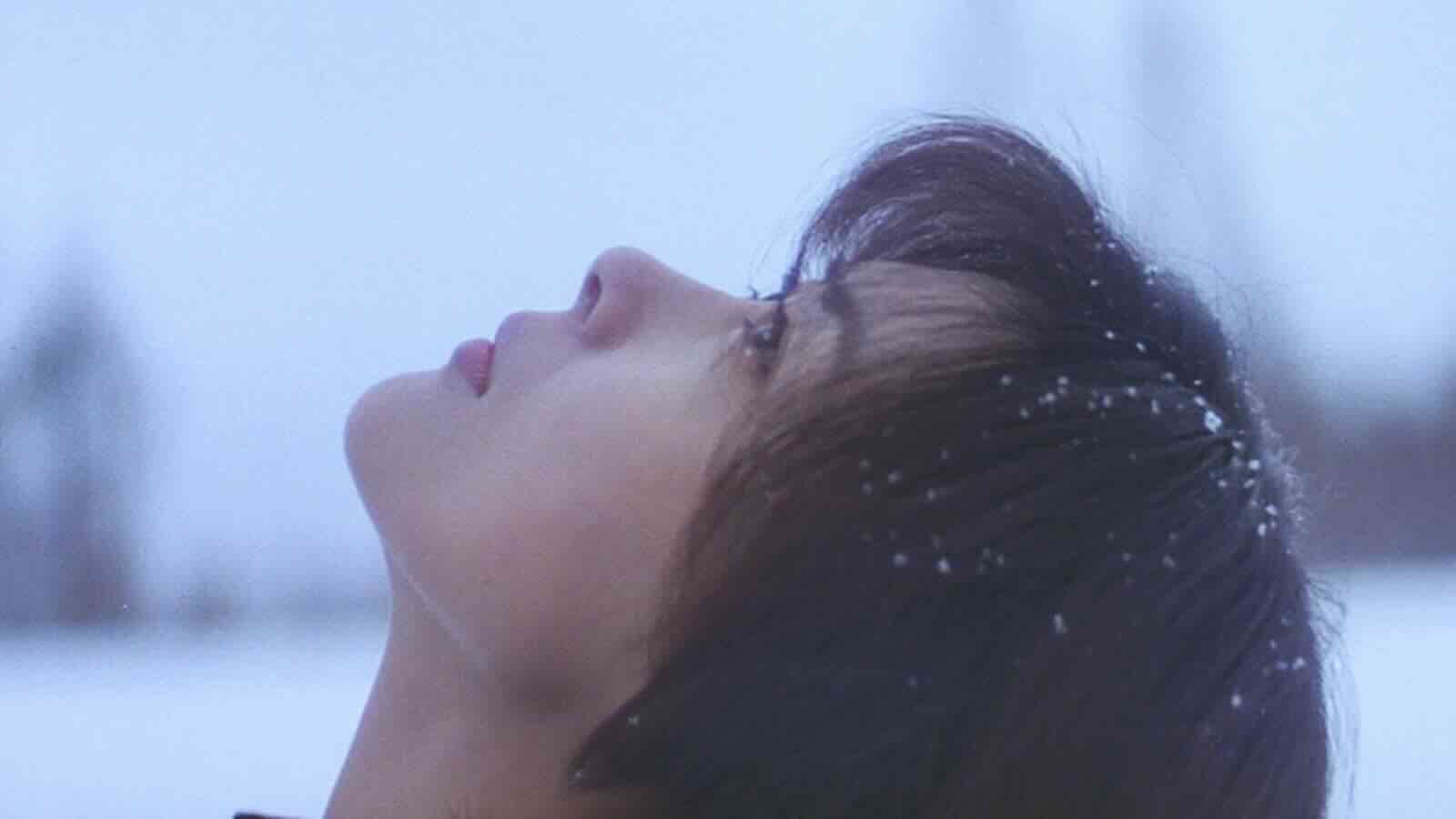
Love Letter (1995)
JMK: Can you speak about your 8mm films? What sort of things were you doing, what techniques were you trying out?
SI: Back then I was definitely influenced by Shōichirō Sasaki, but I was really in love with Shūji Terayama. I would often go to see his experimental films and try to copy his style. My first films were a combination of moving images and music, and they didn’t have a lot of narrative to speak of, but as I began incorporating storylines and narrative arcs, I found them to be really interesting; the latter works from when I was in university are much more story-based.
JMK: You said that you felt more confident once you hit 30 years old. With your early TV dramas, you were already exploring a lot of styles within that time period—something like Lunatic Love (1994) is very different from A Summer Solstice Story (1992). The latter was something that you remade recently, too, in 2023. Are there things you feel you learned about yourself in remaking that film, in light of this conversation about confidence?
SI: Honestly, if I could remake all of my past works, I would. Today, we’re living in a time of increasingly high-resolution images. We’ve gone from HD to 4K and now 8K. And hi-res images are so normalized that we can use our smartphones to shoot in 4K. Back then, we were filming at a much smaller scale, smaller than SD, but it wasn’t something we were even thinking about when we were using that technology. I don’t think most people in the television and film industry were considering the gap in resolution between shooting on 35mm and what we were using for television dramas—we weren’t questioning our methods. Now that we’re in this generation where 4K resolution is so easily accessible, I look at my old works and I think they look quite sad. Maybe we’ll eventually be able to use AI to upscale the images, but that’s going to take a long time. The initial motivation to remake A Summer Solstice Story came from this desire to see it in 4K.
I think of my younger self as my rival—he’s the person I admire the most, in a sense. When I was filming Love Letter, I was constantly chasing after my university-age self—a self that was free and wasn’t held back by anything. I also think about those six months I spent as a kindergartener in Osaka. That was the period where I was probably the most free, and I want to tap into all of the expressions and feelings that organically emerge when I’m at my freest. The fact I haven’t forgotten the initial motivation I had when I was so young… to tap into those feelings is what allows me to continue making films today.
JMK: Is there a ritual you have to tap into those feelings?
SI: No, I just simply try to recall them. When I recall things, I’m basically there. It’s about remembering.

Hana and Alice (2004)
JMK: I wanted to ask how you decided upon Miho Nakayama as the lead actress for Love Letter. Since then, you’ve had other pop stars appear in your films—most recently you had AiNA THE END appear in Kyrie (2023). What’s the thought process behind casting musicians in your films? You’re a composer, too, so I’m curious if you see any importance in having a musical background for acting?
SI: A lot of my casting of musicians has to do with them being in roles that require some kind of singing. But even if they didn’t need to be singing, it’s important for me that an actor appear fresh on the screen. Ideally, I would love it if every person in my film were a first-time actor, that they would appear in my film and never appear in another one—they would only exist in that one single film—but that’s impossible. I’m constantly mulling over ideas for how actors can appear as fresh as possible.
JMK: Do you give specific acting directions to ensure they feel fresh?
SI: I try not to give a lot of direction to my actors. Of course, if they have any questions for me, I’ll do my best to answer, but I do make a point not to give them any detailed direction. When I was making All About Lily Chou-Chou (2001), I had also appeared in a film by Hideaki Anno—the director most famous for Neon Genesis Evangelion (1995-1996)—that was called Ritual (2000). That was my first time appearing in something as an actor, and I realized that when you’re acting, you spend a lot of time thinking about your role, about how to act. Maybe that’s obvious, but when you’re on set, that’s your only job, and you have time to think about it. But as a screenwriter or director, I don’t actually have a lot of time to think through the intricacies of each individual role. That acting experience helped me realize this. Before that, I tried to spend time discussing with each actor about their respective character, but after having the experience of acting myself, I realized I want to trust each actor with the role that has been handed to them. I want them to come to set having thought deeply about their role and trust what they can bring to it.
JMK: You’re a novelist too, and you’ve written books that share the same titles as your films but nevertheless exist as standalone pieces of art. I know that some of these books have been released prior to their corresponding film having any sort of festival premiere. Does the process of writing books help you approach the filmmaking process any differently? I know that the original All About Lily Chou-Chou book, for example, did not have typical prose, but was instead formatted like a series of internet messageboard posts complete with timestamps and usernames.
SI: I understand that there are boundaries between the two different media, but for myself, I can easily and fluidly go back and forth between them. Even though they’re two different mediums, I think about them as different styles of preparation—they’re just vehicles to tell the story I want to tell. It’s like switching out an instrument but playing the same song.
JMK: I wanted to ask about your thoughts on the internet, especially in terms of its role in mediating relationships, and how that’s evolved over time. What did you think about the internet back when Lily Chou-Chou was made and what do you think about it now?
SI: The early internet for me was just emails and message boards. This was a virtual world that you could easily turn off if you turned off your PC. I think the biggest game changer is something like Amazon, where you can get things delivered to your home with a single click. The fact that the internet can be used to manifest these physical objects, and that this has been completely normalized, is one of the biggest changes to the human experience. Of course I use this technology, but I don’t know if it’s good for humanity—it’s a source of concern for me.
JMK: I always end my interviews with the same question and I wanted to ask it to you. Do you mind sharing one thing you love about yourself?
SI: Since I was little, I’ve always prioritized my curiosity. Whether that’s a good or a bad thing, I’m not sure. I’ve prioritized it—so much so that if I ever lost my sense of curiosity, I’d cease to be myself. Once I’m curious about something I just can’t sit still. I think for some people that would be a detriment, but for me it’s led to a lot of success. So, I’m not sure if it’s something I specifically like about myself, but I do appreciate that I can’t hold it back.

Share:
Recommended
- Virgina
 On the rediscovery of a lost film tackling the complexities and pleasures of gender expression in the Balkans.
 - Farley Granger
 On the queer star who defied mid-century Hollywood archetypes.
 - Geraldine Chaplin and Carlos Saura
 On the formidable collaborations of the Aragonese filmmaker and his American muse.