
Essay
Long Live the Republic!
On a slippery, beguiling vision of war-torn Czechoslovakia seen through the eyes of a 12-year-old boy.
Long Live the Republic! opens at Metrograph on Sunday, June 7 as part of Maybe If You Smile, They Will One Day All Return.
Share:
Long Live the Republic! (1965)
A BONY, RAKISH BOY RUNS towards a wide puddle in the road. He jumps to make it over. An invisible gust seems to lift him way up high, setting him down easily on the other side. This is not a moment from a fairy tale, the forces of nature colluding with our young hero’s flights of imagination, but rather one from a war film–albeit seen through the mind of this prepubescent child.
For those fond of Czechoslovak movies of the 1960s, such moments of casual formal elasticity are likely unsurprising. During that decade, a rare combination of lax state control, little to no market pressure, close association with the free-spirited Prague film school FAMU, and a vibrant parallel literary movement feeding into its cinematic sibling led to a flourishing of frantically experimental works from at least two generations of artists, many of whom would later be clustered together by historians and critics as the Czechoslovak New Wave. The somewhat more classical Long Live the Republic! (1965) appeared just as that wave began to amass momentum. The director and writer Karel Kachyňa belonged to the first generation of FAMU graduates after the school opened in 1946, and despite spending the intervening years producing socialist realism films in a very different political atmosphere, like his border patrol drama The King of Sumava (1959), by the ’60s he was breathing in the same heady atmosphere as his more famous New Wave progenitors, and had linked up with writer Jan Procházka, starting a dynamic partnership that would result in numerous infamous, now thoroughly canonized films.

Long Live the Republic! (1965)
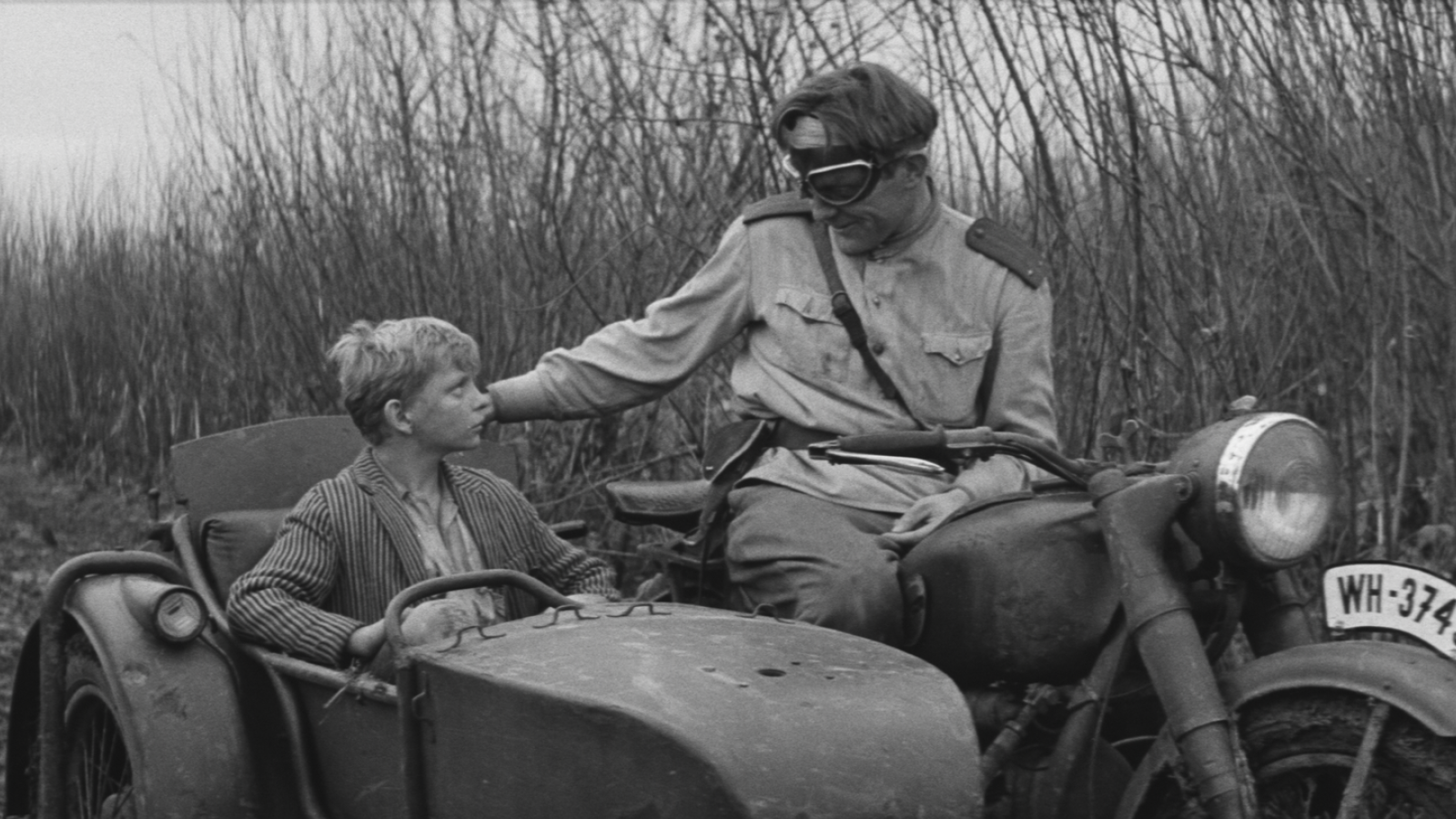
Set at the end of World War II, with German forces in panicked and destructive retreat and the Red Army grindingly trudging west, Long Live the Republic! shows a global conflagration unfolding as the backdrop to the private dramas of children. In theory, this is nothing new: kids have long played a major role in commercial war movies, providing an easy source of pathos and innocence conveniently to set in contrast to the senseless devastation of warmaking. But the team of Kachyňa-Procházka take matters a step further. In Long Live the Republic!, there is a wider adult world of venality, of brute force, of desperation and violence, of exploding shells and looted property, and then there is the world of the children in this small Moravian village, seen through the eyes of 12-year-old Olin (Zdenek Lstiburek). That second world is just as brutal, only in miniature.
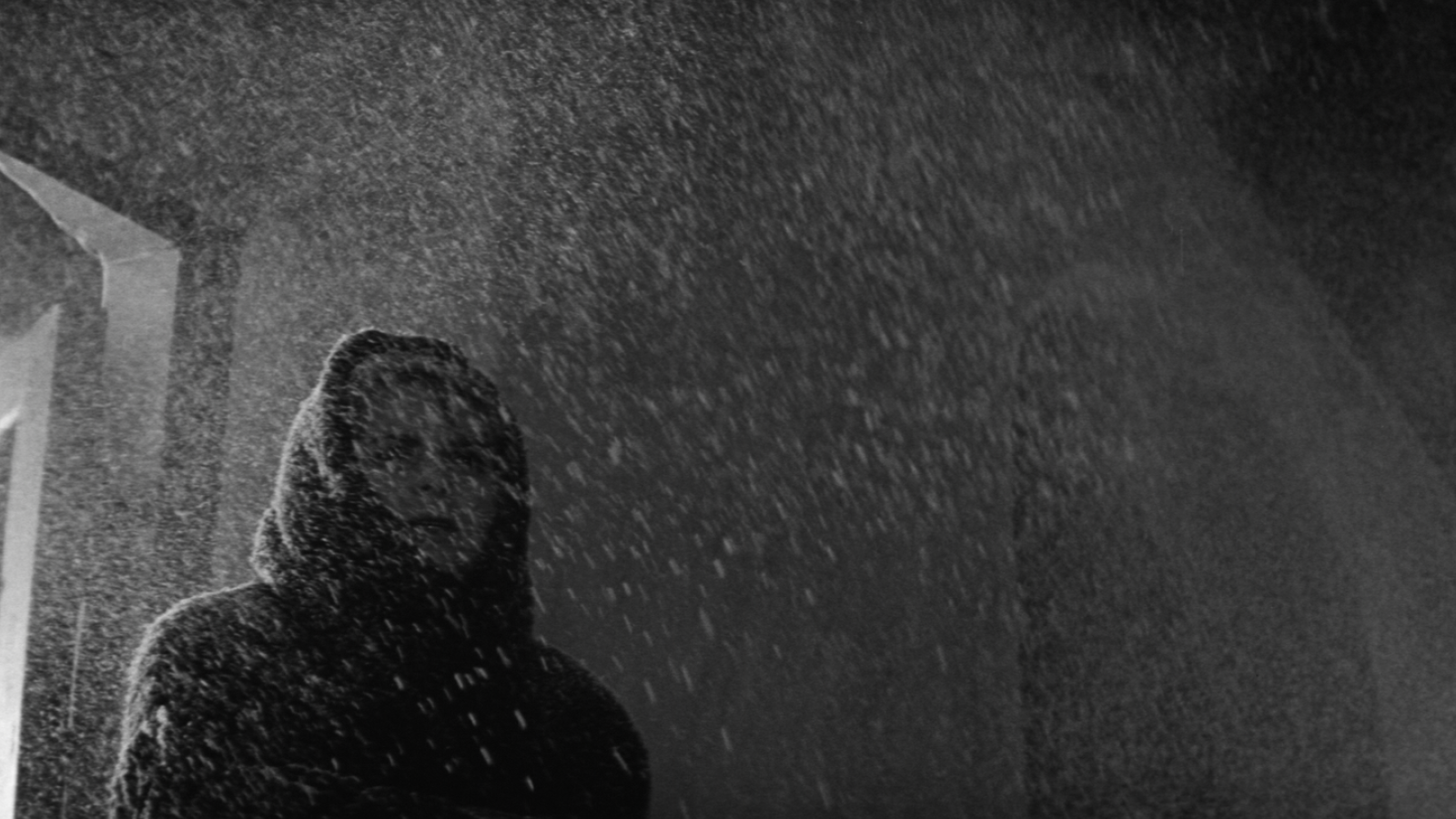
Though the social order is collapsing around him, Olin is too busy wrestling with the vagaries of a lonely, unhappy childhood to pay it much attention. He must contend with ongoing quarrels with the neighborhood kids and a fraught relationship with his violently abusive father. He has a powerful, solitary attachment to nature and to animals–including, later, a horse wounded in battle. Through snow and heavy rain, his mother beckons him to return each evening to a house of shadows, promising futilely that, this time, his father will go easy on him. Because of this, Olin spends his hours roaming the landscape, its grassy pastures pockmarked by the ruin wrought by battle. There is no moral order—at least, not in the theatre of war, which is above all something of an annoyance to him. As we watch that six-year spectacle wind to its ungratifying conclusion on the peripheries of Olin’s story, the capricious rage of his father and the boy’s ostracization from the other kids are far more affecting than anxieties over whatever fate the dreary violence breaking out all around him will bring. Almost perversely, there is no time to think big thoughts about war. More pressing personal dramas require attention.
Soon, Olin ends up at the center of a furious last battle with the retreating Germans. The Soviets are greeted as liberators by the villagers, but to the boy the soldiers are just dumb assholes who tease him even as they shield him from hails of gunfire. From Olin’s perspective, there’s not much difference between the Nazis miserably trekking away through the mud, the Soviets overpowering enemy positions around the village, and those adults that he has grown up with, transformed into cruel monsters by hunger and desperation (Kachyňa-Procházka’s amazing 1966 work A Coach to Vienna, also set during the last days of the war, ends on a similar note of equivalence between Nazi and Soviet soldiers). By maintaining focus on a kid who experiences the war as a disturbance to his own inner dramas, Long Live the Republic! presents something of a Boris Barnet–like, anti-heroic subversion of the beats of most war films, then and now, in Czechoslovakia and elsewhere–a turning inside-out of everything we expect from a movie like this.
Long Live the Republic! (1965)
Throughout the 1960s, Procházka, a loyal party member, turned out one caustically anti-authoritarian work after another, whether the dark satire of religious fervor and forced collectivization The Nun’s Night (1967), or the paranoid political thriller The Ear (1969). It’s not clear if Procházka saw those films as contradicting his faith in socialism; he believed, however naively, that self-criticism was necessary to the thriving of the communist project. Kachyňa in turn brought visionary stylization to their collaboration: a commanding use of impossibly wide black-and-white widescreen, light-blasted white backdrops, and a frenetic, free-associative editing style. Long Live the Republic! appeared towards the start of their artistic partnership and is more restrained in comparison with their other films, and for that I personally find it more gratifying. (New Wave devotees might also notice the name of Ester Krumbachová, costume designer, in the credits for all these films.) By the time of The Nun’s Night, released at the peak of the zeal for New Wave ways of working, the idea of narrative continuity would have little bearing on Kachyňa’s style. That film is a tornado of sounds and images more apt to express abstract notions and sensations than anything like a coherent plot. Even with its manic bursts of formal invention in stylish, wide, wide Cinemascope, Long Live the Republic! represents a midpoint between those dizzying heights of modernist invention and the stolid classicism of the duo’s earlier films. As such, it is a precious and fleeting fusion of the sensibilities of two remarkable eras.
After August 1968, when Warsaw Pact forces occupied the country to put an end to the reformist movement of which these men were a part, several of their most politically pointed films, including The Ear and A Coach to Vienna, were banned or withdrawn from circulation by the new hardline authorities, and Procházka was hounded and blacklisted wherever he turned; Kachyňa, meanwhile, was able to save his skin, shunning his longtime collaborator and making accommodations with the regime. By 1971, Procházka was dead at 42, after being subjected to a sustained smear campaign, which contemporaries and historians see as contributing to his early death; thereafter, whenever his stories were adapted, they would be stripped of their political edge. Kachyňa continued to work prolifically throughout the Normalization years, sometimes directing flaccid regime projects, but just as often, perhaps improbably, making films—often, like Waiting for the Rain (1978) or Golden Eels (1979), also told from a child’s point-of-view—that overflow with much of the same creativity.

Share:
Recommended
- Farley Granger
 On the queer star who defied mid-century Hollywood archetypes.
 - Geraldine Chaplin and Carlos Saura
 On the formidable collaborations of the Aragonese filmmaker and his American muse.
 - Genevieve Yue’s Trains
 On the offbeat pleasures of the train in Genevieve Yue’s new book.