
Extreme Prejudice (1987)
Essay
When Carolco Was King
On the maverick indie studio who ruled the multiplex for a golden decade.
When Carolco Was King opens at Metrograph on Friday, July 3.
Share:
DO YOU REMEMBER WHEN MULTIPLEX movies—we’re talking glossy, obscenely budgeted, star-studded mainstream entertainments primed for blockbuster status—were not only fun, but quite possibly kind of renegade and daring at the same time? For at least a solid decade, a heavy-hitting salvo of the period’s most pop-culture defining smashes, like Ted Kotcheff’s First Blood (1982), James Cameron’s Terminator 2: Judgment Day (1991), and Paul Verhoeven’s Total Recall (1990) and Basic Instinct (1992), were all coming from one studio: Carolco Pictures. They were an indie Icarus who out-stratosphered the Tinseltown majors… until their eventual, debt-laden fall from grace.
Founded in 1976 by the Lebanese Mario Kassar and Hungary-born Andrew G. Vajna, two experienced international distribution agents who’d met in Cannes the previous year, the company initially began so that the savvy pair could cash in on foreign sales. (For those puzzling over the significance of the company’s name, guess no more. It held no personal meaning, as Kassar and Vajna simply found it listed and purchased it from a long-dead company in Panama.) In later interviews, Kassar stated that most outfits back then had “no idea about foreign rights,” nor their potentially lucrative profits. So, sans competition, the duo would pick up, say, the talking vagina laff-fest Chatterbox! (1977), which they sold globally outside the US, or snag an Italian crime comedy like 1976’s Roger Moore/Stacy Keach team-up Street People for $100,000, crank out slick promo materials, sell it in Hong Kong for $250,000, and make a tidy sum.
First Blood (1982)
The issue of quality, however, remained an unshakable, prickly burr. Remembered Kassar, “Most of the films were pretty bad.” In order to raise the standard, Carolco needed to make what they sold; as Kassar reasoned, “I might as well produce my own movie and control my own destiny.”
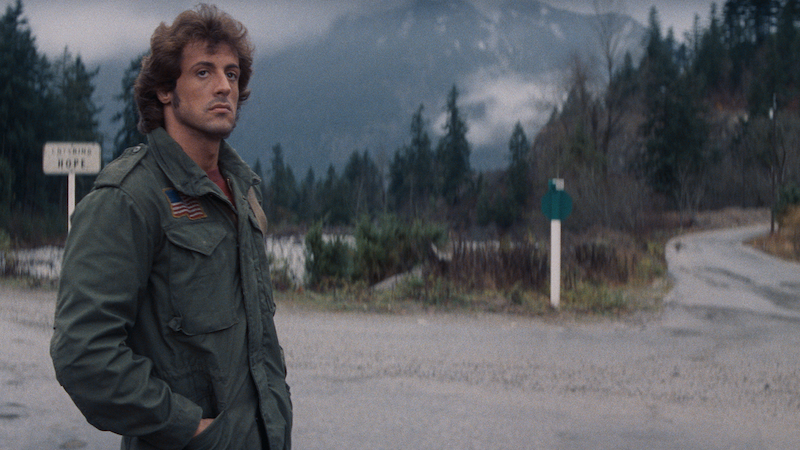
Once they had moved into production, the figure who primed Carolco’s explosive takeoff was a PTSD-plagued Vietnam vet named John Rambo. The rights for David Morrell’s 1972 novel First Blood about the troubled former soldier were with Warner Bros. Actors like Paul Newman and Al Pacino had been considered for the lead role in the film adaptation, but the project stagnated for almost a decade until Kassar and Vajna bought it, and then landed Sylvester Stallone. After grossing over three times its budget, the powerfully somber original (much to Morrell’s chagrin) spawned a rampaging franchise, with the producing duo backing two more hit sequels.
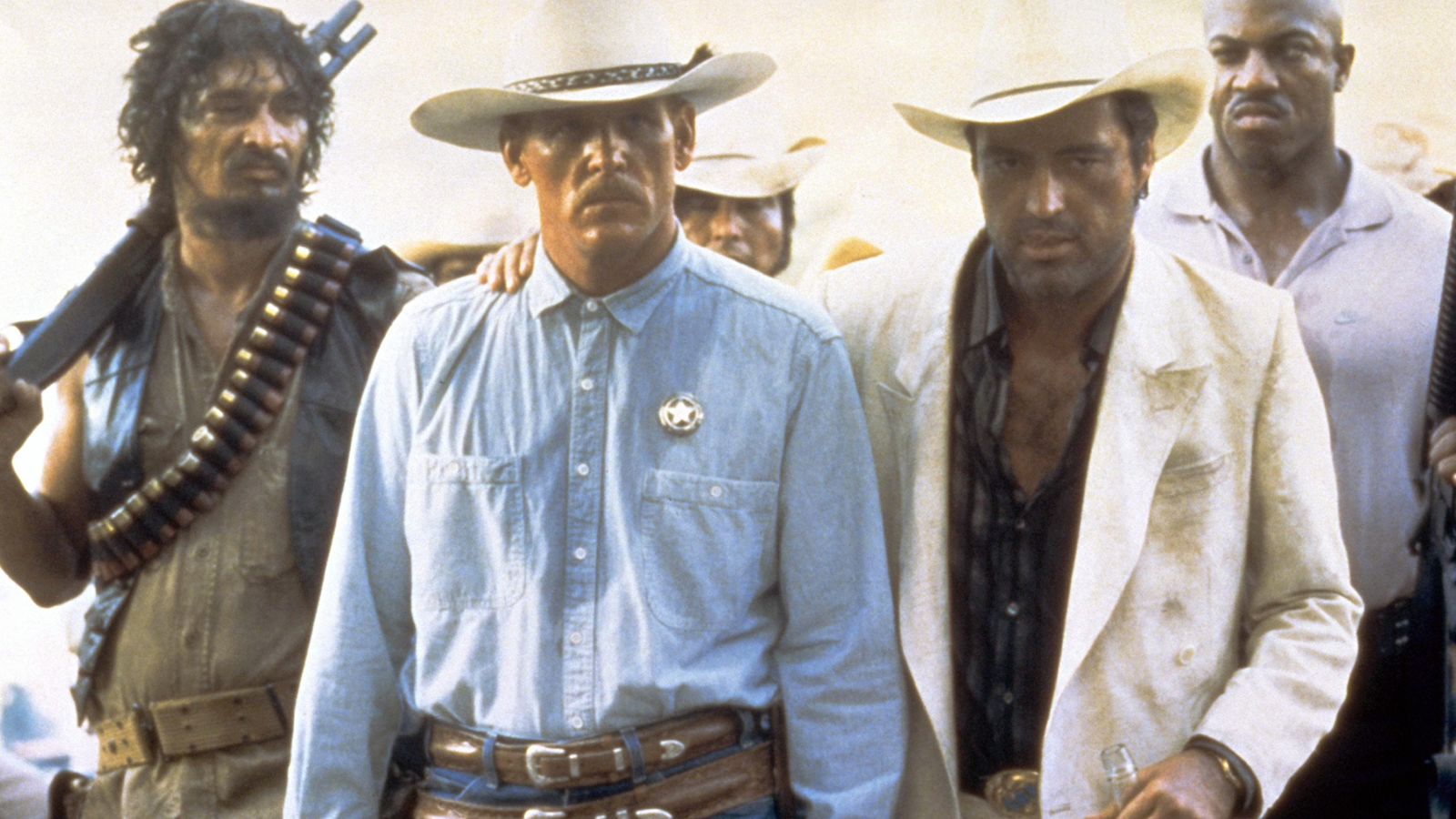
In fact, 1985’s Rambo: First Blood Part II was such a gargantuan phenomenon (earning around 12 times its $25 million budget) that it set a template for the suddenly cashed-up studio. Speaking from his home in LA, Walter Hill—who, with three features, helmed the most Carolco films of any director—recalled to me that his 1987 debut for Kassar and Vajna, the massively entertaining neo-Western Extreme Prejudice, resulted as “pleasant fallout from Rambo. It was a logical follow-up. The military angle was popular. They wanted Jerry Goldsmith to do the score again.” Though its mash-up of drug dealers and covert black ops didn’t strike a chord with US audiences—a damned shame, as it features the most testos-terrific lineup, with Michael Ironside, Clancy Brown, Rip Torn, William Forsythe, Nick Nolte, and a sterling Powers Boothe all running buck-wild—the producing duo’s understanding of foreign markets still made the film profitable, according to Hill.
Deeming the studio a “paradise” and enjoying the producers’ dynamic (“Mario was more creative and project-oriented, and Andy was more of the money man, but they both crossed over into each other’s areas and were a good team,” remembers Hill), he re-teamed with them for the Cold War buddy-cop actioner Red Heat (1988). Though, as with Extreme Prejudice, the palling around of Arnold Schwarzenegger and Jim Belushi fared better overseas, the director astutely declared, “The best thing I’d ever done for them was introduce them to Arnold.” The resulting partnership between the bodybuilding superstar and the wily producers unleashed some of their peak shared critical and commercial successes.

Angel Heart (1987)
Because superstars like Schwarzenegger and Stallone, bolstered by an idiosyncratic but impressive assemblage of respectable directors—Hill, Cameron, Verhoeven, Adrian Lyne (1990’s Jacob’s Ladder), Oliver Stone (1991’s The Doors), Alan Parker (1987’s Angel Heart)– allowed Carolco to pre-sell projects internationally, the company were often getting paid upfront by overseas distributors angling to release those movies in their territories, keeping the cash flowing in. This seemingly infallible model, per Hill, “emboldened [Carolco] to offer higher than the going rate for talent.”
And yes, the excesses over the years were mighty: record-breaking budgets, a personal Gulfstream III jet for the Austrian muscleman, an unheard-of-payout to screenwriter Joe Eszterhas for Basic Instinct, extravagant festivities at Cannes that became the most sought after party invites on the Croisette. Kassar crowed, “We were like the kings of the festival.” But tempering notions of complete fiscal recklessness, Hill stressed, “They were businessmen. They were putting a lot of money into their products but were averse to taking chances with oddball choices.”
Hill adds that, in his case, at least, “They were very respectful of my filmmaking. They never got in the way of shooting.” After screening the final cut of his gritty crime pic Johnny Handsome, he recalled that they were vocally less than thrilled with the downbeat fate awaiting Mickey Rourke’s titular protagonist. However, after Hill explained the finale was one of “dramatic inevitability,” they conceded. “They may not have understood what I meant,” says Hill, “but they still let it go.”
However, the spending began to take its toll—especially on the more business-focused Vajna. Throughout the ’80s, Carolco made investments, purchases, and partnerships at lightning speed to build distribution channels, and increase its IP holdings and control over every step of their entertainment pipeline. In his estimation, “We were trying to become a major studio. I felt that was the wrong direction.” And so in December 1989, Vajna sold his shares to Kassar, and formed his own studio, Cinergi Pictures.
Total Recall (1990)
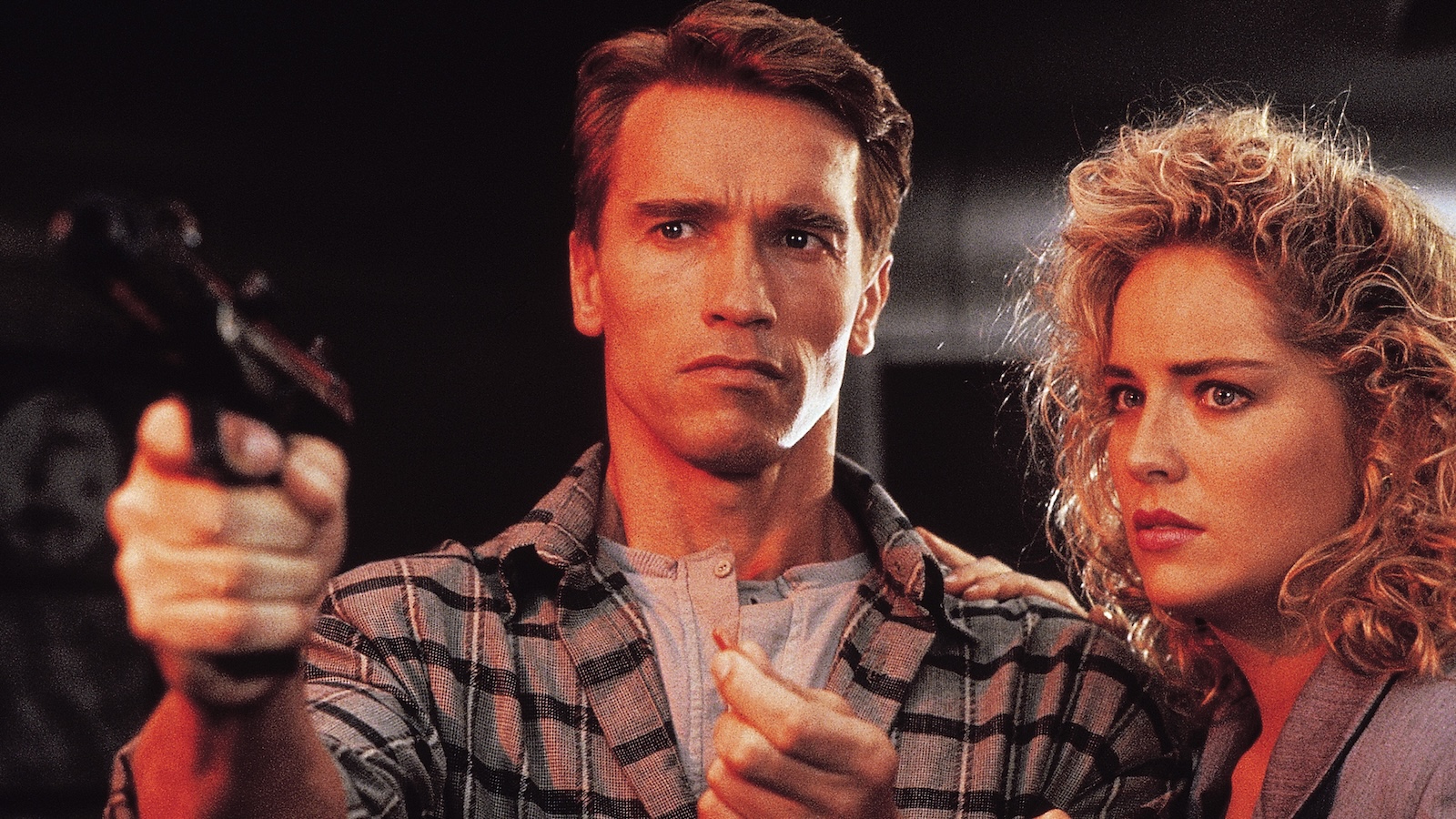
Kassar, however, continued to fly high. He teamed with former tax attorney Peter Hoffman, who became Carolco’s president and CEO, in tandem with some of the company’s most noteworthy hits. Verhoeven, the Dutch provocateur who seems to find new and wonderful ways to piss people off with each release, unleashed eye-popping levels of on-screen gore and sexuality in the one-two punch of his sci-fi mindfuck Total Recall, and the erotic thriller Basic Instinct, which catapulted Sharon Stone (who stars in both) into a household name. Each film required snips and, with the latter some alternate takes, to dodge the dreaded NC-17 rating, and Basic Instinct faced severe public outcry over its depiction of bisexual women as murderous and predatory. Nevertheless, Carolco milked the controversies and, like Nero of yore, gave the people what they wanted: they became the fifth and fourth highest-grossing pictures of their respective years.
(As an aside, I will add that the most frequently seen logo for the company—a blue laser-like glow that traces out a single line and trails into a stylized nesting of concentric Cs—is best deployed at the head of Total Recall. The usual Goldsmith synth and symphonic flourish accompanying it is traded for the composer’s own score for the film, and when the icy synth bed of “The Dream” is punctuated by militaristic snares and brassy blasts as the branding forms, spectacle is audaciously guaranteed, not unlike the way Handel’s “Sarabande” anchors Saul Bass’s classic Warner Bros. emblem before 1975’s Barry Lyndon.)
The lofty heights scaled by the dual Verhoeven pictures would remain unmatched for the remainder of Carolco’s days. With its ever-ballooning budget, constant rewrites, casting changes and the challenges of filming on the open seas, the 1995 Renny Harlin–helmed pirate adventure Cutthroat Island is often blamed for the total collapse of the studio in November that year. Starring the director’s then-wife, Geena Davis, and Matthew Modine (a replacement for Michael Douglas, who bailed when he realized his character would receive less screentime than the heroine), the movie is undoubtedly a perfect example of Hollywood hubris run amok. But Hill, for one, adamantly believes a lot of misrepresentation of Carolco resulted from the press’s singular focus on this swashbuckler. “The common feeling is they went broke because they overspent on the movie, but the truth is they made investments that were unsustainable.”
In 2016, Kassar echoed this take, saying, “No matter what I was doing on the film side where we were making money, I had people working with me either acquiring companies or investing in things that didn’t do well… I can only blame myself. If I didn’t say ‘yes’ nothing would have ever happened.”
And it’s Hill who perhaps best distills the crucial contributions Carolco made to film culture, no matter what corporate folly may have sealed their fate. “They made hugely successful films with respectable casts, defied the system, and managed to have a good time during that period. They raised their profile in an era when the majors were perceived to be the voice of American films, and really broke the studio stranglehold on things.”

Share:
Recommended
- Virgina
 On the rediscovery of a lost film tackling the complexities and pleasures of gender expression in the Balkans.
 - Farley Granger
 On the queer star who defied mid-century Hollywood archetypes.
 - Geraldine Chaplin and Carlos Saura
 On the formidable collaborations of the Aragonese filmmaker and his American muse.