
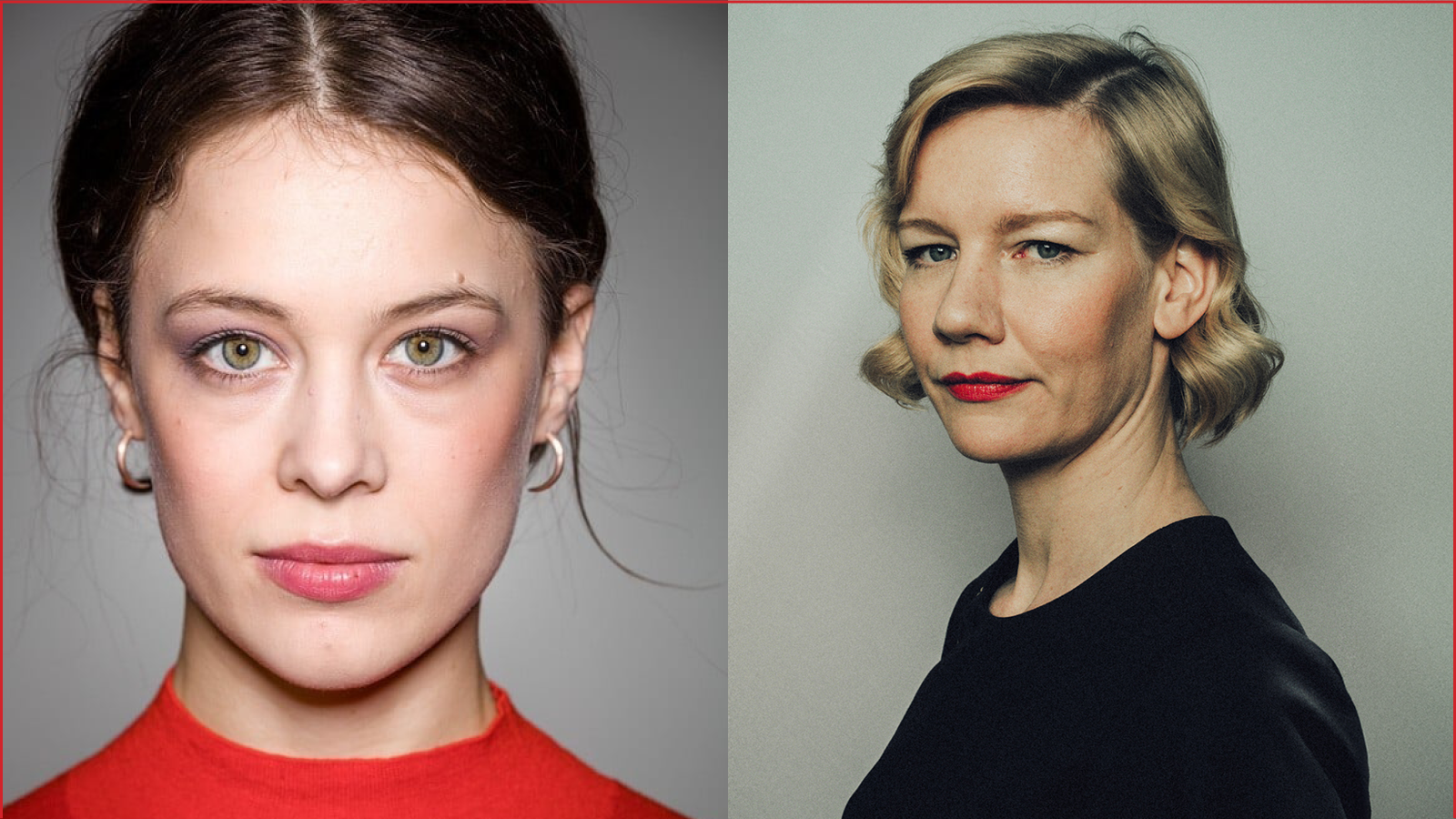
Interview
Sandra Hüller
The German actresses discuss their ascendant careers.
Share:
AMID YEARS OF FEVERISH DISCOURSE lamenting the decline of the “movie star,” Europe seems to have had no shortage of international breakthroughs. Germany, in particular, can boast of a long line of immensely accomplished performers: from Christoph Waltz to Daniel Bruhl and, lately, Nina Hoss and Franz Rogowski. But perhaps no one has enjoyed a more triumphant past year than Sandra Hüller, among the most quietly compelling actresses to grace the big screen in recent years. The incredible one-two punch of Zone of Interest (2023) and Anatomy of a Fall (2023), for which she garnered an Academy Award nomination for Best Actress, cemented her as a formidable talent, not merely versatile, but intricate in her execution.
Of course, Hüller is no stranger to praise by now, given her long and successful tenure abroad: she has won equal accolades for her textured performances in Toni Erdmann (2016), Sibyl (2019)—her first collaboration with Anatomy of a Fall director Justine Triet—and I’m Your Man (2021). Yet another young German actress to watch is the stunning Paula Beer, who has made admirable strides at age 29, thanks especially to her partnership with filmmaker Christian Petzold who has directed her rich, winsome performances in Transit (2018), Undine (2020), and most recently Afire (2023). In honor of Metrograph’s five-film retrospective on Hüller, Beer and Hüller spoke via email about their careers, process, and burgeoning success. —Metrograph

The Zone of Interest (2023)
PAULA BEER: Which project/role has helped you grow the most?
SANDRA HÜLLER: I naturally want to mention the current one first. For the Ruhrtriennale [music and arts festival], I am rehearsing a performance with music by PJ Harvey together with Ivo van Hove, Liesa van der Aa, and the dance collective La Horde. It challenges me on many levels. My body, my soul, my brain. As such, I don’t think I’ve ever done anything this challenging. Then, my work with Johan Simons at the theater helped me grow a lot overall, as did working with Maren Ade, Jonathan Glazer, and Justine Triet. I also developed new skills and insights from shooting Rose (2024) with Markus Schleinzer. I think your question is important, because for me that’s what the work is all about: growth. As a person and as a performer.
PB: What defines success for you?
SH: I find it difficult to answer this question because it’s a word I hardly use, if at all. Neither in conversation, nor in my thoughts. I tend to ask myself: what do I find satisfying? The experience of work is what I find satisfying. Often, it’s the group of people I spend time with on a project, my connection with them, the respect I have for them and receive in return.
PB: Do you experience loneliness in your job?
SH: Yes. A lot, in fact. It’s often also by choice. I don’t find it easy to be around people after rehearsals, shooting days, or performances. Except for my family. I feel that I need time to process what I’ve experienced, thought, and learned. It’s often lonely. Sometimes in a good way, sometimes it also hurts a little.
PB: What was the most formative moment in your career?
SH: The decision to join the permanent acting ensemble in Jena at the start of my career was certainly formative. It was a small ensemble, I wasn’t so exposed, I could try things out in a protected space. The experience of shooting Requiem (2006) with Hans-Christian Schmid set standards for me in terms of how to work on set. I could repeat my answer to your first question, because there might not be one moment to single out. I would of course like to know your own answer to this question.
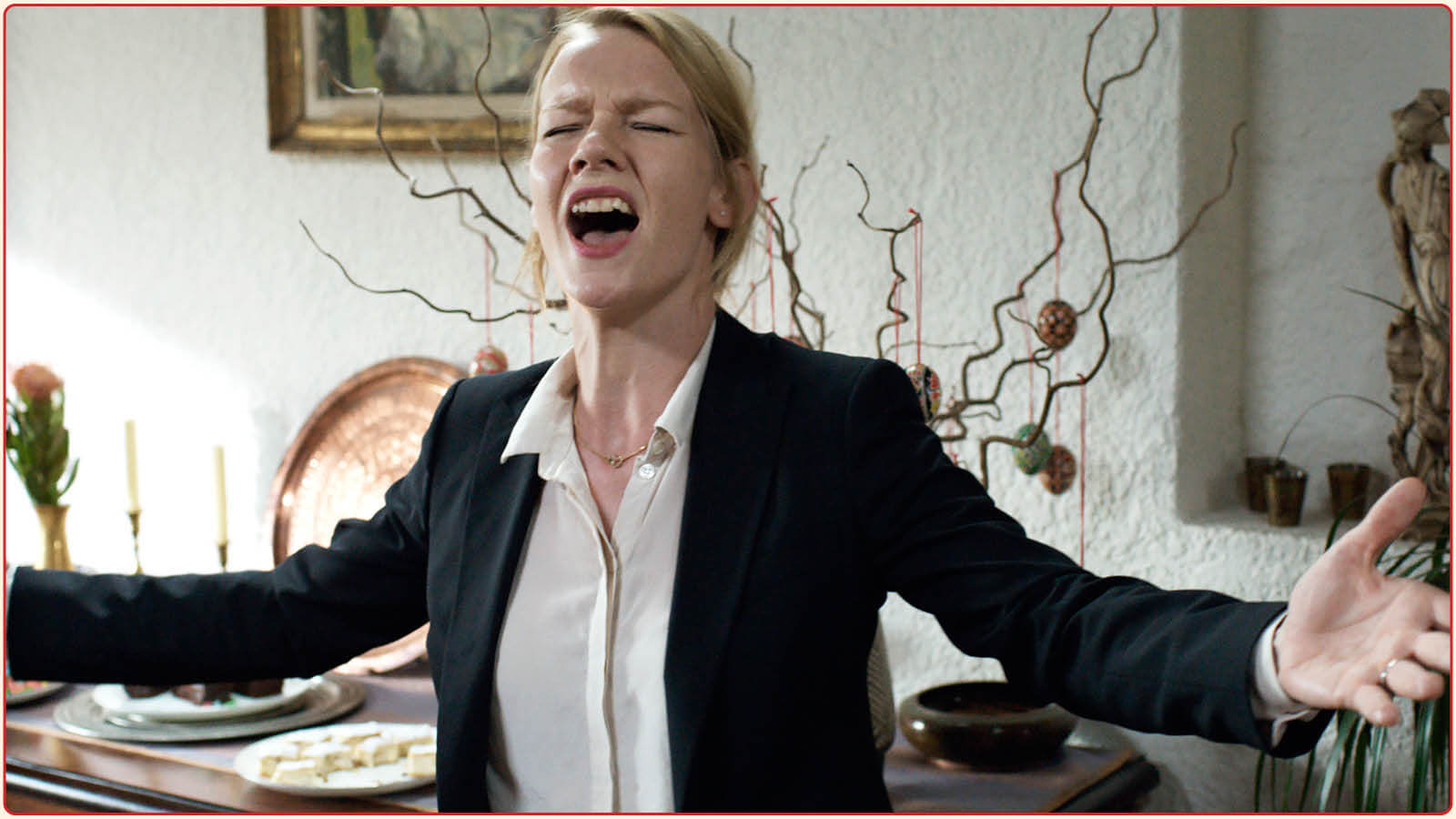
Toni Erdmann (2016)
PB: I think, like you, the beginning of how I got into acting and film was particularly formative. When I was 12, I went to rehearsals at the Friedrichstadtpalast three times a week after school and that was the best time of the week for me. I was 14 when I made my first film and saw the whole thing more as an adventure than a job. And it stayed that way for a long time. Since I then only worked in film, I also felt the pressure of the few rehearsals and trials more and more, and my preparation became more and more detailed. Since working with Christian Petzold, I have a new confidence and ease in this respect. What did you learn the most from?
SH: The foundation for everything is probably my training at the Ernst Busch Academy of Dramatic Arts. Then comes the act of observing, watching.
PB: To me, acting in the theater seems like a different profession than acting in front of the camera. How do you experience this and what do you get out of both?
SH: I don’t find them that different. The process of rehearsing is different to the shorter moments of filming; the potential of making mistakes is incomparably higher in the theater. The thinking and feeling, however, is the same. It’s only the form, the vessel that is different.
PB: Our job is sometimes far too exciting for me, I’m also really nervous before traveling. How do you feel before big new steps? When you were in Cannes last year, for example, we saw each other briefly over lunch. You seemed very relaxed, as if you were so at peace with yourself that the hustle and bustle couldn’t affect you. Do you feel the same way?
SH: I feel the same as you. The job is also very much bound up with the body’s own drugs: adrenaline, dopamine, etc. I find it helpful to see myself as a guest in this profession and I have learned to calm myself down—through meditation, affirmations, sport, routine. By the way, you always seem very calm and at peace with yourself when I see you.
PB: After this incredible Oscar nomination, what’s next for you? What has changed since then?
SH: Unfortunately, the nomination is not like a driver’s license or anything, we always have to start over from scratch. I can sense a certain expectation, though I’m not quite sure whether it’s external or internal. I just keep going and try to not be afraid of making mistakes.
PB: If you could no longer be in film or theater, what would you like to do instead?
SH: I would probably work in care or I would help in some other way. I sometimes have to remind myself that our work also has real meaning for some people.
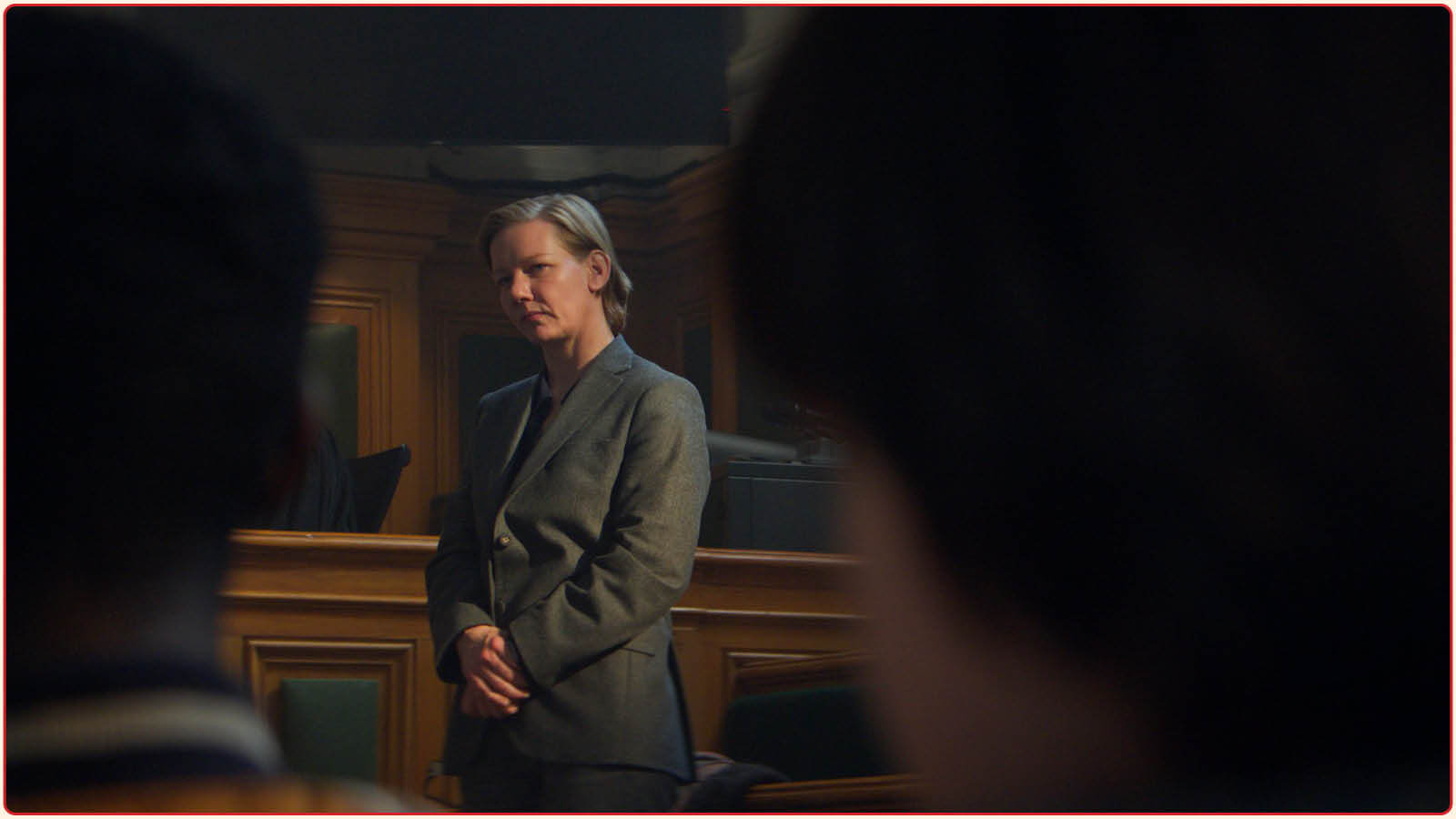
Anatomy of a Fall (2023)
Share:
Recommended
-
Susan Seidelman
 An intimate conversation with the trailblazing American filmmaker.
 -
Carol Kane
 Fifty years in 50 minutes with the irrepressible screen icon.
 -
Mark Lee Ping-bing
 The legendary cinematographer reveals his three core beliefs.
- Five Films About Football
 The Georgian director picks five of his favorites.
 - Listen Up! Light of Day
 Metrograph’s Listen Up! column continues with a look at Paul Schrader’s love letter to Cleveland, family, and rock ’n’ roll.
 - Orian Barki & Meriem Bennani
 The multi-hyphenate collaborators discuss their anthropomorphized, experimental, animated feature debut.