
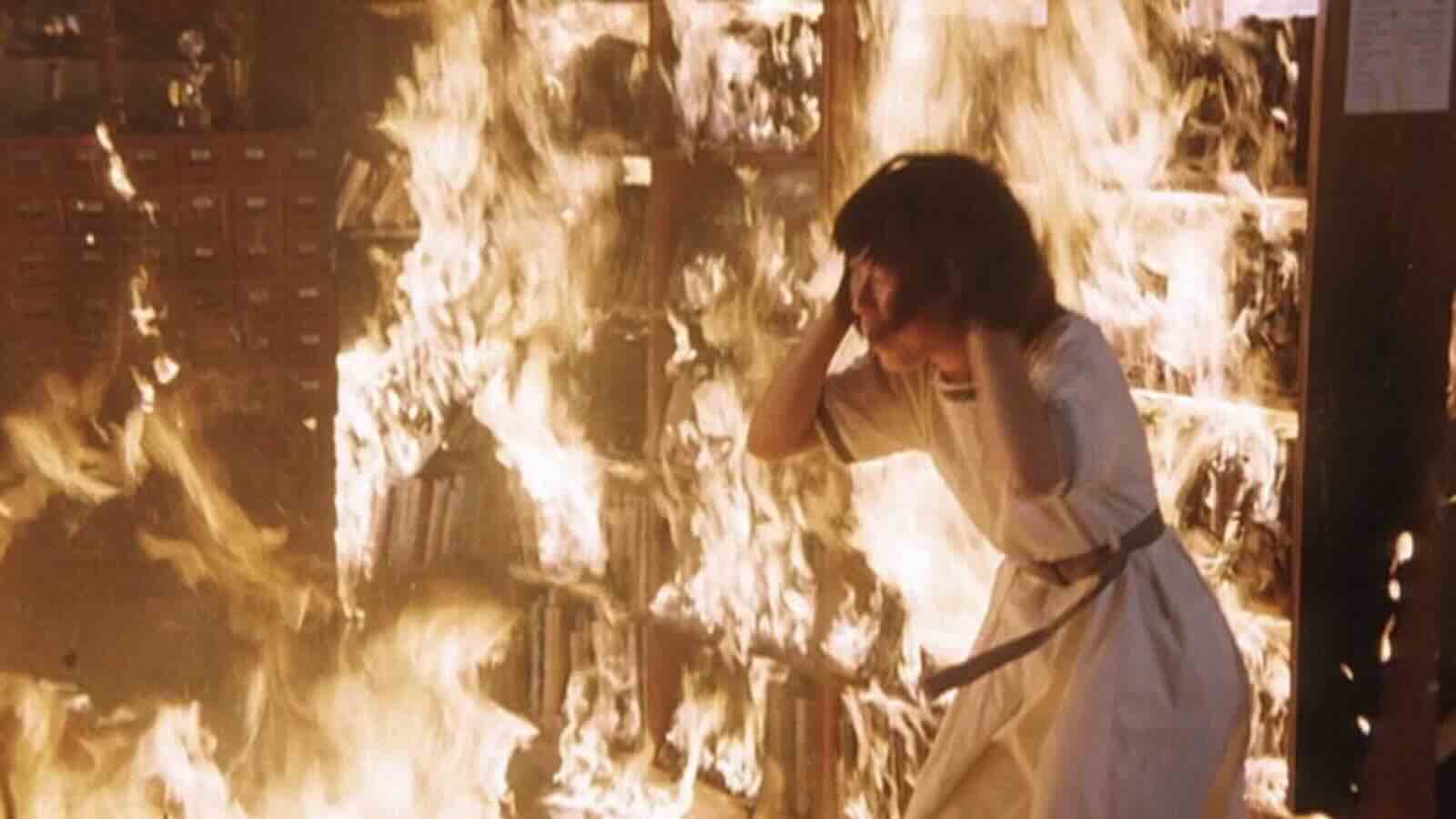
School on Fire (1988)
Essay
Ringo Lam on Fire
On how Ringo Lam’s scorchingly impassioned action cinema returned Hong Kong cinema to the mean streets.
Ringo Lam on Fire opens at Metrograph on Friday, June 5.
Share:
RINGO LAM’S ON FIRE TRILOGY (1987-1989) sits at the core of a decade of vital filmmaking that is representative of Hong Kong cinema to this day. But when Lam first returned to Hong Kong in the early 1980s, he was a man unstuck in time.
In the previous decade, Lam had been part of a new generation of upstart young filmmakers who were coming up in television. Originally training at TVB, Hong Kong’s largest commercial broadcaster, Lam made a reputation for himself before being poached by the ill-fated rival station CTV. CTV let him make whatever he wanted, resulting in the big-budget 1978 detective series The Vanguard, but the production overwhelmed him, and he abandoned the shoot, running away to join his wife in Toronto and start a new life.
Somewhat ironically, around the time that Lam left Hong Kong, independent production was ramping up; first-time producers were breaking into the lucrative film industry, taking chances on young filmmakers, and allowing for a greater level of creative freedom with the expectation they would see at least some return on investment. As a result, many of Lam’s friends and peers such as Johnnie To and Ann Hui, who had all grown up in the same rough and disadvantaged Hong Kong, suddenly took the industry by storm. They were making transgressive, angry, and socially conscious films—a cry of youthful indignation in the face of the dog-eat-dog world they inhabited—reshaping Hong Kong cinema into what would come to be celebrated as the Hong Kong New Wave. Lam should have been among them, but instead he was struggling in Toronto—working where he could during the day, taking film classes at night—while yearning for the gritty streets of his hometown.
Wanting to do nothing but make movies, and with a little encouragement from his friend Chow Yun-fat, Lam decided to return. Hong Kong and its cinema, however, had already left him behind. The city was shedding its dogged working-class spirit, transforming into something closer to the modern metropolis we recognize today, and the New Wave was pretty much over, its members now part of the filmmaking establishment. After a couple of false starts, on the recommendation of his old friend and former angry young man of the New Wave Tsui Hark, Lam found himself employed at the production company Cinema City, where Tsui was one of the so-called “Team of Seven” calling the shots.
In this golden age of commercial cinema, Cinema City was the most commercial of all, their brand built around family-friendly comedies aimed at the widest possible audience. Being neither commercially minded nor having any interest in funny stuff, Lam was regarded as a pariah at the company. He had only ever made serious dramatic work on television, and when he was studying film in Canada, he developed an admiration for New Hollywood, in particular the intensity of William Friedkin’s The French Connection (1971) and the immediacy of Robert Redford’s Ordinary People (1980). His love of Friedkin even drew ridicule from Dean Shek, a member of Cinema City management, who compared such directors to starving dogs.
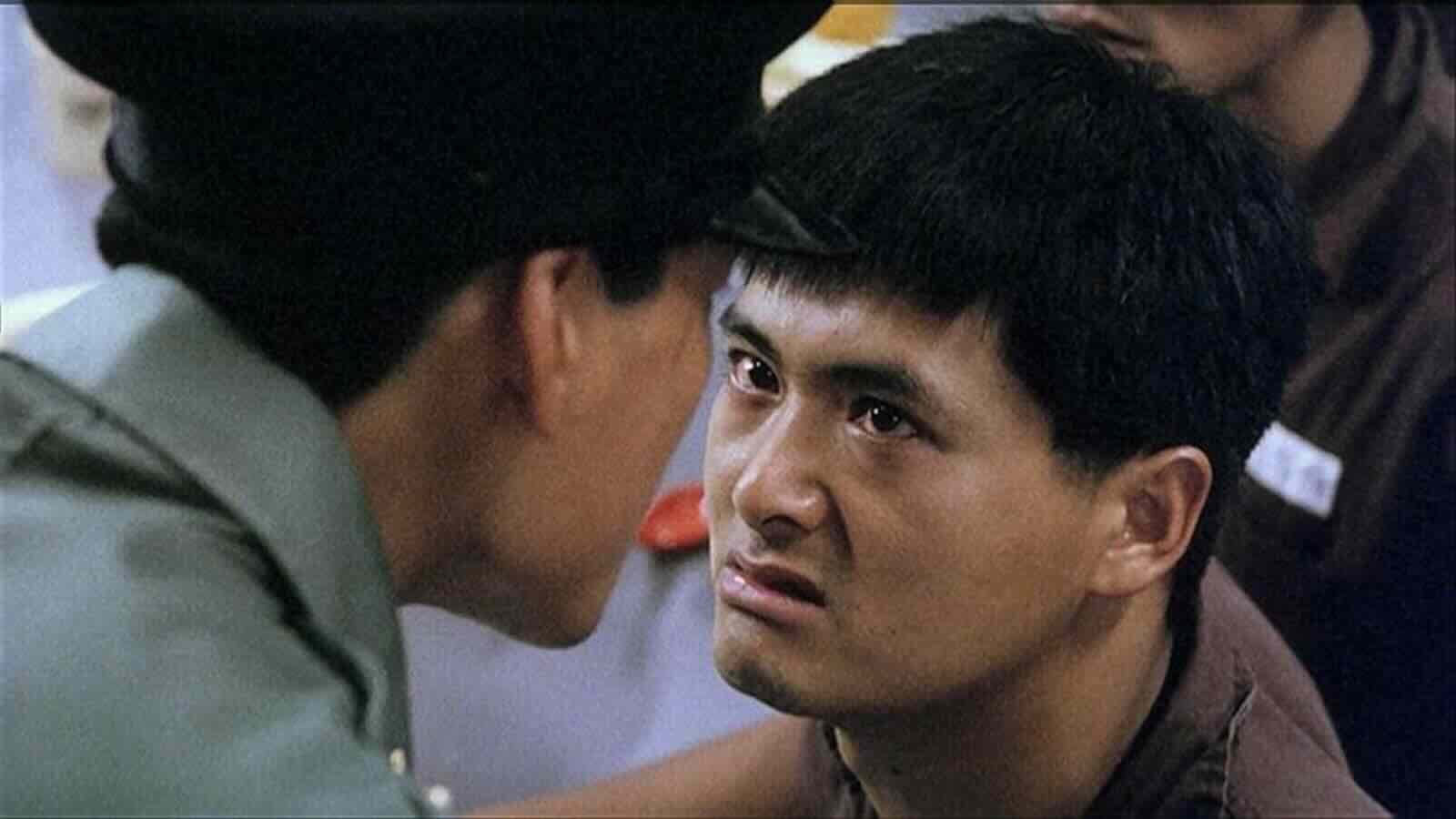
Prison on Fire (1987)
Ironically, Lam’s first job for Cinema City was completing someone else’s film, the ghost romance Esprit D’Amour (1983), after the original director Leong Po-chih was given the boot. Head honcho Karl Maka was so pleased with the finished product that he gave Lam sole director credit despite the film still being mostly Leong’s work. Lam meandered for the next couple of years, though, his sensibilities at odds with the shiny optimism of the Hong Kong on the rise that Cinema City wanted depicted on-screen.
Eventually, Lam accepted that he would need to make something commercial if he wanted to keep working. In a bid to go mainstream, he developed his take on the romance genre with Cupid One (1985), which flopped, before Maka flew him out to New Zealand, putting him in charge of the latest instalment of their flagship action-comedy series Aces Go Places. When Aces Go Places IV (1985) became a hit, proving that Lam could indeed work in the Cinema City mode, Maka gave him carte blanche for his next project as reward.
One year later, Cinema City rocked Hong Kong with John Woo’s seminal crime melodrama A Better Tomorrow (1986). The film was the passion project of Woo and producer Tsui, both of whom were sick of Maka’s insistence on comedies. Maka initially vetoed the project, believing audiences would not go for it, but Tsui turned him around. When Lam pitched City on Fire (1987), A Better Tomorrow was still in production, yet to be released to immense audience fanfare. Little did he know what they were about to let loose.
City on Fire feels like a film from a different era. It sits comfortably alongside Hong Kong New Wave crime pictures like Cops and Robbers (1979) and Dangerous Encounter: First Kind (1980), but produced with the budget and sheen of an ’80s studio production. With a passionate fury, Lam took the camera and his actors to the streets, shooting guerilla style without permits.
At a moment when the city was obsessed with yuppy modernity, Lam returned Hong Kong cinema to its working-class roots. While Woo’s film romanticizes the criminal underworld, imbuing his gangsters with classical ideals of brotherhood and masculine dignity like the heroes of martial arts fiction, Lam, starting with City on Fire, presents an unashamedly blue-collar gangland, its criminals just regular Joes trying to make it through another day. The film was inspired by the real-life armed robbery of the Time Watch Company in 1985, in which seven men looted HK$1.8 million worth of luxury watches, and exchanged over 126 rounds of fire with the police—a heist that is re-enacted in Lam’s film. Lam attended the trial, wanting to see just what kind of men could pull off such a crime, only to leave disappointed when they turned out to be unremarkable losers. This same crushing reality permeates City on Fire: guns misfire, death is not heroic, and the world is full of bastards.
The one-two punch of A Better Tomorrow and City on Fire was a sign of the times, establishing Chow as a star with his knack for switching seamlessly between goofy, cool, and intense, while marking a shift in audience tastes as the national mood darkened under the looming shadow of the 1997 Handover. In the air of such uncertainty, Hongkongers, it appeared, liked seeing a less refined, tougher version of themselves returned to screens; audiences turned out for the modest film, which had neither major names nor commercial leanings, and it cashed in almost HK$20 million at the box office, over three times its budget. It was a reminder of the hardships the city and its people had already overcome—that regardless of what the future holds, they will persevere.
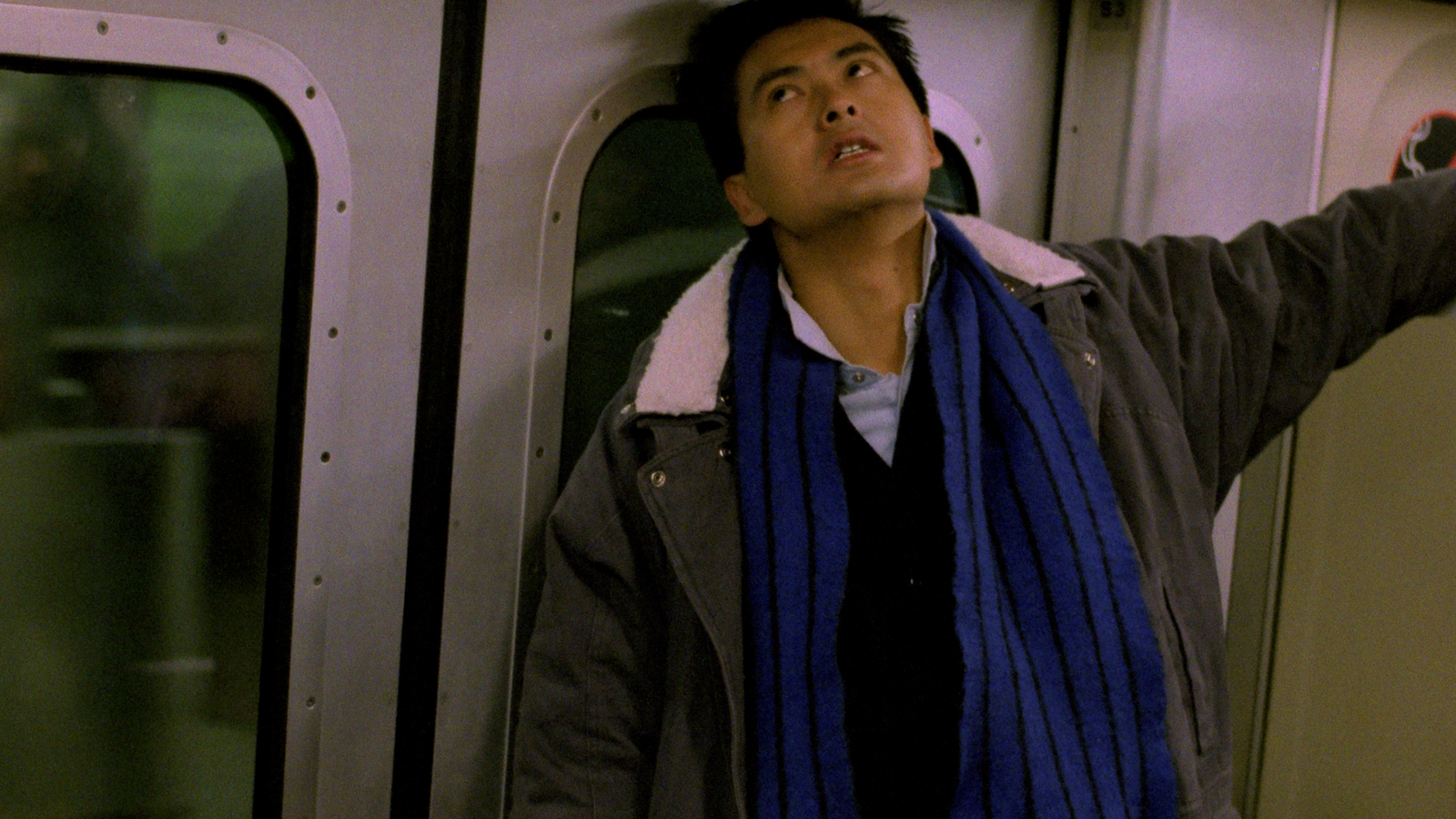
City on Fire (1987)
To celebrate the success of City on Fire, the cast and crew went on holiday to Phuket, where they were joined by Lam’s older brother, the budding screenwriter Nam Yin, “Southern Swallow.” Lam asked if he had any ideas for a film and he holed himself up in his hotel room for a week, producing an unwieldy 180-page opus drawing on his experiences behind bars. This became the basis for Lam’s speedily made second film of the On Fire trilogy, and arguably its most personal, Prison on Fire (1987).
As the youngest of seven children, Lam had enjoyed certain privileges growing up. He was the only one who went to school, and unlike his brothers and sisters, was exempt from working in the family’s tofu-making business so that he could focus on his studies. When Lam left for Canada, he had gone from being a rising television director to a total nobody. His education and his former standing meant nothing as he trudged from one factory to the next in the freezing cold looking for work. This realization that the traits valued by society are ultimately meaningless affected him deeply. Lam’s friends and family have painted his early days in Canada as lonely and miserable, while Lam himself was always light on details about this time, preferring not to recall the hardships he endured. Although Prison on Fire is his brother’s story, the film can be seen as a proposition of his own worldview with Tony Leung Kar-fai’s guileless character Yiu acting as an ideological self-insert, a man whose education and civility render him powerless in the face of a cruel world. The film is bookended by the ’80s Hong Kong skyline, implying the city itself is a prison, that society is nothing more than an illusion.
An even bigger hit than City on Fire, Prison on Fire became the second-highest grossing film of 1987, beating out even Woo’s A Better Tomorrow II at the box office. Lam was officially now a bankable director, but this did not temper the fiery passion that drove him. He immediately got to work on what would be the third film in his trilogy, School on Fire (1988).
Lam once again looked to real life for inspiration, this time to the moral panic of triads infiltrating the school system and recruiting teens into a life of crime. His brother wrote the script, maintaining that he made most of it up. Lam, on the other hand, claimed he shot the film based on things he had seen and heard in real life. Either way, the combination of high school students and gangs was controversial, and the censorship board barred its release. Lam had to make over 30 cuts for it to pass, causing him to genuinely consider quitting filmmaking. The film polarized audiences, and teachers and social workers wrote to him, expressing how socially irresponsible it was. However, in later interviews, Lam recalled that after the midnight premiere, young folks in the audience left in an enthusiastic fervor, filling the streets with the sounds of their car horns.
The Hong Kong we see in School on Fire is almost otherworldly, an intersection of the past, present, and the future. There are no signs of a modern Hong Kong with its glistening skyscrapers, only the old streets of Kowloon, the sprawling postwar squatter villages, and the public housing estates, like the one Lam himself had grown up in, where working families co-existed with criminal gangs. The older generation, from the plainclothes detectives to the working-class immigrant parents, are intentionally anachronistic, stuck in the past because of their inability to move on. The kids have no place to call their own, and we only ever glimpse the present through them, whether at school, which is a prison forcing them to conform, or the hedonistic disco, which feels like a pessimistic harbinger of things to come. The future is inescapable but also non-existent; the school is situated right next to the Kai Tak Airport, a constant reminder of the mass migration in the years leading up to the Handover.
What likely upset some audience members most was not the film’s harrowing content, but rather the uncomfortable truths about the precarious state of Hong Kong that it showed on-screen. Over the next decade, Lam continued to tap into Hong Kong’s consciousness even as his output dwindled, most notably in the still ruthless and bleak tales of the criminal underworld Full Contact (1992) and Full Alert (1997). Viewed alongside the On Fire trilogy, these films show that, for all the visceral action and splashy violence that can so often be seen as defining his cinema, Lam’s ferocious empathy for his home and its people is just as clear and just as uncompromising.

Share:
Recommended
- Virgina
 On the rediscovery of a lost film tackling the complexities and pleasures of gender expression in the Balkans.
 - Farley Granger
 On the queer star who defied mid-century Hollywood archetypes.
 - Geraldine Chaplin and Carlos Saura
 On the formidable collaborations of the Aragonese filmmaker and his American muse.