
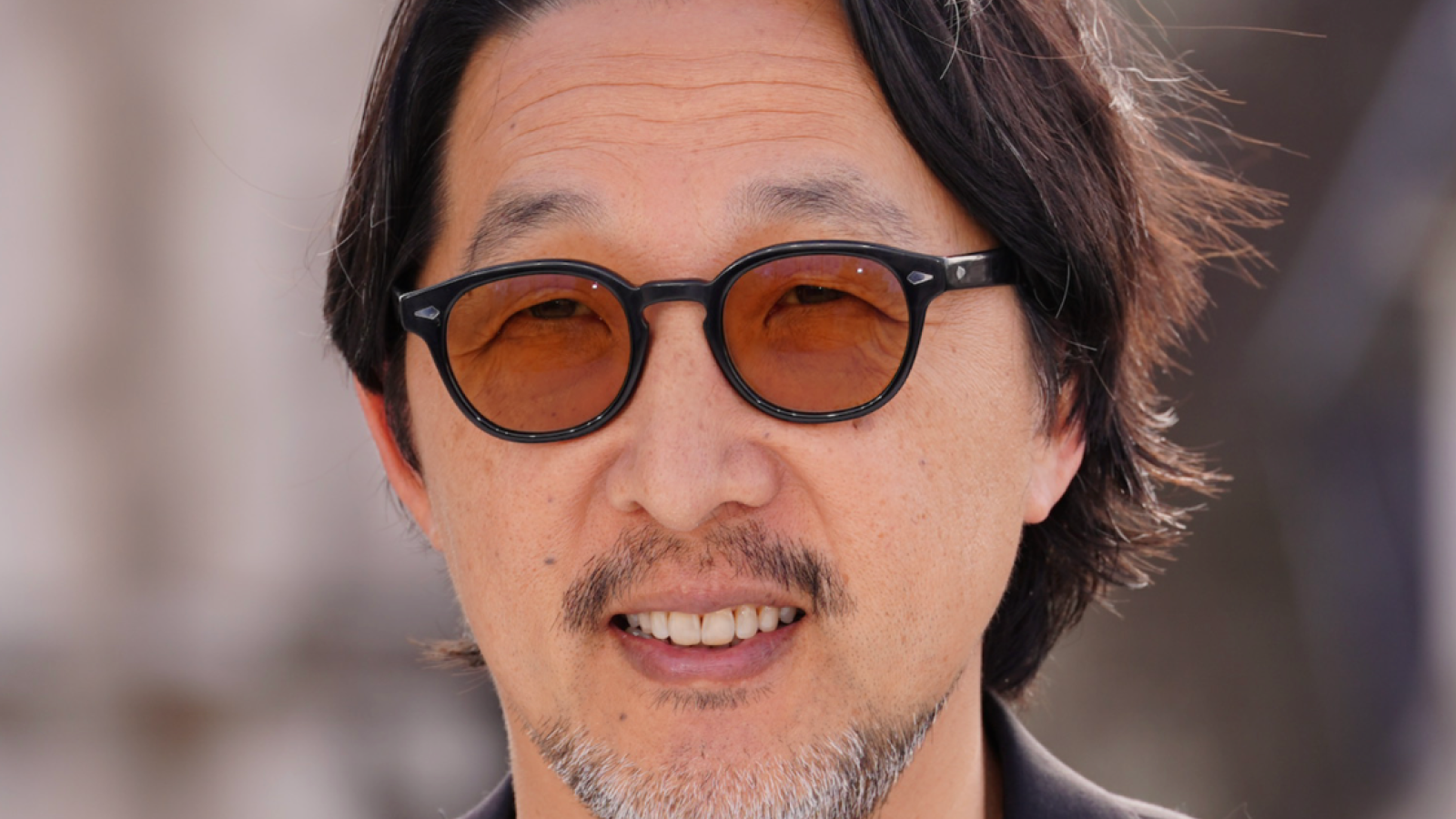
Kogonada, photograph by Ian West
Interview
Kogonada
On the observational portraits of time and space by the Midwest-raised filmmaker.
Kogoanda: A Way of Looking plays at Metrograph from Friday, November 6.
Share:
IN ZI (2026), KOGONADA’S LATEST MEDIATION on alienation and longing, Michelle Mao plays the film’s mononymous protagonist, a violinist drifting through the streets of Hong Kong accompanied by visions of her future self and worries arising from a potentially grim medical diagnosis. During her wanderings she meets two strangers: an offbeat American, Elle (Haley Lu Richardson), and Elle’s researcher ex-boyfriend Min (Jin Ha). Over the course of a single night, these three displaced characters ramble through secluded alleyways and bustling streets, and share painful memories under the glow of festive lights.
With its lush lo-fi aesthetic—composed of moody lens flares and voyeuristic tracking shots—Kogonada’s film bears a striking resemblance to Agnès Varda’s Cleo From 5 to 7 (1962), which similarly follows a woman walking the streets of Paris awaiting the results of a biopsy. With zi the Midwest-raised filmmaker elides conventional plotting for impromptu conversations that range in subject from shared existential fears to Hong Kong’s colonial past. Architecture also looms large here as Koganada elegantly captures the intimacy and dynamism of the densely populated metropolis’ packed buses, overflowing restaurants, and towering Brutalist shophouses.
zi marks something of a return for the filmmaker, after the leap from crafting independent films, such as Columbus (2017) and After Yang (2021), to shouldering a star-driven studio picture like A Big Bold Beautiful Journey (2025). The film’s title, spoken phonetically, doesn’t solely imply a terminus. Perhaps the only way Koganada can find a new beginning is to zoom towards the end, rendering zi a transitory work of remarkable insight, replete with the inviting compositions of the illustrious late artist Ryuichi Sakamoto.
I spoke with Koganada over email about his spontaneous visual language, turning urban architecture into poetry, and working with Sakamoto’s innovative melodies. —Robert Daniels
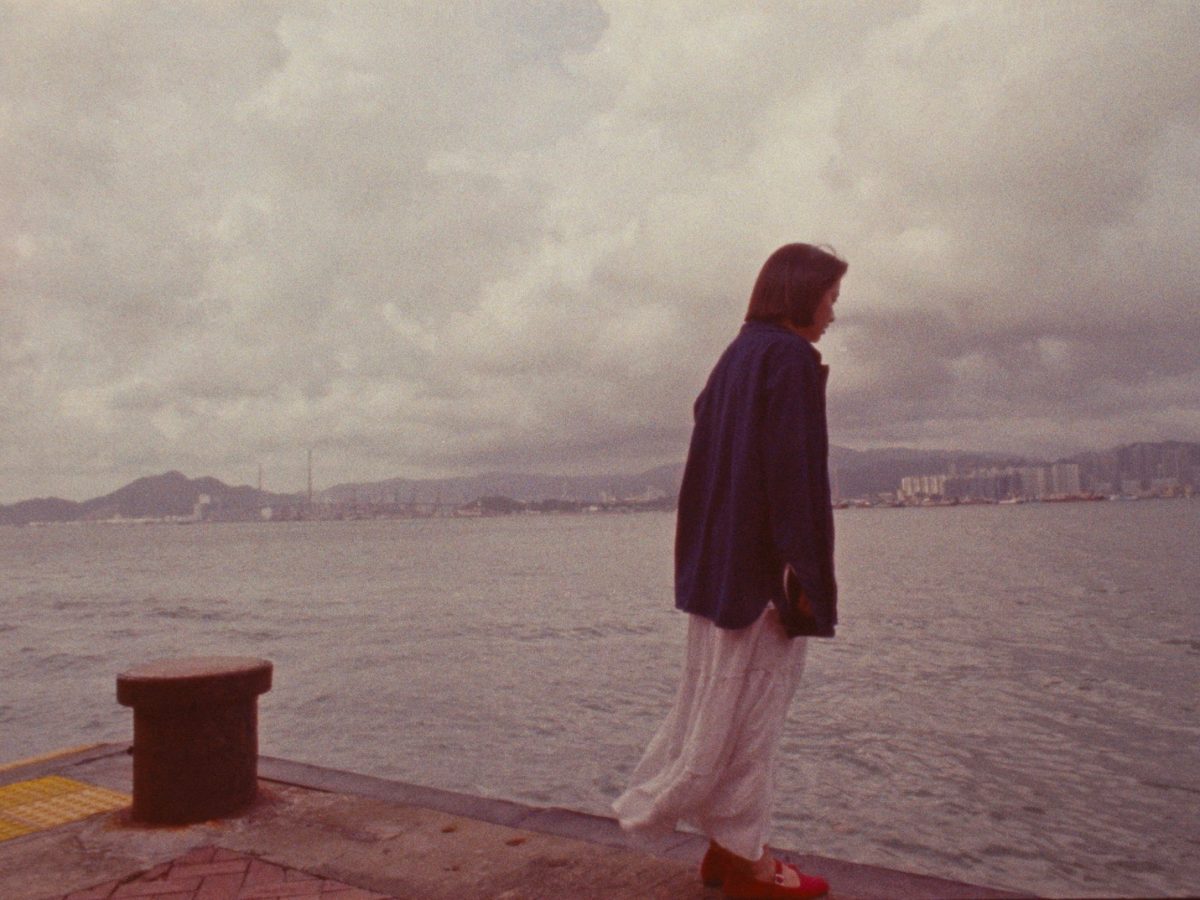
zi (2026)
ROBERT DANIELS: In Columbus the architecture inspires points of discussion that reveal greater complexities within the characters. But in zi, the architecture of Hong Kong appears to act upon the characters. What inspired you to lean on the voyeuristic to marry Zi with her surroundings?
KOGONADA: Columbus is partly about seeing. In particular, how seeing opens up worlds that were previously invisible, like space itself made visible by architecture if we have the eyes to see the shape of nothing. zi is partly about temporalities and a sense of place as a rhythm, a tempo, a transient form of duration. I use “about” loosely. It’s more an exploration. I wasn’t trying to make a film with “aboutness” guiding the process. For me, zi is immersed in a flow of time defined by Hong Kong that is both spatial and temporal along with her own subjective experience of time that is out of sync.
RD: You and cinematographer Benjamin Loeb create an elusive visual language, particularly with your use of tracking shots. What was your approach to marrying the camera’s movements and rhythms with Zi’s temporally skewed perception of the world around her?
K: The approach was for Benjamin to have the freedom to follow the temporal and spatial flow of the city guided by Zi, a temporal being out of sync with her surroundings. We sought a vérité fluidity and spontaneity. Our initial plan before we decided to make zi was to meet up in a city that had its own story and rhythm to reveal—a city that embodied layers of modernity—and to film it over a course of a week or two in hopes of discovering something I would reveal in the edit. Once we decided to make zi in Hong Kong, we approached it much in the same way and spirit.
RD: Conversely, the many long alleyways and quiet staircases you and Loeb find for zi on this single night journey turns the city into a site filled with pockets of stillness, making the urbanscape a place for reflection. What about Hong Kong specifically do you think invited you to go down these contemplative avenues?
K: We need these moments to both counterbalance and give context to the asynchronicity of zi. To capture the everyday tempo of Hong Kong and its inhabitants. These transitory passageways have always been meaningful to me in the films of Ozu. They rarely exist to move plot but to deepen our senses and connection to the temporal world that is being revealed.
RD: There are several moments where Zi and Min talk about the displacement they’ve felt. They’re outsiders in this country despite their histories being deeply ingrained in it. Both characters recall Hong Kong’s colonial past. How did you envision these personal histories intermingling with a region whose history is itself.
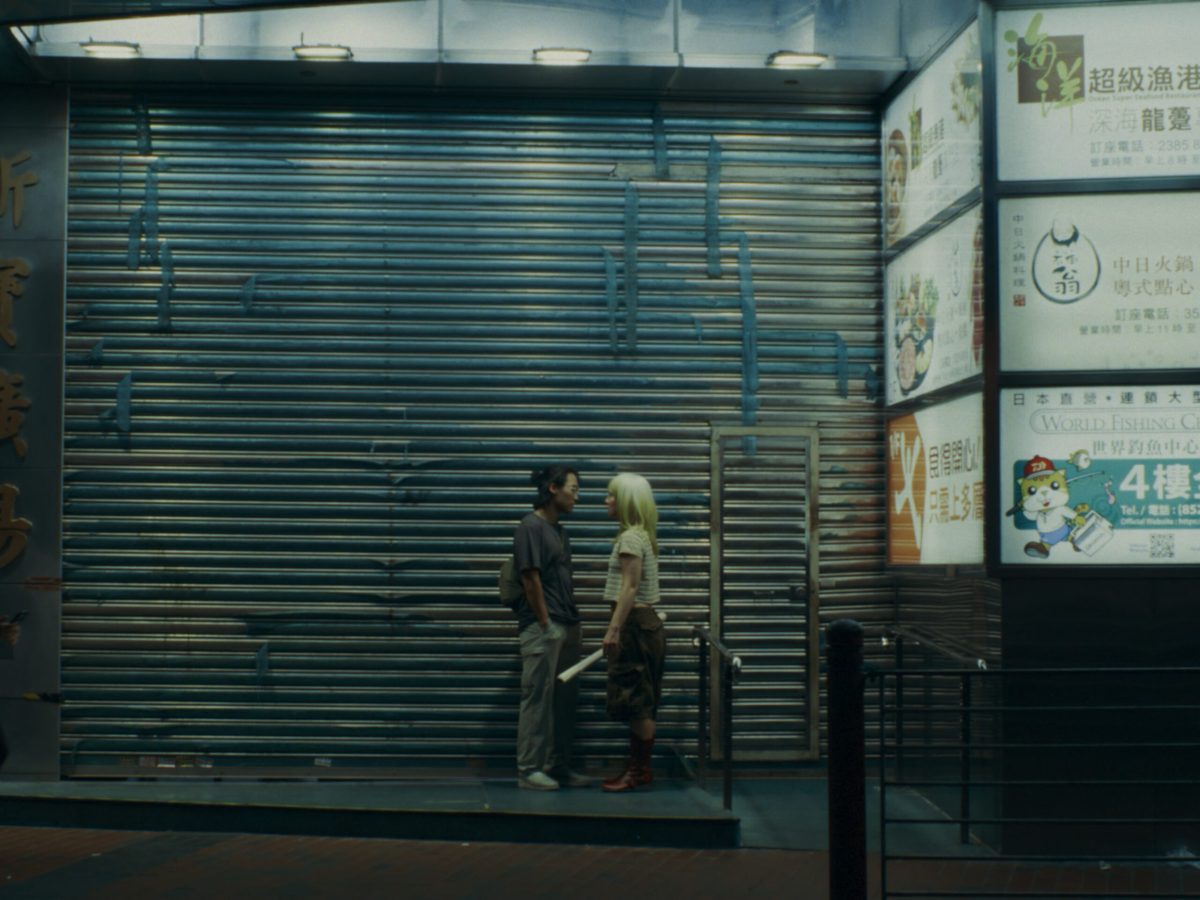
zi (2026)
K: For me, displacement is the dominant feeling of the modern world. Whether one is part of a diaspora or a post-colonial society, there is a general feeling of disjointedness that we, as moderns, all seem to be carrying. Zi is very much an embodiment of this dislocated feeling. As Min says, for Zi, it is always the past. The same might be said for Hong Kong. The fireworks we shot that Zi experiences was in celebration of National Day, which marks the founding of the People’s Republic of China in 1949. The complexity of such a celebration for Hong Kongers caught between two imposed realities was not lost on us. And such complexities also exist in Min as a Korean, who was raised in Hong Kong and went to boarding school in London. This “intermingling” was very much on my mind.
RD: You shot the film on a Bolex, which offered a physical freedom to spontaneously pursue certain moments and scenes, particularly the flashback scenes. How did you think of the Bolex as a tool on this film?
K: The Bolex was used for a specific kind of temporality in our film. And the flashback is part of this temporality but for what present? In the film, there are three different days at play, but only one contains the temporality of the Bolex as a sense of the past that eventually becomes the present.
RD: Richardson’s character spends her time capturing the city’s ambience with a pocket recorder. She says: “There’s answers in the sounds.” If one closed their eyes, they’d almost get a different film from the one they’re seeing. What did you want to achieve with sound in this film?
K: I love this question. A few days ago, I listened to a portion of this film like an album. I was listening to the .wav file with no image. Listening to the textures of Hong Kong and our characters and the music of Sakamoto. It has always been a dream of mine for the audio of a film to be listenable as a sort of Musique concrète album. Sakamoto was obsessed with sound in the real world. There is a scene in the documentary Coda, where Sakamoto records everyday noises in the environment to incorporate into his music. Elle recording the sounds of Hong Kong in our film is inspired by this scene. The intensity of Sakamoto as he listens to the sounds that we often ignore, to find some essence in them, some quality, has always stayed with me. I felt like he was searching for answers in these ordinary sounds.
RD: Ryuichi Sakamoto’s music feels like the one extravagance you allowed yourself in this minimalist picture. Because the film is dedicated to him, what does the inclusion of his work say about the film’s sense of absence and memory?
K: I’m not sure what it says, but I do know that his music is integral to the experience and themes I wanted to explore. His music, particularly from the later era of his life as he was reflecting on his temporal being, is what I was seeking to incarnate in zi.

Share:
Recommended
- Kogonada
 On the filmmaker’s observational portraits of time and space.
- Virgina
 On the rediscovery of a lost film tackling the complexities and pleasures of gender expression in the Balkans.
- Farley Granger
 On the queer star who defied mid-century Hollywood archetypes.