
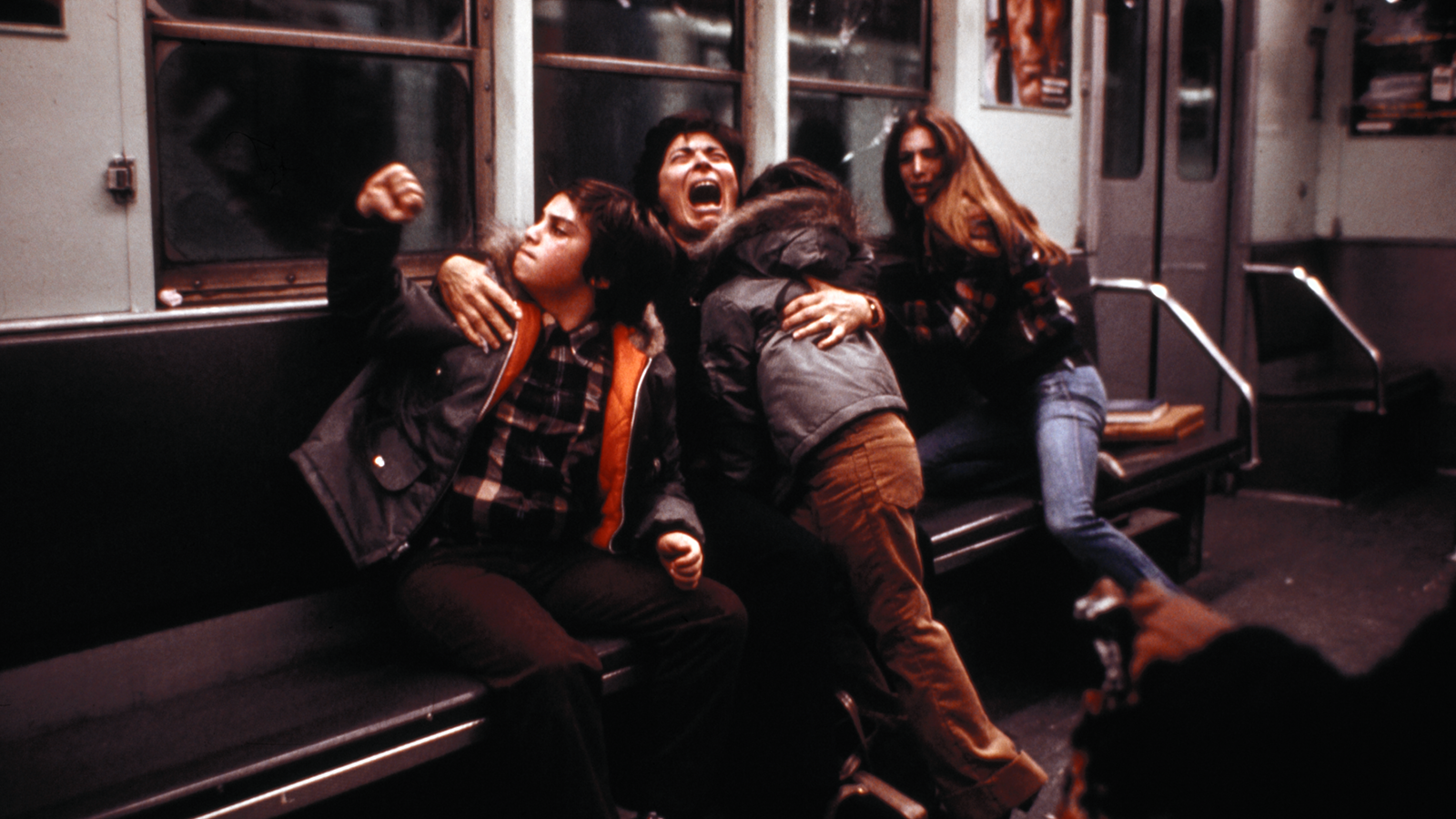
The Taking of Pelham One Two Three (1974)
Interview
Genevieve Yue’s Trains
On the offbeat pleasures of the train in Genevieve Yue’s new book.
Trains: Local Routes plays at Metrograph from Friday, October 9.
Share:
IF IT WEREN’T ENOUGH FOR the filmstrip to resemble railway tracks and the illuminated screen to echo how the world rushes by through a carriage window, the inaugural image of the Lumières’ locomotive entering La Ciotat station in 1896 sealed the deal forever after: the technologies of the train and the cinema are kin. In her new book Trains, out this October, critic and academic Genevieve Yue takes an unexpected approach to this most cinematic of motifs. Traversing more than a century of filmmaking, with both deep research and cinephilic fancy in hand, she acknowledges its associations with astonishment, speed, and suspense, but opts for a less-traveled itinerary in which daydream, drift, and romance take prominence. In Alfred Hitchcock’s 1938 film, a lady vanishes on a train; in Yue’s book, a woman’s intelligence and sensibility vibrantly appear.
Trains is the fourth entry in Cutaways, a series of small books that Yue and I co-edit for Fordham University Press, in which writers trace a single device or theme across an idiosyncratic selection of films. The publication of her contribution to the series gave us the opportunity to discuss not just railway journeys and their depiction on film, but also our shared interest in blurring the line between scholarship and criticism, as well as the program based on the book that she and Edo Choi have curated for Metrograph Theater.—Erika Balsom

Strangers on a Train (1951)
Erika Balsom: Near the beginning of your book, you quote Lynn Kirby’s idea that the train is the “mechanical double” of film. In a book series like Cutaways, which is devoted to cinematic motifs, it feels like there has to be a title about the train. It’s maybe the cinematic motif. Yet your book is written against or at least alongside many commonplace understandings of the relationship between cinema and trains. What would be the expected way to think about cinematic trains? Why was that not interesting to you, and what did you decide to do instead?
Genevieve Yue: I almost didn’t want to do this book, because, as you say, the train has this outsized place in film history. And I don’t come to trains necessarily as someone who is a train fanatic, although while I was writing the book, I had a lot of fun in the “r/train” subreddit reading the many passionate opinions that train workers, conductors, engineers, and enthusiasts have about how trains appear in movies. I like the idea of an overdetermined motif, something that was so present, so laden with an entanglement with cinema. I felt it could be something to work with, rather than avoid. So I do talk about people like John Ford, Yasujirō Ozu, David Lean, and Hitchcock. I wanted to take the commonplace association of trains and movies and tweak it a little bit, or sidestep it. Some of this comes out of my love for early cinema, and a lot of it comes out of my love for experimental cinema, both of which frequently take the train as a subject or setting. It offered me a way to just sit with train movies that felt very, very particular to me. I call it a feminist project, but I mean that in a deeply idiosyncratic way.
EB: You write that it is a feminist book about trains, but not necessarily in the sense that it’s looking at films made by women or films representing women. Even though you do both of those things, you say that it’s the method of this book that makes it feminist. What do you mean by that?
GY: One could write a capital “F” Feminist book about trains that would cover a lot of the same terrain that my book covers: sort of rescuing the damsels tied to the tracks, so to speak. But as a method, feminism allows me to think less specifically about the place of women on screen and in film history, and more generally about the way value and meaning are afforded to certain types of cinema, narratives, and motifs. For instance, if you take the train as a symbol of industrial ingenuity, it is tied to a masculinist sense of progress.
EB: A conquering of space and time.
GY: [laughs] Exactly! Think of the symbol of the train that throttles forward: it’s quite easy to start to dismantle it. You can find it in the most classic of Westerns. For example, in films that would purport to have progress-oriented, teleological narratives, the trains actually break down. There’s a lot that threatens them. I wanted to look at those moments, where the train is stuck, unstable, or breaks down, not for any spectacular reason, but out of a completely ordinary malfunction, or a disinvestment from infrastructure, repair, or labor. It also so happened that as I was writing this book, I realized that so many of my favorite movies have train scenes.
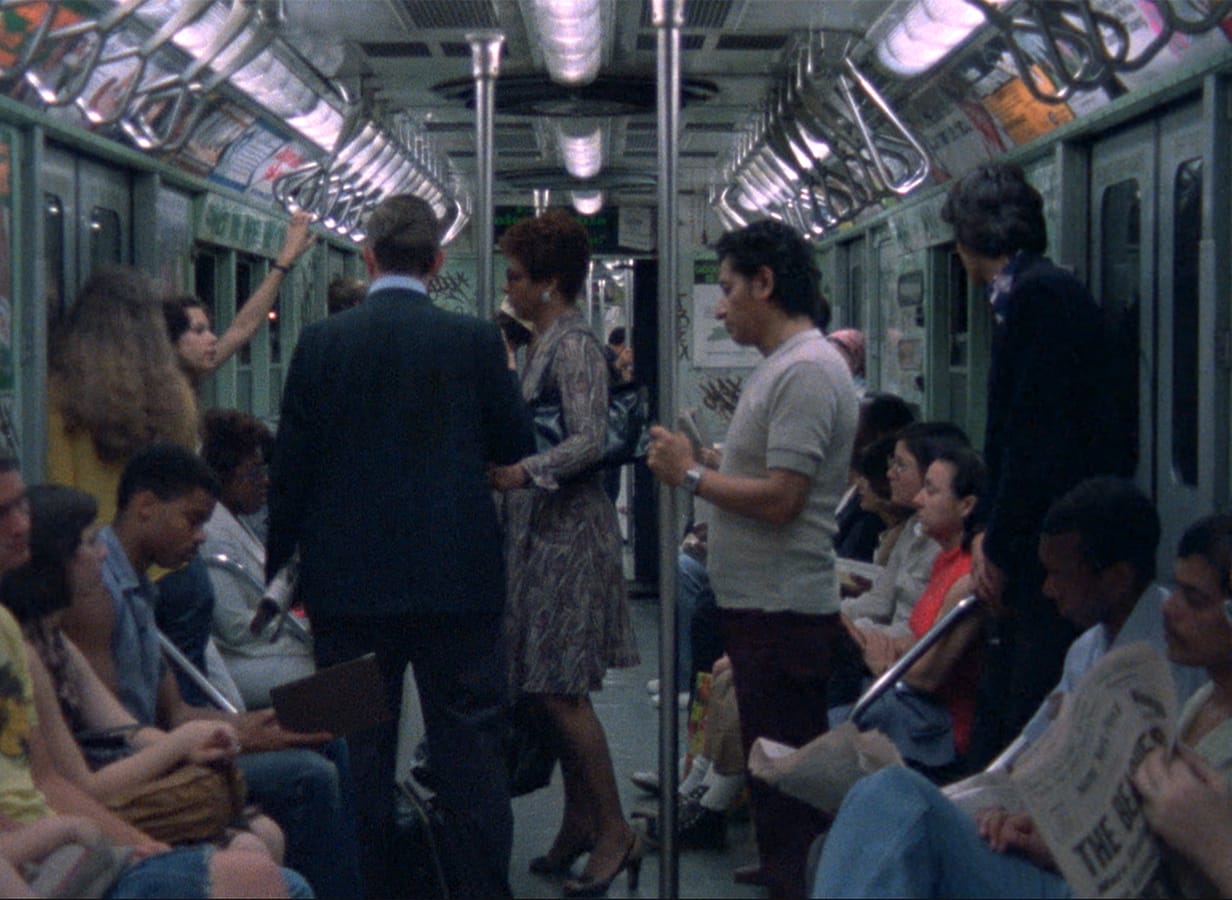
News From Home (1976)
EB: Like what?
GY: I was thinking about Unfaithful (2002), which is an abysmal film by Adrian Lyne, but it has an incredible train scene. Diane Lane is coming back on a commuter train after having a tryst with her hot French bookseller lover (Olivier Martinez). It’s the most ridiculous plot, and it’s so moralistic, but she is just having this private, barely contained feeling. Waves of feeling! Pleasure, regret, embarrassment. She’s trying to conceal herself, even though there’s no one else on the train with her. It’s just really beautiful.
EB: This is one of the threads that runs through the book: the woman on the train who is not just physically transported, but emotionally transported as well. The train becomes a space of fantasy, daydream, or reflection. This is also captured by the cover image of the book, from Hou Hsiao-hsien’s Café Lumière (2003).
GY: It’s a way of saying that this is how I experience being a woman on a train. You’re going from place to place and it’s an in-between time. Your mind drifts. A lot of it is tedium and regularity, but sometimes there is something that surprises you.
I live in New York, so I ride the subway a lot. You see all kinds of things on the subway if you’re paying attention. I like that about the train: it cultivates all these different modes of attention, including drifting and dreaming. It’s maybe a bit sentimental and romantic. But I wanted the book to make room for the feeling of being in love on the train. This is something that I cherish, and which felt very much mixed in with my cinephilia.
EB: I wonder how or if you reconcile this with the fact that this is also a book being published by a university press. Maybe this is a way of asking about how you understand the relationship between criticism and academia.
GY: I was able to write a book that I really wanted to write in a way that I couldn’t when I had to write a book that my job was contingent upon. This is not to say I didn’t want it to be well researched or have an argument. Those things are important. It was more a matter of form. I really enjoyed being able to experiment in this book. The Cutaways series is meant to be an experimental space for both scholars, critics, filmmakers, and programmers to come together and play in a space. But yes, it is still published by a university press and because of that it goes through a rigorous review process.
EB: One thing that really comes through in Trains is the articulation of your own sensibility. A little like being on a train, the book gives a sense of moving through a range of different images and objects, and provides an account of your experience of them. It’s very personal without being autobiographical.
GY: In my criticism, I’ve noticed that I’ve started using the word “I” more, which is pretty much forbidden in academic writing. It has felt really natural to circumscribe what I’m saying, to say, “This is how I feel, this is how I think.” It’s about holding onto that as something distinct from what the received wisdom is, what scholarship is, or what film history has to say about something. And I suppose this goes back to the question of method. It’s not to say feminist work has to be personal, but rather that it was useful for me to hold a sense of myself as someone writing this and to set that against the specter of the overdetermined relationship between trains and cinema. On the one hand, I’m just a single passenger, one of millions of people riding the train every day. And on the other, there’s the gigantic thing that is the history of the train. I wanted to hold those two in some kind of tension with each other.

Nous (2020)
EB: This is the fourth book in the Cutaways series, which we edit together. We’ve had John David Rhodes and Elena Gorfinkel’s The Prop, Jules O’Dwyer’s Hotels, Martine Beugnet’s Blur, and now your Trains. All the books explore a particular motif across a selection of films. But beyond that, would you say there is something they share?
GY: I think the writing is top notch. When we talk to potential authors, we’ve stressed how much the topic should be something that only that writer could produce. We’re not looking for a generic book about trains or hotels. That doesn’t necessarily mean personal, but it could. I love that the sensibility of all these projects is wildly different, and I like that we have team writing, memoir-infused writing, theoretically dense writing, and just very evocative writing. That’s what I’m proud of in the series. If I had to name a direction I would like us to go in, I would like it to be even more eccentric and irreverent. Someone recently asked me what topic I would have chosen if I hadn’t picked trains. I don’t know if I would have picked this topic, but one thing I do pay attention to is very elaborate cakes in movies. In Kurosawa’s The Bad Sleep Well (1960), there is an incredible cake that’s a model of a building, and it’s important in identifying clues about a murder happens. I’m not looking for eccentricity solely for the sake of it. But I hope that the topics of our series will encompass more than just the usual suspects.
EB: The danger of the motif-based approach is that it becomes a list-like, encyclopedic account of a motif. With trains in particular, you could imagine a very canonical iteration of the motif, but the spirit of the series as a whole, and of this book in particular, is to move away from that, into something more idiosyncratic. The motif becomes an occasion to go somewhere else.
GY: I mean, you can literally Google “trains in movies.” I’ll be honest, I did that kind of thing a lot.
EB: You work across films from different places and different moments in history, and also different modes of filmmaking. How did you go about the research for the book? The book’s corpus is immensely varied. This is something we like to encourage in the series in general, but I’m not sure if any of the previous authors have taken it to the level that you have, in terms of the breadth of films discussed.
GY: A lot of it happened through conversation. Because of the pervasiveness of trains in movies, if you mention to someone that you’re writing a book about it immediately people say, “Are you writing about Before Sunrise (1995)? Are you writing about Snowpiercer (2013)?” They mention whatever train movie they love, watched as a kid, or can think up just as a matter of conversation. I would take notes every time this came up. I also searched for ‘“trains” on Karagarga, which was how I came across Ignacio Agüero’s 100 Children Waiting For a Train (1988), which I just fell in love with.
EB: God bless Karagarga.
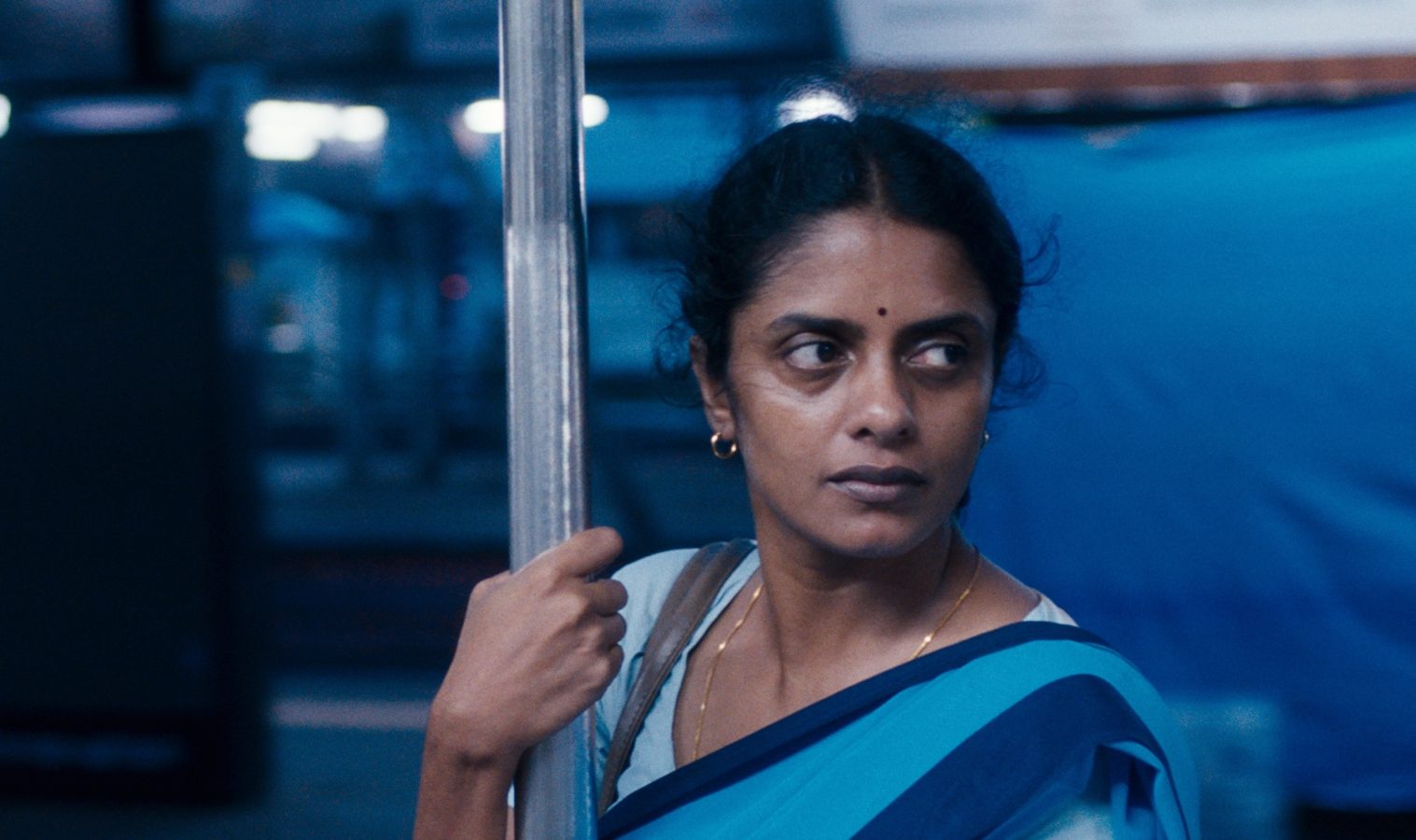
All We Imagine As Light (2024)
GY: This book has been many years in the making, so it’s like I’ve lived with a train antenna for a while. I would watch a movie and if there was a train scene, I would get really excited. Or I’d rewatch something, like Stella Dallas (1937)—one of my favorite movies—and realise that I had never noticed a train scene in it before. I saw it at the Nitrate Picture Show, and of course I was bawling, but the separation scene that happens on a train hit me extra hard. Sometimes I would strike on an idea, and just research that. Like, who is the most famous literary character associated with the train? Probably Anna Karenina. So then I watched every version of Anna Karenina that I could find. But a lot of it was luck. While programming with Edo for the series at Metrograph, I kept finding new train films. At one point this was my greatest fear, to somehow miss a great train film that I could have put in the book. But it has now happened so many times, and I’ve survived. And now many of those films are in the series. I’m sure it’ll keep happening for the rest of my life.
EB: How did you make the selection for the series?
GY: It’s a two-part series of around twenty titles. We decided against a historical, geographical, or generic framework right off the bat because the fun of train films is that they exist in all kinds of filmmaking. That’s the challenge and the fun of it. We decided to organize it according to types of journeys. In the first part, we have local routes, short rides, which we’re loosely defining as being within a city, connecting a suburb to a city, or a ride between two reasonably close cities. The second part looks at long distance trains that travel across a country, region, or continent. A lot of the films we think of as train movies in the grand sense are bigger escapades that happen over long distance rail.
EB: Would you say that those films are tied to a particular moment in history? In many cases, air travel has taken over what in the past would have been accomplished by train. Although long distance train journeys are maybe also making a comeback in an age of ecological consciousness.
GY: Much of the train infrastructure, at least in the United States, but also around the world, peaked so early in the 20th century. So we’re dealing with aging infrastructure and routes that are running at far below the capacity than they used to have. But at the same time, there are new train routes being constructed for high-speed rail and luxury rail, and cargo trains still remain a vital mode of transport. I found it really fascinating that, for various reasons, train lines are still being constructed for political and economic reasons. Martin DiCicco’s 2016 film All That Passes Through a Window That Doesn’t Open is about a new route that goes through Azerbaijan, Georgia, and Turkey, ignoring existing tracks in Armenia, because of the Nagorno-Karabakh conflict. We often associate trains with the past, but they persist and are made to do new things in the present.
EB: This idea seems especially important when thinking about the train as the “mechanical double” of cinema. Because if the train is an emblem of the late 19th century, of the past, then this would be true of cinema, too. But that’s really not the impression that one has reading your book. Both cinema and the train feel alive and contemporary.
GY: I’m very stubbornly materialist in this way. Because I ride the train every day, it feels strange to say that this constant fact in my life is of the past, when it’s just something I and so many others encounter every day. There’s a lot to be taken from that, and many filmmakers have done so. A great example of this is Payal Kapadia’s All We Imagine as Light (2024). In Mumbai there are certain train cars where the doors never close. The wind is blowing through the compartment. The lead character is riding in the ladies-only compartment, and there’s a sense of air and freedom that is so beautiful. The train is very much the lifeblood of the city, how people move around, and live their lives.

Share:
Recommended
- Genevieve Yue’s Trains
 On the offbeat pleasures of the train in Genevieve Yue’s new book.
 - Yuliya Solntseva
 On the actress-turned-filmmaker’s unsung authorship.
 - Futures and Pasts: Socrates
 Rossellini’s one-of-a-kind approach to the costume drama, and his 1970 film on the last years of the Athenian truth-seeker.