

Interview
Yôko Yamanaka
An interview with the ascendant filmmaker on her audacious sophomore feature.
Share:
Yôko Yamanaka’s Desert of Namibia is a fierce and fearless piece of filmmaking with a pulse synced to the careening rhythms of its protagonist. Zooming in on her as though she were the star of a ’70s thriller, the film first spies the 21-year-old Kana (a no-holds-barred Yuumi Kawai) as she descends to street-level from a busy Tokyo overpass. Dressed in an oversized white sweatshirt over a brown pinstripe skirt, tan cloche hat, and nails accented in flashy pea green polish, Kana cuts a contradictory, and intriguing figure.
On her way to meet a friend, she already appears not entirely present in her own body. Slack-jawed, her head tipped back with eyes listing (up and to the left), she sashays lazily down the street. Her gait exaggerates her gangly frame and makes her seem an almost elastic being, as if drawn by animation giants Sunrise Studios or the Fleischer Brothers. It’s not long before we note that Yamanaka’s film itself is equally elastic, the better to mirror Kana’s fluid presence. As she moves through space, often in states of abandon or euphoria, the unsteady camera barrels along with her. Kana’s life is a litany of endless swiping between social calls, romances, apartments, interests, and feelings, all beguilingly revealed to us only in the moment that she herself inhabits them.
The afternoon before its New York premiere, I sat down with Yamanaka to discuss Desert of Namibia, its spontaneous genesis, and fluid form. Yamanaka’s refusal to explain or justify, to define or categorize, a young woman’s life is the structuring principle of her new film. I can hardly recall a more thrillingly contemporary piece of filmmaking. —Edo Choi
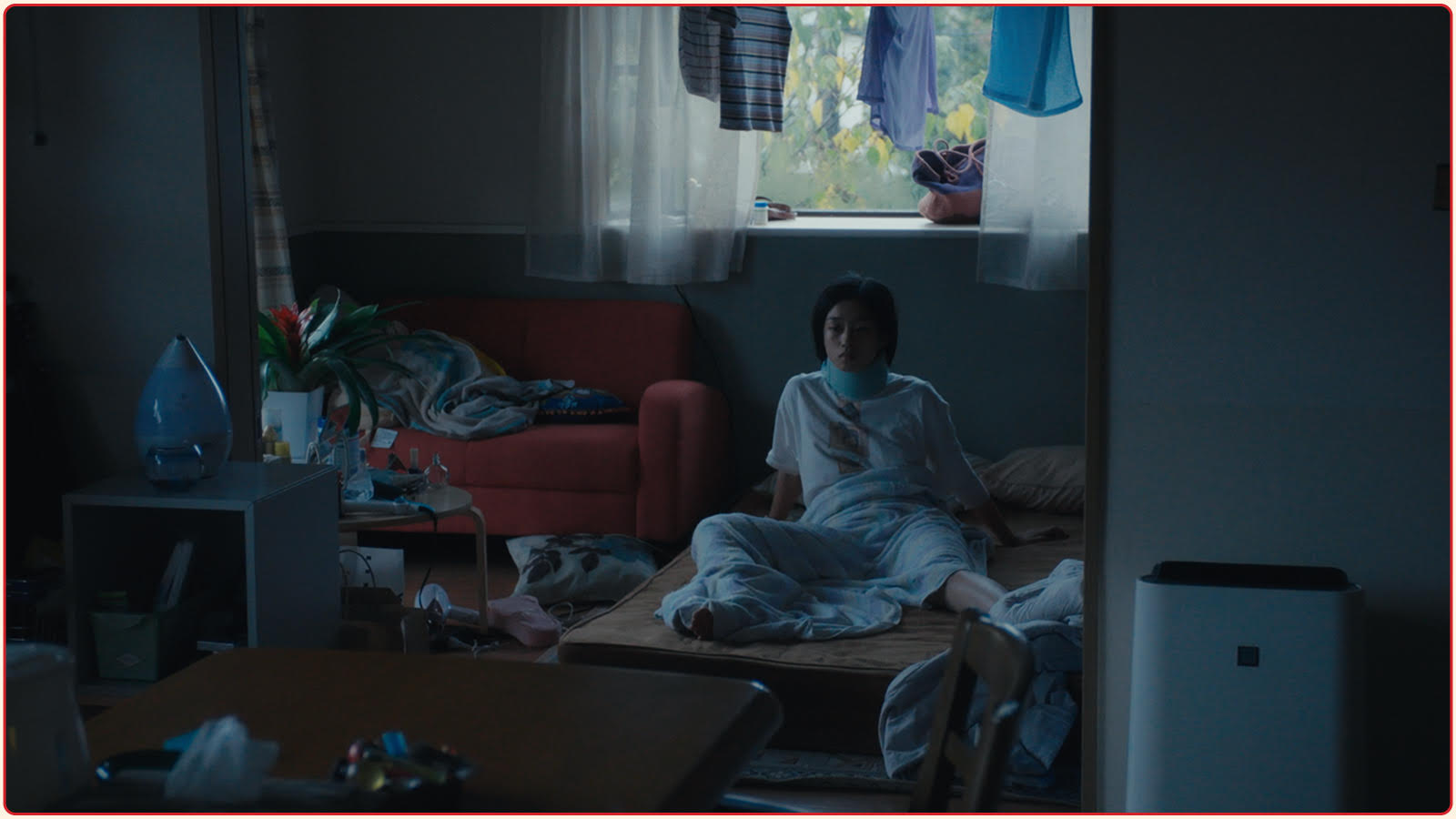
Desert of Namibia (2024)
EDO CHOI: I want to ask about the genesis of Desert of Namibia. When you’re drawing on experiences that are very intimate, what relationship does that ultimately have to the final work?
YÔKO YAMANAKA: It’s a bit of a long story. I was originally adapting a novel for Yuumi Kawai to act in, which I had been working on for a few years. But in April 2023, while I was traveling India, I realized that deep down I no longer wanted to work on this project. I wanted to quit. I called my producer and told them I was no longer interested. But this was in April, and the shoot was scheduled to begin in October. My producer told me, “We already have the crew and Ms. Kawai has already blocked off her schedule, why don’t you write something original and shoot that instead?”
EC: Wow.
YY: I’m the type of director who doesn’t really have a lot of stockpiled material. All of the things that I ended up including such as my philosophy, the fact that I have a mixed race heritage (my mother is Chinese), these details entered the script mostly to save time. It was a bit like cheating, cutting corners, using this and that to complete the script in time. In general, I am not really interested in making portrait films too close to my own life, but this was just the process on this particular film.
EC: I’ve read the story about Kawai approaching you after she saw your first film, Amiko (2017). Was working with her the primary impulse behind this project?
YY: She was certainly one of the biggest motivations I had to keep the project going. I had seen her in a lot of films where she has smaller roles. Sometimes, she would only have one scene, but no matter what story or world she was inhabiting, she seemed to belong. And she would always pull my focus. My eyes were always like, “Follow her!” So I wanted to give her her own place to shine. At first I didn’t know what kind of setting would be best for her—I could see her in so many different rooms and roles—but I wanted to give her this opportunity.
Also, she has very long limbs! Arms and legs! That was really great. She appears to be very light, and at the same time it can seem almost as if she’s fighting against gravity just to keep upright. This posture became the inspiration for the character of Kana.
EC: For me, there is such tension between how she appears and how she behaves in the film. Watching her, I’m not sure what she’ll do next, or equally, where the film is going, how it is going to transform from one scene to the next.
YY: I write my scripts unpredictably, you know, more intuitively. Perhaps that’s what it is. And while Yumi-san does come across as unpredictable, she is the kind of actress who preps meticulously. Of course on set, she is very agile, but she always prepares different options for each scene.
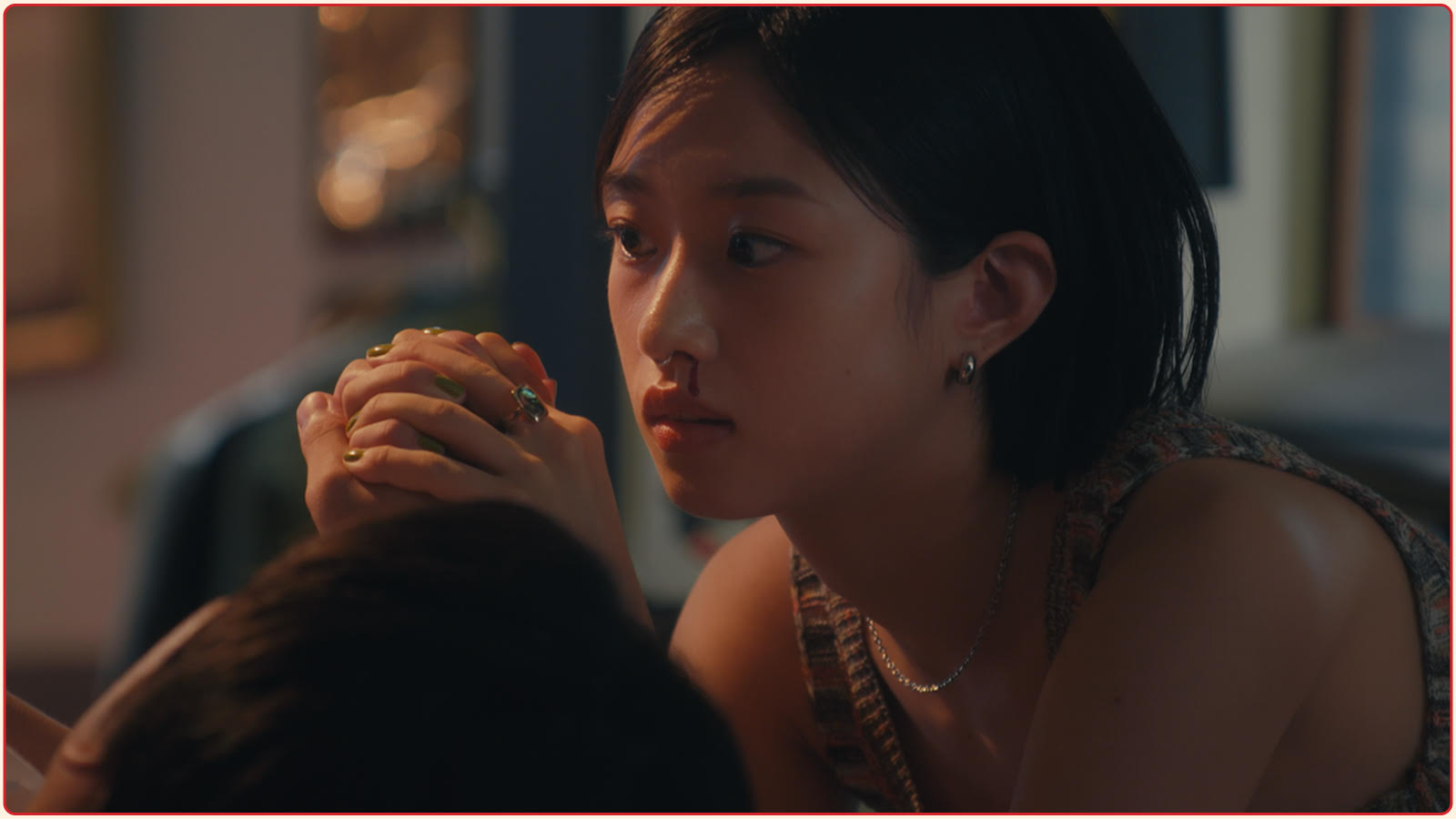
Desert of Namibia (2024)
EC: You open with a shot observing Kana from afar. Then you zoom in and, from that point, you’re quite close to her, switching to a handheld camera. Then, over time, you gradually reintroduce that initial sense of distance, again via the zoom. Would you say there’s a correlation between the changes that Yumi’s character undergoes and the film’s form?
YY: There is a gradual shift from handheld shooting to a fixed camera that revolves around the scene with the pink treadmill. That is when Kana wins her objectivity. Up to that point, we primarily used a handheld to follow her journey, while shifting to a fixed camera afterward. But also, when it comes to the handheld sequences, Yumi-san has so much agility that it was useful to be handheld in order to capture her movements.
The first scene does start with that zoom, but honestly, that was because we couldn’t get the permit because it was a train station and we were trying to figure out what to do. After we used that zoom, we realized we could use the technique to create some distance between Kana and the audience at certain points in the movie, because the topic is so vulnerable and sometimes the viewer may feel too close to the main character. So, whenever I felt it was right, I would use the zoom to gently shock the audience to take a step back from her.
EC: It also has a comic effect, because once we’re placed further away via this formal intervention the action that we’re witnessing is reduced to something like slapstick, especially when Kana and her partner are fighting.
YY: That’s exactly right. I agree. And this is a film where we are talking about how Japanese young people are having a hard time seeing the future clearly or seeing anything hopeful in the future. So I was thinking about Chaplin’s famous quote: “Life is a tragedy when seen in close-up, but a comedy in long-shot.” We are always complaining about how hard life is in my country, but perhaps we can laugh about it when we zoom out.
EC: You bring up the condition of young people in Japan, which I think mirrors that of young people in America insofar as I’m still close to it. Was this theme something that emerged as you wrote or something you were seeking to tackle?
YY: To be honest, I didn’t really want to talk about it at first. I actually wanted to make something like a period piece, something not set in our current world. Because it’s just too real and I think we are always thinking and talking about it. Of course, you can’t avoid it. We are submerged in it. But before I started tackling the script, I had extensive conversations with Kawai-san, and each time we met, we always returned to this subject of just how hard it is to live in the present world. And considering the budget, I could only shoot something in present-day Tokyo, not in period. So this is how it came to be.
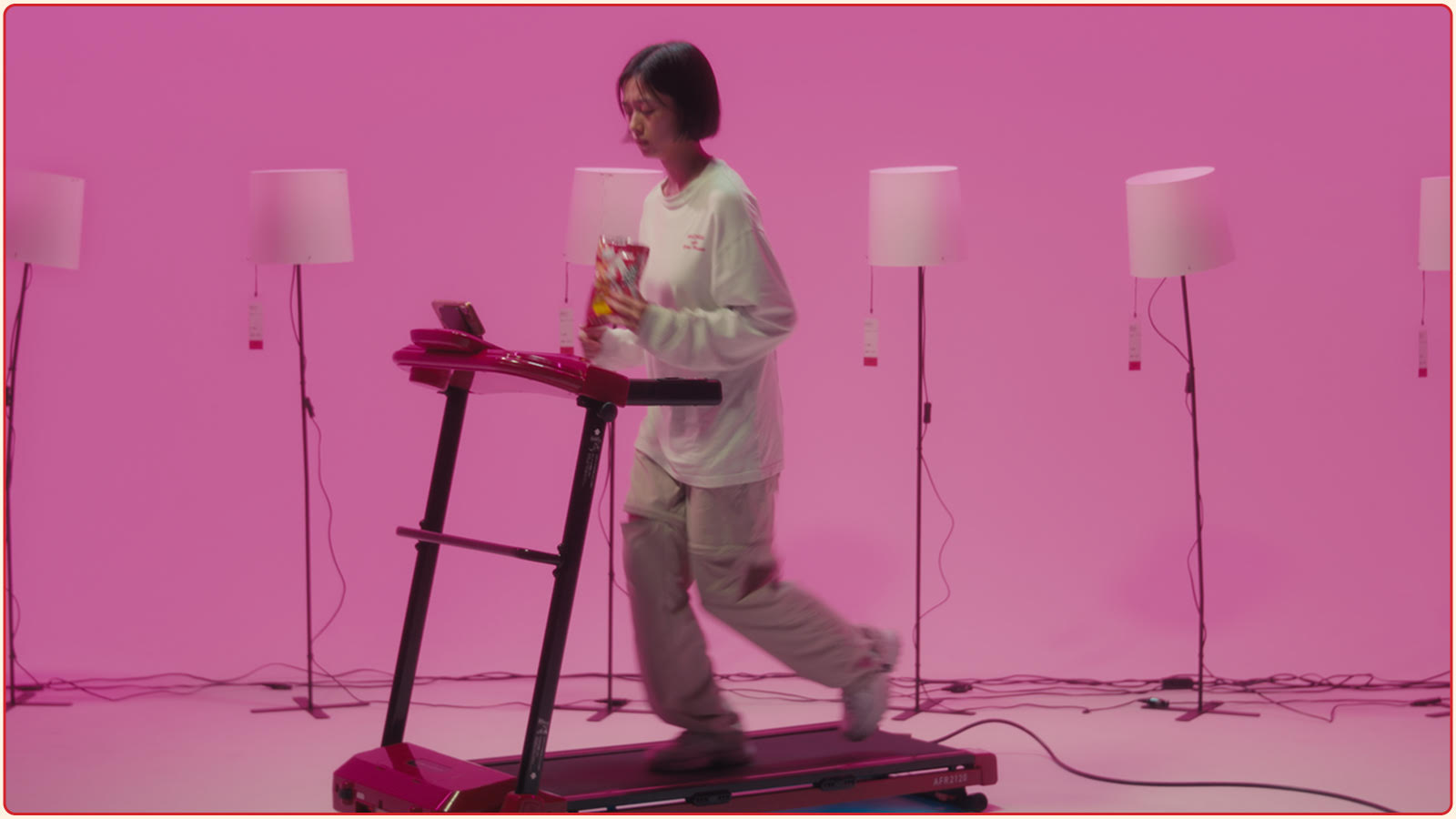
Desert of Namibia (2024)
EC: The other contemporary theme in the film is the question of identity as it relates to the notion of mental health. One of the things I find so unique about the film is that it’s not about either mental health or identity. Instead, you follow the character through her personal changes without putting a frame around her to indicate whether these are good or bad. Could you speak about making a film about a character who could be defined as mentally troubled, while refusing to define them as such?
YY: Everything you said is how I was feeling. So I don’t know if I can add anything to your already perfect analysis.
EC: I’m sure you have something to say about this!
YY: I just hate to be labeled personally, defined by someone else or by outside forces. So I think my moviemaking definitely has a style based on refusal. But because of that, I do get a lot of feedback along the lines of, “Okay, what’s your point? What are you trying to say?” When I get questions like these, I feel that I don’t care to hear what anyone has to say. And I think that is what it’s like to avoid being defined or labeled. Sometimes, I’m accused of evading critique or feedback, but I guess it is what it is.
EC: How has the film been received in Japan?
YY: It’s been very interesting. It’s not even as simple as some people loving it and some hating it. It’s all over the place. I do find this film acts almost like a mirror. Most people in Japan cannot talk about this film without talking about themselves. They see things that are not even in the script. In that sense, it is something of a Rorschach test. Some younger viewers say, “I can only be friends with people who like this film,” or “I can never be friends with somebody who understands what Kawai is going through.” Older women say “Oh, it’s so melancholy! I see myself in her.” And some older men say stuff like, “If I pretend like I understand this film, a lot of young people will like me.” Finally, some people say, “I just can’t even deal with this film at all.”
I believe that watching a film is the simple act of looking at a series of shots. For this particular film, however, people can’t stop talking about their own relationship with Kana/Kawai, the opinions and experiences she brings to the surface for them.
EC: This leads to another theme of the film, which is the problem of how women are defined in Japanese society or any patriarchal society. Even feminist movements face the challenge of defining women precisely so as to win freedoms for them. How do you see your film operating within cultural discourses pitched between feminism and patriarchy? Is it designed to resist such discourses?
YY: Yes, I have intentionally made it this way, but let’s say I’m pretending that I didn’t. I’m playing it cool! Sometimes I do feel the need to clarify my stance and reassure people about my intentions after a screening, but finally I believe the film should stand alone without my explaining it afterwards. Of course, I would like to have conversations about the film with everybody who sees it, but I can’t in this world.

Desert of Namibia (2024)
Share:
About the Contributor
Recommended
- Mississippi Mermaid
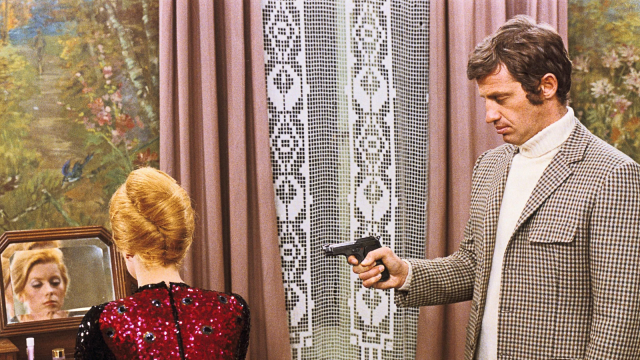 On Yves Saint Laurent’s striking costumes in François Truffaut’s subversive neo-noir.
 - Lady in the Water
 On the death of the critic in M. Night Shyamalan’s watery fairy tale.
 - Der Fan
 Eckhart Schmidt’s chilling cult fable and the all-consuming side of pop fandom.