
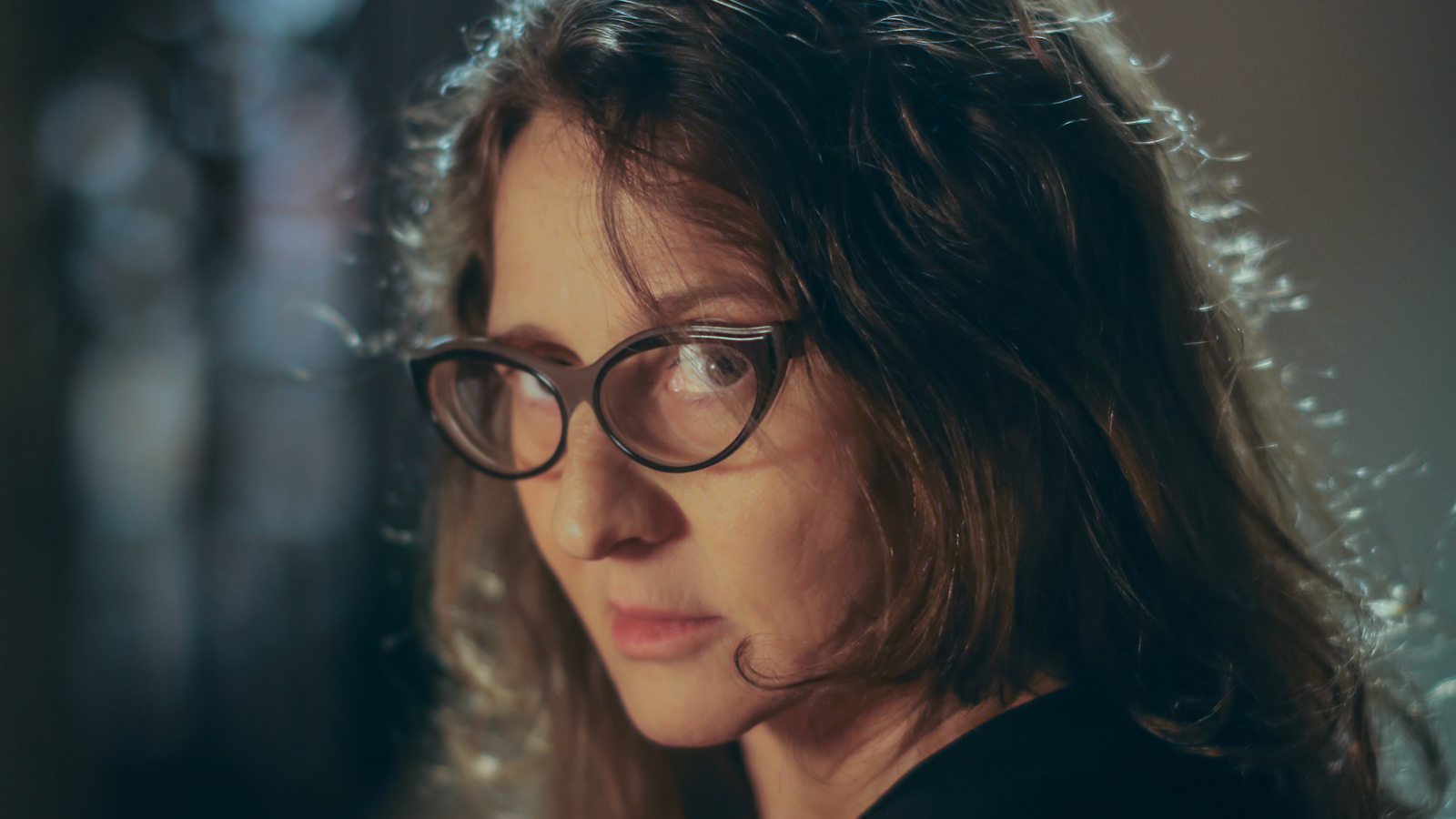
Lucrecia Martel, photograph by Eugenio Fernández Abril
Interview
Lucrecia Martel
Talking with the doyenne of Argentine cinema about her new documentary, historical responsibility, and the actual use of tear gas.
Lucrecia Martel Presents The Headless Woman takes place at Metrograph on Saturday, April 25, while The Headless Woman and Zama are now streaming on Metrograph At Home.
Share:
LUCRECIA MARTEL’S NEW FEATURE Our Land (Nuestra Tierra) will have its US theatrical run at the same time that a new restoration of her 2008 The Headless Woman graces select North American screens. These two films have more in common than their director, though Our Land is a work of nonfiction, and The Headless Woman a scripted work.
The Headless Woman concerns a bourgeois woman in her thirties, Verónica (the late, lamented María Onetto), an Argentinian of European extraction living in the country’s northwest, who, while driving distractedly on a roadway outside of Salta, strikes something—perhaps, she comes to believe, someone—with her car. She keeps driving, but her mind, never leaving the site of the collision, subsequently begins to unravel.
It is never entirely clear if Verónica is in fact culpable for vehicular manslaughter; only a dead dog is seen in the road behind her—to the viewer, not to Verónica—but the body of an adolescent boy, the son of an Indigenous houseworker, is dredged out of a canal near the scene of the accident. Even if Verónica is “innocent” in this particular instance, a sense of criminal conspiracy and free-floating guilt suffuses the film, a film in which the social and economic hierarchy that places white Argentines above the Indigenous population is persistently in evidence.
Our Land, many years in the making, revolves around an actual incident that occurred in Tucumán Province, also in the northwest, shortly after the release of The Headless Woman: a confrontation over a piece of disputed land involving three white Argentines, two of them armed ex-law enforcement, and a group of Indigenous Chuschagasta that resulted in the killing of a 68-year-old man, Javier Chocobar, and the grievous wounding of two other Chuschagastas, all with firearms brought to the scene by the outsider aggressors. Martel’s film covers the Chocobar murder trial, begun after an astonishing nine-year delay, but here, too, one particular act of violence is placed within a larger social context. It is a film about systematic disenfranchisement, yes, but also about how life goes on in spite of it, as various Chuschagasta subjects, poring over old photos, step forward to narrate their personal histories and those of their families.
When I spoke to Martel, two days before her scheduled arrival in New York—including a visit to Metrograph—I opened by telling her I thought that The Headless Woman and Our Land were two films very much in conversation. She responded: “I agree.” We took it from there. —Nick Pinkerton
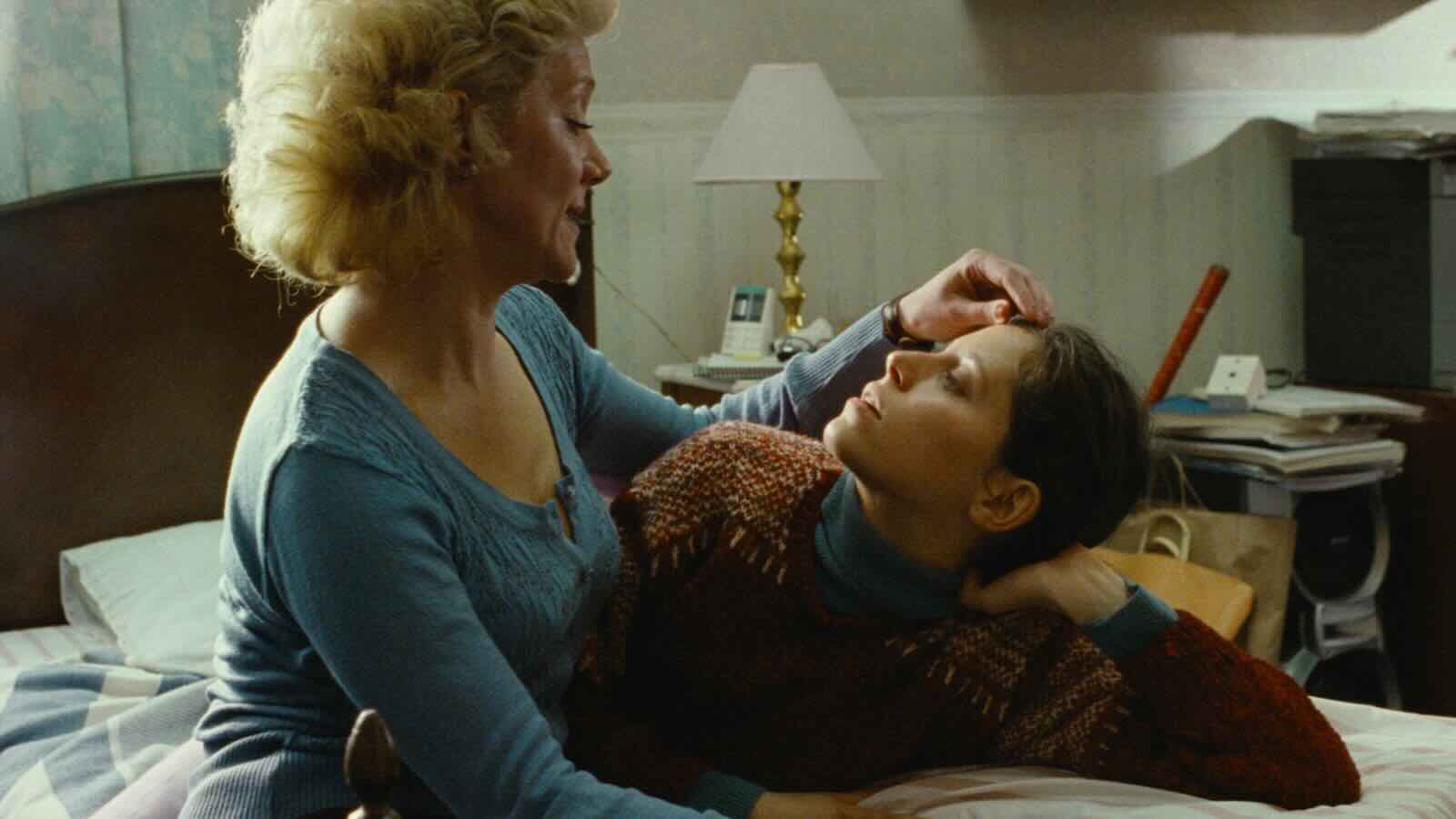
The Headless Woman (2008)
NICK PINKERTON: The Javier Chocobar case, perhaps unsurprisingly, was not a big news item in the US; was it in Argentina in 2009, or did it become more known after that?
LUCRECIA MARTEL: No, in Argentina it wasn’t news, either, and actually, events like these are quite frequent. It is appalling, the amount of murders, the number of people murdered. So if it were not for the film, this would be just one more of those events. That’s also one of the things we were hoping for—for awareness of this to gain some traction and hopefully start conversations, for this event not to be forgotten. And in this case, there’s even footage! But you know, the news cycle; a piece of news gets buried by the next piece of news… It’s a big problem.
NP: I know you have previously made television documentaries (1998’s Encarnación Ezcurra; 1999’s Las dependencias), short documentaries (1990’s La Otra, a student film for La Escuela Nacional de Experimentación y Realización Cinematográfica; an entry in the 2015 nonfiction anthology film El aula vacía) but it has been a while. Coming back to documentary filmmaking with Our Land, how, if at all, has your methodology or your approach to nonfiction changed?
LM: So those other documentaries you mentioned, those were assignments. And I was very young back then. To me, this is my first documentary. At the beginning, I didn’t feel I was equipped or qualified to do this. As time went by, I understood that I could do this. Because what we’re seeing—the fiction that is our country, Argentina—I felt confident I could narrate this using the tools I have from storytelling in fiction.
NP: One thing that strikes me is how much it is a film about storytelling. Not only do you have people relaying their personal histories, but that’s really what lawyers do in a courtroom. The defense, the prosecution, they’re creating two opposing narratives.
LM: So, allegedly, in a trial, what you do is search for the truth. Allegedly. But Argentinian history, this is something that was imposed upon us. So the search for truth can’t ever be an intelligent search. What cinema can do, though, is reveal how truth is fabricated. In this way, cinema is very powerful. Not just [because it can] tell a counternarrative, a narrative that is counter to the official history, but because it is able to reveal how truth is fabricated.
And that’s what we are trying for with this film. Because on an intellectual level, people in Argentina know that the land originally belonged to Indigenous people. We know this. But the Argentinian nation made a huge effort to erase, to deny, to forget that we know that. So being Argentinian means to live in a constant state of madness.
NP: There are obviously many different perspectives on display here; not only concerning the nature of truth, but also in terms of literal points-of-view: we move, for example, freely between the enclosed space of the courtroom and drone shots offering a long view of the disputed terrain, which is on the Chuschagasta people’s ancestral lands—if, that is, one accepts the existence of a Chuschagasta people, who’ve scrupulously been erased from official history. And the film starts with something like a God’s-eye view perspective, the Earth from outer space, like something from Artemis II.
LM: It’s a view from a space station.

Our Land (2025)
NP: And this adds another layer to things, because, while we’re invested in this very terrestrial struggle, we start out seeing a borderless Earth from afar, which adds… I don’t know if it’s a level of irony? It adds something.
LM: So, this is my take on it. Right now, the issue of land and private property is a worldwide issue—not only in countries that were formerly colonized. We are currently seeing many wars disputing territories. And by zooming in to one specific spot, it’s a reminder that this is a planet-wide problem. It doesn’t only happen in this place. This is why the film ends with one member of the community saying, “I believe that if [humans] found another planet in the universe, they would also tear it apart.”
NP: You give yourself an enormous amount of freedom to digress from the trial. At one point something like 10, 12 minutes are given over to exploring every branch on one particular family tree, through photographs, through the recitations of oral history that the photographs inspire. It’s not a “courtroom drama” in any traditional sense; at times, one almost forgets about the case entirely. Could you talk about the structural logic of those choices?
LM: I think there’s a very ironic way in which we shake off our historical responsibility. And that is by feeling sorry for the victim. It seems as if, once you are able to feel those feelings then you’re no longer responsible for what has happened. For me, it was very important that not happen. During the trial, you’re permanently building [up a portrait of] the victim. You are characterizing them as poor, you make them out to be like something inevitable—racism makes you think that there is a type of person who, naturally, will be a victim. So, we now are able to reason with something that really has no reason or rhyme. You justify having poor people, you justify them being completely displaced, completely disregarded; you say that they don’t want to work, that they’re lazy. And this is a horrible construction of the victims. This racist thought also frees governments and the wealthier classes from any responsibility.
NP: In a documentary you of course don’t have the same degree of control of the visual field that you have on a scripted film, where you can block a scene to your liking, or attempt to. But what you do have a certain amount of liberty with—and this is something you’re always very attentive to—is constructing soundscapes, manipulating sound. The courtroom scenes, for example, have a very particular air of technocratic menace: the whoosh of the metal detector wand, the constant “ping” of smartphone notifications, the muffled audio…
LM: Ah, sí. So, in the trial, in the courtroom, there are microphones everywhere—everybody has a microphone. But we were getting our sound from a terrible sounding speaker. A single speaker. So we had our cinema microphone really close to that. Afterwards, when we were trying to recreate everything, we noticed there were screeching sounds, or, you know, when you hit the microphone and it sounds like a thump? We thought: this could be really interesting for the material aspect of the storytelling. So, yes, we had to recreate some sounds so that they would sound better and clearer.
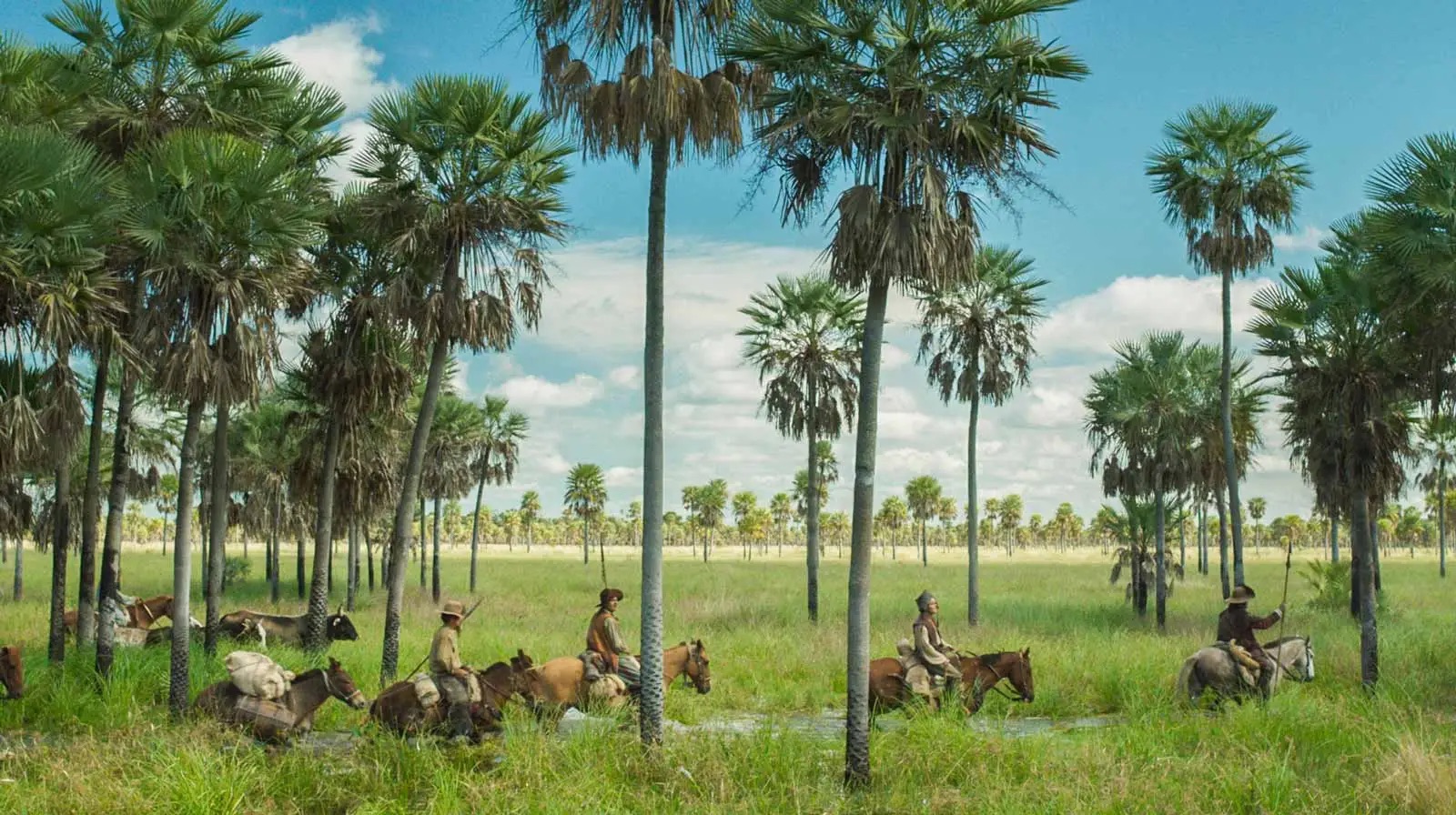
Zama (2017)
NP: When you’re writing a script, are sound elements incorporated into the screenplay? I don’t know how you could visualize, say, the opening of La ciénaga (2001) without the tinkling ice, the patio furniture scraping on concrete, the breaking glass…
LM: You know, I make notes in my little notebook. A script, it’s hard enough, boring enough, to read by itself; if I were to write all those notes on the script, too, I would get zero producers to sign onto my stuff! So I keep the notes to myself. I keep that out. [But] I think a lot about sound before writing the script. The sound elements are something I always keep thinking about and meditating on. The script in this film was an erratic tool—it was more a tool for research, for investigation.
NP: When we’re going through photographs and mementos in Our Land, there’s a very soft but present aural dimension that you bring to these archival artifacts… In an image where a flock of pigeons are present, some soft cooing, for example, as well as other less literal additions. It’s a lovely effect.
LM: All these sound elements you’re talking about… what we were able to do was, we requested the eSIM cards from the community’s cell phones. A lot of delicate sounds came from those that we were then able to use. You know, those sounds are so hard to make! A family, laughter, a friend playing the guitar—they were all there. That was all tremendously valuable.
NP: I greatly admitre the way you manage to use sound to extend the frame beyond the visible. It’s very effective in these moments of violence we don’t in fact see: the mother gouging her chest in La ciénaga; the naked man falling two stories off his balcony in The Holy Girl; the collision in The Headless Woman… It’s always just off-screen. Or, also in The Headless Woman, the rattle of the chain-link fence right before María Onetto turns to see the kid crumpled in the dust with heat stroke on the soccer pitch.
LM: To me, this procedure, when you’re not seeing something, it frees up your imagination. And you’re more attuned to what you are listening to. And, uh, on top of saving a whole lot of money— because it’s really expensive to create those accidents and be able to see them—it also leaves you wondering, “What is the cause?” So to me, this is a very valuable procedure. It keeps you active during the viewing of the film.
But I want to wrap up one idea of something you asked me before, which I did not wrap up. When we were talking about the construction of a victim in a racist context, you know, this inevitable victim, this construction really falls apart when—through photography—you’re able to show the life of this, you know, this human person.
I’m going to make an analogy here. You know when the police throw tear gas at demonstrators? I don’t think the point of the tear gas is for you to be teary-eyed and like, “Oh, now I’m going to leave the demonstration.” What the tear gas does is it creates a cloud of gas. And then it’s easier to shoot at people because you can’t see them clearly. So, it’s evident that in order to exert violence upon some people, it’s a condition to not understand them. Not understanding people allows you to exert violence on them.

Share:
Recommended
- Farley Granger
 On the queer star who defied mid-century Hollywood archetypes.
 - Geraldine Chaplin and Carlos Saura
 On the formidable collaborations of the Aragonese filmmaker and his American muse.
 - Genevieve Yue’s Trains
 On the offbeat pleasures of the train in Genevieve Yue’s new book.