
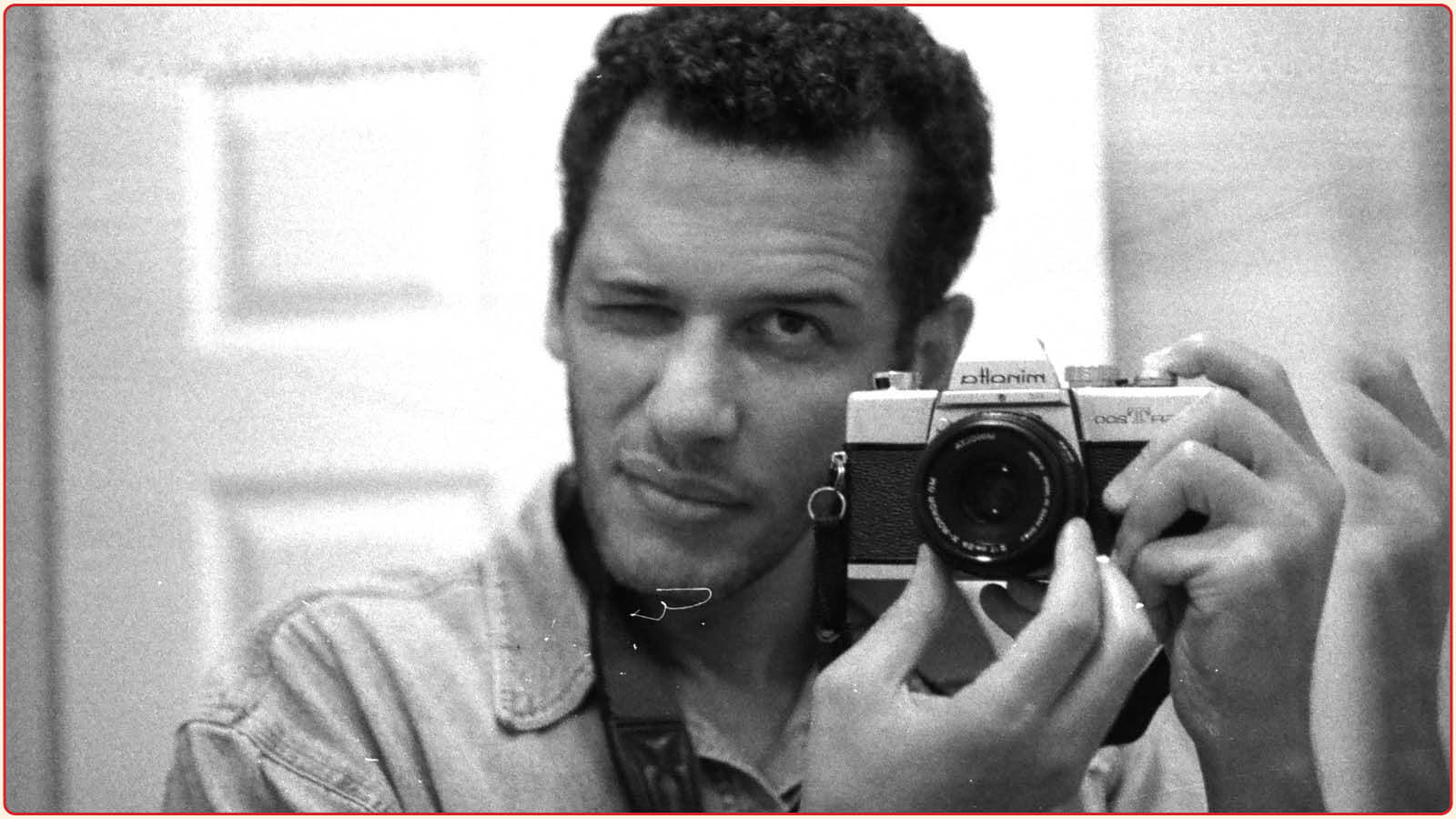
James N. Kienitz Wikins, courtesy the artist, 2023.
Interview
James N. Kienitz Wilkins
A conversation with the experimental filmmaker about influences, Americana, and finding a ”third way.”
Share:
JAMES N. KIENITZ WILKINS ISN’T a professional artist nor a professional filmmaker. Or at least that’s what he says. I met James in 2002, at the tender age of 18, both art school students at The Cooper Union curious about 16mm. At the time he told me, “Anyone who takes moving images seriously shoots on 16.” I looked up to him then, and I look up to him now, an ascetic priest of the indefinable medium he has conjured, invented in the smithy of whatever the soul might be called today (the smithy of his critical acumen?).
His films are conceptual juggernauts, questioning “the real,” undermining our confidence in “the authentic,” yet they read, through James’s freak-loving lens, as ineffably human—like in his first feature, Public Hearing (2012), a pseudo-documentary where weirdo non-professional actors reenact a town meeting about a WalMart supercenter upgrade, or in his most recent, Still Film (2023), where, over a simulated slide carousel containing 140 4K-scanned, nostalgia-infused promotional stills of Hollywood films, James voices all parts of a legal trinity (Prosecutor, Defense Attorney, and Witness) interrogating the first 18 years of his life—literally playing his own devil’s advocate.
He seems to despise labels. I see him as the love child of Frederick Wiseman and David Lynch. Some of his work reads as though Wavelength (1967) had been directed by Nathan Fielder, or if Hans Haake had a conspicuous fetish for Dunkin’ Donuts. But references don’t do James’s work justice. His films are too many things: they are works of sensory ethnography where kaleidoscopic heartfelt autofiction is narrated; social documentaries where postnet punnery abounds; mumblecore metafictions where racial tensions are perverted; late capitalist Americana where amateur actor oddballery ensues. They are all these contradictory mash-ups and their dialectical inverse, with these hybrid “genres” placed in air quotes—they are faux social documentary, faux autofiction, faux structural film, faux mumblecore—because James is lampooning these forms and the ideologies that undergird them.
I talked to him about his work, and prodded him to open up about references, techniques, and biography. But James grates at my feeble attempts to pigeonhole him into discernable categories. Despite this (or because of it?), his challenging, idiosyncratic, and brilliant films have acquired a cult status. More than one person has gushed to me about his work being genius, hilarious, and “so, so, so smart.” I couldn’t agree more: I’m always baffled, amazed, touched, and inevitably left laughing. His films have been feted at festivals like TIFF, Locarno, CPH:DOX, and the Viennale. He has been one of the invited artists to the Whitney Biennial, the Biennale de l’image en Mouvement, and has had solo shows at Gasworks and Spike Island. In 2016, the Film Society of Lincoln Center awarded him the Kazuko Trust Award. Regardless of this consecration, he feeds on and blossoms within marginality. He seems to embrace cages while trying to escape them: the cage of genre, the cage of precarity, the cage of calling yourself an artist or a filmmaker. Though he bristles at such constraints, it is within these that he finds what he calls freedom: the freedom of the “third way.” —Gabriel Abrantes

This Action Lies (2018)
GABRIEL ABRANTES: I want to start with inspirations and the villain origin story of James N. Kienitz Wilkins. You had a short film Springtime (2007) on 16mm, which had a man sexually provoking a motorcycle, if I remember correctly.
JAMES N. KIENITZ WILKINS: Oh yeah, you do remember. We’re starting out strong here.
GA: How come that’s not part of your official filmography? I ask because it really inspired me when I saw it. It made me really think about Kenneth Anger, and particularly Kustom Kar Kommandos (1965). Was that a shared reference?
JW: I think so. Especially at the time, since you and I were going to school at Cooper Union and were a stone’s throw away from Anthology Film Archives. Anger’s work was screened there all the time and was shown in class.
I was just at Anthology for the Ross McLaren memorial. Being there reminded me that Ross, who was a film professor from Cooper, he introduced us to this New York City experimental film and documentary and indie scene. I was getting these flashbacks. We were lucky to swim in it, or at least brush shoulders with it and have it at our disposal to some degree. Ed Halter and Thomas Beard were running the New York Underground Film Festival out of Anthology back in the early 2000s. I think that was the first festival that wasn’t a student film festival where I screened [a film]; it was a short, Nature Mature (pronounced Natter Matter, 2007), my thesis film.
GA: I see a lot of stuff in your films that I relate to. I guess that was my first curiosity: how much does it come from this education and nurture at Cooper? For example, I think a lot about the Guggenheim show by Hans Haacke, who taught me at Cooper, which was censored and canceled: his solo show where he’s sticking it to the man by portraying the museum trustees as slumlords. In your film This Action Lies (2018), you’re sticking it to the man in the same way. You’re referring to curators of a well-funded biennial, who’s poorly funding your film. And you’re talking about money issues and issues of being a dad. I was just wondering if ‘sticking it to the man’ is sort of a strategy that resonates with you—whether art can do that, whether experimental film can do that, or whether it’s part of the humor that it can’t?
JW: That’s a great question. I think this idea of being something of an irritant is interesting to me. Can you watch a movie that’s 35 minutes long that’s just a coffee cup? On its face, that just sounds irritating. But is there a point when it translates, when it actually becomes sublime? I mean to entertain. I know you do, too. So I’m also addressing the challenge of taking the back door, and still seeing if you can make it to this stage. I think we’re living in really confused times, especially in terms of cultural production. And I don’t think the man even knows when he’s the man. I feel like it’s constantly being shifted.
GA: Oblivious, shuffling gatekeepers?
JW: Yeah, or institutions being slow with money that’s promised. Not understanding the context in which things are produced when it’s one’s job to do that. Or, just frankly having a very, very cushy position—and there’s nothing fundamentally wrong with that—but you should accept that people should be making fun of you.
Ultimately, I’ve been struggling with what I am. Am I an independent filmmaker? It’s a very specific term.
GA: I see your films—especially Public Hearing and This Action Lies—as having a bit of institutional critique or the history of appropriation in art. How much of structural or experimental cinema are you inheriting, and continuing that tradition? And how much are you making fun of it, or trying to use it as an irritant?
JW: You activate; you enjoy thinking along with the movie. I’m glad you’re asking this, is it participatory in these modes?
GA: Or is it satire?
JW: I feel it’s both. There’s a third way. This idea of a third way is something that applies to a lot of different facets in my life. There’s just another way. A film can be entertaining. It can be structuralist, but I’m not part of a structuralist scene, you know? I’m not professionalized in a certain way. I think one can be sort of non-committal to movements, modes, techniques. Promiscuous, even, and take what’s needed. Maybe the result is that there’s a poking fun at [form], but also a respect.

The Plagiarists (2019)
GA: Yeah. You’re talking about a lack of professionalism, or amateurism, which is something you embrace a lot. I do as well. Especially in works where you have actors, I feel that’s really present. Most are amateurs or non-actors. So there are these references, like institutional critique, structural cinema, experimental film history—but then there’s also all of this comedy in your work. A lot of it comes from the dialogue, and your particular witticisms and puns, a lot of hilarious quotes from your films really crack me up. But the comedy also comes from the non-professional actors and their banal goofballery or oddity. I’m not sure if it is something that we’re laughing with or at. It reminds me of Tim & Eric and the weirdos that show up, or Nathan Fielder being criticized for “punching down,” since the people participating in Nathan for You and The Rehearsal are often the butt of the jokes.
JW: My general view is that everyone’s sort of a freak, myself included. Everything’s just always a little off in society, but off in a charming way. Maybe it’s just people watching. I wouldn’t say I have a high consumption of comedy necessarily, but I do find Nathan Fielder’s shows to be very fun. I was telling my students, we graduated at the dawn of YouTube. Our minds were blown because we were adults and didn’t take it for granted. But as for comedy, I don’t know. When you laugh, even if it’s during an uncomfortable moment, it’s the most reliable indicator that something’s working, you know? A laugh is a true response.
GA: Your films I invariably find hilarious. And it can be a movie that’s 35-minutes long that’s just a coffee cup [This Action Lies], or you know, these non-professional actors in front of big, still printouts pretending that we’re at jury duty with appropriated dialogue, like in Mediums (2017). That sort of creepy Americana that’s banal, and a sort of structural docu-eye. I was thinking: you’re sort of the mash-up of Wiseman and Lynch.
JW: I’ll take that.
GA: But it feels like you’re really underlining the oddity because that’s what brings you pleasure in it. And then, I really liked this quote that you use in Still Film of the Kodak CEO saying that “Film is America.”
JW: I thought about the limits of Still Film [i.e., only using publicity stills from studio press kits from the last 40 years] as a kind of structural container for what is actually quite a personal movie. I’ve been moving away from this idea of cinephilia—I don’t consider myself a cinephile because I don’t watch that many movies these days, due to demands on my time [family, making a living, making work]. I think about them all the time, but I just don’t have enough – so my knowledge is stuck in this earlier period. Still Film recognizes that limit. It’s like, how are you imprinted as a kid, in advance of then being imprinted as a young adult? How do you live with that? It’s very specific and generational, too.
GA: Continuing on the theme of Americana, are you portraying the weirdo banality of the late-capitalist American landscape? Dunkin’ Donuts, Panera, Walmart, Super Walmart, are consciously ubiquitous in your films. More recently I noticed Pond 5.
JW: I love Pond 5. You know, I’ve got to say, I have this feeling. It’s not a theory, it’s a method. At this point, I find it almost pointless to use music that’s not from Pond 5. It’s really interesting to me that music can just plug in and play. We all pretend the quality of Pond 5 and stock music is different from original music, but the reality is that when it’s merged with some other thought process, it works. It’s really working, even perhaps emotionally moving us.
GA: But I feel like part of your pleasure is putting Pond 5 in the credits, or a character saying “Dunkin’ Donuts.”
JW: That’s part of it, that’s true. There is a pleasure to the verbiage. I like the way certain words make my tongue feel, you know?
GA: And is “Dunkin’” funny, or is your obsession with Dunkin’ funny?
JW: I find Dunkin’ Donuts to be funny, sure, but it’s more about the dominance. I was offered the chance to put up some billboards in Tulsa, Oklahoma, and decided to do a series of Dunkin’ Donuts misspelled slogans. There’s only a few Dunkin’ Donuts in Oklahoma, maybe 12 in the state. It was started in Quincy, Massachusetts, so they’re everywhere in the northeast, but it hasn’t been a Western thing until recently. You can look at a map and see the westward expansion of Dunkin’. And it really looks like the donuts are rolling down and westward like stagecoaches.
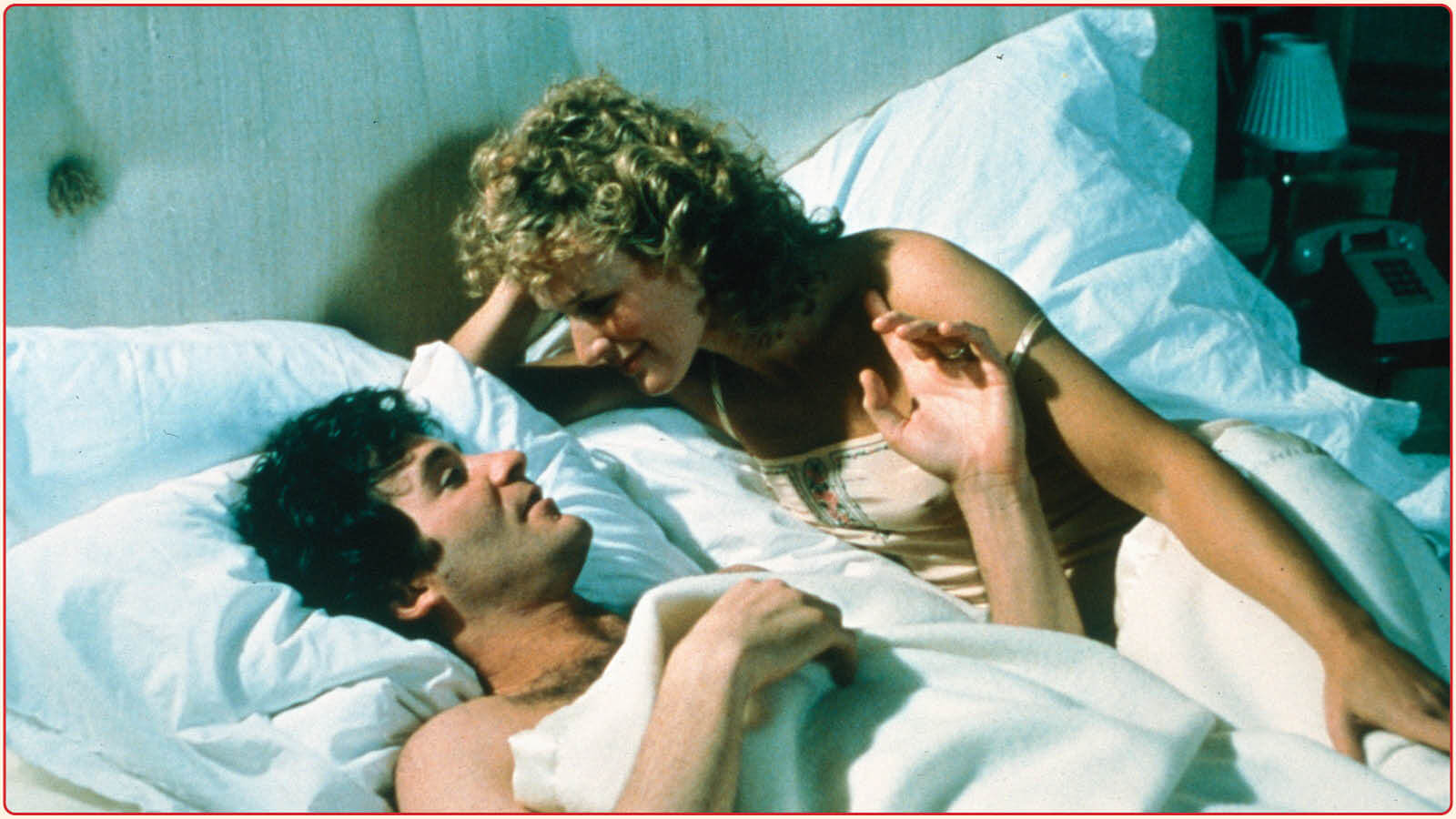
Still Film (2023)
GA: And you drink Dunkin’?
JW: I do. I wrote all of my notes for the movie that I’m working on now in a Dunkin’ Donuts, because I didn’t have a studio at the time. It was a very peaceful experience, I have to say. It was manic around me, but I got into my zone. I had my table. I went there every day.
GA: I’m curious about the writing as well. Obviously you appropriate a bunch—in Public Hearing you get this text, this PDF, and then you don’t even copy paste it, you just use it; you print it out or give it to your actors. But then a lot of these voiceovers are so elaborately written, there’s a real style to it. Like in Special Features (2014), where there’s almost like a Gertrude Stein-like use of repetition. It’s a labor of love, it’s constructed, and it’s full of gags. In that same movie, a guy telling a story says, “Then he shacked up with his girlfriend.” The other guy asks, “What do you mean? He moved into the same apartment with his girlfriend?” and he responds “No, Shaq the basketball player—they went to his house. They shacked up at Shaq’s house.” I’m paraphrasing from memory, but there’s that pun. Where does that come from? How do you write?
JW: I don’t remember where that came from. I feel like I was divinely inspired in that moment. It varies. There’s a point of inspiration in opening up a text and feeling free to fool around and have fun writing, which actually is key. But I do really like to write. I really like the form of the screenplay format—the idea of the screenplay, the document, is something I find to be guiding. I mean, Still Film was very, very structured. I was thinking of it as a carousel that rewinds, restarts, and all of this. Thinking about a slide carousel with 140 sides, and then all the different directions that you can go. It’s actually out of chronological order in the beginning, and then it gets shuffled and goes back to the original chronology. I knew I was developing that structure as I was writing. And I talk about structure because when I know the structure, these rules are bumpers. It’s actually really generative, you can do so much… It’s an open space that’s formed, rather than an enclosed one. Creating this order allows me to feel like a writerly freedom has been earned.
GA: It’s funny that you say you want to be free because a lot of your process consists in constructing constraints for yourself: “I’ve got my Kodak Carousel, it’s 140 slides long. I can go backwards and forwards 10 times exactly.”
JW: There is freedom in those rules. Still Film would only be done because it’s about up until I turned 18, right? That’s a cap. The carousel makes a lot of sense in terms of memory and all of that, and so there’s an easy cap there. Why have two carousels when you have one, right? To me, it’s about simplicity.
GA: Totally, yeah. Changing gears for a second. In Special Features, there’s a quote that the director character, the character you’re playing, says: “French people love Black people, love studying them.” The guy says, “Isn’t that racist?” And then the director is like, “Most definitely.” Where does race fit in your work?
JW: In the third way, man. I’m mixed race. I’m realizing as I’m aging into myself, it’s just important. So that line that you quoted, it is racist, which I have observed. That was based on personal experience. I don’t want to really get into like, how to be anti-racist and all this stuff, like the last eight years of our lives, this stuff being hammered into us.
GA: And you play with it in a weird way. Like even in The Plagiarists (2019)—which you wrote, and “Peter Parlow” directed—the relationship between the white couple and the Black guy is so funny. Allison [Emily Davis] being so angry about him plagiarizing Knausgård: it’s like, she’s angry that this Black guy appropriated white Scandinavian avant-garde culture.
JW: I was actually just talking to Emily about the character, because we were reminiscing about the movie. There is a read, I think, that Allison, despite being so incensed defensively, is actually coming from a place of confusion, because there’s a suggestion at the end that maybe she had some sort of dalliance with him, too, you know? Race aside, maybe she just has a weird relationship with him? And he’s a freak! So, I like those tensions. That, to me, is really what storytelling is made of.
GA: Frustrations with lack of time or money show up in your films, or quirkier pet peeves, such as technological “advancement,” video resolution, etc. It’s almost like a grumpy Larry David schtick that you created. Leaning into that, how do you feel about crypto, AI, streaming metrics?
JW: I’m optimistic about the future, because there was no promise to begin with. Should I be worried what the film industry that I don’t work in is going to not do for me? Or what the art world that I don’t work in is not going to do for me? Again, it’s the third way. I have made my own world, and it’s interesting to me. There’s a pursuit of freedom, in my “voice.” At the end of the day, the material tells you how it wants to express itself. Isn’t that freedom?
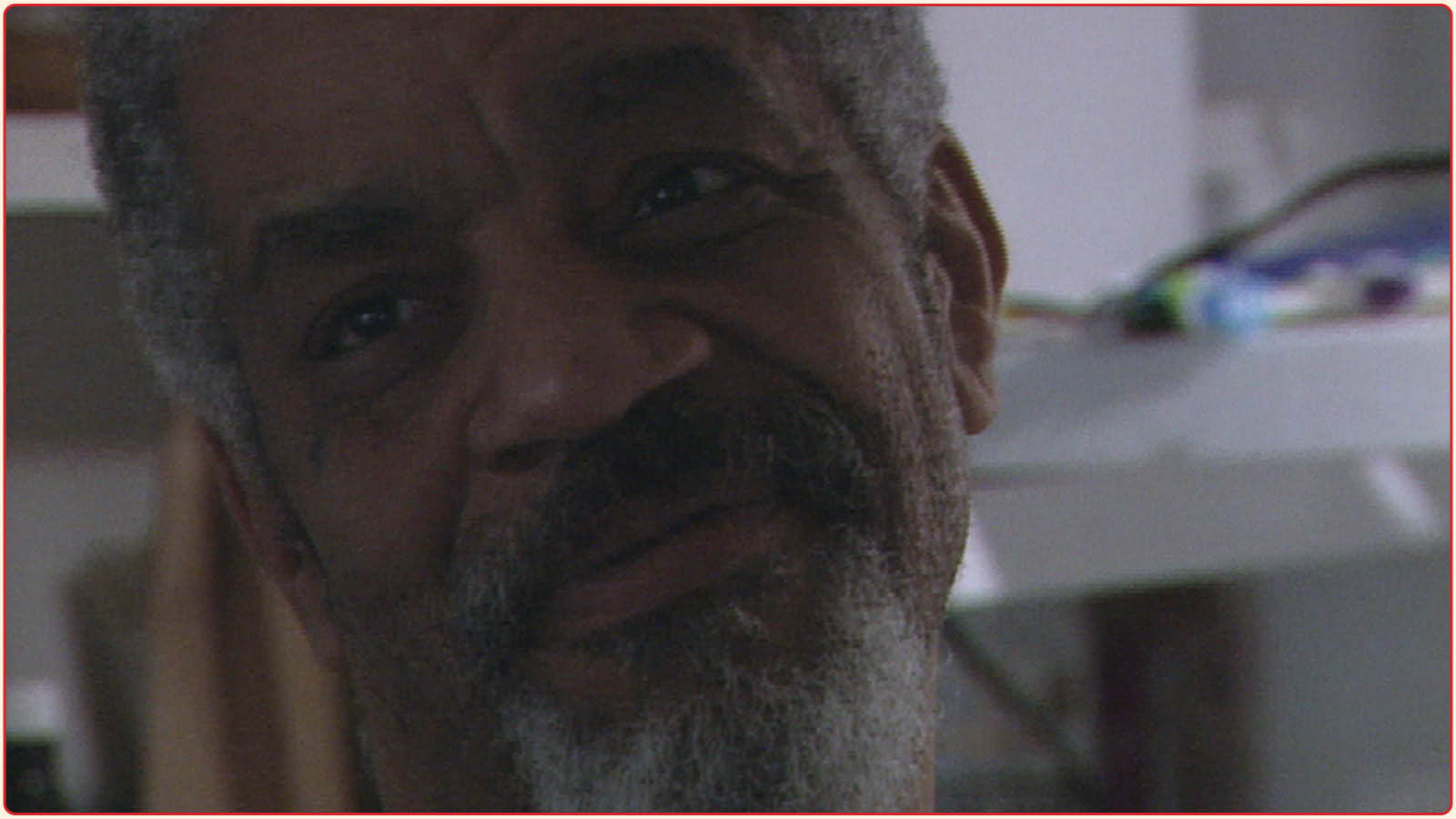
The Plagiarists (2019)

Share:
Recommended
-
Susan Seidelman
 An intimate conversation with the trailblazing American filmmaker.
 -
Carol Kane
 Fifty years in 50 minutes with the irrepressible screen icon.
 -
Mark Lee Ping-bing
 The legendary cinematographer reveals his three core beliefs.
- Farley Granger
 On the queer star who defied mid-century Hollywood archetypes.
 - Geraldine Chaplin and Carlos Saura
 On the formidable collaborations of the Aragonese filmmaker and his American muse.
 - Genevieve Yue’s Trains
 On the offbeat pleasures of the train in Genevieve Yue’s new book.