
I’m Not Everything I Want to Be (2024)
Essay
I’m Not Everything I Want to Be
On Libuše Jarcovjáková, the queer photographer drawn to the social fringes of Soviet Prague.
I’m Not Everything I Want to Be is currently streaming on Metrograph at Home.
Share:
THE CZECH PHOTOGRAPHER LIBUŠE JARCOVJÁKOVÁ—the “I” of Klára Tasovská’s documentary memoir I’m Not Everything I Want to Be (2024)—came of age as the Warsaw Pact tanks trundled into the capital city in August of 1968. The Prague Spring was over. “Now is not the right time for art,” Jarcovjáková recalls her mother saying after she received a rejection letter from FAMU, Prague’s prestigious film academy, which cited her “politically unreliable family.” “Why can’t I live my life the way I want?” she countered.
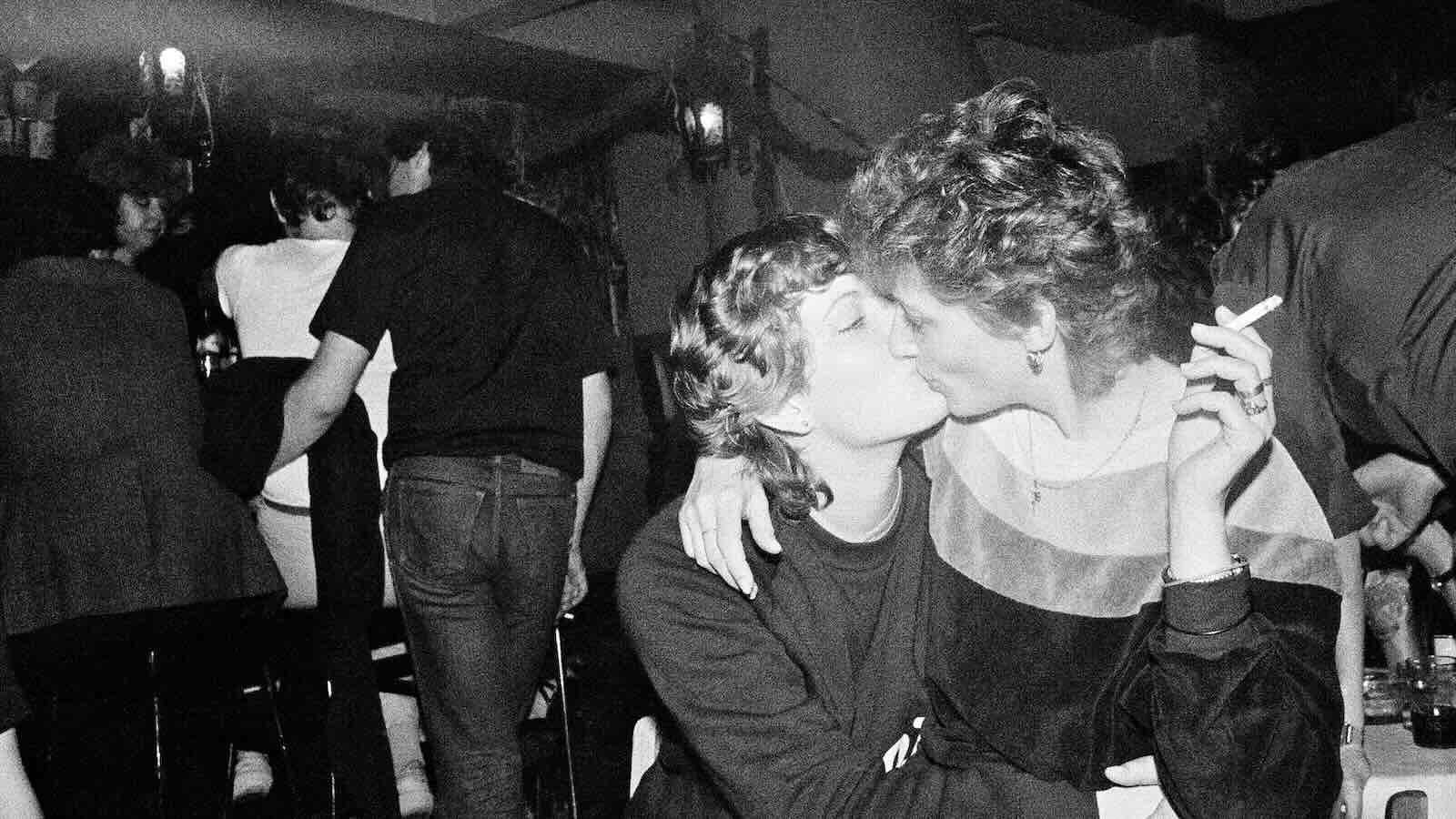
She never found a good reason. Hers would indeed be a life lived in steadfast defiance of the Soviet Union’s claustrophobic mores—as is borne out in her expansive, boldly personal body of work. Radiating unvarnished intimacy, the photographs she took of Prague’s fringe dwellers in the 1970s and ’80s—from scrappy Roma children puffing experimentally on cigarettes to its LGBTQ denizens caught up in clandestine revelry—have seen her retroactively labeled “the Nan Goldin of Czechoslovakia.” It’s a connection reinforced by Tasovská’s choice to structure I’m Not Everything I Want to Be as a slide show, inevitably recalling Goldin’s evolving opus, The Ballad of Sexual Dependency, as it was originally presented.
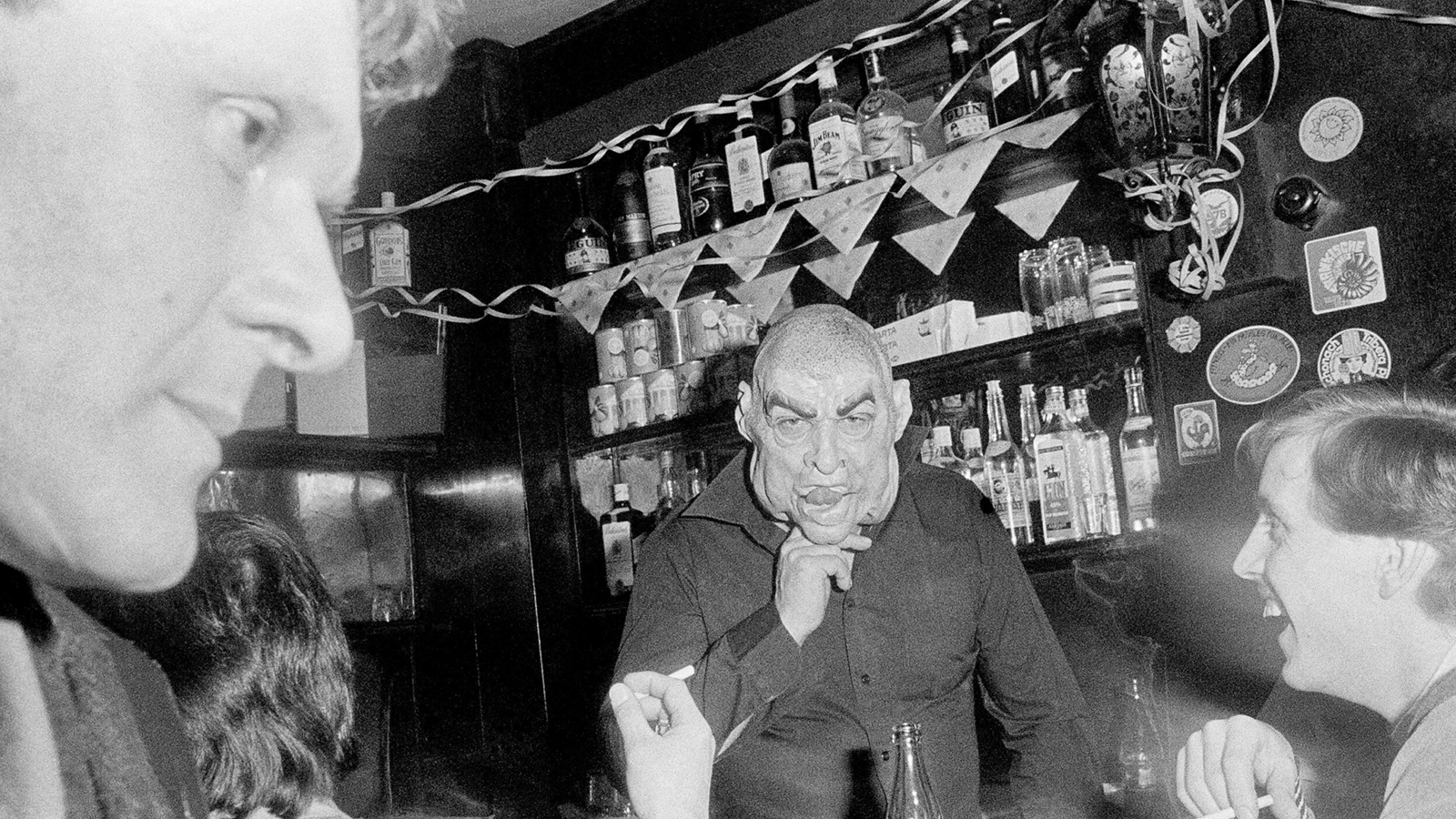
Beyond an unabashed first-person lens and the subcultural subject matter, Jarcovjáková’s work shares with Goldin’s an exhilaratingly offhanded quality—though she would shoot mostly in coarse-grained black and white rather than Goldin’s flash-brightened color. One of my favorite of Jarcovjáková’s images features a bartender in a ghoulish mask: the focal point of a breezily akimbo mise en scène, he stares directly into the lens, tongue protruding suggestively from the rubber. Loosely framing him are several patrons, their cigarettes aloft, mid-conversation and apparently oblivious to the gravitational pull of his gaze. Jarcovjáková in her own fashion made an art of the snapshot—sometimes scrappy, but always tender, always electric. Hers was, as Jack Kerouac wrote of Robert Frank’s The Americans, a photographic touchstone of the generation prior, “the gray film that caught the actual pink juice of human kind.”
I’m Not Everything I Want to Be (2024)
Where Goldin’s art star would rise and rise throughout the 1980s, however, Jarcovjáková’s would remain more or less dormant. During this period, she found brief success as a commercial fashion photographer in Japan, even taking designer Rei Kawakubo’s portrait, but her personal work went largely underappreciated. As she relays one art dealer’s assessment, “I can make unique compositions, but I don’t have much to say.” Meanwhile, in Czechoslovakia, the same photos said all too much, resulting in instances of their being actively suppressed.
It was not until 2019 that Jarcovjáková’s photographs were publicly exhibited, when a collection entitled Evokativ became one of the major attractions at the prestigious photography festival Les Recontres d’Arles. (Among the admirers garnered, Jim Jarmusch—whose former band, The Del-Byzanteens, played alongside early screenings of the Ballad.) In the show’s wake, the artist, then approaching 70, found herself suddenly buoyed up on a wave of celebrity.
Tasovská, as one of a flurry of filmmakers who sought to tell Jarcovjáková’s story, was distinguished by her intent to make something to the left of a conventional documentary. (The project was originally destined for Czech television, but quickly outgrew these small screen designs.) I’m Not Everything I Want to Be comprises some 3,000 images—whittled down from an archive 70,000-strong—assembled into sequences that are frequently stop-motion in their effect: pedestrians cross the frame; a child completes the arc of a swing. To achieve this, Tasovská gleaned freely from Jarcovjáková’s proof sheets—though a sense of motion pervades her published work, too. A strobing effect is used for a sequence set in T-Club, Prague’s only gay and lesbian venue, with each fresh tableau emerging out of a pulse of black. In tandem with Jarcovjáková’s even-keeled voiceover narration, drawn from passages in her diaries, and augmented by a subtly expressive Foley track and snatches of music, the film’s lightly animated quality works to evoke not so much Goldin’s Ballad as Chris Marker’s haunting “photo novel,” La Jetée (1962).
I’m Not Everything I Want to Be (2024)
Tasovská uses the success of Evokativ as a frame for an otherwise chronological narrative, beginning with her subject’s adolescence. Jarcovjáková was the oldest child of a creative middle-class household: her father was an artist and her mother, a commercial painter, was best friends with Ester Krumbachová—a key figure of the Czechoslovak New Wave for her work as a screenwriter and costume designer, and a filmmaker in her own right—whom the young Libuše in turn cast as her “role model.” “She’s used to seeing things differently,” Jarcovjáková avers.
Krumbachová, whose contributions to some of the New Wave’s most audacious films, Vera Chytilová’s Daisies (1966) among them, are understood to have far exceeded her credited roles, had come of age at the dawn of the Czechoslovak Socialist Republic. Alongside Chytilová (in fact the first woman to study directing at FAMU), she was part of a generation notable for the prominence of its women artists across a range of media. It would be inaccurate to label them a feminist movement—not least because the Western concept of feminism was thought to be of limited relevance in the newly communist state, where, for better and worse, the personal was already politicized. Nevertheless, Krumbachová, Chytilová, and their sisters in the arts did frequently produce work that plumbed the gap between gender roles, in cryptic but beak-sharp fashion. Paradoxically, it was the new totalitarian regime, with its enforcement of an equalized view of the sexes—which in material terms translated to, among other things, more university places for women, legalized abortion, and liberalized divorce—that prepared the ground for their self-expression.
Communism’s second coming, a period that went by the ominous name “normalization,” would prove much less tolerant of imagery that colored outside Socialist Realism’s rigid lines. And yet, Jarcovjáková would dispense with the thick mix of absurdism and allegory that Krumbachová and her New Wave peers used as armor against the state censors. Though often pricked with humor, her images—of domestic grunge and unruly bodies; of rowdy gatherings—are all raw sincerity.
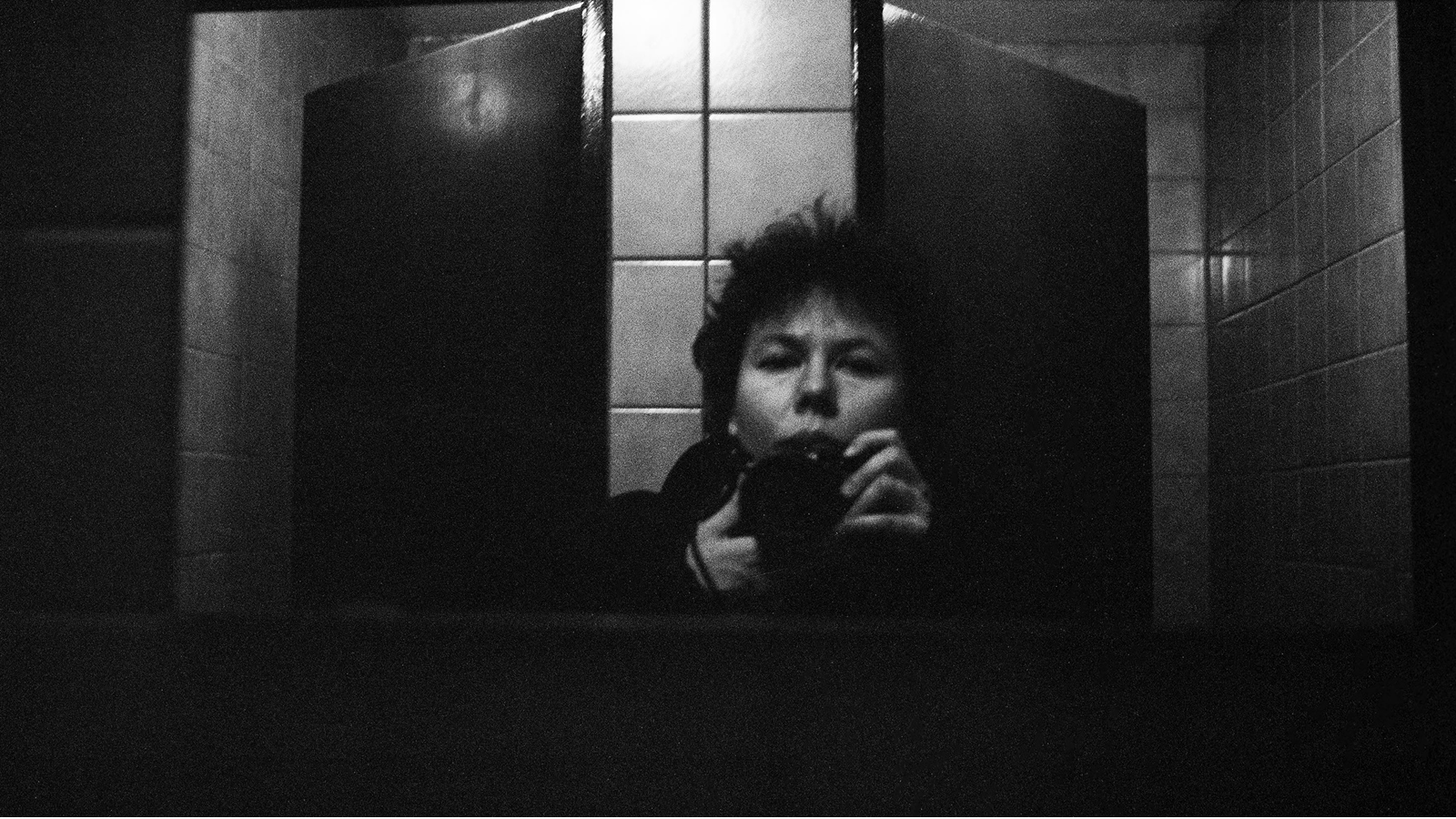
Meandering alongside Prague’s Vltava River with her camera in tow, at first the shy teenager only dares to snap passersby from behind, or from a distance. But her early auto-documentation—a plenitude of stone-faced selfies, mirror shots, and exploratory close-ups, both clothed and not—intimates the unflinching curiosity that would undergird both her practice and her life. There is something Cartesian in her self-portraiture, which became a life-long dedication: each photo is an inquiry into her own existence, the asking of which becomes its own answer.
I’m Not Everything I Want to Be (2024)
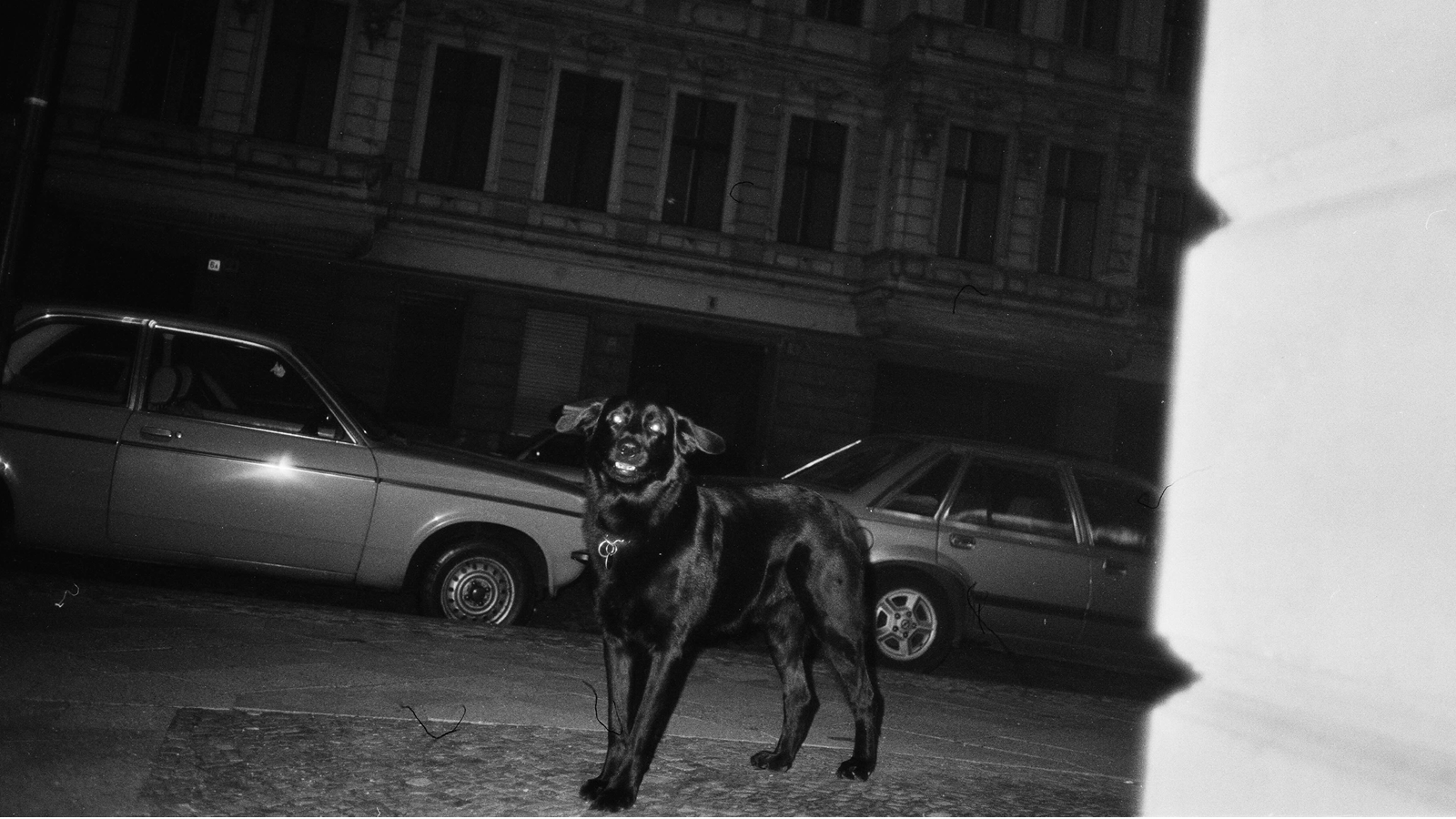
Tasovská’s film depicts a young woman who uses her camera to parse new territories as Jarcovjáková steps out from behind the Iron Curtain. Seizing on chance encounters, she gamely sets herself adrift in Tokyo and then West Berlin. But her independence is not without its costs: more than once, she falls afoul of both border patrol and the abortion committee. And her pursuit of art makes her vulnerable to remonstration by the state. At her first job, in a printing house—where she sought to earn the working-class credentials FAMU desired for admittance—she takes portraits of her hard-drinking nightshift colleagues, slumped over some amenable piece of equipment or sprawled out on the floor. When the photos get into the hands of factory council members, they’re branded as “defamation,” and she is banned from taking any more. Years later, a visit to the art historian and curator Anna Fárová, among the first in her field to promulgate photography as art and, in the regime’s view, a dissident, results in Jarcovjáková being followed by the Secret Police.
Perhaps the most high-stakes of the incidents recounted in the film is one that threatened the anonymity of the clientele at T-Club. For the first half of the ’80s, the bar was to Jarcovjáková what The Other Side in Boston and then Tin Pan Alley in Times Square were to Goldin throughout key periods in her own life: the heady epicenter of a sexually liberated, liquored-up counterculture; both bacchanal and refuge. (It’s there that Jarcovjáková meets the punkish Eva, nicknamed “Strawberry Bar” for her day job in a bakery, who becomes her first woman lover.) When one of the club’s patrons is found murdered nearby, the police want to use Jarcovjáková’s photos to identify the others who were there—a frightening proposition in a country where gay people, Jarcovjáková’s voiceover warns, “are not supposed to exist.” Thankfully, the only rolls she shot that night are over-exposed. Still, she decides to stop taking photos at T-Club: she doesn’t want to risk her work being weaponized by the state.
“I want to capture ordinary things,” says Jarcovjáková. For decades, this desire placed her work out of alignment with the interests of the Soviet Union and the art world alike—but history is a belated phenomenon (maybe especially so for women artists). To quote the unnamed protagonist of La Jetée, meditating on the seminal image of his youth, “Nothing sorts out memories from ordinary moments. Only later do they become memorable by the scars they leave.” Of course, photography is an attempt to intervene in memory. The snapshot in particular is a kind of promise: it makes a bid for the future value of a knowing expression, an unconscious gesture, an unmade bed, even as it anticipates the scar.
Share:
Recommended
- Der Fan
 Eckhart Schmidt’s chilling cult fable and the all-consuming side of pop fandom.
 - Bram Stoker’s Dracula
 On Coppola’s gorgeous and stubbornly old-fashioned approach to the immortal tale.
 - Christopher Doyle
 The legendary DP discusses working in different cultures, his collaborations with Wong Kar-wai, and dancing with Pina Bausch.