

Interview
Ed Lachman
An interview with the famed cinematographer on his newly restored directorial feature, capturing the making of Wim Wenders’s The State of Things (1982).
Share:
Wim Wenders’s The State of Things, a film about the vicissitudes of making a movie, gets its own behind-the-scenes treatment—or, at least, the segments shot in Los Angeles do—in Ed Lachman’s Report from Hollywood, in which one sees Wenders, legendary cinematographer Henri Alekan, and stars Patrick Bachau, Allen Garfield, and Sam Fuller as they kill time on set, run lines, and deal with hostile homeowners, incompetent labs, rubbernecking rednecks, and other hazards of the Seventh Art. Produced by a German film fund, Lachman’s newly restored film—among other things a beautifully lensed time capsule of 1980s Los Angeles—has only rarely surfaced since first airing on German television in 1984. At the East Coast premiere screening at the Rockaway Film Festival, Lachman sat down with fellow cinematographer Sean Price Williams to discuss the story behind the film.
SEAN PRICE WILLIAMS: Report from Hollywood was first aired in 1984, but today’s screening is the East Coast premiere. Where did it previously play?
ED LACHMAN: Yeah, it’s funny, it took 40 years to have a screening. The reason the film exists is because Wim [Wenders] asked me to do a “making-of” of The State of Things, so the money came from a German film fund, and when you make a film with money from a fund, they get a print. When I made it, they said, “Oh, that’s very nice. We don’t know what we can do with it,” because it wasn’t just purely a making-of. So it never screened—but I found it in the Munich Film Museum. It took them about three years to allow me to take the one print of the film out of storage, go across town and do a 4K transfer. That’s why it exists now.
SPW: There’s not a lot written about Report from Hollywood so I can ask the boring questions, like: how did it come about?
EL: I’d worked with Wim. I had seen his early film, Alice in the Cities (1974), and I became immediately taken by his work and Robby Müller’s, his cinematographer. Then I worked with Robby and Wim on The American Friend (1977) for the New York scenes, and later I shot Nick Ray’s film Lightning Over Water (1980), and then Tokyo-Ga (1985) with Wim, and we had become friends. But really the first director out of the German New Wave that I worked with was Werner Herzog—he was the one who gave me my start. I did How Much Wood Would a Woodchuck Chuck (1976), La Soufrière (1977), and Stroszek (1977) with his German cameraman [Thomas Mauch].
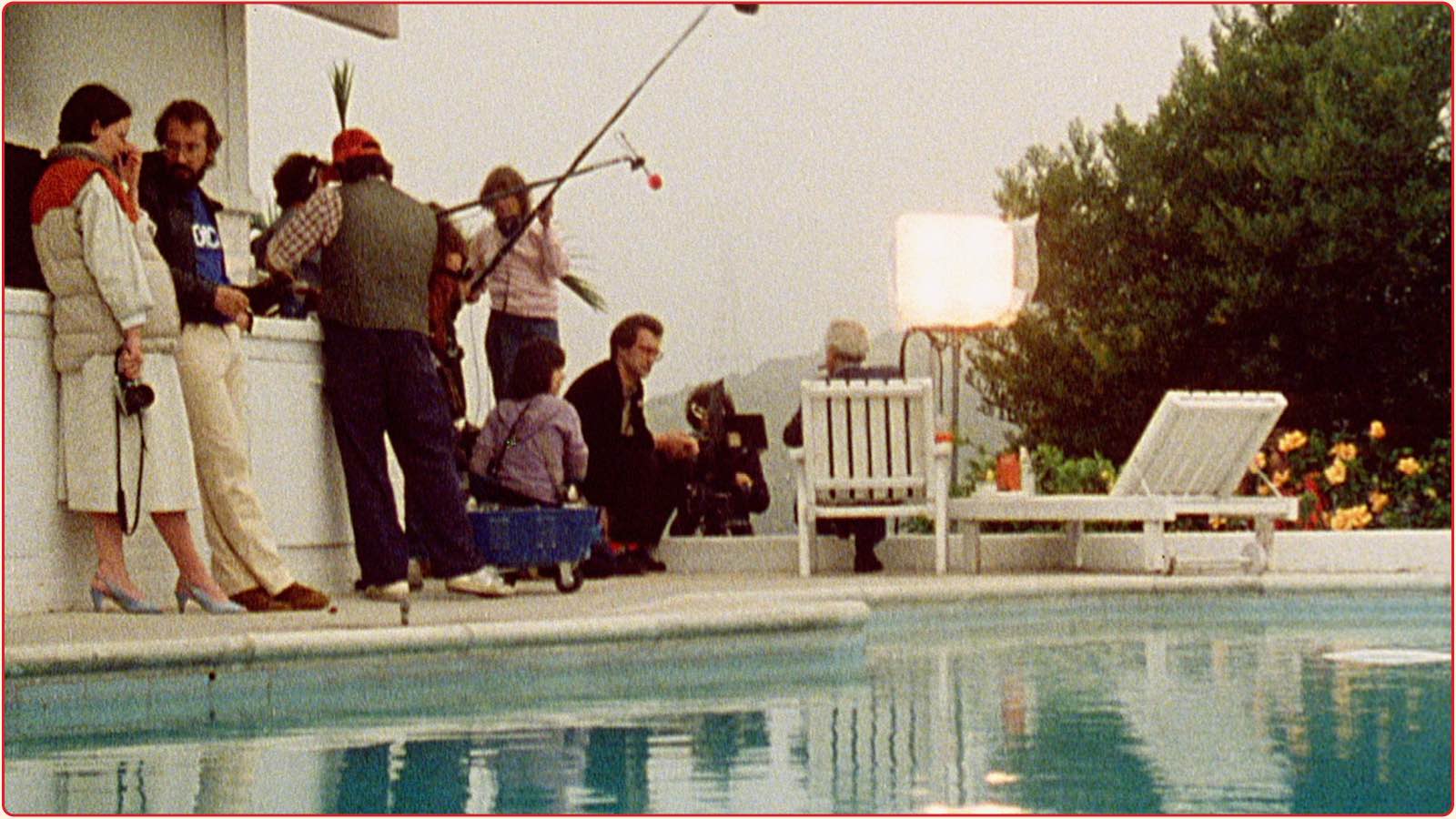
Report from Hollywood (1984)
SPW: You always say that you live in New York because it’s closer to Europe. You never really moved to LA, right? Was there ever a temptation?
EL: I still have a small Spanish hacienda apartment in LA that I’ve had since my early career. Back then, I wasn’t in the union yet, so I was working mostly with independent films—which I still do now.
SPW: The very first shot of Report from Hollywood, that’s in LA, from the set of Coppola’s One from the Heart (1982)?
EL: Yeah, I was on the set because Jean-Luc Godard was doing a visual representation of a film script, and I was shooting it. We started at [Coppola’s studio] Zoetrope, where Godard had an office, and so they let us shoot on the One from the Heart set.
SPW: What happened to that footage?
EL: We made two films:” one called Anatomy of a Shot, and the other, Une bonne à toute faire (1981)—because at that time, Godard wasn’t doing scripts. He was shooting visual representations of ideas for a script. That’s what he hired me to do: shoot ideas for the film that would become Passion (1982).
SPW: The State of Things (1982), that was the film Wim was making while waiting for Coppola?
EL: Yeah, it’s like a film within a film within a film—because this was his reaction to making Hammett (1981) with Zoetrope Studios.
SPW: It’s fun to watch Wim and Alekan, the cameraman. It looks like an indie movie being made by the guy who used to work with Cocteau and many esteemed people.
EL: Henri Alekan’s really a legend in French cinema and cinematography—he shot Beauty and the Beast (1946). He was born in 1909 and went on to shoot Roman Holiday (1953). He’s like the father of French cinematography.
SPW: But here he looks like a Jerry Lewis character playing a cinematographer. Do you have his book [Des lumières et des ombres, 1984], by the way?
EL: You know, I did. He gave it to me, signed it, and then it got stolen.
SPW: Sorry. It’s worth a lot of money.
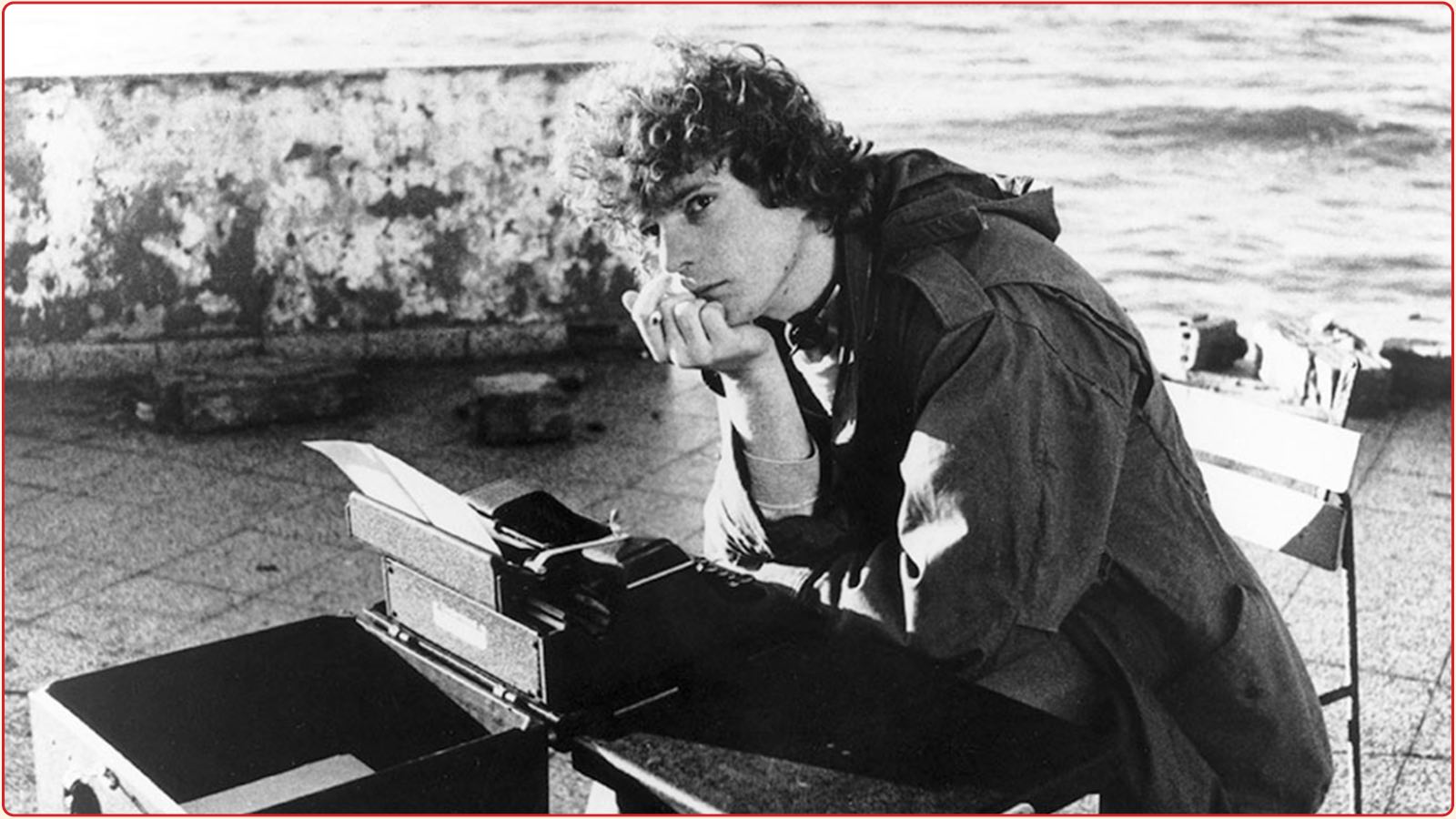
The State of Things (1982)
EL: I’ll say one thing particularly about the concept for Report from Hollywood. I came up out of cinéma vérité, working with the Maysles brothers, and so the influential film coming out of film school was Chronicle of a Summer (1961) by Jean Rouch and Edgar Morin, and then Le joli mai (The Lovely Month of May, 1963). Chronicle of a Summer was a critique of the Algerian War, but they couldn’t really openly talk about it, so they went across Paris—and this is one of the first times that the word cinéma vérité was used—with a small, independent camera, an Eclair NPR and a Nagra, and they asked people in the streets of Paris, “Are you happy? What’s your future?” Through that, they actually were very political. Then Le joli mai, made by Chris Marker and Pierre Lhomme, another wonderful cinematographer, that was made at the end of the Algerian War, so they could be more openly critical. Those two films were influential because they took the idea that one thing became many things. I thought that I could use Wim making a film in Hollywood that could tell the stories of other people I met at that time—Wim’s original film, The State of Things, is about a film being made in Portugal, and the money disappearing, and the filmmaker coming back to Hollywood to find out where the money is. It was a comment on what Wim was going through and the state of Hollywood filmmaking.
SPW: Is Report from Hollywood the first time that you were credited as director?
EL: I had done other documentaries. And I’ve since directed other films, like the concert film Songs for Drella (1990) and the feature Ken Park (2002), with Larry Clark. But my career took off as a cinematographer, and it was easier to make a film as a cinematographer than as a director. As a cinematographer you can go from film to film; when you’re a director, it can take years before you get the film made.
SPW: This is not a political film though, right? Or perhaps a little—about the industry?
EL: Well, they say all films are political. Once you take a point of view, you’re saying something.
SPW: Wim seems like a fish out of water in Hollywood.
EL: Of all the German directors out of the ’70s, he was actually probably the most influenced by American culture.
SPW: He loves rock ’n’ roll.
EL: Yeah. The music was very important, you see that through all his films.
SPW: Was there anybody at that time who you wanted to work with but didn’t get to?
EL: I was very lucky. There are of course films I said “no” to that ended up being interesting films, but I had other reasons.
SPW: Are there some that you regret not touching?
EL: No. Well… I would’ve liked to have been able to shoot River’s Edge (1986), but I had another commitment that I honored. But I’ve been very fortunate.
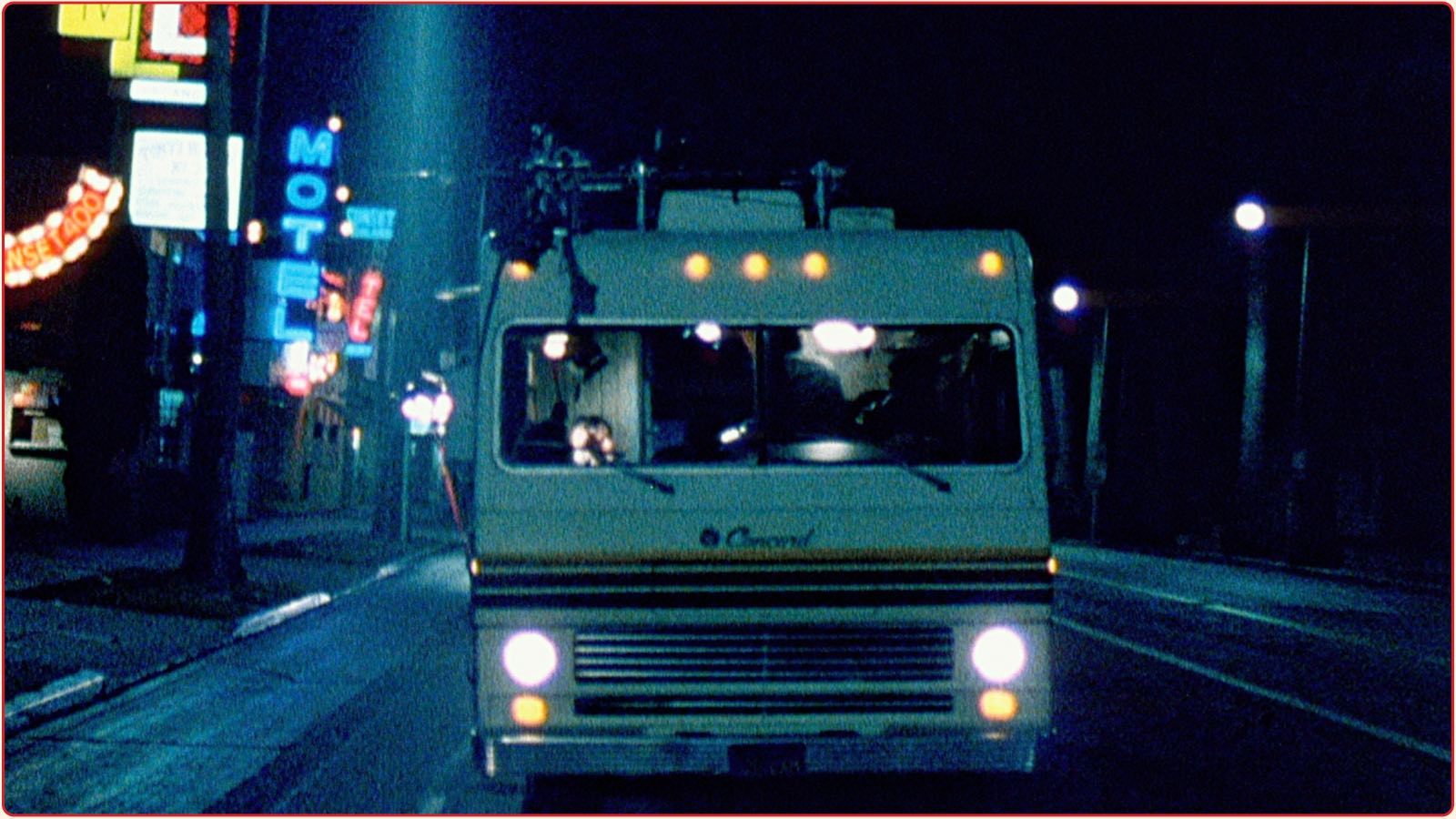
Report from Hollywood (1984)

Share:
About the Contributor
Recommended
- Futures and Pasts: Socrates
 Rossellini’s one-of-a-kind approach to the costume drama, and his 1970 film on the last years of the Athenian truth-seeker.
 - The Illiac Passion
 On the most elaborate of Gregory Markopolous’s modern myths.
 - Jollof Films
 Senegalese visual artists and curators discuss the towering cinematic figures who inspire their craft.