

Friends of Metrograph Weyes Blood, Ian Bradley, Anna Dorn, and Jennifer Krasinski each share a film they love, streaming on demand on the Metrograph At Home platform.

Night Tide, dir. Curtis Harrington, 1961
Mora is a mermaid, caught in the struggle between life in the raptures of the sea and life on land… or is she? Night Tide at first comes off as a bit of schlock, an aqueous beatnik horror teething with the possibilities of a time at the dawn of transformation-the early ’60s. A pioneering independent film, its association with the experimental scene is initially obscured behind a veneer of civility and nostalgia, but an undercurrent of side-show oddities, engulfing voids, and occult symbols prove Harrington’s propensity for a darker show-and hint at Dennis Hopper’s later work as a jester, dancing on the edge of the void.
Weyes Blood is the project of LA-based-singer, songwriter, multi-instrumentalist, and producer Natalie Mering. Greatly influenced by modern and ancient myths explored in film, Mering musically probes these tales through five critically acclaimed albums, the most recent being And in the Darkness, Hearts Aglow (2022).

Portrait of Jason, dir. Shirley Clarke, 1967
From the first moment Jason Holiday aka Aaron Payne appeared onscreen, I was instantly mesmerized by him and his compelling tales, which detail the complexities of being a Black gay hustler in 1967. Clarke’s documentary puts a spotlight on queer storytelling that is rare for its time. As an aspiring cabaret performer, Jason really gives a show throughout this edited 12-hour interview-making you laugh but also conveying the heartbreak of his journey through life. His ability to find humor and joy through the darkness is truly inspiring.
Ian Bradley is a Manhattan-based fashion stylist and editor, and a frequent contributor to T: New York Times Style Magazine.
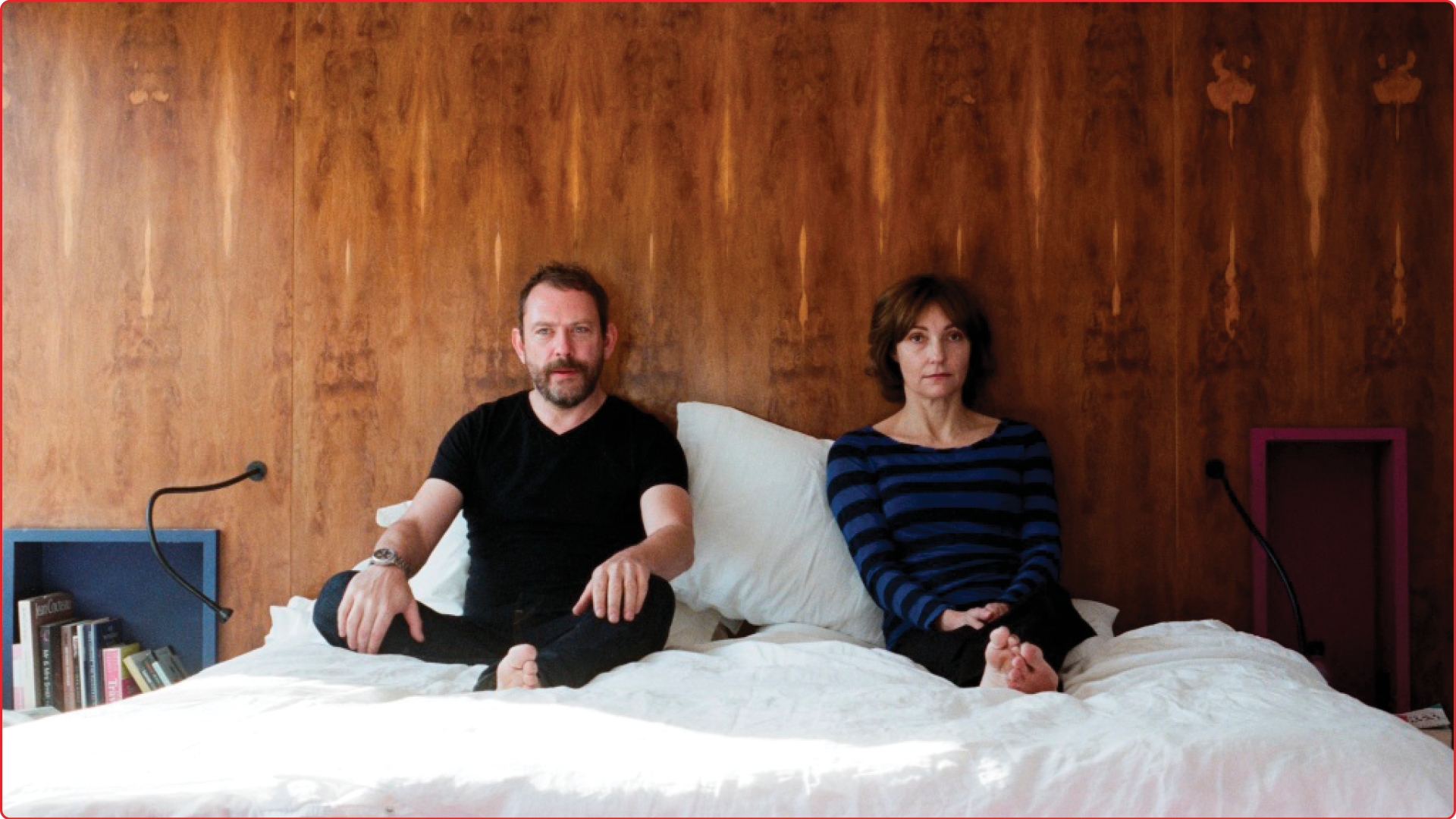
Exhibition, dir. Joanna Hogg, 2013
Hogg’s third film Exhibition speaks to me in its frequent depiction of people lying on the ground (a favored pastime of mine) and foliage blowing softly in the wind (a favored visual). It follows married artists whose lives mostly involve puttering around alone (relatable) and whose comfortable routines are threatened when their house goes up for sale, capturing how artists struggle to adapt to life’s bureaucratic realities. As with all of Hogg’s films, it’s meditative and intimate, honing in on a relationship in crisis. What else could you possibly want from a film?
Anna Dorn is an author and editor living in Los Angeles. Her next book Perfume & Pain is forthcoming from Simon & Schuster.
JENNIFER KRASINSKI selects
Machorka-muff, sicilia!, and where does your hidden smile lie?


Machorka-Muff and Sicilia!, dir. Danièle Huillet and Jean-Marie Straub, 1962/1999
Consider these three films together as a primer on the heroic cinema of Danièle Huillet and Jean-Marie Straub, lifelong partners and models of moral and aesthetic resistance. Their first, Machorka Muff-“an abstract visual dream,” per Straub-is a postwar German horror story that dissects its monsters with a chilly, disquieting elegance. Costa’s ingenious documentary captures the couple decades later, editing their 22nd film, Sicilia! As Straub hotly proselytizes about the distinctions between idea and form, Huillet keeps her hands steady on the reels-a canny portrait of the tender dissonance that fueled their seemingly seamless collaborations.
WATCH WHERE DOES YOUR HIDDEN SMILE LIE?
Jennifer Krasinski is a writer and critic, and frequent contributor to 4Columns, Artforum, Bookforum, and the New Yorker.
Portrait of Jason, dir. Shirley Clarke, 1967
From the first moment Jason Holiday aka Aaron Payne appeared onscreen, I was instantly mesmerized by him and his compelling tales, which detail the complexities of being a Black gay hustler in 1967. Clarke’s documentary puts a spotlight on queer storytelling that is rare for its time. As an aspiring cabaret performer, Jason really gives a show throughout this edited 12-hour interview-making you laugh but also conveying the heartbreak of his journey through life. His ability to find humor and joy through the darkness is truly inspiring.
Ian Bradley is a Manhattan-based fashion stylist and editor, and a frequent contributor to T: New York Times Style Magazine.
Exhibition, dir. Joanna Hogg, 2013
Hogg’s third film Exhibition speaks to me in its frequent depiction of people lying on the ground (a favored pastime of mine) and foliage blowing softly in the wind (a favored visual). It follows married artists whose lives mostly involve puttering around alone (relatable) and whose comfortable routines are threatened when their house goes up for sale, capturing how artists struggle to adapt to life’s bureaucratic realities. As with all of Hogg’s films, it’s meditative and intimate, honing in on a relationship in crisis. What else could you possibly want from a film?
Anna Dorn is an author and editor living in Los Angeles. Her next book Perfume & Pain is forthcoming from Simon & Schuster.
JENNIFER KRASINSKI selects
Machorka-muff, sicilia!, and where does your hidden smile lie?
Machorka-Muff and Sicilia!, dir. Danièle Huillet and Jean-Marie Straub, 1962/1999
Consider these three films together as a primer on the heroic cinema of Danièle Huillet and Jean-Marie Straub, lifelong partners and models of moral and aesthetic resistance. Their first, Machorka Muff-“an abstract visual dream,” per Straub-is a postwar German horror story that dissects its monsters with a chilly, disquieting elegance. Costa’s ingenious documentary captures the couple decades later, editing their 22nd film, Sicilia! As Straub hotly proselytizes about the distinctions between idea and form, Huillet keeps her hands steady on the reels-a canny portrait of the tender dissonance that fueled their seemingly seamless collaborations.
WATCH WHERE DOES YOUR HIDDEN SMILE LIE?
Jennifer Krasinski is a writer and critic, and frequent contributor to 4Columns, Artforum, Bookforum, and the New Yorker.
Machorka-muff, sicilia!, and where does your hidden smile lie?