
Spider Baby (1967)
Essay
Spider Baby
On Jack Hill’s classic horror-comedy, a film outside of time.
Spider Baby (1967) opens at Metrograph on Saturday, August 22 as part of That Most Taboo of Red Meats.
Share:
IT’S A POPULAR CLICHÉ THAT the 1960s didn’t really begin until sometime in the middle of the decade—maybe when President Kennedy was shot, or when the Beatles landed in New York, or certainly by the time Bob Dylan “went electric” at Newport. In film history, the dividing line between the ’50s and ’60s appears starker, with two 1960 releases—Jean-Luc Godard’s Breathless and Michelangelo Antonioni’s L’Avventura—that retroactively announced the beginning of modern cinema. An even more decisive Big Bang moment occurred that same year in the American horror film, when Anthony Perkins’s kitchen knife appeared to slice through the repression and censoriousness of the last decade.
But attempts to package history into such easy narratives are suspect, since the past and present always coexist, and the new is only shocking when surrounded by and placed up in sharp contrast against the old (the first Ed Sullivan Show episode with the Beatles also featured a magician named Fred Kaps and a young Davy Jones as part of a production of Oliver singing “I’d Do Anything”). The decade that brought Psycho as well as Rosemary’s Baby, Night of the Living Dead, and Targets (all 1968)—films that were revisionist, sometimes transgressive, and plugged into the zeitgeist of a turbulent sociopolitical moment—also saw the previous generation’s horror movies ascend to new heights of popularity on television. Baby boomers grew up absorbing the horror genre’s foundational texts, like Dracula and Frankenstein (both 1931), and building “monster kid” identities through magazines like Famous Monsters of Filmland. For channels that couldn’t get the great Universal or Hammer films, there were always the cheaper Old Dark House mysteries made by “Poverty Row” studios in the ’30s and ’40s.
No horror movie of the ’60s dissolves the old and the new quite like Jack Hill’s 1967 independent film Spider Baby (full title: Spider Baby, or The Maddest Story Ever Told), whose slippery tone both calls back to the wry spookiness of James Whale’s The Old Dark House (1932) and forward to the transgressive horror of Tobe Hooper’s The Texas Chain Saw Massacre (1974). The film announces its postmodern irreverence with animated opening credits that play to a kooky novelty song very similar to Bobby “Boris” Pickett’s then-recent “Monster Mash.” “Teenage monsters in a haunted house,” sings a haggard voice. “The ghost on the stair, the vampires bite / Better beware, there’s a full moon tonight!” After that goofy setup, the film announces that nothing is off limits by swiftly and brutally killing a veteran comedian.
Spider Baby (1967)
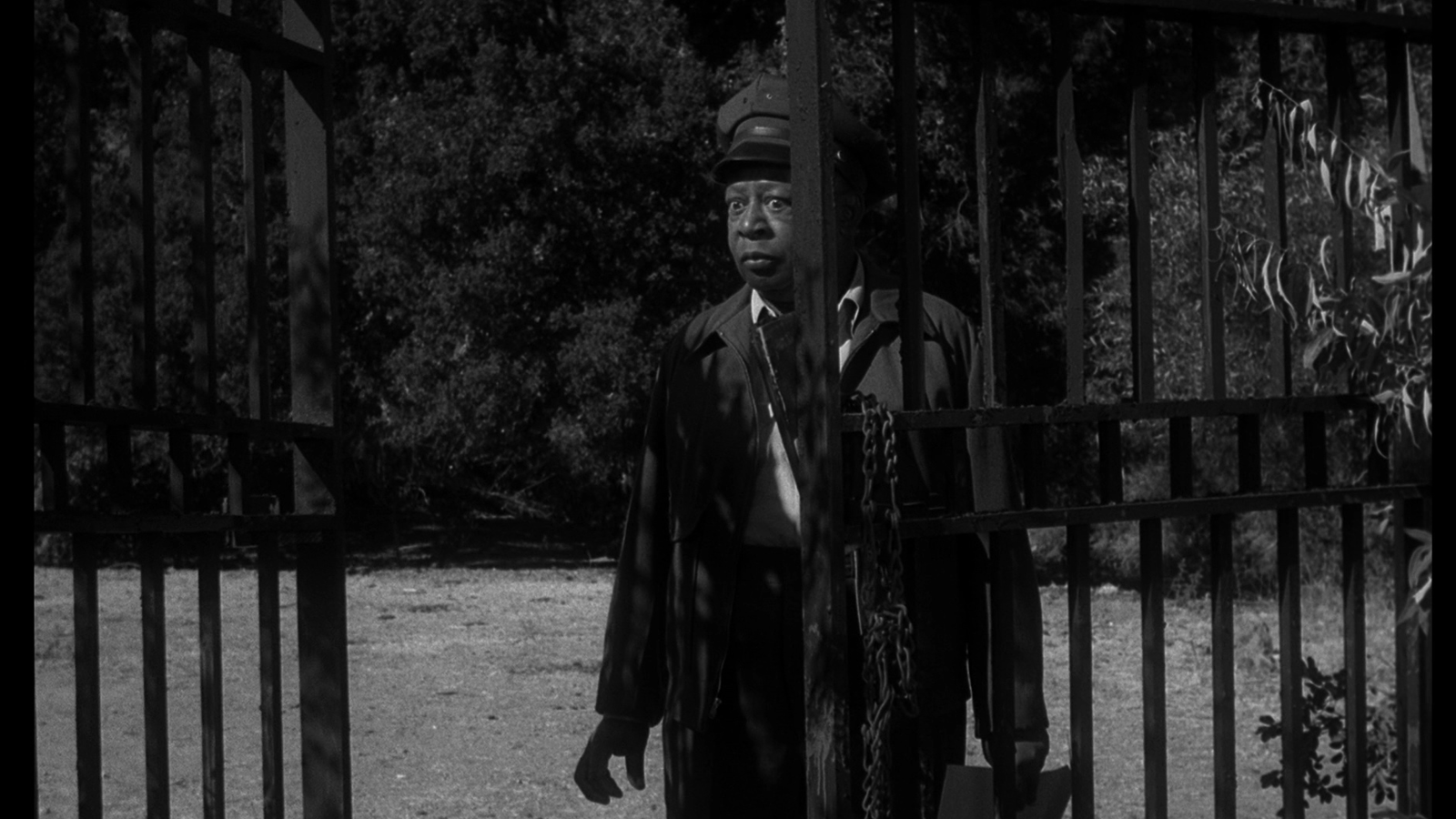
The voice in the credits belongs to Lon Chaney Jr., remembered then and now as Universal’s Wolf-Man. But before we meet him on-screen, we see another holdover from the old times, Mantan Moreland. Once famous for his comic relief role as chauffeur Birmingham Brown in 15 of the popular Charlie Chan detective entries for Monogram Pictures, Moreland was about as visible as a Black star in mainstream films was permitted to be in the ’30s and ’40s… but his scaredy-cat shenanigans became decidedly outmoded in the Civil Rights era. Moreland’s finest hour was probably King of the Zombies (1941), which, like most Poverty Row horrors, was mostly set in and around one spooky house. Spider Baby nods at that history by casting Moreland as a bumbling deliveryman who stumbles upon an Old Dark House. When he is quickly dispatched, it feels like the symbolic ending of an era.
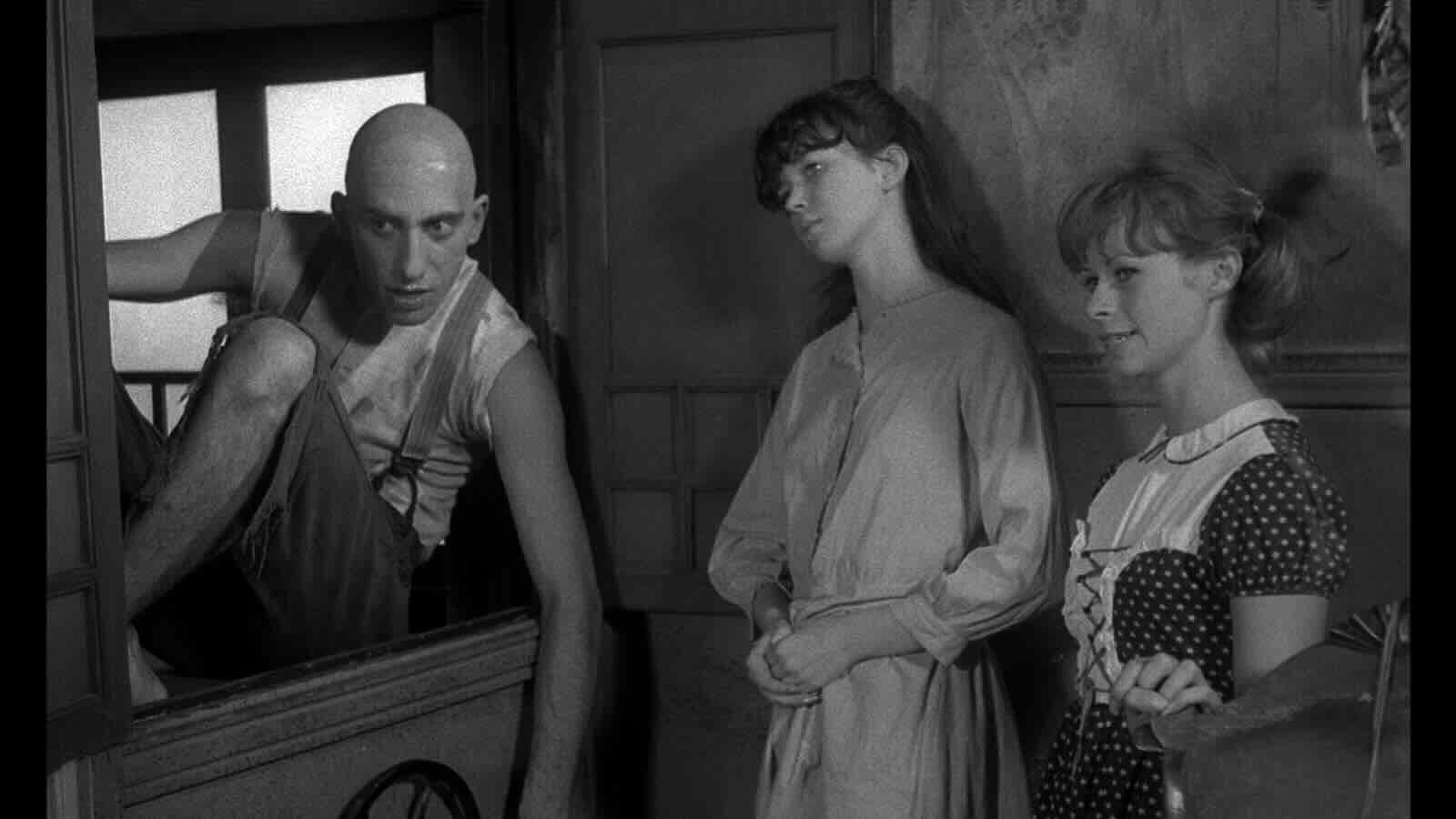
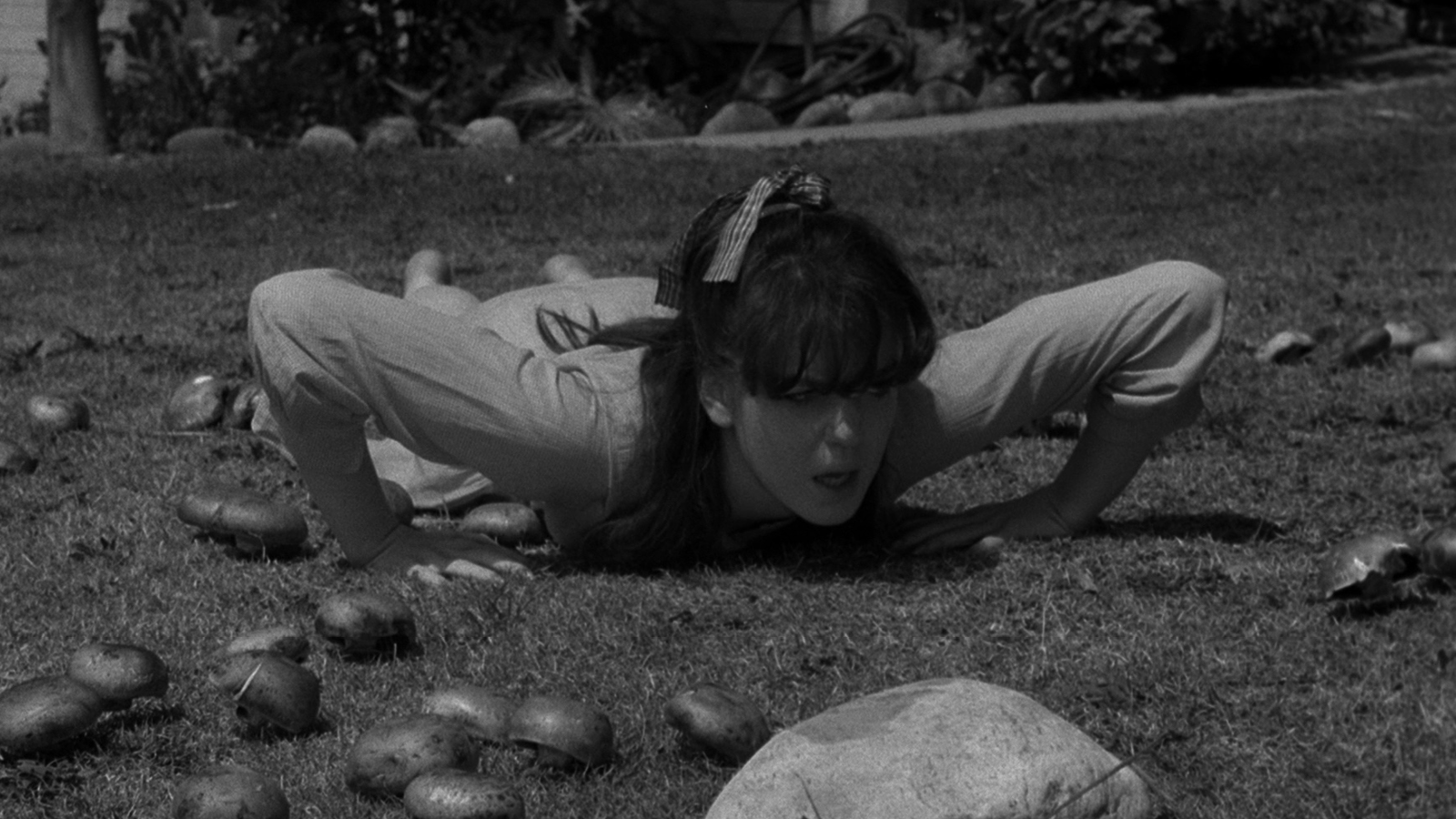
The Old Dark House in question is the crumbling Merrye House, home to three adult orphans afflicted with a mysterious genetic ailment that has regressed them to a pre-pubescent mental state. Moreland’s murder comes at the hands of Virginia (Jill Banner), the titular Spider Baby, who eats insects and catches visitors in a web-like net. Her sister Elizabeth (Beverly Washburn) wears her hair in pigtails and acts like Carroll Baker on the poster for Baby Doll (1956), and their cheerful but mentally toddler-like brother is Ralph (Sid Haig), who looks as much like Schlitzie from Freaks (1932) as it’s possible for anyone who isn’t Schlitzie to look. Together, the siblings are sequestered from society by Bruno (Chaney), their old caretaker, who swore to the long-dead patriarch that he would protect the family.
Spider Baby (1967)
Chaney gives Spider Baby his last great performance, wearing all his years of alcoholism and depression on his sad face, and giving the film its emotional anchor. The fragile peace is disrupted when two alleged heirs to the Merrye fortune—distant cousins Peter and Emily (Quinn Redeker and Carol Ohmart)—arrive with their lawyer to claim the property. From there, the horrors gradually escalate, with sadistic violence and transgressive implications (Virginia stalks the men in the film with the sexuality of an adult but the mind of a child) but with Hill maintaining a tone of tongue-in-cheek bemusement. Virginia’s brutal “spider” killings create a stimulating tension with the light, jazzy score bouncing on the soundtrack.
Spider Baby was Hill’s directorial debut, squeezed in between odd jobs for Roger Corman: Hill photographed stray scenes for Battle Beyond the Sun (1962), shot second unit on Francis Ford Coppola’s Dementia 13 (1963), ghost directed on Corman’s gothic hodgepodge The Terror (1963), etc. From the Corman School, Hill learned efficiency and frugality, delivering Spider Baby in 12 days for $65,000—enough that the movie appears handsomer than most low-budget horrors (Alfred Taylor’s cinematography creates moody atmosphere from both the mansion’s shadowy interiors and the bright California sunshine), but not too much to stifle its loose, anything-goes spirit.
Immediately, the film was caught in litigation when its distributor went bankrupt, and Hill returned to the Corman mines. He would go on to direct many beloved exploitation films, but none that poked and prodded the expectations of their genres like this. Shot in 1964, but not released until three years later—and not widely seen until the video boom of the ’80s—Spider Baby never quite belonged to any particular moment. It feels like what the horror genre would dream about itself if it could sleep.

Share:
Recommended
- The Illiac Passion
 On the most elaborate of Gregory Markopolous’s modern myths.
 - Jollof Films
 Senegalese visual artists and curators discuss the towering cinematic figures who inspire their craft.
 - Winona Ryder
 A Hollywood “It“ girl comes of age.