Essay
Why Look at Cats?
By [wpbb archive:acf type=’text’ name=’byline_author’]
A look into movies that star felines and the cultural space they have occupied over the last century.
 John Berger
Sometimes, when I’ve sunk into my couch and my cat has sprawled himself out on the arm beside me, I challenge him to a staring contest. I always lose. But even after I lose, and blink my stinging eyes, he does not look away. In his essay, “Why Look at Animals,” John Berger describes this look as a profound moment for humans and, presumably, for animals. This look, I think, is something like love. I am connected to my cat but notice a curious abyss between us. Berger writes that animals like my cat are filled with secrets, secrets which, “unlike the secrets of caves, mountains, seas, are specifically addressed to man.” I grant him these secrets, meant for me to wonder at but leave untouched.
Chris Marker, Alexander Hammid, and Maya Deren lovingly approach their own cats with this very look. In Marker’s Cat Listening to Music, the tabby named Guillaume-en-Egypte – Marker’s companion, known to most as his enigmatic avatar – rests on a keyboard. He nestles close to speakers that play Federico Mompou’s piece, “Pajaro Triste (Sorrowful Bird).” An ear twitches; a paw flexes and presses down on a key, revealing a brief glint of a claw. What does Guillaume hear? Does the piece accurately capture the essence of a bird for him, perhaps one perched on a branch just out of reach? Could it evoke the poignant recognition that his extended claws could determine a songbird’s fate? Maybe his appreciation is more abstract, and he simply lets the notes lull him into a melancholic trance. But we refuse to even entertain the notion that Guillaume regards the music as nothing more than an inoffensive collection of sounds.
Hammid and Deren’s The Private Life of a Cat starts and ends with a look and a lick. Two cats warm themselves on a windowsill. “He” looks at “She,” approaches her to gently lick at the top of her head, and a life begins. Panting, she gives birth to a litter in a padded potato chip box, and licks her damp, immediately suckling kittens clean. He approaches his new family and leans in to lick her ears. The kittens tremble and suckle and grow stronger, eventually lapping up milk from saucers and learning to walk on their teetering paws. He and She watch them mature with tender concern, and return to that windowsill and that lick. Hammid and Deren know not to intrude or explain and capture their cats silently, adding only brief and unobtrusive title cards. The cats’ looks are enough to show that their lives teem with a universal kind of love.
Berger writes that animals like my cat are filled with secrets
We look at cats a lot on the internet. I did not first watch these films in a darkened, hallowed movie theater. Instead I found them when curled up with my phone in bed, flitting from one video to the next. Guillaume and our licking cat couple blend seamlessly into the cats who star in the more than 2 million other videos on YouTube, situated somewhere between “Cats wearing Satsuma Mandarin hats ring bells” and “CATS will make you LAUGH YOUR HEAD OFF – Funny CAT compilation” (113 million views). Both films are uploaded multiple times with slightly different titles – one account declares their own Private Life video to be the “Purrfect version” – and slightly different audiences chattering together in the comments sections.
It is a terrible habit, but I tend to read the comments even when the video is running. Sometimes the comments are decidedly charmless: “I bet he wasn’t even listening to music, you just filmed him sleeping. :-)” one writes on the Marker video. Another, on Hammid and Deren’s, merely writes “fake.” Others reveal strange, lovely personalities. Seeing Guillaume with music inspires one commenter to “get my cat a little xylophone the kind kids use.” Another commenter, suspicious of the love between Hammid and Deren’s cats, writes: “Beware!!! Cats only act this way to lull humans into a false sense of security. Some day a CATastrophe will occur and they shall become our rulers!??⬛?? “
YouTube is no place for quiet contemplation. Each cat video is surrounded by a collection of satellite videos to click on, as well as a video cued up to automatically play seconds after the one you’re watching ends. After watching enough of these, it becomes clear that Marker’s film fits squarely into a robust genre of videos capturing other cats listening to music, sometimes also sprawled on pianos. Two videos in particular stand out in the sidebar. One video is “Katey Moss Catwalk” (2.8 million views), a song from the album Music for Cats. Another is “Cat Listening to Classical Music (8 million views).
I call my cat into the room, and click on “Katey Moss Catwalk.” The musician David Teie, the composer behind Music for Cats, is determined that our way of life never intersects with our cat’s way of life: our music does nothing for them. The team of scientists he works with prove that cats must be moved instead by songs with sounds mimicking the fluttering heartbeats of their mothers, or their siblings quietly suckling for milk, played over deep, purring drones. This click leads into a world of videos made for cats – a world with hours and hours of birds and squirrels chirping, or other small woodland creatures cavorting about in forests or on lakeshores. There are no secrets to cats, these videos presume — we know what they want.
Not that cats don’t necessarily want to listen to suckling sounds or watch songbirds hop from tree to tree. Hundreds of poignant comments come from owners playing the videos to soothe their distressed cats, some in their last moments. My own cat could not have cared less about the squirrels on my screen – why should he, when he can watch squirrel action live? – but I can’t deny that something was happening when he settled into my lap, head stretched towards my laptop speakers, tail swaying, ears twitching.
Then again, he could just have been sleepy :-).

“Cat Listening to Classical Music,” however, leads to the antithesis of Guillaume. Instead of sorrowful birds or suckling kittens, the cat is listening to Mahler’s 9th Symphony. This black ferrofluid thing with wild, bulging eyes contorts his neck at the swelling violins, less cat than disoriented ghost. Mahler, it seems, is not for cats. One user comments: “I thought music was supposed to sooth [sic] animals. Cat looks like he’s on an acid trip. ?” We don’t see a cat living a full, parallel cat life, but tossed into our own, Mahler-blasting life. Like many YouTube cats, he just looks funny.
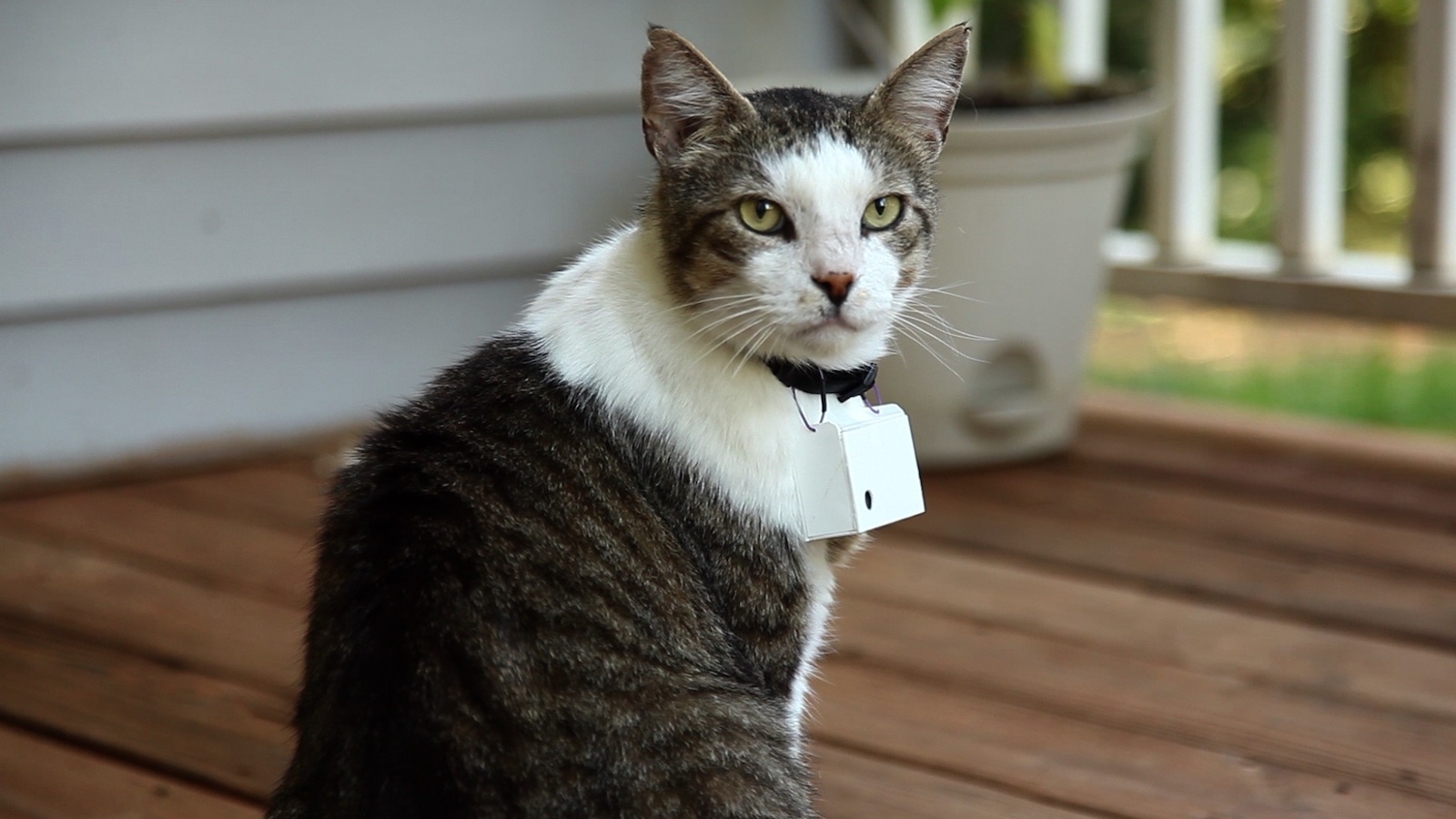
Hammid and Deren’s “Private Life of Cats” belongs to a genre of cat videos devoted to unveiling secrets. There are documentaries on cat’s private lives, secret lives, untold lives. After the invention of the “CatCam,” as Seth Keal’s film of the same name recounts, there are now hours of footage filmed by cats with cameras strapped to their necks, wandering suburban streets, pouncing at field mice, and swatting at rival cats in sewage drains. It is delightful to see cars and dandelions and other neighborhood cats in such a different perspective, and often the footage can be beautiful. But mostly, the video makers and commenters put themselves in a place of victory. The once-enigmatic cats, finally, are “caught on camera!” Finally, the secrets and mysteries have been eradicated.
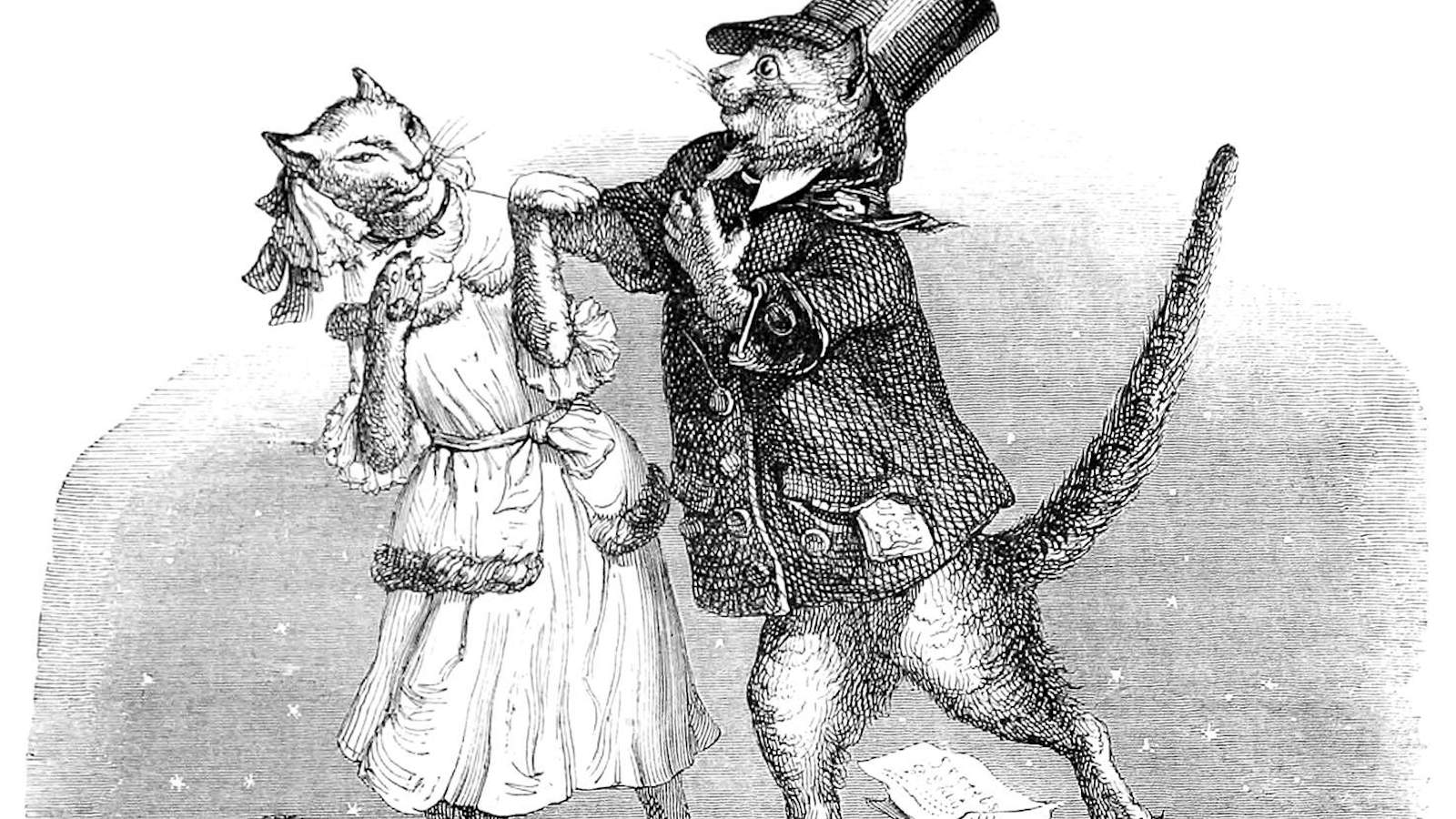
John Berger would not have approved of cats on YouTube. To him, there is a good chance that I have not encountered this animal look at all, the intimate encounter having been pummeled into near-extinction since the 19th century, when animals began to be confined to zoos, more people brought animals into their homes as pets, and children began toting around floppy stuffed animals. He points to J.J. Grandville’s “The Public and Private Life of Animals” as the catalyst to the indignity of anthropomorphism widely popularized by Disney. There, the illustrator, collaborating with authors like Honoré de Balzac, deigns to depict cats as swells sipping milk at dinner parties, or handing off lovesick letters to couriers. The animal’s secrets have been plastered over. We presume to understand animals not because we have uncovered any truth about them, but because we have molded them into what we want to see, which, often, is vulgar versions of ourselves. “Animals and populace are becoming synonymous,” Berger writes, “which is to say the animals are fading away.” All cats have started to look a little bit lolcat, potentially with a taste for cheezburgers.
The actress and experimental filmmaker Pola Chapelle founded the “Intercat”–or international cat–film festival, lasting from 1969 to 1979 and screening short films by Roberto Rossellini, Francois Truffaut, and other filmmaker cat admirers. The subject of her own film, How to Draw a Cat closely resembles those internet cats we know and love- in it, Chapelle scoops up her cat and places her down on a sheet of paper. With a sharpie, she traces her cat’s wriggling paws onto the page. The cat is slippery, and Chapelle has to regain her hold a few times, in order to get the details like the spots on her tail and head just right. The result, of course, looks just like the meme “Girl Tracing Cat.” Tender torture like this might epitomize the spirit of YouTube. In addition to music for cats or catcams in the sidebar, every cat video I have watched this week automatically cues up “Cucumbers Scare The Life Out Of Cats | Pets Town” (21 million views) as the next play. Obviously, I relent and watch every leap, flip and crash. This video is unavoidable, and like the videos of surly cats in pirate costumes in Grandville’s illustrations, would most likely prompt Berger to shake his head in disgust.
But it’s still funny. I am not above any of these demeaning cat moments. I have hoisted my cat up and swung him from side to side as if he were doing a jig. I have both fastened a bowtie around his neck and found him dapper and tied on a red bandana and called him a cowboy. I admit, I have even been inspired to place a cucumber beside his tail, waiting for him to look up from the water bowl. (Luckily for him, and for my conscience, he merely gave the cucumber one indifferent sniff before heading back to the couch.) But I still love him, and, I think, I still see him.
In declaring the death of the look, Berger might not have taken into account the complexities of the cat. We love cats, it seems, because no matter what we do to them, they still have their own lives. A cat can both be a silly, cute thing with a cowboy bandana who answers to “howdy” and a being with a deep life always filled with secrets we can only sense, and leave be. •