
Interview
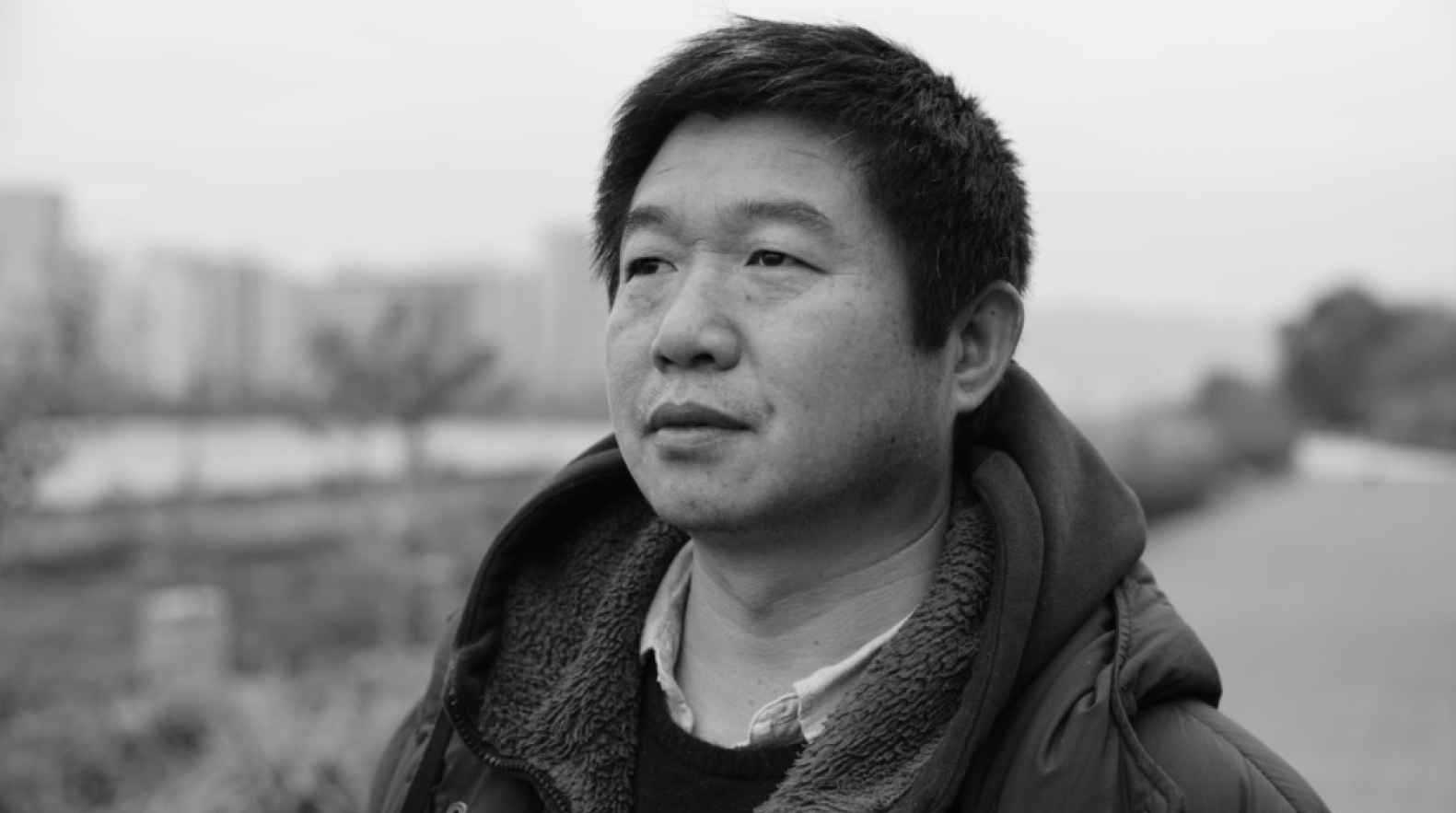
Wang Bing
The lauded documentary filmmaker discusses the latest entries in his Youth Trilogy.
Share:
The Chinese documentary filmmaker Wang Bing is known for long, hard looks at labor. In a fly-on-the-wall vernacular, he embeds himself in spaces on the periphery of modern society, such as the declining state-owned factories in his monumental nine-hour West of the Tracks (2002). His métier is the microcosm, and his films reveal larger truths about urbanizing China and the global economy through the dogged, unblinking accretion of tactile detail and individual testimony.
Youth (Spring) took Wang to Zhili, in Zhejiang province, where about 85% of children’s clothing are manufactured in China. Considered, in the main, too low-quality for export to the West, the clothes are sewn together by subcontractors: mostly young people from the surrounding rural provinces, who migrate seasonally to the city and spend all day hunched over loud, fiddly machines. At night, they return to their rooms, generally upstairs in the same building where they work: concrete quarters with flimsy bunk beds, personalized with garish bedspreads but otherwise identical to all the other dormitories that flank streets full of rain-sodden fabric scraps. Wang and his camera crews follow a cohort of mostly teenagers as they operate sewing machines, or scroll their phones, or flirt and banter with each other, or haggle with their bosses over pay. His subsequent entry Youth (Hard Times) unfolds in a similar structure to its predecessor, taking in tense negotiations between laborers who are paid by the piece and bosses who plead poverty. The film unfurls individual stories that are all the same story: a repetitive-by-design structure which conveys the grind of the work, the vastness of the economy, and the smallness of the individual within it.
Wang was there long enough—from 2014 to 2019—to gather 2,600 hours of footage: a fearsome accumulation even by his usual standards. With his Youth films, now a completed trilogy with this year’s release of Youth (Hard Times) and Youth (Homecoming), the director’s durational project also evokes the cyclical element of seasonal migrant labor. Youth (Homecoming) spends more time away from the textile factories: we pack into crowded trains and buses to join the workers on marathon journeys back home, to villages connected to the outer world by, perhaps, a single rutty mountain road. The workers are a bridge between the vastly different rural and urban milieus that define modern China; in their mobility, the informality of their employment, and the ephemerality of their social bonds away from their hometown, they personify the contingency upon which the modern global economy depends.
I spoke to director Wang when he came to New York for the 62nd New York Film Festival, which presented Youth (Hard Times) and Youth (Homecoming) for the first time in the US. —Mark Asch

Youth (Spring) (2023). Photo courtesy of Icarus Films.
MARK ASCH: You previously depicted Zhili garment workshops in your 2016 film Bitter Money. How did that prepare you to make the Youth films?
WANG BING: I didn’t really know about Zhili until I met these migrant worker teenagers from Yunnan [province in southwestern China]. At the time, I thought I didn’t have the kind of preparation, production-wise, to make a long documentary. But at the same time, I wanted to make a film there. So we made a shorter version [Bitter Money] in preparation for making a much longer version when we were ready: in terms of the producers will be in place, and I will be ready as a director. Through that, we had not only the experience, but also the time to prepare a longer version.
MA: You had a number of different camera operators on these films, over the six years of shooting.
WB: Since this is such a long-term project, taking many, many years to complete, it’s inevitable to change videographers, because not a lot of them can actually stay this long with me. We had agreements about the distance between the camera and the subject, so we were on the same page in terms of camera movement, to make sure the style is consistent and that it will be easier during the editing process.
MA: What were the challenges of shooting in those workshops?
WB: A workshop is very small and very crowded, and the sewing machine itself also takes up space. How can you somehow position your camera without interfering with the workers all the time? It’s definitely something that we thought a lot about, and as a result, we could not move very freely with the camera. From the perspective of the subjects, they work from eight o’clock in the morning until 11pm at night, doing the exact same thing repeatedly. I do think that being filmed over such a long span of time, as they’re doing this repetitive manual labor, gives them some anxiety.
We [the crew] live in a small town nearby; we come in the morning, film all day, and leave at night. It takes a lot of time to understand your subjects, to understand all the different characters and personalities in a particular location, and to build rapport so that you can have their trust and capture something authentic. That’s how we accomplish this, using time as a way to somehow acculturate into their environment.
MA: I read that you shot 2,600 hours of footage.
WB: I worked with Dominique Auvray. She doesn’t speak Mandarin. I do the basic framework first and show her, so that she will be able to somehow use that as a template in terms of style, in terms of the narrative and structure that I want for the rest of the film. We have been working together for quite a long time; she was also the editor for Bitter Money. So it’s been a long collaboration.

Youth (Hard Times) (2024)
MA: Having spent so much time in Zhili, do you feel that the 10 or so hours of the three completed films are a comprehensive record of your impressions, or are there things that you still regret having left out?
WB: For a film like this to work, you need a close relationship and intimacy, not only between the camera and the subject, but also your own personal connection with them. Not only do we want to be close to our subject with the camera, but also in the way that we relate to each other: to capture their lives, to capture their family members’ lives, not only through work, but also through their home life. Unfortunately, there are people who have a dramatic and very lively, amazing presence that would be perfect for the film, but for whatever reasons, we weren’t able to actually capture those moments on film. If I have any regret it would be that. I know that it’s there, but I wasn’t able to access that part of their lives on film.
MA: Are you still in touch with any of your subjects? Have they seen the film?
WB: I do keep in contact with some of my subjects through social media, especially WeChat. In terms of whether or not they’ll have the opportunity to see this film: Some of them did. This film has been pirated, and I will forward the pirated link to them so that they have the chance to watch it.
MA: Do you know how the Covid-19 pandemic has affected or continues to affect the garment industry in Zhili, and the lives of your subjects, in the time since you’ve made the film?
WB: It had a huge impact on the entire industry, especially surrounding Zhili. A lot of my subjects went back to their hometowns, and had to find other work instead of going back to Zhili. When I filmed them, they were in their youth, and working in a foreign place sort of as part of a rite of passage. Now, as I continue to keep in touch with them, I realize that they have moved on from that particular phase of youth, to adulthood; they’re dealing with marriage, with family issues. For some, marriage didn’t work out, so a lot of them became single parents. Those are the impacts, not only of Covid, but also of life on the subjects I filmed for Youth.
I think that their stories now are fascinating and I want to somehow find a way to [capture] it, but we just don’t have the access. And also, as you know, it will be impossible for me to go back and film them at this point of my career. So for me, it’s just knowing that their amazing stories are out there, and they continue to move on from the phase of youth to the phase of adulthood.
MA: Do you know how to use a sewing machine?
WB: No, not at all.
MA: They never showed you?
WB: It’s a high speed operation, those sewing machines. Even the most junior workers in a workshop have probably already trained or been an apprentice for at least six months before they actually operate that machine.
This floating population, these migrant workers, farmers from rural parts of China going into cities to find work, is everywhere. It’s so ubiquitous, it’s very much how a lot of the Chinese population make their living. What’s so different about the garment industry is that in other types of migrant work, you can start making money on day one and be part of the trade, such as by working on construction sites. In the garment industry, you need trade skills established first before you can actually start making money. You have family members, generation to generation, passing down these skills. That’s very unique.
MA: You make films about the lives of low wage workers; I’m curious if that has changed how you think or behave as a consumer—whether, when you look at a product, you think of the person who made it and the conditions under which they made it, and whether that’s whether that affects what you choose to buy or wear.
WB: For this project, I learned a lot about the entire ecology of the garment industry, the OEM industry, in terms of the supply chain, and then the profit sharing or struggles, the difference between the workers and the management. But I am a very low-maintenance person when it comes to fashion. I tend to wear my clothes until I can no longer wear them. It’s not something that is important to me, so I don’t really see a huge impact from this knowledge in terms of the decisions I make as a consumer of clothing.
This interview has been translated by Vincent (Tzu-Wen) Cheng.
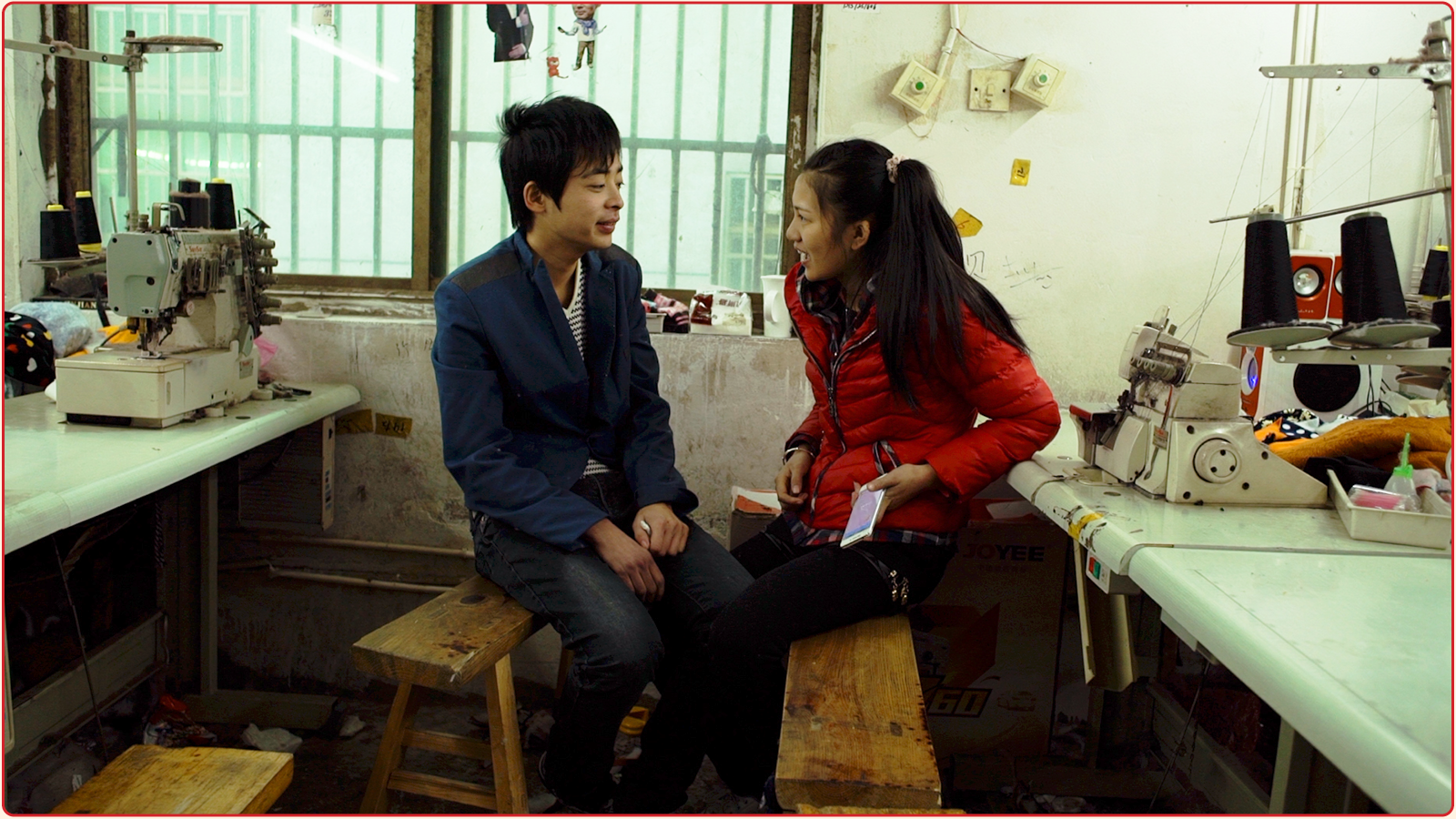
Youth (Spring) (2023). Photo courtesy of Icarus Films.

Share:
About the Contributor
Recommended
- The Illiac Passion
 On the most elaborate of Gregory Markopolous’s modern myths.
 - Jollof Films
 Senegalese visual artists and curators discuss the towering cinematic figures who inspire their craft.
 - Winona Ryder
 A Hollywood “It“ girl comes of age.