Interview
Unpacking Tony Pipolo’s Library

Tony and Carole Pipolo at Carole’s 80th birthday party.
Interview
BY
Nick Pinkerton
An interview with Carole Pipolo about her late husband’s dizzying book collection.
The Tony Pipolo Collection will be presented at the Metrograph Book Fair on Saturday, December 2 and 16.
I was well acquainted with Tony Pipolo as a perspicacious, lucid, incurably curious critic, but knew the man only slightly: a few brief encounters at the Museum of the Moving Image in Queens, where he lived for the last 55 consecutive years of his life, on the occasions of which we complimented one another’s work (on my part, at least, sincerely) as contributors to the prelapsarian Artforum. Through a series of unforeseen circumstances, however, I’ve gotten to know Tony much better since his death this past March, by virtue of spending time with the people who loved him, and with the books that he loved.
This all began when, in early September, my colleague Matt Folden received a cold email from Stuart Liebman, Professor and Chair of the Department of Media Studies at Queens College and Professor Emeritus of Art History and Film Theory at the CUNY Graduate Center, and a film scholar with bylines in publications that include October and Cineaste (for which he contributed a comprehensive and affectionate obituary to Tony). Stuart, who’d taught alongside Tony at CUNY and, beginning in 1983, edited the university’s film journal Persistence of Vision with him, was a long-time friend of the departed and his widow, Carole, and had been recruited to help her to figure out what to do with Tony’s library, as he’d previously helped to sift through the mass of books and papers left behind by October co-founder Annette Michelson after her death in 2017. Would the Metrograph Bookstore, he asked, be interested in taking a look at the collection?
Neither Matt nor myself had any inkling what was awaiting us when, a week or so after this initial correspondence, we arrived at the Pipolo home in Maspeth, Queens, a stone’s throw from Mount Zion Cemetery, the final resting place of The Day of the Locust author Nathaniel West, a visit to which had been the reason for my only other trips to the immediate area. From the outside there was nothing to make chez Pipolo stand out from the other tidy, two-story middle-class homes on the same street, nor to indicate that many of the most distinguished figures in American avant-garde cinema had crossed its threshold at one time or another. (A few weeks later, we learned, Robert Beavers was to be Carole’s houseguest; last week, we had a superlative Thanksgiving dinner there with Ernie Gehr.) Inside, however, it was Ali Baba’s cave.
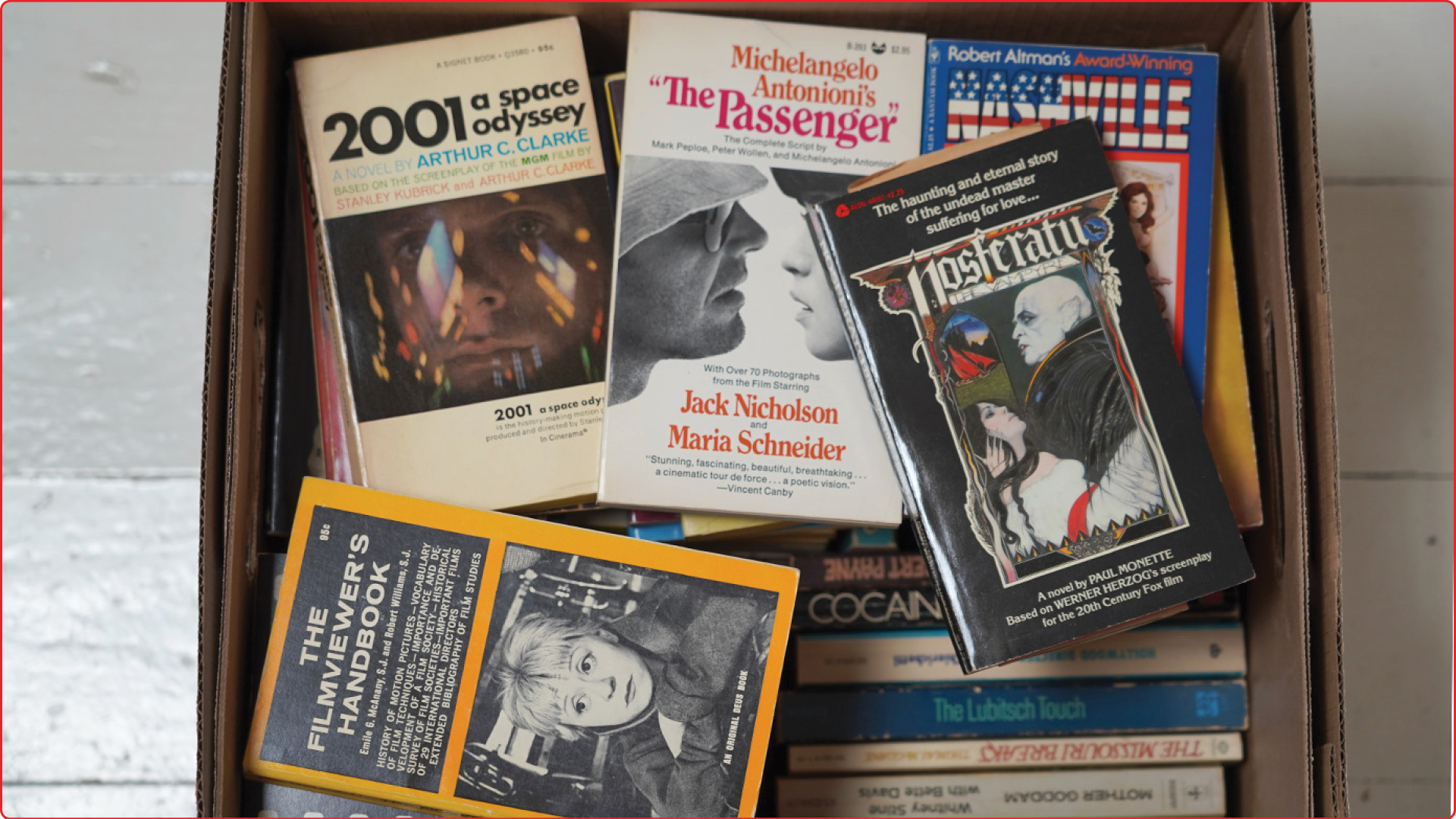
Stuart’s description of Tony as “a prodigious reader” in his Cineaste obituary was an understatement on par with referring to Genghis Khan as a deuced inconvenience to the Jin dynasty Chinese peasantry. Tony’s film books alone, which occupied two walls in his upstairs office, could have been repurposed to build a sizable addition to the house. We were told that John Mhiripiri and Jed Rapfogel of Anthology Film Archives, who had preceded us in reviewing Tony’s collection to pull titles for the AFA library, had left the office with eight banker’s boxes of books; the resulting dent in what remained was akin to scooping a glass of water from an Olympic-size swimming pool. In the basement, the center of which was dominated by an island dedicated to periodicals and varied arcane ephemera, every wall was lined with paperbacks-novels, plays, books on history and politics, and novelizations of films you didn’t know had ever gotten the novelization treatment.
The other upstairs office housed poetry, biography, and texts on psychoanalysis-Tony was credentialed as a psychotherapist after his retirement from teaching, and was sole editor of The Psychoanalytic Review for the last seven years of his life-but I have not yet been able to contemplate its contents without getting a little dizzy. If all of this was not quite equal to the treasure troves of such legendary bibliophiles as Anatole France or Umberto Eco, it was as close as anyone could reasonably expect to find in the quiet suburbs of Maspeth.
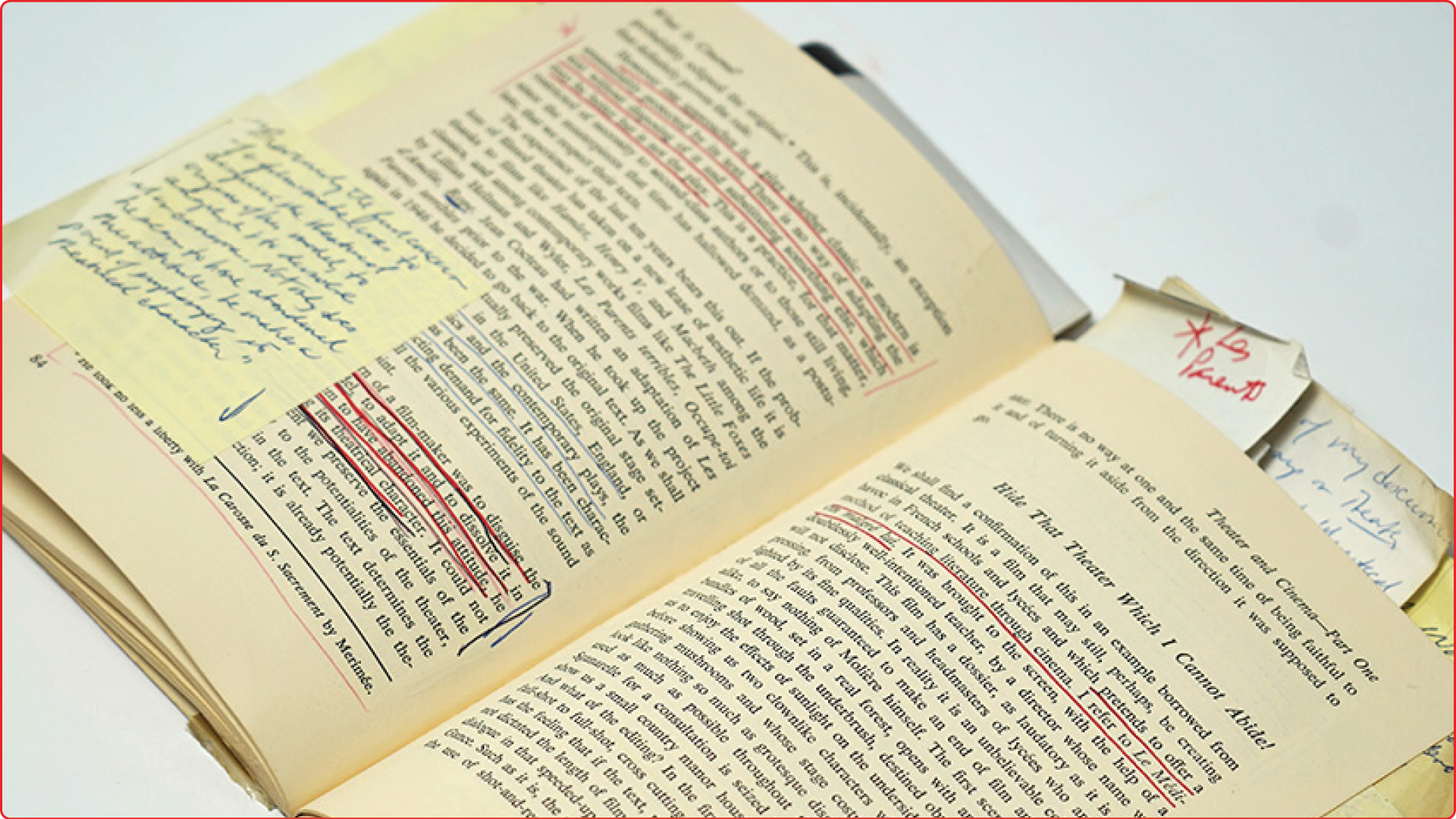
I must hasten to add, this was not the indifferent accumulation of the hoarder who’s saved every New York Post since the Ford administration-this was a remarkably well curated collection, the physical evidence left behind by the omnivorous intellect of an individual who somehow kept abreast of what was going on in practically every field of cultural endeavor, and other areas beside, until the very end of his days. And not only were these good books, they were in good shape; I do not know what arcane process Tony developed for keeping the spines of his paperbacks uncreased, but more than once did I come across a virginal book that I would have sworn had never been cracked only to look inside and find penciled annotations that betrayed that its owner had not only read it, but read it closely.
On this and subsequent visits to Queens, Matt and myself slowly whittled away at Tony’s film books and magazines, transporting the bulk of them to the Metrograph offices, knowing that this collection would be at the heart of the Metrograph Book Fair planned for December. This could hardly be called work, because it also meant we’d get to spend a few hours with Carole, a very funny, enormously charming, and bluntly opinionated woman-when I once jokingly asked her, “So you hate God?” after she averred to her life-long atheism, her quick-draw reply was “Yeah, I do!”-who also happens to be an extraordinary cook and hostess. (While sharing many of her husband’s passions, including those for films and opera, she somehow found the time and energy to cultivate more of her own and, age 81, continues to ply her trade as a bookkeeper.)
Knowing that the story of Tony’s bibliophilia was one that Carole could tell better than myself, we sat down during a recent visit so that she could do exactly that.-Nick Pinkerton
NICK PINKERTON: I believe you told me Tony started writing criticism when he was very, very young. And also producing homemade posters…
CAROLE PIPOLO: Correct. Actually, if you’re interested in seeing them, they’re upstairs. He used to go to the theaters out in Huntington, in Long Island, where he grew up, and he would draw his own movie posters-for Ben-Hur (1959), for all the big blockbusters. He would draw large posters, go down and ask the theaters if they’d put them up in the glass cases. They would humor him, he was like 10 years old, “Oh, son, you know, we have to use the studios’ posters.” But he kept them all.
He also used to make his own movies: he drew the whole story on these long paper scrolls-the scenario, all the characters-and he’d invite the neighborhood kids over to watch in the backyard. His father made a box that they could play them on, with a cut-out screen and rollers that move the scroll along-instead of being like a player piano roll, it was a movie roll. And he was behind the box, voicing all the characters. Frequently, they were movies he’d seen.
He was about 11 or 12 years old when he started to write movie reviews. This was 1951; I have those upstairs, too. He would cut out a photograph of the film from a movie magazine, and he would make a box on the page to fit the photo. Then he’d type the review around the box, and then put the page back into a loose-leaf binder. These were movies that he saw on television, Million Dollar Movie [Television series, 1955-1966, on local New York City station WOR-TV 9, which offered twice-a-night weeklong airings of older films], and some in the theater. Then when he was about 12 or 13 years old, his father started taking him to the movies twice a week.
NP: When you talk about “the box” and that way of telling stories on horizontally moving scrolls I immediately think back to you telling me that one of Tony’s favorite movies-and one, if I’m not mistaken, that you put a copy of in his coffin with him-was Max Ophüls’s Letter from an Unknown Woman (1948), which has that fantastic scene with Joan Fontaine and Louis Jourdan in the artificial train carriage with the moving panorama-
CP: Right, where it’s rolling behind them, and the painted scenery is going past. That’s interesting you bring that up. That’s absolutely true.
NP: Yeah. What it all means, I have absolutely no idea.
CP: Letter from an Unknown Woman. Also, I put in with him the Stefan Zweig novel the movie was based on. And a copy of Written on the Wind (1956). He always had the desire to write a full book on Sirk. Of all of the Hollywood directors, he loved Sirk’s films best.
NP: Let’s talk a little about Tony’s bibliophilia. I have to imagine that was already a mania that was underway when you met.
CP: It was well underway. In fact, the first apartment that we had together was in Woodside, 51st Street, a one-bedroom apartment. Every single night when I went to bed, I would make a little prayer that that bookcase in our bedroom-the bookcase that’s upstairs in my study now-would not fall on the bed. Because it was floor to ceiling books. I was petrified that some night that bookcase was going to come down and kill the both of us. This was in 1968, and he already had 2,000-3,000 books in the apartment. When we moved to our next apartment, I said to him, “I don’t care where you put them, but you’re not putting any more books in our bedroom.”
And when he was checking into hospice care at the end of his life, I got a delivery here at the house of a book. He was still buying books up until three weeks before he died. Honestly, every other day, we had a book delivered.
NP: Did Tony ever write any fiction?
CP: No. He always claimed he was going to write a novel someday so that we would have money to pay for his book addiction. Because it’s an expensive hobby. If you start figuring out how many thousands of dollars are sitting on the shelves…
NP: Best not to do that.
CP: No. But that was an attraction he had to me: I always had a full-time job. And generally made more money than him, for most of our life.
NP: Through the years, were there particular favorite bookstores he frequented?
CP: I mean, there was the Eighth Street Bookshop, that was a famous bookstore. [Opened in 1947 and closed in ’79, Eli Wilentz’s West Village shop at various points counted W.H. Auden, Allen Ginsburg, and Amiri Baraka among its clients.] There was also a well-known bookstore in Huntington; before he started teaching, he was commuting into the city on the Long Island Railroad to a job, of all things, at the Metropolitan Life Insurance. And all the time that he was commuting, he was reading. There were other bookshops, too, I just don’t remember the names because I didn’t go with him.
NP: This was a solitary pleasure.
CP: When we were first married, for the first four or five years, almost every evening we did something in the city, whether it was a movie, play, an opera, whatever… On the weekends, we’d see four movies on Saturday, and three on Sunday. There were times I saw 300 or 400 movies a year. When Anthology opened on Lafayette Street, for instance, we were there every single night for a year. I saw all of the films they were showing in the Essential Cinema.
When he started taking cinema at NYU, he was in a class taught by Annette Michelson, who asked what they’d seen. He said he’d seen this, had seen Ivan the Terrible (1944) already, all these different movies. She was astonished. When? How? He said, “Well, I worked at Metropolitan Life, and then I went to the movies every night.”
NP: Just your average Joe who goes to see Ivan the Terrible, Part I and II after work, then hops on the last LIRR train home….
CP: And then reads War and Peace on the way back in in the morning. He was a smart man!
NP: When I talk with you, and talk with you about Tony, it’s hard not to think how far we’ve moved from the kind of America where a basically working-class guy and a basically working-class gal, people who were not to the manor born, had opportunities to pursue their interests and, by virtue of their own talents and ambitions, create a certain kind of life for themselves. I think those opportunities are fewer and fewer these days.
CP: Yeah, maybe. It didn’t seem difficult at the time for us. Though I don’t want to make it sound like everything was easy. Economically, it was a strain sometimes, definitely.
NP: I feel I know more about your early life at this point than I do about Tony’s. You both grew up in Long Island, Tony in Huntington, you in Port Jefferson… And you mentioned your father was a cab driver at one time…
CP: My father actually did a lot of things. He drove a taxi, he drove the Coney Island bus, which is where he met my mother. She was a passenger. He picked her up on the bus. But he worked most of his life for the post office. We were both born in the Bronx. Tony’s father was a police officer in New York. And both our families moved to Long Island. We didn’t know each other growing up, but my sister married one of his childhood friends. I met him in 1968, at my sister’s wedding. We were both in our late twenties. We married very fast after that. I was working for an accounting firm, and he was already teaching at Queensborough.
NP: In some ways you might have been considered an odd couple pairing-you working in finance, him immersed in all fields of culture… Did you already have an interest in the sort of art that he was interested in when you got together?
CP: I was always very open to it. And I liked to go see movies, and music programs-that was a big part of our life. But also, I think part of the attraction for him to me was that I had had a much more “sophisticated” decade before we met-I was married previously to a French person, and had been to Europe four or five times. I was a worldly character compared to the other women he was dating before me… Also, I was adorable!
NP: This I can believe!
CP: And I think he was always attracted to my outgoing personality.
NP: As who could not be?
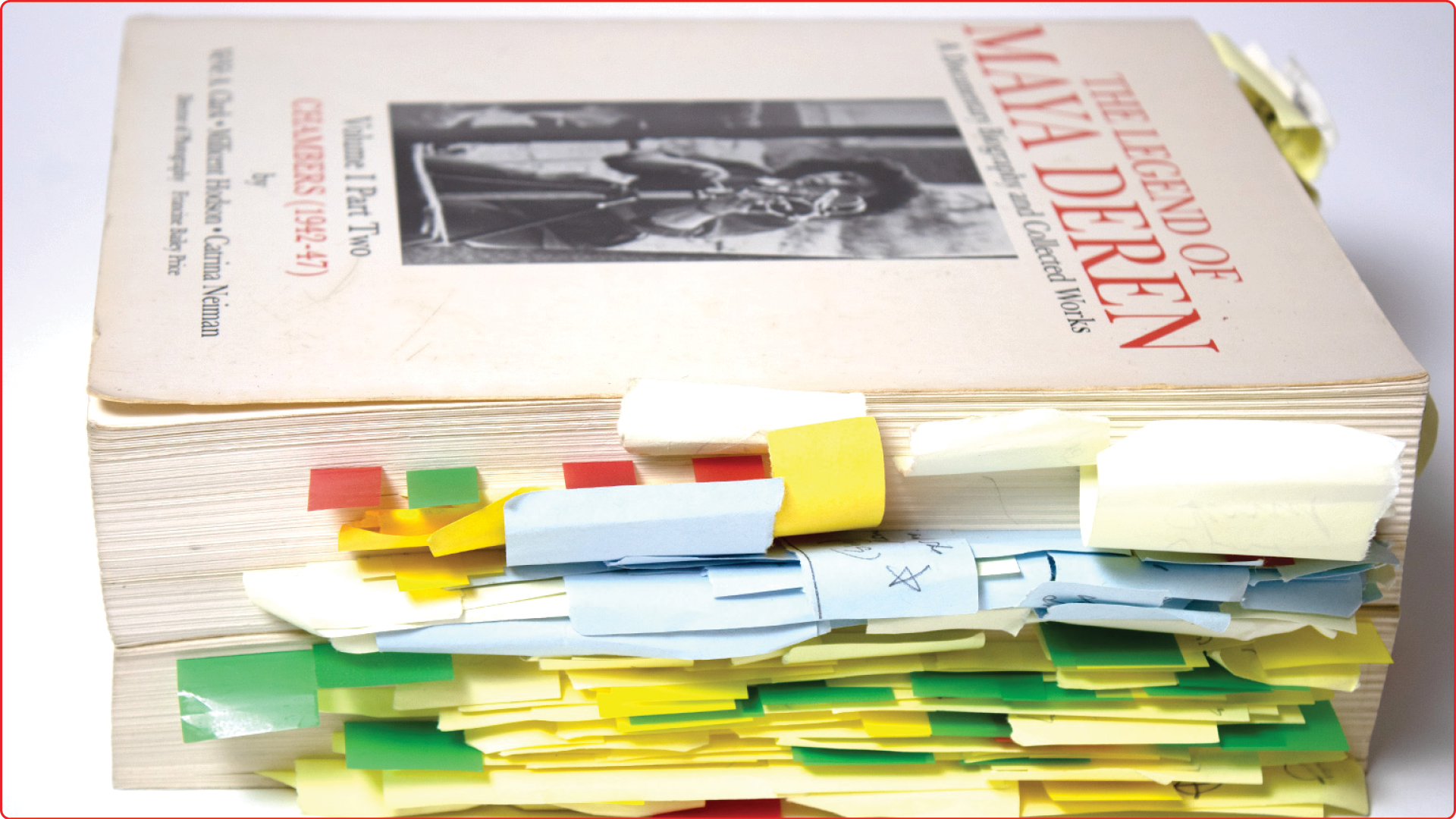
CP: But I mean, that was something he was not accustomed to as much either. There was something that was breaking the mold, because he also was breaking the mold himself; he was the only one of the six kids in his family-he was the youngest-who ever went to college. He was the only one of the six who broke with the church, even though he had gone to Catholic school and then to a Catholic college. It was the family’s anticipation that he was going to be a priest. And he was very interested in religion, even up until the end of his life. I recently discovered that Tony read the entire Torah. And it’s all marked up. I’ll show it to you, it’s got post-its and notes all over it.
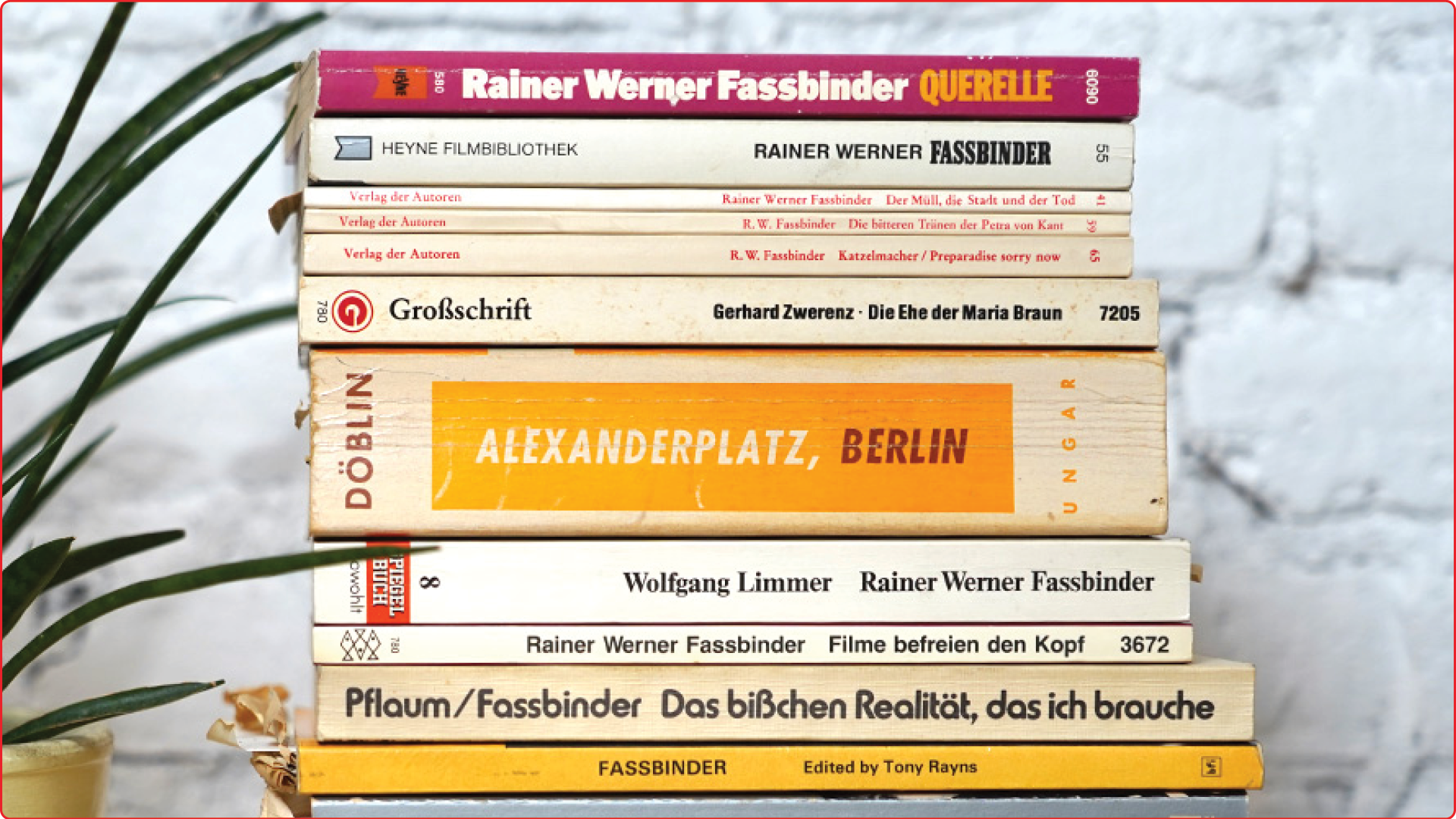
NP: I remember when Matt and I first came here, we were marveling over Tony’s many Fassbinder books, and you mentioned that he had at one point been thinking about writing a book about Fassbinder himself, had even gone to Germany to research.
CP: Oh, my God, yes. He went for the whole summer. Tony, actually, on several occasions, took trips to Europe, on grants that he was able to get through CUNY. And in the early ’80s he was interested in Fassbinder. He made all the arrangements to go there, to meet and interview all of the people that were working with Fassbinder. He had everything in place, and within a few weeks before his departure, Fassbinder died. He went over anyway. He interviewed 90% of the people that appeared in, or worked in, his films, even the cinematographer who eventually came to the States-Ballhaus?
NP: Yeah, Michael Ballhaus. He was Scorsese’s cinematographer for some time, too, among other things.
CP: He has all of those interviews upstairs in his records: notebooks and notebooks of his diaries of the entire trip. The intention was to write a book on Fassbinder, but by the time he came home, he basically decided he didn’t want to. He finally just wrote a piece for October. I have a copy upstairs, because I’ve tried to retrieve every single journal where he is published.
NP: Well, there’s a full set of October in the basement.
CP: And also he had an article on Fassbinder in the New York Times. So he got two big articles out of the trip. But he decided he really felt that Fassbinder wasn’t interesting enough as a filmmaker, he wasn’t in love with the movies anymore. He was in love with the characters, the actors, but not necessarily the movies.
NP: The idea of doing that much research and going so deep into a subject, and then saying, “I just don’t see it anymore,” is, it should be said, pretty funny.
CP: I have at least two, maybe three boxes of Fassbinder stuff. And all the research he did, all his notes.
NP: When I saw all those books, I said something to you along the lines of, “Oh, so Tony really loved Fassbinder?” And you said, “Oh, interesting you should ask. He thought he did…” Whereas Bresson, Dreyer, they stood up to the scrutiny of research long enough to become complete books.
CP: Tony’s dissertation was on The Passion of Joan of Arc (1928); that took him to Copenhagen twice, doing research at the archives there. This table here is from the second trip, in ’72, before [our daughter] Isabel was born.NP: I can see a book about Gilles de Rais from where we’re sitting… When we were first going through the collection, there were a few items you pulled out which-in a very fond and loving way-you presented as evidences of a maniacal collector’s compulsion to hold on to everything that might possibly be of some use some day: a TV Guide listing the “Top 100 Shows of All-Time”; two copies of, I think, Variety advertising the Ringling Bros. and Barnum and Bailey Circus coming to town… Are there any particularly funny curios you’ve run across while going through his effects? Things that make you ask yourself, “Why on Earth did this man think he needed to hang on to this item in particular?”
CP: Well, he liked to clip a lot of things out of papers. It’s not unusual to pick up a book, open it up, and then find the review of the book, and also the obituary of the author, clipped from a newspaper. But he never lent books out to people in his adult life.
NP: [whispers] Nor do I.
CP: When he was younger, he did and never got them back. That was when he started writing his name in the front of every book he owned, and the year.
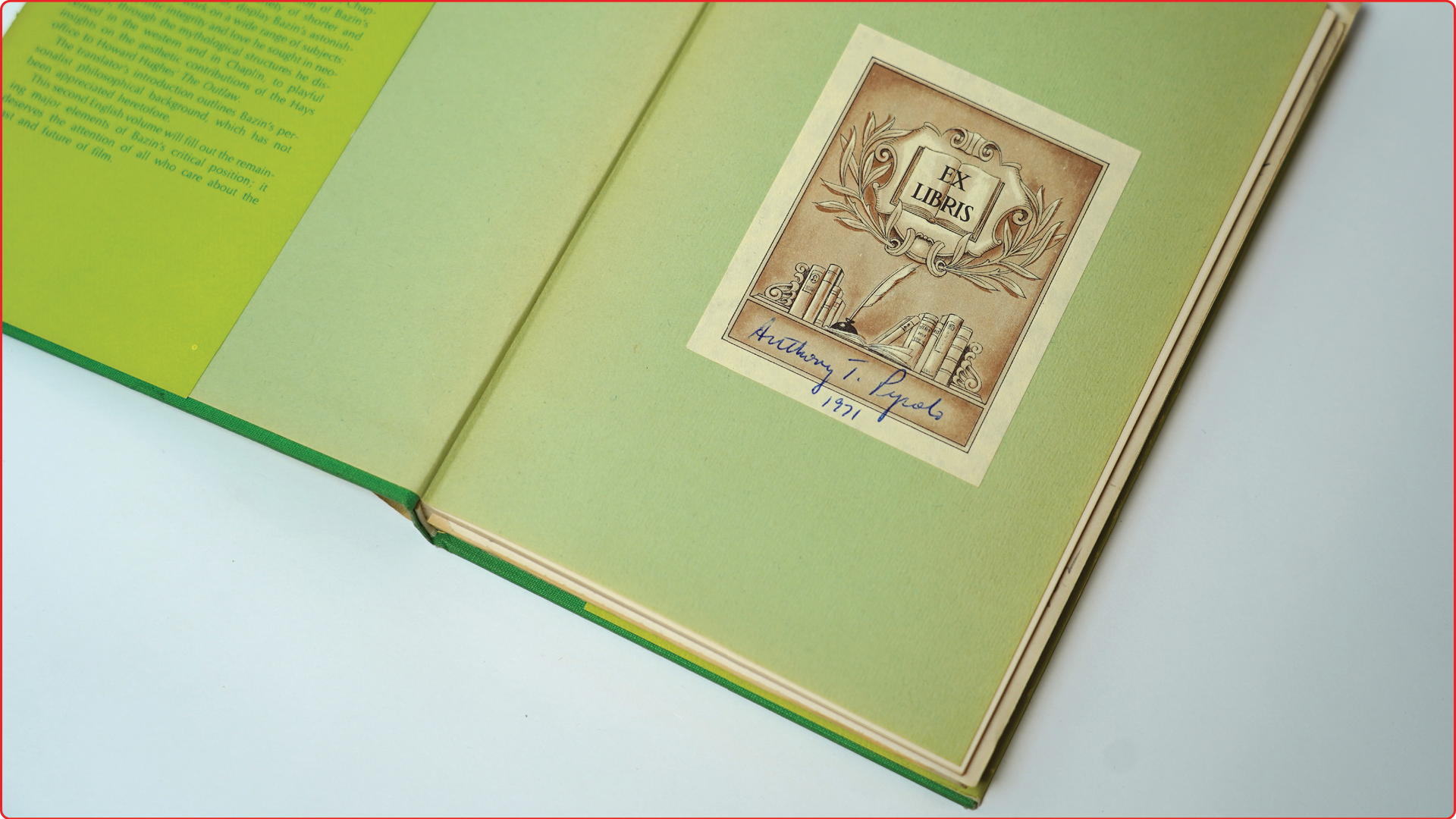
NP: So the police could be called to retrieve them. I wanted to ask you: some of Tony’s books are marked up; some books are kept in reverentially nice shape… Was there any logic to what could and couldn’t be annotated?
CP: It depends upon what it is. Sometimes stuff that he was reading that was specific to what he was doing in his head, that could be sacrificed a little. Also, he was a very slow reader. I think his way of trying to remember things was the underlining, and the writing in the notes and sides. That was a way for him to retain it. So that if he wrote something down, or if he put a sticky note in, he would go back and reread what it was that had drawn his attention in the first place.
If he was sitting here, he would tell you that he had a terrible memory, which was complete insanity. He had an amazing memory. He could remember a movie that he saw when he was 11 years old, what theater he saw it in, who he went to see it with, in what row he sat in. And he remembered all the credits; he knew who did the music, the cinematography… But he was a slow reader. He also read five or six things at a time. On completely different subjects.
It’s interesting, in some ways he was reverential about his books-he could be totally engrossed in the fact that someone had moved a book out-of-place, knew where everything was. But he was also a bit of a slob; his own writing, his own papers, he would just stuff in a box in the closet, improperly marked.
Because you mentioned his writing reviews as a kid: he started to keep track of all the films that he saw-this also goes back to the ’50s. Every time he saw a movie, he came home and he wrote it down in the book. He took meticulous notes of every single film he ever saw. So if the film is three minutes long, it’s in the book. I have all those books also. We took a lot of those with us to his memorial and put them out on the tables at Anthology, so people could see this astonishing record-keeper. I mean, he went back into the hospital in January, and he has a note of the film we watched on TV that night. It’s in the book. He went to his study, pulled the book out, as sick as he was. It’s also in his diary. The last movie he saw.
NP: Going back to the interesting odds and ends Tony would squirrel away in his books: could you talk a bit about the Hitchcock autograph?
CP: Sure. We were on our honeymoon, we decided to cross the country. We always went to the movies, even on a road trip like that. Tony woke up one morning in San Francisco and was looking at the paper and he said, “Oh, there’s going to be a sneak preview of a Hitchcock film in the theater here, today. You want to go?” I said, “Sure.” We went to the theater, and it was Topaz (1969), which neither one of us cared for at all.
NP: Quite middling.
CP: It was pretty boring. But we came out into the lobby, and they gave us surveys to complete. We were filling them out when the manager’s office door opened, and I saw, and I said, “He’s here! Hitchcock is in the office! I swear to God, I think it’s him.” A couple of other people must have heard me, so there were half a dozen of us who stuck around and waited. Sure enough, about 15 minutes later, Hitchcock and his wife walked out. He entered the office, he walked her to the limo, put her in, and then turned around and came back to us because we were all clapping. I was crying my eyes out, because I was just so emotional about seeing him. He came over to me, and he just put his arms around me and said, “Thank you, my dear,” just like that. And then he took my survey and drew his profile and signed it for me. And for 45 years, I had no idea where Tony had put it! I found it, in one of the Hitchcock books. After he died, I was going through every single book, trying to find it. And I did.
Nick Pinkerton is a Cincinnati-born, Brooklyn-based writer focused on moving image-based art; his writing has appeared in Film Comment, Sight & Sound, Artforum, Frieze, Reverse Shot, The Guardian, 4Columns, The Baffler, Rhizome, Harper’s, and the Village Voice. He is the editor of Bombast magazine, editor-at-large of Metrograph Journal, and maintains a Substack, Employee Picks. Publications include monographs on Mondo movies (True/False) and the films of Ruth Beckermann (Austrian Film Museum), a book on Tsai Ming-liang’s Goodbye, Dragon Inn (Fireflies Press), and a forthcoming critical biography of Jean Eustache (The Film Desk). The Sweet East, a film from his original screenplay directed by Sean Price Williams, premiered in the Quinzaine des Cinéastes section of the 2023 Cannes Film Festival, and opens in NYC theaters December 1.