

Friends of Metrograph Dean Kissick, Sarah Blakley-Cartwright, and Emerson Rosenthal each share a film they love, streaming on demand on the Metrograph At Home platform.
Dean Kissick Selects
CÉZANNE – CONVERSATION WITH JOACHIM GASQUET


Cézanne – Conversation With Joachim Gaasquet, dir. Jean-Marie Straub and Danièle Huillet, 1990
One of my best friends is obsessed with Hölderlin, he is writing a book inspired by the life of Hölderlin, so I have been reading some Hölderlin too. Another of my best friends is obsessed with Cézanne, he wants in a sense to become Cézanne, so I spend a lot of time thinking about Cézanne as well. Last year he and I went to Chicago together to see the exhibition there. In 2020 my friend broke the travel ban and journeyed around the half-empty French countryside with his lover visiting places Cézanne had painted (Mont Sainte-Victoire, L’Estaque, the Bibémus quarries by Aix-en-Provence), trying to reach and to find the exact views; but many of those views are no longer there. In 1990 they were more intact. There is a long, lingering shot of Sainte-Victoire in this film that begins around 14 minutes in, and is accompanied by a narration of the painter’s meditations on light-that cuts to a scene of an old man in Greek costume performing Hölderlin’s unfinished The Death of Empedocles (the first version, from 1798), speaking of heavenly light-then returns to Cézanne and the still mountain: “What élan, what imperious thirst for the sun, and what melancholy, in the evening, when all this weight falls again. These blocks were fire. There is fire still in them.” He stares at a shadow so long that he realizes it is convex. When, almost 10 minutes after Sainte-Victoire first appeared, the camera turns and pans away across the landscape, it is agonizingly beautiful.
WATCH CÉZANNE – CONVERSATION WITH JOACHIM GASQUET
Dean Kissick lives in New York. He’s a writer, a contributing editor of Spike Art Magazine, and host of the Seaport Talks.
SARAH BLAKLEY-CARTWRIGHT SELECTS
In the Mirror of Maya Deren

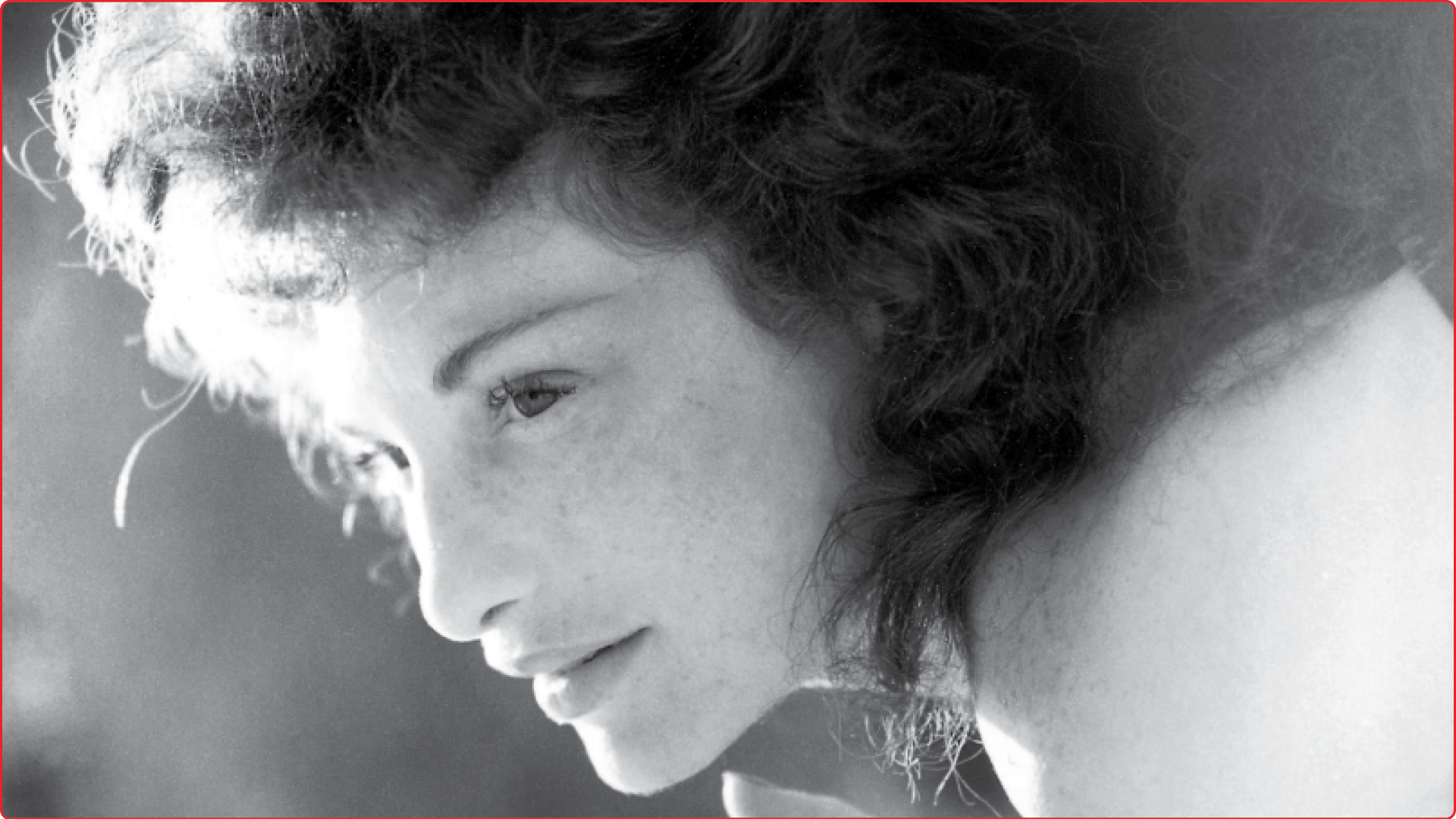
In the Mirror of Maya Deren, dir. Martina Kudlacek, 2001
It is unsurprising to learn, early in this documentary portrait of the “choreocinema” pioneer Maya Deren, that the artist, who took such commanding possession of her person and her implement, renamed herself in 1943. Having been Eleonora (“Elinka”) together with her first husband, the Czech filmmaker Sasha Hammid, she was now Maya, a reference to the Buddhist goddess who wears a veil of illusion. This self-referentiality jives with her themes of transformation of the body and self. Her works, drawn upon throughout this film, are evocative chiaroscuro meditations on movement and violence, kinetic experiments offering a dramatically new immediacy of perspective. She wrote, In film I can make the world dance. Apprehensive of the tripod’s strictures and rigidity, she shot handheld. Her films are rooted in ritual, show her spinning yarn. This documentary offers enriching observations from Stan Brakhage, Jonas Mekas, Katherine Dunham, Chao Li-Chi, and Amos Vogel. John Zorn scores. But the person who comes clearest in Kudlacek’s vivid telling is the woman in the window. Even here, Maya is, witchily, the teller, ever-spinning, ever with camera in hand.
WATCH IN THE MIRROR OF MAYA DEREN
Sarah Blakley-Cartwright is a #1 New York Times bestselling author. Her novel, out this month, is Alice Sadie Celine (Simon & Schuster, 2023).
EMERSON ROSENTHAL Selects
Swept Away

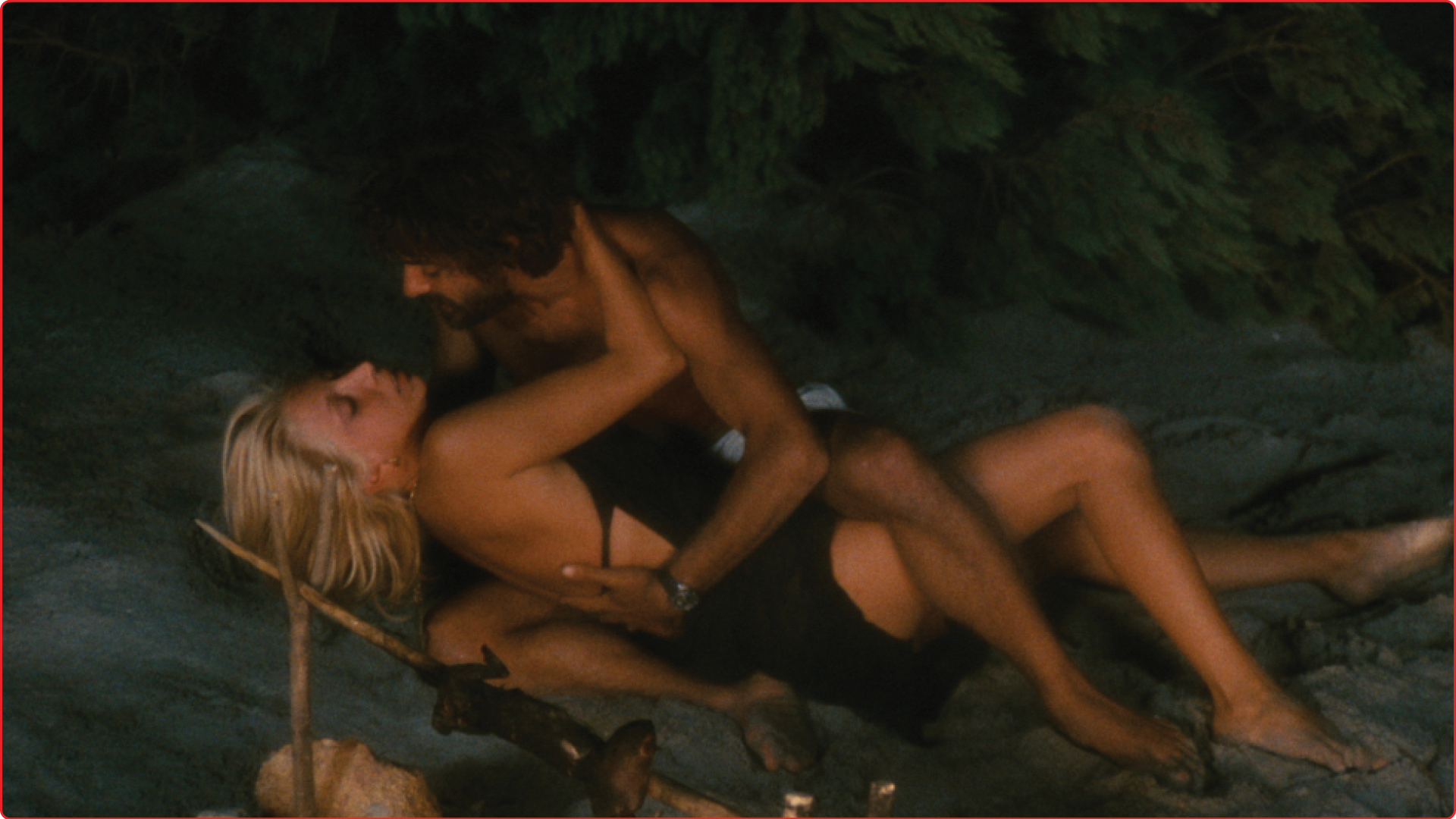
Swept Away, dir. Lina Wertmüller, 1974
That feeling of “If I could just get that person alone, I’d really give ’em a piece of my mind” is at its most tantalizing and, ultimately, fruitless in Wertmüller’s genre-soup about a hard-bitten commie sailor who gets stuck on a desert island with the object of his animosity, a shrieking capitalist Valkyrie whose fortunes, in all likelihood, come on the backs of people like him. What I love most is how this movie desublimates gaseous ideology into the kind of flesh-and-salt fucking generally best left to cinematic fantasia, then shows us how the liquid remainders of time and class and trying to remain an independent thinker amidst the scalding cioppino of human experience will slide through your fingers anyway. Wertmüller and Giannini and Melato are the rare kinds of humanist artists who understood that, while the body keeps the score, the mind still has to live with it.
Emerson Rosenthal is a screenwriter who loves to share @freemovieideas.