
Interview
Todd Solondz
Twenty years later, the reluctantly controversial director looks back on his suburban fairytale, Palindromes.

Share:
IN A CAREER SPANNING THREE DECADES, Todd Solondz has established himself as the nation’s most trenchant, and most fearless, bard of bourgeois suburbia. From a morass of all-American hypocrisy and delusion, the New Jersey native has crystallized a company of unhappy characters—per Tolstoy, each in their own way—whose cursed trajectories he charts with both ultra-dry wit and deep feeling. (Solondz has said that he makes “sad comedies,” not “dark” ones; “dark” would intimate some measure of mockery on the director’s part.)
His breakout was the uncommonly unsentimental coming-of-age tale Welcome to the Dollhouse (1995), a Sundance Grand Jury Prize-winner in what is fondly remembered as a mini-golden age for both the festival and American independent cinema more broadly. Heather Matarazzo’s remarkably shaded performance as Dawn Wiener, the much-bullied middle-schooler at the center of Dollhouse, made her an ideal totem for all those who’d endured an awkward adolescence. So, everyone. In the six features he’s made since, few of his indelible, indelibly damaged creations—off the top of the dome: Philip Seymour Hoffman’s horny, compulsive prank caller (Happiness, 1998); Jordan Gelber’s spoilt man-child (Dark Horse, 2011); Danny DeVito’s murderously embittered screenwriting professor (Wiener-Dog, 2016)—have offered audiences such easy identification.
The writer-director homes in on society’s most easily maligned figures, from pedophiles to adult collectors of action figurines, and prods viewers to recognize their essential humanity—a challenge that has sometimes been read as out-and-out provocation, or resulted in his films being deemed too morally hair-raising to handle. (Three years after feting him, Sundance refused to play Happiness.) That no Solondz film since Dollhouse has repeated its career-minting success is a situation he regrets, though not to the extent that he has made any concessions to commercial or popular appeal. This constancy in the face of diminishing financial returns is part of the reason for his select fandom’s ardor.
Still, he likely threw some of those fans for a loop when he went and killed Dawn off a decade after Dollhouse: Palindromes (2004) opens on her funeral, revealing her to have chosen death over a life beset by obesity, dermatological problems, and abuse. But, as is often the case in Solondz’s films, the sick joke is inextricable from a tender gesture: Palindromes is dedicated to Dawn.
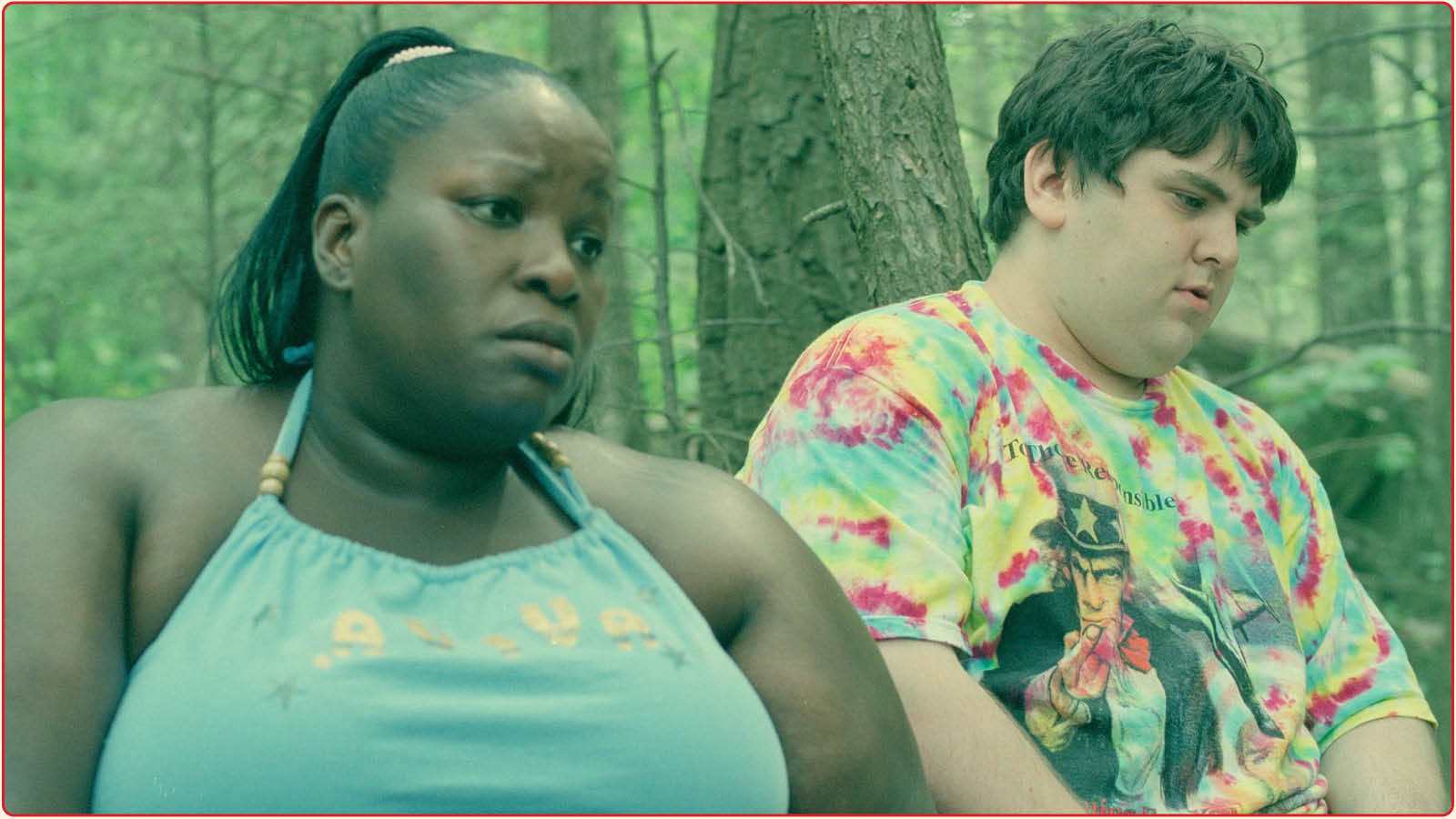
Returning to cinemas this month in a new 4K restoration, Palindromes too is about the travails of an ungainly girl who’s been left wanting for love and affection. Its heroine Aviva—in fact, Dawn’s cousin—is played by a different actor in each of the film’s eight chapters, from a redheaded adolescent waif (Hannah Freiman) to a Rubenesque Black woman (Sharon Wilkins) to Jennifer Jason Leigh. Anticipating by three years the multiplicity of Dylans in Todd Haynes’s I’m Not There, it’s a bold conceit that would seem to be asking for the label “Brechtian”—but Solondz’s intent was not to alienate. Quite the opposite: he has explained the choice as a playful and earnest means of literalizing the idea that a single character can resonate with a wide variety of people.
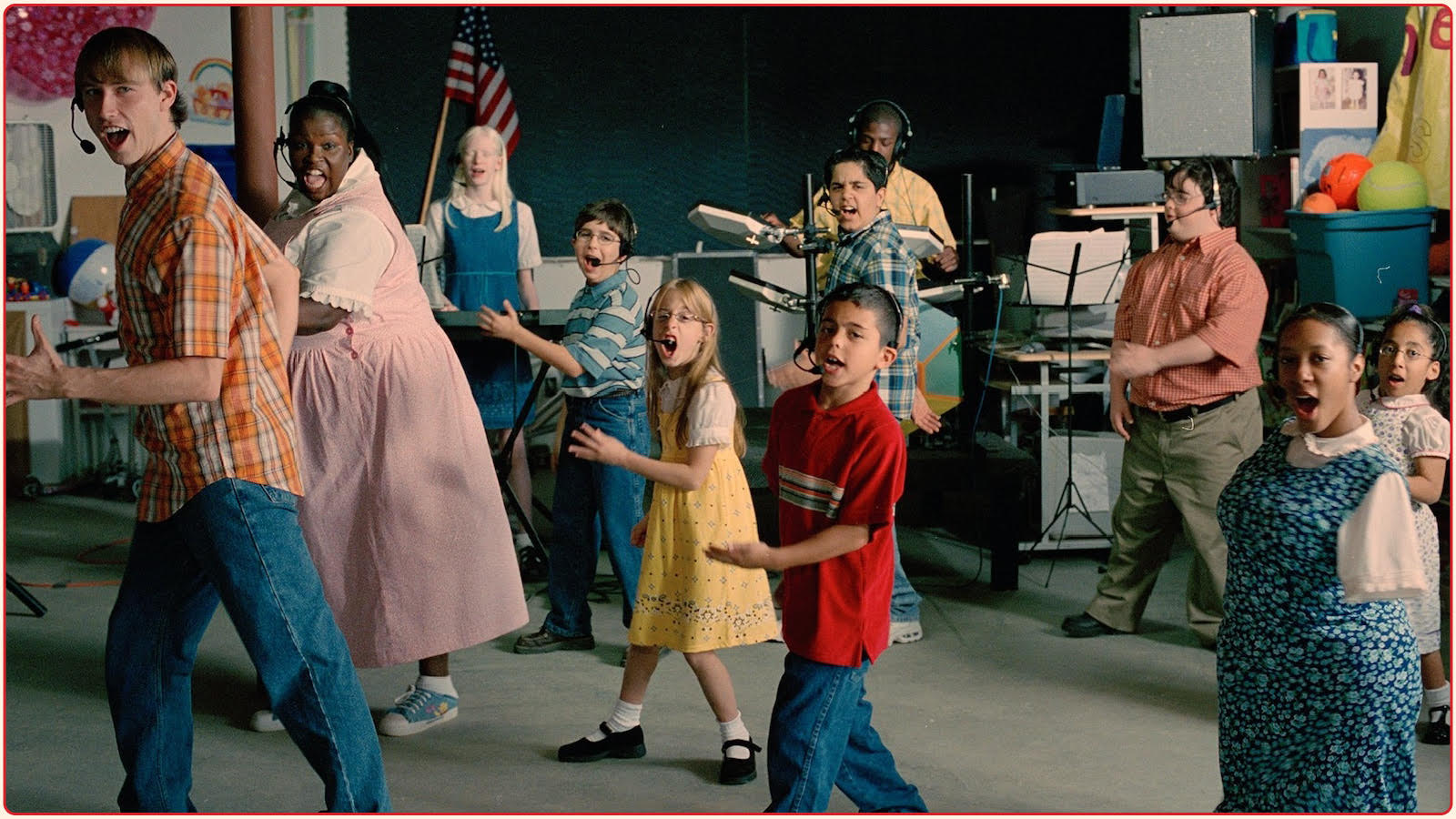
The 13-year-old Aviva wants desperately to have a baby. She even manages to get pregnant, only to be made to abort her embryoid bundle of joy by her horrified parents. Overcome by this betrayal, Aviva flees the family home, hitchhiking her way out of Jersey—a tween runaway looking for love in all the wrong parking lots—and into American heartland, where she finds a safe haven and learns to move to the beat of NSYNC-inspired Christian pop. (Curiouser and curiouser, indeed.) Solondz’s lone self-funded film, Palindromes has a softness not found elsewhere in his work: Aviva’s trip to the abortion clinic begets an adventure fable bathed in a gauzy, almost mystical air, as if a blue moon had risen over the director’s spiritually bereft suburbs.
Twelve years after Palindromes, Solondz lovingly resurrected Dawn in Wiener-Dog—a caustic, cross-country riff on Au Hasard Balthazar (1966) in which the director subs a dachshund for Bresson’s donkey, and swaps Matarazzo for Greta Gerwig. (It remains his most recent film to date; attempts to finance Love Child, a feature revolving around a Broadway-obsessed 11-year-old, have faltered repeatedly over the last seven years.) In honor of the restoration of Palindromes—also a kind of loving resurrection—I spoke to Solondz about casting his eight Avivas, Rosemary’s Baby (1968), Diane Arbus, and, uh, Charlie’s Angels: Full Throttle (2003). His answers belie a man who has cultivated a near-Zen acceptance of being misunderstood. —Keva York
KEVA YORK: Looking back, 20 years on, Palindromes can be seen as the first film to establish a Solondziverse, if you will: you have the return of the characters Dawn and Mark Wiener, and it’s also the first time multiple actors incarnate a single role, which has since become kind of a signature of your work.
TODD SOLONDZ: There is one character from Dollhouse that appears in Happiness. It’s a small character, but technically, Palindromes is not the first time I had a character overlap from movie to movie. But it was just another movie that I wanted to make: I had a story to tell, and it seemed like it would be fun to approach the movie with this conceit. That was it… I always think my stories are self-contained.

Welcome to the Dollhouse (1995)
KY: You’ve said that the idea of casting multiple actors in the one role came out of so many different kinds of people telling you, after the release of Welcome to the Dollhouse, that they identified with the character of Dawn Wiener. Famously, Buñuel was the first to cast two actresses in the one role, in That Obscure Object of Desire (1977)—was that film on your mind at all when writing Palindromes?
TS: I did think about that, although I had been told the reason he used two actresses was that they had shot three weeks with one actress and it wasn’t working out, and he didn’t want to have to reshoot. So he just got another actress, and then he came up with the title, That Obscure Object of Desire… [Whereas] Palindromes wasn’t happenstance, it was designed this way.
KY: Palindromes features eight actors who are diverse in age, gender, race, physical build playing the one role of Aviva. How did you place them in the story? Were you auditioning specific actors for each of the different segments?
TS: No, the kids would just come in and I would consider my sense of what would be most suitable for whatever section of the movie. I didn’t have a set idea of how it was going to work out, because I didn’t know who the actresses would be. It was always very instinctive, I just let the casting itself guide me.
KY: I understand that you work quite closely with actors during the shoot. Did the Avivas also work with one another at all? Or was it up to you to ensure there was an emotional continuity between them?
TS: It was just up to me. I had approached them directorially in a way that I hoped would lend a kind of unity or coherence to their performances… Some directors spend more time or less time with actors, everyone’s got their own way.
Palindromes (2004)
KY: How do you particularly approach working with young people when making films that are not at all kid-friendly? For example, in Palindromes, there’s the sex scene between Aviva and the truck driver. And there’s that bit in Storytelling (2001) where the little boy, Mikey, asks the maid what rape is. That’s a tricky question to answer in real life, and I’m sure you’ve had to think deeply about how to navigate things like that with your young actors.
TS: I’m always just very straightforward with the parents about what’s involved. Certainly they’d all read the script. You have to be open about it with the parents, and then it’s up to them if they think that this is something they will feel good about and take pride in for their child. That’s not for me to decide… We had a cast and crew screening [of Palindromes] years ago, and I think they were all there, so I guess none of the parents were terribly troubled by anything that appeared onscreen. There’s nothing explicit [in that film], really. I remember some of the younger actors whispering in the ears of their parents about certain scenes that I’m sure they were a little confused about, but that may not have had anything to do with those things [in the film] that are more troubling to grown-ups.
KY: You have teenage children yourself now—do you feel like that’s affected how you approach writing young characters? Young people are often really central in your films.
TS: I don’t think becoming a dad altered the way I approach my work. It’s still just as hard as ever. It hasn’t changed me artistically, as far as I can tell.
KY: “Lullaby” is kind of the film’s theme song. It sounds a lot like the theme from Rosemary’s Baby—which I guess is also a film about someone who wants to have a baby because she’s not getting enough love at home, and gets taken advantage of because of that.
TS: I had used that as a temp track for Nathan, which is how we got to where we got.
KY: It’s Mia Farrow singing that track in Rosemary’s Baby—and you worked with her on Dark Horse. Had she seen Palindromes, or was she aware of this little tribute to her?
TS: When she did Dark Horse, she was essentially in retirement from movies, but she said her son Ronan was a big fan of Happiness, and he said, “Mom, you have to do this movie”—so that’s why she did it. She was a pleasure to work with. But I don’t know that she had seen any of my movies.

Wiener-Dog (2016)
KY: You’ve talked about humor being a productive way to address taboos, which I think is undoubtedly true, that’s a hallowed function of humor—but often the humorous treatment of these subjects is what people have the most trouble with.
TS: Well, it’s not like humor is some element I throw in the mix. Everything is right there in the script and the writing process: the pathos and the comedy or the irony, what have you, is woven together. They’re inextricably linked. Some people are receptive to my sensibility and what it amounts to, and some people are not. I can’t control this, and it accounts for why I have a very limited audience.
KY: Self-selecting, some might say, but also ardent. That Palindromes has been restored and is getting a re-release is exciting for your fans, I know. Looking back in time to the original release, though, the critical response was pretty mixed. When I was reading old reviews, it seemed like even the critics praising it were doing so in terms I’m not sure you yourself would agree with. For example, Peter Bradshaw referred to you as “the Diane Arbus of modern American cinema.” It’s a compliment, but I imagine it’s one that might sit uneasily with you.
TS: Diane Arbus was a brilliant photographer, and I suppose he’s using some shorthand to describe some aspects of my work. And that’s fine, that’s fair. People can say whatever they like, and they do. My job is to make the best movie I can with the material that I have, and about that I have no regrets. I feel very grateful and lucky that I’ve been able to make this and all the movies that I’ve made so far.
KY: You might not be able to say anything about this, but I feel compelled to ask about the status of Love Child. Are there any updates you can share?
TS: We’re still hoping the movie can come together, but it’s not such a small budget, so we have our challenges. We try to be hopeful. There’s no such thing as close—you either have the budget or you don’t. We’ll just have to see.
KY: Here’s hoping, then! If you don’t mind, let’s go out on a silly one: there’s a throwaway line in the recent New Yorker profile of you I was curious about. You were briefly considered to direct Charlie’s Angels: Full Throttle?
TS: Oh, it was a conversation Drew [Barrymore] and I had had years ago. It was a lovely dinner, but I can’t imagine Drew really thought that I’d ever get approved for the project. And if I had made the movie, instead of making $300 million, it might have made $3 million. So from their perspective, the studio did the right thing.
Palindromes (2004)

Share:
About the Contributor
Recommended
- Futures and Pasts: Socrates
 Rossellini’s one-of-a-kind approach to the costume drama, and his 1970 film on the last years of the Athenian truth-seeker.
 - The Illiac Passion
 On the most elaborate of Gregory Markopolous’s modern myths.
 - Jollof Films
 Senegalese visual artists and curators discuss the towering cinematic figures who inspire their craft.