
Strange Pleasures
Strange Pleasures: Sin City (Halloween Edition)
Strange Pleasures is a regular Metrograph column in which writer Beatrice Loayza shares unconventional desires found across underground and mainstream cinema alike.
For Halloween, she considers two bloody, spooky season favorites that unravel the gendered subjection—and rage—bursting in the claustrophobic city limits.

Share:
I often find myself defending New York City’s honor against fear-mongering news reports that my mom invokes over the phone (which is not to say I’m pleased with the state of things here, like our laughably unreliable public transport system and the hordes of thumb-twiddling cops). Still, on the occasion of Halloween, where we might indulge our most superstitious fantasies, it is interesting to consider the version of the city that exists in my mom’s head—and that of many semi-retired suburbanites—which looks a bit more like the kind you’d see in horror movies from the ’70s onward, reflections of urban anxiety at a time of economic decline and increased immigration. There’s the New York of Brian De Palma—think Dressed to Kill (1980), which sees cross-dressing lunatics and vicious street gangs scouring apartment complexes—or the feral, frenetic visions of municipal decay in the films of Abel Ferrara: Driller Killer (1979), King of New York (1990), and Bad Lieutenant (1992). The city was indeed ravaged by a drug and crime epidemic in the ’80s and ’90s, but these openly cinephile directors weren’t aiming for realism. In his erotic noirs, De Palma amplified the city’s contradictions—its opulent upscale institutions right around the corner from its seedier hubs—to underscore his narratives’ psychosexual dimensions, while Ferrara’s style was pitched between video store sleaze and New Hollywood-style urban operas, showing the city as a purgatorial arena within which tortured individuals are ensnared in cycles of destruction. Nevertheless, it’s hard to scrub the mind of the starkly traditional gender relations on display: the innocent nun, all-too-willing to forgive her attackers in Bad Lieutenant; the lovesick housewife in Dressed to Kill given an STD and literally massacred for going to bed with a stranger; the self-hating machos in, well, all of these films, men who bring to life the nightmare hypotheticals imagined by any girl who has walked home alone at night to her empty apartment.
Ms .45 (1981), my favorite of Ferrara’s early New York films, seems to stick to this logic—at least at first. We see the streets buzzing with foamy-mouthed perverts and gun-toting rapists: a set-up that tracks closely with B-grade erotic thrillers popular at the time—such as The New York Ripper (1982) and Call Me (1988) —which envisioned young working women as open targets (the high price of rejecting domesticity and pursuing single city girl life). In the film’s first 10 minutes, Thana (Zoë Lund), a mute seamstress, is seen walking home from work, her shoulders hunched, eyes darting, as she weaves past boisterous catcallers through menacingly empty alleyways and junk-filled lots. Even in the most crowded parts of town, she’s alone, passersby indifferently whipping past her as she’s harassed by strange men. In this explicitly predatory world, men feel at liberty to violate women’s bodies and invade their homes, which is exactly what happens to Thana during this fateful commute. A masked rapist drags her into a back alley and has his way with her. When she gets home, another crook climbs through her apartment window and assaults her.
The rest of the film concerns Thana’s righteous retaliation. After she bludgeons the second assailant to death—and chops him into pieces that she scatters around town—Thana turns into a vigilante killer à la Charles Bronson in Death Wish (1974). Fed up with the scummy men in her midst, she guns down any fellow who rubs her the wrong way, be they switchblade-toting gangsters, creepy pickup artists, or domestic abusers. Bang! Thana delights in their eradication, and though she begins sporting thigh-highs and lipstick as bait, there’s also a sense that her misandrist compulsions are sexually affirming. With each kill, she stands taller, sexier, as if finally enacting a way she’s always wanted to fuck. A jazzy trumpet score echoes her inner exhilaration each time she pursues a victim; and when she unloads her pistol, the camera captures her visage in close-up, her parted lips and icy eyes radiating pleasurably wicked intent.
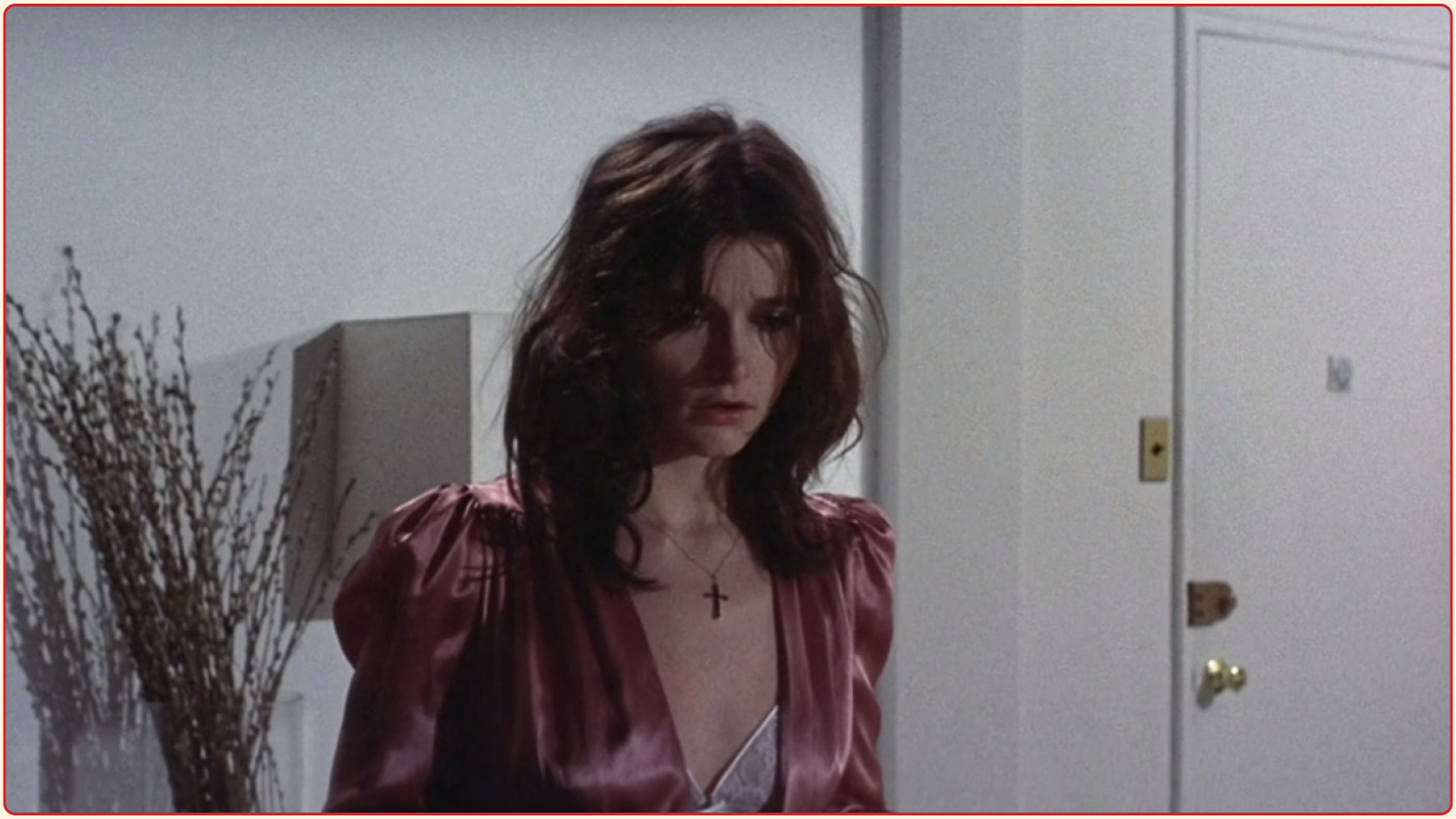
Sisters (1972)
Rape revenge movies are known to make victimized women into ruthless forces of nature, subverting the very order that pins them down as prey. Less common, however, are the ones that envision this traumatized survivalism as a self-destructive force in and of itself. For some women, heterosexuality often feels like a curse. You desire men, but then you also find yourself rolling your eyes and gritting your teeth at all the man-children and mansplainers that come your way—the instinctual response to their nonsense always coded along gender lines. Men. Fucking men. In the end, Thana sees all men as punishable, her avenging gaze warped by lust and power as she moves through a spectrum of feminine archetypes—from feeble ingénue to femme fatale. (Lund co-wrote the screenplay with Ferrara and shaped her character to reflect her own ideas around femininity, trauma, and empowerment.) At the company costume party (in which, of course, she’s dressed like a nun), she agrees to go somewhere private with her slimy boss. He gets a bullet instead of getting laid, after which Thana goes in for her closing act: firing at any and every man she spots on the dancefloor. “Sister…” she mutters with her last breath when a female coworker stabs her with a knife, putting an end to her anti-man killing spree.
Brian De Palma’s Sisters (1972) also brews sororal treachery and righteous misandry-turned-toxic within the urban stress chamber that is New York City, where the line between public and private is blurred and even one’s home is susceptible to external dangers. It, too, makes a single woman’s apartment the scene of the crime: the place where our expectations of her apparent vulnerability are turned upside-down. In DePalma’s hands, the home is neither a place of safety nor privacy. Everyone seems to be watching—through windows and from street corners—which makes the city a cradle of paranoia, teeming with potential casualties who may just as well be foes. After winning a dinner-for-two on a reality game show, a handsome Black man named Philip (Lisle Wilson) chooses one of the gameshow’s participants, a Quebecois beauty named Danielle (Margot Kidder), as his date. At a (questionably jungle-themed) restaurant in uptown Manhattan, Danielle explains that, despite her rejection of the women’s liberation movement and the idea that all men are scum, her ex-husband, Emil (William Finley), was genuinely terrible. He was the reason she left Canada. Seconds later, he appears behind her, urging her to come home with him.
Danielle’s (exaggerated) French accent, her demure (if eccentric) manner, her puppy-dog eyes, all play into the desperate woman role, further reinforced with the arrival of her mustachioed former flame. (That Danielle is played by Kidder, best known as Lois Lane in the Superman movies of the late ’70s and ’80s, should add to this damsel image for the modern viewer.) Clearly this man is a pest, inspiring Philip to play defender. On the ferry back to her place in Staten Island, he cradles her between his arms, and in a bit of pre-coital heroics, he drives away her ex after the two catch him staring into her apartment from the front yard. Danielle flashes a steely look at her voyeur as he drives off into the night. Only later do we find out that she wants to escape his gaze for her own nefarious reasons, these hidden desires complemented by the borough’s isolation. Sleepy, quasi-suburban Staten Island would seem peaceful enough relative to Manhattan’s congested avenues, yet in this case it’s also conveniently inconspicuous, strategically removed from the authorities’ radar.
Unluckily for Philip, Sisters devolves into a Hitchcockian crime plot that sees Danielle torn in two: on one side, a lusty bachelorette and on the other, a vengeful murderess. In a magnificent split-screen sequence, we see Grace (Jennifer Salt), an investigative journalist, spot the words “HELP” written out in blood in one of Danielle’s windows—Philip’s last act before succumbing to his stab wounds. As Danielle (and her ex) hide Philip’s body, Grace calls the cops and leads them to the killer’s apartment; the camera hovers around narrow, burnt-orange hallways, with De Palma’s tight compositions emphasizing the cramped infrastructure endemic to the cityscape; the plethora of doors and windows through which the characters can surveil others or be surveilled.
Later in the film, the clinical origins of Danielle’s madness are uncovered: she was born a conjoined twin, but when her sister, Dominique, died during a surgical procedure to separate them, Danielle absorbed Dominique’s personality as a kind of coping mechanism. Dominique, however, was always the more disturbed of the two, becoming furious and unhinged when Danielle started having sex with their doctor. After spending the night with Philip, Dominique emerges and slays her sister’s one-time lover, manifesting the angry-feminist’s love-hate relationship to heterosexuality. Her deceptively banal apartment—at once a love nest, the object of peepers’ fascination, and a secret realm where her rage finds expression—is one among millions, but it sustains this tension just as well as her psychological cracks. As in Ms .45, which uses the nun-figure as a double-edged sword—the fear of defilement versus the conviction to discipline others in the name of a higher cause—Danielle/Dominique enacts the victim-victimizer dichotomy in a single body. Both intimate and invasive, the city alienates, encouraging a kind of mental withdrawal with its own set of fangs. Without them, how else would the modern woman survive in such a misogynist inferno? Danielle/Dominique’s personality split pathologizes a feminine crisis, the rift between the kind of docility that inspires desire in others and the fury cultivated by living within these gendered boundaries. If—as alarmist clichés dictate—the city streets are filled with psychopaths yearning for female flesh, these movies say (with a wink): we sisters have to stick together.
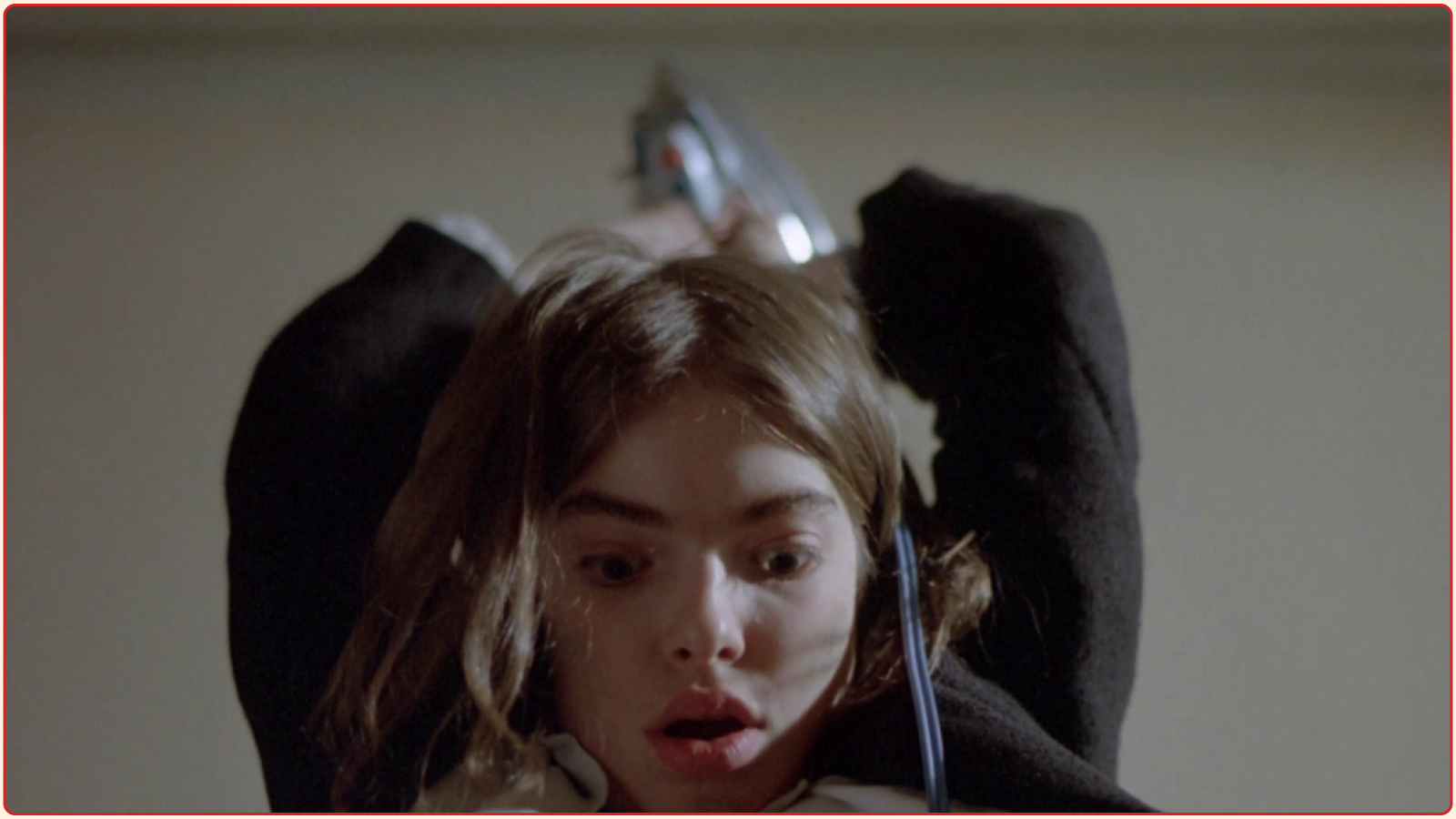
Ms .45 (1981)
Share:
About the Contributor
Recommended
- Bram Stoker’s Dracula
 On Coppola’s gorgeous and stubbornly old-fashioned approach to the immortal tale.
 - Christopher Doyle
 The legendary DP discusses working in different cultures, his collaborations with Wong Kar-wai, and dancing with Pina Bausch.
 - Cracked Actor: David Gulpilil
 Looking back at the inimitable Indigenous icon.