
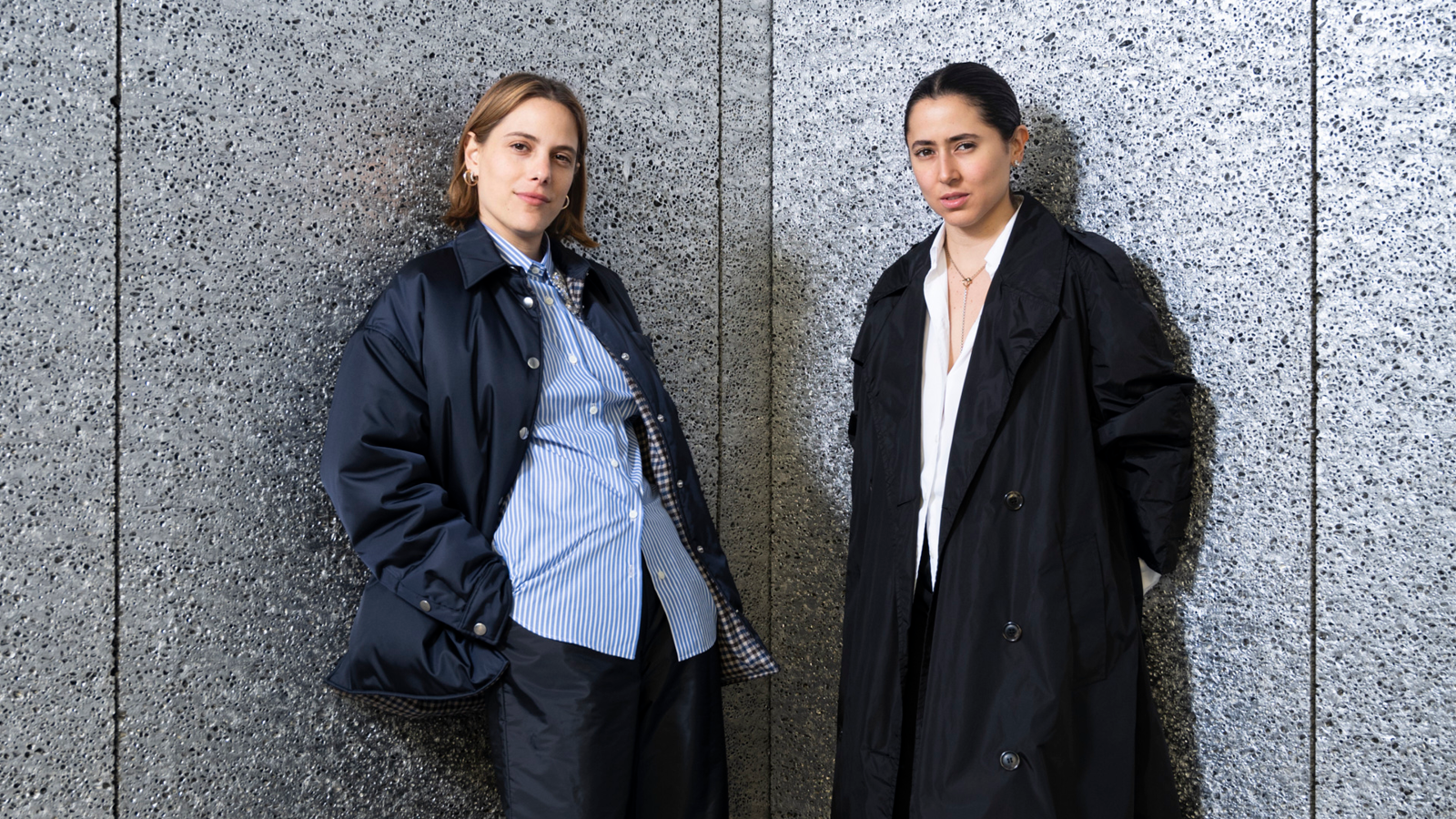
Orian Barki and Meriem Bennani, photo by Valentina Sommariva
Interview
Orian Barki & Meriem Bennani
The multi-hyphenate collaborators discuss their anthropomorphized, experimental, animated feature debut.
Focus on Orian Barki & Meriem Bennani opens at Metrograph on Friday, June 26.
Share:
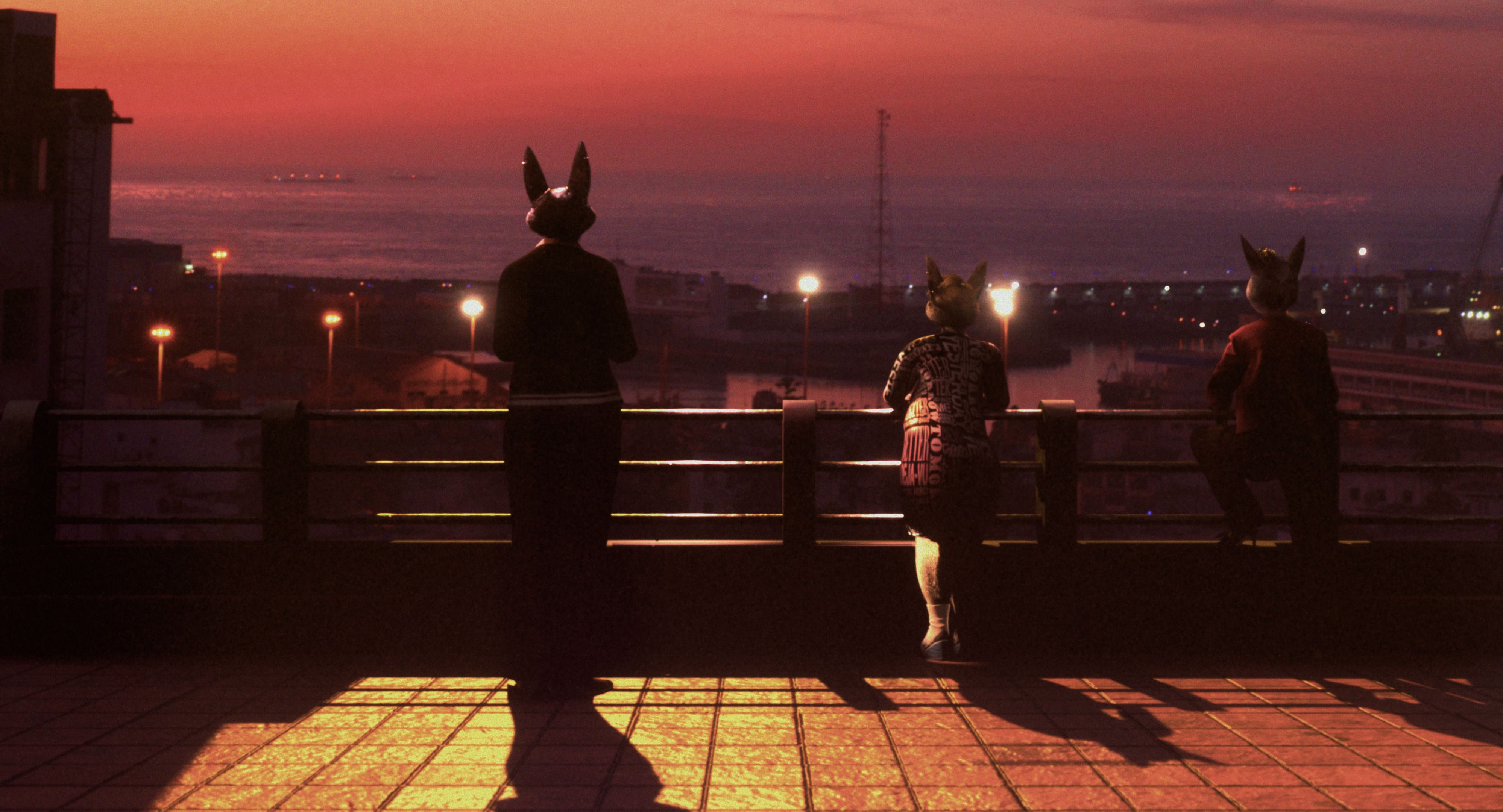
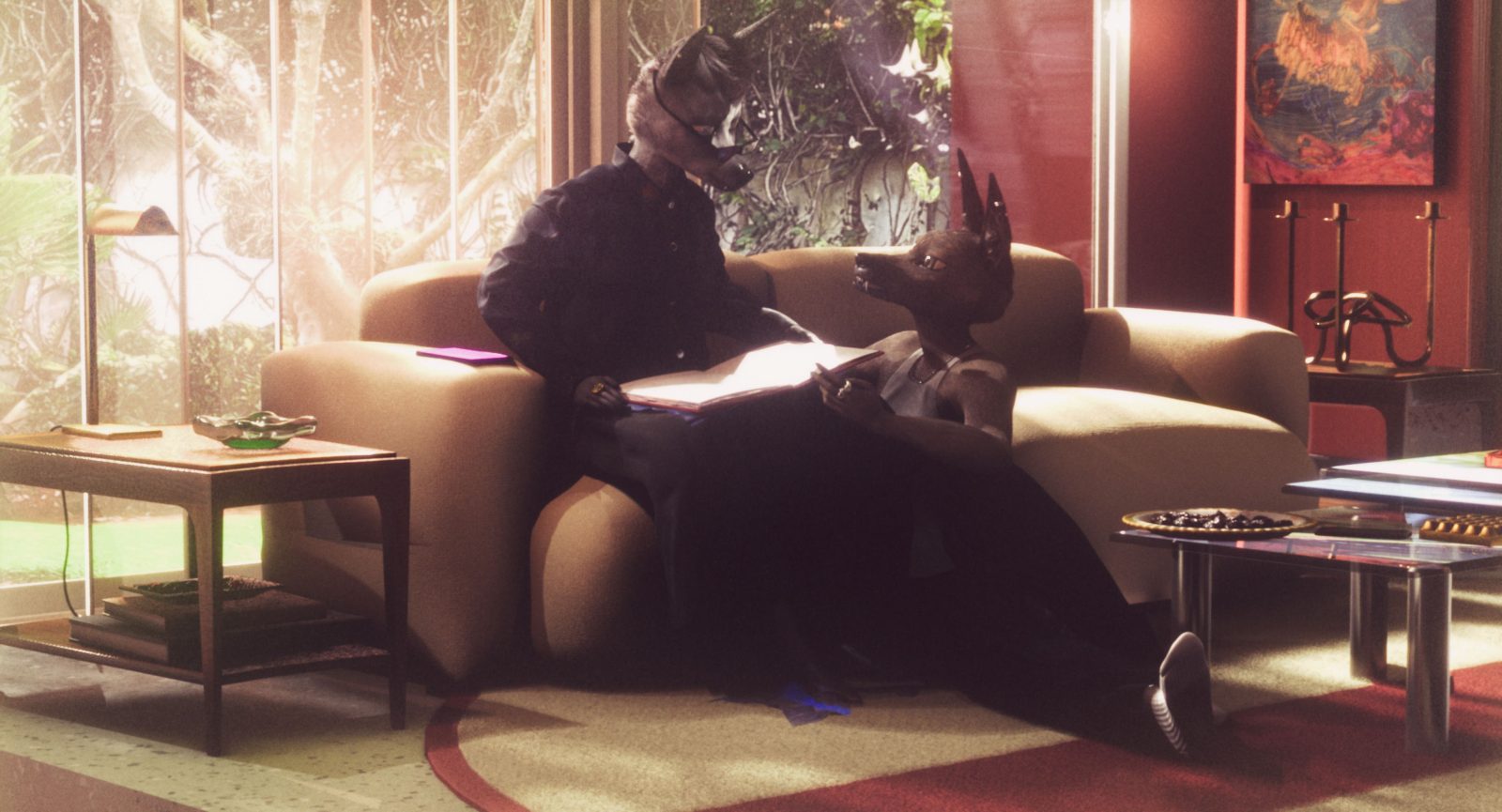
BOUCHRA (2025), THE DEBUT FEATURE BY Meriem Bennani and Orian Barki, explores the relationship between Bouchra, a 35-year-old Moroccan coyote living in New York, and her mother Aicha, in Casablanca. It is a queer, computer-animated film with the same processual question driving an early ’90s Disney film: how can animation give form to intimacy? Together, across continents and emotional gulfs, Bouchra and Aicha navigate the complexities of love, pain, and secrets that unite them.
Developed over two and a half years, the film premiered as part of Bennani’s solo exhibition at Fondazione Prada in Milan. It emerges from the creative partnership between the two artists, each with a successful career in the art world and documentary filmmaking, respectively. Both came from highly individual practices, accustomed to controlling every aspect of production alone. Their previous cult pandemic-era series, Two Lizards (2020), paved the way for Bouchra, which is an extension of their elaborate digital world-building, including fur-rendering in Blender and meticulously constructed interiors drawing on archives from camera roll.
Bouchra required Bennani and Barki to develop existing skills, including how to direct others, and navigate uncertainty together. Speaking with me, they describe a filmmaking process that is defined by vulnerability and trust as much as technical mastery, highlighting the challenge of collaboration itself. What emerges is a portrait of two filmmakers experimenting freely, while thinking seriously about their process, as well as the strange logistical realities of independent filmmaking. And so it only makes sense that the end of our conversation lands, fittingly, on taxes. —Róisín Tapponi
Bouchra (2025)
RÓISÍN TAPPONI: How did the project of Bouchra begin?
MERIEM BENNANI: Two Lizards, our 2020 short series, was the first time we worked together. After we made it, we realized that something interesting emerged when we collaborated. So we developed some TV shows, and did some stuff in the film industry, but we didn’t feel good in those worlds because, well, on my end, I come from the art world. Then I got offered a show at Fondazione Prada, and because they do such ambitious projects, they asked, “What have you been wanting to make that you haven’t been able to do elsewhere?” So I asked if they would finance a feature film with Orian, and they accepted. The idea was to do an exhibition with two parts: an installation that I would do alone, and then the film. So Bouchra didn’t start with the subject; it started with the desire to make a film with Orian. And then pretty quickly the subject emerged; a story between a mother and a daughter, but it wasn’t until very late in the project that it became about my mom and I.
RT: Did you experiment with any new techniques, particularly in animation, that you hadn’t used before?
ORIAN BARKI: Yeah, many. One technique that was new for us was working with fur. John Michael Boling and Jason Coombs are amazing animators, and they made the film with us on Blender. We wanted the animals to have fur, so they had to figure out how to do that in an affordable way. We worked on the film for two and a half years, and the first year was just pre-production, for example, when we experimented with techniques, built the sets, and the characters etc.
MB: I think the technique we had to work most on, if you could call it that, was our directing. In everything else I’ve made, I did everything myself. But for Bouchra, we were directors. Same for Orian—she edits, she shoots, she does it all. I’ve always made my own animation, and I write through making. But this was the first time we both had to learn how to communicate our ideas to other people, who were better than us technically, in the making of the film.
RT: Your films together have developed an identifiable visual language. How do you go about world-building?
MB: I mean animation is full world-building. Because everything you see on screen is a decision. Every single detail is something we had to build from scratch. So you’re constantly negotiating how detailed you want to go into a world. Someone even noticed that, at one point, Bouchra opens the microwave, and there are stains inside. That was a decision. It’s almost beyond realism. It’s a hyper realism. You have to decide to focus on dust, to draw the contours of a world. I can really get lost in the nerdy stuff when I have control over that many decisions. Thanks to Orian, I learnt how to get my head out of the water and focus on what was going to best serve the story and the emotions. When you have such little time, you have to prioritize what is going to add to the story.
OB: World building for me is very much character driven. Last week we were in Venice, and we were surrounded by so much beauty. I noticed how everyone was taking photos, processing the beauty, and taking it all in… When I’m making things, I see it, but sometimes I forget to appreciate the beauty. Instead I get really engaged whenever things have to do with stories or people. That’s where my attention naturally goes. I only really lock in when something is emotionally engaging. Not to say that I take beauty for granted, but to me, it’s always there to serve an emotion.
RT: Were there any references for Bouchra, in terms of character and story, that added to the making of the film?
OB: Yeah. There were three movies I watched while we were making the film: Chungking Express (1994), After Hours (1985), and Midnight Cowboy (1969). These three movies for me are really inspiring in terms of how to tell a story with elegance and nuance. They also gave me confidence because Bouchra has the same approach towards nuance in storytelling; it leaves a lot of space and breathing room for life to happen.
MB: My compass for finding a good balance in the mother-daughter relationship was just reality. I was so scared to create something that villainized parents, or that simplified the mother-daughter relationship to just a gay kid and the mom of a gay kid. Then visually, the film was made using a bank of 10 years of videos and photos that I took at home in Morocco. I’ve had those forever, they’ve been part of my work forever. When we started working on the film I organized them into categories, as if they were an archive. Aunties, restaurants, everything. So whenever we had to create a scene, and we didn’t know what someone would wear, or how someone would behave, or how something would feel, we visited the archive.
Bouchra (2025)
RT: Bouchra and Two Lizards are both co-directed, so how did you navigate that process as individuals, as partners, as artists with your own specific visions?
MB: There are things that we do together, and there are things that we naturally delegate to each other, because we know each other’s skillset really well. Editing is the part of the process that’s the most collaborative. One of us will have an intuition about a scene, and be like, “I know how I imagine this scene.” I say editing, but really in animation, that means directing. We have the audio, we have the dialogue, then one of us will have an instinct on how it should be timed, so we do the storyboard, etc.
But in terms of other things, like when the story became really personal, and we brought in conversations with my mom, that was too hard for me to do. The material was too close to my life to know what was interesting, what was good, and what served the story. So I leaned on Orian to make decisions. She’s known me for so long, and my family, so I can trust her on so many levels to have a very careful and tender approach. That’s the main example of when I took a step back [laughs]. And there’s moments where it was the other way around.
OB: Meriem and I have always inspired each other, and we have always trusted each other. That provided a very strong base for creative collaboration, because they’re the two main things you need. The thing we had left to figure out, within our process, was how to be practical together. We had to learn how to do things as if we were driving a car together, with two driver seats, two wheels, two gas tanks, and two breaks. And we had to try to get somewhere, but at the beginning, we didn’t even know where that was. Plus we didn’t have a map. I think that is the most vulnerable part—when you genuinely don’t know what you’re doing yet, and you have to share this discomfort with another person. And I realized that we have different coping mechanisms, which are complimentary. Sometimes I’m guided by doubt, so I can be too much like, “Is this really the right thing?” I’m constantly questioning myself. And it can easily become self-deprecating. But for Meriem, that’s very much not the way. Doubt for her is almost a cock block. So there was a moment when we had to understand each other in that regard, in practical terms, so we could get things done.
A few months into production, when we were still not sure where the story was going, Meriem surprised me. She was like, “We’re going on a date.” So we went to this restaurant in Midtown, which had a “Broadway” theme, where the waiters sing songs from musicals, and it was a very camp and very New York moment, and we were drinking martinis. Afterwards, she takes me into a building, and inside, there’s an escape room. And it very quickly became an illustration of how we were working together on the movie! The second we arrived, I was kind of floating in the middle of the room, trying to catch a vibe. And Meriem started running around like, “This is what’s going to happen! This, this!”
RT: So, what did you learn from this project that you will carry into future projects?
MB: Well, it sounds very basic, but I learned that I want to keep doing long-term projects. This isn’t so much about the result, like making a feature, but rather, spending a lot of time on something, and working in collaboration. As an emerging artist, you make a new piece every six months. And you’re alone. So for me to have had the opportunity to work with so many people, and constantly receive feedback, which was really hard, but also really good… That made it a really great process. I want to continue giving myself time to go deep into projects.
OB: I also wanted to say something similar. But you said it better. Sitting with things. Interacting with the longform process. I’m a very short sprint type of person. So before Bouchra, if things took a long time, I took it as a sign of, well, it’s not working. But thanks to the making of this film, I learned the value of having patience. If something is not like [snaps fingers] immediately clicking, that’s still fine.
MB: We also learned how to produce.
OB: Yeah…
MB: We also learned how to be the legal, the accountants, the set designers… What we learned is huge and will be amazing for our next show.
OB: I learned something interesting about taxes actually, because I was the accountant. If you have a company, an LLC, and you receive money, like basically a budget, but then you spend all that money to, you know, pay people, pay for gear and equipment, etc., at the end, you pay zero taxes! Because you didn’t make any profit.
RT: Taxes! Let’s end it on taxes.
OB: Well, you know Meriem’s birthday is on tax day. American tax day.
MB: Right.
Share:
Recommended
- Der Fan
 Eckhart Schmidt’s chilling cult fable and the all-consuming side of pop fandom.
 - Bram Stoker’s Dracula
 On Coppola’s gorgeous and stubbornly old-fashioned approach to the immortal tale.
 - Christopher Doyle
 The legendary DP discusses working in different cultures, his collaborations with Wong Kar-wai, and dancing with Pina Bausch.