
Essay
Just a Little Curse
By Gracie Gardner
How the lessons taken from an early favorite movie evolve as one leaves childhood behind.
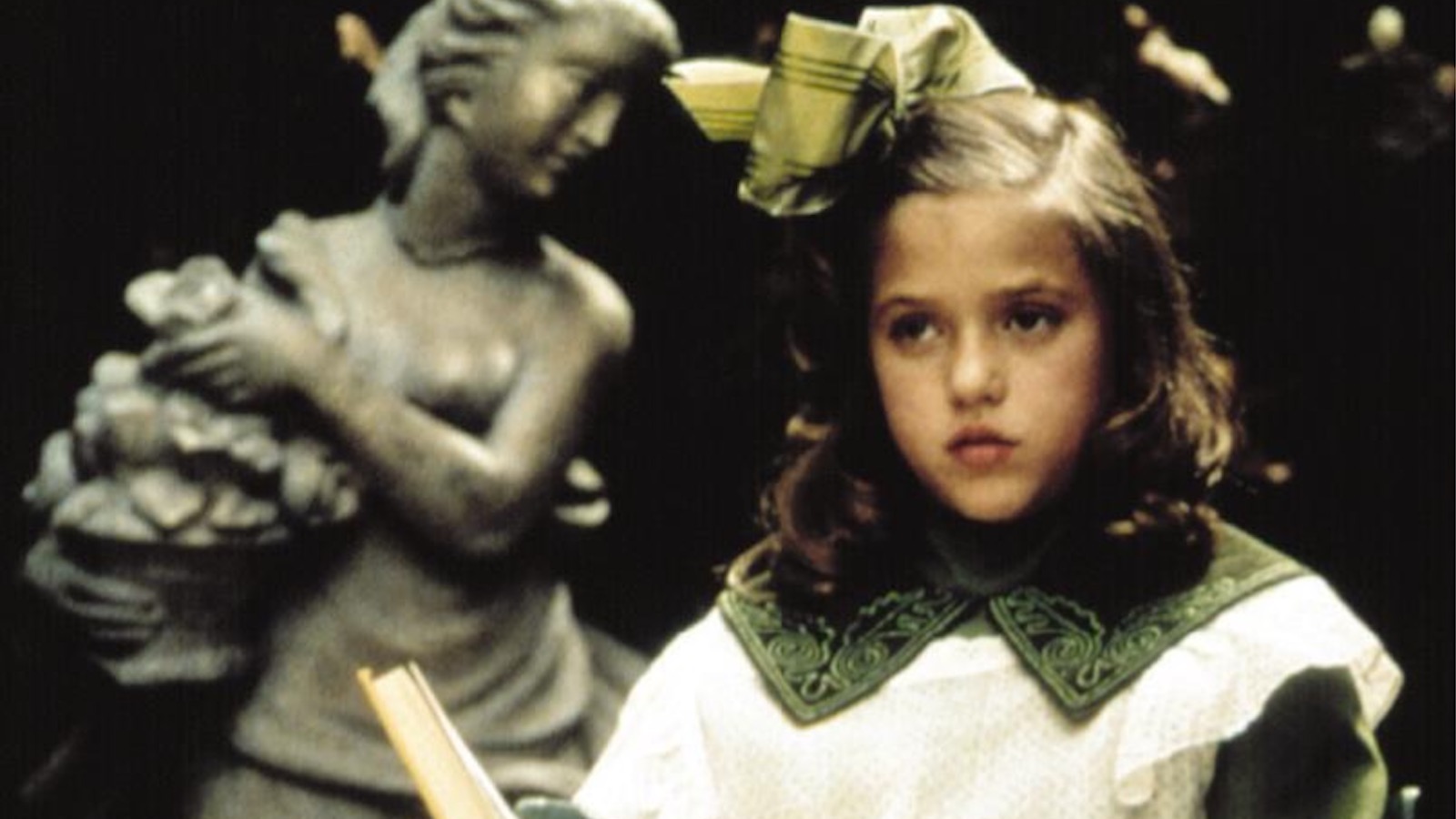
Tremendous olive green hair ribbons the size of a child’s head. Steamer trunks with pillowy peach quilted interiors. A dew-speckled yellow rose threaded through the latch of a heavy Victorian door. Such is the lush world of my most beloved movie, Alfonso Cuarón’s A Little Princess. I first watched it on VHS as a kid, and I regularly revisit it with the soaring sense of relief that often accompanies a childhood favorite. For years, this movie has reliably served as the jaws of life for my crumbling optimism, but now that I’m older, my understanding of its characters has shifted.
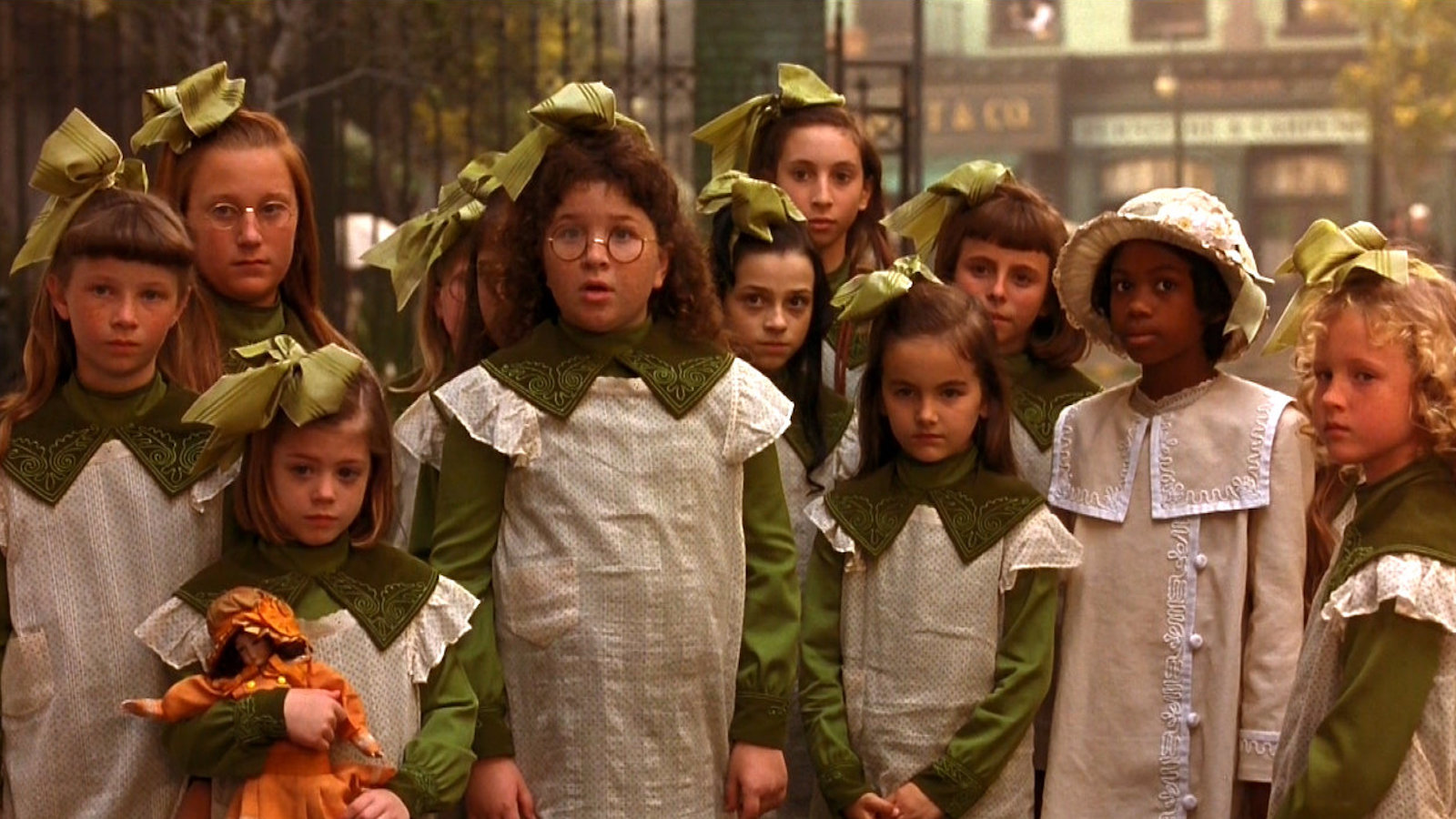
In the film, Sara Crewe balks at the social hierarchy she’s expected to respect and the silence she’s supposed to maintain at Miss Minchin’s Seminary for Girls. On Sara’s first day, an aristocratic student named Lavinia locks eyes with her, then silently dips an unaware classmate’s hair into a pot of ink with diabolical detachment. It’s a chilling introduction to the socialization Sara can expect at this institution; it is one of unamused, even diligent cruelty. When the severe headmistress Miss Minchin scolds Sara for openly grieving, playing, and expressing gratitude, Sara admits that this whole situation just “doesn’t seem natural.” She disobeys the cardinal rule of silence, and shares her gift for invention with everyone around her, listening to their stories and helping them identify and realize their desires. The way Sara freely expresses care through curiosity ingrained in me early on that kindness is an act of imagination.
this movie has reliably served as the jaws of life for my crumbling optimism, but now that I’m older, my understanding of its characters has shifted.
When I was young, I wanted to be like Sara, but the character I related to most was her freckle-faced classmate, Ermengarde, the one whose hair was dipped in ink, who is socially awkward and lousy at math. As an adult, I still admire Sara, but the one I recognize myself in is Miss Minchin’s uncompromisingly romantic sister Emelia, whose infatuation with yearning itself prevents her from doing anything that might get what she wants. And shamefully, I also identify with some elements of Miss Minchin: my own rigidity, obsession with productivity, fearfulness, discomfort with sincerity, difficulty facing grief, and Protestant suspicion of pleasure. I can particularly recognize my adult self in the scene where Miss Minchin is playing her harp, humming along tonelessly, frowning when Sara goes off script from the dreary novel she’s made to read aloud. She reacts to Sara’s creative interpretation at first with confusion, then mockery, and then there’s a flicker of longing on her face when Sara asks: “Don’t you ever do that, Miss Minchin? Believe in something just to make it real?” Miss Minchin’s face hardens. “I suppose that’s rather easy for a child who has everything.”
The last time I saw the movie, I had the same reaction as Miss Minchin’s. Of course things seem to manifest like magic for Sara. Her father lavishes her with affection, calls her “a little princess,” and anticipates her every wish. Miss Minchin’s response highlighted my own cynical habit of searching for sinister causes of spontaneous grace, and forced me to think about the inadvertent consequences of that practice. This kind of suspicion diminishes the unexpected and rejects compassion. All through this scene, there’s a miniature mechanical pewter harpist who plays along with Miss Minchin, a callback to an earlier moment where a dancing ballerina twirls under glass as Sara comforts a classmate. These miniatures remind me that when imagination is forbidden, a child can harden to indifferent stone, and to a certain extent, grief and disappointment have taught me this method of self-preservation.
Along with Sara’s revived spirit comes her sense of mischief. In my favorite scene, Sara loads wood into a fireplace for Lavinia, who lounges cat-like, brushing her hair, bossing Sara around and insulting her. Sara silently finishes her task, brushes the soot of her hands, and launches into a gleeful, spinning dance, pretending to put a spell on the girl. Terrified, Lavinia asks what she’s done, and, unbothered, Sara shrugs and admits that it was, “just a little curse! But I wouldn’t brush my hair as much if I were you.” Lavinia uses her wealth as social leverage, which makes her lonely and controlling, and this insecurity turns Sara’s playful retort into unhinged paranoia. She can’t bear the light touch and charm of Sara’s buoyancy, and later when she notices a few strands of hair in her brush, it causes her to collapse. I’m inspired by Sara’s impishness, and the effectiveness of this kind of self defense. But the ultimate revenge Sara offers this vindictive child is a chance at a redemptive ending.
Looking back on the movie, it’s easy to see my own deliberate efforts to be as good-natured as Sara. I make these attempts because I know it’s an extraordinary privilege to be blessed by the compassion of a Sara Crewe, those rare people who have gone through the wringer and have come out grounded, resilient, and kind, with an untamed ability to imagine that things could be better than they are. As a result, their sense of self is unshakable, and more often than not, they’re rebels too. That’s the thing about good girls: you can’t tell them what to do.
As an adult, I’ve learned to seek out the Sara Crewes of the world because being around a Sara makes life feel warmer, holier, and more liveable. It’s easy to catch their light, because there’s so much of it. Being around them can offer a spiritual correction, and there’s always a particular loveliness to be rediscovered in the company of the triumphant Sara Crewe that Cuarón so sparklingly rendered, dancing in the snow. •
