
Columns
At Home With… November
Friends of Metrograph Lynn Hershman Leeson, Nathan Gelgud, and Toma Vagner each share a film they love, streaming on demand on the Metrograph At Home platform.
Share:
Lynn Hershman Leeson
selects
The Image of Dorian Gray in the Yellow Press

The Image of Dorian Gray in the Yellow Press, dir. Ulrike Ottinger, 1984
Dorian Gray in the Mirror of the Yellow Press is an exuberant, wild and over-the-top film by Ulrike Ottinger. I had forgotten the glory of Ottinger’s unrestrained flirtation with the luxuriant possibilities offered only by film. Ottinger exploits these possibilities with matching wit and humor as only she can, creating a metaphor for the story through her extraordinary style.
Over the last five decades, artist and filmmaker Lynn Hershman Leeson has been internationally acclaimed for her art and films. Hershman Leeson is widely recognized for her innovative work investigating issues including: the relationship between humans and technology, identity, surveillance, and the use of media as a tool of empowerment against censorship and political repression. Lynn Hershman Leeson’s Private I: A Memoir is published by ZE Books.
Nathan Gelgud
selects
Los Angeles Plays Itself
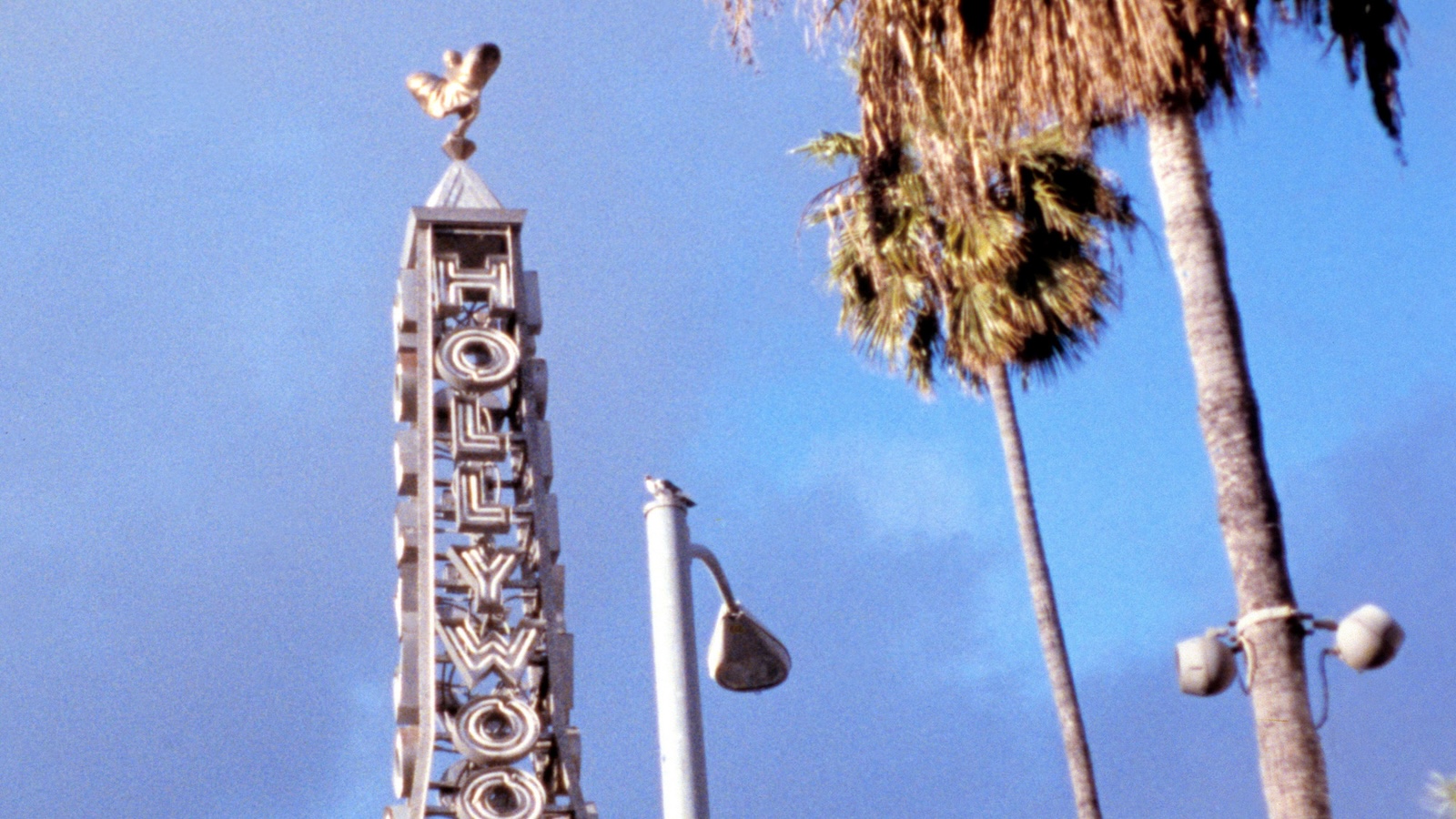
Los Angeles Plays Itself, dir. Thom Andersen, 2003
Movies that are made up of clips of other movies make all movies look indispensable. These kinds of movies reorganize our way of seeing movies, defamiliarizing us by taking away standard ways of judging and watching. Christian Marclay’s The Clock (2010) does this. So does Los Angeles Plays Itself. Andersen says something in the narration about how if it’s acceptable to critique a movie based on its emotional realism, then it should also be valid to critique its geographical realism. Who cares if a movie is good or bad? Who cares if it’s realistic? Apply any other mode of categorization to how you think about movies, even an arbitrary one, and the movies change. You change.
Nathan Gelgud is the cartoonist of Reel Politik. He has been a projectionist, a video store clerk, and a movie critic. He makes those movie director tote bags and T-shirts you’ve seen on people around town. Sometimes Gelgud contributes nonfiction comics to The New York Times, Hyperallergic, and The Metrograph magazine. He used to live in New York, now he lives in Los Angeles. His newly released collection Reel Politik launches at Metrograph on Friday, November 7 with a special double bill and a book signing in the Metrograph Lobby.
Toma Vagner
selects
The Pillow Book

The Pillow Book, dir. Peter Greenaway, 1995
When was the last time you saw a movie jump from color to black-and-white and back again; from Japanese to French, English to Mandarin; from square ratio to rectangle to a frame-within-a-frame; from a dick to a dick to another dick—this time covered in intricate calligraphy? Reasons to watch: 1) Aesthetics: Rich visual language. Frame overlays. Exquisite calligraphy. A feast for the eyes (until the narrative wins over your attention and gets a bit unhinged). 2) The soundtrack: a wild but somehow cohesive mix of Tibetan ritual music, French pop, U2, Japanese court music, and industrial. Not even a minute in, the movie greets you with the most gorgeous throat singing you’ve ever heard. Nb. Trigger warning (or the third reason—depends who’s reading): contains some seriously disturbing scenes.
Toma Vagner is a Russian-born, NYC-based artist and illustrator exploring art, design, and the nature of consciousness. Her artwork is featured in Issue 1 of The Metrograph, accompanying the article “Movies Come to This Place for Magic” by Steve Martin.
Share:
Recommended
- Green Snake
 On Tsui Hark’s subversive reimagining of an immortal Chinese folk tale, starring Maggie Cheung as a serpent demon.
 - Travel Companions: Bahram Beyzaie & Amir Naderi
 On two defining Iranian filmmakers, and two of their most enduring works.
 - A New Love in Tokyo
 On the pulse of pleasure in Banmei Takahashi’s effervescent Pink drama.