
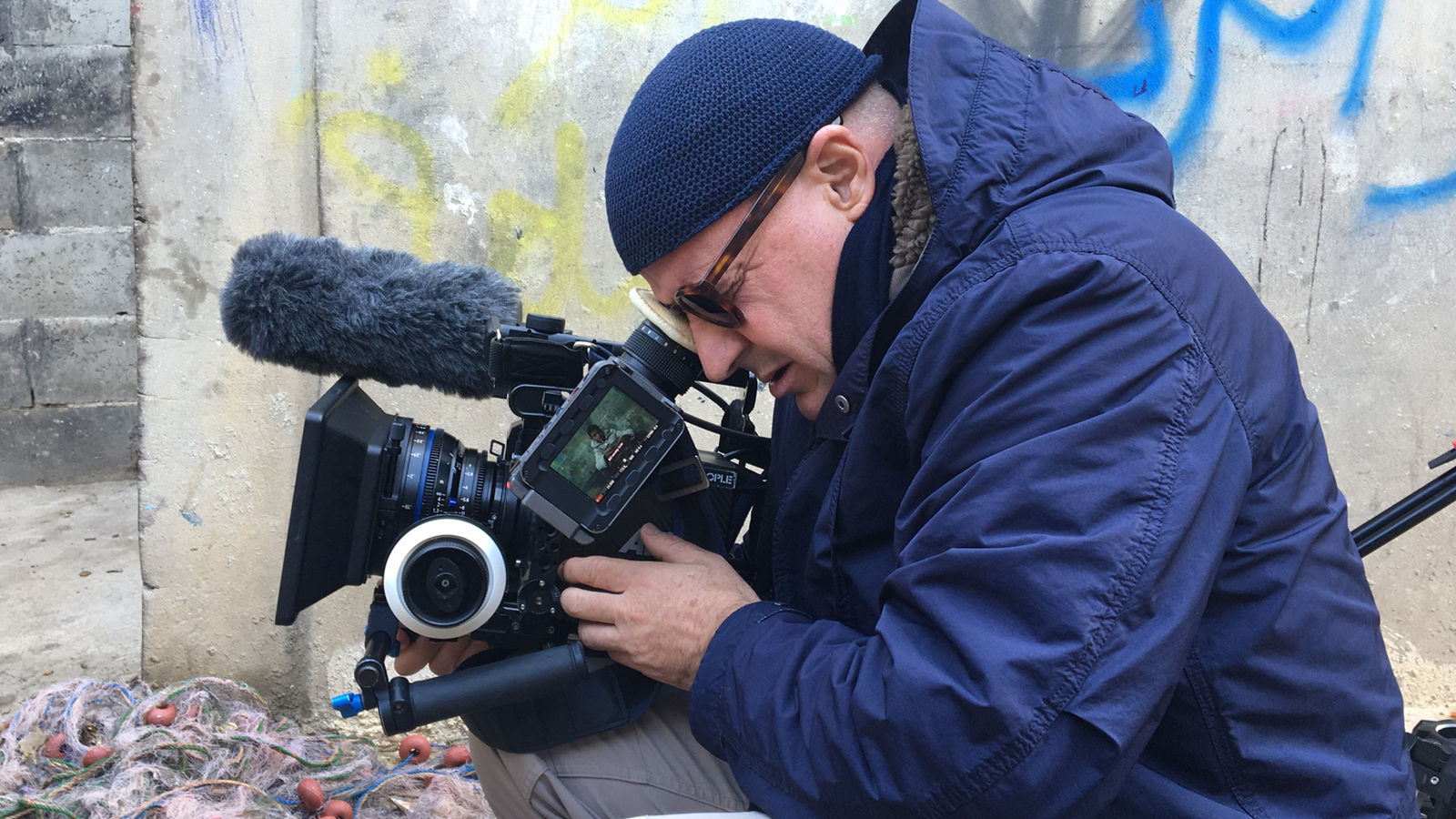
Gianfranco Rosi
Interview
Gianfranco Rosi
A career-spanning conversation, traversing borders of place and time with the acclaimed documentarian.
Share:
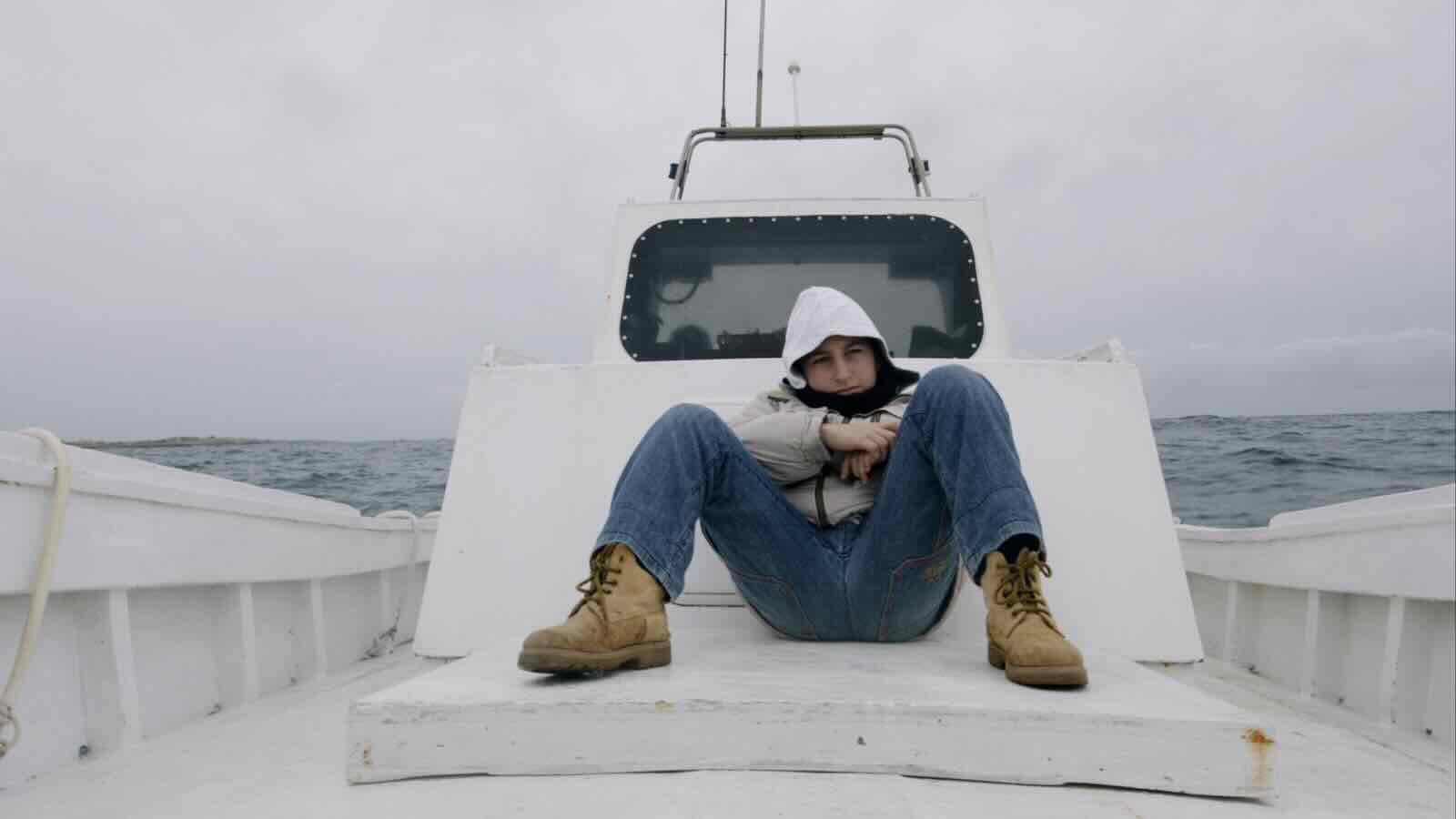
GIANFRANCO ROSI PUTS FAITH IN an almost classical form of emotional portraiture that bodies forth themes of survival, resilience, grief, time, and the sublime (both the terrible and the wondrous). The sheer strength of his often painterly imagery is matched by the evident trust he builds up with his subjects, whose lives he captures in a welter of daily routines and looming crisis. After his first two feature-length films—Below Sea Level (2008), visiting a community of squatters in the desert California community of Slab City, and El Sicario: Room 164 (2010), a solo interview with a killer for Mexican cartels—Rosi has increasingly worked with several, often disparate threads in his films. Fire at Sea (2016) juxtaposes immigrants making the deadly journey to Lampedusa, Italy, and the government services that assist them, with an Italian boy at play and with his family, whereas Notturno (2020) spans at least eight stories in four countries in the Middle East. He seems to return instinctively to bring situations of precarity to the screen, and even in what could become a tour of old Naples in Pompei: Below the Clouds (2025), he finds not just historical marvels but a sighing sense of fragility.
Talking to Rosi, you also immediately feel the drive to chat and think through the world alongside others, which perhaps has its most purely curious, ludic form in his tour of Rome’s circumnavigating highway, Sacro GRA (2013)—a headline-making winner of the Golden Lion in Venice thanks to a jury lead by Bernardo Bertolucci (who, Rosi learned later, had seen his other four features). On the occasion of a full retrospective of his work at Metrograph, we spoke at length, over two conversations. While I tried to keep up with his voluble flow, we discussed his origins, the adventures of his first half of his career, two major mentors, Roberto Rossellini, and how the relationships he builds turn into the pluralist humanist chronicles we experience in the films. —Nicolas Rapold
NICOLAS RAPOLD: When we talked the other day, I mentioned I’d like to know more about your background, which I don’t think people know much about.
GIANFRANCO ROSI: I like to keep it always very mysterious. But yesterday I was on a bicycle and thinking that, yes, my work has been shaped so much by my moving around from place to place, different cultures, different places.
NR: I noticed in Fire at Sea, when the immigrants who have come over by boat are playing soccer, the teams are organized by nation of origin, like Somalia, and Eritrea, which is where I think you grew up?
GR: My family went and remained in Asmara because my mother was there, working at the Italian consulate. She had a diplomatic career. My mother was pregnant with me, so I was born there. The period I spent in Asmara was very difficult. I always wanted to run away from everything, from my family. But also it did shape somehow my ability to be alone. I was there until I was like 10, 11. Since then, I have spent my life moving from one place to another. In Istanbul, my father was working for this Italian institute for industrial reconstruction after the war. He was a geopolitical expert, so he was traveling a lot: I went to Istanbul, France, and then Italy, but very little in Italy, just for university. I arrived in New York when I was 21, 22 for NYU. Being constantly on the move has shaped my life, but also the way I look at the world.

Below Sea Level (2008)
NR: When you were a kid, did you like walking around neighborhoods and talking to people?
GR: I loved it. I had my camera. I always had the passion since I was very young. In Istanbul, I did like a reportage on the brothels of Istanbul, which was published when I was like 15, 16. And then I said to myself, “Well, this is something I cannot deal with.” I completely stopped taking pictures, and I went to study medicine in Pisa for two years.
NR: To become a doctor?
GR: Yeah. But then I realized during an anatomy exam that, oh, no, this was not for me. Memorizing numbers, names. But when I was there, I started watching films for the first time, instead of studying anatomy. This is where I discovered cinema, somehow. And then I went to Milan, I did political science, and then I jumped, I was in theater. One day, I applied to an NYU class on film. I came here, I made a short film, and from there, boom! I said, “I’ll film. That’s what I want to do.” I applied to NYU, and was accepted. And that’s when I moved. New York was like a laboratory.
NR: Where did you live?
GR: I was living everywhere the first year, even sleeping in Washington Square Park when I didn’t have any money. That was during the time you could sleep there with a blanket. I was going to the NYU gym to wash. I had a little bag with my clothes, changing there. At six o’clock in the morning, the police would come. You’d get up and then you’d go on your way to work. I lived everywhere. I changed places every week. I lived in lofts, which probably cost like $20,000 a month now. A tiny room shared with eight people on Spring Street and Broadway.
NR: Did you find people you liked to hang out with?
GR: I was always on my own. That’s why I started doing documentaries. Feature film is something you have to share with too many people. You have to write the script, share the script, the script has to be approved. And then you have to have actors. What I hated mostly was that idea of having only three months, two months, one month, three weeks to make a movie, and that’s it. You have to be extremely prepared. For me, it was inconceivable. Then I saw Ross McElwee’s film, Sherman’s March (1985).
NR: So good.
GR: And I saw you can make a film on your own. I was doing all kinds of work here and there. I was a cameraman for music videos. They were paying $1,000 a day.
NR: Wait, what music videos?
GR: It was so many, like for Madonna, for—but I was just doing camerawork! I never wanted to direct. For me, it was just: go there, get the money, go. I was always investing my money in making my film. In India, my first project [Boatman, 1993] lasted forever. It was also my thesis at NYU.
NR: How did it feel going to India and making your own film?
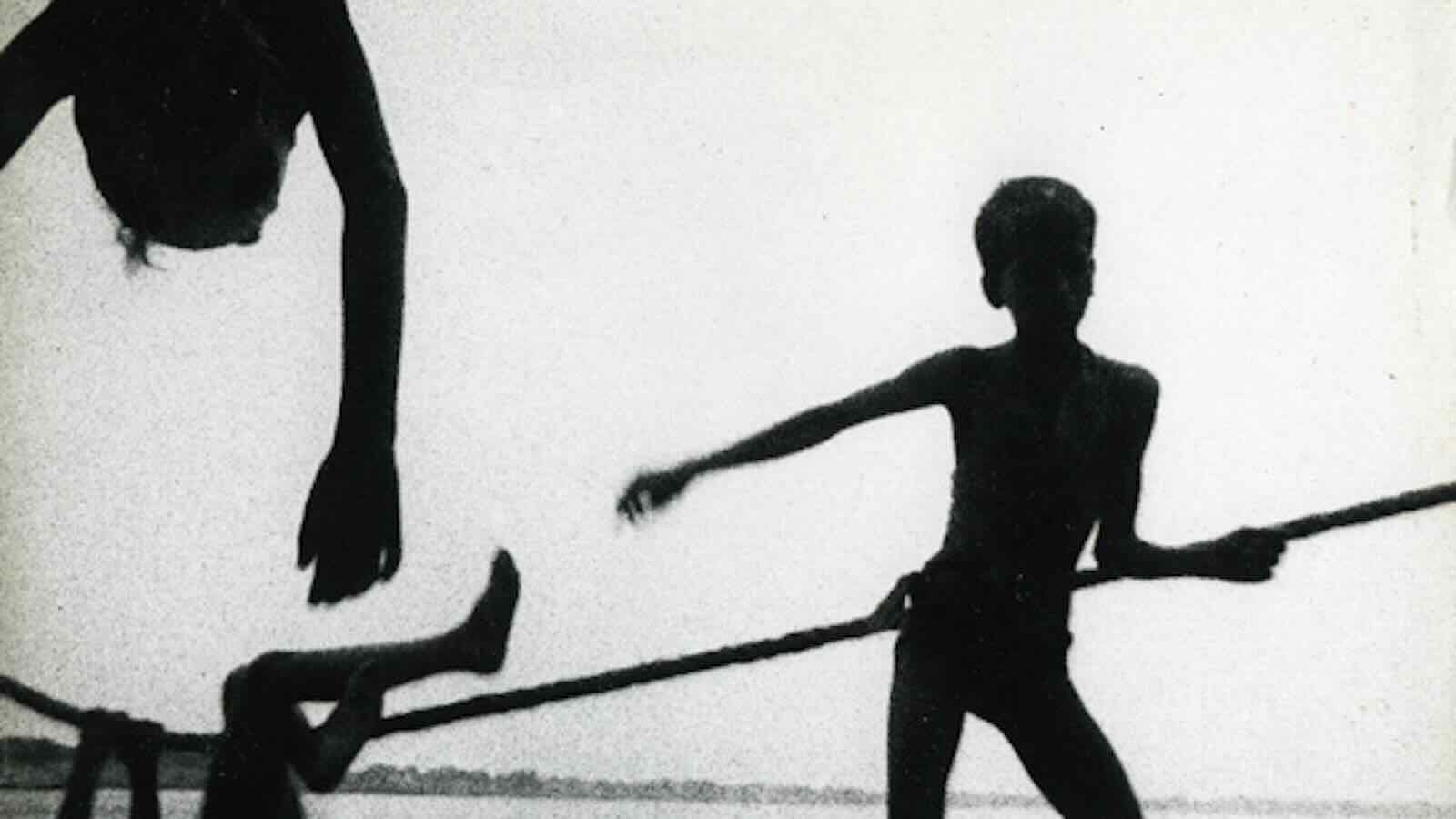
GR: Boatman was really where I learned everything. That is where I learned the ethical frame. My first encounter with India was in Benares [Varanasi], because I made a film during my NYU period in Miami about retired people in the water in the early morning. An Indian friend of mine saw this film, and he said, “It looks like Benares, the Ganges, this way of embracing the water.” Abluzione—ablution. And then I was working as a cameraman for an Australian director who was making these geographical things all over the place. The last location was in India. I went to see Benares, and I said to myself, “I want to make a film here.” And I remember, I had just seen Forest of Bliss (1986).
NR: Sure, by Robert Gardner.
GR: That film was extremely controversial. It was an idea of anthropological documentary. And so I was going around Benares fighting that approach, but then I was doing exactly what Gardner was doing, you know, going around with my camera in the city. One day I said, “That’s it, I have to go back to New York and forget this film.” The next day I went to the rivers with no camera and I met Gopal [Maji], the protagonist of the film. I bargained a price—first it was half an hour, then it was one hour, two hours, three. I said, “Listen, I want to spend the whole day with you. It’s interesting when you’re talking to me as we go from place to place.” It was the most beautiful day I spent on this boat. When I went back to my hotel, I was like, “That’s what the film has to be. Just exactly the day I spent today, without any statements.” The next day, I went with my camera looking for him. And I found him. You know, at the beginning of the film, [you hear] “Boat, boat, boat?” That is the first shot I did. When I came back to New York, I developed all this footage. I watched two, three hours: it was a total disaster. There were only two or three moments that were nice. But I knew I wanted to do this film. So every time I had some money, I went to India, and found Gopal, went again on the boat and spent one month with him. So Boatman is somehow a reconstruction of that one day, the emotional idea of that day. It took me three, four, five years to make.
NR: That’s fantastic.
GR: I learned the ethic of the frame. That was, for me, so important in that film. How to frame, how to do things, how to see and wait that something is happening, the encounter, the trust. That film became a huge journey after I graduated. Everybody said to me, “Where are you going?” and I replied, “I’m going to India.” People thought I was crazy.

Fire at Sea (2016)
NR: Did you have anyone in school who was like a teacher or mentor?
GR: No, nobody… I was really an outsider. Everybody wanted to make feature films. That was the time of Jim Jarmusch, Spike Lee. Everybody wanted to be a real filmmaker. My myth was Ross McElwee.
NR: Did you ever end up meeting Ross?
GR: Yes. It was such a fantastic encounter. When Below Sea Level was invited to a festival, I don’t even remember where anymore, I was in this elevator, and suddenly I saw Ross. I said, “Are you Ross McElwee? Can I hug you?” He was like, “Well, let’s have a beer.” We went and started talking, and I said, “I did this film Below Sea Level. I would like you to see it.” He said, “I’ll come to see your film. But, you know, if I don’t like it, I’m going to tell you!” But he loved the film. And after, he came to me and said, “Can I hug you?”
NR: That’s great.
GR: I saw him in Venice with his last film.
NR: Remake (2025). Fantastic. I interviewed him right there.
GR: It’s amazing. It’s a masterpiece. That film should have been in competition in Venice. I felt guilty, I was in competition and it was not, because that film deserved to be. And maybe he would have won. He put everything into that film. So he was my mentor. And I had another mentor in my life, [author] Charles Bowden, when I did Sicario.
NR: How did you meet Charles Bowden?
GR: During the making of Below Sea Level. That was another film that took years to do. I wanted to make a film in the desert, like having the desert be the protagonist of the film. A friend of mine said, “I think you should go to this place, Slab City.” And so that’s where I went, with my camper. I stayed there, like I was part of the community, because I didn’t have any money, I didn’t have any trust, I didn’t have any courage. I was there for two, three weeks and said, “Wow, I’m going to become one of these guys, just running away from life.” And then one day I met Bus Kenny.
NR: The chatty friendly guy who lives in a bus.
GR: He started talking to me, and I see this guy being very open. I say, “Okay, maybe I should start filming.” That’s when it started. I spent, again, another two, three years there. And then on one of my trips from California, I was listening to an interview with Charles Bowden, and I said, “I want to meet this guy.” I called him, and he answered. I said, “My name is Gianfranco Rosi, I’m a filmmaker. I read your book.” He said, “Are you Italian? Can you cook?” I was in the north of California, took my camper, drove, bought food. In 24 hours, I was at his place and I showed him Boatman. He loved the film so much. He became really my mentor. I spent so much time with him, talking about everything. And he guided me on this film [Below Sea Level]. I said, “Charles, I shot so many hours, I don’t know what to do.” He said, “I want to see all your footage.” I had like 150 hours. He watched it all!
NR: Wow.
GR: And he said, “This is great. This is the America nobody wants to see.” So he really encouraged me to. That film was never, never released in the States.
NR: Below Sea Level never got a US release?
GR: Never got a release. It was in Venice, it went all over the world. But for me, it’s a very strong film. When I finished that film, I said to myself, “This is a Coen brothers film, but it’s real.” Because the dialogue is fantastic. It’s between Whitman and Thoreau. It’s like that kind of poetry. And it’s a new frontier, the last outpost of freedom. When Cindy, the Vietnam veteran, is caressing her wig and says, “Nothing should be perfect,” I love this sentence. It’s a sentence that remains with me forever. That’s a film that I love so much, but it’s never been recognized here in the States.
NR: Which is crazy because you get so close with the inhabitants of Slab City.
GR: I’ve always been interested in what happens when different worlds meet. Boatman, Sicario, Notturno… And for me, cinema has always been a way of crossing borders, invisible borders often. For me, the question has never been “Who is entitled to tell the story?” but “What kind of relationship is established in the process of telling that story?” I’ll never begin my film having in mind a message or an agenda, who is right, who is wrong. I begin with the place, and the film emerges from the encounters that happen there. Time for me is fundamental. I am a one-person crew. I have to spend a long time in this place. Filming, it’s almost just finding a space where I want to be.
In all my films there’s always been a debate. I think Boatman, Sicario, Notturno, and even Below Sea Level were often discussed through the lens of cultural identity in the States in a way that I have never encountered anywhere else. The case of Below Sea Level is incredible because it’s a revelation because I’m an American citizen. I’ve been living here since I was 21 and I have spent more of my adult life in the States than in Italy or any other place, and that film emerged from years of living and working in America. And by contrast, films like Fire at Sea, Below the Clouds have not raised the same questions, you know? Perhaps because they’re rooted in Italy and people perceive me as an Italian filmmaker, which I’m not. I’m just a filmmaker. What is important is what kind of relationship is established in the process of telling a story. That’s maybe why I chose Rossellini for my retrospective.
Boatman (1993)
NR: Yes, what was it about his film India: Matri Bhumi (1959) that made you want to include that as your carte-blanche choice for the Metrograph retrospective?
GR: Rossellini was an Italian filmmaker who made that film in India as an act of curiosity, openness, and a need for encounters. I feel that so strongly. Rossellini is a filmmaker I love, and his method, his way of working—I feel very close to him, and to Ozu, too. A cinema that does not seek to speak for others but somehow to learn from them. A cinema that crosses borders, not to possess or explain another world, but to be transformed by the experience of encountering it. That’s what I love about Rossellini, a cinema where observation becomes imagination. And I understand the roots of the cultural appropriation [question], but when this becomes just one way of thinking—that you cannot make a film in Mexico because you’re not Mexican; you cannot make a film in Syria because you’re not Syrian; you cannot make a film in America because you’re not American—they become limitations. I’m an artist. You cannot tell me what to look at. You can tell me what I saw is wrong. But don’t tell me that I cannot make a film in Syria. My producer, Orwa [Nyrabia], said, Notturno is the best film that was ever made in Syria.
NR: Let’s talk about Sicario because that’s another movie that I think not everyone has seen. How did that project start?
GR: One day Charlie showed me his article [in Harper’s Magazine about the sicario, or hit man, who is the subject of the film]. I said, “Charles, I want to make a film about this guy.” He said, “Oh, you cannot do that. That’s impossible.” I said, “But how?” Then one day, Charles called me and said, “Listen, I have good news and bad news. The guy agreed to be filmed by you, but he wants money.” I said, “What do you mean he wants money?” I always believe you have to pay people for their time and their things. People open up their lives, their stories, their things. They’re acting in their own life. But Sicario was like a journalistic piece. And he asked for $2,000. I said, “Why $2,000?” “Because,” Charles said, “that was the price he asked for shooting people.” So for me to shoot him, it would be the same amount.
NR: That’s pretty good.
GR: Yes, this is good. And so then with zero money, I borrowed a Panasonic camera from a friend, and I went and met this guy. He looked like a nice guy. He was in his forties, someone you would meet anywhere. He told Charles that he was going to choose the location where we would shoot. [The sicario] brought us to this motel, and said, “This is the room where I want to film.” I said, “Okay, when can we start this?” [But the sicario] said, “I don’t know, tomorrow or after tomorrow. You just stay here.” [After he left] Charles said, “I don’t know, you just have to wait for him in this room. Just don’t fuck it up.”
NR: Not to make you nervous or anything.
GR: Yeah. So Charles left me in this room, in this motel in the middle of nowhere, with no car. I had all my equipment with me. I started looking around the place. I already knew [from the Harper’s article] that he was a graphomaniac—that he wrote, wrote, wrote when he did the interview with Charlie. And I always carry with me a huge notebook because I like to write when I wake up in the middle of the night. So I had this notebook, I had my Sharpie, and I had a net to cover the camera, because I knew I was going to do some more filming. I completely changed the room. I put a blanket on the chair. I wanted it to become like a stage. I didn’t want this room to be real.
NR: You set it up so he could be a performer.

El Sicario: Room 164 (2010)
GR: I wanted him to be in a place where he could perform. And then I passed three, four days. Waiting was the most horrible thing. What the fuck am I doing in this room? Maybe I shouldn’t be here. One morning, 6am, there’s a knock on the door. And he says, “Well, I’m ready.” He had changed—put on these black clothes and a hood over his face. I said, “No, I cannot film you with a hood. It’s so stereotypical.” I gave him the net [from the camera]. I said, “At least it’s looser. I still want to see a bit of your face.” He accepted that. He wanted to change the voice! And then he said, “Okay, okay.” He sat down. And I put the camera—I don’t know why and where—but where you put the camera is where reality starts. For me, that’s fundamental. The distance you create between the subject and things is where you tell truth in the documentary. He sits down immediately, he takes a pen, he starts writing, and he starts talking. I said, “Fuck, I cannot move anymore.” He talks, talks, talks, talks, talks, talks. Looking inside the camera, I could not move.
NR: It was on a tripod?
GR: No, a monopod. I said to myself, “I’m fucking this up. Okay, so this is not a CNN reportage, it’s fine.” I just stayed there for one hour, probably, filming. My back was killing me. And at a certain point, he stopped, he put down the pen, and he started crying.
NR: Oh, wow.
GR: And I didn’t move. Then I went to smoke a cigarette. I came back and I said, “I have to ask you for a favor. My editor’s going to kill me if I just have one shot. Do you mind coming back tomorrow?” The next day he came, I did the second shot, and everything was good. Then I said, “I know I owe you $2,000. But I think you are the one who has to pay. This was like a session with a psychoanalyst.”
NR: What did he say to that?
GR: He said, “I don’t need any money. Don’t give me any money.” But I didn’t want to have a debt with the sicario. So I paid him. I went back to Italy to start editing. And I said, “Charles, something’s missing here. Because why that room?” Charles said, “Well, because in that room where I spoke to him, he was doing torture.” I said, “He never mentioned that.” I was sleeping and staying in that room. It was like a prison. So I knew I needed one more shooting [session] for him to tell me that was true, because I needed to have that [detail]. I went back. He agreed to shoot. And he saw the footage that I edited; he said, “It’s fantastic. Just take out this, this and that.” “Why?” I asked. “Because at a certain point I say Guzman, El Chapo. If you put this in, I’ll fucking find you and kill you. That’s for your safety as well.” And he loved the film. He said, “Nobody can make a film like that in the world. Not even you. This is my film.” It was true. He was like a director. And I said, “So what happened in this room?” And he started doing all this reenactment. I was astonished. And at a certain point. he sat down on his knees and he started crying again. So basically that film is like three shots. Zero producing money. It’s not a talking heads film, it’s talking hands. When I finished, I said, “Nobody’s going to show this film.” But the film went everywhere around the world. Because in the end, this is a type of man. He’s an archetype. For me, it’s the most cinematic film. It’s like watching a storyboard coming to life.
NR: Your next film was Sacro GRA, which took you to Rome.
GR: All my films that come out, it’s not me saying, “Ah, I want to make a film about this or that.” In Sacro GRA, it was proposed to me that I do this film. And I said, “No, I don’t want to make a film about Rome. Being without identity, I think Rome is the last city I feel close to.” Then I went through a separation, and my wife said, “If you go back to New York, you’re not going to see your daughter anymore.” I didn’t want that. I called the producer and said, “You remember that idea you told me about?” They said, “Yeah, I would love you to do it.” And then, as I was separated, I left the house. I said, “I just need a van.” And so he brought me this van. And I lived in this van for two years, around the GRA [a motorway that encircles Rome, around 70 kilometers in length].
NR: So you’re on the road again in the camper, basically.

Sacro GRA (2013)
GR: Yeah, I was again homeless somehow. And then I started driving through the biggest highway around the city, which is this circle. It’s like a ring of Saturn, you know? This circle has surrounded Rome, like a wall. After two years, I went to leave. I was teaching at the time in Geneva, and the head of the university suggested, “Why don’t you bring your students and do a masterclass on your next location?” I brought like 20 students there. They had to look for a place and we found the castle—you know, where the crazy guy is. The real noble lives in a very small place. The people who are in the film, I met them completely randomly.
NR: You would just drive into an exit and see who you met?
GR: Yeah, drive and exit, meet one, and then meet one, and then meet one. That’s why I don’t do [fiction] feature films. I don’t like to write. How can I make a thing by sitting in my room and writing about things? I have to be completely there and living in that space, in that situation.
NR: How do you break the ice with someone?
GR: I don’t know, I love to talk to people. Now it’s more difficult, because people have their phones. And they’re not used to talking to a stranger anymore. I remember when I was in New York, I was just walking around. You know how many friends I met just like this, on the street or the bar? Now they’re on their phones and they look at you like, “What do you want?” But before, people were looking around.
NR: We’re losing something with the phones, yes. How do you know when people are ready to be filmed?
GR: Well, it’s like falling in love, you know? It’s like you know when to declare yourself or not to someone. Either that moment is there or it’s not there. And so when I meet people, I meet people randomly, completely. For Pompei: Below the Clouds, for example, I went to a conference and then I met the curator. I said, “This is incredible what you said today.” And you start creating a relationship. And then it took me three years to film. Then I got to the museum [National Archaeological Museum of Naples]. I wanted to shoot inside. I go around and talk to people. I met Maria [Morisco, archaeologist and conservator at the museum]. She took me down with a flashlight [to the storage rooms]. I said, “Look at this, she’s fantastic.” But before I ever take out the camera, I have to build a relationship. That’s why all my films come out of trust, on both sides. I have never betrayed any person I’ve met. I never left anyone out in the editing.
NR: That’s really interesting. They shared their space, that reality, with you.
GR: Yeah, then it’s something you carry on all together and it becomes this incredible element of trust of sharing and working together.
NR: Pompei: Below the Clouds shows us all these people at work, going about their lives, but with the discussions of Vesuvius and archaeology, alongside calls to emergency services and a grain ship from Ukraine, this movie also feels like it’s about a decline in the world.
GR: Well, it’s about the fragility of our society, and at the end, it’s there. But for me, it’s born from the perception of what lies outside the frame. Because that’s what it is, Naples. It’s a huge time machine because it’s always hiding something. Naples is a universal city. It’s a laboratory of the future that lives immersed in a sort of future perfect.
NR: How do you mean?
GR: Well, I mean something that you perceive is happening, but it’s not yet there. In Naples, you never ask when the disaster is going to happen. But more, how come we didn’t realize that it already happened? That’s the future perfect. A perfect metaphor of the condition we live in this shaky, uncertain world. At the end of the film, I would like the viewer to ask themselves a question: is there still hope? Sooner or later, will our civilization be submerged like the Roman statues in the film, in the final shot of the film? But more, the real question for me is: what will we leave behind? At least those guys left out these statues, and us, what are we going to leave? So this film somehow is so different from my other films because it’s more like an idea of something. I could do this film because Naples, for me, is the world. I started the film saying the Cocteau line about the clouds, that Vesuvius builds all the clouds in the world. It is such an incredible image, and that’s what I wanted the film to be.
NR: In Pompei, you also feature these dreamy moments inside a derelict theater, showing clips from documentaries and scenes from Rossellini’s Journey to Italy (1954), which makes me think of how cinema shapes how we view the world. What made you include that?
GR: When I started, for the first time, I wanted to use archival footage, but I didn’t know how to use it. I didn’t want to use it as a counterpoint to something happening. Pietro Marcello, my dear friend, is a master of using archival footage. One day there was this huge cinema, completely rotten, broken down. I was able to get the permit to go inside. And I see the screen, this dead cinema completely becoming like a memory, you know, like an archaeological site. And I saw this light. This is exactly what I shot in the film. I didn’t project the film there. So it’s just like a mask. But I started imagining that this screen still has memories. I said, “That’s where I’m going to create a story of all my archival footage. I want the archival to become part of the narrative of things inside a place that’s still holding the memory of the past.” I imagined that from this screen there were still memories coming out, although everything was broken down and dead. Somehow also this is why I shot in black and white. I wanted the present to become archival. That’s what I want the film to be. It’s about suspended time.

Notturno (2020)
NR: Notturno is a film I’ve seen three or four times now, and I’m always struck by the mix of feelings—recovery from trauma, and life going on. How did you work that out? I noticed it was almost an hour before we see maybe the hardest sequence, involving the Yazidi children drawing their horrific experiences with ISIS.
GR: Well, this film is a bit of the counterspace of Fire at Sea, about the crisis of migrants escaping from all kinds of tragedy, mostly war. In a way it was [born from] a natural need to go to the other side, to cross the sea myself and encounter this. At the time, it was the end of the ISIS state—which was not really an end, but somehow it was diminishing the tragic evolution of those years. I felt it was necessary somehow to move there and to look at the consequences of this war, and from what and where people were escaping. The film takes place where the border of the Islamic State was touching: Syria, Iraq, Kurdistan, and Lebanon. It was very difficult to organize, and we were never safe. In every country, I had an assistant with me and a producer there. I gave my life basically to the producer. I don’t like to use the word “fixer,” because a fixer usually works for cheap, fast money, and you cannot trust them. For me, it was very important to have a local producer, and we got close to stories and to the drama of the stories. I started going from place to place. I spent six months without filming anything, just encountering a situation, creating a sort of map of a hypothetical itinerary of the film. My producer Donatella [Palermo] was very worried. As I was telling you, making a film is not about capturing constant things but about creating and developing relationships. Sometimes you go to places and you just focus on taking, taking, filming, filming. Not having the camera was the best thing. I always say I hate filming. When you put the camera down, things change. You change the relationship with who you have in front of you. You change the dynamic, the anxiety, the sky, the light. So that was a fantastic period of freedom and engaging with situations and people. The most important was building a relationship and telling the person, “I will be back.” Nobody believes you when you say that. But then when you return—after six months, one year—it’s really embracing a strong relationship. People know you’re really interested in their story, so this immediately opens up all kinds of intimacy and trust.
NR: You’re fulfilling a promise.
GR: Yeah. And then you’re there.
NR: Your films until Notturno are a bit more bound to a particular area. How was it in this case, moving across four different countries?
GR: This was another shock for me, because usually I find a microcosm, which is very small, and somehow it’s a place that embodies the bigger picture. This was a place that sometimes you had to travel 15 hours in order to go to another place. So it was extremely exhausting, and very dangerous because all the areas where we were going were basically at war. You’re capturing the sound of artillery fire constantly. But I didn’t want to make a film about war. I wanted to make a film about the tragedy when war hit. I was on the front line in many places, and I didn’t want to film anything because war is boring. You feel it’s always the same thing, wherever you are.
NR: How so?
GR: You just have people shooting. It’s not interesting. It’s television. It’s news, but you don’t understand anything. “We’re shooting here. We have to hide.” And it’s always the same. Every war has exactly the same pattern. I want my film to start when the news is finished, basically. So this film is based on the consequences of war. The war affects people that are miles from the border when the war is happening. And for me, the film is the betrayal of history, the tragedy of destiny, you know, being born. Look at Ali [the young boy in Notturno whom we follow working day and night, and at home with his family]. His father was a prisoner in Syria because he was fishing on the wrong side. So this little kid [Ali] had to support the whole family. And he was only 12 years old.
NR: How did you meet Ali?
GR: One morning, I saw these kids outside in the street. [My producer and I] We rented a little house in the middle of nowhere. I said, “What do they do?” [I learned that] they’re waiting for the hunters, and they get paid. Then I met Ali with his incredible face, always silent. He invited us to his house and we met the relatives. We were sleeping there because there were no towns, and we were always staying in houses we found randomly. Within one or two weeks, we started getting close to him. He could be very shy, but his face tells everything and says more than any interview.
I knew in Baghdad that there was this psychiatric institution where most of the people are victims of the war of Saddam Hussein. I tried to get a permit to film there. After a long time, I got it, but you cannot film the patients. I said, “What do I do?” Then I started hearing a strange sound and I opened this door, and there was a theater performance. It was a theater for therapy. And then they gave me the permit to film that. So I spent one month there.
You see the story, you do not avoid that. And in this film, two or three times, we really risked our life. Once in the marshland and another time when I went to the Yazidi territory. We were close to being kidnapped. We were saved by the trust we created with the people working there. In the marshland, at a certain point a boat approached and said, “Some foreign people are making some film here, do you know where they are?” I said, “No, I haven’t seen anyone.” Of course, they were looking for us. So we left everything, the camera and equipment, on a boat. Because if you stay more than three, four days, you immediately become a target.
Fire at Sea (2016)
NR: Coming back to the idea of encounters, the early scene in Notturno of mothers in mourning at the abandoned prison is such a moving moment. Could you talk about beginning the film that way?
GR: This is one of the most important scenes. Those are the mothers of the victims of Saddam Hussein, when they did the genocide of the Kurdish people in Iraq. There were four or five of these prisons built by Saddam Hussein where they took all the Kurdish people and massacred them. We were passing by this incredible castle, like a fortress, and it was a prison, completely empty. We went there; there was an anniversary and people were preparing a gathering. I met the women there. [Later] I didn’t know what to do, I didn’t know what to say. I said, “Well, let’s just walk in this place.” So I started filming them walking in this corridor like this. And then suddenly, they enter this room, and I’m outside, and this mourning starts. And then I filmed that moment with [one mother] when she was touching the wall. Because she recognized the room where the son was killed. And she brought the picture of the son. I spent the whole day with her. The whole scene was extremely painful. But it’s an important scene to have at the beginning because it’s a kind of archetypical idea of pain. It’s a universal pain. And in this film, I wanted to cancel the borders, you know? Borders are something that was invented after the war from the colonial system, from Picot and Balfour, who—drinking whiskey, smoking cigars—started designing the borders of the Middle East. I wanted to eliminate the border completely, but people always like to know where they are. And it didn’t help the film with the audience. I had a big criticism that, “Oh, but you didn’t include [the title of] where we are.”
NR: Well, that’s not something you usually do in your films. You don’t have text over the image.
GR: The film is difficult because you go from one place to another place to another. But I don’t like to make commentary in my films, I like to leave people always with their own interpretation of things. Through the whole period of COVID, I was editing the film, and that was an incredible lesson, because for the first time I realized what it means to live in a suspended time, in a suspended future. I realized, editing in that sense of uncertainty, that we [in lockdown] are here just for a few months, whereas the people I film, like Ali, the only thing he knows is a suspended future. He’s living a life of suspension completely, and we were, for the first time, living this uncertainty. And we were completely collapsing, you know?

Share:
Recommended
- Farley Granger
 On the queer star who defied mid-century Hollywood archetypes.
 - Geraldine Chaplin and Carlos Saura
 On the formidable collaborations of the Aragonese filmmaker and his American muse.
 - Genevieve Yue’s Trains
 On the offbeat pleasures of the train in Genevieve Yue’s new book.