
Columns
Futures and Pasts: The Lost World(s) of Otar Iosseliani
In Futures and Pasts, Metrograph’s Editor-at-Large Nick Pinkerton highlights screenings of particular note taking place at the Metrograph theater. For the latest entry, he considers the wry eye and deadpan drollery of a Georgian national treasure.
Otar Iosseliani: Fables of Modern Life opens at Metrograph on Saturday, August 8.
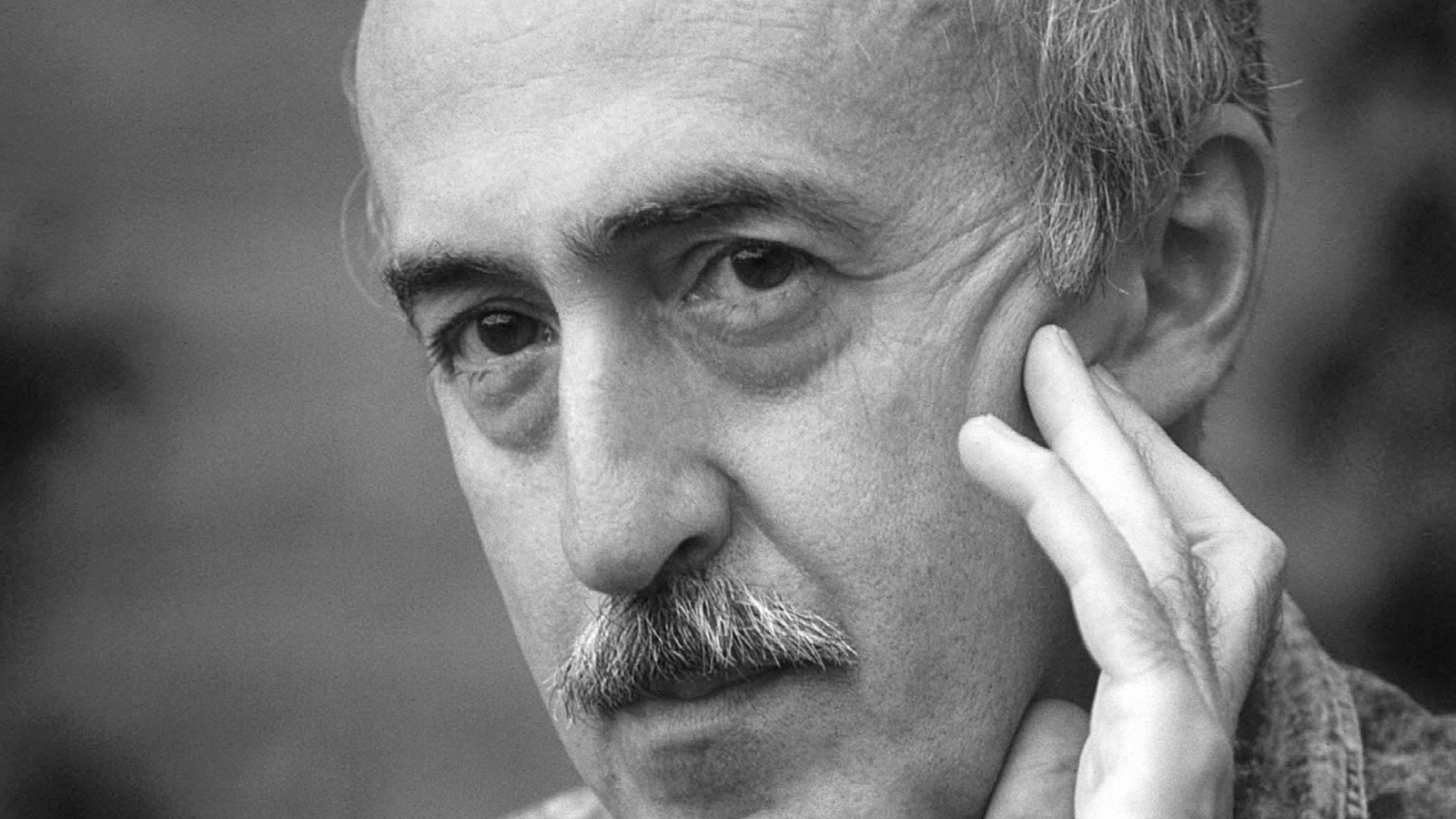
Otar Iosseliani, at the 1989 Venice Film Festival, photograph by Gorup de Besanez.
Share:
I ONCE SPENT ALL OF an hour in the company of Otar Iosseliani. This was in 2015, in Locarno, where Iosseliani was premiering Winter Song, his latest feature—and, as it would transpire, his last—at the festival. As memory serves, the film was received in the trades respectfully, if not rapturously, but it put me into conniptions at least a few times, particularly one bit where a raggedy drunk gets run over by a steamroller and his mates collect his bloodless-but-crêpe-flat remains, then slide them under a nearby door sill like a surreptitiously delivered note.
When I arrived at 11am, as arranged via a publicist, and knocked on the door of Iosseliani’s hotel room, he greeted me in a shirt unbuttoned to the navel, a St. George’s cross reposing in his grizzled chest hair that, in my memory, must’ve weighed one stone at the very least. Before I got a word out, he told me, firmly but without malice, that he would only do the interview if I could recite Shakespeare, any Shakespeare, from memory. A bit of the old “O, that this too too solid flesh would melt / Thaw and resolve itself into a dew!” later and we were sitting in his suite, heavy blackout curtains shutting out the morning, talking over a freshly uncorked bottle of red wine that was empty before noon, he discoursing between glasses on the subjects of Georgian polyphonic singing, the peculiar scripts of the Georgian alphabet(s)—he wrote out my name in looping characters on a piece of scrap paper, since regrettably lost—and the alleged Georgian ancestry of Gregory Peck, wholly unsubstantiated.
In short: a proper character, of a sort that it was already quite obvious 10 years ago was on the way to extinction, and that would have no place in the dictatorship of prim professionalism in the arts. The fact that certain human types, certain ways of being in the world and their attendant fetish objects and rituals, are eternally being pushed aside and pulped to make room for others is, in fact, a persistent preoccupation of Iosseliani’s cinema, which abounds in the mementos of times not-so-long past, out-of-step eccentrics, and even the occasional ghost, like that of an aristocratic officer of some dismantled 19th-century empire who, smoking elegantly, semi-transparent, drifts through the tchotchke-crammed estate where much of 1992’s Chasing Butterflies lays its scene. (The part is played by none other than Iosseliani.)
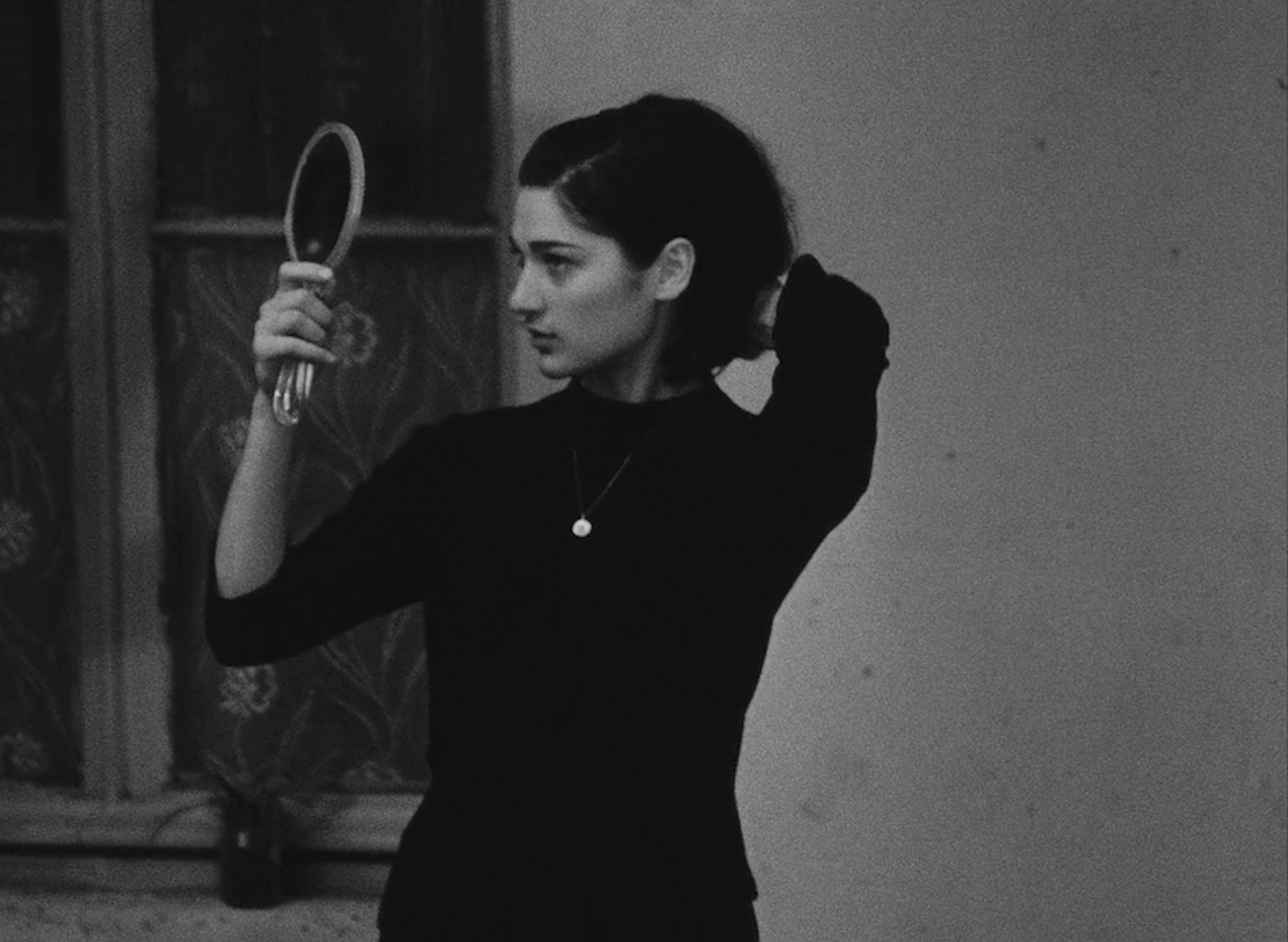
Falling Leaves (1966)
Iosseliani was born in Tbilisi, Georgia, in 1934 and died there in 2023, a few weeks shy of his ninetieth birthday, a number of his years spent in Parisian exile, having shot films in France, Italy, Senegal. The year of his birth closed out with the murder of Old Bolshevik Sergei Kirov in December, the inciting event of the show trials and a Great Purge to come, and Iosseliani avers darkly in a 1991 interview to his family’s fortunes—“My dad had 11 brothers, and I am their sole heir. You can thus imagine what happened”—and to being raised by his mother and aunt. In 1952 he earned a diploma in composition, conducting, and piano from the Tbilisi State Conservatoire, then, after a sojourn studying mathematics in Moscow, transferred to the All-Russian State University of Cinematography (VGIK) in the capital, where his approximate contemporaries included Andrei Tarkovsky and fellow Georgians Eldar and Giorgi Shengelaia, as well as instructors such as Oleksandr Dovzhenko and Mikhail Chiaureli, the latter also a countryman and mentor of sorts.
Coming out of VGIK in the aftermath of the Khrushchev thaw, with the relative relaxation of the dictates of socialist realism, and headquartered far from Moscow’s meddlesome bureaucrats, Iosseliani was able to enjoy, sporadically, at least, a certain amount of freedom to comment on and criticize aspects of Soviet Georgian society. A certain amount. His 46-minute April, completed in 1961, was as good as smothered in the cradle by censors (Iosseliani: “It was seen as a parable about the defeat of Bolshevism. When the tree stump appears at the end, they saw it as saying that Bolshevism is dead and can never be reconstructed”), but in 1966’s Falling Leaves, his debut feature, he would present a far from flattering depiction of the operations of a collectively run winemaking factory where pressure to meet quotas imposed from above is prioritized above producing a palatable product, a fact that pricks the conscience of new hire Niko (Ramaz Giorgobiani). Not only is Falling Leaves skeptical of the improvements introduced by streamlining industrial efficiency, its documentary-style prologue—which shows us every step of the vinification process as practiced in the Georgian countryside since time immemorial and ends in merry toasts over a communal supra—is a fairly explicit argument for the ruddy holistic healthiness of earthbound, tried-and-true tradition as opposed to antiseptic, engineered innovation.
Iosseliani the musician and mathematician would live on in Iosseliani the filmmaker. April, the story of a young couple who move on up from the narrow streets of Tbilisi’s Old Town into a fresh-out-of-the-box modern apartment building only to find their mutual affection diminishing as their stock of noisy appliances grows, eschews legible spoken dialogue, conceived instead as a musique concrète performance composed for shoe soles on cobblestone, the din of gadgetry, a revving chainsaw, and so forth. Another short, 1969’s Georgian Ancient Songs, one of Iosseliani’s periodic forays into nonfiction, concerns itself with the country’s venerable folk tradition of polyphonic singing in dissonant harmonies—a key influence on the choral narratives that Iosseliani would gravitate towards in years ahead. In fact, his second feature, the freewheeling Once Upon a Time There Was a Singing Blackbird (1970), is his last with anything resembling a proper protagonist, this being Gia (Gela Kandelaki), a feckless and flirtatious timpani player in the Tbilisi Philharmonic who has made an artform of arriving in the orchestra pit at the split second it’s time for his kettledrum cue, then exchanging his concert black attire for civvies to dash back into the streets and shake up some action.
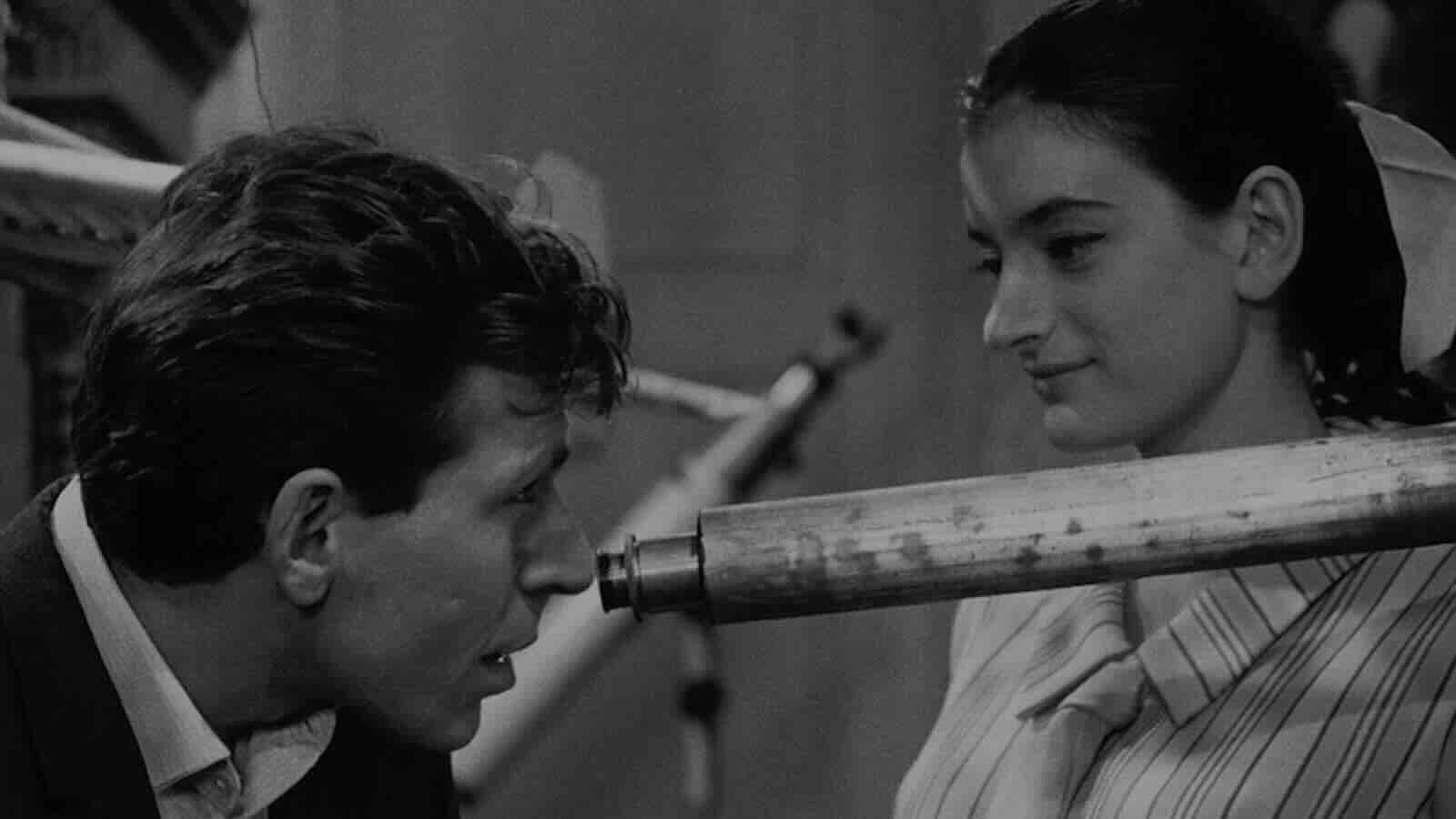
Once Upon a Time There Was a Singing Blackbird (1970)
One might assume it was this judgement-withholding character study of untamed (and, admittedly, unfocused) individualism that soured Iosseliani’s reputation with the powers that be, but the breaking point came after the production of 1975’s Pastorale, in which a young quartet of classical musicians from Tbilisi and their handler—two men, three women—arrive in a mountain village for what’s intended to be a summer of uninterrupted practice against a bucolic background, then instead find themselves contending with swarms of curious children, the roar of crop dusters passing overhead, and the sometimes too-jovial hospitality of their seasonal neighbors.
It’s not clear what, exactly, the powers that be found to take offense to in Pastorale—the at times less than perfectly comradely relations between city folk and rural peasantry? The scenes of grumbling over the incompetence of collective leadership and glad-handing graft?—but it took the better part of four years to get the film in front of audiences in the Soviet Union, and when Iosseliani arrived in Paris in October 1979 to screen his films at the Cinémathèque, the print of Pastorale was languishing back in the USSR. Addressing this state of affairs in an interview with Cahiers du cinéma, Iosseliani, though making no attempt to disguise his frustration, doesn’t go so far as to extol the superior virtues of the “free world”: “I’ve discovered that France is no paradise either, not at all. Things are bad in France, perhaps where I live is better, perhaps… I don’t know.”
This piece of equivocation may have been a matter of hesitating to burn bridges so long as hope of a career back home remained—though, given Iosseliani’s habitual bluntness, I doubt it—but in any case, his decampment to La Belle France in 1982 didn’t transform him into a Yakov Smirnoff-esque cheerleader for his adoptive country. Iosseliani had an abiding interest, to borrow his own memorable phrasing, in how “the fragile ligature of culture is destroyed and disappears,” and the films he made after leaving Georgia make it abundantly clear that he considered the capitalist west no more reliable a safekeeper of tradition than the communist east.

Pastorale (1975)
The first of these, Favorites of the Moon (1984)—a largely Paris-set roundelay teeming with characters from all walks of French society, involving tramps, tarts, terrorists, and the peregrinations of an 18th-century Limoges dinnerware set—travels rather further down the path of dispersed storytelling that Pastorale had embarked on. This cursory description may suggest a structure after the fashion of, say, Ophuls’s The Earrings of Madame de… (1953), but if this kind of narrative baton-passing is a matter of basic addition and subtraction, Iosseliani operates in the realm of complex proofs. Bernard Eisenschitz, who knew the filmmaker well, describes his preparatory process in a recent interview in terms that suggest a mathematician absorbed in drawing figures upon a chalkboard:
First, ideas for scenes were dreamt up, written down, and glued to a wall. Slowly the ideas made sense, came together, and a kind of physiognomy would emerge of what the film could look like. Then came the writing of a so-called “literary” script—that was standard procedure. He would write the film like a novella or a short story. Then he would prepare the découpage, the scene-by-scene, shot-by-shot design. And, he would make drawings of each scene, first with the help of a storyboard designer from Tbilisi, and later on with his son-in-law and daughter. These drawings were immensely interesting—huge cardboard sheets with the story, shot descriptions, a list of actors, props, and so on.
Eisenschitz—critic, biographer, and film historian—has a substantive acting role in Favorites of the Moon, as does Jean-Pierre Beauviala, engineer, inventor, and founder of the film equipment company Aaton, playing the father of a young Mathieu Amalric, here in his cinematic debut. In his French productions, as in his Georgian films, Iosseliani freely mixed nonprofessionals and veteran actors, certain of whom helped him to overcome his avowed misgivings towards the profession—Amalric would appear in three Iosseliani films, as would filmmaker/clown Pierre Étaix, who made his final screen appearance in Winter Song.
Étaix had begun his life in film working under Jacques Tati on Mon Oncle (1954), and one can well imagine the significance of both men, each working to keep alive a tradition of screen comedy based in the physical and the visual rather than the verbal, might have had for Iosseliani, who would himself return to a kind of filmmaking that didn’t depend on dialogue to advance a narrative with 1989’s And Then There Was Light.
In point of fact there is quite a bit of chatter in And Then There Was Light, but since almost all of it is in a Senegalese tribal dialect that is intentionally left unsubtitled, save for the odd occasions on which silent film–style intertitles intervene, most audiences will have to get by without understanding the fine nuances of what’s being said. None of this interferes with a marginally attentive viewer’s ability to comprehend what’s going on in the vignettes of village life that make up the film—the various petty squabbles, the hushed communal appreciation of the setting sun, an imprecation to a sacred totem for rain that is promptly answered in torrential sheets—or the fact that the trucks, bulldozers, and other heavy equipment that rumble past with increasing frequency pose a grave threat to the continuance of that life. (As in April, made almost 30 years before and a continent away, we understand that bringing down a tree in the countryside is never a non-event.)

And Then There Was Light (1989)
Chasing Butterflies, Iosseliani’s next feature, is a requiem for a very different, imperiled way of life and its peculiar artifacts and pastimes: the genteel world of the haute bourgeoise entre-deux-guerres, kept alive by two elderly women sharing a dim château and the pokey residents of the somnolent village nearby. The film marks the beginning of a five-film collaboration with cinematographer William Lubtchansky, a favorite of both Jacques Rivette and Philippe Garrel in the same years, who brought a casual lubricity to Iosseliani’s sequence shots. For all the comings-and-goings in these films, all their many, many moving parts, Lubtchansky’s camerawork never snaps and swivels, but rather drifts: from a pack of Hare Krishnas chanting on a sun-kissed knoll we pick up and follow a passing tractor to then alight, on the far shores of a stocked pond, one of the aged housemates (Narda Blanchet) hunting fish with bow and arrow.
Lubtchansky doesn’t introduce this element of almost serenely observed detachment to Iosseliani’s cinema, but he does bring it to a consistent level of technical refinement, and this calm, measured gaze is one of the things that first comes to mind when I think of Iosseliani’s films—after watching certain of them, particularly in close succession, one can find one’s self subconsciously approximating a similar point of view, looking at the world from the far side of the street, as it were. Also distinctive is the Iosseliani concept of the “gag,” often a queer, meandering kind of thing that does away with the traditional setup and punchline. There is no payoff, per se, in the sequence in Chasing Butterflies that follows a fusty notary leading two Krishnas into his manorial home along a chartered path designed to preserve the parquet floors as they’re swarmed by husky hounds fitted with protective cloth booties, file past a houseguest, the Maharajah of Mullakh, and settle in to provide the host with piano accompaniment to his warbling (“I’d like to know my tessitura; I have a metallic ring in my voice, like Chaliapin…”), which is joined in turn by a chorus of screeching tropical birds and—the finishing touch—a butler who starts harmonizing upon dropping off a glass of sherry. This kind of steady house-of-cards accumulation of absurdities is an Iosseliani specialty and, to paraphrase Godard on Jerry Lewis, even when it’s not funny, it’s funny.
There is, to be sure, a strain of melancholy in Iosseliani’s corpus, but the abiding tone is more bittersweet than bitter, at times angry but never anguished. Discussing Boris Barnet, the filmmaker of early Soviet cinema whom Iosseliani admired above all others, he would opine that cinema “is a craft which should be plied happily if at all possible”—its practice, if not a solution to the world’s ills, perhaps a momentary reprieve from them. His films tend to land on somber notes and unresolved chords, but at least one, 1999’s Farewell, Home Sweet Home, closes with the suggestion of possible respite, retreat. The patriarch of yet another country manse, a harmlessly lecherous toper who spends days and nights shut up in a room lined with antique pornography, draining his cellar and watching his model trains whir along their circumscribed routes, slips out during one of his business tycoon wife’s parties to meet with a clochard drinking buddy—the rough sleeper is played by Amiran Amiranashvili, a Iosseliani favorite; the moneyed reprobate is Iosseliani himself. Last seen, they are setting out to sea in a puny sailing craft, voices twined together in song. You can’t go home again, but at least you can go.

Share:
Recommended
- Winona Ryder
 A Hollywood “It“ girl comes of age.
 - Music Sets You Free
 An excerpt from the prodigious musician’s remarkable, newly translated autobiography.
 - Albert Serra
 From Locarno, an interview with the indefatigable Catalan filmmaker.