
Double Exposure
Double Exposure: Ryusuke Hamaguchi and Neo Sora
Welcome to Double Exposure, Metrograph’s column in which two filmmakers interview one another about the craft.
Happyend (2024) opens at Metrograph on Friday, September 12, accompanied by Neo Sora Selects, a carte blanche selection of films that inspired his coming-of-age epic set in a near-future Japan.
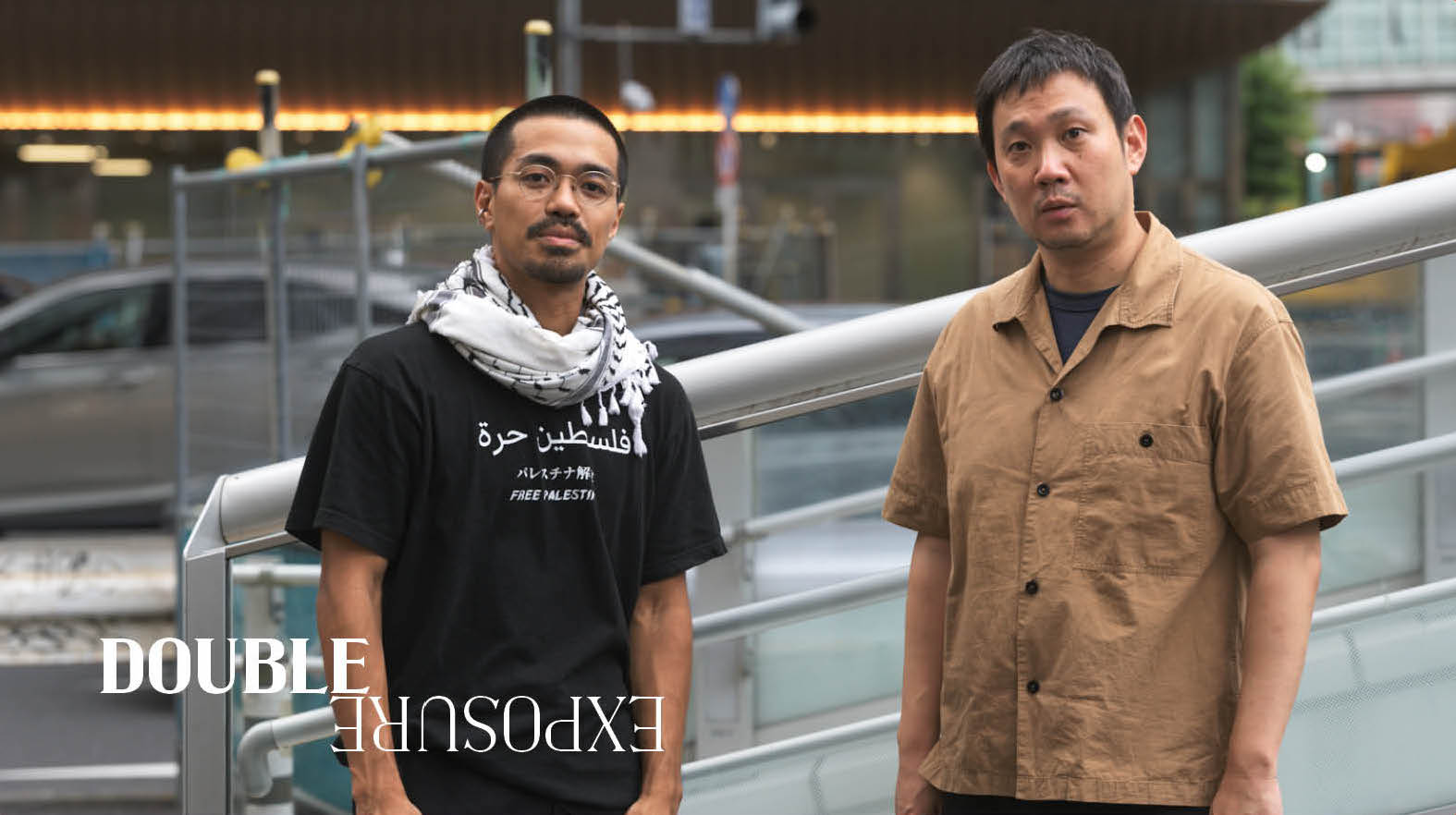
Photo by Go Itami
Share:
The fictional feature debut from Neo Sora, Happyend is a visually daring youth ensemble piece about a group of high schoolers from diverse backgrounds facing an uncertain future. Ahead of the film’s theatrical release, Fumihisa Miyata spoke to the rising director together with the lauded Japanese filmmaker Ryusuke Hamaguchi. Their conversation has kindly been translated into English for Metrograph by Aiko Masubuchi.
NEO SORA: [Taking a seat] I think I’m the most nervous one here [laughs]. I’m humbled to be having a conversation with Ryusuke, who I respect so much.
RYUSUKE HAMAGUCHI: No, no. I am looking forward to this. I actually am not clear about when exactly we first met. What I am sure of is that we were connected through Aiko Masubuchi, one of the producers of Happyend. Like Neo, she is based in both New York and Tokyo, and she is also a wonderful interpreter. When I was in New York for the screenings of Wheel of Fortune and Fantasy and Drive My Car in 2021, she interpreted for me, and Neo and I met organically.
NS: You’re right. I’ve since had multiple opportunities to meet Ryusuke. We’ve also had meals together.
RH: That tuna and scallion hot pot you made was delicious. I think we started talking about Happyend in these kinds of settings?
NS: Yes. When I was preparing this film, I hadn’t had much experience actually making films in Japan, so I took the opportunity to ask for advice regarding what sorts of things I should be keeping in mind. Later on, when I was casting my main actors, I asked Ryusuke if we could have another chat.
FUMIHISA MIYATA: How did you go about auditioning people for a film like this?
NS: After auditioning hundreds of people, we cast non-professional actors to play four of the five characters in the main friend group. This wasn’t something we had planned for, and in fact, we auditioned many professional actors as well, but the people I ended up instinctively feeling like, “It has to be them!” happened to be non-actors. For example, the two protagonists, Yuta and Kou, who dream of becoming techno DJs, are played by Hayato Kurihara and Yukito Hidaka, who are both originally models. Kou’s background is that his mother runs a Korean restaurant, and he is beginning to think about his identity.
FM: Yuta Hayashi, who plays fashionista Ata-chan, is the only professional actor in the group, and Arazi, who plays Tomu, the social glue of the group, is also originally a model, and is of Japanese and Senegalese origin.
RH: Just how good of a person Tomu is, and the way he relates to his friends, is one of the sources of solace in the film.
NS: Arazi in real life is a truly kind person.
RH: Seeing his warm smile made me feel that he is trustworthy. It’s not just him though, I got the impression that for all of your cast, their actual personalities were flowing directly into the film.
NS: I had a tough time finding someone to play Ming, who is Taiwanese. But through a friend, I was introduced to Shina Peng, who is a Taiwanese American photographer and grew up in Japan. But I had no idea about how to direct non-actors. So in my desperation, the person I turned to was Ryusuke, who has directed one of my favorite films, Happy Hour (2015).
RH: Happy Hour was a project that grew out of a workshop, and the set was indeed full of people who had never acted before.
NS: He taught me about opening up and revealing your inner desires as a director to the people you are making the film with, and to build relationships. With that, he also told me about making sure to create a set environment where the actors do not feel nervous. This is something I was very careful about.
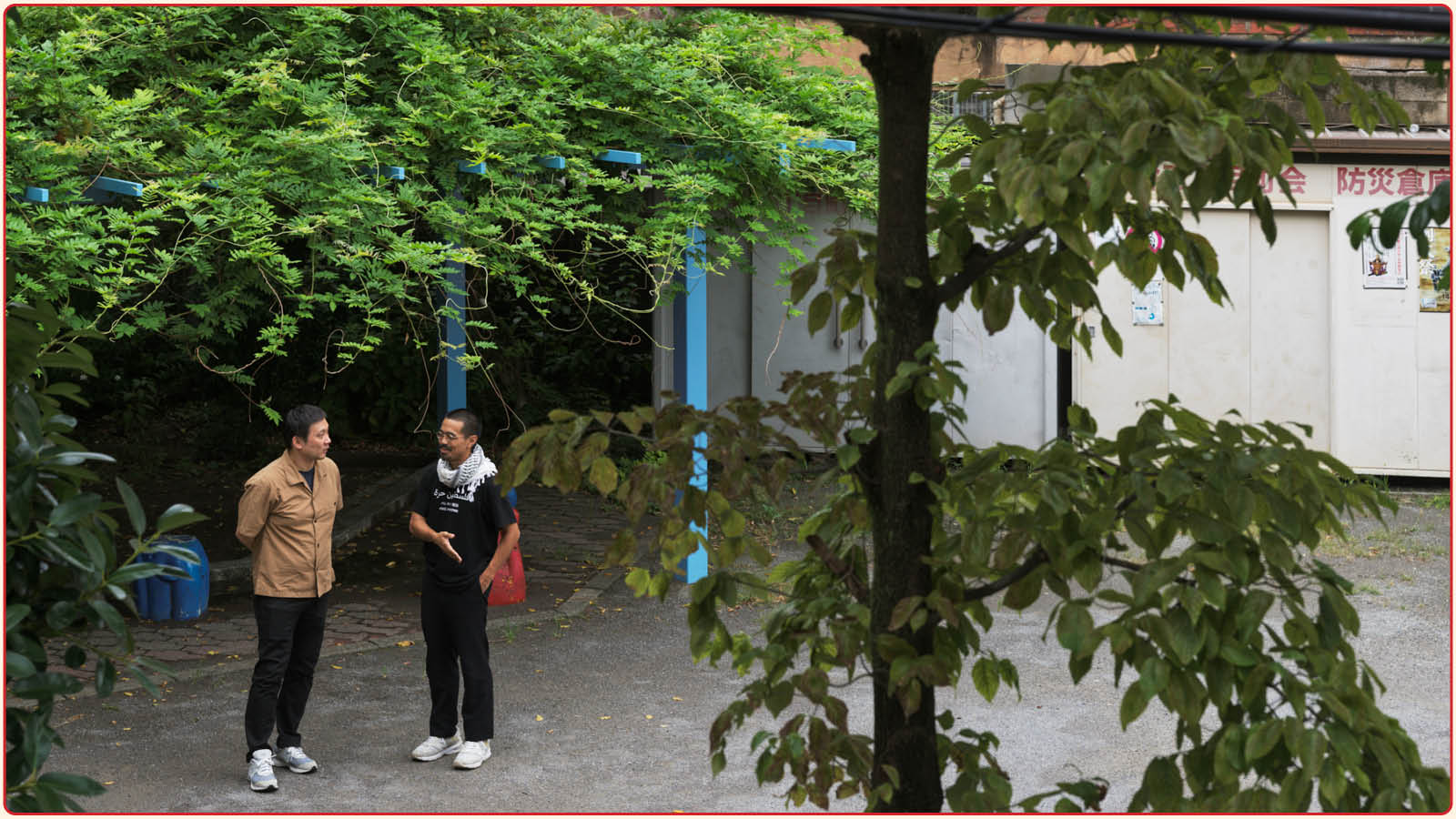
Photo by Go Itami
RH: And when you watch Happyend, you would never think that Neo had these worries. It’s an astonishing debut fiction feature film. Most of all, it made me think that I was watching real people. Even after the film is over, you’re left with the strong feeling that these characters’ lives are continuing on, that they’re somewhere out in the world. Films that achieve this feeling are incredibly rare, no matter in what country or generation. That’s why I think what Happyend achieves is something to marvel at.
Also, the near-future setting doesn’t land as an early punchline. On the contrary, it’s wonderful that the film tightens its grip as it heads towards the ending, grounded in this setting. It makes you excited about what kind of film he’ll make next. It suggests a very strong career ahead in filmmaking for Neo.
NS: I’m truly humbled. Thank you. I’ve been reading volumes 1 and 2 of your book, Ta Naru Eiga to (他なる映画と). In them, you begin by talking about the smallest unit in filmmaking: “the shot,” and eventually arrive at a vast theory of film. To me, those books are like the film version of what the philosopher Bertrand Russell did by reformulating the fundamentals of mathematics in Principia Mathematica.
Especially when I was reading the first three paragraphs in volume one, where your theory of directing is condensed, it helped me understand my own film better. As I read the discussion on “capturing coincidences,” I was able to reflect on the coincidence of how I was able to encounter people who were similar to the characters I had written, and how coincidentally and miraculously, the five people who played this main friend group got along tremendously.
RH: Just like in your film, they were able to find things that drew them to each other. Of course, coincidences play a part in this, but I think that it’s most of all a result of your personality.
NS: I’m grateful. Personally, I do think that the camera recorded the five of them becoming incredibly close through the filmmaking process and building a deep bond with each other. There’s a section in your book where you theorize how the camera records with a “mechanical ambivalence,” and I think the camera did exactly that: it recorded the friendship between the five of them as they were. If the film indeed made you feel like the characters continue to live on in the world, it might be because the friendship that the camera recorded was something that extended beyond the film.
FM: This group of five repeatedly rebel against the principal, played by Shiro Sano, of the strict school. There’s an atmosphere of a youth rebellion film.
RH: One aspect that surprised me was how strongly Happyend reminded me of Asian films from the 1990s. I’m talking about films directed by Edward Yang, Hou Hsiao-hsien, and Takeshi Kitano. It made me think, “I see, when films from that generation get digested by our current generation, it comes out like this.”
Relatedly, I found myself drawn to the cool ways that the characters wear their uniforms. For example, with Yuta, he wears headphones while in his school uniform, but he’s also wearing them when he’s lying down with his clothes off, and it tells us how much music is a part of his life. Ata-chan modifies his uniform to his own liking, Ming wears highlights in her hair, and Tomu wears a headband—they all have a detail that gives them a unique sense of style. In this sense, the film differs from the kind of fashions you see in a regular Japanese juvenile delinquent film and feels closer to other Asian films.
NS: It becomes apparent to anyone who watches Happyend, but Taiwanese films like A Brighter Summer Day (1991) by Yang, Boys of Fengkuei (1983) by Hou, and Rebels of the Neon God (1992) by Tsai Ming-liang are pillars in my life and are very clear references in my filmmaking.
At the same time, I also love films about rebellious students such as Zero for Conduct (1933) by Jean Vigo and Rebel Without a Cause (1955) by Nicolas Ray. I grew up going to a Quaker school from Fourth Grade through high school, and I wasn’t a rebel myself, so maybe this is why I was drawn to these stories. The themes in Happyend reflect my own experiences, but I also borrowed a lot from the rebellious youth genre.
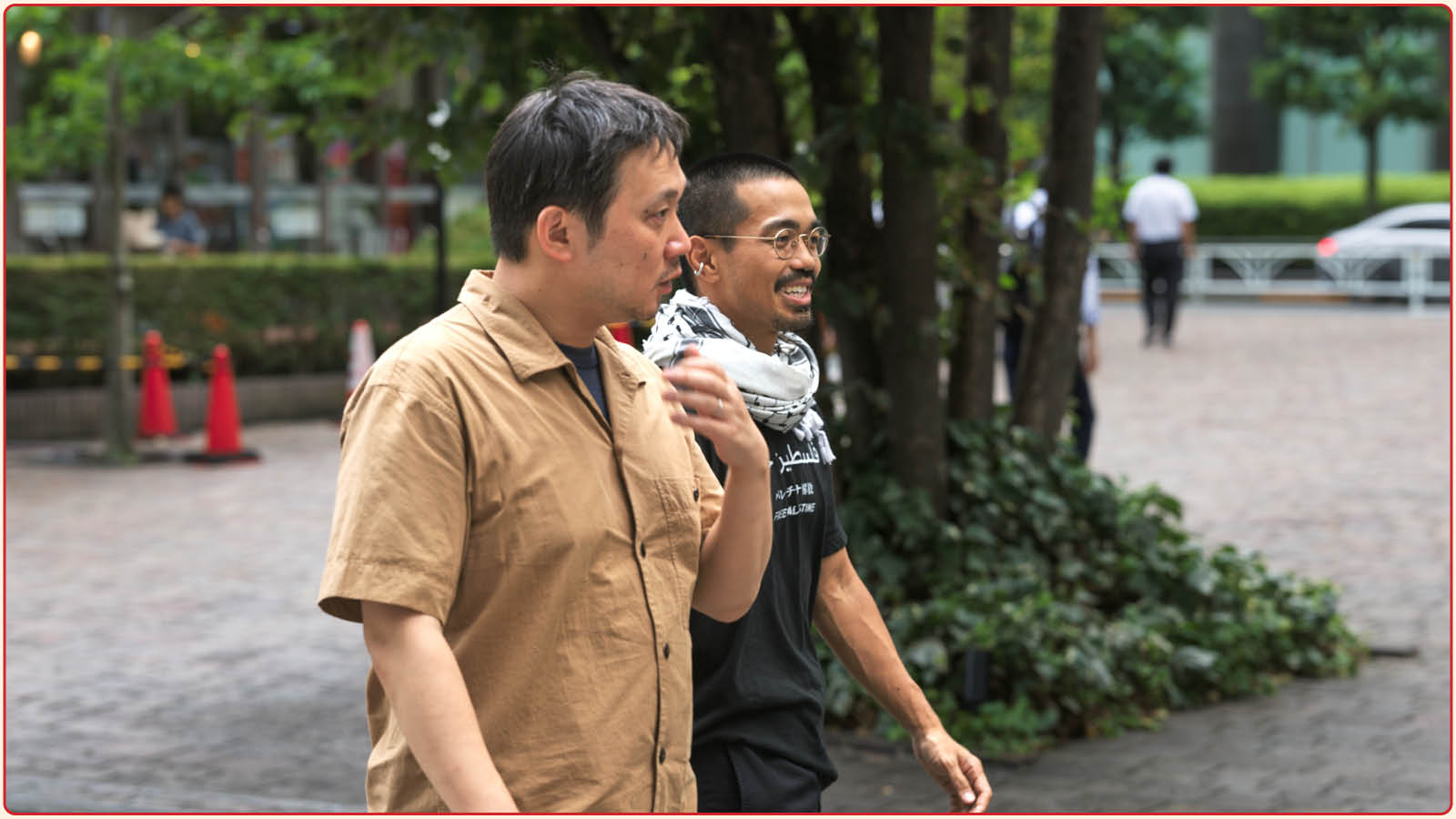
Photo by Go Itami
FM: What initially inspired you to make this film?
NS: The seed of this film was a thought experiment: what might happen if the Nankai Trough earthquake that is said to happen one day still has yet to happen—what would society look like then? I imagined a society in which the pressure increases while people are constantly subjected to an unseeable fear.
It’s related to my own development towards becoming conscious about social issues after the Fukushima earthquake on March 11, 2011. In the US, there were movements like Occupy Wall Street and Black Lives Matter, and Donald Trump came into power. In the midst of all this, when I looked at what was going on in Japan, it was a time when hate speech was becoming more prevalent and when I researched the history, I arrived at the massacre of Korean people during the 1923 Great Kanto Earthquake.
Happyend was born out of seeing firsthand that history could repeat itself, while thinking about the societal landscape of Japan. In addition to that, I considered my own identity, and I was motivated to depict a Japanese society where many different kinds of people live together as if that’s normal.
RH: And it was indeed a film that properly depicted a society where many different kinds of people live together as if it were completely normal. I was surprised to learn in the latter part of the film—when the students who don’t have Japanese citizenship are ordered to leave the classroom—that there are about a dozen students who fit the criteria.
I found it very important that the setting was one where there were people who were not Japanese nationals in the classroom as an ordinary and natural fact, and that even the ones who were not part of the main cast had lines to say. Each person’s opinion exists properly without any explanation or preface.
NS: Yes, that’s something I was very conscious about. I had decided that even if the focus were not necessarily on them, everyone in the film should exist as they are, and that they should say what they want to say.
FM: Another characteristic of the film is how highway overpasses seem to constantly loom over the heads of the high schoolers out in the streets.
NS: This film is at once about the protagonists, and though it is fiction, it’s also about the historical moment that the characters are living in. That’s why we used a deep focus to have the background in focus as well so that we can see the spaces that they exist in. Personally, I like wide shots and these kinds of images can make buildings look very tall. Small earthquakes occur frequently in the world of Happyend and I wanted the images to suggest that the buildings could come crumbling down at any moment. That was something I thought about constantly when shooting outdoors.
RH: The wide shots are stunningly good. This is relevant to our discussion around the relationship between the camera and its subjects. I believe the film was shot relatively chronologically. The further into the film we get, the distance that the camera uses when capturing the friend group suggests that it is watching the kids with true tenderness. I think this is a beautiful quality of the film. Not only are there bonds being created between the people, but there is a sense that there is also a bond built between the camera and the people in front of it throughout the film.
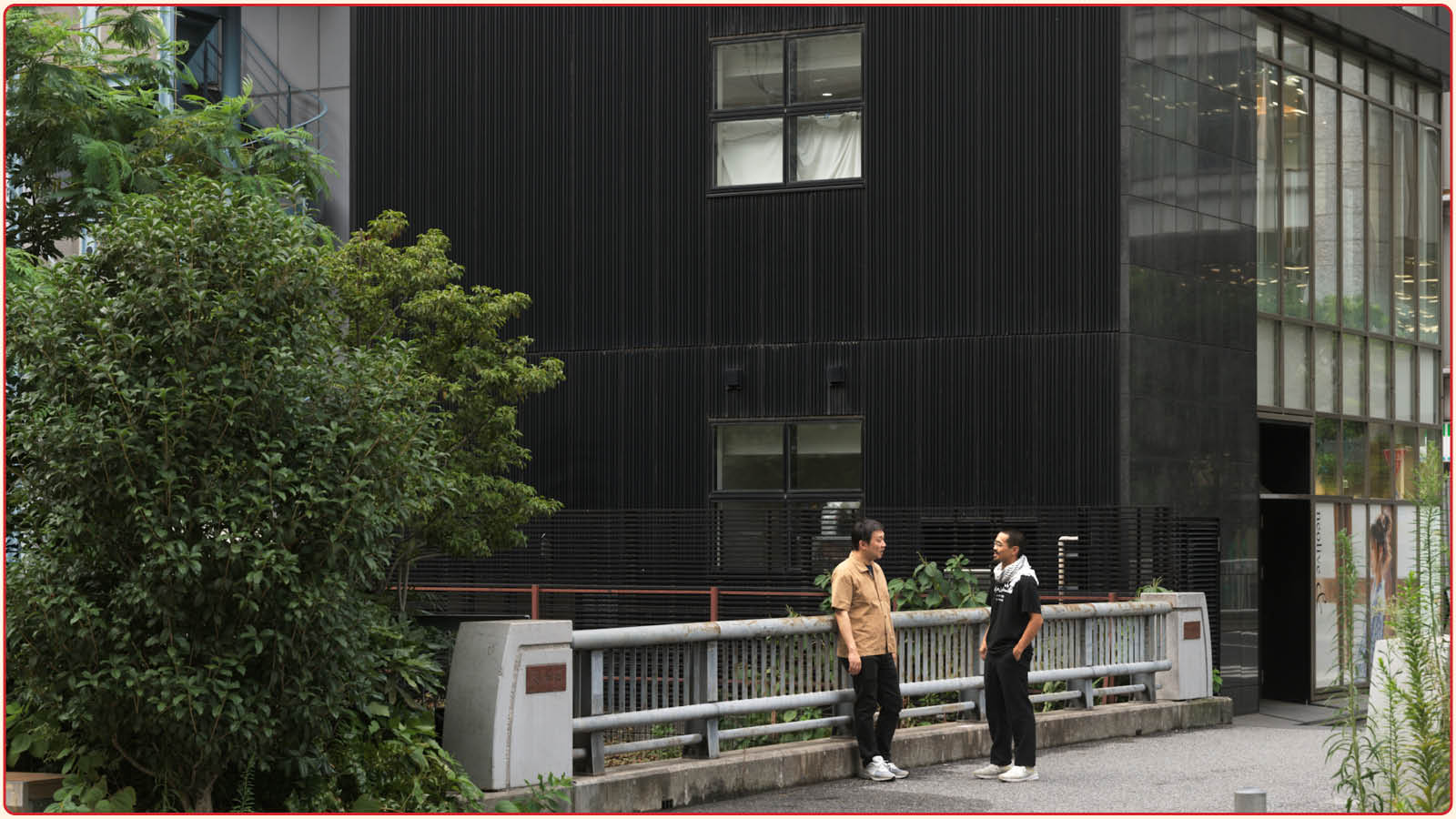
Photo by Go Itami
FM: Speaking of bonds in the film, Yuta wants to just have fun with his friends while Kou becomes more conscious about social issues and this creates a rift between them.
NS: I think rifts that occur due to differences is a theme that many films all over the world deal with. 1900 (1976) by Bernardo Bertolucci or the anime Akira (1988) by Katsuhiro Otomo are some examples. Though much less dramatic than in those films, I have experienced similar moments in my life multiple times. Friendships that I thought would be forever have ended or an encounter with a childhood friend after a long time made me realize we have very different opinions as adults. I think these kinds of tragedies can happen anywhere.
FM: One of the charms of Happyend is that while it digs into these more serious elements, on the other hand, it often slips in scenes with a unique sense of humor.
RH: You don’t just carry the film with tension. Time flows differently here than in a film that continues to heighten the tension and brings the audience into it. Rather than relying solely on the perspective of the individual, spaces are captured widely, and it’s wonderful how the film shows things along an axis of time that gently wafts by. I thought the scenes where two of the friends have fun imagining what their friends are saying in a conversation they can’t hear was a simple and great idea.
NS: I like films with a sense of humor. There are comedic elements in Yang’s films, and I like the films by Ernst Lubitsch and Rainer Werner Fassbinder. Or when you watch a Buster Keaton film, you sometimes find some cruel things that are happening to be funny when they’re seen from afar. Viewing things from a slight distance can allow both humor and a sense of reality surrounding the drama to emerge.
I think many commercial films often devote themselves to having the audience vicariously experience the characters’ emotions. With Happyend, I wanted to maintain a certain distance. I wanted it to feel like Yuta and Kou are my age now [33, at the time], and are drinking and reminiscing together about these events.
RH: Interesting. One other point that I can share without revealing too much of the film’s details is that, as far as I could tell, not a single drop of blood is shed in this film. We see conflict between protestors and the police, but we don’t see any apparent expressions of violence. A run-of-the-mill story development would take this scene and show a character getting hurt at a protest or, even worse, have them die and turn it into a big dramatic moment. But you don’t take that path.
The modus operandi of a youth film tends to be to express a kind of struggle in the process of joining a society of adults. They often depict becoming an adult as related to the sense of needing to grit through something and accept it. However, again, Happyend, as expressed also in the title, doesn’t choose this path. I think that’s worth highlighting.
FM: Listening to the two of you in conversation, I realize that you share many commonalities . And yet, where you differ, you differ greatly. For example, the political nature of Happyend and the allegorical nature of Evil Does Not Exist (2024) feel very different from each other.
NS: Oh, I think that Happyend is in fact the more allegorical of the two. I saw Evil Does Not Exist at Venice last year, and was particularly enthralled by the thrilling dialogue. Ryusuke’s film was inspired by actual events. I strongly feel that his films are more grounded, and directly engaged with politics as it exists in reality.
RH: Wait. However… There is the problem here of what “political” even means.
NS: That’s true.
RH: The word “politics” in English and Japanese expresses entirely different nuances. The English word, which I believe has its roots in Ancient Greece, probably has its foundation in how civilians adjust and run regional society.
On the other hand, the word “politics” or seiji in Japanese is written as a combination of characters that means a sovereign governing festivities, with its roots in a God or a higher being governing the people. In other words, there’s a sense that politics happens somewhere separate from quotidian life, and hence it’s difficult to make a “political” film of this sort.
I’m not sure I should be bringing myself into this conversation but I’m not trying to make political films. I’m always trying to make films related to daily life. However, making a film about daily life means that one of the challenges that arises is how to convincingly show a world that in reality has no separation or borders, where everything is all mixed together as if it were the most normal thing. In doing so, the work naturally becomes political because there is no way of separating politics from living.
The distance and the duration with which you capture these lives is itself a question of cinema that is political, and at the same time, aesthetic. This is what I strongly felt while watching your film, which has an exceptional sense of balancing these elements.
NS: I think what you say is exactly right. There is the phrase, “The personal is political.” I can never separate politics from my being, and that is the same with my filmmaking and my experiences that become the seeds of my creations.
This interview was originally published in CINRA and has been translated into English by Aiko Masubuchi with the generous permission of the author and publisher. The piece was edited and modified in part for clarity and context. Special thanks to Shoichi Yamamoto.

Photo by Go Itami
Share:
Recommended
- I’m Not Everything I Want to Be
 On Libuše Jarcovjáková, the queer photographer drawn to the social fringes of Soviet Prague.
 - Letters to His Wife
 Translated into English for the first time, a selection of the esteemed Soviet filmmaker’s devastatingly honest and bittersweet letters.
 - Anocha Suwichakornpong
 The two filmmakers discuss exile, the shock of political awakening, and the filmmaking ecosystem of Southeast Asia.