

Interview
Anocha Suwichakornpong
The two filmmakers discuss questions of home, exile, the shock of political awakening, the filmmaking ecosystem of Southeast Asia, and more.
Anocha Suwichakornpong: A Retrospective is now streaming on Metrograph At Home, accompanied by the in-theater program Currents of Southeast Asia spotlighting Purin Film Fund.
Share:
I FIRST HEARD OF Anocha Suwichakornpong when I was a film student in New York. She was at Columbia University; I was at NYU’s Tisch. She’s Thai; I’m Singaporean. By the time I arrived at Tisch, she had graduated, yet her reputation was already circulating within the tight-knit Southeast Asian film scene. Our paths ran parallel for years, though never quite intersecting.
In 2009, I finally encountered her work at the Busan International Film Festival. Her debut feature, Mundane History, played there the same year as my short film, Cold Noodles. I remember that screening vividly, and the brief exchange we shared in the lobby afterward. What stayed with me then, and still does now, wasn’t just the film itself, but her essential approach to the medium. Over time, those parallel lines began to cross more frequently, and I remain struck by the contrast between the lightness of her demeanour and the rigor of her practice. She carries herself with an ease that belies the deliberate, often demanding, construction of her films. Her cinema feels meditative, almost airy, yet it engages the full gravity of Thai politics and history. Her frame is never declarative; instead, it’s a vigilant space that probes its own position. That dual movement of gaze, directed outward toward unsettling political narratives and inward toward disciplined self-scrutiny, gives her work a unique tension.
That same structural attentiveness extends beyond the screen. Through Purin Film Fund, which she co-founded in 2017 to support Southeast Asian cinema, she reshapes the conditions that determine how films are financed and sustained, carrying the same critical thoughtfulness into a wider ecosystem. We have moved through similar cities and circles for years, never quite pausing long enough for this: a conversation that feels overdue. —Kirsten Tan
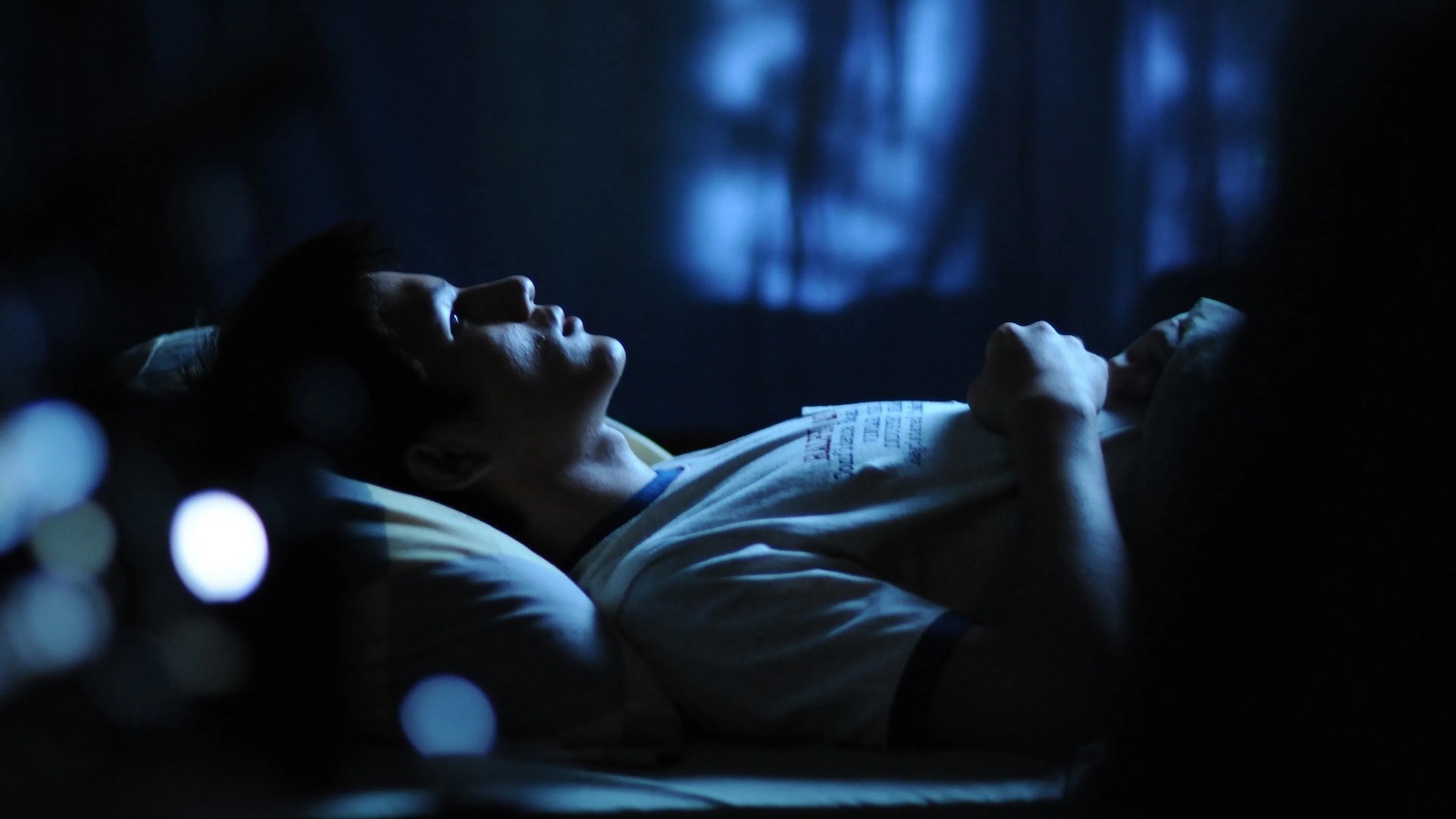
Mundane History (2009)
KIRSTEN TAN: Hi Anocha! How are you? Are you in New York City right now? For a while, I heard you’re in Japan.
AS: I am! I took one-year’s leave, so I was away last year. My partner Paul and I started a small production company with another Japanese partner, so we’re going to be spending more time there. I don’t have a film set in Japan, but I have two projects in development in Thailand, and it’s easier to go back and forth between Thailand and Japan. We like living in the countryside and rented a house in the mountains. Actually, it’s in a town where Evil Does Not Exist (2023) was shot.
KT: Wow, yes—I remember the cinematography. Makes sense you’d want to live there. Are you here for good now?
AS: Who knows?! And how are you? I wasn’t sure if you were still here.
KT: I just got back to New York—I was in Singapore for a small shoot. Then I’m maybe going to go to Dubai for another shoot. All this traveling makes me wonder why I’m still holding onto my apartment here. But for my own selfish reasons, I do hope you’ll stay around.
AS: Yes, we’ve got to see each other more.
KT: I’d love to. I’m excited to finally have this conversation with you. Obviously, I’m very aware of your films—my first exposure was the screening of Mundane History in Busan.
AS: That was the world premiere, actually.
KT: That final scene blew me away. And I am glad we’re doing this because it gives me a chance to dive deeper into your films. They resist categorization, but at the same time, there is a remarkable consistency in how deeply they engage with Thai politics and history, and also your specific lens… there is a distinct self-awareness to it. I’ll start with something broad: how did your relationship to politics first form as a filmmaker? Was there a moment of awakening, or did it emerge more gradually?
AS: It wasn’t so gradual, it was really a wake-up call. This was in 2006—I had just come back to Thailand after film school in New York. We had a coup d’etat in 2006 in Thailand—I mean, we’ve had so many since [laughs], but that coup d’etat in 2006 was a turning point for me. There’s been a coup roughly every 15 years—so one in 1976, the year I was born; another when I was 15, but I was a little too young to be shocked then; but at 30… I had just graduated, I was back in Bangkok, already making films… I was not just surprised but really shocked by the reactions of the people in Bangkok, who by and large, supported the coup. They went out in droves to give roses to the army riding tanks. What I saw left a huge impression on me, I felt I didn’t understand my society anymore. I thought everything I knew about Thailand was wrong, because it didn’t make sense why people would support the army taking over the country. Even though I was not a Thaksin [Shinawatra, then prime minister] supporter—this was a time when he was very unpopular—the way he was kicked out by the military was a disgrace.
It was this shock that led to a real engagement with politics. I wanted to understand the mentality of the people, and what led to that moment. Due to censorship, underground forums on politics were very active—I started reading these, and discovered a huge similarity of behavior between people in 2006 and in the ’70s: supporters of the right-wing ultra-royalists coming into power, upholding the monarchy, and witch-hunting those who thought otherwise.
The coup d’etat coincided with the time I was developing Mundane History—I had finished Graceland (2006), my thesis short—when the first wave of so-called “Yellow Shirt” protesters emerged, the ultra-royalists who wanted to safeguard the monarchy at the expense of everything else. That protest was ongoing while we were filming Mundane History. Because we were shooting at a house near one of the protest sites, we could hear them, and I ended up including a scene with them in the film.

Come Here (2021)
KT: Would you say the impulse to make the films you make comes from a responsibility you feel towards Thailand, or, since you’ve repeatedly used the word “shock,” is it more from a place of emotion?
AS: It was something emotional, for sure. I felt alienated; I didn’t have anyone to talk to. I didn’t understand why people would support something I thought was corrupt. Suddenly friends, family—not that everyone was supportive, but they were either supportive or ambivalent. They’d be like, “Well, this is how it is.” I was like, “No!” Because I had just moved back and was getting to know Thai society, I had to reckon with how patriarchal and class-based it is—which is not often talked about, even now.
KT: Your relationship to Thailand seems at once intimate but also alienated, as you said, and many of your film seems to be made from a position of estrangement. As you move around so much, has distance helped in your filmmaking? Has it reshaped the way you see Thailand?
AS: Up until that point, even though I had lived abroad, I was still very connected to Thailand. I never thought of living anywhere else. I went to film school in New York with the intention of going back home. I felt very much a Thai person, a Thai filmmaker—not in a super conscious way, but I never felt I could make a film in New York. That mentality lasted until almost 10 years ago—so I’d already had about 10 years of a film career, if you can call it that, from the time I graduated to the time By the Time It Gets Dark (2016) came out. The turning point came after that release, when I got an offer to teach at Harvard, which coincided with the time I got together with Paul, and we became parents… Since we got together, gradually things started to happen—I went to Berlin, we were moving around a lot, and suddenly I realized: I’m not just based in Thailand anymore. It was mostly unplanned. And now there’s also Japan. I do think of myself as a bit more of an international filmmaker. But the projects I’m developing are still connected to Thailand.
KT: So, staying out of Thailand—
AS: It happened naturally. But I will say this: one of the projects I’m developing has to do with a very sensitive subject that I might not have thought of if I were still living there full-time. I have distance and I feel… let’s put it this way: when this project is finally finished, and if it ends up getting me kicked out of the country, at least I will have another place to stay.
KT: As in, kicked out of Thailand?
AS: Yeah.
KT: I’m sorry, that’s heavy. It’s interesting how living between places becomes almost an accidental protection. It also makes me think of the fluidity of your filmography, how you also move across features, essay films, and shorts, and how you also direct solo, as well as co-direct, such as your work with Ben Rivers. Is this restlessness a deliberate strategy? Because there is a kind of consistency here: a refusal to settle, or a refusal to be pinned down.
AS: As to where I live and work, it happens naturally, but in terms of my filmmaking, it’s deliberate. I don’t want to be making only one kind of film—and when I say one kind of film, I mean in terms of the visuals, the narrative structure, the form.
When I was developing By the Time It Gets Dark, I wanted it to be very different from Mundane History, which deals with masculinity, had one location, a small household, only a few characters—so I started writing a script with multiple locations and multiple characters, including many female characters. Each new film tends to be a reaction against the previous.
Sometimes, they end up different from how I intended. With Come Here (2021), I initially wanted to make a film about a teenage love story, and it became what it is. My collaborators still tease me about it. By the Time It Gets Dark took many years, so for Come Here I wanted to make something small, self-contained and we shot that in five days, with no script. It was a very different process.
KT: When it comes to the construction of your cinema, do you take this exploratory reactive approach and shape things along the way, too?
AS: I’m often lost in the process of development—over time, development and production have become intertwined for me. Even when we’re in production, it’s still developing. I got this from By the Time It Gets Dark, because for that film, we’d edit, we’d shoot more, we’d keep editing… we were sculpting the film with the footage, even though it was very scripted. We shot everything in the script and more—it was evolving all the way. I realized I really liked this way of working—that the script is a blueprint, but not the house itself.
KT: If the development and production are intertwined, and the process of the making constantly feeds into the making itself, how do you know when you’re done?
AS: You can never really know for sure. There’s always an ounce of uncertainty. [Laughs] It’s very different from writing a script—when it’s good, you know it’s done, but with this way of working, it’s really hard.

By the Time it Gets Dark (2016)
KT: As someone who really interrogates the process, I feel there’s also a lot of self-reflexivity in your work. Often, the protagonists are also filmmakers and artists, and so the act of looking and making is also often built into the work itself. Where do you think that desire to implicate the gaze comes from?
AS: I think it’s this feeling of uncertainty, and some guilt; like, “Who am I to represent a point of view?” Implicating oneself is at least to acknowledge that this is only one point of view, and that’s mine, or the character’s, that this is not to be taken as the “truth.”
KT: Where do you think this guilt comes from? I mean it’s noble to present a work but, within the same piece, admit its own limitations. In By the Time It Gets Dark, rather than trying to replicate history, you show it through failed attempts at representation and rehearsals instead.
AS: I think it has to do with the age-old question “What is cinema?” [Laughs] I’m still grappling with it, I still don’t know what it is. It’s so simple, but depending on who you ask, or with me, what day it is, the answer is different… But I want to understand it, and that’s why I keep making films; I feel like with each film, I’m getting towards some kind of answer. Not a definitive answer, but closer to understanding a little more. People say, “Cinema is lies,” “Cinema is truth”—very often, the answer revolves around whether it’s truth or not, and whether it’s a representation, or more than a representation. I don’t know, I still find it so fascinating.
KT: Maybe you don’t have a definite answer now, but do you feel hopeful about cinema?
AS: I remain hopeful—not too hopeful, but hopeful enough that it sustains me in this quest. There are days when I question cinema—does it even matter? Especially with the film I’m developing now, which I hope will have a real impact, not just on the film circuit, but beyond. But can it achieve that? I don’t know. I want to be hopeful, but there are some days I feel perhaps it can’t.
KT: How do you keep hope alive? Is it something you have to constantly generate?
AS: I think it comes from seeing other films. I don’t know if it’s real change with a capital C, but sometimes I see a film and I think, “If I hadn’t seen this film, I wouldn’t have known about this.” Maybe that is a small impact, but more people are getting to know about something through it, and maybe that’s enough. This small hope keeps me going.
KT: That’s beautiful. I feel like, fundamentally, we’re all cinephiles. Likewise, when I watch a good film, nothing compares to that feeling—suddenly, life feels possible again. As much as we feel cynical at times, there is something magical and intangible to the form. As someone who is constantly questioning—what cinema is, what it can do—what grounds you? Does your gaze ever rest?
AS: Does my gaze ever rest? [Laughs] My first thought was, “In my sleep,” but maybe that’s not true, because you have dreams, and that’s a form of gazing—I don’t know. How about you?
KT: Hmm, my brain doesn’t really switch off, so oddly, filmmaking itself gives my obsessions somewhere to land. It’s almost a place of safety for me. Do you think motherhood, with the embodied consistency it demands, has changed your relationship to cinema?
AS: The way I think about cinema, I’m not sure, but the process, yes. I had this tendency to really draw out the making process. [Laughs] Sorry, my daughter’s here. [To her daughter] Twenty minutes and I’ll come, okay?
KT: Such perfect timing.
AS: She wants ice cream. Yeah, perfect timing with the question—that’s my answer. The process is even more drawn out now. I used to be very conscious of the process—not to say it’s more important than the final film, but it always makes itself known in the final film. That’s why my films are self-reflexive; the process is so drawn out, and I want to put all that into the film as well. But with motherhood, I guess you have to—oh, you understand: Jai Yen Yen (ใจเย็นเย็น.) [Laughs]
KT: Yes, Jai Yen Yen. Be calm.
AS: Be calm, yes—a next level of calmness, I’d say. Time seems to flow differently now, so my thinking about film maybe has changed, because time and film are so closely connected. I can’t believe I’ve been a mother for almost five and a half years. It went by so quickly. In the past, I used to say, “Oh, By the Time It Gets Dark took so long”—that was six years. All of a sudden, six years doesn’t seem long anymore. I am at another level of Jai Yen Yen; if something doesn’t go the way I want to, it’s okay, I’ll wait. There’ll be a next time—and if there’s no next time, what can you do? You find another way.
KT: Your films often question the boundaries of cinema, and yet with Purin Film Fund, you have built such a strong foundational structure for Southeast Asian filmmakers.
AS: Purin started with Visra [Vichit-Vadakan], Aditya [Assarat] and me: we saw there was a lack of support in our region. In most countries [in Southeast Asia], there isn’t strong support from the government, the state, or even private money. Purin is lucky to be in the position of being supported by a foundation that can distribute grants to filmmakers.
It started with just one category, for film production. Quickly, we saw that it shouldn’t be limited to just the practice of filmmaking, but [cover] the ecosystem—so that means all kinds of activities related to Southeast Asian cinema, like workshops, education programs, public programs, and so on. So the second category of funding was created. I can’t believe it’s been eight or nine years already.
I’m still involved but Aditya is much more involved than me, he’s more hands-on, especially with the Short Film Camp, which is his brainchild. Short Film Camp is the only event that Purin organizes; everything is in-house. It takes place in Bangkok in December, and it was started because we weren’t receiving enough strong applications, especially from certain countries, so Aditya created it to support a new generation of emerging filmmakers there.
KT: When you think about the future, as a filmmaker, and for the filmmakers who Purin supports, is there anything that you feel is urgent?
AS: The question of exile is something that we think about—I’m not an exile, I’m working in different countries, but there are filmmakers who are at risk because of their work, and they have to flee their home countries. We want to see if there’s a way to support them… Hubert Bals has a Displacement Film Fund initiative too. In these uncertain times, a film can genuinely get you into trouble, with the political climates in many countries swinging right…We just had an election in Thailand, two days ago. You might know, it was really rigged.
KT: Yeah, that was sad.
AS: In Thailand, the progressive party keeps getting disbanded. This is the third time that MPS from the same party are facing a ban from politics—for, like, five years, 10 years. Now, 44 members are possibly getting banned, including the guy who was running for prime minister[Natthaphong Ruengpanyawut], which could lead to the party’s dissolution. It’s hard to stay hopeful.
KT: Yes, it’s that same feeling everywhere. As you know, in Singapore, queerness is suppressed, so when I first moved to NYC, it felt like an escape, like another way of living was possible. Now, to see that erode too, along with everything the US is supposed to represent—
AS: But where can you go? I was doing the DAAD residency in Berlin, when it felt like a wind of change was coming with [Olaf] Scholz winning in 2021, and then it was a nosedive in Germany too.
KT: I don’t know if anywhere is good now. Maybe it’s just about us staying the course—showing up, making things, doing work, the way you’ve done with your films, and also with Purin. That feels necessary. It’s the only thing that makes sense.

Share:
Recommended
- Futures and Pasts: Socrates
 Rossellini’s one-of-a-kind approach to the costume drama, and his 1970 film on the last years of the Athenian truth-seeker.
 - The Illiac Passion
 On the most elaborate of Gregory Markopolous’s modern myths.
 - Jollof Films
 Senegalese visual artists and curators discuss the towering cinematic figures who inspire their craft.