

Interview
Daisuke Miyazaki
The independent Japanese filmmaker discusses time capsule cinema, music, and place.
Share:
A pupil of directors such as Leos Carax and Kiyoshi Kurosawa, Daisuke Miyazaki is attuned to the spaces and places in which we discover art and one another. Returning to the music-based bonding of his breakout hit Yamato (2016), Miyazaki’s new feature, Plastic (2023), follows two teenage music fans in sleepy Nagoya that connect and reconnect over their shared love of a cult album.
The record soundtracking these romantic beats is Kensuke Ide’s 2021 concept album Strolling Planet ’74, which reenvisages the eclectic artist and his band as “Exne Kedy and the Poltergeists,” a 1970s glam rock outfit. The tracks zip and bounce along with a spunky early morning energy that Miyazaki’s visuals match in their warm, music video vibrance.
I spoke with Miyazaki about his deep love of music, connection in the time of the pandemic, and the importance of local histories in his cinema.—Blake Simons
BLAKE SIMONS: Where did your personal journey with Kensuke Ide’s music begin, and what sparked you to develop a film around this album?
DAISUKE MIYAZAKI: I was a fan of his music, and we were based in the same music and film distribution office. I liked his past work, which was closer to psychedelic folk, but this album felt more powerful and rich in some way, probably because it was made by a band, instead of him singing alone.
When the distribution company asked me who I wanted for the soundtrack, I asked if it was possible to get Kensuke. Once I found out that it was possible, I knew I wanted to make a film related to music.
BS: The film diegetically mythologizes the band’s story. You’re taking it a layer further and making them, in a way, realer. What did Kensuke Ide think of your film concept when you pitched it to him?
DM: Overall, he respected my filmmaking. I never said anything about music, and he never said anything about the story or the directing. When it was finished and we screened it with all the music producers and the band members, they seemed to be very happy with how it turned out. I was really content to see that, more than [I would have been with] any other audience.
BS: You’ve worked in many styles and genres. What keeps drawing you back to youth dramas?
DM: My teenage era and my twenties were not as happy or fun as music and cinema had led me to expect; it turned out to be quite boring. Maybe I tried to go back and repeat it, to use my movie as a way to think about another possible version of life.
Plastic (2023)
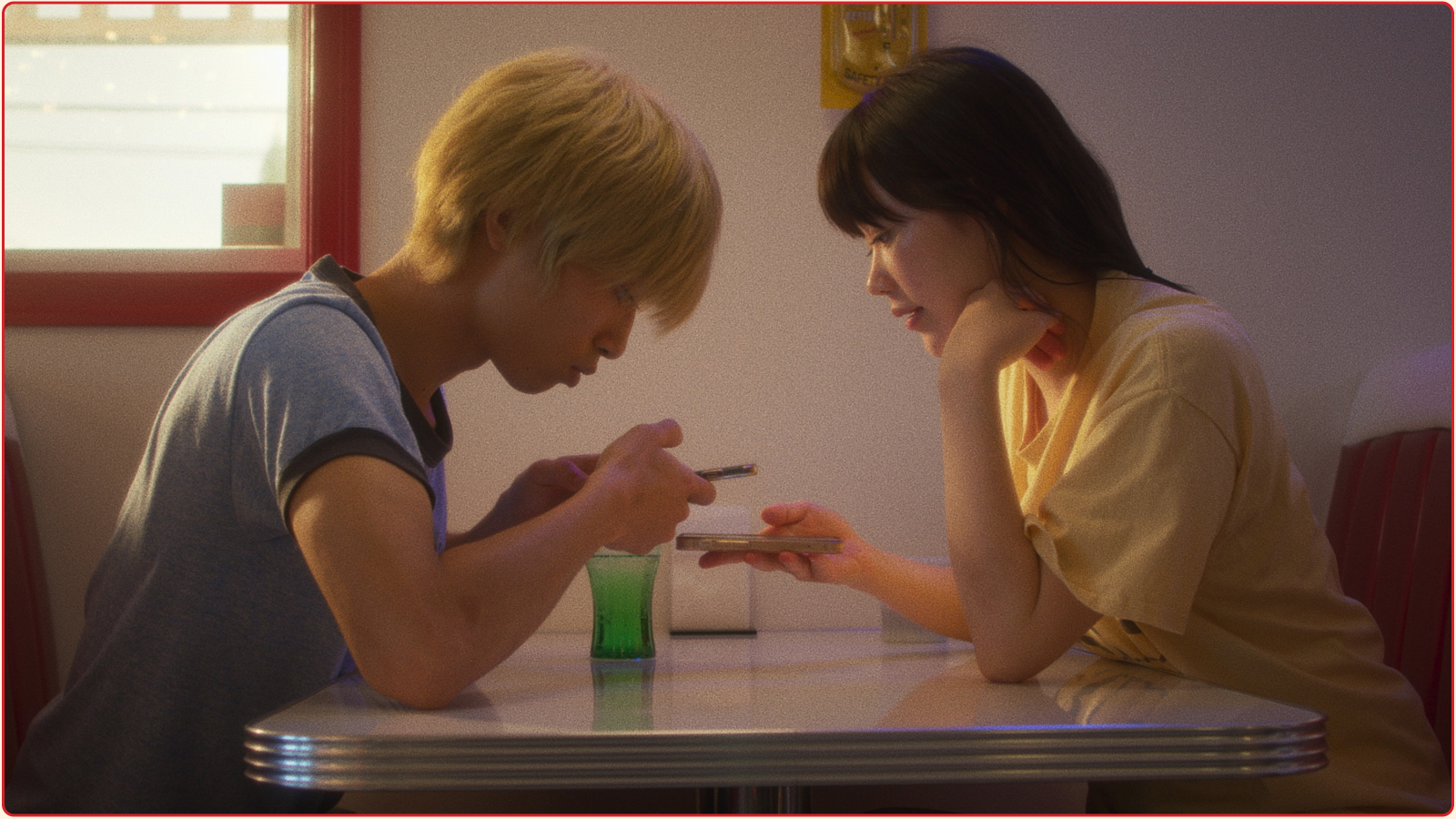
BS: The lighting and color grade in the film are soft and warm. It feels like a memory, or a vintage photograph. How did you develop the look of the film, and what were you hoping to evoke through it?
DM: My colorist, [Gonçalo Ferreira], lives in Lisbon, Portugal. He’s a big music and Japanese movie fan. I’ve never met him directly—that’s the funny part. For this film, I said I wanted that 16mm touch. The story takes place in the present day, but it covers ’70s bands. I thought it would be interesting if it looked a little bit like the ’70s or the old kind of film tone. Plastic was filmed in 2022 in Japan, which is quite boring and gray, so to introduce it in an interesting way was important to me. Gonçalo and I discussed that a lot.
BS: Stylistically, the film feels young. Its exuberant montage put me in mind of the Hong Kong New Wave, for example. What were your reference points for the visuals and the editing tempo?
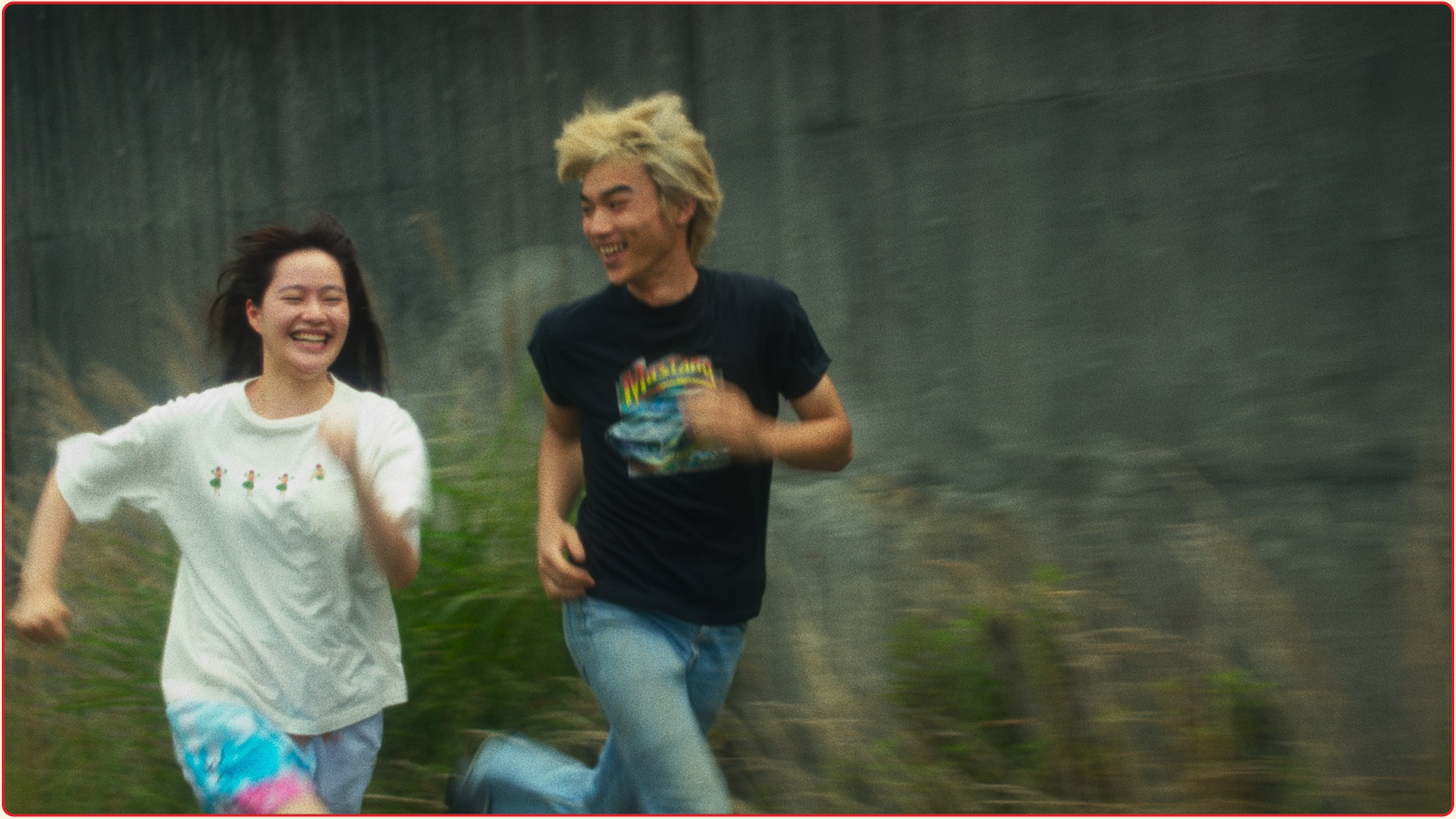
DM: I tried to make it rough—rough and raw. But I don’t know if I’m rough and raw, or if what I’m trying to do is rough and raw. The movie is about this bumpy life: teenagers who don’t know what to do, who can’t do anything about the world. I tried to make it a little amateurish in some way. I think my inspiration comes more from the French New Wave.
BS: One thing that your film understands and captures beautifully is the inherent romance at the core of the way that we love music. With headphones, we’re in our own world of music, but it’s also something that we connect over with each other. It’s personal, but it’s also interpersonal. How did you set about expressing that through film?
DM: Kensuke Ide and the Exne Kedy band are serious about music; they’re known in Japan for their seriousness. I’ve been a big music fan for most of my life, so that lineup was a bit scary for me. I spoke with them a lot about the expression of music and how [the characters] listen to it in this movie, because I, as an audience, had pride, and they, as musicians, had pride. The question was of how to mix that into very real but interesting scenes in the movie.
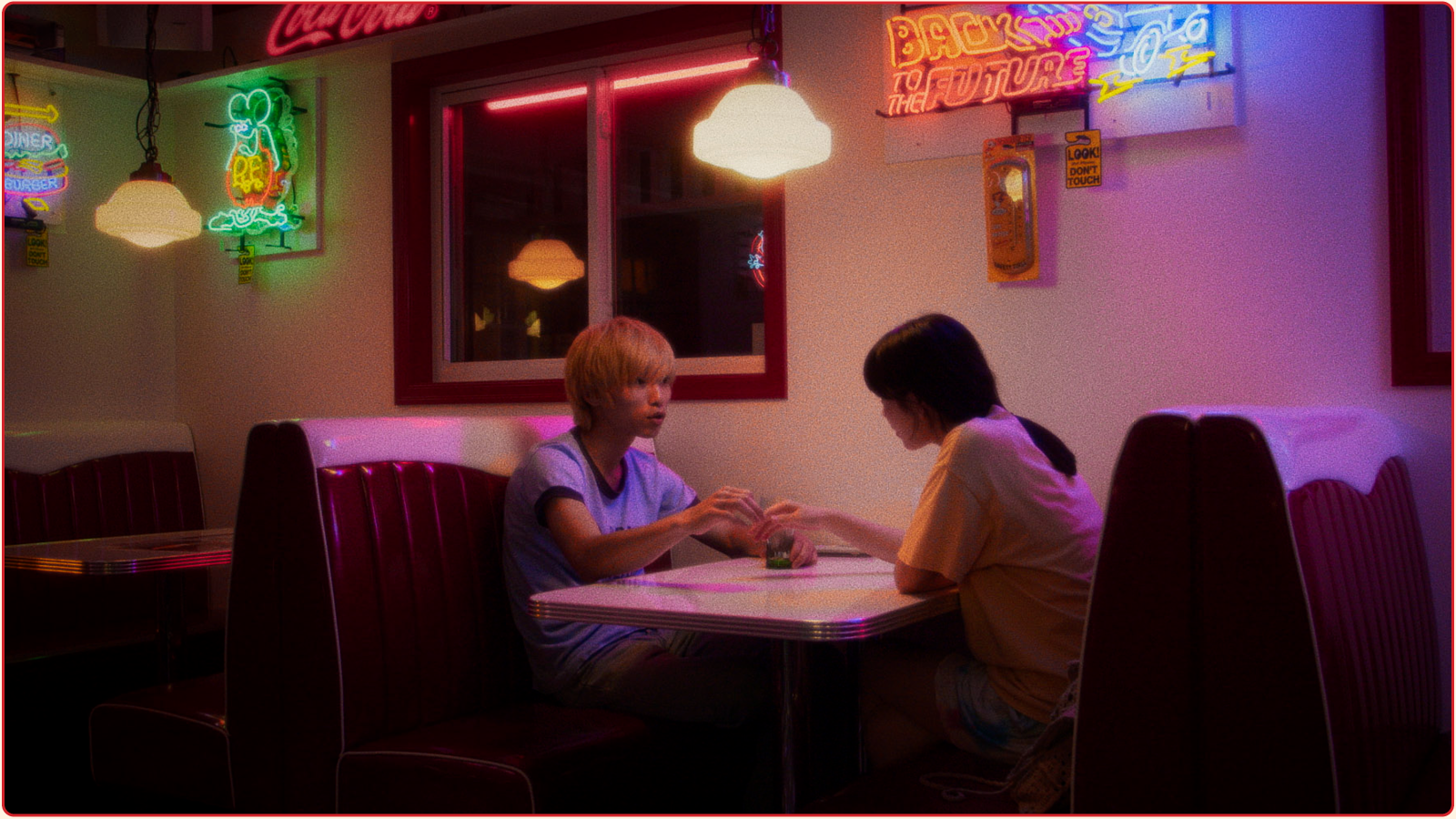
BS: I love the variety of scenes that you incorporate the tracks into. It feels that the film is less a catalogue of the songs, and more a catalogue of the ways in which we listen to music and the places that we listen to it: whether on a bike, in a bedroom, in a diner, at a concert. Your approach is very place and moment-specific.
DM: I approach any project from the place first, because I think places have histories that we can’t deny or ignore. It’s a post-truth world, but places everywhere have their own histories. So where to shoot, the place, and the memory of that land is a big starting point for my directing. Mixing these original lyrics with the memory of the land, questioning what’s so special about the place, that’s a big topic for me.
Plastic (2023)
BS: Can you tell me about your choice of placing this film in Nagoya? There feels a personal affection in the way that you’ve captured it.
DM: Nagoya is a difficult place, because it’s right in the center of Tokyo and Osaka. Tokyo has its obvious original style, and Osaka also has pride and style. Most Japanese people think of Nagoya as a land that has no style. It’s between Tokyo and Osaka, but they reject being in Osaka, instead they feel they’re the suburbs of Tokyo. But I don’t think they’re in Tokyo at all; I think the landscape and their thoughts are pretty between everything in Japan. They’re a very standard Japanese city.
Nagoya was bombed seriously during the World War; they built the city on top of nothing after everything was bombed. So the history is erased and disappeared. To show that “nothingness” inside the movie was an interesting thing for me.
In my previous film, Videophobia (2019), I shot the old area of Osaka, which has a long history through the Edo and the Samurai eras, but now has none. The investor of the film was the University of Nagoya, where I teach; that was another reason.
BS: What does music mean to you?
DM: Music is everything for me. I think it’s the most important thing in my life. It has brought me all kinds of arts: cinema, literature, modern art, fashion—everything. Music was the beginning for me. It was the first thing that told me “you should express yourself,” and “you should make what you want to make.”
Everything begins with music for me. I love it so much. I used to play music, but I quit very fast because I realized there was too much genius in the world. I thought, “Let the geniuses play, that’s okay, I think I have something else to do.” If I was still in music now, I probably wouldn’t be able to do what I’m doing now.
BS: Do you feel that music changes as we change? Or is music a comforting constant that remains the same whilst we don’t?
DM: I think it’s both music and us that change every time we listen. We are constantly changed by music, and music is constantly changed by us. Music is like a buddy or a friend, a partner or a lover. That’s what I feel.
BS: Tell me about your young lead actors and casting them. There’s a refreshing simplicity and sincerity to their performances.
DM: Both had small roles in my prior short films. I have many friends who are actors, but I don’t choose them just because they’re famous; I choose whoever fits the role. And, so far, I’m lucky enough to be able to do that.
When I first told them they were going to be the main characters, they didn’t believe it, because they had only done tiny voiceovers in the short film. They were like: Suddenly I’m the main actor of a feature film? That doesn’t sound so real.
The boy, played by Fujie Takuma, is a musician, and he plays guitar pretty well. I wanted someone who could really play the guitar instead of faking it, because every guitar scene is connected with the emotion of the character. The girl [Ogawa An] is from another short film as well. I wanted her loveliness and her realism. Her character in Plastic is one who thinks about her life realistically. One movie I watched a lot that influenced this movie is Baby, It’s You (1983). I feel that movie is about the image men have of their lives. Men’s self-understanding is a little slower than that of women. Women grow faster, and they think more realistically than men. I wanted that kind of touch from the female character. She loves him, but at the same time she’s realistic.

Plastic (2023)
BS: There’s an economy to your storytelling. You’ve got very few characters, simple plot beats, a focused location. And yet the film feels very lived in; it breathes. Do you work from something complex and then strip that back to the essentials, or do you conceptualize the film in these simple beats?
DM: Usually I write something more complicated, like a poem or a philosopher’s note, but it becomes a very simple thing, and that’s the performance of the actor.
We’re independent Japanese filmmakers, so we don’t have a long shoot and lots of budget. With that situation, what I should do is focus on the performances, pull out whatever I can from the place, and make the script simple and more universal. These are the three things I consider when I film.
BS: It feels poignant to have made a film about connecting with each other through music across time and space during the pandemic. Did the pandemic heighten your feelings towards music as a tool for connection?
DM: Yes, definitely. I feel postmodern relativism distanced people from one another and the post-truth world made it worse. The pandemic fixed those negative distances from others. Under those circumstances, I believe appreciating music together, or watching a film—experiencing something real together—was the only way to connect with each other once again.
BS: Who have you made this film for? Is it for the youth of today, or for our younger selves? To capture the present, or to celebrate nostalgia?
DM: I’ve been teaching at a film school for a few years now. Like I said, my youth was very boring. During COVID, I was thinking, “What will these years mean for these young kids?” I wanted to give them a message, a present from me, to say that, yes, this very sad and depressing pandemic really happened, but maybe you can learn something from it, and it might become a meaningful experience for you in the future.
It’s also for artists who are struggling, including myself. Just go on with what you’re doing and don‘t stop it. Even if no one is listening, maybe someone outside of our star or universe is listening, but even if no one is listening, just go on. If you feel like quitting, or if you’re tired of something, please just watch this movie and reconsider. That’s what I want, even for myself.
Plastic (2023)

Share:
About the Contributor
Recommended
- Yuliya Solntseva
 On the actress-turned-filmmaker’s unsung authorship.
 - Futures and Pasts: Socrates
 Rossellini’s one-of-a-kind approach to the costume drama, and his 1970 film on the last years of the Athenian truth-seeker.
 - The Illiac Passion
 On the most elaborate of Gregory Markopolous’s modern myths.