
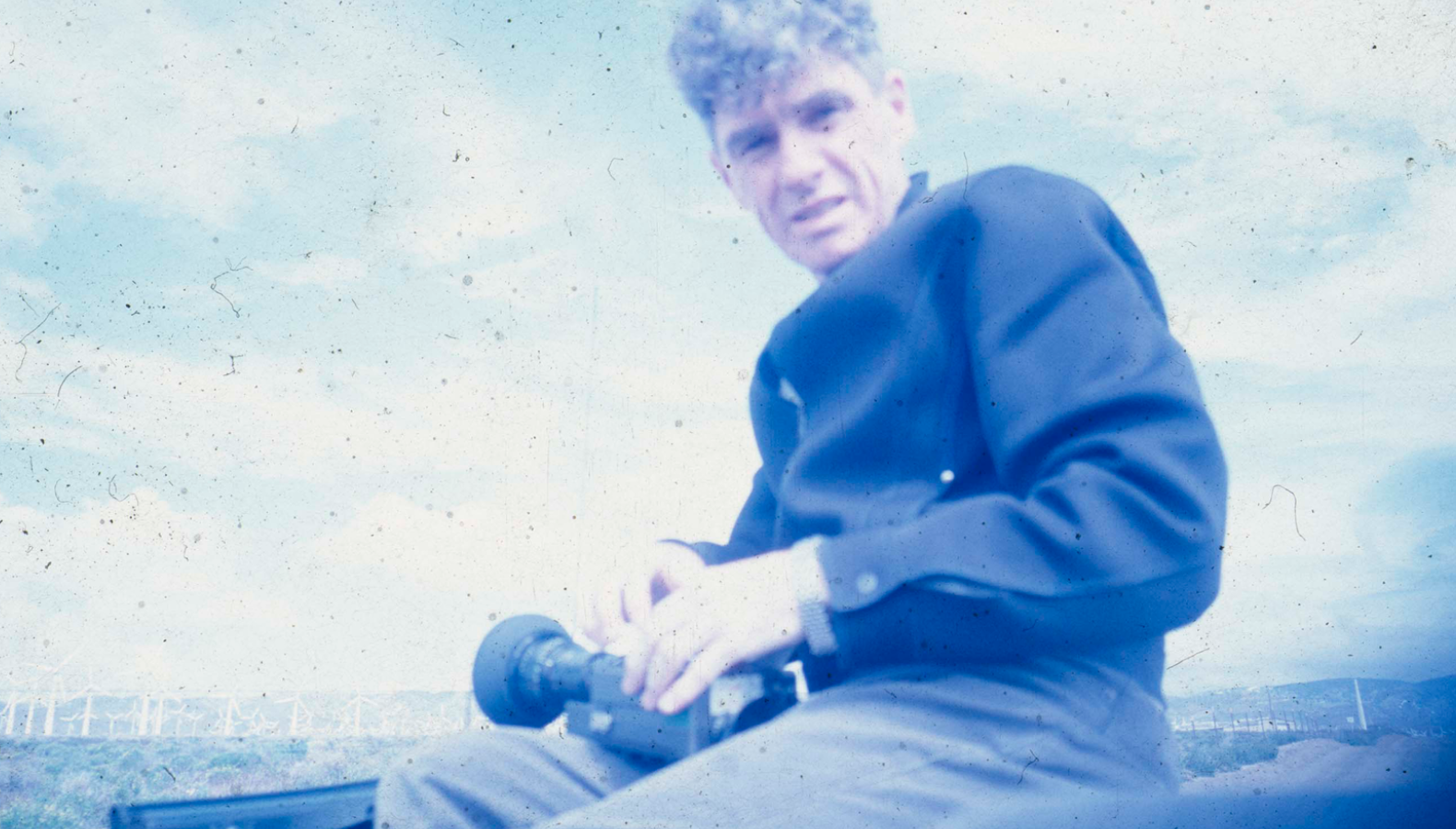
Christopher Doyle, courtesy Christopher Doyle
Interview
Christopher Doyle
The legendary DP discusses working in different cultures, his collaborations with Wong Kar-wai, and dancing with Pina Bausch.
Like the Wind: Lensed by Christopher Doyle is currently playing at Metrograph.
Share:
A FILM MAY BEGIN WITH plans, but in the end it is the product of chance. This is especially true of the films made by the great cinematographer Christopher Doyle, whose philosophy rests on the notion that, as he once wrote of a shot in In the Mood for Love (2000), “It didn’t happen because we thought it through. It just happened that this space with this particular light and this particular possibility gave us this moment.”
Doyle was born in Sydney in 1952. As with many artists from Australia, his home country’s distance from the rest of the world—a distance as much psychological as physical—seems to have produced a longing for whatever lay in the distances of the oceans that surround it. As a boy, Doyle was a reader; as a young man, an explorer. He left home at 18, working as a merchant marine, and went on to hold a range of odd jobs in Israel, Thailand, and India. Though, as our conversation attests, he has retained a very Australian tendency to irreverent humor, he never moved back. Instead, he found another home in East Asia, where he has lived since the late ’70s, when he began to study Chinese at the Chinese University of Hong Kong.
In Hong Kong, Doyle’s literature teacher, Miss Lin, gave him the name 杜可风, or Du Kefeng—the first character being a kind of translation of “Doyle,” the second two meaning “Like the Wind.” That name now appears in the credits of many of the artistically significant and influential films that have been produced in Hong Kong, Taiwan, and mainland China in the past 50 years. The first full-length narrative feature Doyle shot was That Day on the Beach (1983), the début film of his friend Edward Yang. By the end of the ’80s, Doyle(/Du) was among the crop of artists redefining Hong Kong cinema, working with such directors as Patrick Tam, Stanley Kwan, and—in what would become his best-known and most influential lasting artistic partnership—Wong Kar-wai.
Doyle has since directed several of his own films and published a number of artists’ books. His career stretches from East Asia to France to Chile to Thailand to the United States. In 2017, he received the Pierre Angéniuex award for cinematography, Cannes’ equivalent of a lifetime achievement award. There is no question that he is a genius of images, with a visual sensibility informed by his own interpretations of jazz, eastern philosophy, poetry, and other sources. But Doyle himself, when I spoke to him recently—him Zooming in from Shanghai, where he lives with his wife, the filmmaker and poet Hei Wen; me from New York—attributes his trajectory to luck. In his telling, his career has grown out of the alchemy of encounter—encounter with light, with time, with place, and above all, with people. —Victoria Uren
VICTORIA UREN: You’ve shot films in so many countries, with crews from many different places. What do you think makes you so good at working with people from different cultures, and in different cultures of filmmaking?
CHRISTOPHER DOYLE: I don’t know that I—I think it’s that I traveled. You see people now working their whole lives and saving up enough money to go on a cruise ship at the age of 60, and they can’t get off the boat because they’ve got rheumatism. It’s not the way to live.
Even as a kid, I found Australia stifling and very, very, very provincial. I always wanted to leave. And I read a lot. I’d rather read than go to the cinema, actually. Much rather. I always knew there was something else out there, so I went looking for it. I was reading D.H. Lawrence when I was eight years old, because he happened to have stayed in Australia very close to where I used to go surfing. I had a connection with D. H. Lawrence in my mind—and in my aspirations to a good sex life and stuff like that.
But anyway, I travelled, so I knew I had to adapt. I was a merchant marine, then I worked and lived in many places, until I kind of settled down to study Chinese. I had all this—what’s the word—engagement with the world already. And I had been exposed from a very young age to the Beats and to Zen, to Alan Watts, all these influences. A very happening thing in the ’60s was to engage with ancient but newer-to-us, us Westerners, worldviews. Those included Zen, Buddhism, vegetarianism. I’ve been vegetarian since I was 18. I think all those things combine to give you a certain give and take with other things. And then, I’ve been lucky to have always encountered, by accident, people who were doing more interesting things than I was at the time. [Laughs.] So I just tagged along, you know?

In the Mood for Love (2000)
VU: What did your family think of you reading these sorts of things?
CD: Oh, they didn’t know. They didn’t know. The priests were more upset about me reading D.H. Lawrence. Lawrence was banned in Australia—Lady Chatterley’s Lover was banned until 1965. Even longer than in other parts of the Western world.
My dad was a total Shakespearean, into opera and stuff. He was a doctor and had a certain bias towards culture, let’s say. He taught himself piano. But I was never artistic as a kid. I mean, I still can’t draw or paint or, or, or, or. I didn’t want to play music. I started playing piano at five years old, and gave up after about six months. It was only when I was about 30 that I realized I didn’t like the piano because the guy teaching me was touching me all the time. It was maybe 10, 15, years ago I thought, “Hey, hold on. Now I know why!” So, Okay. Well, that was that. Hello, he’s not the only one, you know. I mean, I went to a Catholic school. I know the stories.
Anyway, that’s the growing up stuff. But I don’t think I could ever live in Australia again because it’s just—like certain parts of America—extremely isolationist. One is preoccupied more with the mundane than the actually aspirational or inspirational aspects of life. Which, you know, is what we do. Hopefully.
The other thing is I’ve always loved languages, and I really enjoy the way in which other cultures approach, firstly, how they express themselves. Even physically. To see how actors express themselves physically. And the second is, I love cities, and I love cities by the sea, because I grew up in a city by the sea. The sea is a very, very, very strong component in my quote-unquote way of seeing the world, because in the presence of the sea you realize how unimportant you are, and how grand the bigger system, the bigger whatever you call nature or God or the kami—you know, the Shinto gods. There’s kami in everything. The sea is very basic to my aspirations to how one should get through the few days that one has been given. [Laughs.] I didn’t start making films until I was 32. So I’ve got a bit of catching up to do.
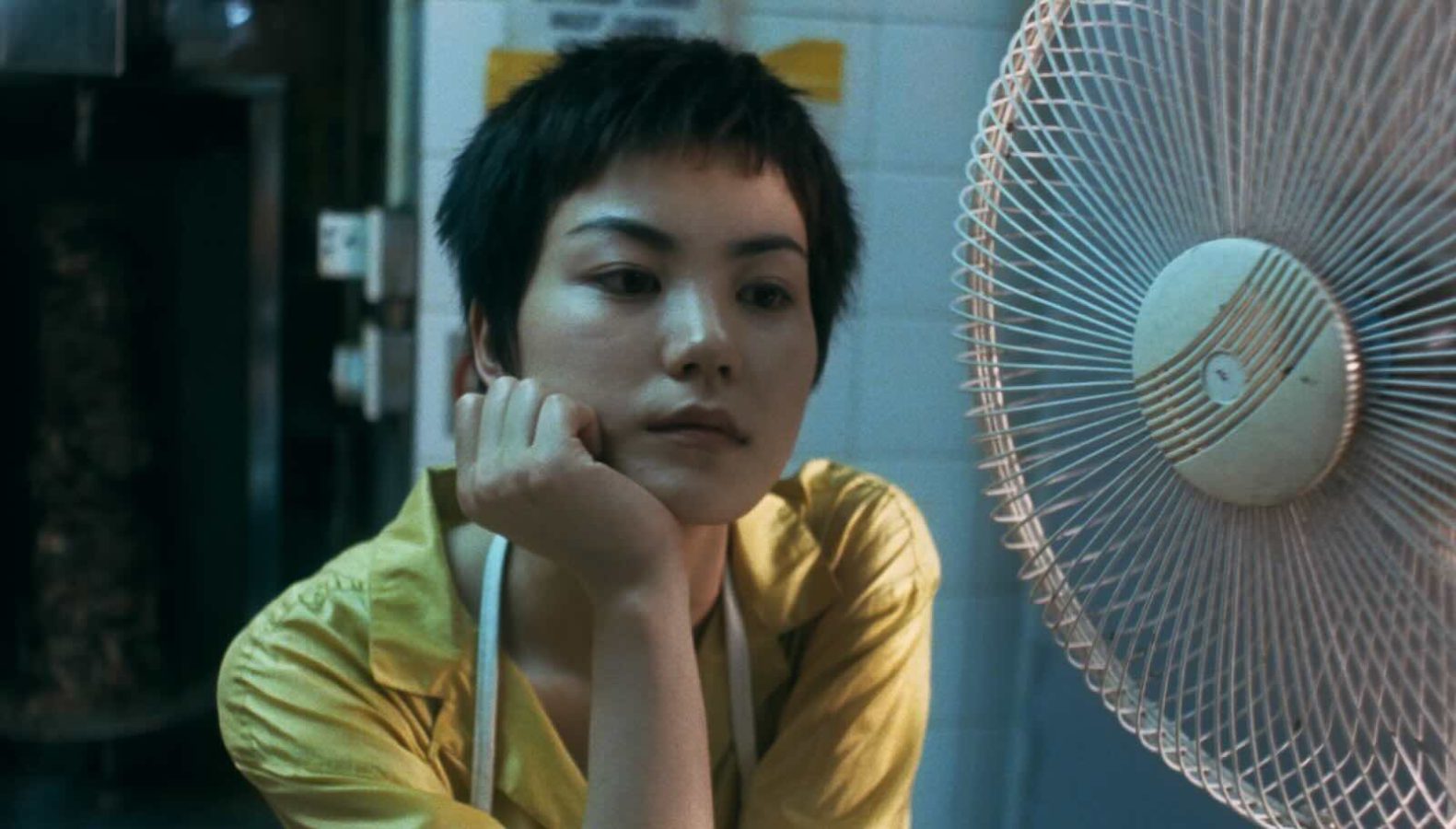
Chungking Express (1994)
VU: I’ve read a lot of you talking about books. Did books impart your sense for space, for place?
CD: It’s feng shui, everything’s feng shui. Cinema is feng shui. It’s how people react to space. You know, you walk into a restaurant and sit in that corner—bang. Why? That’s feng shui! Why do you arrange your kitchen or living room, even your bedroom, why do you arrange it in a certain way? Why do you sleep on this side of the bed, not the other? Some people research why and ask feng shui masters, but for most of us, it’s just intuitive.
The classic western approach—especially the French—to how you prepare a scene is, you go to work, bring all the actors in, they walk through and they basically tell the director what they want to do, and some directors try to tell them what he or she wants to do, and there’s a dialogue that goes on forever while the rest of us stand by—some of us watch, some of us go off for a coffee or a smoke—and then they go off to make-up. Then the team starts to light and prepare the set.
That’s totally ridiculous, because if there’s no set and it’s not lit, and you don’t have a sense of the space, how are you going to know where to go? You’re going to impose yourself upon it—which is a very western process, by the way. Imposition. I mean, look at a certain president that thinks his will is God’s will. It is a western concept. The law is made unto man’s likeness, it’s in the Bible. The whole of western filmmaking is based on Christianity and Christian principles and good and bad. Three-act system: birth, life, and then purgatory. It’s totally Christian bullshit!
So, if I go on a set, first of all, number one, how do you choose a space in which to work? In most of the films I prefer to work on a real set, a real location. Because everybody feels differently in a real space. And especially avoid blue screen or green screen. Even Christopher Nolan avoids blue screen. You’ve got to have a sense of space, you’ve got to have the feng shui, the limitations and the possibilities and the textures and the natural or unnatural light that the space already emits. And then, you know, at least 70% or 80% of your job is done.
Then, if it’s me, I put light somewhere where I want the actors to stand. And they will definitely go there. There’s no question. [Laughs.] You silly fuckers, you think you know what you’re doing? I put the light there so you would stand there. Huh? Then we don’t have any argument. It’s easy! We don’t have to discuss, “What’s my motivation for standing over here, don’t you think I should stand by the window?” “Yeah, the window is a bit high…” I can play the game too. I can play it a bit more effectively, because my ego’s not in the way. Fortunately. Sometimes.
VU: Never?
CD: Never. I don’t think so. I mean, why would I? I’ve directed like six or seven films, but I’d rather be a cinematographer because I think that both my “personality” and my responsiveness are much more useful. Going back to the Christian thing, I don’t think I’m God’s savior to cinematography. I think that other people have much better ideas than I do, but I have responses to their ideas, which perhaps engage us in a different journey, or a journey that, hopefully, is a little more than what we started with. At the very least, we get what you want done, and maybe a little bonus.
Even with M. Night Shyamalan—I mean, you know, he’s not an easy guy to—because he’s very Christian, by the way. Very precise. Everything’s storyboarded. For example, with Lady in the Water (2006), the set is totally built, totally artificial. I even built in the sunlight—I built everything in. You know, which I can do. But even with Night there was a bit of an opening of the gap between the required and the possible. We’re very different people personality-wise, and certainly in our approach to filmmaking, and yet, I think we went somewhere together. Now, whether that was what was expected, or how it was received, that’s another story. But if you’re making films to make people happy, then you should become president of SpaceX or something.
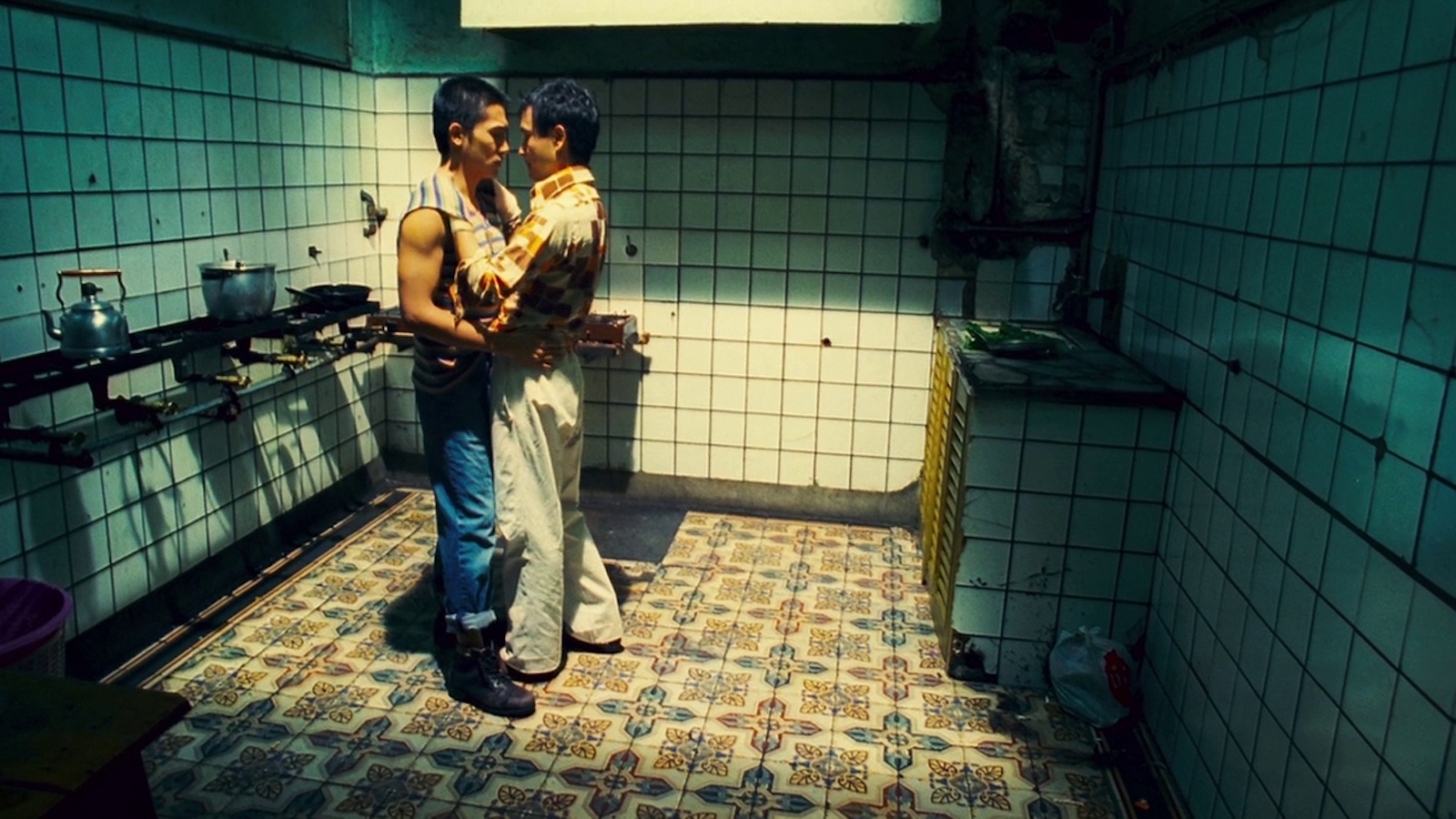
Happy Together (1997)
VU: Metrograph is actually showing Lady in the Water.
CD: Oh, really? Well, another thing you can say about it is that I don’t think it’s a typical M. Night Shyamalan film, you know? And that’s my fault, in a certain way. I made a 3D horror film in Japan once [Tormented, 2011], and the guy was, like, the hottest director, this superstar of 3D horror in Japan. Very big star, big box office—and the one I shot with him wasn’t horrible enough. [Laughs.] They said, “You made a bloody poetic film.” I said, “Well… I don’t know.” I don’t like seeing heads chopped off and flying through space. It’s not my thing.
I won’t even start about The Odyssey (2026) because then I really start throwing things around the room. What total bullshit.
VU: Did you see it?
CD: Twenty minutes. Yeah. Oh, no. No. They really, really, really, really got it wrong.
VU: That was rough. That was heavy sledding.
CD: It’s, it’s—it’s everything wrong with Americanisms. And I want to let you know that I’m acting! I’m acting, and I’m not even Homeric! I’m speaking and I’m saying “Fuck” in ancient Greece. Are you fucking nuts? Are you at least a little bit aspirational to do something? And then the hype! “I cried when I read the script!”Oh, come on. And the camera! [Hoots and grimaces.] Don’t even start me on the camera. “I wish I didn’t bump as much, because it’s so big!”The whole thing—come on, what an insult. The hype about the artistic merits is bullshit, and the marketing is just over the top. It’s Trumpism. It’s Trumpish. There’s nothing true in life. It’s all a conspiracy.
VU: I want to ask about you teaching yourself to use cameras. Because you were never formally trained, right?
CD: No, but I played rugby. And I grew up during the disco era; I know how to move. And I look better than Travolta. Fuck you, man. And I have less attitude. Come on. It’s about people. Again, it’s movement. If someone pulls a knife on me, I’ll run. And I love dance. I was very involved in modern dance when I first started to live in Taiwan. I’ve even danced with Pina Bausch.
VU: Wow.
CD: Well, social dancing.
VU: Sure, but not everyone can say that.
CD: At a party. And I was going to shoot Pina (2011)—Wim [Wenders] and I were talking about shooting Pina, but then she died, so it was delayed, and then I was doing something else. And then they made such a fantastic job of it. I’m glad somebody else did it because what they did with the format—that’s a genius work. That’s the most spectacular use of a medium in the history of cinema. There are only three perfect films, as far as I’m concerned. There’s Blue (1993), Derek Jarman. Have you seen Blue?
VU: Oh, yes.
CD: That’s the perfect film! It’s exactly what it is. And Hunger (2008), Steve McQueen. Where can you go wrong? And Pina. There’s only a few films in the world that really are what they are. A Tsui Hark film is what it is. A Stephen Chow film is what it is. You know?
VU: Can we go back to modern dance and Taiwan?
CD: Well, have you seen Cloud Gate [Dance Theater of Taiwan]? There’s a wonderful person called Lin Hwai-min. He’s a little older than me, maybe 10 years. In his twenties, he went to study writing at Iowa, but he fell into dance, and when he came back, he created what’s called Cloud Gate, so named after the mythological entrance to the realms of the spirits. This is a time when the people I was involved with, like Edward Yang and Stan Lai and Hou Hsiao-hsien, these people were aspiring to do something different from what had come before. There was certain response from society and the government to encourage young people. At that time, everyone was involved with everyone. It was very much a communal experience. The dance people were encouraged by the film people, and the theater people were encouraging the dance people. And then I became a co-founder of a theater group [Lan Ling Theatre Workshop], a so-called modern theater group. I was involved in lighting—I had no idea what I was doing—and all this stuff was starting to engage. There was commercial support, and at that time all these amazing groups started to tour Asia. Martha Graham came, and Merce Cunningham. I had the pleasure of being a translator sometimes, or helping with the lighting, or sometimes shooting some of these groups.
The way a dancer engages the space of a stage, to go back, is feng shui. One of my closest friends is Stan Lai, one of the greatest playwrights ever—in the world, not just in China. He was actually my first friend in Taiwan. Why do I have such great luck in life, you know? I don’t know. I don’t deserve it. Anyway, where was I? Stan wrote a play, Anlian Taohuayuan, called Secret Love in Peach Blossom Land in English, and we made a film version of it [in 1992]. The realization was: if we’re going to make a film, it has to be not just about the content of the play, it has to be about theater itself. We’re going back to the thing itself. What is the thing itself? Our decision was that, because there was no audience in what we shot, we had to make the theater into a character—a party that engaged with the film. The theater functions as the audience would, it gave the actors something to play off.
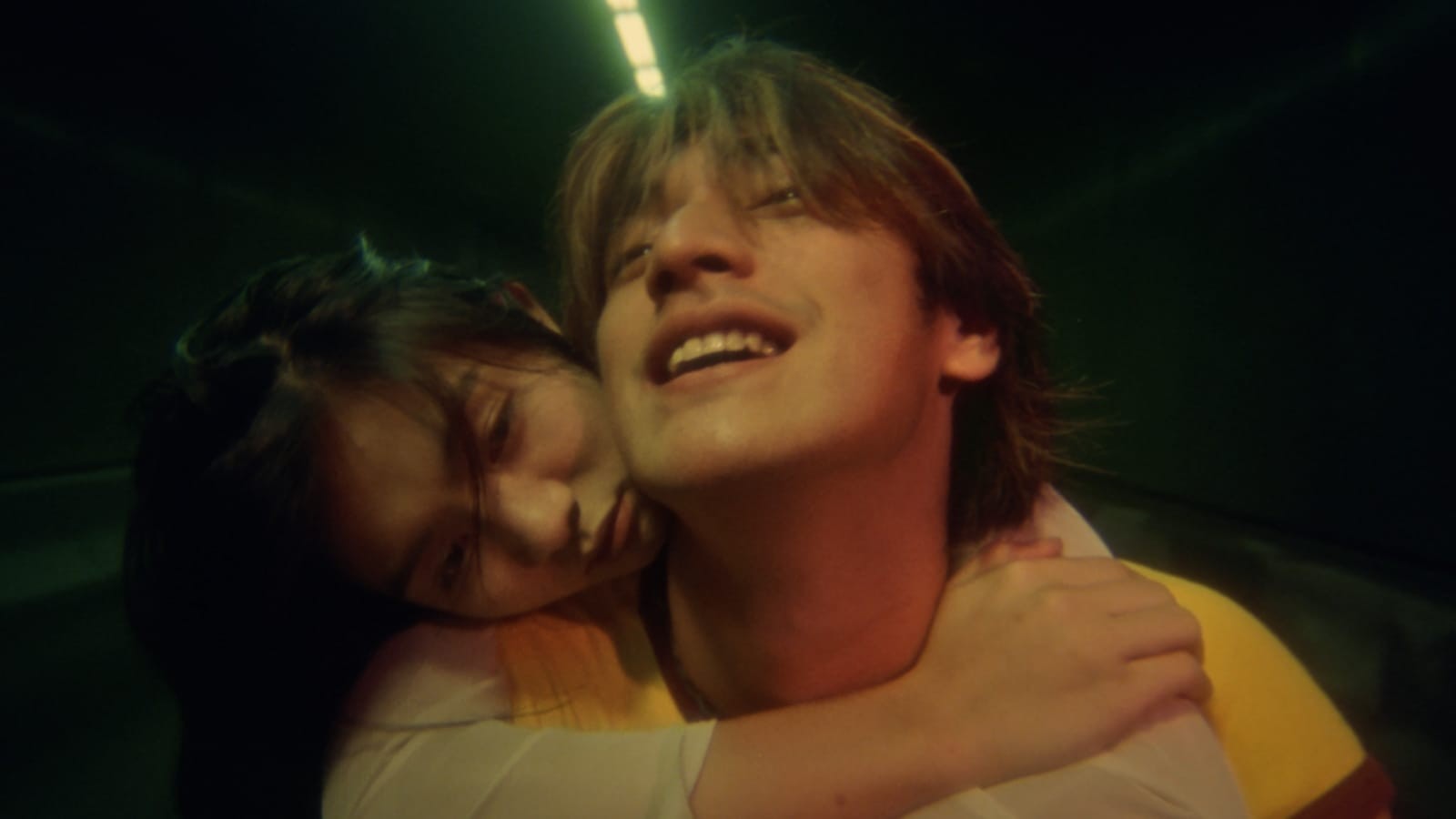
Fallen Angels (1995)
VU: I want to know, do you watch films now? What’s excited you recently?
CD: There’s no way anyone who’s sane or has any love of cinema would go to a film with me, because there’s no way I wouldn’t stop complaining or walk out. Usually both. I mean—I was at the Cannes premiere of Roma (2018), and I walked out. Because I just thought it was genius. I thought it was the most beautiful thing, and that’s enough. I know, I know what you’re about. I don’t care about the story. I don’t give a shit. I mean, Wong Kar-wai’s got no stories.
The story’s not the thing, to me. Absolutely not. I work with someone because they’re a friend. Because I know we’re going to do something special together. Do you know how many good films have been made from good scripts? A lot. Do you know how many bad films will be made from great scripts? A lot. Even more. So all this bullshit about cinematographers saying “the script’s the thing”—total crap. You’re just sucking up to the producers so you’ll get another job. Come on. Why do you have a job if the script’s the thing? It’s the emotional and spiritual and visual engagement. You’ll only remember one image anyway, right? That’s the whole point, to get to that cathartic image. So it can’t be just a script. Why are the actors there? Why are you lighting the bastards? Why is makeup there? Why are they working so hard to make it work?
VU: When you start a project, do you know what the cathartic image is going to be?
CD: No, no, no. You work towards it. All the films Wong Kar-wai and I made leading up to In the Mood for Love (2001) were just working towards that. There’s no question about that. They’re all versions of the same story, basically. If you look at any artist’s work, it’s just one story. The pleasure is seeing something familiar in a slightly different variation. So anything after that point, to me, is either a new start, or we’re just repeating ourselves—which is the danger, for anyone, to repeat yourself. But of course, it’s almost impossible not to. [Laughs.] Because you are what you are. So therefore, the engagement is with the whole process, not just the script. It’s engagement with the space, with the culture, with the people involved.
Yes, the script helps, the script is the blueprint that keeps you on track. It’s like a compass for a boat. Okay, you need a compass, right? I’d rather have a compass than GPS. And then they think a script is a GPS, but what you need is a compass. It’s not the same. The GPS is the production system, the money people. That’s the GPS. And then what happens if it fails? What happens if it gets hacked—which, it’s always hacked, in film. Somebody’s going to throw a spanner in the works somewhere, always. Especially if there’s a lot of money involved, right? Ask Christopher Nolan. Ha ha ha.
VU: Do you always have a favorite shot after the fact?
CD: I think there’s something that stays with you. It might not be because it’s “aesthetically pleasing.” I mean, again, it’s an accumulation of what it took to get there, or how you were feeling on the day. Why do you have certain memories? I’d rather not know, actually.
But then, this is only my way. I mean, whatever you do, don’t try to be Chris Doyle. And certainly, don’t try to be Du Kefeng. That’s impossible. Look at my journey through Chinese culture. It’s very strange, it’s very unusual. This is not me patting myself on the shoulder, it’s the astonishment that my first friend when I got here was Cui Jian [the Chinese rock musician], all these accumulated things. There’s no way anyone could have the experience of Chinese cinema I’ve had, of getting to be part of basically every new wave. It’s really weird. But I’m not Chinese—theoretically, I’m not. These are particular characteristics or choices or characteristics that I have. I’m pretty sure they won’t work for you. [Laughs.]
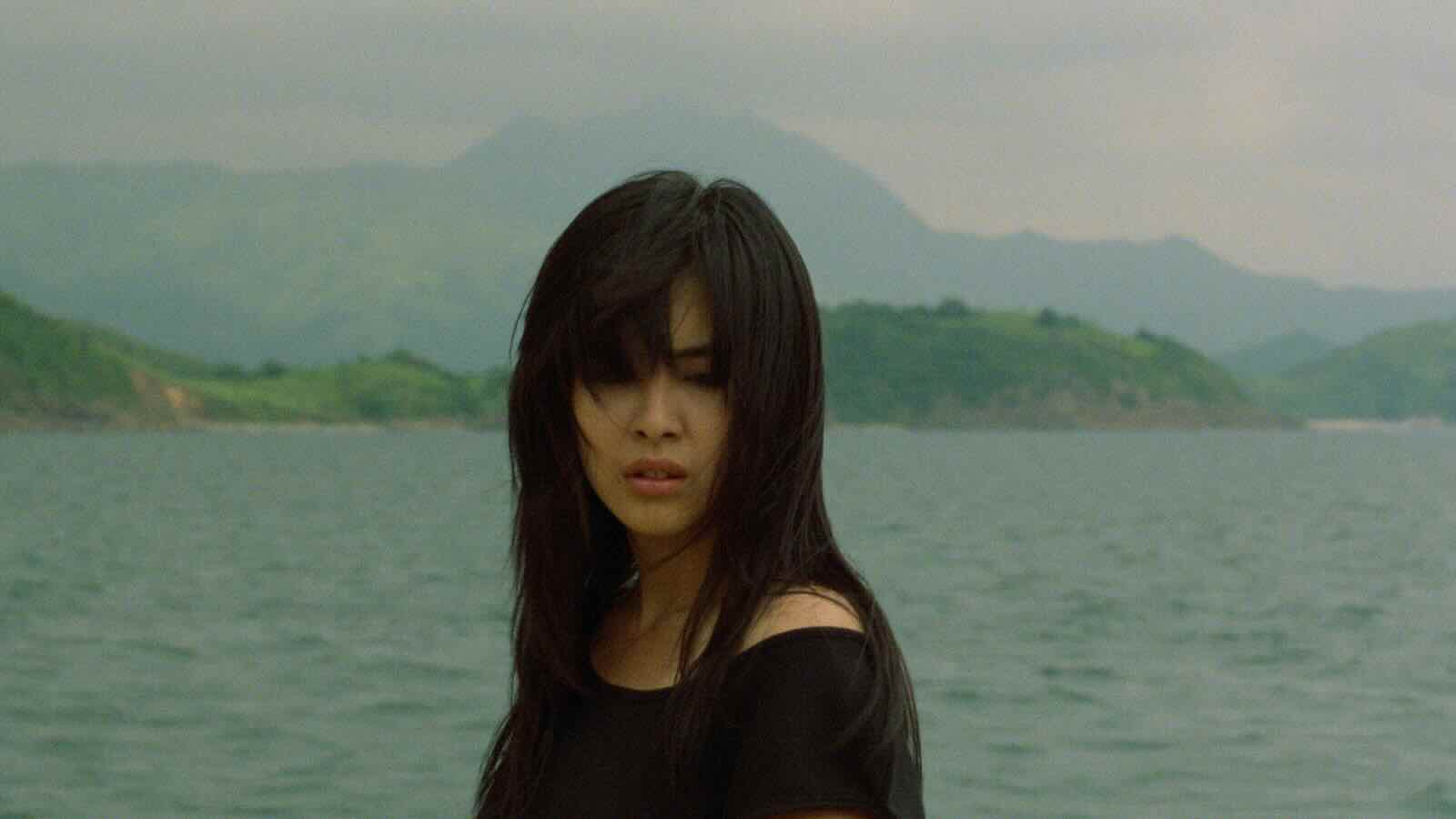
My Heart is That Eternal Rose (1989)
VU: Can I ask about your book that’s coming out, Ke Feng [Like Madness]?
CD: Have you seen any of my other books?
VU: I’m actually looking on Taobao right now to see if I can order some.
CD: [Holds up a copy.] It’s basically like this. It’s images and text. It’s called Ke Feng, but like crazy feng [疯], not just feng [风]. [In Mandarin and Cantonese, “wind” and “insane” are homophones.] Basically, it’s like us talking. The point is, if you think what I do is of any interest, perhaps how I get there may also be of interest. That’s basically what the books are about. And of course, there are a few stories in there—but nothing about who I slept with, which is usually what most books by camerapeople are, just telling you who they fucked, or what they did technically.
One thing I write about is that there’s only three people in cinema: the person in front of the camera, the audience, and the person who joins the two of them, which is the cameraperson. If you’re not talking to me, you’re not talking to the audience. That’s why the great directors are the ones who stand right beside the camera—and there are still some who do, but very few. Most prefer to sit back and be omnipresent with 45 monitors and seven different producers looking over their shoulders. That’s how you make a commercial show, and that’s why commercials are so boring and repetitive.
VU: Have any of the places you’ve shot triggered intense spiritual experiences for you? Or is it more about the mosaic of the situation, the people…
CD: In the more traditional process, you look for the spaces that say something to you before you even start the film. I get involved, almost always, at the script stage. Because again, like I said, it’s only what somebody says. It was raining. Okay, that’s shorthand for “she was very unhappy.” Or “there’s a change of direction in the story.” It’s a metaphor. My wife, we did a film together [One-Way Street, 2019], which we shot near Beijing. She wrote five or six scenes where there is rain. There’s none in the final film, absolutely none. Either logistically we couldn’t do it—we couldn’t get the fire trucks, for example—or we were beside a railway and it was too dangerous. Another shot was on a highway and we couldn’t get the rain to fall in the right places. So we looked for another way to express this emotion.
You know, they say 80% of filmmaking is casting. I say at least 80% is location. So that makes 160%, and you’re in good shape. I get in as early as possible because we probably find somewhere closer—which saves money. Closer also means there’s more unconscious visual and emotional and geographical continuity for the actors and for the audience. All these things matter. The more coherent a working space and the choices you make, the more coherent the film is, the more focused people are, and the more economically practical it is. And then! You come to the day, and whatever. Everyone’s depressed, so it doesn’t work. Or it’s been raining for a week and suddenly the light appears through the clouds and you have this astonishing moment. But you couldn’t have planned for it. [Laughs.] You can’t plan the weather, sorry.
A few hours after Doyle and I spoke, I received an email from him elaborating on his answers to some of the questions I’d posed. He agreed to let the Metrograph reprint his reply in full.
i wonder if i was clear enough about why i rarely see films through to the end :
mostly ” stuff ” of film-making gets in the way : the techniques , the dialogue , the performance , the showy sets and frenetic cutting …
thing is that the intent of the people and their lack of belief ( or lack of trust and commitment ) in and to what they are doing all neither impress nor distract me from the shallowness of their world view and the waste of everyone’s time that they call their “work”
Either the people who make a film really wanted to share what they had to say and what they hoped we could experience , or they are just in it for the money or the fame and have nothing special or relevant to say or share … no … if they don’t care , why should i ???And then … i realise that the moments in film that i remember are mostly those where what others interpret as stylistic choices were actually us appropriating and going with what many would call mistakes :
like the way the mist from the Iguazu falls was fogging up the lens when Tony Leung’s character approaches ….makes him seem even more heartbroken and lost , doesn’t it ?
Or how the only way to save a scene in Fallen Angels was to dupe it in black
and white …. and that looked so interesting that we looked for other similarly ” cathartic ” scenes to make it look like a ” metaphoric ” choice …
and so on and so forth
hope all helps
C

Share:
Recommended
- Farley Granger
 On the queer star who defied mid-century Hollywood archetypes.
 - Geraldine Chaplin and Carlos Saura
 On the formidable collaborations of the Aragonese filmmaker and his American muse.
 - Genevieve Yue’s Trains
 On the offbeat pleasures of the train in Genevieve Yue’s new book.