
Interview
Scott Cummings
On the everyday magic of Satanism in the New York filmmaker’s debut feature documentary.
Realm of Satan (2024) opens at Metrograph on Saturday, September 20, and Cumming’s acclaimed short Buffalo Juggalos (2013) is streaming now on At Home.
Share:
Realm of Satan opens in a barn where a goat is in the throes of giving birth, bathed in a shaft of light that could alternately be interpreted as heavenly or as the directional spotlight of a stage production. It’s a rather Christ-like image to start a film about Satanists, a darkly funny introduction to this sly and fantastical nonfiction portrait of the Church of Satan.
Honing an observational approach, traced back to his award-winning experimental documentary short, Buffalo Juggalos (2013), about an Insane Clown Posse–devoted subculture in upstate New York, director Scott Cummings stages precisely composed tableaux featuring global members of the Church in their homes and lives, both ordinary and otherwise. Filmed over the course of seven years in a deeply collaborative process with its subjects, Realm of Satan is equal parts George Méliès–inspired reverie and modern ethnography that is deeply interested in the presentation of ritual. Cummings (who also serves as editor) and his cinematographer Gerald Kerkletz dignify all of its practitioners’ rituals with the same even and attentive gaze—from the careful process of applying a thick layer of black face paint in a suburban kitchen to the strikingly avant-garde choreography of a PVC-clad group sex scenario.
The first time I spoke with Cummings about Realm of Satan was nearly a decade ago in a quiet bar near both our homes, before he had shot a single frame. I asked a rather stupid question about whether there was anything to fear about the Church of Satan. Before he could answer, a wine glass fell from the ceiling, shattering as it hit my skull. Point taken. For this interview, we met in an establishment that doesn’t serve spirits and discussed the finished project. —Sierra Pettengill
SIERRA PETTENGILL: I guess we’re both Satanic Panic children, right?
SCOTT CUMMINGS: Yeah, totally. The Church of Satan had just been around my consciousness for a long time. Late night shows were a big part of my childhood, and they would be on all these shows. They had this mythical quality, because they were like TV stars to me.When I grew up, they were pretty present culturally, and I was just thinking, “What had happened to them? Where are they?”
SP: What was the process of working with them like? How collaborative was it?
SC: The initial idea is always: let’s see what this person is about. What defines this person—not even as a Satanist—but what they think defines them. I had some narrative points already that I wanted to make, and most of that stuff was more fantastical, based in the mythology around them. Then I found things when I was shooting in a more typical documentary way.
With Buffalo Juggalos as well, I was trying to embrace their influences as much as my influences, so we found common touchstones together. And I would lean into them as far as I could. There’s very much a generation of monster movies and sci-fi movies that are a big part of their aesthetic. Obviously we started with film stuff. Universal Horror movies were a big part of the consideration.

Buffalo Juggalos (2014)
SP: The camera is totally still, I think, all the time? Why was that your choice?
SC: No, there’s two shots that are on a Steadicam. Oh, and there’s one shot that pans. [Laughs] To me it’s important to emphasize that they’re performing, so there is a layer of artifice involved. They’re removed from us. For example, we didn’t record any live sound. All the sound was done in post, on purpose, to make it less real. The idea was to take away reality as much as possible, even though they’re real Satanists in their real environments.
What’s interesting for me—having done a bit of acting, but not liking it—is that performance is a very vulnerable thing, actually. There’s a certain courage required. When normal people are put on the spot to do it, it exposes things about them; like the Rineke Dykstra photos of the girls on the beach, where she would shoot the same shot like 150 times, 1000 times, until she got the perfect shot. All of a sudden, you get to some weird truthful thing through artifice.
SP: I’m always a little cranky with the faux intimacy of a certain kind of nonfiction film. But this film is turning the saturation up as high as possible and seems to be directly asking the viewer about our expectations of access, including into people’s interiority?
SC: What is really hard right now about nonfiction filmmaking is that people have access to all this information, all the time, constantly. And it’s kind of special to not know everything, or not to be able to get information, and to be kept in the dark a bit. I thought, especially for the Church of Satan, because they are essentially a secret society or a shadow organization, whatever you want to call it, really the most uninteresting thing to do is to… reveal them? Because then you destroy the whole idea of it.
SP: You don’t get closer to them that way.
SC: No. The idea that you can let people keep their mythology is really powerful. The first real Satanic thing I went to was the 50th anniversary of the Church of Satan. It was in a hotel ballroom. There were a lot of people there, and I was the only non-Satanist. I mean, no one knew; I could’ve just been a Satanist, because obviously there’s a lot of incognito Satanists. But I was there as a guest. I wasn’t allowed to shoot anything, I wasn’t even allowed to mention the movie.
And there was a Satanic ritual; there was a naked woman on an altar. The waiters for the hotel would come in throughout the whole time, bringing food and drinks. I just thought, “Oh, these waiters are getting such an amazing gift!” They just came to their job, and all of a sudden there’s a naked woman on an altar, and some guy in black robes intoning Satan. Then they walk out of the room and return 20 minutes later for drinks or whatever, and see something else. If some other waiters start talking, then there’s this whole network of people talking about it, but nobody knows what it is. They might never find out, and then think about this night for years, talk about how crazy it was, and make a whole mythology about this night that they didn’t understand but got just a glimpse of. I thought that was an amazing experience, actually: [to understand that] you can get a glimpse of something, know it exists, and then let the rest fill itself in for you.

Realm of Satan (2024)
SP: In your film, we see so many different versions of what that process looks like for these individuals, of trying to externalize it.
SC: Satanism is a religion that emphasizes the self and the individual. So, you don’t actually need to participate in any way beyond yourself. There isn’t so much of a collective element; it isn’t about the collective experience so much as about the individual experience. I mean, these are all just ways that we decide to survive in the world and try to make sense of it.
A lot of occult beliefs are just different ways of organizing the world around you, of creating a structure to live in that is valid to you. The fundamental tenant of Satanism is essentially: you create the world that you are going to live in. And I don’t mean that in a woo-woo way. You surround yourself with what matters most to you.
SP: The whole film is told through a series of domestic environments. Their objects and the artwork on their walls and all of their things are so specifically-chosen and individualized; they are given so much weight and meaning by your camera. So then to see one of their homes burning down… I mean, it’s like sacrilege, right?
SC: It was still pretty fresh when we started shooting. There was a lot of media around it, and it made international news. The person had clearly set the fire knowing there were people inside, and never been caught. There was real trauma around [the incident] and a lot of sadness. Because I think when you talk about Satanists, they have that philosophy of you create your own environment, and a lot of that is reflected in where you live and in your house, which is why their houses are often very showy. Their houses are them.
It goes along with the idea that the witches are the ones who get burned. The witches aren’t the ones who actually do the burning, right? Like, the people who are forced to live on the outskirts of the village, whom the village actually needs in a weird way, eventually the villagers turn on them. Like the people who were accused during the Satanic Panic and who were getting threats during that time. The world is hostile to them. To stand up and proudly create your own world is very threatening to people. These people are seen as this scary dangerous group when actually it’s the rest of the world that is the dangerous thing.
SP: Yeah. What’s way scarier than anything else in the movie is the security footage of that guy coming up to the front door of the house holding gas cans. To have that footage look the way it does, lo-res and janky and very clearly not captured either by you or by the community, feels like this violent intervention, both in the form of the film itself, but also the community.
SC: When I started the film, on the first day I went upstate to where Peter, the high priest, lives, and the guy, Joe, was living there. He was this great, colorful character, really friendly who passed away shortly before the house burnt down, but Satanists were still living there, and it was a big deal when it burned down.
It was just this gaping hole nearby. I would drive by all the time, and it started weighing on me, I would hear about Joe and the house so much. But it wasn’t supposed to be in the movie, and I really struggled with whether to include it or not. And then the actual house fire footage, I didn’t even know that existed until I was on the plane going to the sound mix. Falon, who was the best friend of the owner of the house, said, “I have the security camera footage. You can see it happen.” So she gave it to me and that was meaningful too, you know. And then, I did a re-edit as we were sound mixing.
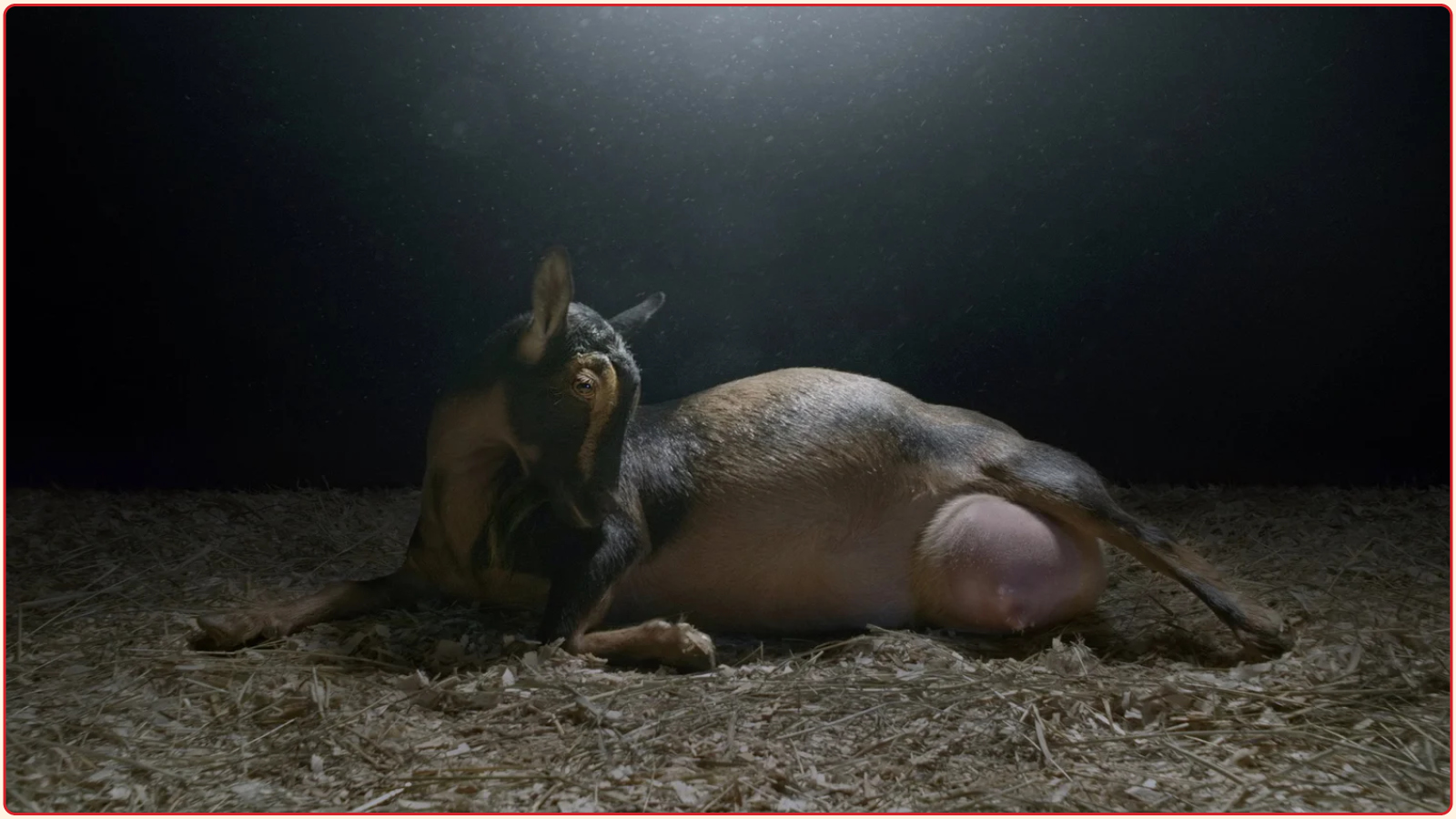
Realm of Satan (2024)
SP: I want to ask about the digital interventions, CGI interventions.
SC: For me, the most important thing is that the film is artificial but still real. So to do this thing that you are 100% not supposed to do, and then flaunt it, might be the most interesting thing: classifying the film as nonfiction but then doing something that is so clearly not nonfiction that it just throws everybody off. I also wanted to play with the idea of film as magic. I wanted to mix different kinds of magic in the film. So the idea of black magic, and practicing magic in your daily life, or having a ritual practice, mixed with stage magic, movie magic, and flattening the line between all those things.
In this world magic of all types exists. When I pitched the movie originally, I said it was like a nonfiction film in the vein of Méliès not Lumière. Because there’s been this historical connection between film and magic from the beginning. But actually doing magic on film, and using film to create magic has always been a big part of filmmaking. I wanted to lean into this. I wanted to play with both practical effects and CGI; I wanted to reference those really cheap practical magic effects people did in Universal Horror movies.
I watched Abbott and Costello Meet Frankenstein (1948) so many times before we shot this film. We reverse engineered the Lon Chaney-turning-into-a-werewolf shot from that movie in a similar way, with layers and layers of makeup and masks. Then a CGI artist [rendered] it for me, but he did it too well, it was too professional. So I did it myself in After Effects. I tried to make it look… bad. I like practical effects way better, but I also like the idea of going to the farthest point of what “Hollywood magic” is right now, and just embracing it.
SP: [Satanists] feel like they’re living in an in-between time or non-time: their aesthetic references are scaling across hundreds of years. What other references were you working from?
SC: I’m coming from the standpoint of Pier Paolo Pasolini or Werner Herzog. Early Herzog. Where he was working with people who it was very questionable to work with ethically, maybe? And pushing that as far as possible.
SP: Heart of Glass (1976) is one of my favorites. I watch that once a year.
SC: Heart of Glass is so amazing, and it’s like… why did he hypnotize the people? But who cares? It’s amazing.
SP: Because you can’t see anything like this otherwise.
SC: Yeah, totally. I started wanting to buy all this red glass stuff, and I was like, “I’m just gonna look like an old person in Florida if I own all this red glass.” But in the movie, after you watch Heart of Glass you’re like, “I need all red glass. This is amazing.”
But I also pull in a lot of stuff [Satanists] like too. Peter, the high priest of the Church of Satan is a pretty big cinephile. He always had good, really off-the-wall recommendations for me, things I’d never even heard of. Like No Way to Treat a Lady (1968), a movie where Rod Steiger plays a serial killer. Everything is like a vignette. He just serial kills people in different costumes, and that’s his schtick.. There’s a whole list of the Church of Satan’s film recommendations, essentially. If you look at the list, it’s actually quite interesting; they have a broad range of taste that is kind of surprising. Peter is a big Val Lewton fan; The Black Cat (1934), by Edgar G. Ulmer. One of my favorite films that I found through them is Paul Bartel’s Private Parts (1972). Have you ever seen that? It’s about a serial killer living in a roach motel on Skid Row, who’s also having sex with a blow-up doll. It’s bizarre.
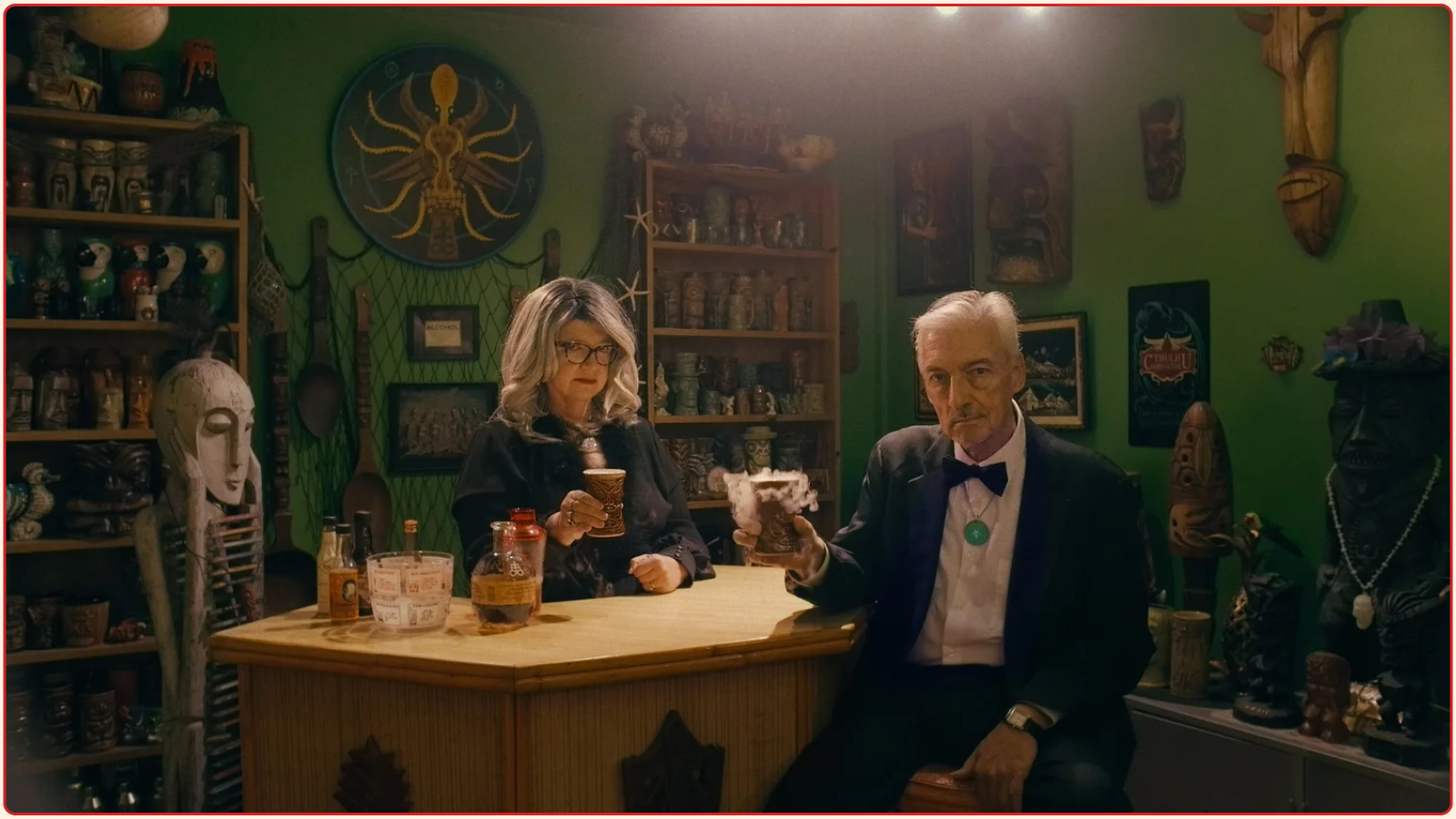
Realm of Satan (2024)
Share:
Recommended
- An Introduction to Jan Švankmajer
 A primer on the work of the visionary Czech artist.
 - A Few Musings on Specific Films
 The visionary Czech filmmaker shares his unique reflections on several of his legendary films.
 - Father Figure: Tahar Cheriaa
 On the era-defining champion of Afro-Arab cinema.