

Essay
Demi Moore
On the return of the fearless actress whose daring performances dominated the ’90s.
Share:
In many of her early roles, Demi Moore embodies 20th-century womanhood in all its professional and domestic implications. For her trouble, she remains one of the most distinguished and recognizable icons of ’90s cinema. To see Moore is to love her: whether she’s a hero or villain, loving wife or sultry temptress, it’s hard not to be on her side. Despite—or perhaps because of—her beauty, nothing seems to come easy for Moore’s characters; they each have to work for their success, and the actress herself is never afraid to show her dedication and steely resolve in almost every scene.
In 1994, Moore starred alongside Michael Douglas in Disclosure, Barry Levinson’s workplace erotic thriller that played on their established Hollywood personas: Douglas as the masculine, authoritative patriarch and Moore as the sexy, modern woman disrupting conventional gender norms. In the film, Moore sexually harasses Douglas, but no one seems to believe him. After all, she is the young, attractive businesswoman recently hired for the job that he was passed up for. Plus, their characters used to be lovers, so she is able to successfully present the narrative of a man so upset that his former girlfriend has now become his boss that he would craft an elaborate lie in order to get her fired. Disclosure plants itself firmly on Douglas’s side, portraying Moore’s character as a conniving liar with little expertise at her job. For some, this was the attitude of the ’90s: women were “taking over” the workplace, and men were constantly suspicious of their qualifications. Moore does her best to elevate the role, but she toils in service of a script devoted to the male perspective. Her character is emblematic of the misogyny of the time, which also plagued Moore throughout her career. Though she was a box office draw, her talent as an actress was often treated as secondary to her looks. And despite the obvious commitment to her craft, Moore’s confident sensuality frequently gave way to unfair portrayals in the media as an oversexed Hollywood diva.
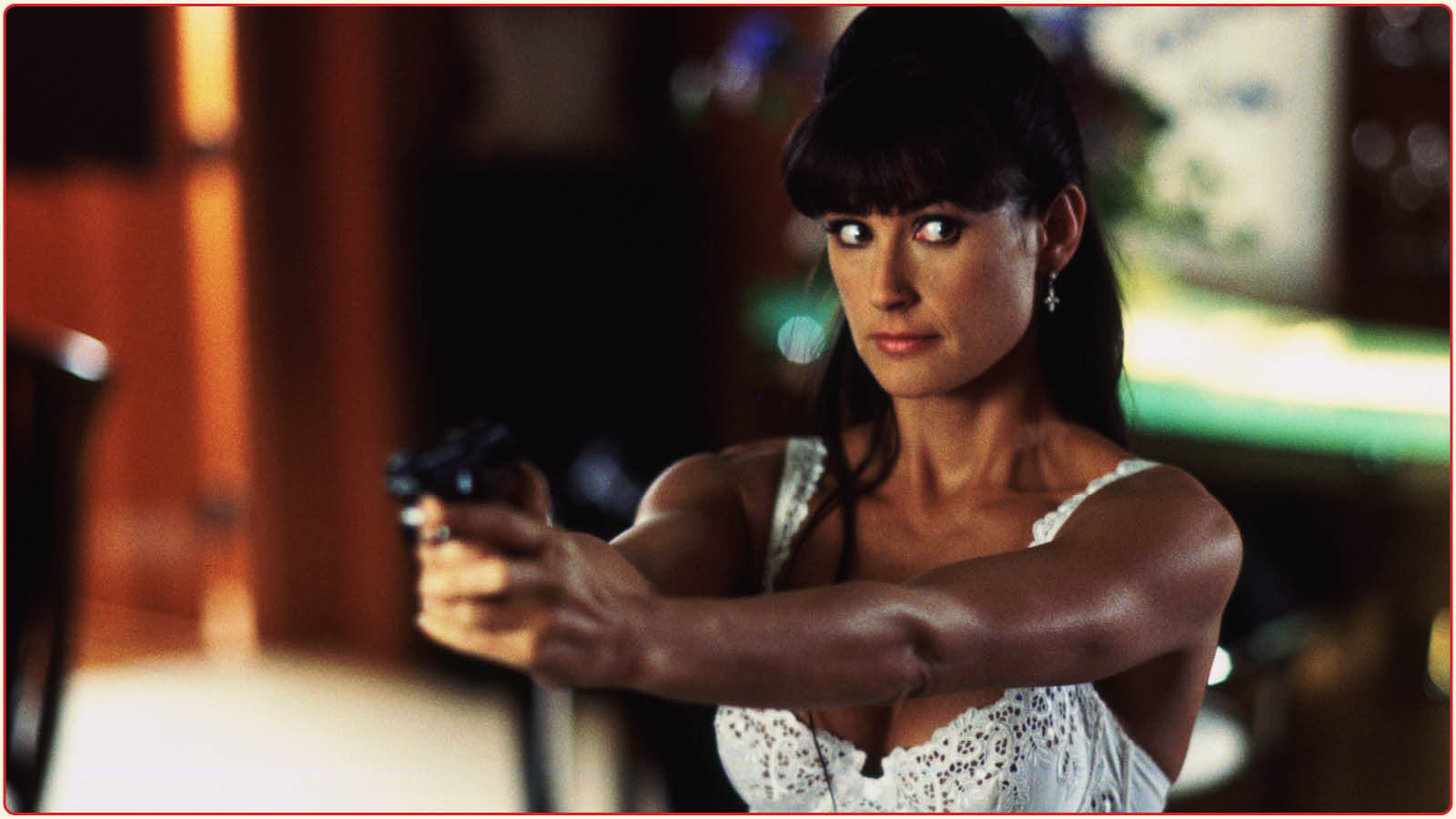
Striptease (1996)
Moore’s persona as the driven, independent woman was already largely defined by the time she starred in Levinson’s film. Unlike her peers Meg Ryan and Julia Roberts, who were lauded for their likeability and effortless charm, Moore was an actress with obvious grit: from her husky voice to her striking gaze, she possesses the bold aura of a woman determined to prove herself. She was born Demi Guynes in Roswell, New Mexico, to a single teenage mother, and became a bride herself at 17, when she married rock star Freddy Moore, 12 years her senior. She would make her film debut just two years later in Choices (1981). By the end of the ’80s, she had become a major box office draw with roles in films like St. Elmo’s Fire (1985), About Last Night… (1986), and Ghost (1990).
As her star rose, the late ’80s and early ’90s were marked by significant professional gains for women, exemplified in movies openly ambivalent about those advancements such as Jagged Edge (1985), Baby Boom and Fatal Attraction (both 1987), and Working Girl (1988). Moore, in turn, played women intent on having it all. She is frequently surrounded—but never overshadowed and rarely outranked—by men onscreen: the male-dominated office in Disclosure, or the dangerous power brokers who populate Striptease (1996). And in Rob Reiner’s A Few Good Men (1992), she stars alongside Jack Nicholson and Tom Cruise as a military lawyer (and the only woman in the main cast) tasked with defending two Marines who have been charged with the murder of a fellow private, extensively bullied by their platoon.
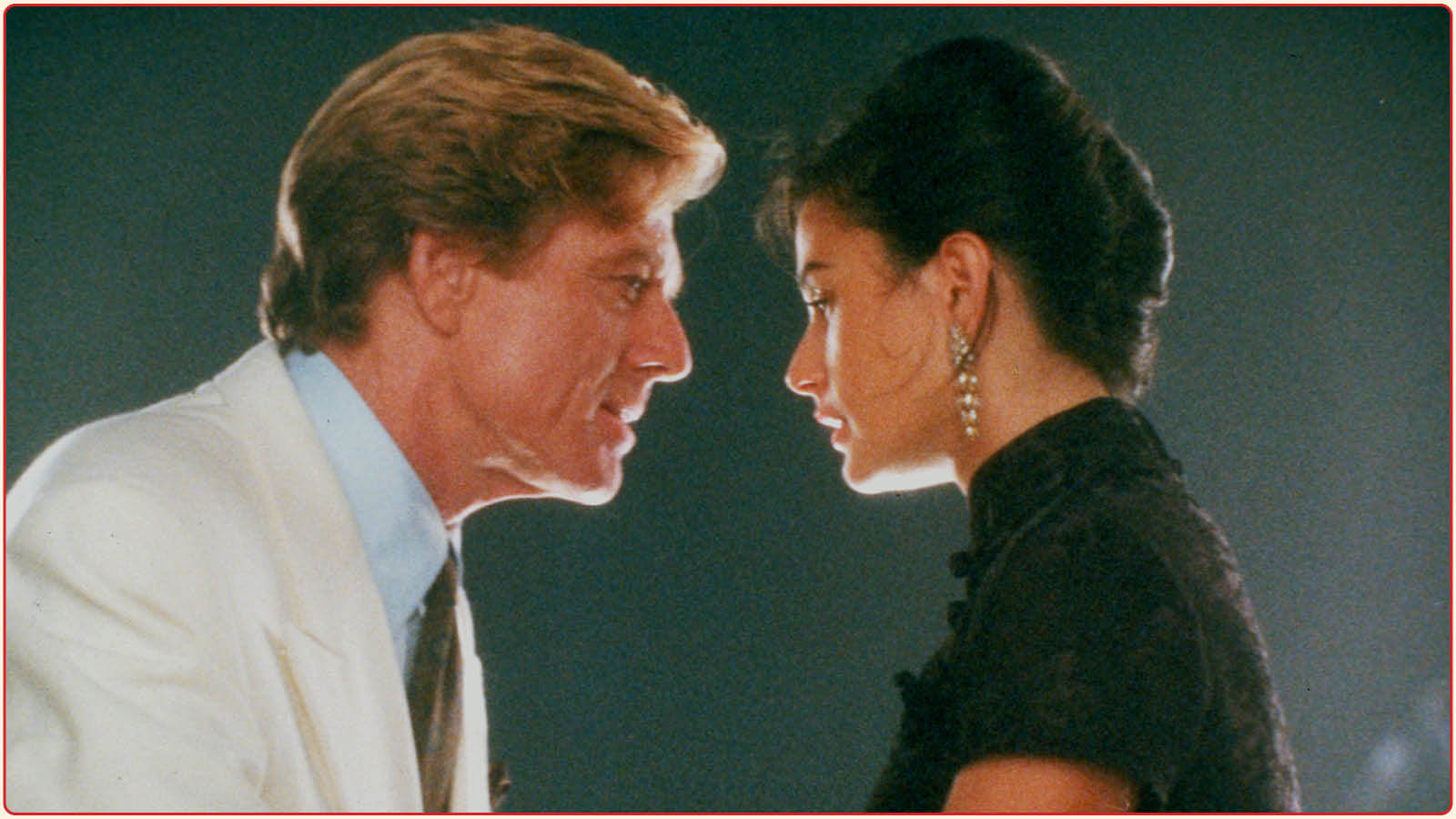
Indecent Proposal (1993)
Moore made further waves the following year in Adrian Lyne’s erotic drama Indecent Proposal (1993), playing a married woman pursued by an older man (Robert Redford) who offers her and her husband (Woody Harrelson) one million dollars in exchange for one night of sex. Even in the thankless role of exploited wife, Moore brings a rebellious energy that wasn’t fully unleashed until four years later in Ridley Scott’s maligned box-office bomb G.I. Jane (1997). The film tells the story of a US Navy topographic analyst named Jordan O’Neill, chosen in a political ploy, to undergo grueling physical training in order to determine whether women can endure the demands of the Navy. On Jordan’s shoulders rests the future chances of women’s acceptance into the military. A passion project of hers, Moore came to Scott—who had previously directed Thelma & Louise (1991)—to make what she saw as an empowering film for women. Moore shaved her head and trained aggressively for the role, but the picture left audiences and critics alike cold.
G. I. Jane was one of a string of critical and commercial failures the actress weathered, including an ill-conceived reimagining of The Scarlet Letter in 1995 and The Juror in 1996. Moore mostly retreated from the spotlight thereafter. She would make a memorable turn in 2003’s Charlie’s Angels: Full Throttle playing a former “Angel”-turned independent operative; critics and commentators, predictably, made a great commotion over her body at the unforgivable age of 40, to the neglect of a charismatic performance, a highlight of an otherwise silly Hollywood cash-grab. Subsequently, she took supporting roles in more high-end fare such as Bobby (2006), Mr. Brooks (2007), and Margin Call (2011). In recent years, Moore, no longer beholden to the whims of the box office, has turned her focus to smaller independent films. Now formally entering her second act as an arthouse darling, the actress has lent her star power to Amanda Kramer’s playful and erotic musical drama Please Baby Please (2022) and Coralie Fargeat’s body horror comedy The Substance (2024). Back at the top of her game, it’s clear that Moore will always defy expectation.
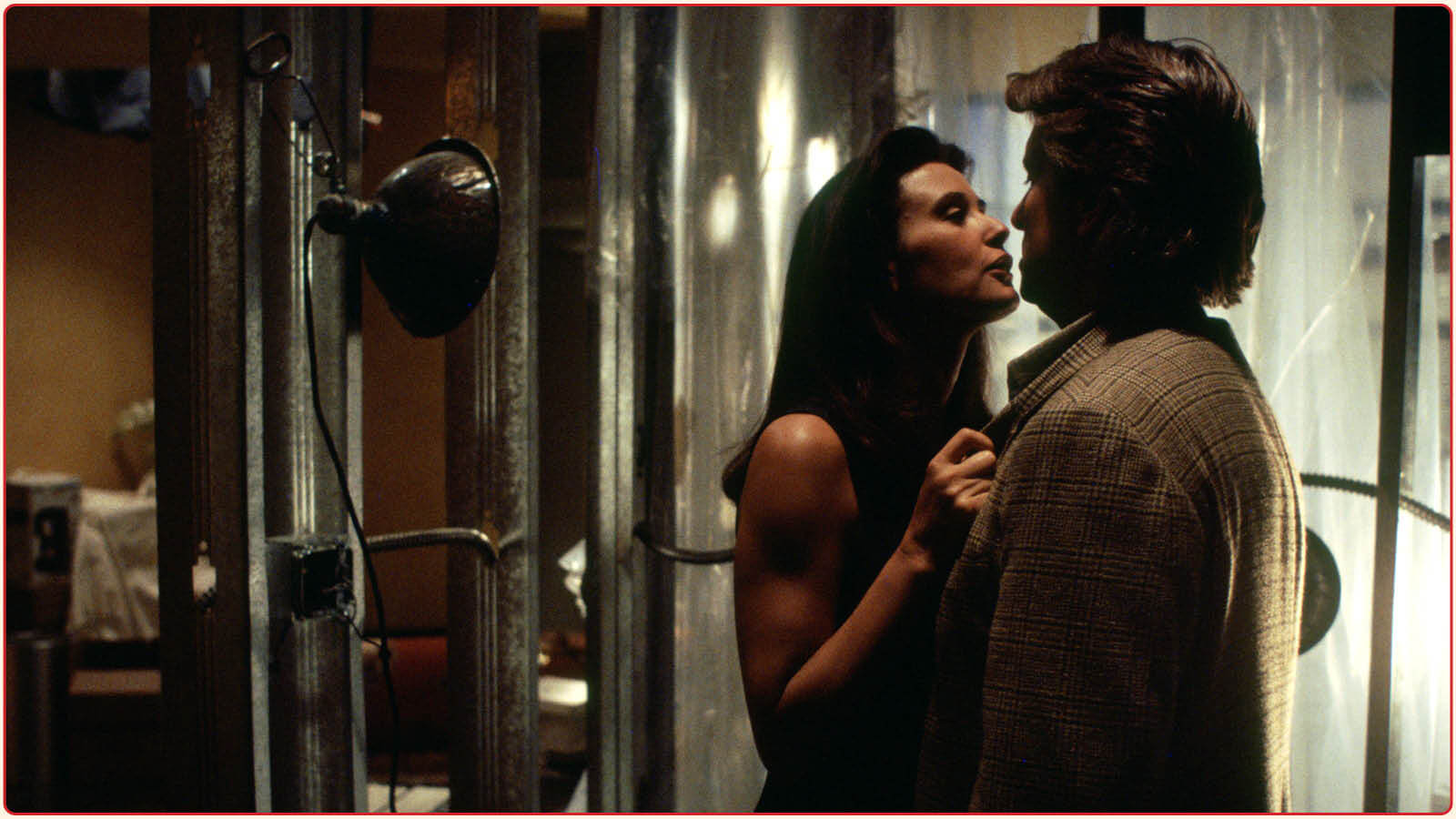
Disclosure (1994)
Share:
About the Contributor
Recommended
- Wallace Shawn
 On the fever that drives the veteran actor and playwright.
 - The Taste of Tea
 On Katsuhito Ishii’s uniquely gonzo take on the Japanese shokin-geki genre.
 - Lucrecia Martel
 Talking with the doyenne of Argentine cinema about her new documentary, historical responsibility, and the actual use of tear gas.