
Essay
The African Gaze
How rebellious mobility in African cinema upends colonial ways of seeing.
Share:
Med Hondo’s 1986 epic Sarraounia, about the eponymous warrior queen (played by Aï Keïta Yara) of late 19th-century Aznas (present-day Niger), opens on a haunting sequence. Soldiers, merchants, workers, and refugees—in exodus—resolutely walk or ride horses in a dreamlike scene reminiscent of petroglyphs: the blur of the enlarged Techniscope format, the haze of the pink Saharan dust, and a superimposed seascape radiating from the bottom of the image. Djibril Diop Mambéty’s medium-length features Le Franc (1994) and The Little Girl Who Sold the Sun (1999) equally exemplify a kindred, yet distinct emphasis on forward movement in the midst of structural displacement. The main protagonists—Sili (Lissa Balera), a disabled little girl peddling Senegal’s daily newspaper Le Soleil while facing off with police or boy hawkers (The Sun); and Marigo (Dieye Ma Dieye), an itinerant, broke musician (Le Franc)—roam across the city in atypical ways. Marigo, in particular—a modern-day Sisyphus—wanders industrial ruins, lively streets, polluted fields, and the restless Atlantic coast. He carries either a congoma (thumb piano) in his arms or the door (where he has glued a lottery ticket), wrenched from the hinges of his house, on his back. The loads toted on the heads of Sarraounia’s marchers and the door on Marigo’s back in Le Franc both reveal a shared condition of ongoing displacement in the wake of colonialism, from the historically overlooked perspective of those displaced.
Portraying war expeditions, the criminalized mobility of the poor, and the wayward movement of urban residents, Sarraounia, Le Franc, and The Sun exemplify African imagemakers’ embrace of what Hondo called a “cinema of rupture,” which Amy Sall celebrates in her new book The African Gaze: Photography, Cinema and Power. Featuring critical essays by scholars Yasmina Price and Zoé Samudzi, The African Gaze is a dazzling compendium that brings photographic and cinematic practices from across the continent into long awaited dialogue. The book honors a heterogeneous tapestry of visual approaches grounded in a common material context: the collective project of refusing, subverting, or bypassing altogether colonial ways of seeing.
Spectatorship is a crucial terrain of warfare in both Hondo and Mambéty’s cinematic worlds. During the colonial era, official censorship such as the Laval decree in the French colonies, banned or restricted the colonized from making films. It is with formal decolonization that African storytellers were finally able to appropriate the camera in unprecedented numbers. These artists produced unruly counterimages anchored in their own palimpsest realities. Sarraounia, Le Franc, and The Sun express the scope and stylistic creativity that Sall’s book hails: the petites gens and the royals, the precolonial past and the neocolonial present, big productions and shoe-string budgets—imaginatively yoking together a diverse array of genres, including fiction, nonfiction, comedy, the epic, theater, opera, and animation. The African Gaze asserts, alongside other theories of spectatorship rooted in the Black experience (i.e. Du Bois’s double consciousness, bell hooks’s oppositional gaze), that there is no innocent relationship to the camera, yet visualization remains an unceded territory.

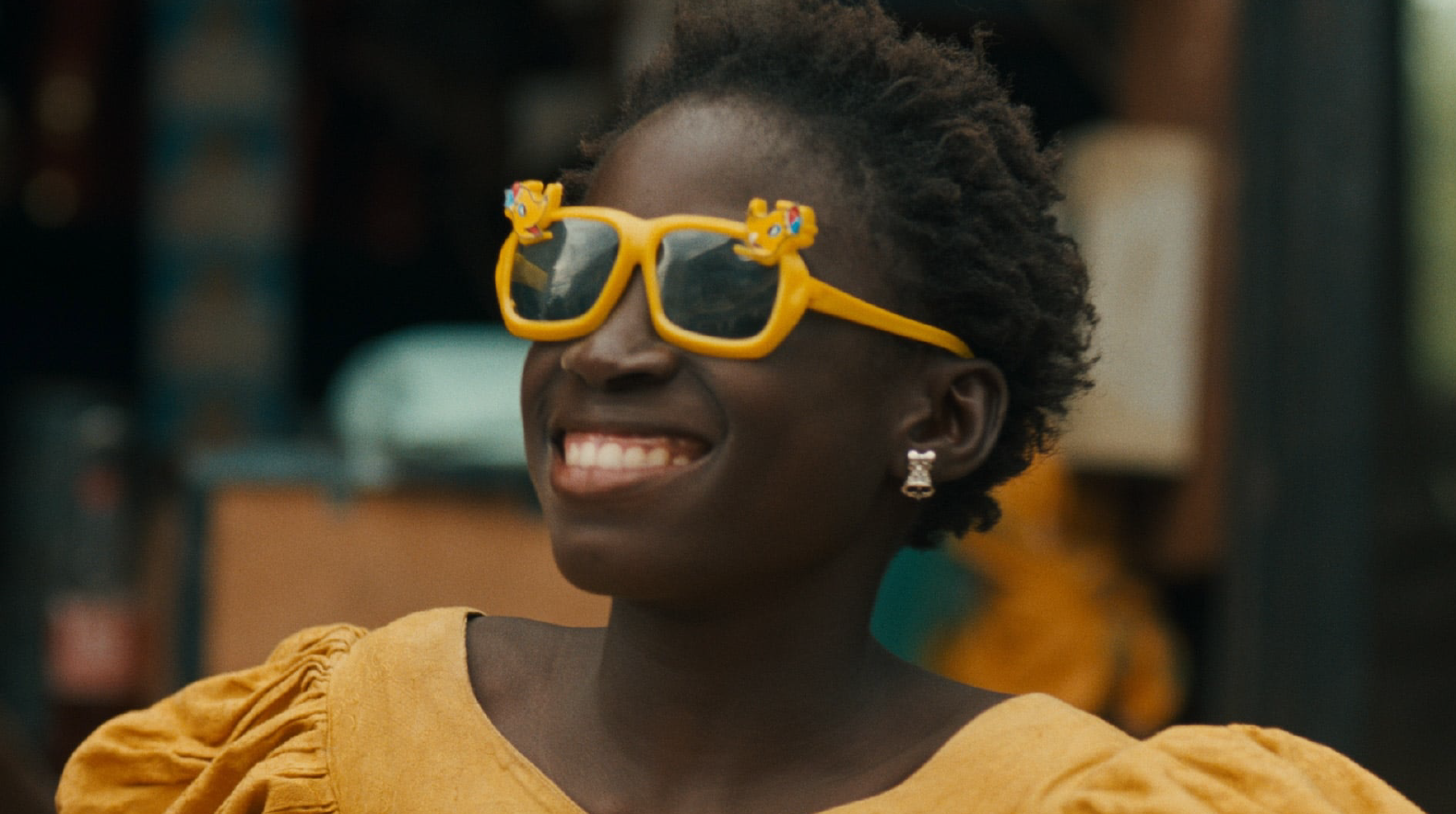
The Little Girl Who Sold the Sun (1999)
Mambéty assigns African filmmakers the task of “reinventing cinema,” departing from a Eurocentric tyranny of vision. Amidst a plethora of dehumanizing images that have historically plagued depictions of the continent, it is no accident that children, the disabled, women, outcasts, and immigrants occupy such a vital place in the narratives of Mambéty, Hondo, and their contemporaries, such as Sarah Maldoror and Safi Faye. A common feature of Mambéty’s compassionate lens are the carefully curated moments of cinematic reprieve, whereby his protagonists escape the watchful gaze of the spectator while remaining in the frame. After one of her multiple confrontations with newsboys in The Sun, Babou Seck rescues Sili’s crutches from the water. What follows is a tender interaction, portrayed with eloquent visual restraint: they remain semi-hidden by the fruit-bearing branches of a tree, flowing in the wind.
There are plenty of such precious moments in Mambéty’s film, which reflect African cinema’s commitment to the opacity of its subjects. “People have to stop considering us a homogeneous swarm of grasshoppers,” Hondo declared, echoing Ousmane Sembène’s infamous address to French ethnographer Jean Rouch’s colonial cinema: “What I hold against you and the Africanists is that you look at us as if we were insects.” Mambéty and Hondo painstakingly and lovingly underscore the complexity of the communities they film.
Sarraounia celebrates anticolonial resistance as much as it lambasts a motley of colonial collaborators, from the emirate of Sokoto to the infantry recruits of Sudan. Eschewing romance, Mambéty’s theatrical urban chorus often engages in cruel acts of spectatorship. The Sun opens on a scene of public humiliation as a woman is arbitrarily arrested and later descends into madness. Everyone witnesses but no one intervenes; some laugh. The crowds gathered around as she tussles with police seem a broken mimicry of the ubiquitous communal circle, at the center of which people perform, make speeches or wrestle in Sarraounia. Later, Mambéty dissects the micropolitics of urban belonging and how colonialism estranges subjects not just from land but also, psychically, from themselves. One of the bystanders in Soleil, the wheelchair youth who plays street music from his radio for a few monies is bullied by the same newsboys who constantly harass Sili. His knit cap falls, revealing his locks, which he immediately covers, casting anxious looks at his surroundings. Antiblack colonial standards of propriety have socially condemned this native hairstyle.

Sarraounia (1986)
In Sarraounia, Hondo grapples with the ambiguity of human desire to produce heroes against histories of domination. Visually, the anticolonial female war hero often appears at the margins of the screen. It is less her physical presence and biographical detail, than her strategic genius—her acute observations of the European invaders—that takes center stage. In various acts of counter-surveillance in hidden or elevated spots that also belie an intimate knowledge of the environment, the protagonists of Sarraounia gaze back at power, observe the enemy and warn each other of impending attacks. Similarly, the women forced into sexual exploitation in the military camp watch the white officers with disdain as they feast after yet another massacre. Europeans shift from image-makers to the ones being imaged. “They are so pale, they must be sick,” say two herders watching the French troops from afar.
In The Sun, the watchful predatory gaze of the police and other self-proclaimed vigilantes—always ready to extort, humiliate, or harass—is omnipresent. Literal prison bars if not bridges, staircases, or access gates of a carceral urban infrastructure often frame the camera’s field of vision. In these productions, as in his earlier short Contras City (1969), Mambéty alternates between alienating sequences of a distant, objectified city, and intimate street-level shots of the people who inhabit it: a metaphor for the relationship between people and the authorities. “The South is the people’s newspaper, the Sun the government’s,” says Soleil’s Babou Seck.
Whether in Le Franc or Soleil, the gaze with Mambéty is always multidirectional. There is a voyeur excess in the delightful choreography of the oppositional, fugitive gazes that urban dwellers throw at each other: mocking, suspicious, desolate, curious, sympathetic, cruel, taunting, desiring, envious. We may add the reconstructive gaze of the spectator themselves, in the face of Mambéty disorienting non-linear modes of narration. Marigo and his landlady gauge each other via his door’s spyglass, in a state of relentless war, strategy, and subterfuge. Sili brings the horizon closer by looking through borrowed binoculars. Passersby exchange surreptitious glances, peeping behind the backs of the few able to afford newspapers, catching a glimpse of the day’s information, in a cinema verité, recalling Fritz Lang’s earlier cinematic engagement with urban readership, virality, and the kinetics of information in the 1931 thriller M.

Le Franc (1994)
Anticolonial warriors and urban dwellers alike in Sarraounia, Le Franc and Soleil are, above all, citizen-spectators. In acts of looking, they condense a freedom of expression increasingly denied in authoritarian neo-colonial regimes. Neither Hondo nor Mambéty are, sadly, strangers to censorship. Sarraounia’s production was imperiled when Niger withdrew its support, allegedly under pressure from the French government. We owe the latter film, in part, to the assistance of avid cinephile and Pan-Africanist Thomas Sankara, the late former president of Burkina Faso. Sankara offered to let Hondo shoot in Burkina Faso and moreover, lent the filmmaker the services of the Burkinabe army. In fact, revolutionary guerrilla governments committed to cultural production such as Algeria’s FLN, Mozambique’s FRELIMO, Angola’s MPLA or Guinea Bissau’s PAIGC were central to the making of many masterpieces of African cinema, including Maldoror’s Sambizanga (1972).
A crucial reminder of these material conditions of production—of the fact that spectatorship is unceded territory—is how people gaze back at the camera as an instrument of power, rupturing the fourth wall. This is an inherent quality of an African cinema often filmed on location rather than in controlled, expensive studios. Yet this is not just an expression of what Sembène called “the mathematics of cinema” but also of an unwavering commitment to place, inflected by neorealist avant-gardist sensibilities. The Dakar of a Mambéty or Sembène, the Paris of Vieyra or Hondo, or the Fadjal of Faye are not accidental locations, but active characters of their films.
I often find myself pausing at the brief moments when passersby or nonprofessional extras momentarily lose the ability to pretend that the camera isn’t there: filming, staging, representing. As they glance furtively towards the camera and indirectly us, with secrecy, curiosity or amusement, they also clarify the stakes of a cinema in which the line between documentary and fiction is, by necessity, never clear cut. Filming publics for which the camera remains both a technology of domination and a field of expressive possibilities, demands of the filmmaker accountability to said publics. Tellingly, Le Franc is dedicated “à tous les passants de la ville de Dakar.” To all passersby in the city of Dakar.
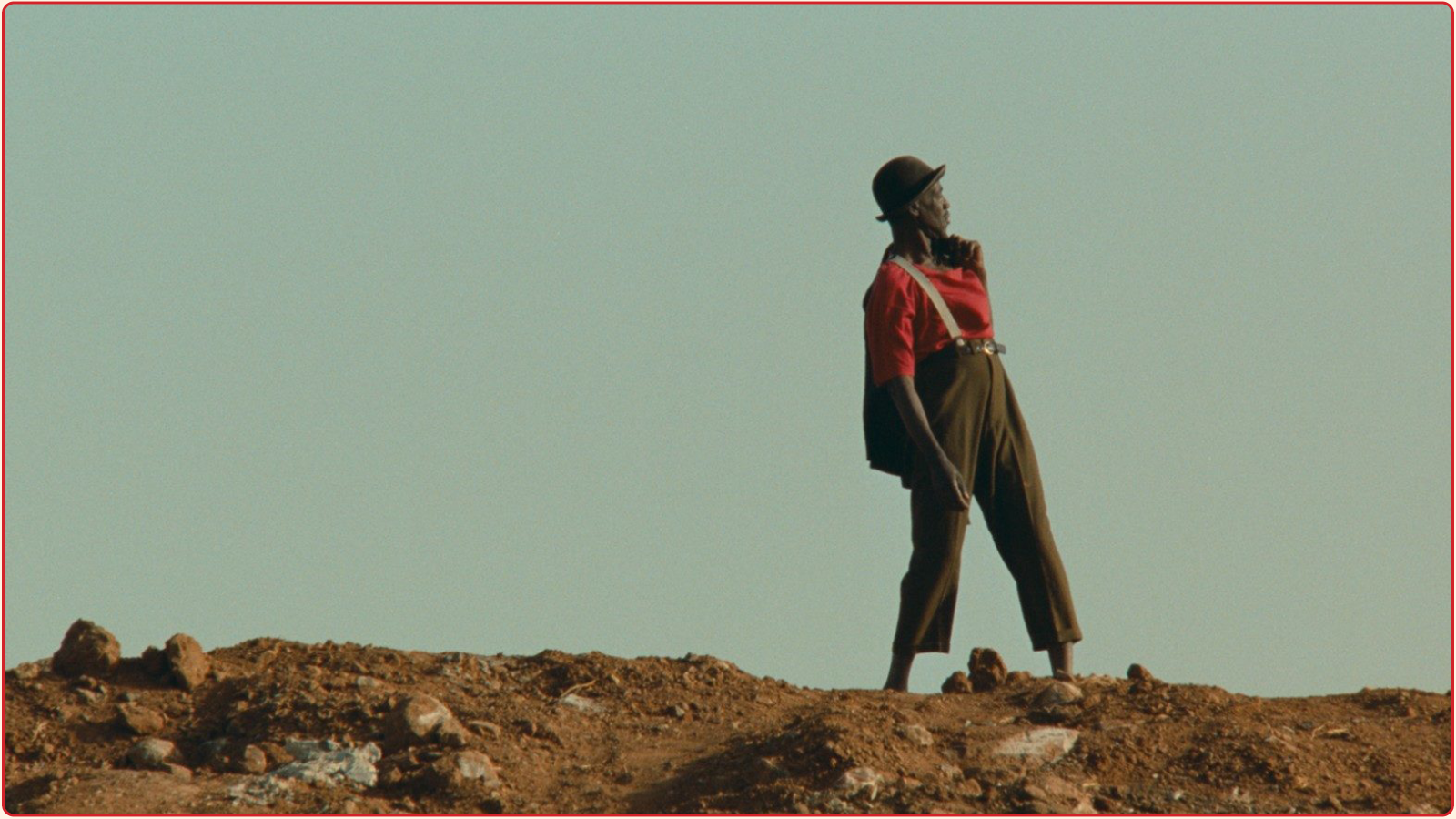
Le Franc (1994)

Share:
About the Contributor
Recommended
- Virgina
 On the rediscovery of a lost film tackling the complexities and pleasures of gender expression in the Balkans.
 - Farley Granger
 On the queer star who defied mid-century Hollywood archetypes.
 - Geraldine Chaplin and Carlos Saura
 On the formidable collaborations of the Aragonese filmmaker and his American muse.