
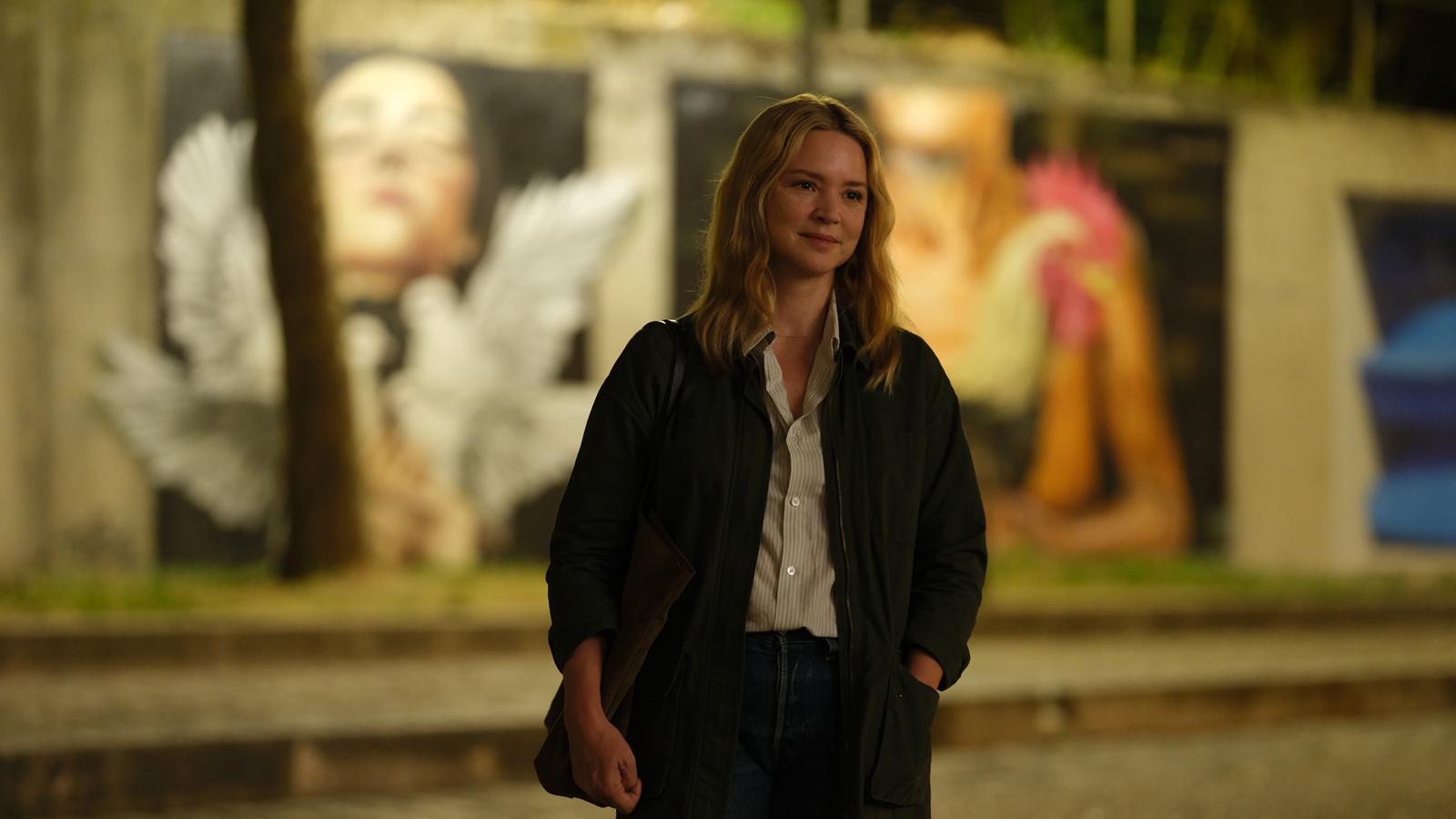
All of a Sudden (2026)
Interview
Virginie Efira
An interview with the daring and wildly in-demand international actress.
Spotlight on Virginie Efira opens at Metrograph on Friday, November 13.
Share:
SHE HAS YET TO PLAY an assassin, but there is an exacting force and precision to Virginie Efira’s performances that hit straight to the heart. Over the past decade, the Brussels-born, Paris-based actress has embodied a run of women whose contradictions don’t compromise their convictions, working with directors such as Justine Triet, Paul Verhoeven, Rebecca Zlotowski, Alice Winocour, Asghar Farhadi, and most recently, Ryûsuke Hamaguchi.
Efira began her career as a television presenter in Belgium before moving into comedic roles. Her first collaboration with Anatomy of a Fall (2023) director Triet on 2016’s In Bed With Victoria, was, Efira says, as if lightning struck; the pair reunited for Sibyl (2019), another sharp, dark comedy centered around a woman’s id, where an audacious Efira leads an ensemble of Adèle Exarchopoulos, Gaspard Ulliel, and Sandra Hüller.
After an appearance in Verhoeven’s sinuous rape-revenge thriller, Elle (2016), the director wrote Efira the leading role in Benedetta (2021), whose heroine is a 17th-century nun beset by stigmata and visions of a sexual Christ. Her more earthly activities, drawn from the real-life Tuscan abbess Benedetta Carlini, include political maneuverings with the Mother Superior (Charlotte Rampling) and sex with a recent novice, who carves a wooden statue of the Virgin into a dildo. For a film that toys with faith and belief, Efira grounds it with an insolent serenity.
Efira obviously isn’t afraid of a challenge, and her latest role, as Marie-Lou in Hamaguchi’s All of A Sudden (2026), hinges on a chance encounter. The head of a suburban Parisian care home in the process of implementing a radically compassionate methodology called Humanitude, Marie-Lou meets Mari (Tao Okamoto), a Japanese playwright with terminal cancer. Hamaguchi’s script is structured with extended stretches of rich, meandering dialogue, with Efira speaking Japanese and Okamoto French, and what unfolds is a deeply moving story of friendship and what we can exchange in our shared humanity. Efira, along with Okamoto, won the Best Actress prize at this year’s Cannes Film Festival. I met Efira during the New York Film Festival. —Colleen Kelsey
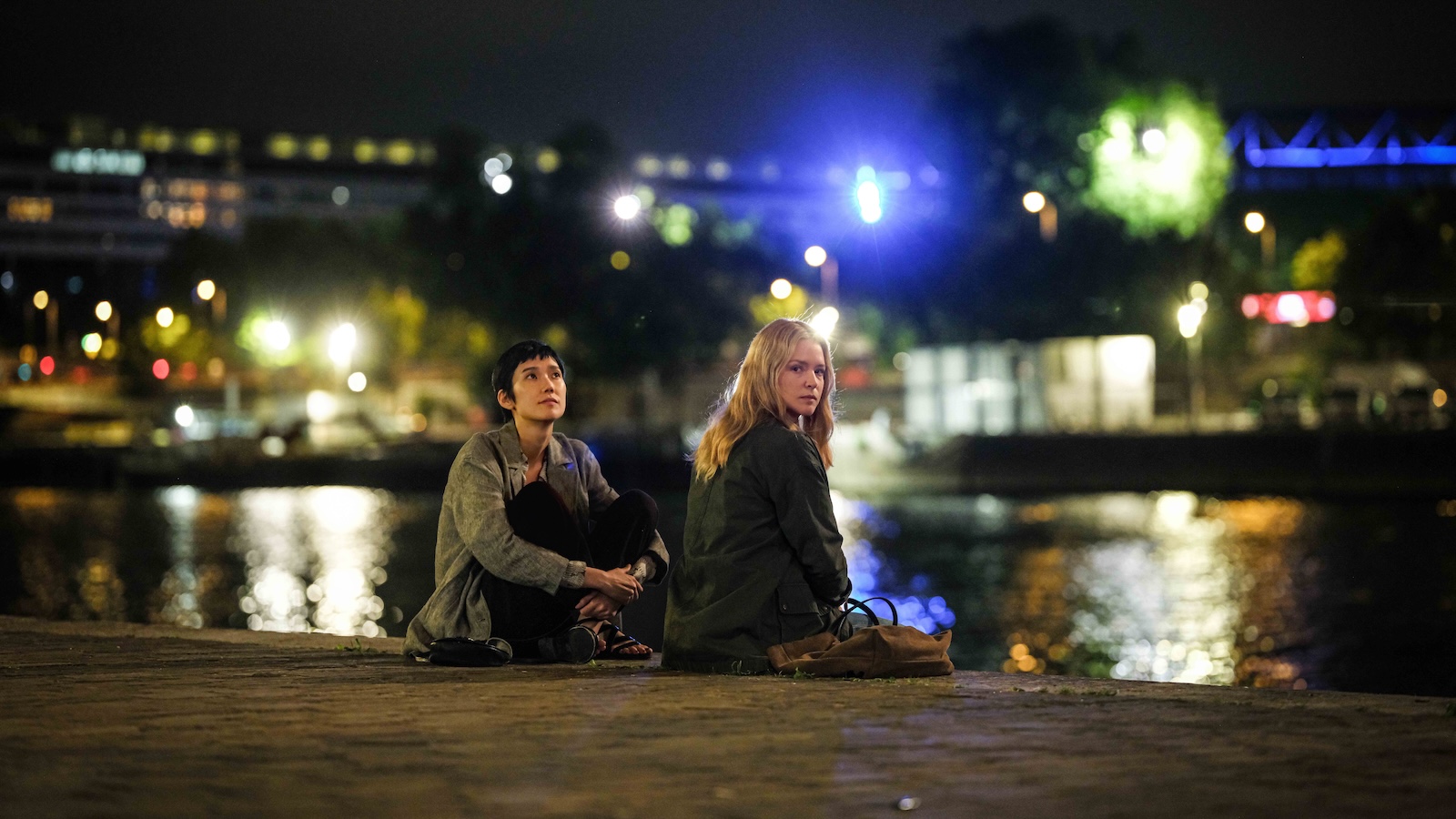
All of a Sudden (2026)
COLLEEN KELSEY: How did you get involved with All of a Sudden?
VIRGINIE EFIRA: First, I’m fortunate to live in France because we have a film financing system where, because of the love that we have for the French cinema industry, a lot of films can be made without profit being the main voucher for their feasibility. A lot of interesting filmmakers can come to France and make more particular films, which is why I was able to work with Verhoeven and Farhadi. So when Hamaguchi came to France looking to work with a French actress, and he was interested to meet me, it was important for me, because I’d been following his work for a long time.
Then I received the scenario. It really shook me, because it’s rare for me to read something so profound, so radical, so special. There is something very alive and very organic about it. I also felt, half-jokingly, that I was a kinder person after reading it. Yeah, not that before I was a big shit, but there was something special, like a magical thing. [Laughs] Oh yes, I want to be near this material. Then after, there was a meeting with Ryûsuke. I was in a vulnerable place, because when you want to do something, in France we don’t express, “Oh I want to do it!” But he’s got the kindest eyes you’ve ever seen. It’s like Humanitude, Ryûsuke. He really listens to you. He asked me a lot of questions about Benedetta, and if I was afraid, because there were a lot of weird scenes in this movie. I think what he felt in me is that I’m more committed to the film itself than I am to my particular character, which means that once I put myself in the service of the film, I am able to commit.
CK: I read Hamaguchi say that he was thinking about the film when a French production company approached him, and that’s when it felt like it could actually happen, as France has a great tradition of the conversational movie. Rohmer, Eustache, etc. It felt related in that way.
VE: Yes, of course! You know, [the film is based on] a correspondence between a philosopher and an anthropologist [You and I – The Illness Suddenly Get Worse by Makiko Miyano and Maho Isono]. He gave us the translation of this book. It’s an amazing text, but what is it to put that in cinema? And we have, of course, this kind of culture. He knows that very much. When I must find how to do it, [it’s] not, “What is my character?” It’s too little for me to think like that. But what’s the movie to feel? Also the way we play [it], because the lines were not, even in French, that naturalistic. The language is slightly “superior”…
In the movie there is also something very straightforward. He spoke to me a lot about Cassavetes, he loved Gena Rowlands, but he also sent me Jeanne d’Arc (1962), by Bresson. Because the actress speaks “la la la la” like this, but just does this [emotes] with her eyes. The way to understand [it]… Gena Rowlands is there. Bresson is there. It’s to have everything inside you. It’s not very American to say that, but it’s like anti-performance.
CK: To feel it, it’s more visceral.
VE: When we were rehearsing, he told us that we have a bell inside of us: two fingers underneath your belly button near your spine. Nobody questioned that. You say that it exists? Okay. And I must ring this bell.
That opens this door for the other world. It’s not, “Oh, I’m Marie-Lou,” but you live in something.
I think I share something with my character. It’s a certain fatigue, also an optimism… a kind of optimism that’s based on a recognition that the situation is desperate. Despite the evidence of the situation being desperate, one mustn’t give up hope.
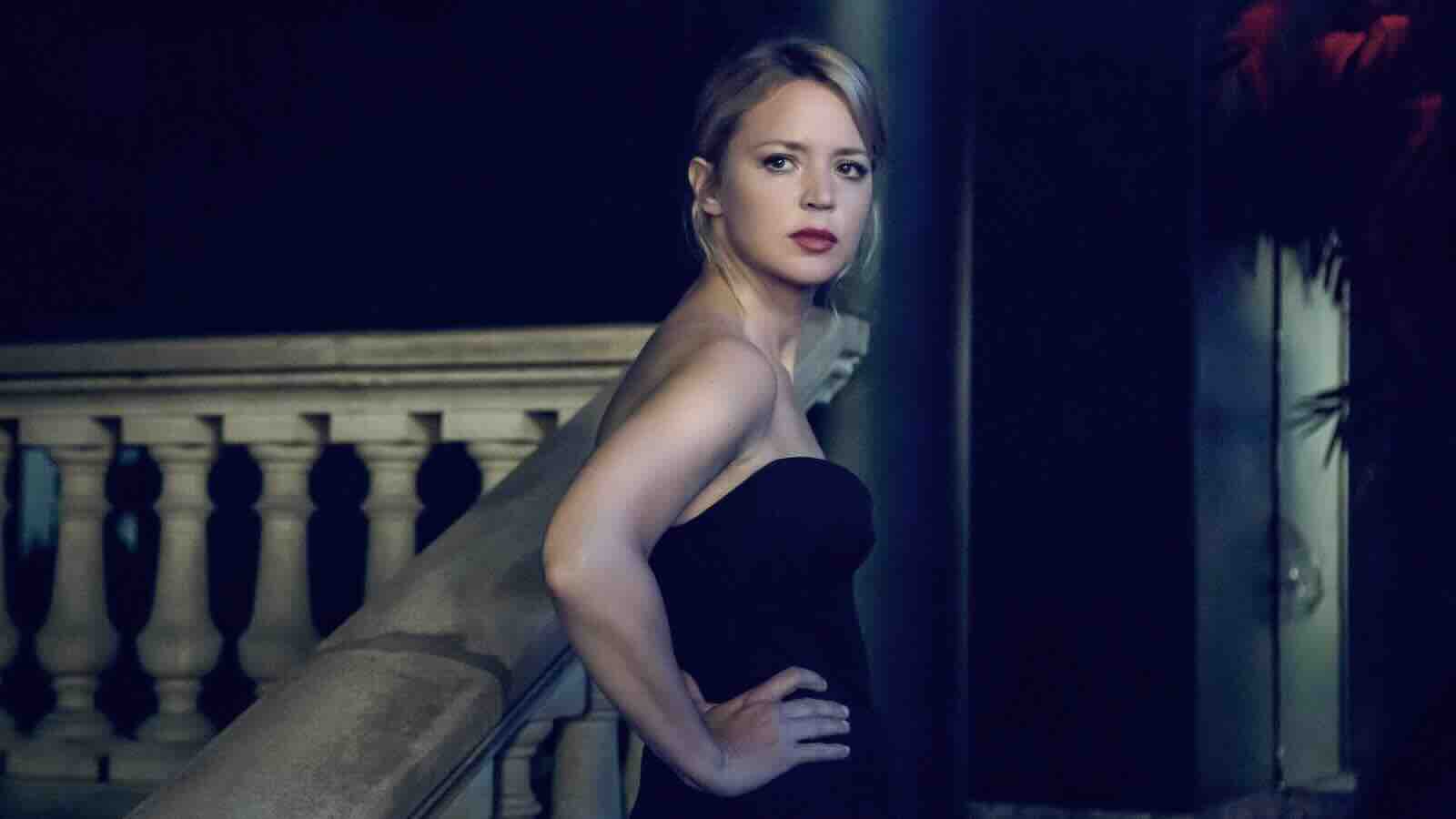
Sibyl (2019)
CK: It’s interesting contrasting Marie-Lou with a character like Benedetta, who has her own kind of faith and hope. Though they’re very different, they both have their missions.
VE: What was interesting with Benedetta is sometimes I think actors are also a little bit the hostage of their own morphology, and me with my round cheeks, it’s like, “Oh, she’s sympathetic. She’s so gentle.” Verhoeven was the first time, because of the complicated female characters that he brings about, that I was trusted with a character that had a certain individual, self-serving, not to say selfish, arc where she uses God to her own for her own design, and that density of character was new to me. I didn’t think that before, but yes, maybe they share something, Marie-Lou and Benedetta. Mission, c’est ça. Yes.
CK: You first worked with Verhoeven on Elle, but how did he pitch Benedetta to you?
VE: Me, it always begins with love of cinema. I’m a huge fan of Verhoeven still. I discovered him like everybody of my generation did: Basic Instinct (1992). When I was growing up, Verhoeven’s cinema was also very meaningful because I hadn’’t read The Second Sex, I hadn’t read [Simone] de Beauvoir, but somehow through his films, a certain form of feminism was passed on to me, a feminism very much rooted in the body and the notion that sexuality is not the domain of men. That was very important for me. Later, I watched all of his movies. I’m a huge fan of Showgirls (1995). And I saw all his Dutch movies. Turkish Delight (1973) is one of my favorites.
Then when I met him, it was for a small part in Elle, and I didn’t know that he was writing something for me after… For Benedetta, I remember he was speaking English, and I didn’t understand everything. Then he said, “There are a lot of sex scenes…” “Okay for me.” “And with girls.” “Okay for me.” “And there is also a dildo.” “What does it mean…dildo, dildo?” I didn’t understand dildo. [Laughs] I said, “Okay, no problem.” If I’m a big fan of Showgirls, sure, okay.
CK: Benedetta is a fascinating movie because there are very real thoughts about faith and how your character is operating in the world, but there is comedy as well.
VE: Yes. There’s something burlesque. I like to be on the border with something ridiculous.
CK: I wanted to talk about your collaborations with Justine Triet, another person who makes a lot of feminist films. In Sybil and In Bed with Victoria, these are women who have power, though it takes them a minute to figure themselves out. I don’t like to say they are “complicated” but they are women with a lot of contradictions.
VE: Complex is a great word. In French, complex is complex. It’s not just one thing. It’s a lot of things.

Benedetta (2021)
CK: We don’t see those depictions so often. I was curious about how you started working with Triet. What attracted you to her perspective?
VE: Justine is something very special for me, because at the beginning… You know, I wanted to make movies. It was difficult, of course. I was afraid. I made television [show] after television [show], I made a lot of comedies, and Justine Triet is no snob at all, and was interested in meeting me. She proposed the movie to me. We were from different horizons, but when we met, lightning struck. In understanding my own trajectory, there’s Justine and then Hamaguchi.
There’s a direct link. Both experiences modified something in my internal experience of acting, my internal experience of creation, and the creative process at large. Yes, I got more dramatic roles after these films, but more importantly, something shifted in my understanding of what a relationship to a director could be, and what it could mean to do something together, and that really started with Justine.
CK: Is that a relationship of trust? Is it a collaboration? What do you think makes you feel like you want to continue to work with directors again and again?
VE: What’s at stake in that relationship, yes, it’s trust. It is about a certain abandon, and by abandon I mean a kind of submission, and giving oneself over to the process. Of course, that entails a trust in the gaze that’s being extended out to you. But I want to speak about it in even perhaps more mysterious terms. Where is this energy coming from? What happens is that in a certain encounter a creative energy is dispensed—which brings us back to Hamaguchi’s film, and this question of relation and chance encounter.
What happens in a moment that I need a director, and that something in the creative power between us allows me to go there? Working with Justine opened that space up for me, opened up what I thought was possible in a collaboration, and in some ways sent me on my way to look for that again, for that symbiotic relationship with other directors. I think I’ve been looking for it in every collaboration since.

Share:
Recommended
- Virginie Efira
 An interview with the daring and in-demand international actress.
- Sho Miyake: The Young Master
 Why the director is, in the eyes of Ryûsuke Hamaguchi, the young master.
- The Woman in the Window
 On Fritz Lang’s slippery noir about the power of images and dreams in the American police state.