
Essay
The Making Of The Beaver Trilogy, Or How Gary Got His Groove Back
The story behind Trent Harris’s tragicomic cult favorite triptych, starring a young Sean Penn and Crispin Glover.
Share:
Over the past decade, numerous campaigns have sought to shed light on bad behavior in the arts. New and concerted efforts have been made to finally flip over every rock, exposing the rotten, exploitative underbelly of the entertainment industry to the world. Archetypal monsters like the supervillain sex freak actor, the insult (and projectile) launching studio executive, the geopolitically nefarious, blood money–flaunting financier and the emotionally abusive director have been sensationalized, to the point that they’re now basically synonymous with “film production” as a whole. Phrases like “humiliation ritual” have been tossed around to describe particularly dubious on-set practices. Sounding the alarm on how the sausage is made has, for the most part, been a public service. Everyone should be treated with dignity in the workplace, especially when one’s job involves being vulnerable. How can performers do their best work if external forces collude to make life a living hell? What type of sicko would argue against that?
Ensuring that the cast and crew are comfortable to bring their A game should be a top priority for any director. That said, everyone also deserves the right to completely humiliate themselves if they so desire. This is particularly true considering that any public offering of creativity is always an embarrassment to some degree. Any performer who claims to not feel a shred of horror or shame while bearing their soul to an audience is simply lying. All artistic expression is a “humiliation ritual,” and the more embarrassment one feels over what they’ve done, the higher the chances that they’ve actually knocked it out of the park. That jolt of hardwired panic often means they’ve attempted something daring or unexpected, maybe even avant-garde! Unfortunately, it can also serve as a red flag, warning that objective, painful failure is incoming.
How to navigate creative output in relation to embarrassment can be a sophisticated negotiation. The Heaven’s Gate (1980) filmmaker, Michael Cimino, in his later years, dedicated much of his energy to churning out novels instead of movies. He’d write them in English, then have them painstakingly translated into French as a hack to avoid reading any potentially hostile criticism. He explained, “I didn’t want to publish them in English ’cause I loved the characters too much and I didn’t want to subject them to the American critics who were not exactly favorable toward my work… I didn’t want them brutalized unnecessarily.” Cimino’s plan was to stay one step ahead of the speculative firing squad. When faced with the same impulse to protect his work, the notoriously provocative director and photographer Larry Clark interpreted his insecurity as a call to action. “When I made my books I’d get to a point where I felt I really didn’t want anyone to see them; that’s when I knew they were ready… [When] I said to myself, I can’t show this. It’s too embarrassing. And that’s when I thought, I guess the show’s ready.” Nearly everyone experiences that form of dread at some point, and the variety of methods for tackling it are vast.
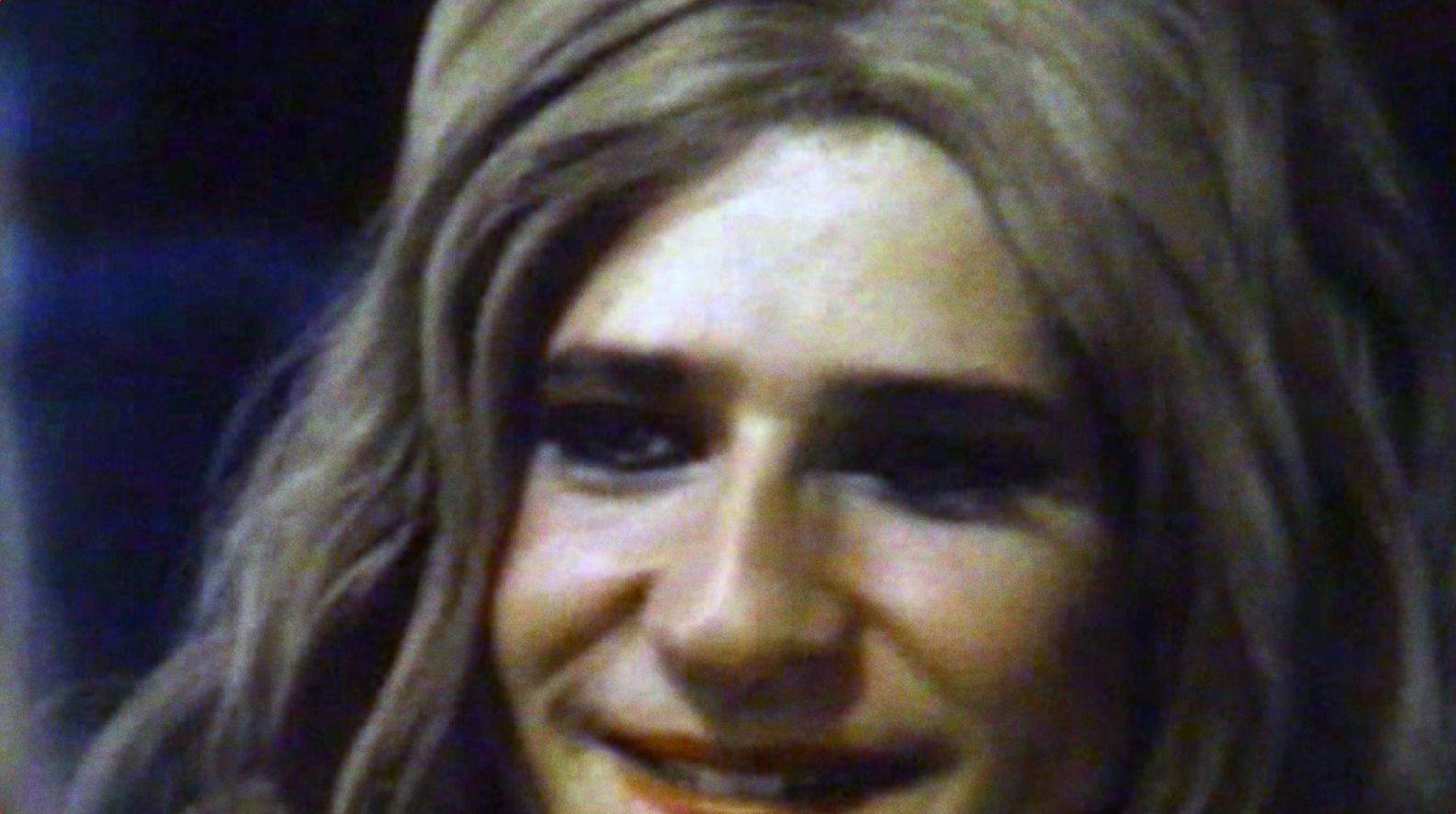
One of the most unique case studies in questions of both artistic ego and the ethics of film production is The Beaver Trilogy (2000). It all started when, in 1979, a 21-year-old Trent Harris was working at KUTV, a local television station in Salt Lake City, Utah, directing segments for a quirky, personality-based documentary series called Extra. As legend goes, he stepped out from his office one day to test a new video camera, when he spotted a young man sporting a fluffy strawberry blonde Trump-like coif, elephant bell-bottom jeans, and a colorful long-sleeved polo shirt with an exposed gold chain who was loitering around the parking lot, conspicuously snapping photos of the station’s Channel 2 News helicopter.
Upon seeing the rolling camera, the kid, credited onscreen as Groovin’ Gary, rushed over to Harris, giggled nervously and announced his knack for celebrity impersonations. Lowering his voice to a growl to sound like John Wayne, he awkwardly garbled, “Here, Mom, here’s John Wayne. Yo. Well, I’ll tell ya something out there in TV land…” before trailing off. It was not a good impersonation at all. It was terrible, even. He proceeded to do Sylvester Stallone and Barry Manilow. As rough as the jokes were, it was impossible for Harris not to be lured in by Gary’s pleas for attention. “I love impersonating and, by gosh, if I made the tube I’d just thank you so much.”
In the original footage, Harris trails the peculiar young man back to his car, which is covered in ornate window etchings of Farrah Fawcett and Olivia Newton John, and barely starts when he turns the key. He reveals that he’s from a small town called Beaver and offers to notify Channel 2 of any newsworthy happenings there in the future. Unsurprisingly, Gary mailed Harris a letter immediately after, imploring him to come film a local talent show that he’d organized (seemingly just for them), “Please, Trent. I’m begging.” He said he would be performing as “Olivia Newton Dawn,” and that he’d been watching episodes of Mister Rogers’ Neighborhood and Sesame Street “to calm down” in anticipation of their response. Harris and a co-worker didn’t think twice, grabbed their gear and headed on down. The idea of passing up a trainwreck of this magnitude was not an option.

The Beaver Trilogy (2000)
The crew pulled up to a mortuary in Beaver where Gary was reclining in a chair, transforming into his alter ego, with the help of a makeup artist (the local mortician) and a long blonde wig. Speaking to the camera, Gary offers his signature nervous laugh and announces, “I still am a man. I’m doing outrageous things, but I enjoy being a guy. I really do.” He adds, “I must be a little off, but I enjoy making people laugh. That’s the main thing. I take my impersonations seriously, but I know if people see me dressed up like Olivia Newton John I’m gonna get a smile whether I do it serious or not… It’s fun to dress up and it kind of helps you perform better when you’re in makeup.” He pauses. “I have a hard time expressing myself. Maybe I’m just nervous.”
As captured by Channel 2, the talent show is a pretty rinky-dink affair in a suburban high school auditorium. The opening acts are all quintessentially dorky 1970s students performing endearingly ramshackle musical theater numbers and cornball vaudeville routines. It’s all lighthearted fun. That is, until it’s time for the main event. Gary, as “Olivia Newton Dawn,” struts out on stage in full regalia, including thigh-high boots, long hair, red lipstick, a leather jacket, and a silk scarf. After he’s introduced to the crowd by his new stage moniker, he stands there for a beat. It’s a moment of intense drama and emotion. It’s hard not to be in his corner. The music kicks in and Gary begins singing “Please Don’t Keep Me Waiting” by Olivia Newton John. He doesn’t exactly deliver perfect pitch to the catchy 1978 disco hit, but what he lacks in craft he makes up for in attitude, serving up an impassioned and full-force appeal, crooning in falsetto, “Please don’t keep me waiting, I can’t take this kind of pain. Take me back in your arms once again,” to the dumbfounded, mostly empty room. The number ends when a guy in a trench coat and old-man mask runs on stage, picking Gary up and carrying him off in his arms. Gary reemerges, dressed in a red and blue–striped rugby shirt, and goes directly into a Manilow number, “New York City Rhythm.” It’s a pretty harsh rendition, but done in a humorous accent with off-kilter bravado. After the show, he waves goodbye to the crew and thanks them for coming.
This segment, known as The Beaver Kid, never aired on KUTV, and it would take 21 years for the full, harrowing story behind it to come out. Harris alluded to what happened in an interview on NPR’s This American Life in 2002: when the host pressed him about his relationship with Groovin’ Gary, Harris admitted that things became strained after the talent show and Gary, whose real name was Richard LaVon Griffiths, desperately asked him not to air it (the implication being he didn’t want to be potentially seen as gay) while remaining adamant it was all “just for fun.”
In a 2015 documentary by Brad Besser called The Beaver Trilogy Part IV, the story comes further into focus. In it, an Extra producer explains, “I just thought it went too far and exposed too much.” Harris recalls how he realized he’d left a mic in Beaver and called Griffiths’s home about coming to retrieve it. Griffiths’s mother answered, and informed Harris that her son was in the hospital because he had shot himself. Following the performance, he had fallen into a serious depression. Griffiths survived, but he barely discussed the show subsequent to that. His impersonation aspirations quickly faded and he became withdrawn, erratic, and much more distant after the incident. In heartbreaking interviews recorded with his three sisters and a nephew, all allude to his resentment over the segment. “Oh it was terrible. I mean, it was a terrible thing,” Harris laments.
Following these revelations, Harris found himself in that classic bind faced by many artists. He had made something incredible, yet wasn’t comfortable putting The Beaver Kid out in the world. He knew if he released the segment there could be serious repercussions, and he also had personal, ethical concerns with what had happened to Griffiths. But had he even done anything wrong? It was Griffiths, in fact, who had approached him in the first place and encouraged them to document the drag routine.
Still, it’s never a good look when things go so far south on a project that the star pre-emptively shuns the work and attempts suicide over it. While this is an extreme and brutal example, it is reflective of the harsh ambiguities and tough decisions that are involved in all productions. Filmmaking is about trust. The actors need to trust the director, and vice-versa. The screenwriter needs to trust that his words will be done justice. The financiers need to trust that their money is being used appropriately, and the director needs to trust that the producers won’t stifle the vision with too many constraints. It’s all a big house of cards. And one thing that is certain: no matter how many storyboards, look books, readings, etc., there are, the final product will never be exactly what was on the page, or a perfect manifestation of what was pitched. Knowing that the final work will not be what everyone expected is where the fear creeps in. “Did I fuck this up? Did I betray the trust and enthusiasm of the people I collaborated with? Will people hate it or, worse, find it so problematic that severe consequences are inflicted? Will I ever work again?” These are all completely normal and fair questions that swirl around a creator’s head before their work is shared with the world.
Of course, not everyone will, like Cimino, have their work translated into a language that they don’t actually speak in order to avoid seeing the reactions, but the lengths most filmmakers will go to dodge potential uneasiness are breathtaking. One tried and true ego-preservational technique is to maintain a rapid-fire output. This way, if anyone objects to the material the creator can say, “Oh, that piece? I’ve already moved on from that. Wait ’til you see my next film. That one is much more representative of where I’m at now.” (Joe Swanberg and Nathan Silver had this method mastered in the 2010s.) The reverse gambit is to simply keep work locked up in a vault, protected from unworthy eyes. Will we ever get to see Promises Written in Water (2010)? Fight Harm (1999)? The Day the Clown Cried (1972)? Another tactic is to make something so esoteric that if people respond poorly, the creator can say, “Here, read this long-winded, out-of-print, theoretical tome and get back to me. Maybe then you’ll grasp it.” Or they release work under a pseudonym and let that persona take any heat. These days, a popular coping mechanism for artistic insecurity is to use identity as an armor, where any critique is framed by the creator as an attack on an entire group, and any trace of personal discomfort redirected into righteous anger. The simple fact is that there will always be a clash between expectations, public opinion, and reality. Sadly, there’s no way around it; it’s always painful and tumultuous.
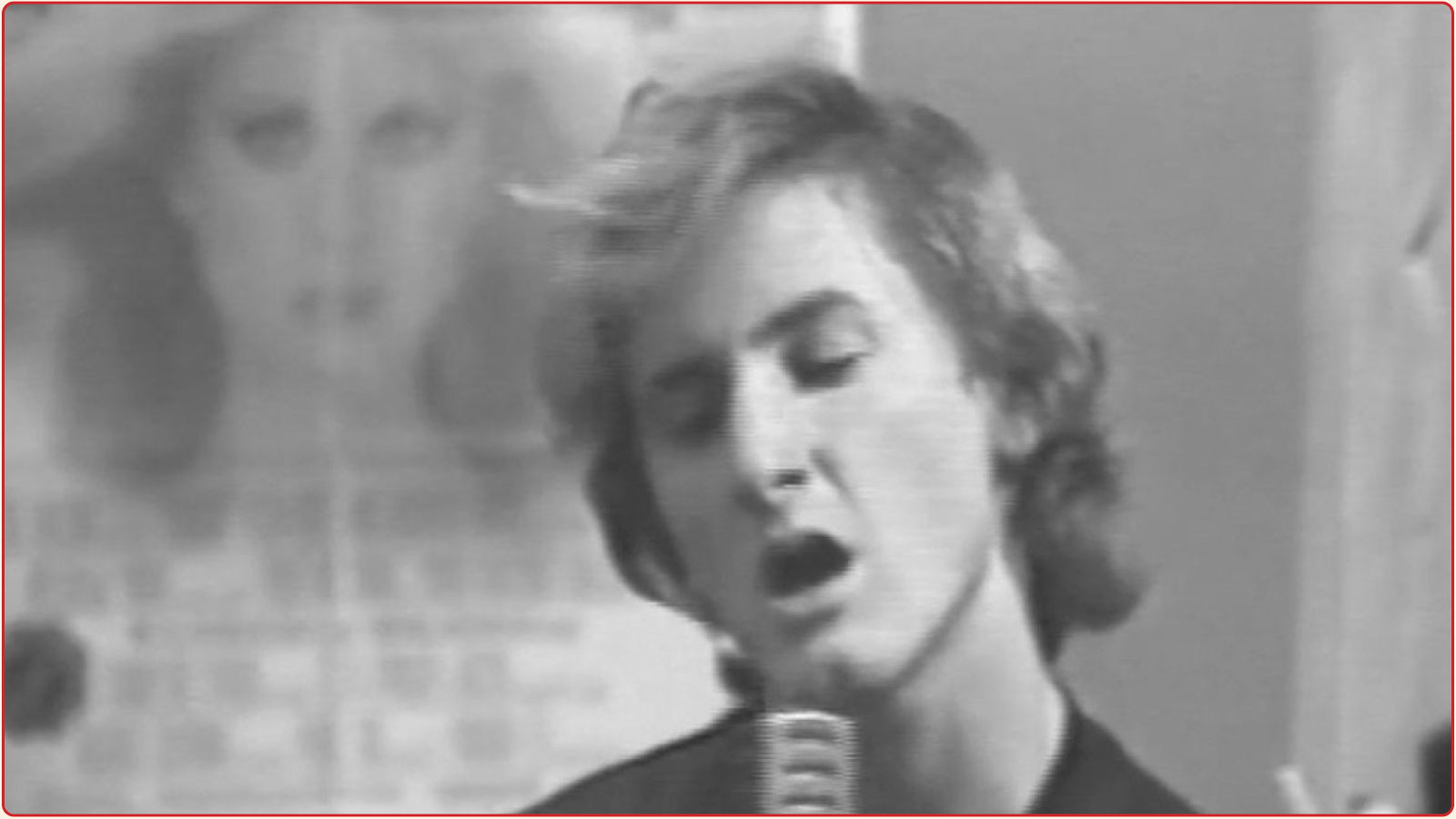
Harris himself chose to deal with the discomfort of the Beaver debacle by fleeing Utah for Los Angeles to attend the American Film Institute for grad school. In his new surroundings, though, he kept thinking about his unaired profile, as he explains: “There’s a lot more going on here. He’s not a joke. He’s an interesting character. I wasn’t sure whether they were picking up on the pathos of the whole thing. And that’s kind of what inspired me. I gotta do this movie again, so let’s make it perfectly clear.” So, Harris embarked on a narrative version of the original segment, casting a then-unknown young actor named Sean Penn to play Groovin’ Gary, here renamed Groovin’ Larry. (This casting was a remarkable coup, coming right before the 1982 release of Fast Times at Ridgemont High, Penn’s mainstream breakthrough.)
The Beaver Trilogy (2000)
The Beaver Kid 2 (1981) was shot and edited in a mere five days, in black and white, on a lo-fi consumer home video camera for a budget of around $100. It’s incredibly similar to the original, though Harris adds a more critical look at his own character’s amusement with his subject. He also puts Larry through more hardship. This time, after the “Please Don’t Keep Me Waiting” routine, he exits the stage jubilant only to be confronted by the MC who gives him a harsh review: “You made a fool out of yourself out there. Those TV people aren’t your friends. When people see that on television, they’re not going to call. They’re gonna call you a fruit.” This assessment plunges Larry into an episode. Larry calls the Harris character, begging him to not air the footage. His request is denied. Larry deals with the horror by putting a shotgun in his mouth. He doesn’t pull the trigger, though, because he receives a call that distracts him right at the last second. It’s from a friend saying that she thought his performance at the talent show was “really funny,” and offers him a gig as Olivia at an upcoming party. Harris decided against screening The Beaver Kid 2. “After it was finished,” he said, “I still didn’t feel right about it. So I decided I’d better do it again.”
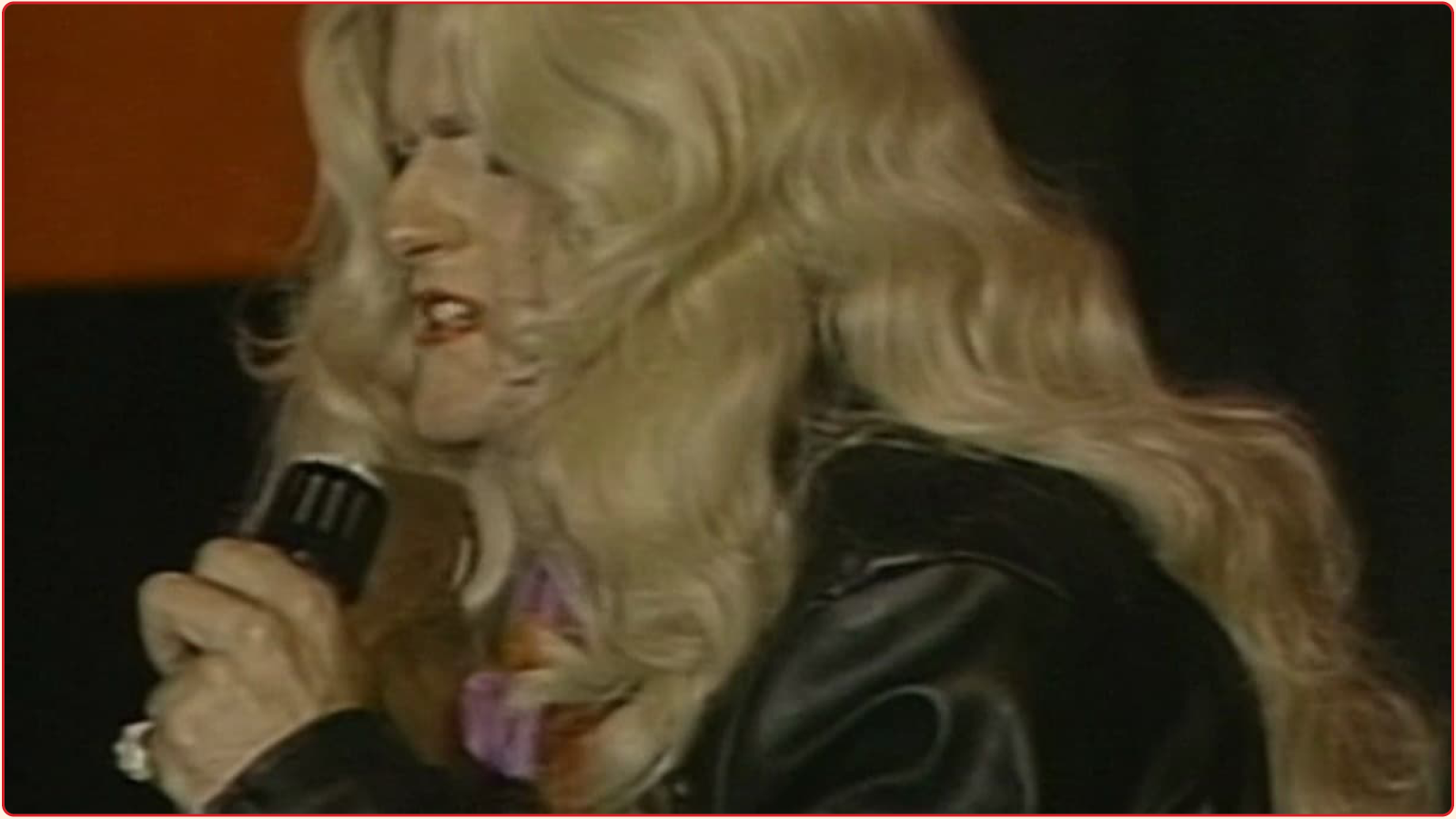
Three years later, for his thesis film, Harris gave the tale another spin with The Orkly Kid (1984). With a bigger budget of $50,000 and a new lead, a pre-fame Crispin Glover, it was time for another stab at Groovin’ Gary, or Groovin’ Larry as he was again called here. Beaver was now re-envisioned as the made-up town of Orkly. While this version had more fictional elements, Harris felt he was more honestly engaging with the character: “It was partly my own guilt because maybe I didn’t understand him so well the first time. There’s things beneath the surface of this character that make him rich and wonderful, and ultimately I wanted people to like him like I liked him. And that’s why I began to remake this movie over and over and over again just to try to get to that point. To try to get it right.”
Glover gives an amazing performance in the film, hinting at the singular and remarkable career he would come to have. Harris also beefs up the embarrassment quota even more than in the previous short. In one of the new, funnier, hair-raising scenes, Larry is in a bathroom stall, getting dolled up as “Olivia Newtron Bomb,” as he calls her here. A burly yokel enters the restroom needing to take a dump. Larry is scared to reveal his look, but he eventually does in a bombastic, self-assured, stroll right out of the stall. This version is longer and more polished than the previous two. There’s more hostility from the townies, more betrayal from the TV crew and a happier ending where Larry drives off into the sunset, headed for LA, rocking out to “Please Don’t Keep Me Waiting.”
The artistic success of The Orkly Kid at AFI, and the newfound celebrity of its star, courtesy of Back to the Future (1985), allowed Harris to go on to direct his sole Hollywood feature, Rubin & Ed (1991). The oddball comedy stars Crispin Glover as Ruben, an eccentric loner looking for the right spot to bury his dead cat, and Howard Hesseman as Ed, a divorced, scheming businessman along for the ride. The film was a complete bomb and swiftly ended Harris’s industry aspirations (despite becoming a minor cult classic on VHS years later). Harris found himself back in Salt Lake City, teaching at a local college and pursuing smaller, stranger work. He made a campy Ed Wood homage, Plan 10 From Outer Space in 1995, and started traveling the world, as a one-man crew, producing experimental documentary content for his YouTube channel while also raising awareness about active landmines in Cambodia. At the same time, he was still faced with the ethical conundrum of what to do with his three Beaver shorts. “It was a mixture of things,” he explained:
I’d feel guilty that I exploited the guy, and then I’d think about that. “No, I didn’t exploit him, he was exploiting me, actually, in a way.” I started to think that, too. So I got over the guilt thing. But to take it to any step beyond that, I would have felt guilty. Because then it becomes exploitive. And that’s the trouble I was having when I kept remaking the damn thing. I’m making the thing, but if I show it, it becomes exploitive. So I didn’t show it, it was ridiculous.
In the same way that Griffiths feared the footage getting out and embarrassing him, Harris feared showing it now, as it could potentially out him as the classic director stereotype: a self-centered manipulator. Everyone was nervous and things were at a perpetual stalemate.
One day, when he was particularly broke and down in the dumps, the Utah Film & Video Center asked Harris if he had anything rare he might be interested in screening, and he decided to finally give it a go. He showed the three shorts together under the title The Secret Tapes of Trent Harris and the response was electric. It was clear it was time to cross the self-imposed ethical line in the sand and roll the dice. Sundance took the bait and it was off to the races. The Beaver Kid, The Beaver Kid 2 and The Orkly Kid were now The Beaver Trilogy. With great effort, he tracked down Griffiths and invited him to the premiere, unsure of what his reaction would be.
The Beaver Trilogy debuted at the Sundance Film Festival in 2000. Groovin’ Gary himself finally saw his infamous performance on the big screen, along with the two fictional variations. The audience went crazy and Griffiths was the toast of the fest. After all the years spent in pain and seclusion, it turned out that people loved both his musical numbers and him as a character. Reflecting on the premiere, he mused, “As far as Park City goes, people made me feel real special. But I can’t see what other people see, because it’s me. I still think, ‘Man, was it really good or was it really bad?’ I’m still trying to shuttle that around in my mind. Do people really like this or are they making fun?”
Laughter comes in many forms. It can be the highest compliment for a comedian or the worst insult for a dramatist. It can also be the source of heated online discourse, like last summer when a Chicago audience laughed “inappropriately” at a deranged scene of domestic abuse in Blue Velvet (1986). It can also be ambiguous and hard to parse. It’s understandable that Griffiths grappled with it for so many years.
Back when I was in grad school at NYU, one of the first speakers to guest lecture our class was Philip Seymour Hoffman. He recounted a story about doing the scene in Happiness (1998) where he masturbates in a pair of tighty-whities while making an explicit prank call. He described having some reservations and asking director Todd Solondz, “Do you think the audience will laugh at me if I do it this way?” To which Solondz responded something along the lines of, “Yes, they will, because it’s uncomfortable. But they will also emotionally connect with your desperation and understand.” Today, many consider that film one of the best of the ’90s. (Hoffman, who made a career out of tackling emotionally naked roles, could have played the perfect Groovin’ Gary.)
Tragically, soon after The Beaver Trilogy’s premiere at Sundance, Griffiths died from a massive heart attack at age 50. His semi-bewildered reaction to the film’s acclaim only made him more authentic and endearing. Very few performers go through that level of self-doubt to finally achieve delayed gratification. There have been numerous studies over the years on the topic of embarrassment and many of them have concluded that people who are easily embarrassed tend to be viewed as more generous and trustworthy. I often think about this when friends and associates occasionally send me their scripts. It’s common for screenwriters to just assume their protagonists will be viewed as cool or relatable because they share the same interests or backstory as the writer. I often suggest adding a part early on where we see a vulnerable side of the character through some form of total humiliation. If done right it can anchor them as believable and worthy of empathy. It’s not surprising that as Harris sought deeper truth in each short, he ramped up the embarrassment factor.
The inimitable underground filmmaker Paul Morrissey was always an admirer and chronicler of misfits with huge personalities. Trans women, drag queens, druggies, hustlers, disgraced socialites, and assorted lovable riffraff often found a stage in his productions, where they were free to go big with their non-professional acting talents. The performances could be transcendent on a good day or completely unreleasable (and borderline criminal) on a bad one. Griffiths’s manic, outré, and desperate presence would have fit right into any of these sordid comedies. When Morrissey died a few weeks ago, at the age of 86, I rewatched a 2002 documentary on him, Autumn in Montauk, and was struck when he says, “I don’t believe in cinematic devices having meaning. I think they are window decoration… They’re useful, but they have no merit on their own… The most cinematic thing in any movie is a good line of dialogue delivered by an interesting character.” Revisiting The Beaver Trilogy, this passage hit home all the harder. All three shorts are exceptional as a result of the performances from Richard LaVon Griffiths, Sean Penn, and Crispin Glover. The formats, budgets, genres, and contexts are each noteworthy and deserving of appreciation, but, taken in toto, at the end of the day, it all works because of the charisma and pathos of its unforgettable, nuanced, and hilarious lead character, the Olivia Newton John–loving legend known as Groovin’ Gary.
The Beaver Trilogy (2000)
Share:
About the Contributor
Recommended
- Orangey, Revisited
 A video essay ode to the inimitable feline screen star.
 - Green Snake
 On Tsui Hark’s subversive reimagining of an immortal Chinese folk tale, starring Maggie Cheung as a serpent demon.
 - Travel Companions: Bahram Beyzaie & Amir Naderi
 On two defining Iranian filmmakers, and two of their most enduring works.