
[wpbb post:terms_list taxonomy=’category’ html_list=’no’ separator=’, ‘ linked=’yes’]
[wpbb post:title]
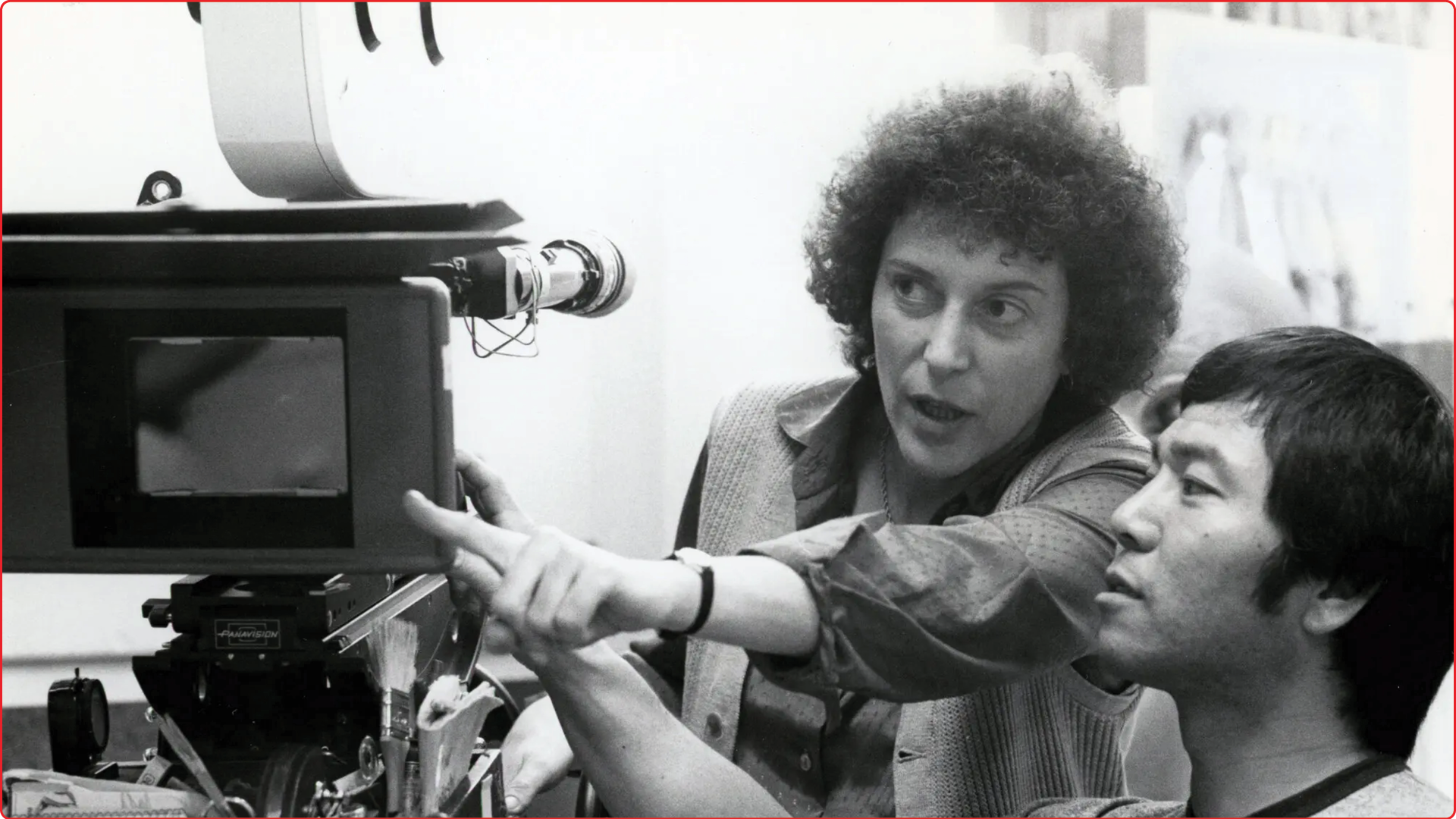
Joan Micklin Silver
[wpbb post:terms_list taxonomy=’category’ html_list=’no’ separator=’, ‘ linked=’yes’]
BY
[wpbb archive:acf type=’text’ name=’byline_author’]
On Joan Micklin Silver’s prescient 1977 drama about the decline and death of independent journalism.
Between the Lines plays 7 Ludlow beginning on April 15 as part of Metrograph Selects.
In 1967, a 32-year-old Joan Micklin Silver arrived in New York City, with three young daughters in tow. She had dreams of becoming a filmmaker, though this wasn’t the reason she’d moved from Cleveland: her husband, Ray, was expanding his real estate business. The Silvers were prosperous, and social. At a political fundraiser, Joan met a TV producer developing a little show called Sesame Street, and, through her, a producer named Linda Gottlieb, who oversaw short educational films for kids.
It was a boom era for creative, conscientious children’s entertainment: Mister Rogers’ Neighborhood was just then debuting, and Free to Be…You and Me would arrive a few years later. Gottlieb’s approach was not to make “message films”-no tidy morals to recite, as Marsha Gordon observed in Salon. Instead, the shorts that Silver wound up making with Gottlieb (such as 1972’s The Immigrant Experience, or 1974’s The Case of the Elevator Duck) were New York movies in miniature: without sugarcoating the realities of poverty or crime, they encouraged kids to take interest in their surroundings, showing how big and inviting the world could be in spite of its dangers. Silver would carry this ethos into her feature filmmaking career. Her work is never flashy or didactic, but she captures attention the way a great teacher does-by earning our trust.
For men in the 1970s, directing shorts was a reliable avenue to a directing career. The same was not true for women. Silver’s films were well received, by kids and adults alike; but she was told, bluntly and more than once, that features were expensive to make, and men didn’t trust women with money. “I got discouraged,” she said to Filmmaker Magazine, “but Ray got angry.” Her husband promised that if she could make a film for around $350,000, he would raise the funds.
Silver’s celebrated first feature, Hester Street (1975), tells the story of a Russian Jewish émigré adjusting to life on the Lower East Side in the 1890s, and enduring-to a point-her impatient, assimilated husband. Silver, assuming it was the only feature-length film she’d ever get to make, wanted to honor her parents, who’d come to America in the early 1900s. US distributors called it an “ethnic oddity.” But it got into Cannes, where the Silvers made enough in foreign rights sales to release it themselves.

Hester Street (1975)
At Cannes, Joan was interviewed by Fred Barron, a writer for a Boston alt-weekly called the Real Paper. Six months later, when Hester Street opened in Boston, the two reconnected, and Barron passed her a screenplay, drawn from his experiences at the Real Paper and the Boston Phoenix. Silver, who’d written for the Village Voice, liked it enough to buy it for $8,000. It would become her second feature-length film-and because the studios passed, yet again, the Silvers financed it with proceeds from her first.
Between the Lines, released in 1977, is set at the Back Bay Mainline, a fictional weekly with roots in 1960s rebellion. The outlet might soon be sold to a newspaper mogul; staff members agree to walk out if it happens. Though their radicalism has long subsided, they still loathe the idea of working for a “communications empire.” It’s a premise that feels timely today-and has, pretty much, since the movie debuted. The Village Voice was sold to Rupert Murdoch that same year. From there, it passed hands from media mogul to pet food scion to investment group; merged with another chain of alt-weeklies; hemorrhaged staff, and folded, eventually, in 2018. (Two years later it was resurrected, sort of, by the same publisher blamed for gutting the LA Weekly.)
This is the story of media in the late 20th, and early 21st century: major outlets consolidate; smaller ones scramble for solvency, careen from one owner to the next, or get bought up and bled of remaining value and personnel. Newer indie outlets may fund themselves through a shifting range of methods: donors, subscribers, wealthy patrons. (Until recently, I worked for a publication funded by Snap Inc.) But gone are the days when you could run a paper on classified ads and the good will of local retailers.
Between the Lines takes place, it would seem, at the end of a golden era. The late 1960s saw the genesis of hundreds of underground newspapers, forming the nervous system of a greater youth movement-which, by the 1970s, had largely tapered off. (John McMillian gives a full account in his book Smoking Typewriters.) Surviving papers joined a new generation of “alternative” outlets-inspired by the underground but eager to distinguish themselves, and to remain solvent.
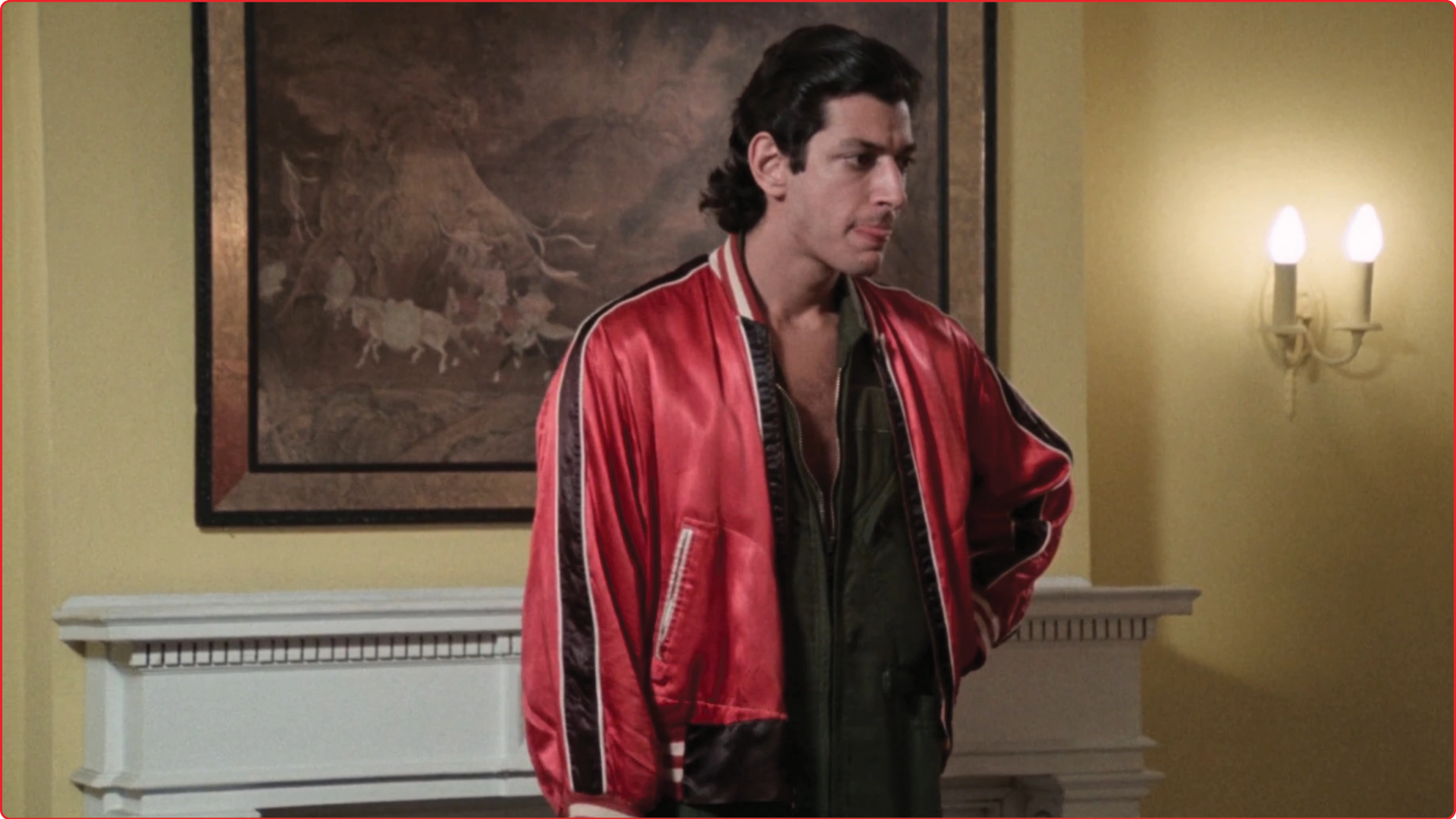
Between the Lines (1977)
You might expect the film to feel elegiac: a tragic David-and-Goliath tale, falling to Goliath. Movies about underdogs tend to valorize the underdog, and movies about journalists (from 1952’s Park Row, and 1976’s All the President’s Men, to 2015’s Spotlight) tend to valorize journalists. Over the past few years especially, anti-capitalist critique has become a rote convention of much mainstream entertainment. But Silver’s approach is more measured than that, and Barron’s perspective more clear-eyed.
Among Barron’s former colleagues, reactions to the film were mixed. Those who’d already departed their desks loved it; those who’d stayed generally didn’t. “They thought I sold out the left,” Barron said, in one interview with Michael Phillips. “‘Why didn’t you show our idealism?’ That was the complaint.” As Phillips points out, the film does portray its characters’ idealism, but in a phase of decline. Some at the Back Bay Mainline do still care. They’re just outnumbered by those who no longer even pretend.
Amongst them is Max, the Mainline‘s music critic (Jeff Goldblum, in a standout early role), a bon vivant who could use a raise-he subsides on $75 a week, plus the extra he makes selling promo LPs-but seems content to milk his local celebrity. Then there’s Harry (John Heard), the paper’s star reporter, once awarded for uncovering corruption at Boston nursing homes. But that was years ago: the nursing homes are still corrupt, and Harry, disillusioned, is sleepwalking through his job, pandering to the new yuppie readership with features on “dating bar fashions.” There’s nothing to stop him from pursuing more hard-hitting, investigative work, but he’s too depressed to make an effort, and too complacent to move on.
Michael (Stephen Collins), Harry’s one-time rival, barely bothers showing up at the office anymore. A former counterculture reporter, he’s now writing a book on the death of the counterculture. (“Don’t think it died a natural death, either,” Max says. “It was done in by enemies from within.”) For Laura (Gwen Welles), Michael’s girlfriend, the paper is just a job-one of two she works to support him while he finishes his book. She constantly threatens to leave him, but never does. Abbie (Lindsay Crouse) is a talented photographer who dates Harry on and off. She’s dedicated to her work, but thinks she could do it better somewhere else.
Long-time staff members reminisce about the paper’s beginnings, but even their nostalgia feels half-hearted. Harry and Laura look over a few old photographs, stowed away in a folder on his bookshelf, but remembering the past is primarily a way to complain about the present. Harry feels sorrier for himself than for the paper, and Michael is more interested in banking on the good old days than reviving them. A couple of enthusiasts remain: David, a cub reporter with more ambition than sense (Bruno Kirby); and the warm-hearted office manager, Lynn (Jill Eikenberry). In the end, she walks out; no one follows. The buyout is a relative non-event, confirming a transformation that has already taken place.
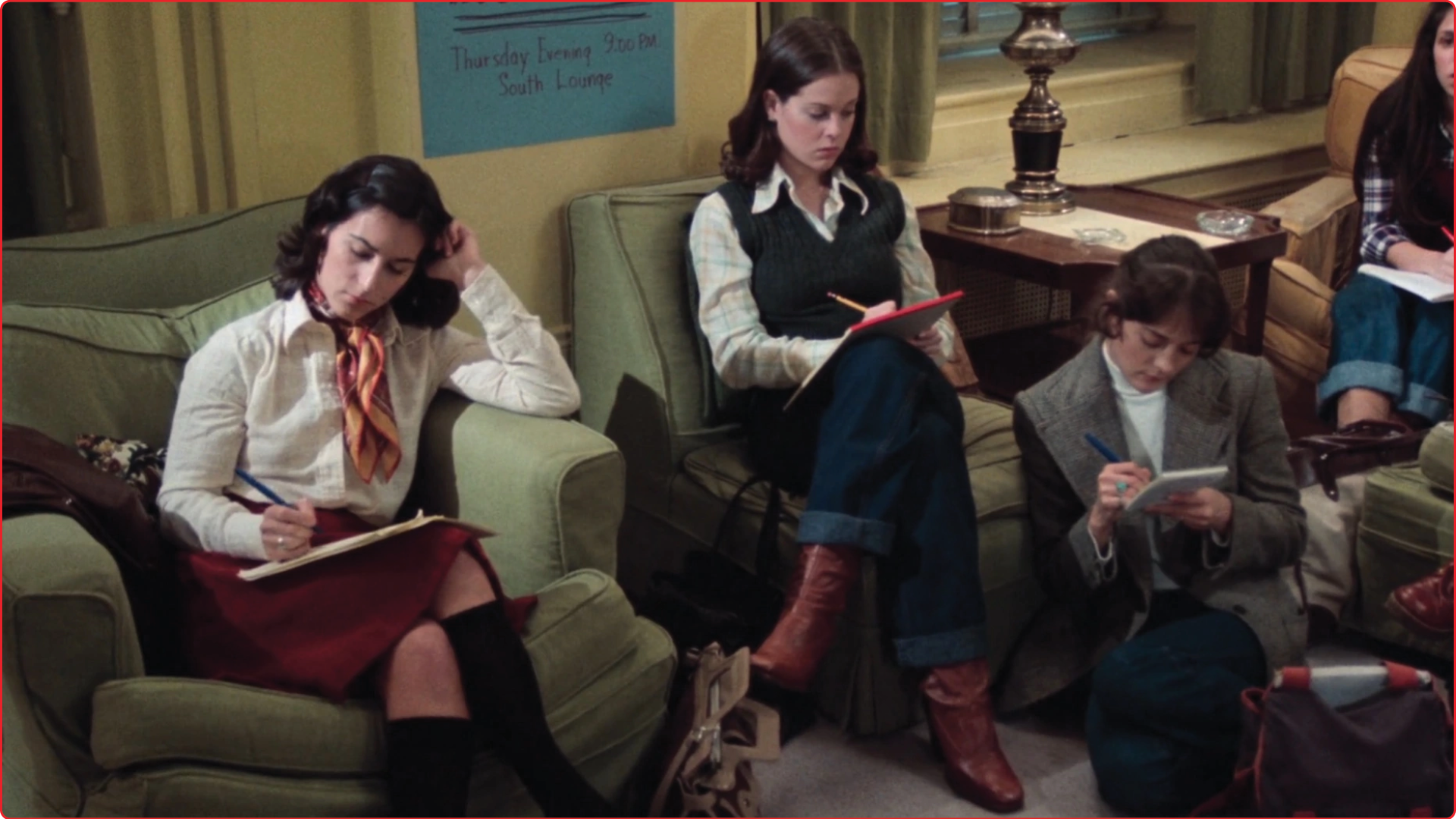
Between the Lines (1977)
Barron’s script might have come off as cynical at the time, but its perspective is broad, while the case in point is specific. The buyout is just another compromise in what may well be a long series of compromises-not all of them ruinous, or even all that compromising. Many alternative weeklies with roots in the 1960s-including the Boston Phoenix-would thrive in the ’80s and ’90s, retaining their editorial independence, hosting world-class reporters, and covering essential stories the dailies hadn’t touched. More than a lack of integrity, perhaps the Mainline‘s main problem is one of morale.
Between the Lines is not really about the end of an era, seen through a group of colleagues; it’s about a group of colleagues navigating the end of their era. The characters’ bonds are both unique, and not at all. As workplaces go, alternative media tends to be more chaotic than most-close quarters, all-nighters, budgetary troubles and crashing deadlines create a sense of “being in the trenches” with your co-workers, and some of the pomposity that implies. Staffers share another important affinity: the fact that their project exists because they believe it should. This is, in the end, what makes the rag worth reading.
The film also gets at the experience of belonging to a work family. People you haven’t chosen to spend time with, but spend all your time with, because you don’t have a choice; whom you might love or hate, but have to maneuver with and around anyway.
Thematically, Between the Lines might have seemed like a strange successor to Hester Street, but this last point is precisely what made it a perfect fit for Silver. There are no heroes or villains in her films. No character parts, either: one of the joys of Between the Lines is watching a young Jeff Goldblum inhabit Max, and himself, onscreen-keeping his own rhythm, delighting us by delighting himself, in a role that might otherwise have been merely comic relief.
Between the Lines is not really about the end of an era, seen through a group of colleagues; it’s about a group of colleagues navigating the end of their era.
Silver thrived with ensembles, but even in films with leaner casts, parallel lives drift in from the periphery. In 1988’s Crossing Delancey, a literary Manhattanite, Izzy (Amy Irving), is set up matchmaker-style with a pickle salesman from the Lower East Side (Peter Riegert). As the two circle one another, hitting the rom-com beats, Silver lingers on “piquant urban intimacies,” as Shonni Enelow writes: “the frank sex talk between two women Izzy and her friend overhear in a sauna; a teasing interaction with a scruffy bookseller on the street.” In Chilly Scenes of Winter (1979), John Heard, a government clerk from Salt Lake City, obsesses over an ex. His reveries grow more intense, and more sinister, but outsiders frequently interrupt: the ornery man who sells him his candy bars after work; the chatty woman in the hospital bed next to his mother’s.
These interjections are reminders that there are no protagonists in life; other people might strike us as strange or obnoxious, but they make as much sense to themselves as we do. Silver’s work demonstrates an equanimity that upends emotional expectations; it maintains a calm, steady heartbeat, even in moments of conflict or transgression.
That’s not to say that all of Silver’s characters are easy to like-nor that we have to, in order to care about them. In Between the Lines, it’s impossible not to observe the paper’s gender dynamics: Harry and Michael are arrogant, entitled, and frustrated with their lot; they take out these frustrations on their girlfriends, who are doing good work in their shadows. Harry excoriates Abbie for butting into his interview with an exotic dancer, even though her questions are much more thoughtful than his; Michael throws cereal at Laura who, after working a 12-hour day, has asked him to pick up dog food. Meanwhile, Lynn politely deflects the ad manager’s sexual harassment.
It’s not a political take, per se; it’s the truth-an application of perspective, as Enelow writes. If viewers felt roused to political action, so much the better. But the film’s job is not to adjudicate-it’s to look. “Somebody said to me about Between the Lines that I was too nice to the characters,” Silver recounted in a 1977 interview. “I said, ‘What do you mean?’ They said, ‘You end up liking them all, even the awful ones.’ I don’t think that’s a criticism. I think that’s pretty nice … the Jewish view is that people have the potential for good and evil and I really agree.”
For anyone who’s spent time in a scrappy newsroom, Between the Lines is full of nostalgia hits; but I also found it refreshing, forward-looking, largely because it observes its characters as they are. None of them are antiheroes with righteousness on their side, or emblems of the worst in society. They’re people, thrown together with other people. Like most of us, they have principles but don’t always act in a principled way.
Between the Lines is not a “message film.” Though there are lessons to draw from it after all. Personally, I’m tired of message movies that don’t actually say anything-I just watched a $30M horror film about the evils of capitalism; perhaps you did, too. I think I understand the impulse: the more bound up we are in immoral systems, and the harder it is to ignore their immorality, the greater the fantasy of casting it all off with a tidy critique. This can have the insidious effect of suggesting that moral work is simple, or of abstracting people to ideas.
The wisdom of Silver’s filmmaking is that people are not symbols; they don’t exist for our condemnation or instruction. Sometimes the most edifying course is to get to know them.
Alexandra Molotkow is a writer-currently of the newsletter/essay series Crush Material-and an editor who co-founded Real Life and Hazlitt magazines.

Crossing Delancey (1988)