
Essay
That Most Important Thing: Love
On the Polish auteur’s transgressive melodrama.
That Most Important Thing: Love plays at Metrograph from Saturday, February 15 as part of 15 Minutes.
Share:
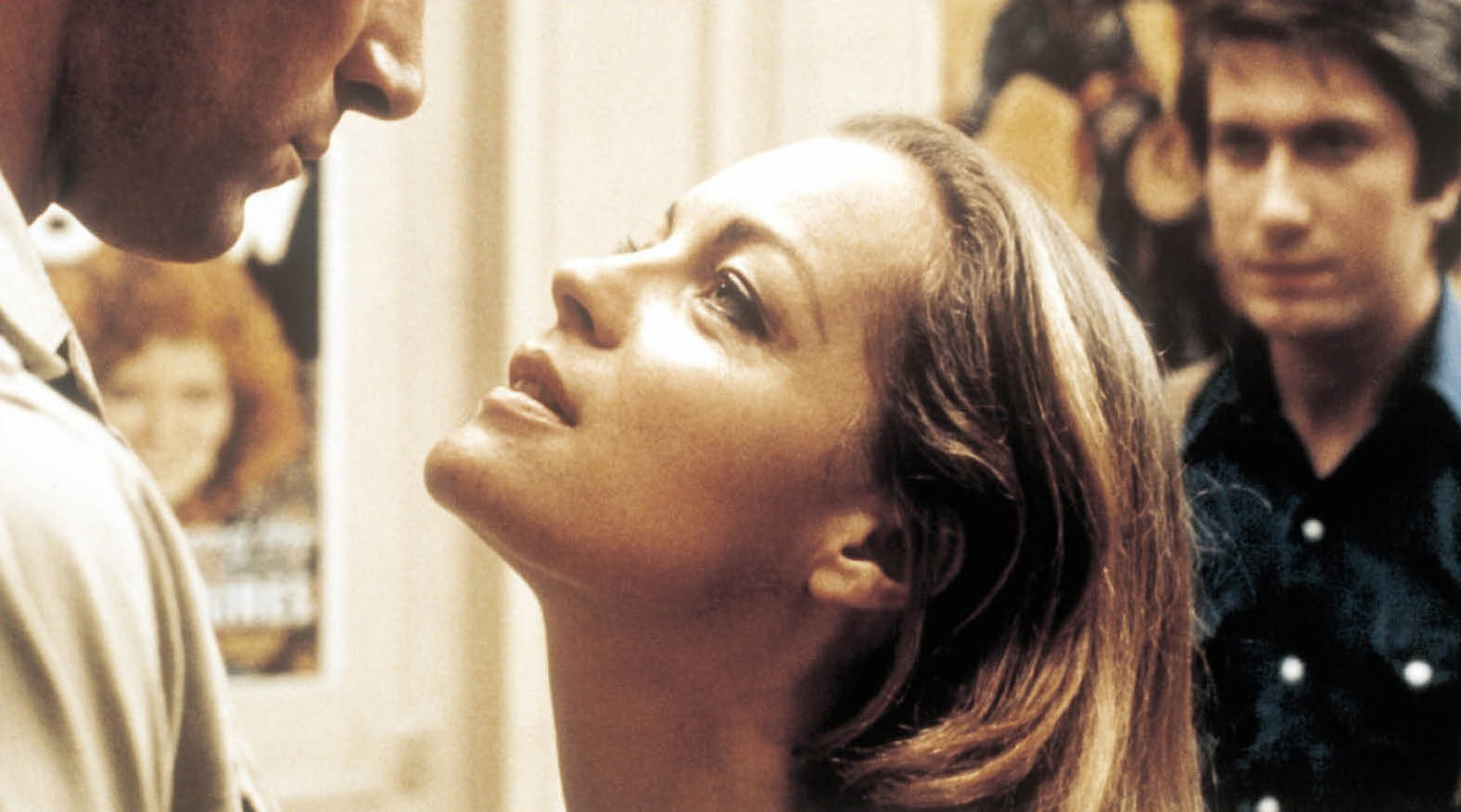
In the early 1970s, Polish director Andrzej Żuławski was driven out of his home country, largely due to the political controversy and censorship issues surrounding his first two films, The Third Part of the Night (1971) and The Devil (1972), which was banned for its critique of the government. He would end up in France, where he originally studied cinema, and ultimately made films there for much of the rest of his life. His French debut L’important c’est d’aimer (1975)—meaning “the important thing is to love,” though it is usually known by its English title That Most Important Thing: Love—marks Żuławski’s foray into melodrama, a departure from his nightmarish and surrealistic early features, which borrowed elements from horror and film noir. But That Most Important Thing: Love remains as challenging and unconventional as its predecessors, pushing the boundaries of genre and romantic tropes. Like his West German peer Rainer Werner Fassbinder, emotional excess is one of the key defining features of Żuławski’s films. Both directors often relied on manipulating the genre’s conventions to explore sexuality, repressed desires, gender roles, and difficult family relationships.
Loosely based on Christopher Frank’s novel La nuit américaine (renamed to avoid being confused with François Truffaut’s 1973 film), Żuławski’s adaptation follows the ill-fated relationship between an aimless photographer, Servais Mont (Fabio Testi), and a struggling actress, Nadine Chevalier (Romy Schneider). Though she longs for a legitimate acting career, Nadine is forced to support herself and her indolent husband Jacques (Jacques Dutronc) by appearing in cheap sexploitation films. Servais, who occasionally works as a stills photographer on porn shoots for a low-level gangster, falls in love with her at first sight, and borrows money to bankroll an avant garde production of Shakespeare’s Richard III with the guarantee that Nadine will be cast in the lead female role.
That Most Important Thing: Love hasn’t had a fraction of the attention that Żuławski’s supernatural-horror-cum-divorce-melodrama Possession (1981) has garnered, but it is a more obvious entry point for the director’s career and one of his most accessible, yet devastating films. At its heart, the film is a transgressive romance that features several of Żuławski’s favored themes: the all-consuming agonies of love; lonely protagonists who are often artists and always outsiders; and the tragedy inherent in love triangles. Despite the filmmaker’s relative inexperience at the time of shooting, his third feature includes a diverse cast of European cinema notables: Testi, already a legend of Italian crime films, and French pop icon Dutronc, both cast against type, alongside German wildman Klaus Kinski. But above all, it is a showcase for Austrian star Schneider.
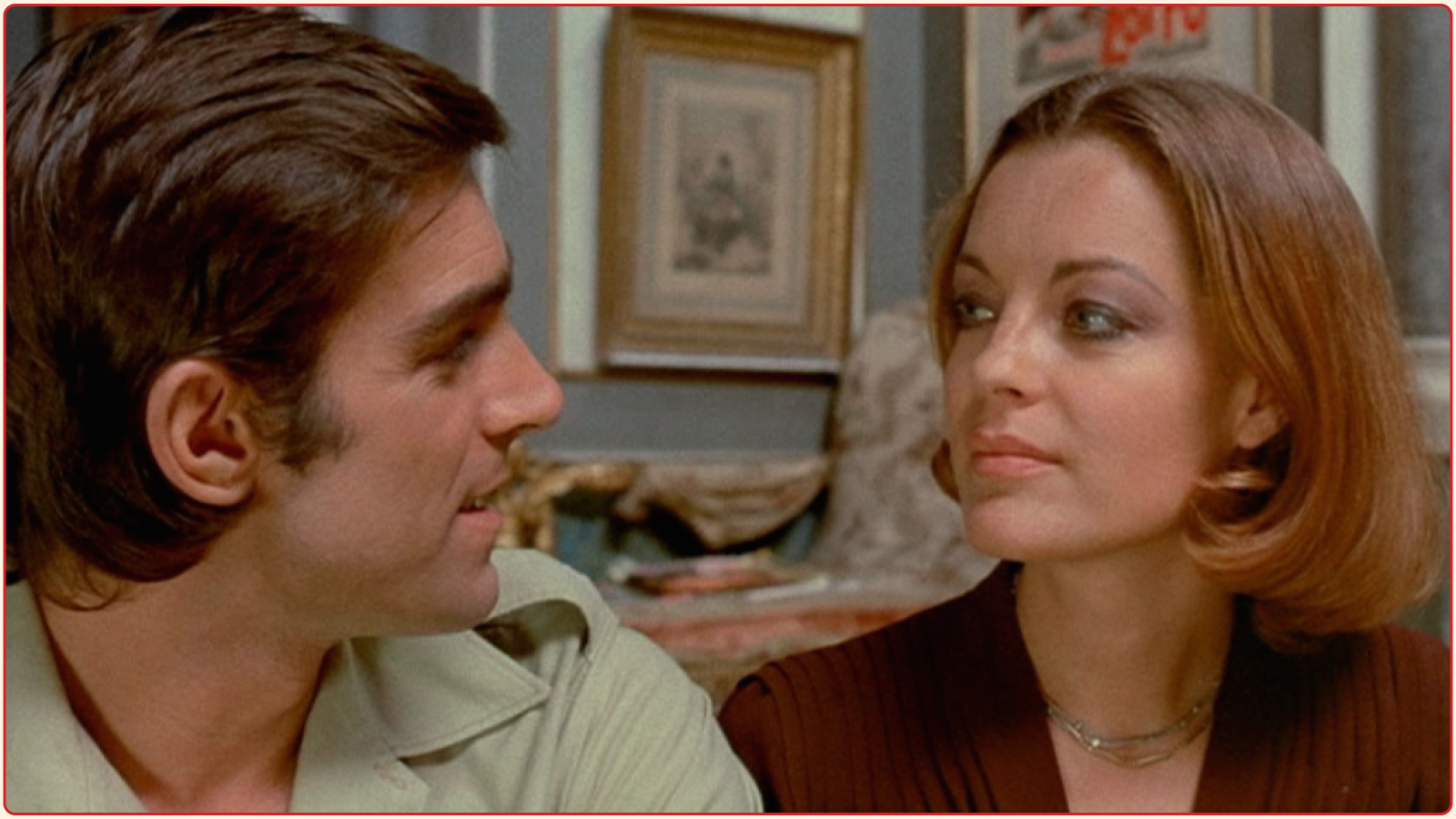
That Most Important Thing: Love (1975)
Schneider, whose performance revitalized her career and won her the inaugural César Award for Best Actress, is also somewhat cast against type. As Nadine, the focal point around which the film revolves, Schneider looks truly exhausted and on the verge of a breakdown throughout, in contrast to previous roles that emphasized her beauty and sophistication. She began working as an actress at only 15-years-old in the early 1950s. Her breakout role in the lush 1955 Austrian historical drama Sissi, about the life of Empress Elizabeth, and its two sequels—The Young Empress (1956) and Fateful Years of an Empress (1956)—made her a star. After conquering historical dramas and romances in Germany and Austria, she relocated to France to join then partner Alain Delon in the late ’50s and quickly became a cultural icon throughout Europe. Rather than settling into her comfortable celebrity, she acted on the stage and took on more challenging arthouse films, working with some of the greatest directors of the ‘60s and ‘70s: Luchino Viscont, Orson Welles, Henri-Georges Clouzot, Otto Preminger, Jules Dassin, and Claude Sautet. At the same time, Schneider became a fashion icon. The media was fixated on her public appearances with the equally beautiful Delon. When Visconti had her outfitted in Chanel for his anthology film Boccaccio ’70 (1962), Coco Chanel herself befriended Schneider and would become her mentor. Chanel called her “the ultimate incarnation of the ideal woman” and the actress is still frequently profiled by Vogue for her elegant style both on and off screen.
Żuławski’s films almost always feature complex, provocative roles for women and these collaborations have garnered several notable career best turns. He would often coax hysterical, liberating, and physically demanding performances from many of his actresses: Małgorzata Braunek, Isabelle Adjani, Valerie Kaprisky, longtime partner Sophie Marceau, and Iwona Petry. In interviews, Żuławski spoke about how he convinced actresses to physically transform themselves, to shed conventional trappings of beauty in order to depict raw emotion that often made them appear ugly: examples include Braunek’s horrible contortions in The Third Part of the Night and The Devil, Adjani’s ecstatic vomiting in Possession, and Marceau’s snotty, swollen, and tear-streaked face in Mad Love (1985), My Nights Are More Beautiful Than Your Days (1989), The Blue Note (1991), and Fidelity (2000).
While Schneider escaped many of these physical exertions, Żuławski did persuade her to abandon the thick layers of makeup that she felt preserved a more youthful appearance. Schneider was in her mid-thirties during the film’s production and, as with many of her peers, aging was a point of stress in her career. She was reluctant to discard the glamorous element of her previous roles, but an exposed, even defeated quality is central to Nadine’s character. She is shown to be painfully, utterly adrift in the world, and clinging to the foundation of her identity: beauty and sex appeal. Her occasional lack of makeup (and lighting)—revealing puffy eyes and even slight wrinkles—enhances this vulnerability, as do the scenes where she is crying, often in public. This is apparent from the film’s harrowing opening scene: Nadine is rehearsing for an exploitation film, clad in only a negligee, with a face full of heavy makeup streaked with tears. She straddles a prone actor who is meant to be a corpse (or perhaps just nearly dead). She is tasked to repeat, “I love you,” and then begin simulating sex, but she breaks down, unable to perform. She strives to be a great actress, but when she is finally given a serious role on stage in Richard III, she can barely get through rehearsals and nearly gives up out of shame. Her husband spends all his time watching old films and collecting photographs of Hollywood starlets and movie posters, which plaster their bedroom walls, but cruelly neglects her and seemingly tries to sabotage her career. The only man in the film who consistently expresses warmth and affection to her is Kinski’s volatile, queer leading actor, Karl-Heinz Zimmer, who plays Richard III to Nadine’s Lady Anne.
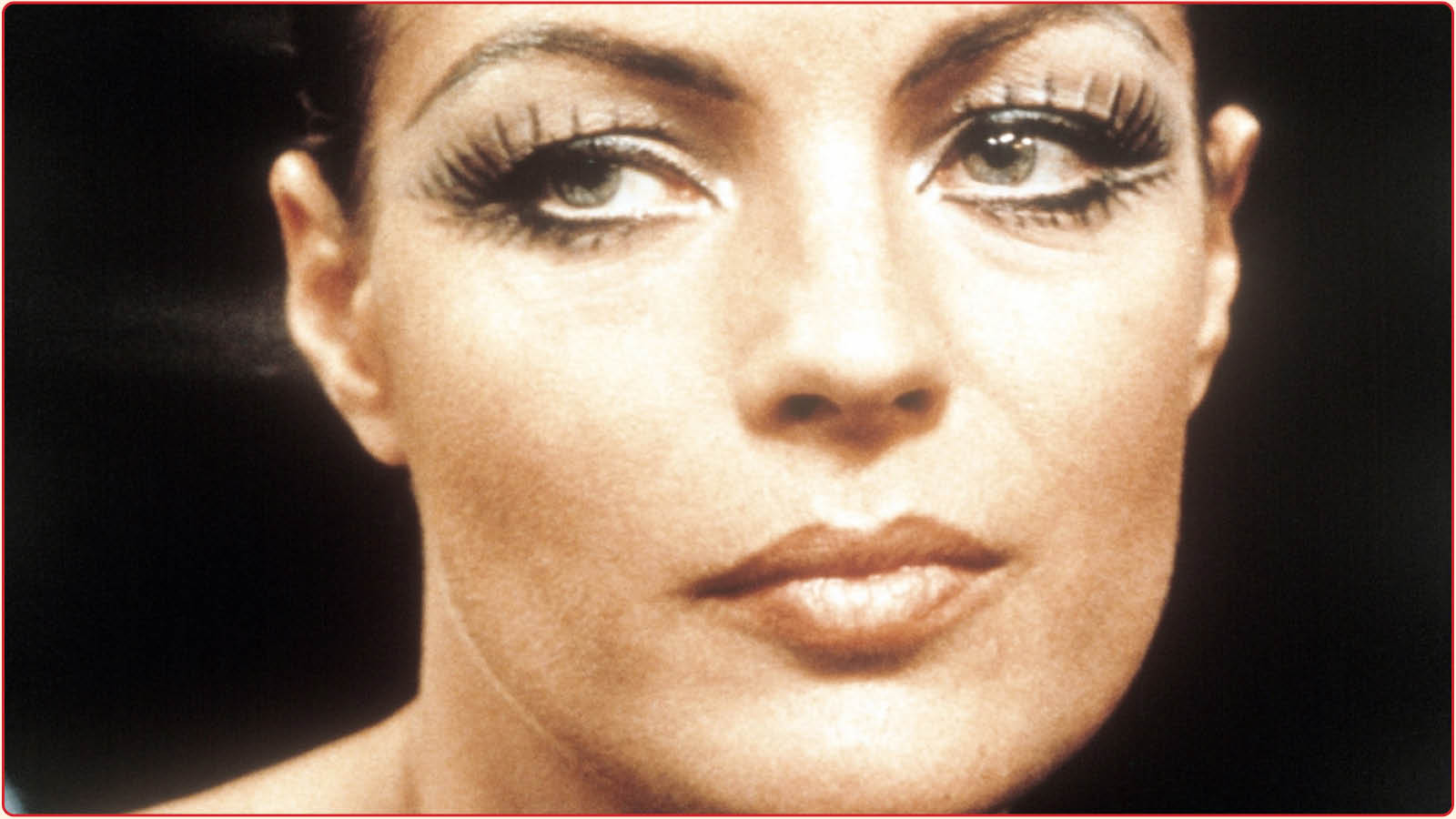
That Most Important Thing: Love (1975)
As in many of Żuławski’s films, the play-within-the-film offers important parallels. Richard quite literally woos Anne over the corpse of her husband, with Jacques being asked to lay in the prop coffin during rehearsals to elicit more emotion from Nadine. While Anne is terrified and easily manipulated, Nadine is desperately insecure and seeks affection and approval from a jealous Jacques. She seems bound to him by a combination of duty, guilt, and resignation; at their best, they have a childlike camaraderie together (and strong natural chemistry, perhaps bolstered by the brief on-set affair between Schneider and Dutronc). And while Serge supports Nadine, he does so passively, prompting the other characters to joke that he is the theater’s hovering “Phantom.”
Through Schneider and her heartwrenching portrayal of Nadine, who is unable to find happiness with either of the men in her life, Żuławski presents an almost existential struggle to comprehend love itself. Nadine is driven to despair by both Jacques and Serge, whose confrontations gradually increase as Jacques becomes crueler to her. She breaks down in a café, smashing a glass—one of Żuławski’s oft used visual tropes—while screaming to her husband that “I love you means nothing.” Żuławski frequently used cafes and restaurants to stage similarly volatile, fraught conversations between lovers throughout his films. This public exposure of emotional pain is part of what makes many of his characters appear on the verge of emotional breakdown, especially Nadine, who is torn between duty (to her husband and the work on exploitation films that pays the bills) and passion (for Serge and for the craft of acting).
Though many examples of Schneider’s brilliance are preserved on celluloid, few performances by any actor match the sheer desperation exhibited by her in That Most Important Thing: Love. But despite the suffering and violence that unfolds in the film, it is also deeply romantic. Though Nadine and Serge are beaten down in the last act (one emotionally, the other physically), Żuławski shows them coming together against the odds, assuring us that through love, all things are possible, even hope.

That Most Important Thing: Love (1975)
Share:
About the Contributor
Recommended
-
Susan Seidelman
 An intimate conversation with the trailblazing American filmmaker.
 -
Carol Kane
 Fifty years in 50 minutes with the irrepressible screen icon.
 -
Mark Lee Ping-bing
 The legendary cinematographer reveals his three core beliefs.
- Hirokazu Kore-eda
 The master of meditative cinema on one of his most bittersweet humanist portraits… about a blow-up doll.
 - Metrograph Journal 10 Best Reads of 2025
 For your reading pleasure, 10 of the best pieces published this year in the Metrograph Journal.
 - Metrograph’s Best Film Experiences of 2025
 Wrapping up a year in moviegoing, friends of Metrograph share their best film experiences of 2025!