
[wpbb post:terms_list taxonomy=’category’ html_list=’no’ separator=’, ‘ linked=’yes’]
[wpbb post:title]
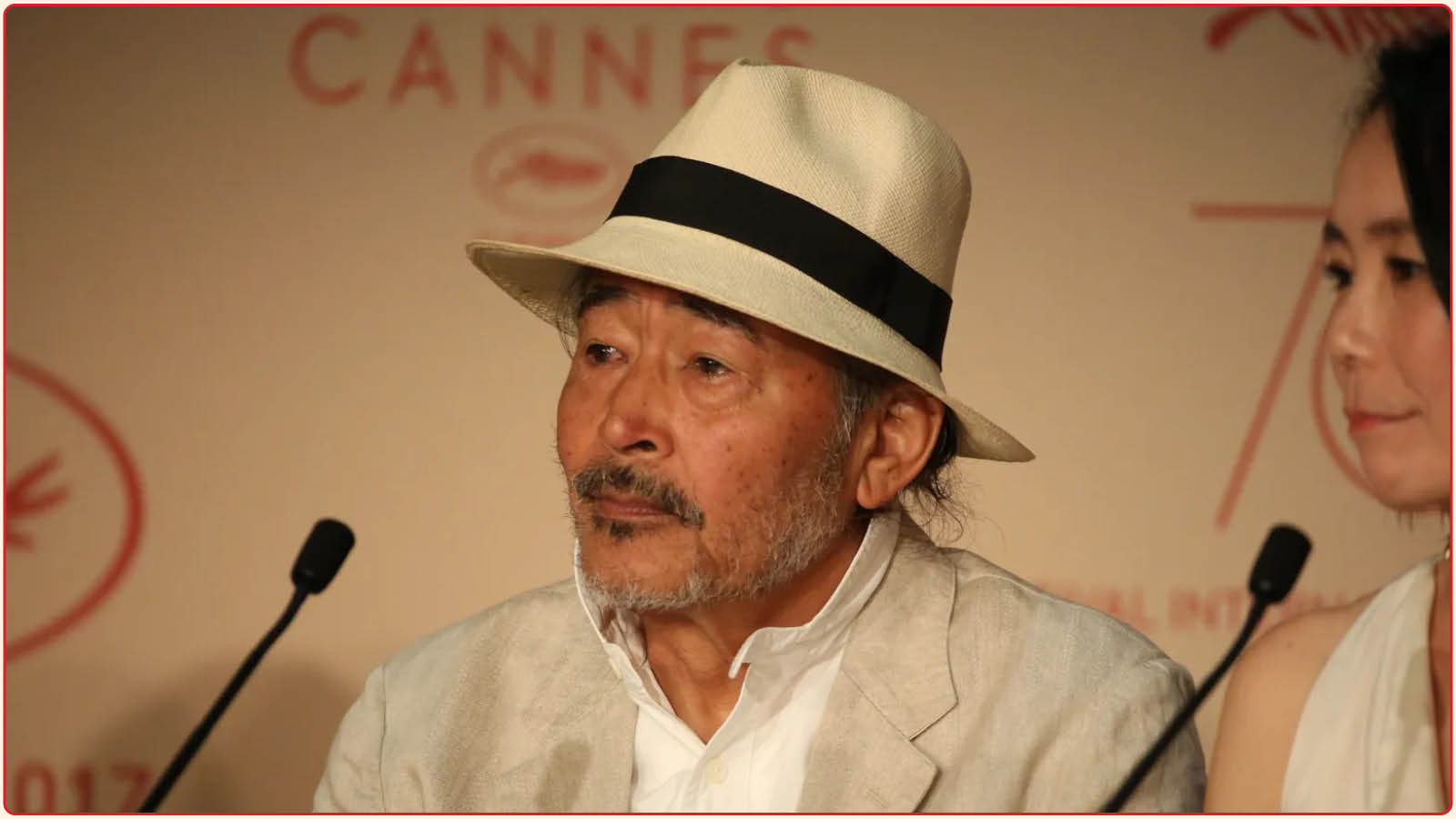
Tatsuya Fuji
[wpbb post:terms_list taxonomy=’category’ html_list=’no’ separator=’, ‘ linked=’yes’]
BY
[wpbb archive:acf type=’text’ name=’byline_author’]
An interview with the icon of Japanese cinema.
In the Realm of Tatsuya Fuji opens at Metrograph on Friday, July 19.
In 1976, Tatsuya Fuji made history as one part of the desire-afflicted couple in Nagisa Ōshima’s In the Realm of the Senses, famously one of the first instances of full, unsimulated male sexual nudity in Japanese cinema outside of pink films. Ai no Korīda, the original title for Ōshima’s legendary taboo-breaker, refers, in fact, to a corrida, a bullfight of love. It might be only fitting, then, that no other actor could rise up to the demanding role of the insatiable hotel owner Kichizō Ishida-a certain nonchalant bullishness has always come natural to Fuji. Few other Japanese actors have held such power in the rasp of their voice, or shown such unbridled passion behind a sly, devious smile.
Before reaching critical and arthouse acclaim with In the Realm of the Senses and Ōshima’s other scandalously erotic iteration, Empire of Passion (1978), Fuji started out as an actor for the Nikkatsu studio, working in genre and exploitation films. Enthusiasts of the actress and singer Meiko Kaji may remember Fuji for his appearances as different hoodlums and villains in their juvenile delinquency series Stray Cat Rock (1970). Many other studio collaborations with exploitation master Yasuharu Hasebe also bear witness to the actor’s talent for finding the perfect balance between sleaze and coolness, perhaps evinced best in the original trailer for Hasebe’s yakuza film Massacre Gun (1967): just as Fuji erupts, “Damn rat! I’ll kill that bastard!”, the kicker-“portrayed with a cool touch”-appears onscreen. That might be all that you need to get a feeling for the peculiar thrills of Fuji’s acting.

In the Realm of the Senses (1976)
While never disavowing a trademark brashness (see a recent collaboration with Takeshi Kitano, Ryuzo and the Seven Henchmen, 2015), Fuji’s career after the year 2000 has seen him step into more tranquil, often fatherly roles. He’s most notably collaborated with new auteurs like Naomi Kawase, starring as a veteran actor-filmmaker in Radiance (2017), or Kiyoshi Kurosawa, playing a real father to a disturbed Tadanobu Asano and a forgiving, adoptive one to Joe Odagiri in Bright Future (2003). His most recent role as an estranged patriarch suffering from dementia in Kei Chika-ura’s Great Absence (2024) departs, however, from the oft-expected mellowness of elder characters. He is hardly lovable, despite his illness-a conflicting set-up that lends itself perfectly to Fuji’s innate ability to exude both charisma and enmity at the same time.
Ahead of the upcoming Metrograph program honoring Tatsuya Fuji, I exchanged with the veteran actor a few words about working with Oshima and the more daring roles of his career. His answers have been translated and edited for clarity. -Dora Leu
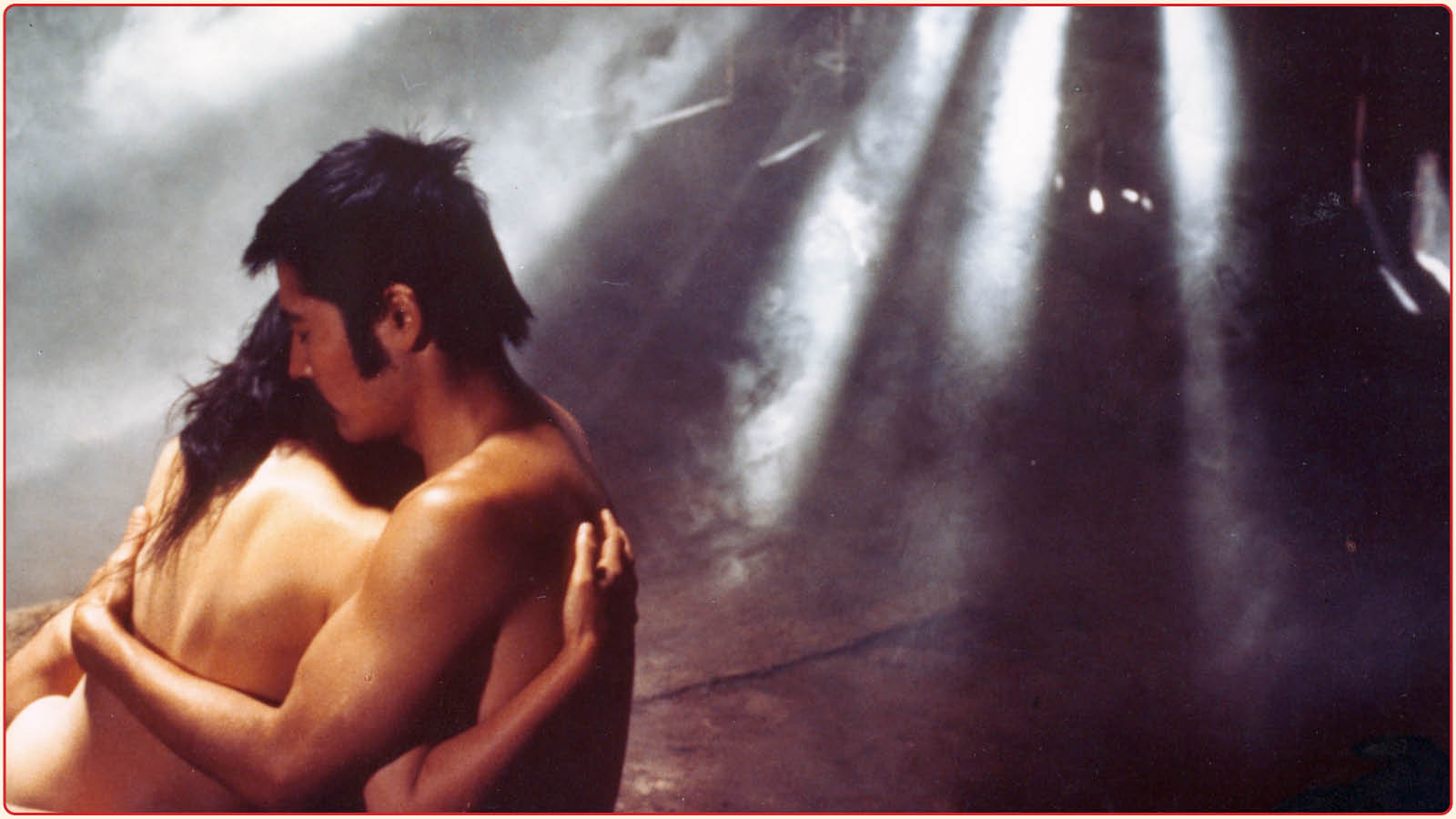
Empire of Passion (1978)
DORA LEU: You have just won the Silver Shell Award at the San Sebastian Film Festival for your absolutely heart-shattering role in Great Absence. It must have been incredibly difficult to channel this vulnerable, yet extremely complicated character. What resonated with you about this story?
TATSUYA FUJI: When I read the screenplay for Great Absence, I thought to myself, “What a script that doesn’t seek to impose itself on the audience.” I could not discern any of the usual contrivances meant to cause audiences to be moved, laugh, cry, make their hearts pound, and so forth, in Director Chika-ura’s script. Instead, I felt as if it were simply recording, in a matter-of-fact way, what was happening to an elderly scholar losing his memory due to dementia, as well as to his son, wife, and other family members. I fell in love with the pure way that Director Chika-ura’s script didn’t curry favor with the audience. And happily, I was hijacked by the character Yohji almost instantly. Thus was Great Absence completed. I watched it. And lo and behold, I was deeply moved. I laughed. I wept. My soul was shaken. Director Kei Chika-ura’s really made a masterpiece.
DL: You have made a very terrific delinquent, villain, and gangster throughout your career. Could you describe those early days at Nikkatsu and how you felt making those many frenzied exploitation films with Hasebe Yasuharu?
TF: My stint at Nikkatsu was fun. However, during the time I worked with Director Hasebe, Nikkatsu was going through financial trouble and there were rumors that the studio would close. Many famous actors were quitting and leaving, too. And yet, young directors like Director Hasebe, along with young actors such as myself, kept cranking out one anarchic, helter-skelter B-movie after another. Not that too many people came to see them, though. These Nikkatsu exploitation films formed the foundation of my 62-year career. But ultimately, around 1970 I believe, the studio closed, and I got to make a fresh start as an independent actor.
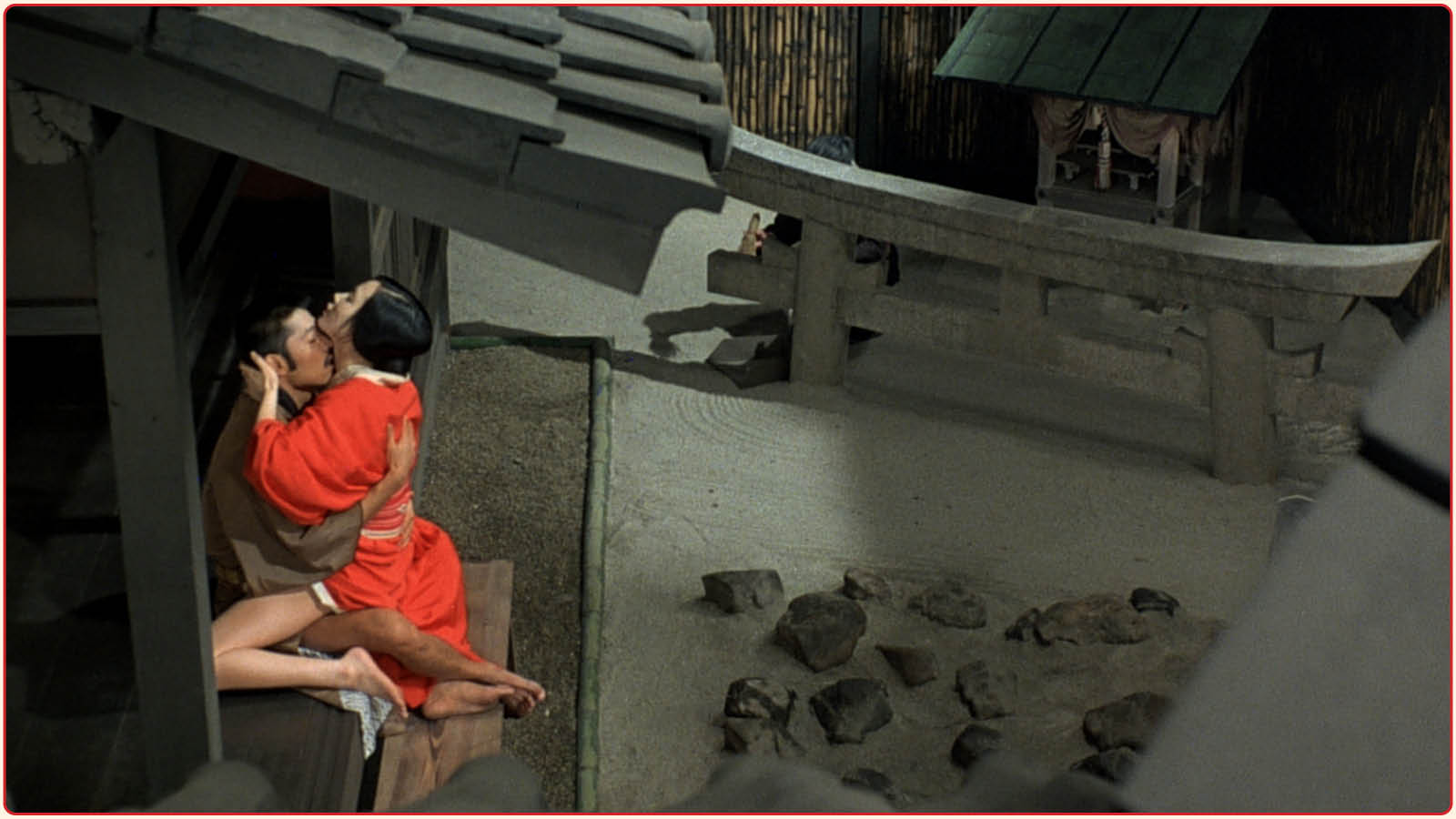
In the Realm of the Senses (1976)
DL: Even in recent years, you’ve maintained your charm as a gangster-your collaboration with Kitano Takeshi for Ryuzo and the Seven Henchmen (2015) is a nice wink back to those sorts of characters. Whether we speak of these brash delinquents or your roles in Oshima’s films, you are an actor who acts intensely with the body, for whom physical expression seems deeply important.
TF: What I always pay attention to when acting is allowing the role to hijack me. Having said that, there was a time in my thirties where I was doggedly intent on achieving the detached coolness that I felt audiences of those television action shows and soap operas were seeking.
DL: Of course, many Western cinephiles know you for your collaborations with Ōshima for In the Realm of the Senses and Empire of Passion. Oshima often said it was incredibly hard to cast the role of Kichizō Ishida in In the Realm of the Senses. What made you say yes to this very challenging role?
TF: Allow me to recount the day I read the screenplay for In the Realm of the Senses for the first time, in Director Nagisa Ōshima’s office. My initial reaction was, “Page after page of just sex scenes?! Whoa, what in the world? Has Nagisa Ōshima lost his mind?” I binge-read the whole thing, and then, experiencing a somewhat mysterious emotion that I couldn’t pin down, read it through about twice more at a furious pace, after which I felt a jolt as if I had been struck on the head. What had become distinctly visible beyond the many sex scenes was the story of one woman and one man’s life-staking love. It was a screenplay that depicted irrepressible human pathos. I thought Director Ōshima a great man for trying to make a love story from such a perspective. I had never before performed sex scenes such as the ones written in the script. But I instinctively knew that if I fled this project out of fear of the sex scenes, I would end up a loser, as an actor. The decision I made that day (to say yes) was not a mistake. Thank you, Director Ōshima!!
Dora Leu is a Romanian film critic and occasional filmmaker. She’s dedicated herself to the Japanese New Wave, essay films, and music videos.

Empire of Passion (1978)