
Strange Pleasures
Strange Pleasures: Hollywood 90028
Strange Pleasures is a regular Metrograph column in which writer Beatrice Loayza shares unconventional desires found across underground and mainstream cinema alike.

Share:
There’s chatter in the distance; the sidewalks are busy and the red glow of boozy interiors spills out into the night. When Mark (Christopher Augustine), a mustachioed photographer, spots a fellow drifter at the diner, their brief encounter cuts through the city’s churning malaise. At first, their one night stand conjures the sort of understated intimacy you wouldn’t expect from a grindhouse nudie, which Hollywood 90028 (1973), Christina Hornisher’s sole directorial feature, has been labeled. Indeed, it’s not too long before we get to the sex and naked bodies, and our leading man Mark reveals himself to be a killer. But before the diner girl, a Black bachelorette (Dianna Huntress), meets her end by strangulation, the two fall into each other’s arms so effortlessly. When they make love, it’s slow and soft. We see his hands in close-up, gliding over her silky flesh—gentle, affectionate even—until they’re not, and he tightens them around her neck. The moment, as the jam-band music bends towards climax, isn’t strictly sensational. It’s disturbing for its mix of menace and tenderness, underscoring the film’s tragic vision of modernity: the men and women caught in its dispassionate folds.
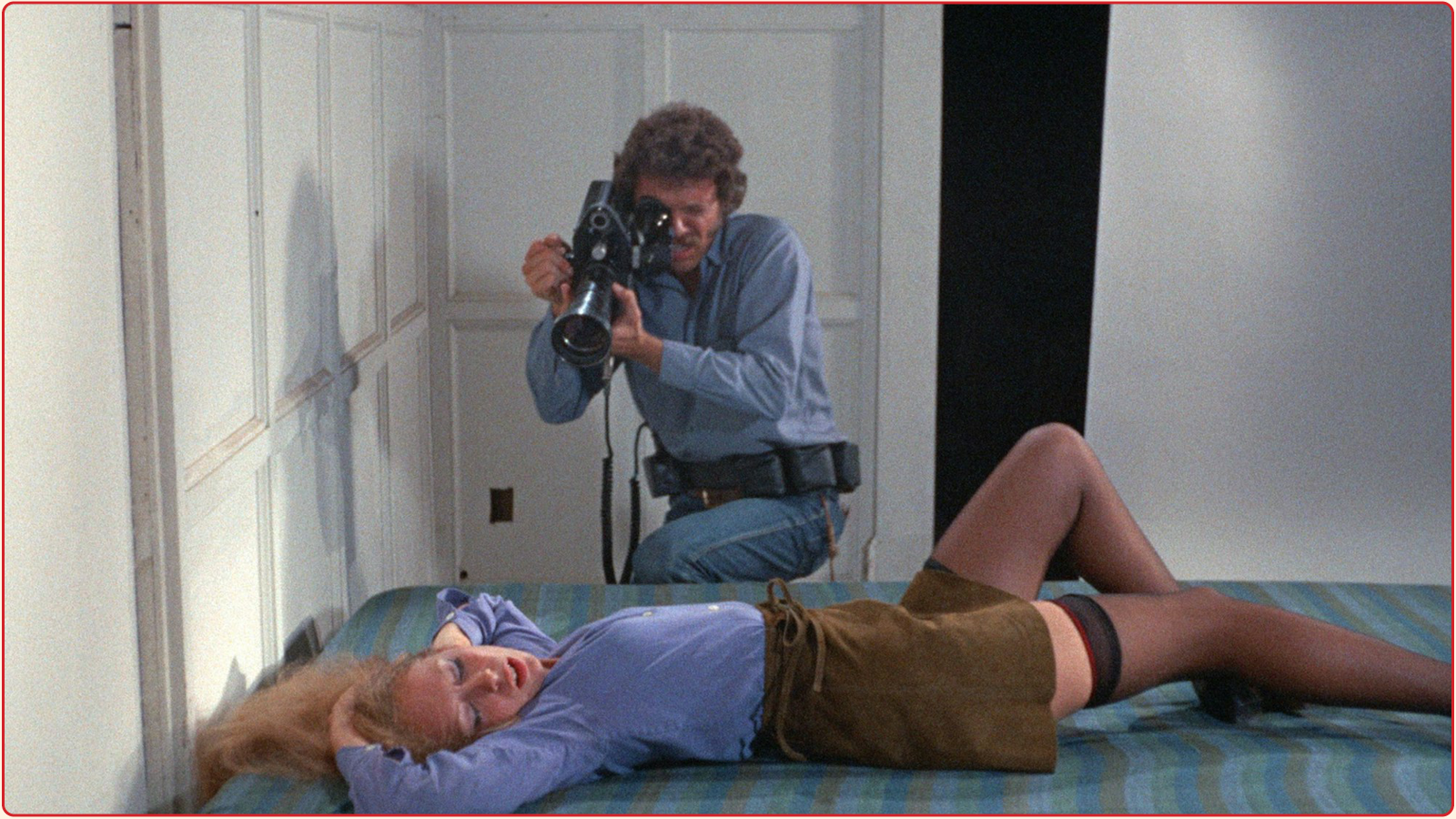
On paper, Hollywood 90028 blends smoothly into the subset of schlock made en masse during the ’70s and ’80s, as evidenced by some of the other titles—The Hollywood Hillside Strangler and Twisted Throats—it played under on the grindhouse circuit. Mark, with his deepset eyes, Canadian tuxedo, and pervert stache, looks the part of a psychopath, and his day job as a skin flick cameraman sets the stage for all kinds of lurid encounters with the softer sex. But like Amy Holden Jones, Stephanie Rothman, and Barbara Peters—other pioneering women filmmakers who cut their teeth making B-movies—Hornisher employed the tools of exploitation cinema in unexpectedly profound ways, complicating the misogynistic dynamics that have tended to inform slasher templates.
Hollywood 90028, however, flows nothing like a traditional slasher, and its thematic differences aren’t premised on narrative twists that end up empowering the victims, as in Bob Clark’s Black Christmas (1974) or Holden Jones’s Slumber Party Massacre (1982). With scenes cut together by woozy dissolves— a trippy, flute-heavy score by Basil Poledouris—who would go on to compose the music for Conan the Barbarian (1982) and Robocop (1987)—the film unfolds like a modernist reverie, its sense of place (see the zip code in the title) central to its psychic drama, Antonioni-style. Much of the film is spent watching Mark make his way around Los Angeles, trekking through downtown avenues, smoking cigs with his back against psychedelic murals, contemplating his misery as he makes his way to the wretched studio where the porn shoots take place. His boss, a sleazy director, is a penny-pinching lout. Mark doesn’t particularly like him or their dubious line of work, but his standards are necessarily low. Once a starry-eyed Midwesterner, Mark came to LA to pursue his passion for photography, turning to movies to make ends meet, and finding gigs in the porn world, whose employers, for better or worse, don’t ask many questions.
Hollywood 90028 (1973)
In the first film shoot we see, a young woman slowly undresses and touches herself in front of the camera. The machine’s audible whirring and the shifting aspect ratio, which takes on the viewfinder’s boxy perspective, accentuates the remote and mechanical nature of her body’s commodification. Above both the actress and Mark is the director, shouting instructions from an elevated platform and looking down, godlike, at his playthings as they perform and capture his sexual whims.
Like Taxi Driver (1976) and Hardcore (1979), Hollywood 90028 is about sin, grace, and redemption against a backdrop of urban indifference and underground squalor: the dark flipside to the luminous (and basically unattainable) dream of making it big in the city. The masculine fragility that runs through the aforementioned Paul Schrader joints, however, is treated much less spectacularly by Hornisher. In the opening credits, a slideshow of vintage photographs from Mark’s childhood silently relate his backstory as the only boy in a family of three fiery sisters, his inferiority complex stoked by the shame he feels for accidentally causing his baby brother’s death. Women, when they get too pushy and familiar, trigger his sororal traumas: when he listens to a voicemail from one of his siblings, her nagging voice echoes, creating the semblance of multiple speakers, a three-headed hydra out to rattle his mind. Halfway through the film, Mark meets a chatty hitchhiker, but when she psychoanalyzes him a bit too intensely, memories of his sisters float uncomfortably to the surface, unleashing his killer instinct. Again, he strangles the woman to death. Although the isolated setting and sailboat in the middle of the ocean seems to suggest the murder was premeditated, the spontaneity of his violence conveys a kind of blackout-state reactivity. Hornisher, I think, would have us believe that killers aren’t born but bred by painful pasts and the conditions of their present.
In any case, Mark isn’t an overly sympathetic figure either. He’s a depersonalized cog that’s just cool, clever, and conventionally attractive enough to secure a steady stream of love interests. Michele (Jeannete Dilger), whom Mark meets on the set of a BDSM-themed shoot, isn’t like his other girls. Sad and gentle, Michele is a runaway from Nebraska whose disappointments mirror Mark’s own. In the early days of their courtship, the two take a walk around the city as she narrates the story of her life, her voice seemingly disembodied as cinematographer John H. Pratt captures them from a distance like aimless spirits. (The film’s audio was recorded well after the multiple shoots it took to assemble sufficient footage, so the dialogue is only loosely attached to each scene, coming from the heavens instead of directly from the actors’ mouths.) The couple’s promenade is punctuated by sharp, sepia-toned images of Michele posing nude, Mapplethorpian portraits that give a romantic sort of dignity to what she considers her humiliating journey from aspiring actress to sex worker.
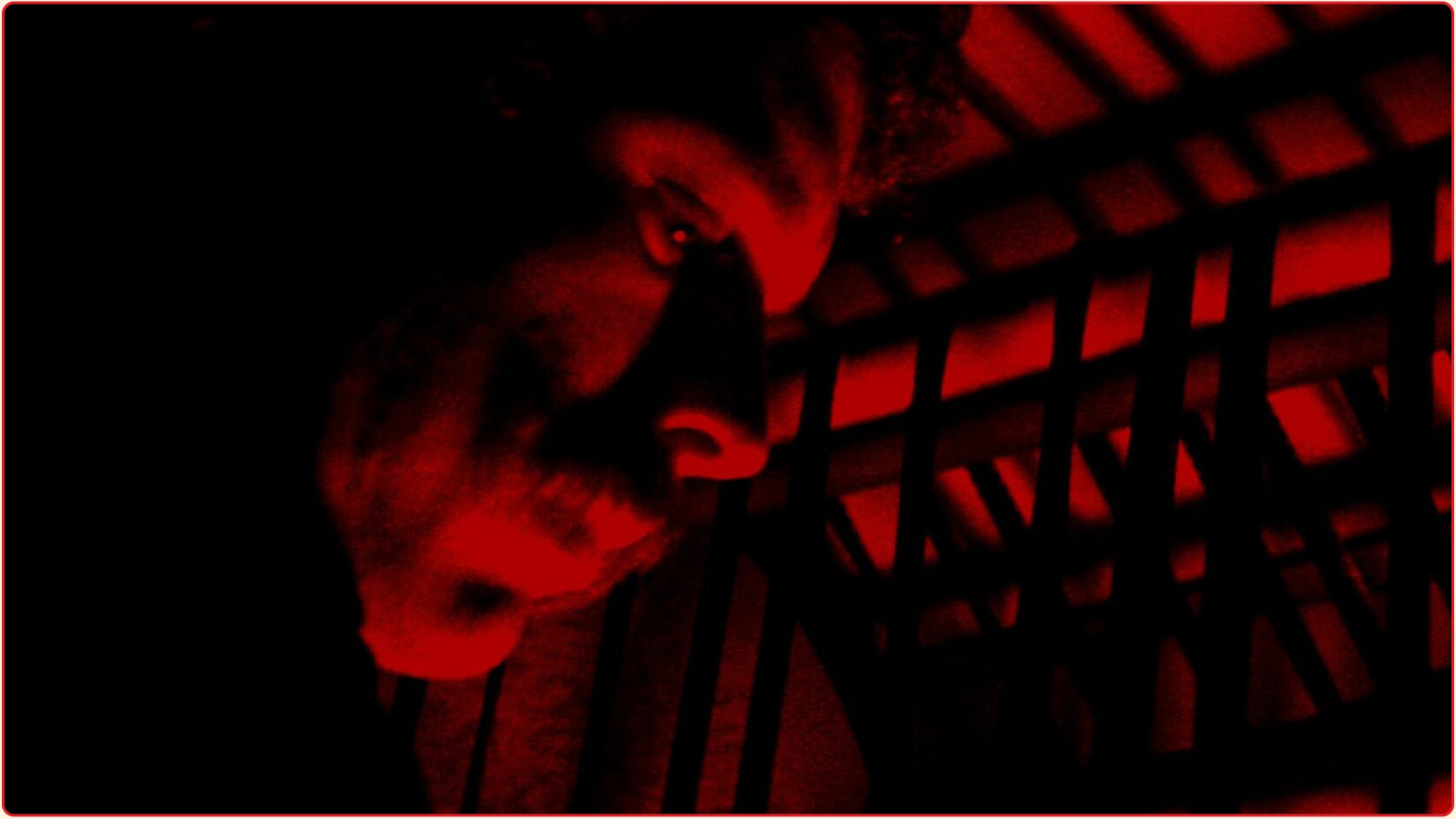
Mark falls in love and begins dreaming of a happier life with Michele, going so far as to perform this illusion when Michele’s sugar daddy is away on a work trip, allowing the couple to make dinner together and eat as a family. In the end, it’s not Michele’s rejection of Mark that leads to their ruin, but their folly in holding on, and in Mark’s inability to see things for how they are, untempered by the camera’s lenses and its blinkered frameworks. If Michele has learned to live “alone with that obscene image of herself,” and found peace with the compromises she’s made to survive, Mark is in denial, clinging to his fractured identity and the camera’s comforting chasm. After he receives a voicemail from Michele explaining why she can’t see him anymore—a choice of stability over passion—Mark races to her front door. They finally make love in a scene more remarkable for its abstraction than its anticipatedly graphic show of sex. But Mark’s desire for Michele is dangerously at odds with the truth of himself. In the film’s final shot—its most spectacular gesture—Mark hangs himself from the “Y” in the Hollywood sign and films his suicide with a camera. Hornisher zooms out and pulls back. The lettering grows smaller. All the houses and small lives in the valley spread out before us until the entire city, it seems, is held in this one shot. Mark’s death—and his home movie—are destined to be forgotten, like all of the other deaths and movies churned out below.
Hollywood 90028 (1973)
Share:
About the Contributor
Recommended
- The Maiku Hama Trilogy
 On the retro riffs and magnetic lead of Kaizo Hayashi’s newly restored cult trilogy.
 - Juliette Binoche
 On the eloquent hunger of the iconic French actress.
 - I’m Not Everything I Want to Be
 On Libuše Jarcovjáková, the queer photographer drawn to the social fringes of Soviet Prague.