
Essay
Jacques Rivette’s Twisted Sisters
On Jacques Rivette’s doubled women and the detective genre.
Share:
A suited, beanpole of a man sulks around a countryside mansion, increasingly hysterical about the teeth of his ailing cousin. That’s Éric Rohmer, starring in his early short Bérénice (1954). Behind the camera is a young Jacques Rivette, handling cinematography. The shadowy 20-minute film was an adaptation of Edgar Allan Poe’s story of the same name, published in 1835. In fact, echoes of the American writer, wittingly or otherwise, can be heard in so much cinema that embraces Gothic mystery, particularly those which take the form of the detective story, invented by Poe in 1841 with his tale The Murders of Rue Morgue. His gory little Parisian puzzle set the template for all that would follow: the strange and seemingly impossible occurs, and a genius outsider unravels the entire conundrum through superlative, almost dizzying rationality.
As the detective genre has moved beyond its Gothic roots, its hero has hardened into a calculating (oftentimes male) agent, driven solely by irrefutable facts and objects, working to dispel mystery rather than cultivate it. Curiously though, two films made by Rivette, back-to-back—Celine and Julie Go Boating (1974) and Duelle (1976)—place the detective story against the conceits of Poe’s other writings, where inexplicable horrors, hauntings, and the inconclusive take the reigns; where an argument for things one cannot prove, but can intuit to be true, quivers under the prose. In Rivette’s hands, the detective story’s closed doors are swung open by his doubled women, who usher in metaphysical truths and endlessness.
In both films, amateur sleuths privilege magic, dreams, rumors and play in their quest to find a missing person or solve a murder. The resolution of this journey is almost beside the point. The inquiry’s strange shape and digressions draw us closer to the truth of storytelling, friendship, mortality, and the relationship between the self and the other. These are not investigations where a story is wrapped up into a tight bow, but where the bows turn into knots, and where ribbons keep on appearing, piling on top of one another in a tangled, endlessly evolving edifice.
Celine and Julie Go Boating (1974)
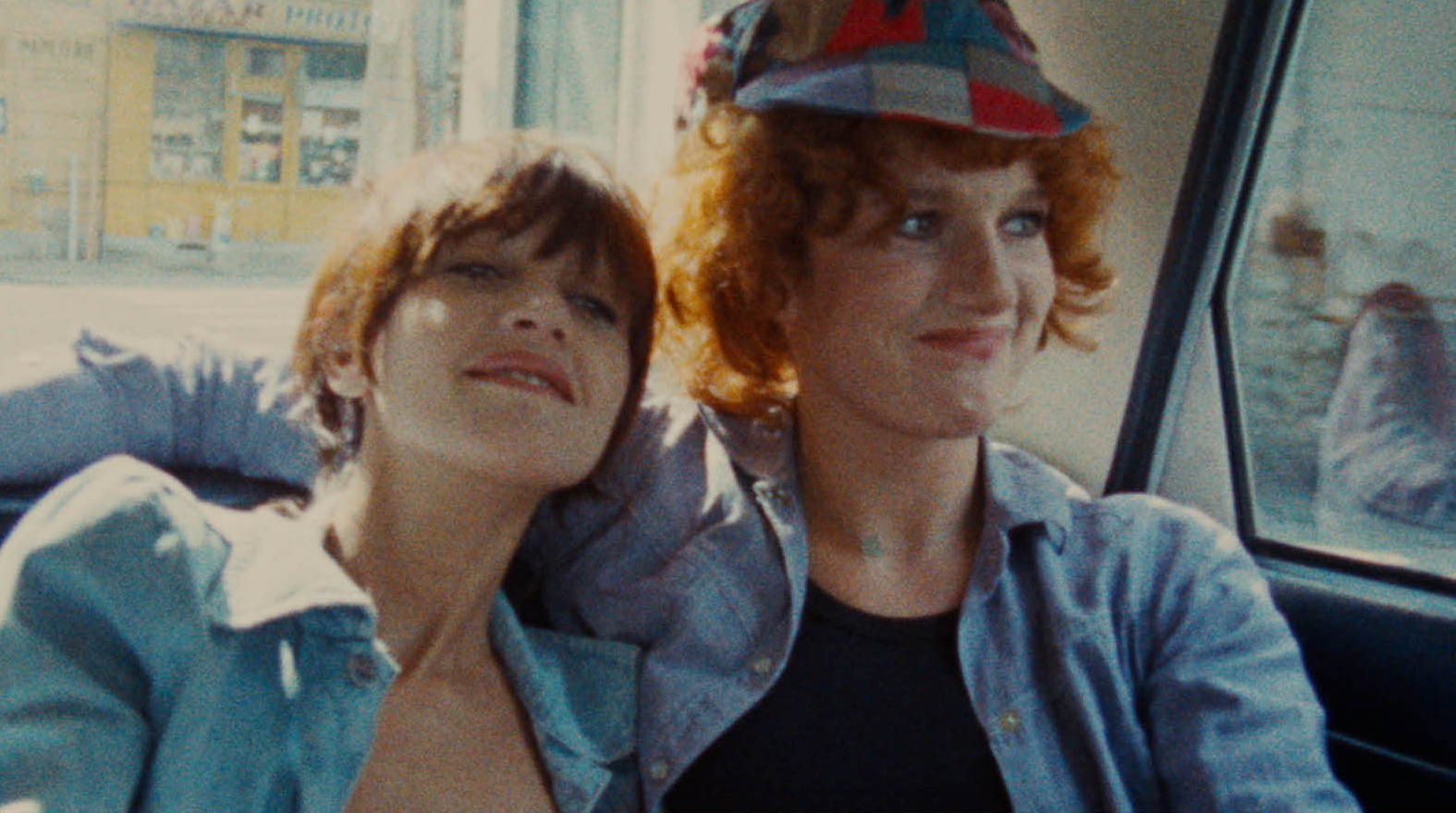
Speaking about Duelle, Rivette preferred to call his surprising cinematic turns “little hairpins.” But let’s begin with Celine and Julie: set in Paris, the film starts with a seemingly chance encounter. There is Julie (Dominique Labourier), a librarian and magic enthusiast, reading about witchcraft and drawing occult symbols in the dirt. There is Celine (Juliet Berto), a nightclub magician, who enters the scene flustered and bouncing, shedding objects—sunglasses, a scarf, a musty-looking doll—as she stomps around Montmartre.
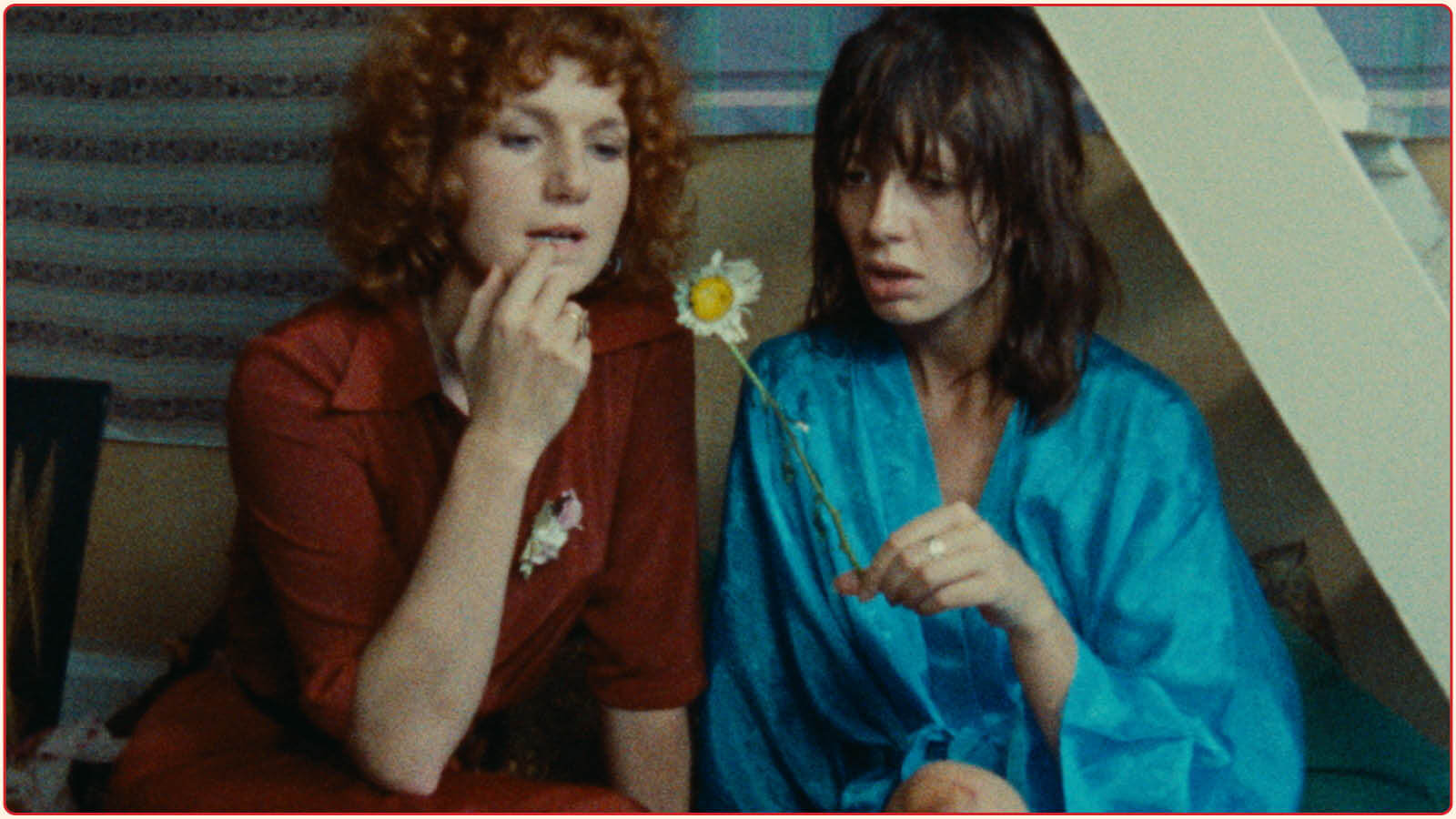
At first, these two women are detectives intent on discovering one another. Their sleuthing takes the form of some light, coy stalking: Julie chases Celine cat-and-mouse style, cradling her abandoned items. Celine then appears at Julie’s library and the pair indulge in rituals of leaving their trace: Julie stabbing her inky fingertips into white paper; Celine doodling and tracing her hand into children’s picture books, which Julie can’t help but lovingly preserve, ripping the pages out and shoving it down her bra for safekeeping. The women rummage through each other’s belongings and try on each other’s identities for size, but their “investigations” are not exactly needed: what is between them is already there, telepathic and fantastical, frivolous and exact. In one scene, Celine yawns for a Bloody Mary, which immediately materializes in Julie’s hands; they take turns sipping the drink in solemn, awed reverence.
Their bond is extreme and all-consuming, but oblique to the observer; the evidence is intangible. However, what is felt is the giddiness of being understood without having to explain yourself and the exhilaration of burgeoning friendship, where even the most obscene fantasies seem possible. Together, with spells and hijinks, the pair might be able to reshuffle a universe cruel and unrelenting in its absurdity.
This idea is tested when Celine and Julie’s uncontainable inquisitiveness leads them to a house where a Gothic melodrama is playing on a loop, remembered by the duo in pieces, through ingesting glistening candies they find deposited in their mouths after their visits. In this stuffy mansion, two women are battling it out for the love of a widowed father, who promised his dead wife never to remarry so long as their child Madlyn (Nathalie Asnar) is alive. The dresses of the dead are brought out of wooden chests and sinister warnings are spat. Then, Madlyn is murdered, the only evidence being a bloody handprint left on her pillow. Celine and Julie are not merely viewers but players, entering the scene as the house’s nursemaids.

Celine and Julie Go Boating (1974)
Rivette uses this boxed-in narrative to indulge in mirrors, multiply images, and create more shadows: another set of women, nurses and tricksters in a constant state of convergence. The audience is doubled, too. Sucking the candies and eating popcorn, Celine and Julie sit in the latter’s apartment, watching back the show that has flooded both their minds. They are cinema-goers, but also amateur detectives, who must solve the murder and save the child; compelled to rely on alternative, speculative knowledge systems: potions, visions, and ritual.
While Celine and Julie are spellbound by the domestic tale’s drama and tragedy, they are also tired, and a little bored, of the way it’s tunneling towards a forgone conclusion of feminine disgrace and death. “Always the same,” Celine moans. This scene is not a recrimination exactly, but a question: how might myth or genre be moved somewhere more freewheeling, without forfeiting its great resonances and pleasures?
Duelle attempts to answer this question through the interplay of goddesses and mortals, lightness and darkness, music and silence. As with many Rivette films from this period, it’s absurd, if a little doomed, to try and sum up through plot, but I’ll try: two goddesses in the form of two glamorous women—Leni, Daughter of the Moon (Berto again) and Viva, Daughter of the Sun (Bulle Ogier)—are desperate for a gleaming diamond that will grant them permanent residence on earth (at current, they are only sanctioned 40 wintry days). To track down and seize this remedy, a set of mortals are dragged into the goddesses’ loopy and threatening schemes.
What sets Duelle down its winding, phantasmagorical path is, again, a detective story, pitched somewhere between noir and fairytale. This is established from the outset. The film opens with Lucie (Hermine Karagheuz), a hotel night porter, trying to balance on a giant bouncy ball, aided by her brother Pierrot (Jean Babilée), holding up her arms. When Pierrot leaves, Lucie meets Leni, who is playing every bit the moneyed, jilted lover. Red-lipped and shielded by a mesh veil, Leni wails as she says the name “Max Christie,” purportedly her former partner whom she requires Lucie’s help in locating.
Duelle (1976)
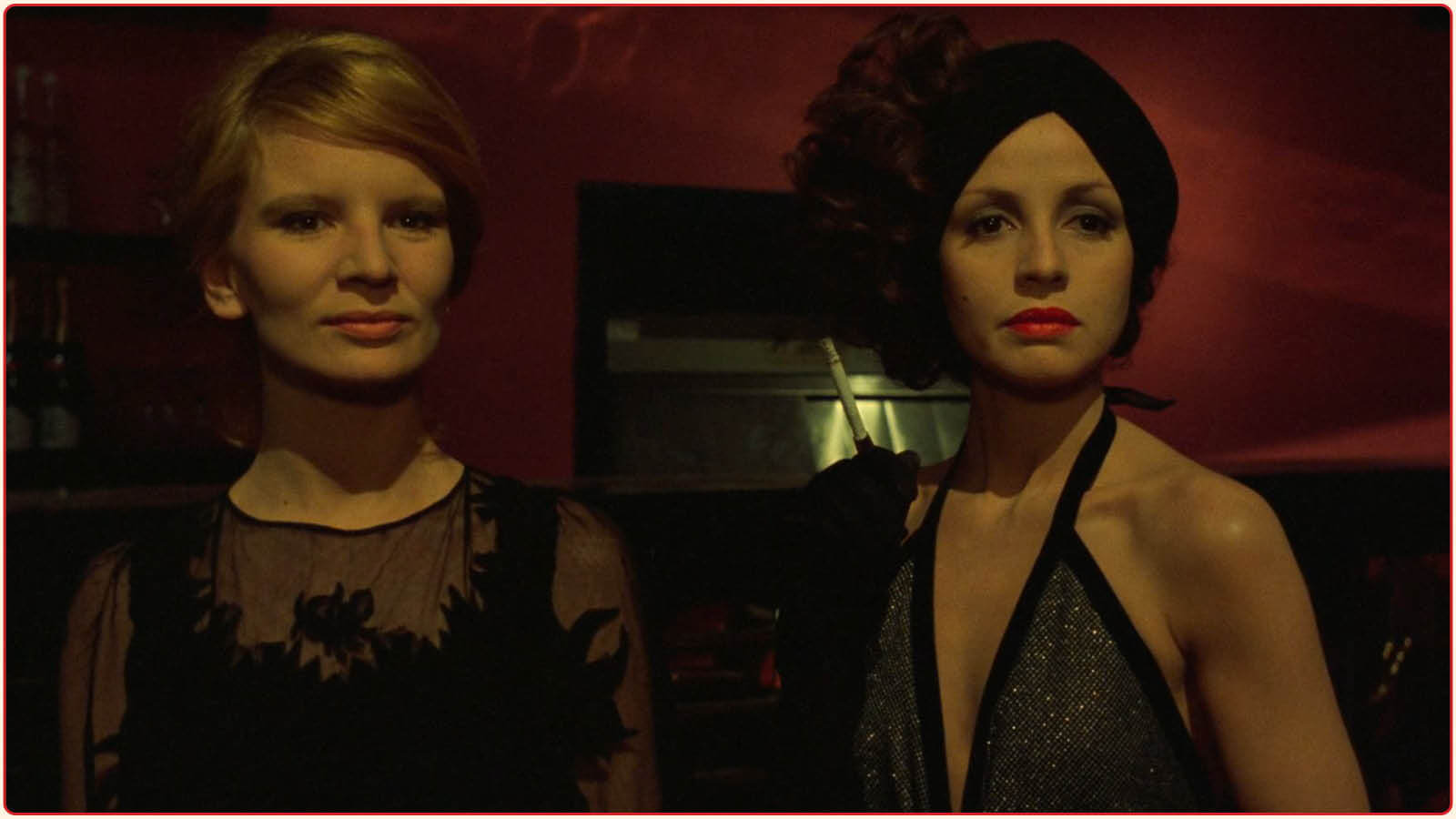
This is the first of Leni’s many extravagant disguises in pursuit of the magic diamond. She’ll soon play Christie’s masc sister, hair slicked back and wearing a red tuxedo blazer, embossed with pianos. Then a down-and-out friend of Christie, just released from prison, shrouded in a trench coat. Meanwhile, Viva molds herself into a vague underworld figure, floating in and out of baccarat games and making fake phone calls about drug deals in a bid to ensnare Christie’s old friend—and Lucie’s brother—Pierrot. But Viva’s dress is pure magician (and an echo of Celine). Almost always, she’s armed with a black hat, wand, and some metallic blouse shimmering in the light.
But as the search for the diamond descends into a labyrinth of rivalries and interrogations, moving from hotel room to hostess club, to a misty aquarium in the dead of night, it becomes clear that an easy, linear conquest is the furthest thing from these devious celestial minds. “Facing a scenario whose terms are set, hypocritically, by men (stories of secret societies, scavenger hunts, traps) the women respond by inventing an even more aleatory way of acting!” wrote French critic Serge Daney about Le Pont du Nord (1981), another Rivette film about two women (Bulle and her daughter Pascale Ogier) tending to an urban investigation rife with mythical implications: “A game unto themselves, then a game between themselves—beyond all hope, parodic and excessive.”
The parodic, excessive detective games of Duelle are deployed in service of a gestural spell-casting. Reality melts and then solidifies somewhere new, one dictated by theatrical movement and music. Characters follow each other primarily so that we can see them move. They spin around tables, leap and jump towards one another. In street corners and hallways, they dance or slide in harmony, producing strange symmetries. As the film progresses, the motion of the mortals turns elegant and otherworldly, while the goddesses rattle like wind-up dolls, all nervy and raw.
There is perhaps one moment of true equilibrium between Duelle’s divine creatures and unlucky humans. They are all dancing at the hostess club, The Rumba. Pierrot, in possession of the diamond, hovers his palm in front of a mirror, cracking it open. What leaks out is something mythic: the light darkens and the daughters transform into representatives of their respective lifeforces—the sun and the moon—gliding in gowns of gold and silver. They move in a trance, pointing their hands towards each other, proposing a battle.
As others have noted, what Rivette was reaching for finds its roots in the artist Antonin Artaud’s 1938 collection of essays The Theatre and its Double, where the surrealist lampooned playwrights and pulverized Western theater, while suggesting his alternative: a ritualistic stagecraft that would transgress “the ordinary limits of art and speech… in which man must reassume his place between dream and events.” Nothing brings us more into this liminal halfway house than Duelle’s two goddesses, doubled but opposites, in sublime, cosmic conflict.

Duelle (1976)
Share:
About the Contributor
Recommended
- The Maiku Hama Trilogy
 On the retro riffs and magnetic lead of Kaizo Hayashi’s newly restored cult trilogy.
 - Juliette Binoche
 On the eloquent hunger of the iconic French actress.
 - I’m Not Everything I Want to Be
 On Libuše Jarcovjáková, the queer photographer drawn to the social fringes of Soviet Prague.