
Interview
RaMell Ross
Nickel Boys (2024) director RaMell Ross looks back at his lauded feature debut.
Share:
I got to know RaMell Ross a bit in 2018 when he was doing the festival rounds with his first feature, Hale County This Morning, This Evening, which had been accumulating proselytizing admirers since its Sundance premiere at the beginning of the year. People I knew kept telling me the film was extraordinary, and Ross proved to be an amiable, modest, funny, and altogether lovely guy when I met him, so naturally I avoided seeing the movie until I absolutely had to, so as to forestall inevitably forming a withering opinion of it, until finally Hale County showed up on a competition slate at a festival where I was on the awards jury.
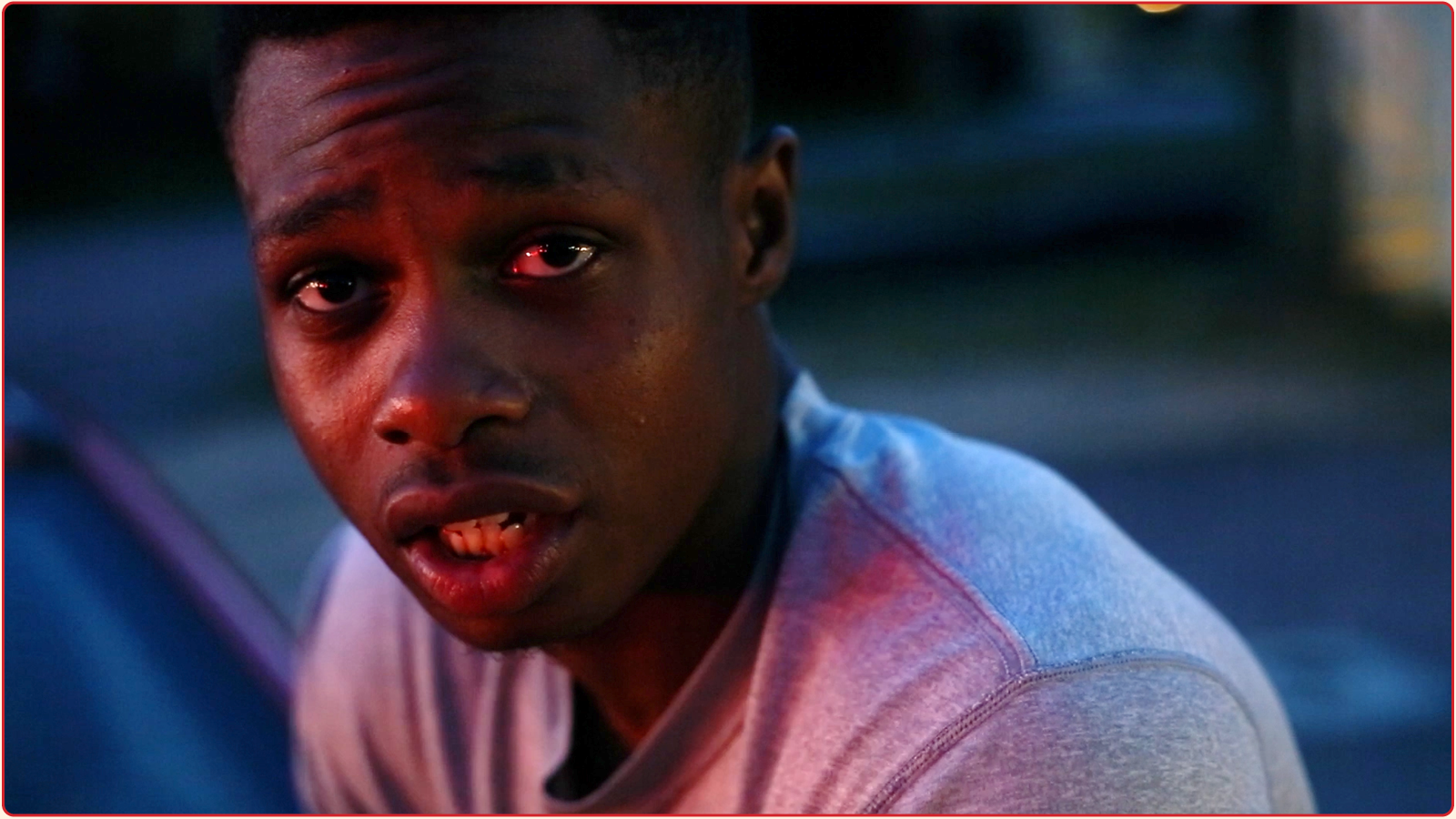
Embarrassingly enough, it turned out the stopped clock that is consensus was right in this case… The movie actually was extraordinary, the fruits of years of working and more years of hanging around and shooting in rural Hale County, Alabama, where Ross, a onetime swingman for the Georgetown Hoyas basketball team raised in northern Virginia, had gone to teach high school hoops and photography in 2009, then stayed on to finish making a distinctly 21st century, distinctly African American version of the City Symphony films that proliferated in Europe in the 1920s. Hale County spends considerable time with two particular young men, Daniel Collins and Quincy Bryant, as they face various rites of passage, including preparations for college, fatherhood, unexpected loss, but as much if not more in documenting with an eye that dispenses with obvious, shopworn pictorialism and finds beauty in the banal—a potential swamp of banality if the looker doesn’t possess an acute sense of beauty—the ambiance and the daily rhythms of life in the community that raised them. (Incidentally, this was much the same terrain that produced James Agee and Walker Evans’s 1941 Let Us Now Praise Famous Men, a study of dirt poor white sharecropper families further immiserated by the aftermath of the Great Depression.)
Now, six years later, Ross has that rarest of rarities: a deserved Academy Award nomination to his name (for Hale County), and his fiction debut, Nickel Boys (2024)—an adaptation of Colson Whitehead’s 2019 historical novel of the same name—will be opening the New York Film Festival this Friday evening. Ross remains, in spite every invitation to mounting megalomania, a serious-minded, conscientious artist and almost disconcertingly affable fellow, as evinced by the fact that he not only took time out of an undoubtedly hectic schedule to talk with me about a six-year-old movie, but then did it again after a recording snafu resulted in the consignment of our first conversation to oblivion. I haven’t yet seen Nickel Boys, but it has a budget I’d conservatively estimate to be approximately 70 times that of Hale County, and an overarching aesthetic conceit—a reportedly exclusive adherence to first-person perspective—at least as radical as anything in the previous film, recalling the POV adaptation of Jospeh Conrad’s Heart of Darkness that Orson Welles set about planning when he first got in the door of a Hollywood lot. If there’s a future for the American studio film, it rests in idiosyncratic intelligences being given a shot at making them. The very fact of Nickel Boys’s existence is enough to make you feel we aren’t entirely licked. —Nick Pinkerton
NICK PINKERTON: One of the things I noticed in rewatching Hale County—and it’s something that I really admire—is the film’s willingness to do things, to try all sorts of things, and not necessarily to repeat them or turn them into a governing stylistic pattern. I’m thinking particularly of the disarming Bert Williams sequence, that one-off use of archival footage, an excerpt from 1913’s Lime Kiln Field Day [the oldest known surviving film with an all-Black cast].
RAMELL ROSS: Working with archival, I definitely recognize that it’s typically not used just once in a film, but that seemed like the most powerful use of that clip. I imagined that I could come across a clip that would be most powerful if it were used multiple times—but this entire film is basically match cut, and that [Bert Williams] clip has a three-dimensionality to it. If you watch that entire film, Lime Kiln Field Day, it fit perfectly with the aesthetic of Hale County, and then the action that was happening in it kind of just alters one’s perception of time and Black visuality in the South. Then we began to organize the film around that moment: it was like, there’s before-Bert Williams, and then, when you see Bert Williams, all the visuals are different. This clip became a demarcation line. Using it once in the middle, as a bifurcating point, just seemed logical.
NP: So much of the logic of the film’s construction is about finding those rhymes between images. It just happens that, in this case, the images didn’t originate with you. There are a lot of these rhymes: the shot of sweat droplets hitting the concrete before the cut to the downpour, for example; the cut from Quincy holding his baby to the boy cradling the goldfish bowl. Was this something that evolved in the edit, or in the course of shooting were you really conscious of looking for moments that would click together, feed into and bounce off of one another?
RR: As this was the first formal film I’ve pursued, I realized that my sensibility and thinking was about the way images rhyme, like words in a rap song—it’s not necessarily about clear, narrative linearity. It’s as much about ways to pull out relationships that can give me a bit of electric insight, where you’re like, “Whoa, that felt good mentally, or physically, or visually… That’s interesting.” For the first six months, it was just me documenting my two buddies; then when I first put the things on the timeline, it made most sense to me to put beautiful images beside beautiful images. Otherwise it felt way more traditional, and way more “southern Black narrative struggle”—which is a needed method of filmmaking, but it was not my experience in that place. My integration into their lives was more about poetic encounters, and whatever else is insightful in the film.
NP: What was the timeline of the shoot? How long had you been going down to Hale County before you started filming? You were at Rhode Island School of Design when you started, correct?
RR: The timeline is always butchered by every place that talks about it; no one has it precisely right. There’s like a weird mythology starting, and I just never correct people. But—I moved to Alabama in 2009, and lived there from 2009 to 2012, full time. That’s where I was teaching in the youth program and coaching basketball, and that’s when I met Daniel and Quincy, but I wasn’t filming then, I was just taking photos—and they’re not photos that I show. One of my favorite things to think about and to share with folks is that I photographed the community for three years—like, obsessively—before I came to an understanding of how to make images that I felt could contribute to whatever this moving target of visual aesthetics is. I decided to go to grad school about that same time, which is when I had a sort of breakthrough with my 4×5 camera; I was like, “Oh, that’s how I can make some meaning.” So after three years I left, went to grad school, and then I basically spent half the year coming back, living in a friend’s backyard and filming with the guys. I filmed for two years, all the way through grad school; then I graduated and filmed for three more years, going back and forth, eventually buying a place—and it’s kind of been history ever since. So, it was five years that I shot. But one of the key things is that I knew Quincy for three years and Daniel for two years before we even thought about making a film.
Hale County This Morning, This Evening (2018)
NP: You mentioned having this revelation with the 4×5. What was it that made up your mind that this was a milieu you wanted to shoot in moving images, rather than stills? What demanded that?
RR: It was the lack that is photography. For example, cinema has a huge lack in comparison to sculpture; sculpture has an enormous lack in comparison to X medium; and it continues on. To me, making intentionally, ambiguously narrative images, socially geared images of people of color, Black folks in the landscape, gave a plurality to meaning and a looseness to the iconography of Blackness that hadn’t existed quite yet, at least from my analysis of photo history and cinema history—and I wondered what a moving version of that was. What is an experience-based moment of ambiguity within the lives of people of color in Alabama? I had no idea—that’s where that camera came in.
NP: You do a lot of extreme shifts in scope in the film, from the micro to the macro. On one hand, lingering on details like the bumblebee being nudged around in the pickup truck bed—
RR: My favorite image of the movie. Nick, come on! [Both laugh]
NP: —but you also get a lot of, for lack of a better word, “cosmic,” wide scope images. That could so easily have the effect of suggesting, “Oh, what insignificant specks of dust we are,” but somehow it has the inverse effect. The importance of everything—the micro and the macro—is emphasized. I found myself thinking of a piece by David Wojnarowicz, it’s a photo print of a tiny tree frog in someone’s hand, with a dense bit of text in the upper corner that reads: “What’s this little guy’s job in the world? If this little guy dies does the world know?” and so on. I’m being the worst guy at the Q&A now: “Not a question, but a comment…”
RR: I appreciate that. I think the comments are almost better than the questions at times though.
NP: Another thing I find so fascinating about the movie is that it is in some ways neither fish nor fowl, which is to say, it’s not strictly narratively driven, but it’s also not strictly not that, either—and that’s very unusual. What I mean is that there’s a whole tradition of oblique, avant-garde nonfiction filmmaking and there’s of course a whole tradition of narrativized nonfiction that maybe certain viewers would expect when coming into your movie: “Okay, is this Hoop Dreams 2? Are we going to see the guys struggle to make it to a certain level of accomplishment in their sport?” Or, “Is this some kind of experimental ‘tone poem’ thing?” And it dupes you on both counts; it’s both those things and it’s neither.
RR: I will say, Steve James told me after he saw the film that he loved it because it was Hoop Dreams’s (1994) dream. I think that was maybe the highest compliment [I could’ve received] because the urge to document and participate in Daniel and Quincy’s lives stemmed from the power of Hoop Dreams, one of the greatest documentaries of all time by almost all accounts—yet that fixedness as to their futures, and our understanding of them is something that I did not want to apply to Daniel and Quincy. But I did want the film to be a documentary. I got to a point in the edit when we were really trying to finish this film, and Robb Moss said, “This is going to be the most defining question as to how we move forward: do you want this film to be a documentary or an art piece? And I’m not saying that your designation of it will actually make it either/or; I’m saying that the logic of each one categorizes it to a certain place of cultural reception.” I realized that if I could have an art film that was ambiguous and experiential about Daniel and Quincy’s lives in the Deep South categorized as a documentary, then the predisposition for truth that happens when a person encounters a documentary would allow them to take in the ambiguity in an unknown way. Like, who knows how a person will engage with this image if they think this image is true, and this image isn’t settling for them?
NP: I don’t know to what degree you went through workshops or things of that nature when the movie was coming together, but I could just so easily imagine somebody looking at the film with binary-brained blinkers on and going like, “Come on, what are you doing? It’s a story about these two kids, what are you doing fucking around with this bee in a pickup truck?” [Both laugh] Is that an experience you had at all?
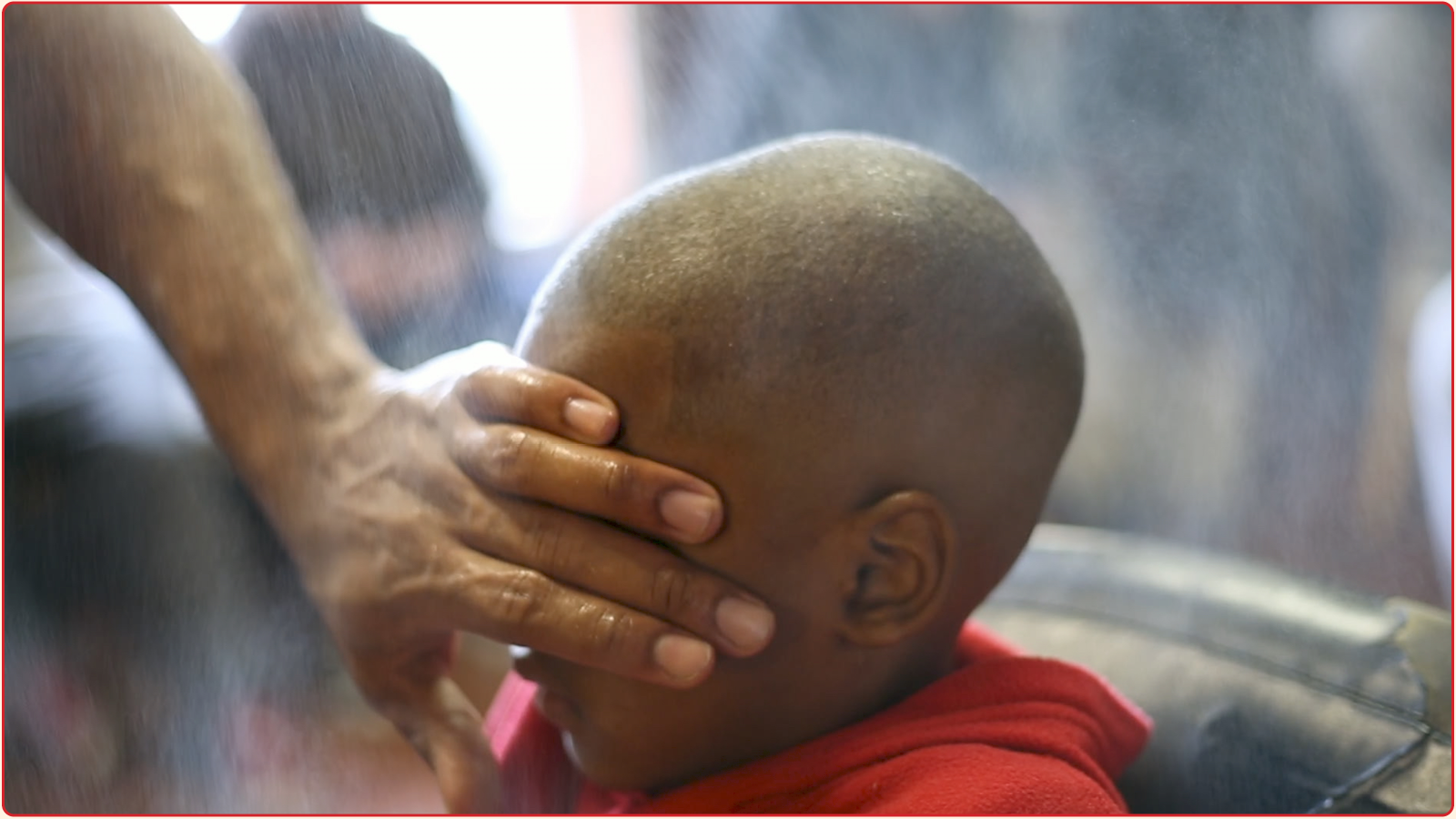
RR: Oh, for sure. It’s funny, I think back to the film feeling both random and really conceived. People walked out of the film when we first started screening it. It’s not like, a ready-made Oscar-nominated contribution to whatever world. It somehow got there, but it’s not an easy film for some people to watch, because it’s not didactic, it’s not clear in those ways, but it is experiential. I always thought that if I can make the images beautiful enough that a person will make it through—and if they do, then whether or not they’re acknowledging they’re receiving these ideas, the ideas are in there.
NP: As somebody who is a teacher yourself, I wonder… In my own limited experience of teaching, usually writing, one of the things I’d so often run up against is students writing in a way they know to be “writerly,” and having to work on shaking off that affect. I can imagine that being the case in teaching photography, too—seeing work that’s shaped by a preconceived notion of “art photography,” and having to say: “No, it’s not about doing the thing that you know somebody else already does in a way you know is palatable. It’s got to be the thing only you can do.”
RR: I love that you said that, because I say that a lot, but I’ve never had someone say that to me during an interview—that a person has to not only find their voice but acknowledge that the baseline of their voice is one thousand other people’s voices. If you don’t work on trying to find what’s truly interesting about language and story for yourself, with the movie or still camera, you’re just repeating a universal aesthetic. You will get praise, people will accept it, and you will be paid, because you’re producing “content,” but there is potentially something that’s way more deeply connected to yourself and that medium if you put in that work, that reflection.
NP: Going back to Lime Kiln Field Day, I feel like the legacy of silent film is in the film in a lot of ways. There’s a connection to the City Symphony tradition that belongs, really, to the 1920s… though I was delighted to see that you’d done an interview with the Ross Brothers, whose work I love, and whose 45365 (2009) also feels indebted to that genre. And then there’s your use of intertitles, which are quite eccentric at times—like the odd old-timey vernacular of lines like “Boosie careth not about the film.”
RR: Yeah, it’s funny. As you watch the film, the intertitles can seem a bit random for an outsider, but they also feel highly constructed. The process was just sheerly following one’s nose, following intuition. It’s pure experiment.
Hale County This Morning, This Evening (2018)
NP: I was reading an Oxford American piece about the literary aspects of particularly your photo and installation work, and it occurred to me that these intertitles lend a literary aspect, even in their phrasing, to this film, too.
RR: Well, my entryway into art, aside from sports, was literature—I became particularly fascinated with language and the power of a word, or the idea that’s embedded in a word. The intertitles happened quite late in the film: we were experimenting in the edit, trying to figure out how to carry someone through a documentary that’s not traditionally organized, and something that has more emotion and sentiment as narrative drivers as opposed to facts. When we came across the Bert Williams film, that introduced the idea of having intertitles to space out the visual flows. Because the film was so image-rich, we found that the images began to sort of erase what happened before, as opposed to being cumulative. But if we added a little black frame in between, then it gave a person a little time to just catch up. I think [co-editor and co-writer] Maya Krinsky suggested we should use some of my writing. I’ve always written a bunch. We started to realize that this was actually a narrative tool that we could use, and that we shouldn’t shy away from the funny, punny and quirky ways that I like to use language, and it grew from there.
NP: I suppose it’s inescapable that you have to answer the occasional question about James Agee and Walker Evans’s Let Us Now Praise Famous Men (1941), which is a work very much based on the dialectic between descriptive language and the photographic image.
RR: It’s exactly that, Nick; the language I put in the intertitles allows the audience to have a better sense of the use of the images. Despite how we would read things—you and I, and/or a person who spends a lot of time thinking deeply about visual images—images are wildly open-ended, even when they’re juxtaposed. To take a literary approach in the intertitles is to connect it to the history of literature; to say the person who made this film is aware of the way it’s participating in that, and that maybe there are other clues in there that add to its value. Even more so, it clarifies how you’re supposed to take things in, right? Like, you’re allowed to laugh at the “Boosie careth not about the film”; “Mary could cough a catfish”—you know there’s a little tongue-in-cheek humor involved in the filmmaking process.
NP: In that regard, your approach to your subjects is very different from that of Let Us Now Praise Famous Men, which is such an anguished work, concerned with not being able to access or comprehend, really, the anguish of the subjects.
RR: It also allows someone to think about the images as literary devices, which maybe I said moments ago in a different way, but—people don’t think of images as puns; they think of images in terms of metaphor and allegory, but not as something that can intentionally have three or four meanings that can all be true. When you’re looking at a sentence, you’re allowed to recognize it’s a joke, but how can you tell that an image is a joke? That’s a very specific form of image production.
NP: The film really reminds me at times—and I mean this as the highest possible compliment—of Tang dynasty Chinese poetry, where Du Fu, for example, will make a sudden lateral movement from a narrative section to, via what we’d call in cinematic terms a hard cut, a seemingly wholly unrelated image of the natural world.
RR: I really appreciate that recognition of the way that the film’s images are working, because I’ve been sort of secretly and non-secretly studying the Eastern intellectual tradition for a long time. And the thing that I found most powerful through the philosophers of Laozi and Yang Zhu is the way that things both exist and don’t exist at the same time. We know this from quantum physics—like, all this cosmos talk is so trendy and contemporary but in fact, for each person, the meaning is there if you see it, and it’s not there if you don’t. That things can exist simultaneously is to me the perfect analog for the way Black folks are integrated into American culture, the way we exist as both a Black person and not a Black person, you know—if you add a Black narrative, if you color in a person on the street who’s white, Black, what they’re doing means something different. That duality is everything to me.
NP: One aspect of the movie that doesn’t get talked about a lot—and not only with regards to your film, but with films in general—is the aural element, particularly the construction of its soundscapes. A documentary that’s dealing with the rural South, we all know what that’s supposed to sound like: the cliché of gently fretted acoustic guitar on the front porch or, maybe, because you’re dealing with a Black milieu, you could have some Cash Money Records or Muscle Shoals soul playing in the background—and there’s none of that in the film, only a bit of 12-bar electric blues. If you even hear any Southern rap, it’s melted into this soundscape like something coming in and out over a scratchy transistor radio, or that oddly gloomy, glitchy electronic music that plays over the kids horsing around in the locker room.
RR: I’ve found that in terms of audio, what’s always drawn the most insight from an experience is when there’s some sort of contrast in terms of modes of relation that generate something that’s exciting to me. What’s not exciting to me is listening to rap over this community, or listening to jazz over this community, or an old slave song—what’s interesting is hearing The Books or Arthur Russell, or these asymmetrical sounds and musicscapes that resemble what it’s like to be in the world. To hear a car drive by, and a person scream, and a tire screech, and a cat do this, and this other thing happening, and the wind blow… for all of that to be a memory of things that are recognizable, but also a moment that feels like something, you know? That’s what we went for here. For Scott [Alario], Forrest [Kelly], and Alex [Somer], it was a free for all. It was like, “Make things that are interesting to you, and we’ll see how they contrast. You’re not scoring the film, you’re producing sound and noise and rhythm, and we’ll see what they bring out in each other.”

Hale County This Morning, This Evening (2018)
NP: When you say, “not scoring the film,” they were sending you pieces that were written totally independent of the movie?
RR: This is my secret. Even for Nickel Boys, no one’s scoring anything; you don’t score, you make a song that you like. And then, like a music video, we’ll put the imagery we know is powerful underneath, and there’ll be some really unexpected relationships—and we can make adjustments if we need things to align because of whatever beat but, for the films that I’ve made, no one’s scoring anything. You’re an artist who’s going to do your thing, and I’m going to have an artist here do their thing, and then we’re going to bring the two together.
NP: Who did you work with on Nickel Boys?
RR: Nick, who do you think? The same guys!
NP: Okay. I thought you’d moved up in the world.
RR: I really like those guys. I mean, the score’s fucking phenomenal, Nick. Like, they did it again. It’s very similar and very unexpected.
NP: Another idiosyncratic element of Hale County is that its basic building blocks are shots rather than scenes; you have little in the way of constructed scenes where you get multiple angles on the action, and that’s pretty unusual.
RR: That was a rule of the film—the film has a whole bunch of rules. One is “no scenes”; I’m not interested in “coverage.” It’s a single point perspective: it’s me, the camera, and a person in a space in time, looking at the world. I think there’s only two or maybe three continuity cuts in the film… I break every rule because rules are just guidelines but, to me, the single unit of the shot is based on photography, which—to be a little reductive, though I think truthful—the single image is about the single image, and the moving image is traditionally about a series of images for a point. The idea of bringing the cinematic universe to a single point, and providing that point with all the meaning possible—which is the difference between the photograph and the moving image. There’s nothing more you can do with the single image, so you have to do your best because the singles stand alone. But the other one, you’re allowed not do it all, you know—so like, “What happens if you do it all in every image, and then you give it time?” was the concept.
NP: Coming from a still photography background, was there any particular inspiration, or anti-inspiration for this feeling of, like, “I don’t want to make this a movie of constructed scenes. It has to have this integrity within the shot”?
RR: It’s based on my photography, the ambiguity that I was embedding or importing into the image. But there were clear inspirations. I mean, the film is a portmanteau of Killer of Sheep (1978), Tree of Life (2011), and the Qatsi Trilogy (1983–2002). You can throw in two literary pieces, too: Ginsberg’s “Howl,” and every single book Toni Morrison has written. The film is those, just collapsed. And so, the single shot—I noticed the power of this sort of like roving and mounting poetry in Tree of Life, probably my all-time favorite film, and then Killer of Sheep, it’s about the Black banal and the quotidian, and that being as important as the sensational moment or the defining event. When you put those together with my photography, it’s just a natural occurrence.
NP: Hale County, in the shoot, was just you… Just you on the camera, running sound; you’re a one-man band. I ask because it’s got to be a huge, huge leap to go from a shoot like that to overseeing a major motion picture—not to say that Hale County isn’t a major motion picture, of course, but budgetarily speaking… Do you feel like you’ve been able to keep a steady course between what you were doing on Hale County and Nickel Boys?
RR: Yeah, because, you know, it’s my sensibility. If someone wants to know who I am, they should just watch Hale County—that’s how I look at the world, that’s how I think. And the producers gave me the leeway to embed the way I think into Colson [Whitehead]’s narrative; I think I maybe even surprised them a bit about what happens when you give someone a carte blanche imaginative-scape. They didn’t put any financial restrictions on the first draft of the writing, they were just like, “Imagine!” and so I just went all out with Jos [co-writer Joslyn Barnes].
NP: Now, is this going to be one of these cases where you’re on a Marvel movie next thing I know?
RR: Well, you know, Nick, I do like that cash money—I’m just kidding.
NP: This is always the thing, once you started taking those paydays… everybody’s like, “Yeah, it’s just going be one, then I’m going get back to my roots.” But nobody ever goes back.
RR: What do you think about Barry Jenkins doing Mufasa: The Lion King (2024)? Have you seen any of it?
NP: I have not. I will say, I’m always hesitant to make value judgments because I don’t know what the fuck goes on in other people’s lives. And people have their own perspectives—maybe there’s a genuine belief that they can do something interesting in this context. Also, I don’t know if somebody has 70 relatives to support, or what considerations they have to make financially. Is it a thing I personally would want to spend time on? No. I can’t see myself getting too jazzed up for it.
RR: Do you watch those movies, even recreationally?
NP: I’ve kind of stopped at this point. I used to when I was still writing a lot about contemporary films, just because I had this sense that I had to keep up with what’s going on. At this point, though… there’s a great Hemingway quote: “I don’t need to eat a whole bowl of scabs to know that they’re scabs.” I feel I’ve eaten enough scabs at this point to have a pretty good idea of what the flavor profile is. How about yourself? Are you making it out to the multiplex much?
RR: I love the multiplex, but I love going for the Dune (2021) or Interstellar (2014)—to see what Christopher Nolan’s up to. When I’m with my nieces, I’ll watch something and maybe be surprised, like that animated movie Soul (2020), I was like, “Whoa, this actually has enormous value, and there are clearly artists’ minds behind a lot of it.” But I don’t pursue those films; there’s not enough time, and like you’re saying, it’s not even hit or miss, it’s miss and then like, accidental bird strike good.
I’m not against doing a big budget crazy film like that, though, but it’d have to be the same way in which Nickel Boys happened; it’s hard to not hear someone out who has resources and genuinely seems to respect what you want to do. I think there’s only a couple of franchises that are open to reconfiguring the ideology or the structure that they know sells tickets. If they’re open to something fresh or there weren’t many restrictions… Otherwise, I’ll just teach and drink my Gatorades.
NP: I think also, with the success Hale County enjoyed, it’s a strange precedent to have as a filmmaker where it only is the movie it is because of how embedded you are in the community, and it really embodies the amount of time put in. I imagine it must be kind of strange when everybody’s like, “Oh, man, congratulations on the movie. When’s the next one?” “I don’t know, nine years?”
RR: “When I’m 60, what do you mean?” “What, you’re going to spend that time there?” It’s also funny, I realized how rare of a film it is because I don’t want to do that anymore. Like, I’m still shooting with the guys; I think there’ll be, for lack of a better word, some follow-up, but I can’t do that again. That was nuts. I didn’t “lose” five years of my life, but I was not prioritizing my well-being, or my centrality.
NP: Part of what makes it so special is it feels like a natural outgrowth of your existence. It doesn’t feel like something where you were like, “You know what, I’ve got to go down to the rural South, and I’ve got to find this story, I’ve got to tell this story.” It feels like it comes very organically. It’s almost—are you an admirer of Wang Bing at all?
RR: Yeah, I am.
NP: Just the way that his films sort of hopscotch from one to the other: when you hear him talk about them, it’s like, “Oh, well, I went down to Yunnan Province, and I saw this girl going into a factory… then I met her cousin, and I thought that was kind of interesting, so I thought I’d do something with him…” The way they sort of meander one into another, one movie informing the next.
RR: Yeah, I like that. I like to tell a lot of my doc students, and any students who are making art—because they all have this urge that you mentioned, to go make “the big thing” or find “the big story”—but if you make a film where you are and where your life is, it’s going to have something that doesn’t feel like this pursuit of cinema and status that I think undermines even the process of organizing the narrative, or the scale at which you would like to affect the world.
NP: You know what? You just fucking stuck the landing there, RaMell.
Share:
About the Contributor
Recommended
- The Given Word
 An essay from the newly released compendium Ken Jacobs: I Walked Into My Shortcomings.
 - An Introduction to Jan Švankmajer
 A primer on the work of the visionary Czech artist.
 - A Few Musings on Specific Films
 The visionary Czech filmmaker shares his unique reflections on several of his legendary films.