
Column
[wpbb post:title]
Les Idoles (1968)
Column
BY
[wpbb archive:acf type=’text’ name=’byline_author’]
In Futures and Pasts, Metrograph’s Editor-at-Large Nick Pinkerton highlights screenings of particular note taking place at the Metrograph theater. For the latest entry, he considers the melted plastic dreams of Marc’O’s Les Idoles (1968).
Les Idoles plays at Metrograph from Saturday, 28 September, as part of One More Time: The Cinema of Daniel Pommereulle.
Just a few months before America’s premiere prefab rock quartet the Monkees committed career suicide with Bob Rafelson’s hash-inspired 1968 self-sabotaging self-satire Head, an equally hyperactive and rather more scathing sendup of record industry Svengalis and the stage-managed public lives of popstar effigies had been seen-briefly-in Paris cinemas that year. The target of Les Idoles scorn was the yé-yé phenomenon-though not confined to the Francophone world, centered in Paris-most famously addressed in cinema by Jean-Luc Godard’s 1966 Masculin Féminin, a film whose chanteuse star, born Chantal de Guerre, had been christened Chantal Goya and elevated to fame by composer husband Jean-Jacques Debout a few years earlier. (Debout appears as himself, alongside a who’s who of yé-yé stars, in a 1964 piece of a frippery called Cherchez l’idole, one of several cinematic cash-ins on the craze since forgotten by time.) Sociologist Edgar Morin is credited with popularizing the term yé-yé in a 1963 article for Le Monde, though the mass media manufacture of this distinctive new breed of youth jukebox icons-fashion plate products of a prosperous, rebuilt, conspicuously consumerist postwar France, a breed apart from those world-weary chansonniers of yore-is generally regarded as having begun with the astronomical popularity of the youth-geared radio program Salut les copains, which went on the air in December of 1959, and the magazine of the same name, which appeared in newsstands three years later.
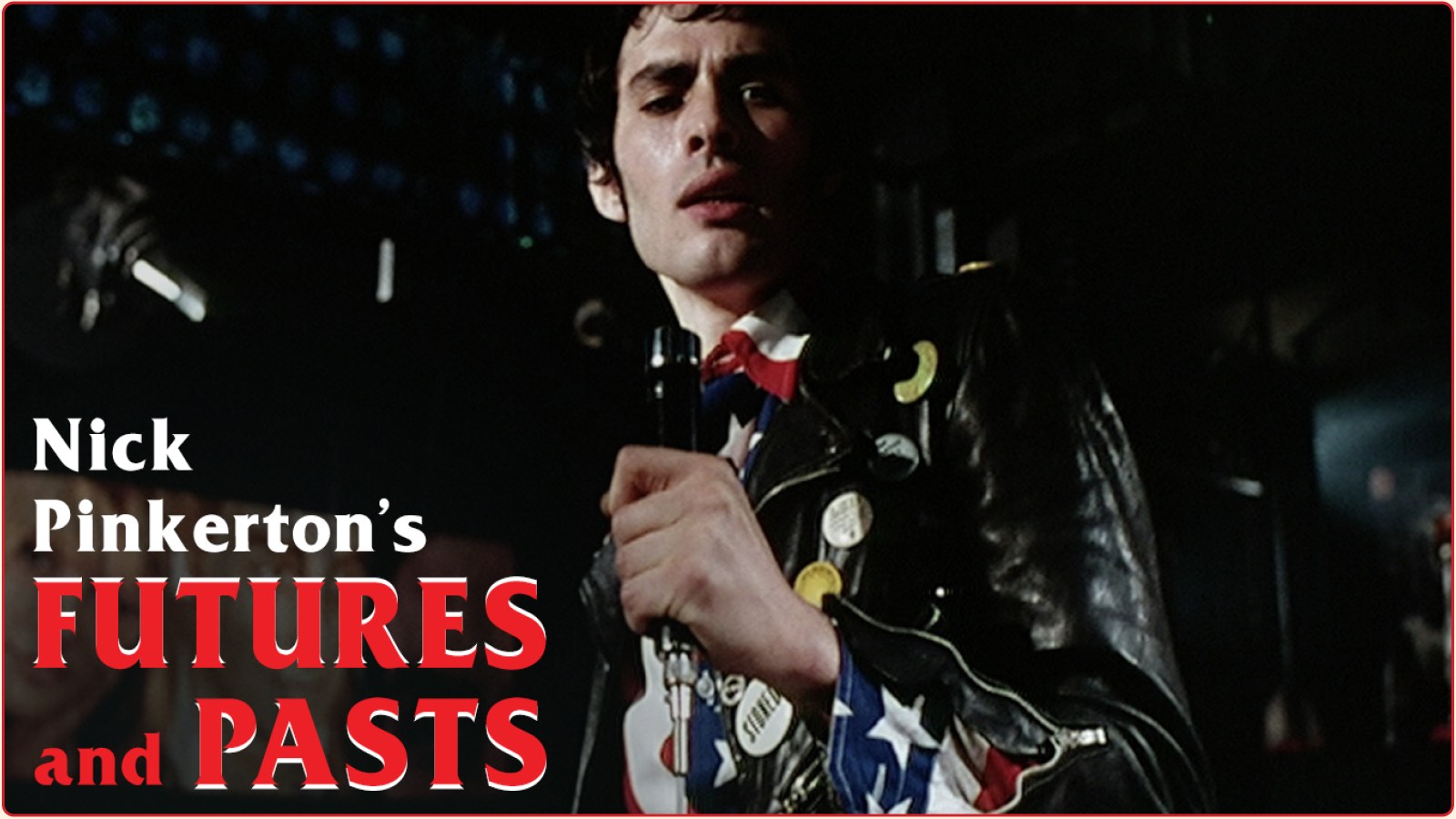
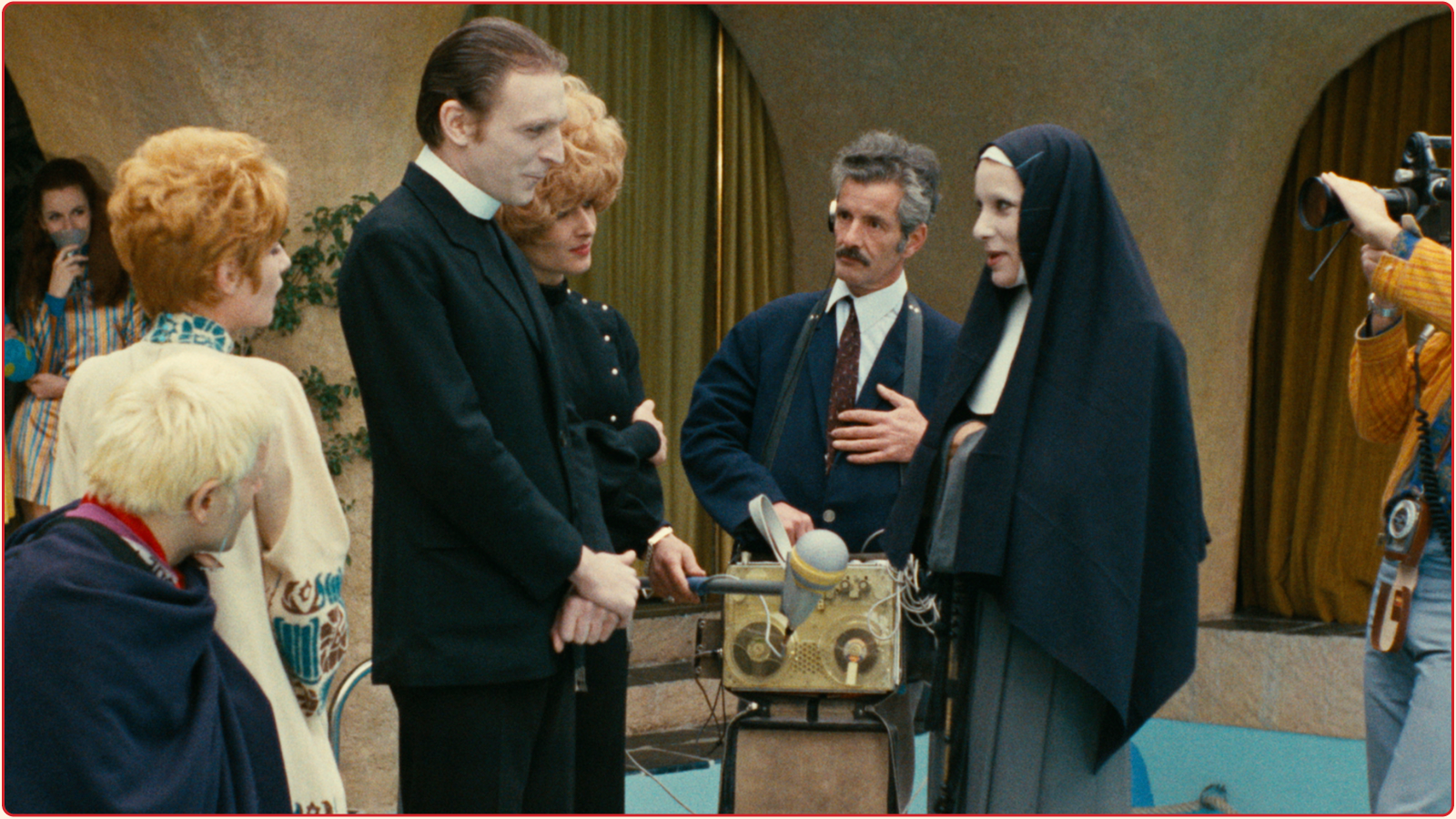
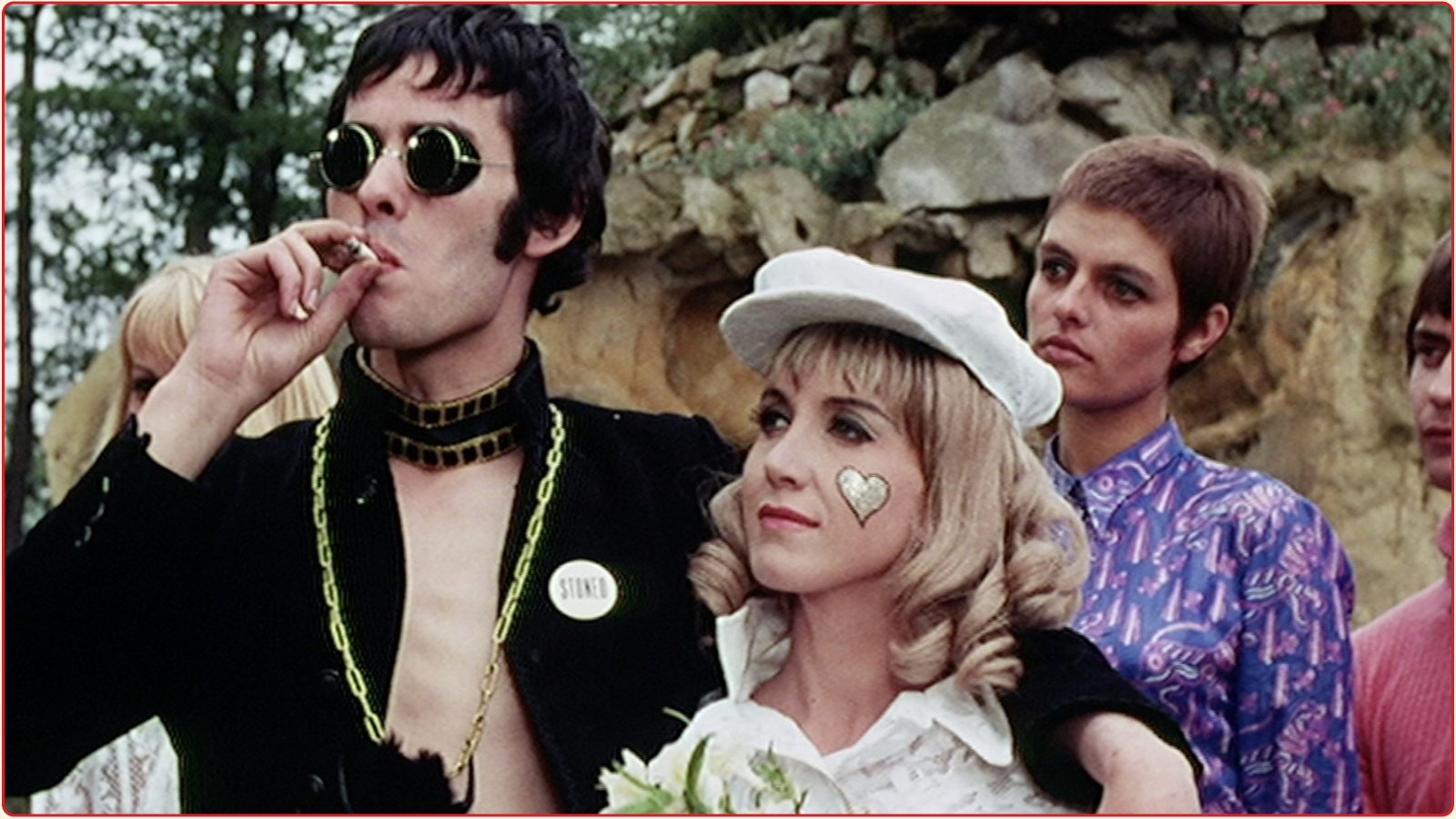
The confluence of a remarkable number of tributary strains of crazed counterculture creativity, Les Idoles features a triad of major French screen actors as its eponymous the “idols,” three yé-yé celebrities played by Jean-Pierre Kalfon, Pierre Clémenti, and Bulle Ogier-the last-named in her first substantive feature film role. (Kalfon had been seen onscreen as the leader of the Front de Libération de la Seine-et-Oise in Godard’s Weekend the previous year, while Clémenti’s star had been on the rise since his role in Luchino Visconti’s 1963 The Leopard.) Kalfon is Simon le Magicien (“Simon the Magician”), a bottle-blonde clairvoyant-cum-crooner who’s made a schtick out of mystic mummery, his Frankenstein’s monster-like misé-en-stage marking him as a primogenitor of Gerrit Graham’s “Beef” in Brian de Palma’s 1974 Phantom of the Paradise. Clémenti is Charly le Surineur (“Charly the Knife”), a surly, argot-spouting, chain-smoking, motorcycle-riding, leather-clad bad boy guttersnipe with a rictus sneer. Ogier is Gigi la Folle (“Wild Gigi”), a perky, pouty, pop-eyed faux-naïf package of nymphet fetishism dolled-up to appeal to sexually precocious teens and middle-aged perverts, sharing a haircut and much else with the 1965 Eurovision winner France Gall. Faced with fading album sales, the trio, at the behest of their anxious handlers, are holding a press conference intended to announce their formation of a supergroup-this rowdy round table, with which the film opens, the framing device to which it returns throughout. But instead of obediently regurgitating their well-rehearsed autobiographies, staged in a series of flashbacks set to narrative songs often delivered direct-to-camera, the three increasingly go off-script, describing a history of manipulation and coercion-the arrangement of a marriage between Charly and Gigi as fodder for fan magazines, for example, likely inspired by the on-air engagement announcement of “French Elvis” Johnny Hallyday and “Tous mais copains” singer Sylvie Vartan-and finally declaring independence from their masters and their public.
The leads, as well as the house band who accompany their often violently physical, unnaturally energetic and emphatic performances, Les Rollsticks, were all carried over from the stage production of Les Idoles, written and directed, as was the film, by one Marc’O-a singular figure in French culture, a polymath who, in his peregrinations, has exercised an influence far greater than his relative obscurity outside of obscurantist cinephile circles would suggest.. Born 1927 in Clermont-Ferrand as Marc-Gilbert Guillaumin, he was injured in Auvergne at 15 while fighting for the Resistance, an auspicious beginning to an adult life spent irreconcilably in rebellion, and by 20 was in Paris, where he immersed himself in the artistic ferment of the Quartier Latin and Saint-Germain-des-Prés. Hosting poetry readings alongside Boris Vian at the storied nightclub Le Tabou, incubator of the avant-garde movement called “Lettrism,” then being positioned as inheritor to the spiritual legacy of Dada and Surrealism, Marc’O met the poet and artist François Dufrêne, who in turn would introduce him to the dean of the Lettrists, Romanian-born Isidor Isou, who in his copious writings proposed a program for the destruction of old models of artistic creation and for the new building that would be done out of their debris.
Marc’O’s introduction to the film industry came through producing Isou’s debut feature, Traité de bave et d’éternité (Venom and Eternity). The film would enjoy an infamous Cannes screening in 1951, organized by Jean Cocteau only after much kicking up dust by Lettrists grown belligerent at its being denied a festival slot. It was at Cannes that the visiting Lettrist bravos, including Marc’O, encountered an intense 18-year-old studying for his baccalaureate at a local lycée, Guy Debord, whose first published text-on Isou’s film-would appear in the lone issue of Ion, a magazine on poetry and cinema published in April, 1952 and edited by Marc’O, who later described his relationship towards Debord around this time as that of a “protective and initiating big brother.”
Les Idoles (1968)
Describing sallies into filmmaking by Lettrist comrades Isou, Debord, Dufrêne, and Gil J. Wolman, and their relationship to what would come to be known as “expanded cinema,” critic Nicole Brenez notes the importance of Isou’s idiosyncratic concept of “syncinéma,” which “involved combining the film apparatus with living elements; the author must be present, the audience must participate, the film should be interrupted, etc. Lettrism enacted the critical reintegration of living presence within representation. Accordingly, the work no longer was the film: it was the ‘séance.'” Marc’O’s own contribution to Ion, titled “First manifestation of a nuclear cinema – Diagram, O. of the Cinema,” offers, per Brenez, “an amusing version of the Lettrist propositions at the very moment of their emergence.” The author, she continues,
suggests that each and every concrete cinematographic parameter be reinvented (he uses the term “le bouleversement,” the upturning or turning upside down), from the theater to the projection booth, temperature, screen, seats, the atmosphere inside as well as outside the theater. This particularly aims to displace the “receiving element,” that is, the “spectator in person.” Marc’O also successively put forth the invention of the aquarium-cinema (an aquarium full of fish is placed between the screen and the spectators), the electoral cinema (which “calls upon the spectator as an essential principle of mise-en-scene”), the tracking-shot cinema (seats move in the course of the screening), the nautical sport cinema (which “introduces sport as a primary principle of mise-en-scène”), the merry-go-round cinema (a circular, moving room with eight projectors with which Marc’O revives Grimoin-Sanson’s grand project), etc. In all these instances, the “receiving apparatus,” or spectator, must be prepared and transformed. In a critical tone that always verges on the burlesque, Marc’O goes through a list of practical examples: “The drunk or drugged-up spectator,” “the spectator with a vision blurred by distorting glasses,” the spectator whose glasses get changed every 30 seconds, the spectator with indigestion caused by hanging from by his/her feet, the spectator “altered by the absorption of stimulants,” heated up on a seat to the point of torture, frozen on a block of ice.
Roughly contemporaneously to all of this, Marc’O, as a regular habitué of screenings at the Ciné-Club du Quartier Latin, had become friendly with a budding film critic who would file an approving notice of Traité de bave et d’éternité, Maurice Scherer, later to find fame as Éric Rohmer; Jean-Luc Godard; and a teenaged cinephile prodigy from Roeun, Jacques Rivette, upon whose work Marc’O would exercise a profound effect some years down the line.
Marc’O’s active engagement with Lettrism appears to taper off not long after the schisms that broke the group into contentious shards-he himself went with the Externalists, as distinct from the Isouists and Debord’s Letterist International, precursor to the Situationist International-and after his stream-of-conscience Closed Vision (1954), presented with Cocteau’s imprimatur and shot by a young Jean-Gabriel Albicocco, played Cannes, he shifted his focus to the stage. (His follow-up film, the 1958 short Voyage au bout du rêve seems to have disappeared without a trace.) At the American Center for Students and Artists on the Boulevard Raspail in Montparnasse, known colloquially as the American Center, Marc’O found a home for his Center for Theater and Experimentation on Actor Performance, which he described as a “laboratory,” and which would attract a remarkable collection of pupils including-aside from the aforementioned leads of Les Idoles-Élisabeth Wiener, Michèle Moretti, Jacques Higelin, Yves Beneyton, and singer Valérie Lagrange. (Most of them can be seen in Les Idoles, and the last two alongside Kalfon in Weekend.)
The group’s time at the American Center, founded in 1931 by the American Episcopalian congregation of Paris to provide a healthy alternative to the city’s insalubrious café life, coincided with the space’s unlikely emergence in the early 1960s as a hotbed for outré creative endeavors of all stripes, a meeting point of the Franco-American avant-gardes which played host to a parade of pioneers, crackpots, and certified geniuses. Carolee Schneemann and Alejandro Jodorowsky performed happenings in the Center; Anthony Braxton did his first dabbling in electronic music in its well-equipped studio; the travelling Festum Fluxorum, featuring performances by Nam June Paik, Joseph Beuys, and Karlheinz Stockhausen, passed through; Jean-Jacques Lebel staged a production of Picasso’s Desire Caught by the Tail in a circus tent on the ground with a cast of underground stars (Rita Renoir, Taylor Mead, Ultra Violet) and live music by Soft Machine.
Most pertinent to Marc’O and his group was a year-long residency by Julian Beck and Judith Molina’s off-off-Broadway troupe The Living Theatre, radical in both their politics and their approach to dramaturgy and stagecraft, who had embarked on an extended period of European exile after losing the lease of their New York home after their 1963 production of Kenneth H. Brown’s The Brig, captured by Jonas Mekas in his film of the same name. (Another Living Theatre show, Jack Gelber’s The Connection, was adapted in 1961 by Shirley Clarke.) No strangers to Paris-they had won the Grand Prix at the 1961 Théâtre des Nations festival, and appeared again there the following year-the Living Theater’s time at the American Center produced Mysteries and Smaller Pieces, whose emphasis on improvisation and the leveling of boundaries between performer and audience-including pulling spectators pell-mell into the action and, at the opening of the show, egging on the heckling of a stiff, silent actor standing alone on stage-greatly impressed Marc’O and his company, and appears to have had an immediate impact on his own productions. Reviewing a new Marc’O play, Les Bargasses, staged at the Théâtre Edouard-VII in the 9th arrondissement in spring of 1965 with Clémenti, Bulle, and Kalfon as leads, Le Monde critic Claude Sarraute, who had been decidedly cold towards their previous work, viewed the group as invigorated by the influence of the anarchic Americans. Referring to the theatre company of Bertolt Brecht and wife Helene Weigel, Sarraute proclaimed: “The time of the Berliner Ensemble has passed, that of the Living Theatre has sounded.”
Les Idoles (1968)
Les Idoles, which would be the apotheosis of the Center for Theater and Experimentation on Actor Performance’s seven-year lifespan, was written in 1964, when the idols of yé-yé were still very much ripe for a toppling: Hallyday would report for military service in December-the probable inspiration for Charly’s vocal objection to being conscripted, to the horror of the press, in Marc’O’s play-but his bride-to-be Vartan was still turning out massive hits like “La plus belle pour aller danser” and “Il n’a rien retrouvé,” as were fresh-faced newcomers Goya (“C’est bien Bernard”) and Gall (the Serge Gainsbourg-penned “Laisse tomber les filles”). When it was finally performed in May of 1966 at the Bilboquet Théâtre de Paris on rue Saint-Benoit in Saint-Germain-des-Prés, the Beatles’ “Tomorrow Never Knows” was only a few months off, particolored psychedelia was starting to infiltrate pop, strains of heretofore underground experimentation were bubbling up to the mainstream surface, and the play’s pulling down of manicured stage facades might very well have seemed emblematic of a larger cultural groundswell, a collective yearning for something unmistakably authentic and untamed to rip through the packaged pretense. Marc’O, who had lost none of the old Lettrist’s fondness for real-life ruptures of rehearsed performance, offered two tickets to any spectator who entered the theater on a motorcycle.
The production of Les Idoles at the Bilboquet was an event. Some impressed attendees from the film world included Rivette, who had also much admired Les Bargasses, fellow Cahiers critic-turned-filmmaker Jean Douchet, and the nascent writer-director Jean Eustache, who had met Marc’O on evenings at hotspot Montparnasse brasseries La Couple and La Closerie des Lilas, and who kept coming back to performances at the Bilboquet, per critic Olivier Pélisson, “since pretty girls flocked there.” Actress Bernadette Lafont, who would appear as chart-topping nun Souer Hilarité (“Sister Hilarity”) in the film of Les Idoles, describes her first encounter with the stage play, in the company of Noël Burch, in her autobiography:
We arrive at Bilboquet, a precursor of café-theaters where Jean Bouquin presides. We’ve barely sat down when a din of guitars explodes our eardrums. The actors propel themselves on stage and I recognize the man with the deeply moving back: Jean-Pierre Kalfon, an actor of the caliber of Brando. My knees are tired of fiddling with tablecloths. He captivates me to the point that I barely look at Pierre Clémenti and the other actors. Then came Bulle Ogier, a female flame who sings and wiggles in a parodic charge that turns psychedelic. The piece denounces the launching of a star like a laundry detergent brand. Gigi la Folle, Charlie le Surineur and Simon le Magicien reveal how they were made and destroy everything. The public communes, feverish, transported by this pagan mass. Burning liquid drips down my cheeks. I, who hate tears so much, am unable to stem the excitement that overwhelms me. Everything seduces me, without restriction. The shady spectacle close to the cabaret dear to Bertolt Brecht. The actors sing, move, dance, act… In short, they are disturbing. At this precise moment Les Idoles overtake Mao’s Cultural Revolution which everyone is reveling in. This is a train I dream of getting on.
The train kept on rolling through most of ’66, which included stops at the Théâtre 140 in Brussels and a second Parisian stand at Bobino on rue de la Gaîté, after which Les Idoles was translated to film, according to its writer-director, “Because there are many things to say through cinema that could not be expressed through theater.” To take advantage of cinema’s capacity for split-second scenery changes, the cultural theorist and aesthetic philosopher Paul Virilio and architect Claude Parent, co-founders of the Architecture Principe group, were recruited to scout locations, these including Parent’s home in Neuilly and one of the undulous-walled Côte d’Azur villas-nicknamed “Les Troglodytes” (“The Cave Dwellers”) by prominent architecture-sculpture proselytizer and Gaudi acolyte Jacques Couëlle. The press conference scenes were filmed at the troupe’s home at Bibloquet, with stage lighting in full view, allowing free range to cinematographers Jean Badal and Gilbert Sarthre.
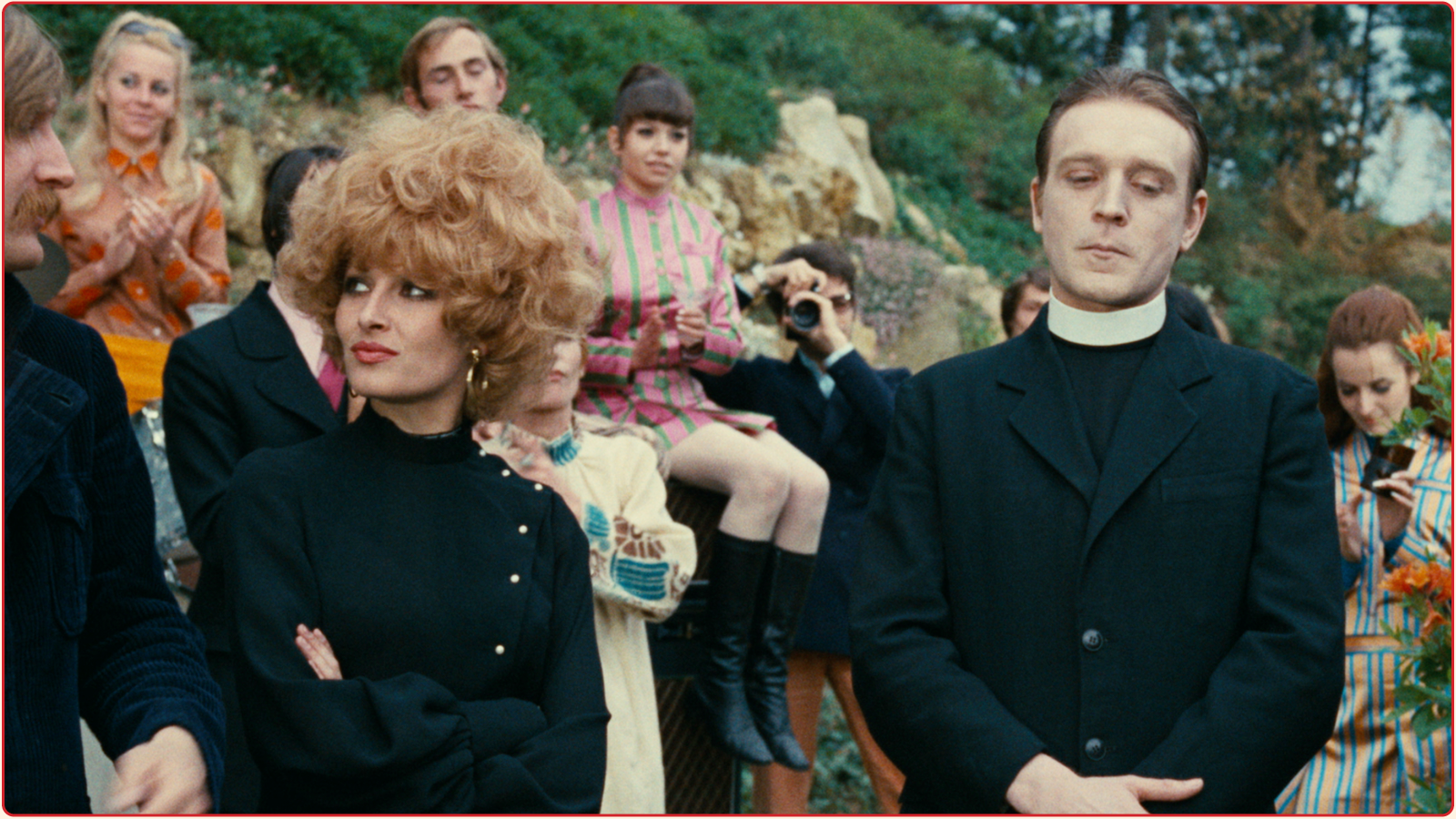
Costume changes, too, came fast and furious, with designer Bouquin-a couturier to Brigitte Bardot whose boutiques in St. Tropez and Paris helped create a craze for “hippie chic,” later to become a café-theater impresario-going all-in with mad excrescences of ruffle and feather, transparent plastic raincoats, swinging tarantula medallions, matching tricolor 14 Juillet outfits, and other camp extravagances. Among other notables newly recruited to the film production were Lafont; Eustache, hired on as editor; André Téchiné, a young Cahiers stringer who served as assistant director; Lagrange, fresh off the release of her self-titled debut LP, playing one of the impresarios; sculptor and painter Daniel Pommereulle, who’d recently appeared as one of the leads in Rohmer’s 1967 La Collectionneuse, playing the hip priest presiding over Gigi and Charly’s nuptials; and writer and director-to-be Francis Girod, author of the 1966 Manuel de la pensée yé-yé, playing a newspaper columnist named “Pécuchet” (at once a nod to Flaubert and spoof of radio and television personality Philippe Bouvard).
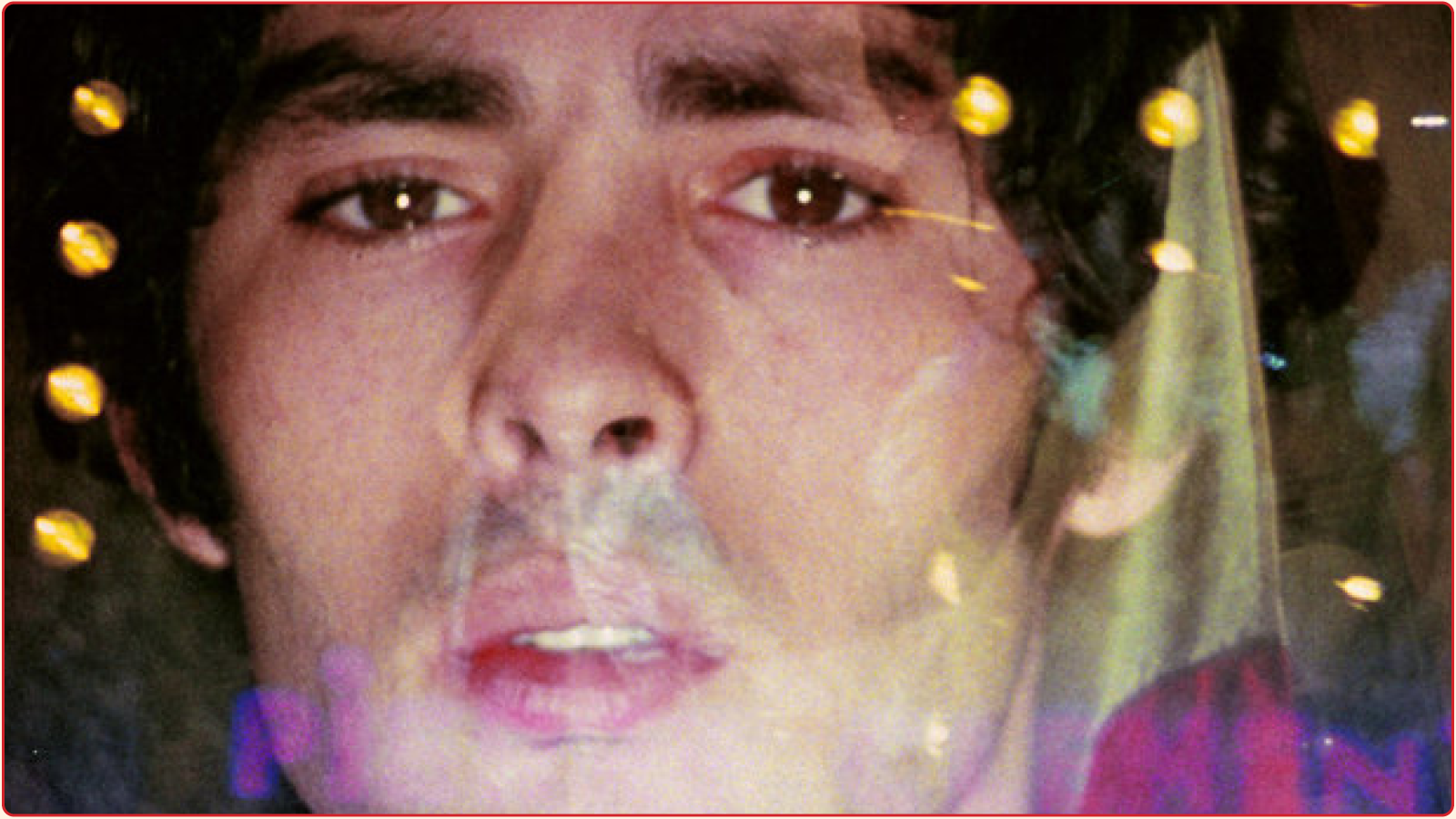
Structurally, the filmed Les Idoles is a work of disconcerting digression upon digression; while always returning to the “present tense” of the unravelling press conference, it otherwise freely toggles between musical and narrative flashbacks to events in the idols’ lives-both resoundingly, flamboyantly artificial-and other less easily definable material. Simon’s description of his reversal of fortunes, for example, moves between a spluttering, self-pitying recital and monologue at the conference, replete with a gruesome bout of face-pulling that put critic Jonathan Rosenbaum in mind of Jerry Lewis; a quiet tête-à-tête at his apartment with a young interlocutor from the press (Marianne di Vettimo), using much the same dialogue as the conference, veers into a short segment of Simon performing his #1 hit “Viens Dans Mon Coeur” at a nightclub, then proceeds through re-enactments of his early encounters with Gigi-including a fantasy segment of Faustian compact on a blank soundstage colored with sherbet-hued theatrical gels-and his first trip to the recording studio before finally taking a pit stop back at the press conference, en route to the next round of hallucinatory reminiscences. While Les Idoles frequent employs long takes preserving the integrity of the antic and downright acrobatic central performances, Eustache more than earned his pay packet with his deft handling of these transitions.
Simon, as is made abundantly clear when the backing track briefly drops out in the recording studio booth, cannot carry a tune to save his life, a handicap he shares with both Gigi and Charly. For a film about sticky sweet pop pap, Les Idoles is a defiantly difficult listening experience-and not only in the discordant background music that threatens to drown out several dialogue scenes-the sinister rumble of brass and timpani that underscores negotiations over Charly’s fate by Idols Productions brass and the Chef de Cabinet du Ministre des Armées (Henry Chapier), for example. Our trio are never presented as “convincing” hitmakers, any more than the American Center group were trying to ape the polished “craft” and concision of gesture bestowed by classical training; rather they are something like overwound automatons in the process of extravagant malfunction, like Moira Shearer’s dancing doll Olympia in Michael Powell and Emeric Pressburger’s The Tales of Hoffmann (1951). In turning the stylized postures of yé-yé performers into a grotesque lampoon, Marc’O and his leads arrive at something practically proto-punk, with Clémenti’s Richard III mannerisms and Kalfon’s ogrish lurching predicting Johnny Rotten, their snarling performances before ecstatic teenyboppers having something of the incongruity of Public Image Ltd.’s 1980 appearance on American Bandstand, while when Gigi turns a schmaltzy paean to her grand-mère into a squalling dirge about death and incest, one might almost be listening to a Francophone Lydia Lunch.
Somewhat complicating matters is the fact that, while average French studio musicianship in the yé-yé heyday fell well short of American and English standards-Françoise Hardy, one of the most bewitching and enduring talents to emerge from the period, would refer to the recording of her 1962 breakthrough “Tous les garçons et les filles” as “three hours with the four worst musicians in Paris”-Les Rollsticks are a formidably tight combo. The lineup consists of bassist Jacques Zins, keyboardist Patrick Greussay, guitarist Didier Léon, drummer Stéphane Vilar, and saxophonist Didier Malherbe, a member from 1969 to ’77 of the psych rock outfit Gong, among other accomplishments. The songwriting is credited to Greussay and Vilar-the son of theater legend Jean Vilar, who’d become the first director of the Festival d’Avignon in 1947-who had been introduced to Marc’O through Graeme Allwright, a New Zealand-born folk musician who’d been based in France since the late ’40s, and had recorded with Zins on his 1965 self-titled debut LP. Following the Les Idoles shoot, the three would attempt to keep the band-or something like it-together; Vilar, Zins, and Greussay, joined by drummer Alain Sirguy, guitarist Denys Lable, and Yves Saint Laurent model/actress/Paris nightlife fixture Danièle Ciarlet, better known as Zouzou, would step into Studio Davout in 1969 to record under the name Calcium, their lone, underpromoted single eventually gaining legendary status and impressive prices in crate-digger circles. (The full LP was finally issued in 2017 by Monster Melodies Records.)
The Calcium sessions were underwritten by Sylvina Boissonnas, inheritor of a fortune built on her grandfather’s invention of a lucrative oil-prospecting device in the 1920s, and an angel investor in radical avant-garde art, funding, among other things, the films produced by the so-called Zanzibar Group, including Philippe Garrel’s Le lit de la vierge (The Virgin’s Bed), starring Clémenti and Zouzou, and Pommereulle’s Vite, both completed in 1969. These various intersections and overlaps of personalities, representing the crosspollination of fashion, rock music, politics, modern art, underground literature, experimental theater, Dionysian drug culture, and cinema, which Les Idoles in some ways anticipates, were reaching full flower in Paris by the end of the decade. Just around the hour mark, there is a passage which seems like a symbolic passage from the transitional middle years of the ’60s to their bacchanalian conclusion, a sweaty, stoned, champagne-sopping freak-out scored to a hectic Les Rollsticks jam in which the newly insurgent Charly, Gigi, and Simon start to manhandle their bosses, jerk about as though afflicted by St. Vitus’s dance, and float in and out of hazy, bad-trip stupors.
Les Idoles (1968)
By the time Les Idoles made its way into theaters, Marc’O wasn’t around to bask in the glow of the prophet. The film’s cursory release was overshadowed by the events of May 1968-by many reckonings the greatest external manifestation of a strain of virulent protest against the intolerability of everyday life, which carried through Dada, Surrealism, Lettrism, and the Situationism that had risen from Lettrism’s ashes-and its director had turned his back on commercial cinema, like Godard with his Dziga Vertov Group, who Marc’O followed to Rome for an eventually scuttled collaboration on Le vent d’est (Wind from the East, 1970), staying on to occupy the Teatro Municipale in Reggio Emilia and co-direct a movie about the experience, L’impossibilità di recitare Elettra oggi. In the years following, Marc’O would continue his established pattern of insubordinate creative intransigence: staging a rock opera (Flash rouge) that brought together 18-year-old Catherine Ringer and musician Fredéric Chichin, later known as Les Rita Mitsuoko; appearing alongside Félix Guattari at the 1977 International Congress Against Repression in Bologna; producing experiments in video art as part of Philippe Quéau’s Groupe de Recherche Image at the Institut National de l’Audiovisuel (INA); occupying the roles of stage director and éminence grise in the musical theatre group Génération Chaos…
To summarize such a variegated career is an impossible task, but one lasting resonance of Marc’O’s work may be said to be a certain shot in the arm to French stage and screen acting, as seen in the full-bodied, over-the-edge physicality of Les Idoles, in the frenetic, relentless frugging of its leads. Writing in Cahiers, Jean-Claude Biette grouped Marc’O with Věra Chytilová as a filmmaker of “explosive liberty,” and his unfettering influence found eager disciples. Rivette, writes Tom Paulus, would discover in Marc’O’s productions “the kind of spontaneity, a highly physical style of performance by actors unpolished by the ‘Conservatoire’ style and bursting with youthful energy, joy and fearless improvisatory zest… and that he had also discovered in the cinema of Rouch, Cassavetes, and Renoir.”
Rivette would go on to recruit Ogier, Kalfon, and Moretti to star in his 1969 L’Amour fou, a watershed work in his own career. In that film’s harrowing sequences of Kalfon cutting his clothes to ribbons with a pair of tailor’s shears as Ogier watches, and the whirlwind of destruction in which they dismantle their apartment, one can see something of the wedding night fiasco between Gigi and Charly in Marc’O’s film. (In the same year, Ogier would appear in, among other things, Douchet’s short Et crac…! and, with Moretti, Téchiné’s debut feature Paulina s’en va.)
Eustache, according to Pélisson, “was fascinated by the specific direction of actors of [Marc’O’s] ‘school,’ where hyper-expressiveness and the choreography of bodies contrasted with the ambient naturalism,” and it is no great stretch to imagine that the future director of that orgy of domestic discord, 1973’s La Maman et la Putain (The Mother and the Whore), took not a little from his time with Marc’O. (The recent restoration of Eustache’s film includes a scene, previously excised, in which the characters played by Lafont and Jean-Pierre Léaud attend a screening of Les Idoles.) As to the new generation of raw and reckless actors who would come out of the café-theater scene, like Gérard Depardieu and Patrick Dewaere from the Marais’s Café de la Gare, they certainly would have found things to idolize in Marc’O’s manic band of players.
Lafont, who would appear in Rivette’s Out 1 (1971) and Noroît (1976) as well as Eustache’s film, writes of her encounter with Les Idoles lifting her out of a mounting disillusion with screen acting in the mid-’60s:
While the sparkle of the Seventh Academic Art exasperates me, Les Idoles lights a new flame in my heart. This show runs on wandering paths. It is out of the ordinary like all the things I love. I want to blend in with Bulle Ogier and Jean-Pierre Kaldon. For me, it is no longer about “making movies” but becoming a real acrobat. The insolent Nouvelle Vague has long since burned all its cartridges, and the directors have fallen into line.
The rejuvenating, renegade force that Lafont felt in her encounter with Les Idoles may not immediately impact a viewer of Marc’O’s film-as one reviewer of a 21st-century staging of Mysteries and Smaller Pieces mused of yesteryear’s innovation turned today’s establishment: “One can’t help but wonder what happens to the revolutionaries once the revolution has been won”-but the rabid commitment of its leads is all the same riveting, its dinning excess and braying, brazen confrontation quite unlike anything in ’60s French cinema, its stars thrashing against the lens like wild animals in a glass enclosure. With its performers unable to feed off the energy of the audience-and vice-versa-as in live theatre, one suspects the film of Les Idoles is a somewhat more harrowing, brutalizing experience than was the stage version, its assault on glossy teenybopper fantasies like an attempt to cure a sweet tooth by forcing you to eat an entire ice cream parlor. A film of malign, amphetamine energy and obnoxious flamboyance, Les Idoles has never been something that the world much wanted, but it may just be the one that our present era of subservient “stan” culture richly deserves.
Nick Pinkerton is a Cincinnati-born, Brooklyn-based writer focused on moving image-based art; his writing has appeared in Film Comment, Sight & Sound, Artforum, Frieze, Reverse Shot, The Guardian, 4Columns, The Baffler, Rhizome, Harper’s, and the Village Voice. He is the editor of Bombast magazine, editor-at-large of Metrograph Journal, and maintains a Substack, Employee Picks. Publications include monographs on Mondo movies (True/False) and the films of Ruth Beckermann (Austrian Film Museum), a book on Tsai Ming-liang’s Goodbye, Dragon Inn (Fireflies Press), and a forthcoming critical biography of Jean Eustache (The Film Desk). The Sweet East, a film from his original screenplay premiered in the Quinzaine des Cinéastes section of the 2023 Cannes Film Festival.
Les Idoles (1968)