
From the Magazine
Limelight: Ann Hui
On the long, tenacious career and lyrical films of the cinematic poet laureate of Hong Kong.

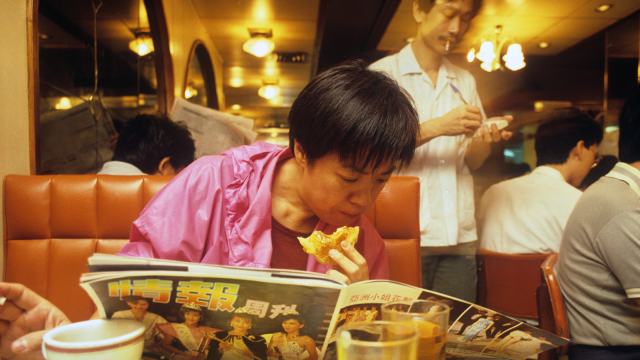
Ann Hui, 1986. Photograph ©Greg Girard
Share:
This essay appears in Issue 1 of The Metrograph, our award-winning print publication. Explore more of Issue 1 and newer editions here.
ANN HUI ON-WAH, LIKE MOST patriotic Chinese children born in the smoldering aftermath of World War II and years of ruthless depredations by the Imperial Japanese Army, grew up with a healthy contempt for the Land of the Rising Sun. This undemanding, reliable prejudice would be complicated when, at the age of 16, Hui learned that her mother, a tight-lipped and often sullen woman with whom the tomboyish teenager kept up a fraught-at-best relationship, was in fact born and raised Japanese, her dark moods presumably stemming as much from cultural isolation—her mother couldn’t read Chinese at the time and was hesitant to speak it—than from temperament alone.
The discovery that one has the blood of both the invaded and the invader running through their veins would no doubt have been a rude awakening, but it may have also had more than a little to do with making Hui the filmmaker she would become: a director of films deeply concerned with questions of cultural identity and heritage, intensely ironic works—not “irony” in the sense that’s frequently, pejoratively used by generation after tedious generation of proselytizers for the New Sincerity (or whatever it’s being called this time around), but in the sense used by philosopher Richard Rorty, born of an understanding that our own perspective on things is by no means the only one, that in different circumstances we might easily be other than who we so passionately believe ourselves to be, and that the bedrock of “self” in fact lies on shifting sands. Hui’s Song of the Exile (1990), a pivotal work in her filmography—which has to date received only scattershot attention in the US—draws closely from her first visit to her mother’s birthplace, and depicts the ensuing feeling of social quarantine that allowed Hui to glean something of the alienation experienced by her mother. The tacit assumption that one is a procession of selves in the course of a life carries through Hui’s films, quite a few of them epoch-spanning affairs in which characters are found mulling over their pasts and in which interpersonal dynamics and identities change over time, even transpose: the seduced become seducers, custodians become dependents, revolutionaries cool in their fervor.
Hui’s own story began in Anshan, Liaoning Province, in May 1947. Two months after her birth, her father, a clerk conscripted by the Kuomintang government, relocated the family to live with his parents in Macau, then under Portuguese rule, in order to shelter from the Chinese Civil War that would soon end with a decisive victory for Mao. In 1949, her mother joined her father in Hong Kong, where he was working; Hui remained in Macao until her grandparents returned to the Mainland, when she followed her parents to the British colony, taking up residence in a waterfront housing estate in the North Point neighborhood located along Kowloon Bay, an area then rapidly filling with war refugees from China and immigrants from elsewhere in Southeast Asia—this period, along with much of Hui’s life up to the dawning of her filmmaking career, is reproduced in Song of the Exile.
Graduating from St. Paul’s Convent School in Causeway Bay, she would go on to take a degree in comparative literature and philosophy at the University of Hong Kong (HKU). Her university years overlapped with the Hong Kong trade union riots and bombing campaigns that flared up across 1967, and Hui would later evoke the political fervor, violence, and repression of this period in Starry Is the Night (1988), as well as reflect upon it in conversations with fellow classmates, by then middle-aged, in the documentary As Time Goes By (1997), co-directed with Vincent Chui.
Chinese literature, classical and otherwise, holds a place of pride in Hui’s filmography: she has kept up a decades-long engagement with the writer Eileen Chang, whose work she has thrice made into films (1984’s Love in a Fallen City, 1997’s Eighteen Springs, and 2020’s Love After Love); she directed a two-part adaptation of the serialized wuxia novel The Book and the Sword by Louis Cha, aka Jin Yong; and in 2014’s The Golden Era, Hui offers a fictionalized retelling of the life and death of the author Xiao Hong, a representative figure of rebellious 1930s youth culture, played by Tang Wei. In addition to these inspirations from prose, classical Chinese poetry is also a weighty presence in several Hui films, including recitations of Liu Yuxi’s “The Black Gown Alley” by the young Hui stand-in to her grandfather in Song of the Exile, of Li Bai (“Yellow Crane Tower”) and Su Shi (“First Rhapsody on Red Cliff”) in July Rhapsody (2002), and namechecks of Qu Yuan and Du Fu by Chow Yun-fat’s preening, dandyish chiseler in The Postmodern Life of My Aunt (2006). Finally, Hui’s most recent film, the touchingly handmade Elegies (2023), finds Hui in dialogue with several Hong Kong (and Hong Kong expatriate) poets about their life, their art, and the changing face of the city, her subjects including Huang Canran, Liu Waitong and, briefly, the celebrated Xi Xi. “If film is my wife or husband,” says Hui in Keep Rolling, a 2020 documentary portrait of the director by repeat collaborator Man Lim-chung, “then literature is my mistress.”
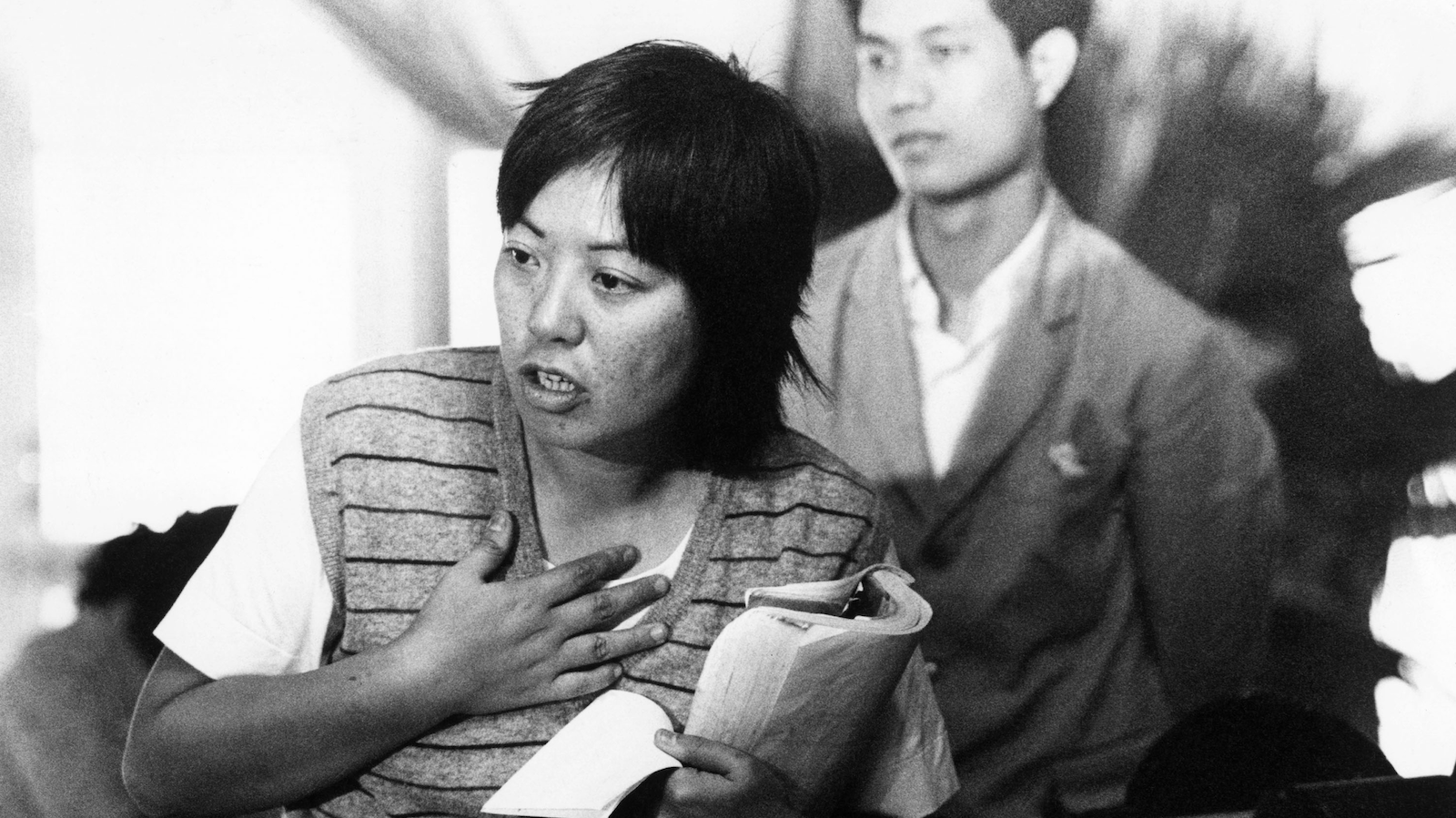
Ann Hui, during the making of Boat People (1982)
Hui’s betrothal to cinema began in earnest when, burned out by the academic grind after completing a master’s thesis on the French writer and filmmaker Alain Robbe-Grillet in 1972, she took the advice of a university supervisor to pursue cinema as a vocation. The choice to take an oeuvre like Robbe-Grillet’s as her subject, a body of work encompassing both literature and cinema and exploring the relationship between the two via written approximations, per Hui’s thesis, of “space montage” and the tracking shot, suggests a healthy preexisting interest in filmmaking. This was by no means a niche curiosity: the ’60s mania of campus cinephilia was especially pronounced in Hong Kong, a city with a rich history of compulsive moviegoing; critics in The Chinese Student Weekly such as Law Kar, Kam Ping-hing, and Tin Gour amassed loyal readerships, and the latest developments in high modernist international cinema were screened at the Studio One ciné-club at City Hall.
As locally produced narrative “art” cinema was practically nonexistent in Hong Kong during Hui’s formative years—a notable exception being The Arch (1968) by Tang Shu-shuen, a graduate of the University of Southern California—Hui decamped for London Film School in Covent Garden, where her classmates included fellow Hong Kong New Wave luminary Yim Ho. The experiences of Hui and Yim were not unlike that of many sons and daughters of the suddenly prosperous, boomtown Hong Kong that emerged in the years after the city’s population had swollen with refugees from the Mainland, quite a few of whose children would get their higher education abroad. Along with Tang we find, among directors-to-be, Tsui Hark at the University of Texas at Austin, Ronny Yu at Ohio University in Athens, and Mabel Cheung at New York University. Having finished her two years in London, Hui was introduced by way of Dominic Tsim Tak-lung, an HKU friend and future media personality, to the director King Hu, a maverick who’d broken away from the finicky oversight of the Shaw Brothers studio to continue producing wuxia films of unusual formal rigor and period detail, and who adopted the aspiring filmmaker as something of a protégé, hiring her as assistant director on his Taiwan-shot The Valiant Ones (1974), on the set of which a young Sammo Hung—a future Hui collaborator—was presiding as fight choreographer.
Conforming to a not-unusual trajectory among the directors who would come to be classified together as the Hong Kong New Wave—including Tsui, Yim, Patrick Tam, Alex Cheung, Johnny Mak, and Allen Fong—Hui came to making theatrical films through an apprenticeship in the high-pressure environment of television production. She landed first at Television Broadcasts Limited (TVB), which had begun transmitting its signal from a hilltop in Kowloon in 1967; had attracted hip, savvy young talent like Law Kar; and by 1976 had established a “film unit” to shoot on 16mm stock, which Hui used for an episode of the crime program Dragon, Tiger, Panther (announced in an opening title as “a salute to Alfred Hitchcock”). After turning out well-regarded episodes of the programs Social Worker, Below the Lion Rock, and CID—all of these ripped-from-the-headlines fiction series dedicated to exploring the social realities of contemporary Hong Kong, with CID drawing on actual cases investigated by Hong Kong’s Criminal Investigation Department—Hui left TVB to join the community relations department of the Independent Commission Against Corruption (ICAC), a recently created anti-graft body that had decided it could efficiently dramatize its mission via television, and for which Hui directed six telefilms in the course of a single year before resigning in protest after two of the films were withdrawn from public broadcasting.
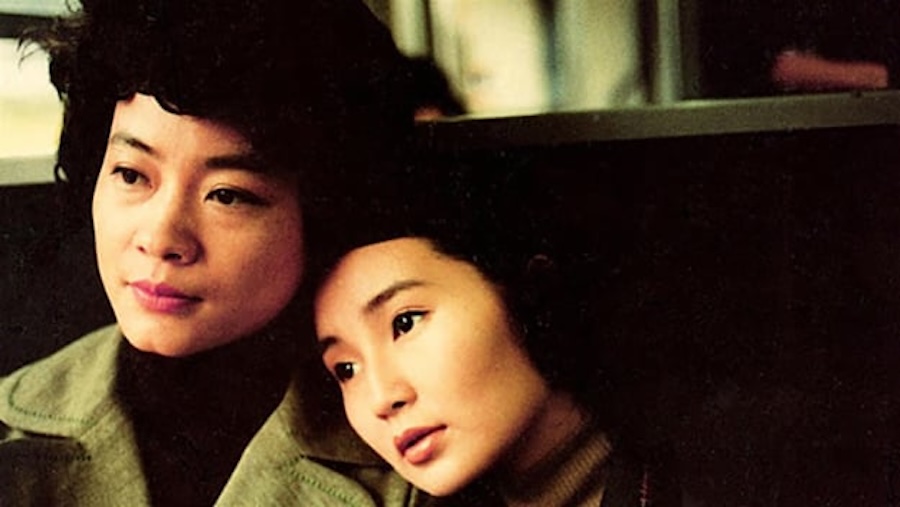
Song of the Exile (1990)
Aside from “The Boy from Vietnam,” the episode of Below the Lion Rock that initiated Hui’s onscreen engagement with the Vietnamese “boat people” refugees who’d begun arriving to Hong Kong en masse in the late ’70s, Hui’s work for television remains, outside of some scattered festival screenings, inaccessible to the Western viewer without a working knowledge of Cantonese. As such, it’s hard to say to what degree her first theatrical feature, The Secret (1979), represents a departure or a continuation—though Hui is here, as in her telefilms, taking inspiration from a real-life news item, specifically the mysterious events surrounding the murder of two 22-year-olds whose bodies were discovered on Lung Fu Shan, a hiking destination above Pok Fu Lam Road. Financed by a production company formed by the film’s Taiwanese-born star Sylvia Chang and former TVB executive Selina Chow, the death-haunted, frenetically inventive The Secret is unlike anything else in 1970s Hong Kong cinema, and established Hui as a major filmmaker almost overnight. (Filing a “Hong Kong Journal” for Cahiers du Cinéma describing his summer of 1980 in the city, Serge Daney notes Hui has been “passionately discussed since [his] arrival.”) Its intricate, disjunctive flashback structure and employment of a spectral, red-coated figure owes not a little to Nicolas Roeg’s Don’t Look Now (1973), and the whole affair, more than any other Hui film, feels like the work of someone who wrote a 187-page master’s thesis on Alain Robbe-Grillet.
From its earliest years to the present, the Hong Kong filmmaking industry has been first and foremost geared towards the production of popular, profitable cinema via private funding. In the absence of abundant public moneys, surviving professionally requires a record of box-office success—in this regard, Hong Kong’s industry more closely resembles that of the US than it does the industry of most of Europe, or even of the culturally proximate Taiwan. The Hong Kong New Wave directors, then, had to seek out a way to strike a balance between the demands of audience appeal and individual expression after their initial successes. Those who managed to do so, like Tsui Hark, would go on to long careers with all the attendant perks—even if, in the eyes of some local critics, Tsui would never again display the potency of early, angry films like 1980’s Dangerous Encounters of the First Kind. Those who found such compromises impossible to manage or, in the long run, to stomach—Patrick Tam is a textbook example of the latter type—would work sporadically if they continued to work at all.
For a time, at least, Hui seemed to find an admirable equilibrium. Her follow-up to The Secret, the sprightly comic fantasy The Spooky Bunch (1980), isn’t nearly so stylistically audacious or serious-minded as its predecessor: it concerns a Cantonese opera troupe bedeviled by an unquiet phantom named “Cat Shit.” The film, however, was quietly revolutionary in its own way, an outlier in the male-dominated industry for its much-publicized emphasis on hiring female above-the-line talent: two of the actresses, Tina Lau and the brilliant comedienne Josephine Siao, were also its producers, while the screenplay came courtesy Joyce Chan, the former TVB and ICAC colleague who’d also written The Secret. (Per Siao, the film was meant to employ an all-woman crew and act as “a celebration of the liberation of Hong Kong women from the kitchen,” an aspiration scuttled when the Czechoslovak cinematographer who’d been hired was barred from Hong Kong, deemed a potential Communist threat.)
Hui’s next two features, The Story of Woo Viet (1981) and Boat People (1982), rounded out a trilogy of sorts begun with her “The Boy from Vietnam,” addressing the fallout of the Vietcong capture of Saigon in 1975. Where Woo Viet, an early starring vehicle for an intensely charismatic young Chow Yun-fat, then best known for his television work, was concerned with the abuses faced by vulnerable Vietnamese migrants in Hong Kong and the Philippines, Boat People sought to depict the humanitarian catastrophe that drove them to diaspora—the implementation of the New Economic Zones program in the unified Socialist Republic of Vietnam, which saw thousands of rural Southerners evicted from confiscated, collectivized farmland to undergo reeducation and, alongside unemployed urbanites, attempt to “develop” often impossibly barren terrain for agricultural use.
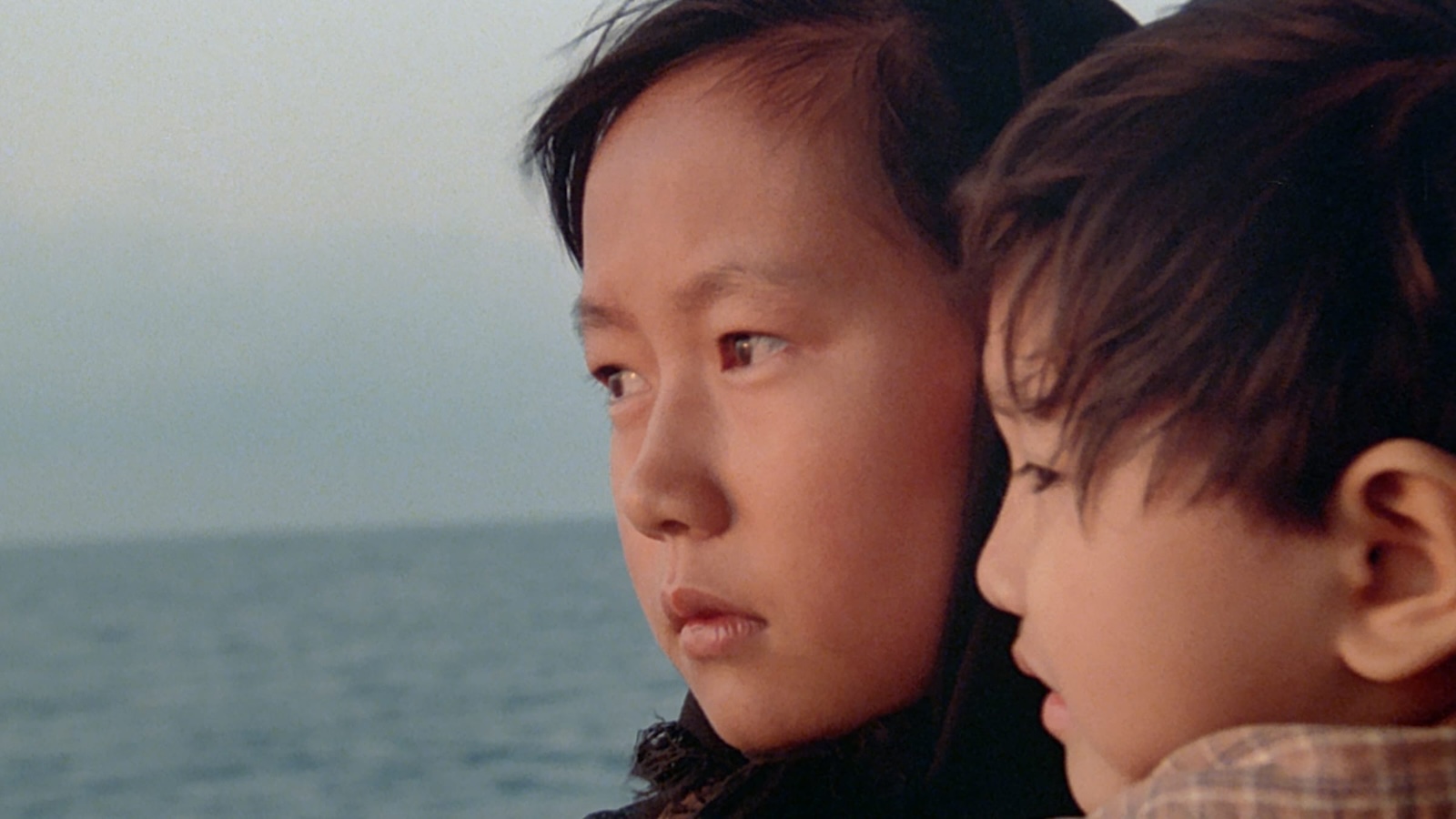
Boat People (1982)
Boat People raised Hui’s profile at home and abroad considerably, bringing along with this new prominence greater opprobrium than she had faced on any project to date, beginning with the film being dropped from the competition slate at the 1983 Cannes Film Festival due to the newly friendly diplomatic relationship between the Vietnamese and French governments under the presidency of François Mitterrand. The film was criticized in certain circles—left- and right-wing—as politically compromised by virtue of having shot scenes on Hainan Island in the People’s Republic of China, whose relations with Vietnam were decidedly frosty in the wake of the 1979 Sino-Vietnamese War, and just about nonexistent with Taiwan, a vital market. (The prosperity of the Hong Kong industry has long been reliant on export, and it is here that Hui’s movies, often so locally specific and resistant to genre tags, have frequently struggled to recoup costs even when popular at home.)
Given Hui’s tendency towards relentless self-criticism, somewhat infamous among her peers, one should take Hui’s estimation of her own work with a grain of salt, though whatever merits may be found in her Louis Cha diptych—whose two parts, entitled The Romance of Book and Sword and Princess Fragrance (both 1987), were shot across Mainland China over the course of a calendar year—they represent to their director a personal nadir. (Per Hui, in Keep Rolling: “I was truly apologetic for the result. I was very depressed.”) Around the same time Hui felt herself facing a creative impasse, she was casting a keen eye towards the emerging Taiwan New Wave and transformative films like Edward Yang’s 1983 feature debut That Day, on the Beach (“I watched it and thought Hong Kong New Wave is dead. The film was talking about reality with an intensity and depth we lacked”) and Hou Hsiao-hsien’s 1985 A Time to Live and a Time to Die (“Hong Kong scriptwriters were plot and action driven, and that one started telling me it’s the characters that come first and the story follows, not the other way around”).
Indeed, it was through working with the Taiwanese-born screenwriter Wu Nien-jin, the author of Yang’s That Day and a repeat Hou collaborator, that Hui enjoyed her first succès d’estime after several wilderness years in which she felt she’d lost her footing, Song of the Exile. The loosely autobiographical work stars Maggie Cheung as a stand-in for the twentysomething Hui, seen confronting her strained relationship with her mother (Lu Hsiao-fen) and a stock of stored-up resentments—illustrated via flashback—first upon returning to her native Hong Kong after studying abroad, and then accompanying her Japanese mother on a trip to her hometown of Beppu.
Hui would continue to work in myriad genres after Song of the Exile with an equally wide range of accomplishment. Made for Golden Harvest, 1991’s Zodiac Killers—a mid-budget reunion with Andy Lau, to whom Hui had given his first substantive film role in Boat People—is the nearest thing in her filmography to a “heroic bloodshed” picture à la John Woo. While occasionally narratively muddled, the story (co-written by Wu) about Chinese expats in Tokyo does provide Hui occasion to create an often poignant portrayal of cultural disorientation, and no movie that ends with a showdown at a junkyard porno shoot can be all bad. (Said Lau of Hui’s ill-starred attempt to “sell out”: “She didn’t actually want to mwake a commercial film. She wanted the package of a commercial film to express her ideas.”) The Stunt Woman (1996), featuring a soon-to-be Hollywood-bound Michelle Yeoh in the title role risking life and limb for her boss Sammo Hung, is likewise disjointed—one suspects a serious on-set injury to Yeoh was at least partially responsible—but is nevertheless an enormously endearing and entertaining film about the exigencies of excelling as a woman in a male-dominated industry, as well as an affecting paean to the go-for-broke spirit of Hong Kong cinema produced in its moment of near-total commercial collapse. A knockoff of The Sixth Sense (1999), Visible Secret (2001), about a woman (Shu Qi) who sees ghosts only out of one eye—an affliction also found in Johnny To’s My Left Eye Sees Ghosts of the following year—finds Hui circling back to the horror-comedy terrain of The Spooky Bunch for diminishing returns, and of the above films, it seems to most clearly represent an attempt to regain box-office footing after a string of commercial disappointments.
These genre departures and sporadic detours into nonfiction filmmaking aside, the years following Song of the Exile have seen Hui mostly dividing her attention between modestly scaled dramas of contemporary life, seriocomic and otherwise, and larger-canvas period films. If the latter have predominated over the last decade, one suspects this can be accounted for by changes in the Hong Kong industry, now dominated by Mainland money and increasingly as indifferent to “little” pictures as the tentpole-driven American studios that their Chinese counterparts are competing with.
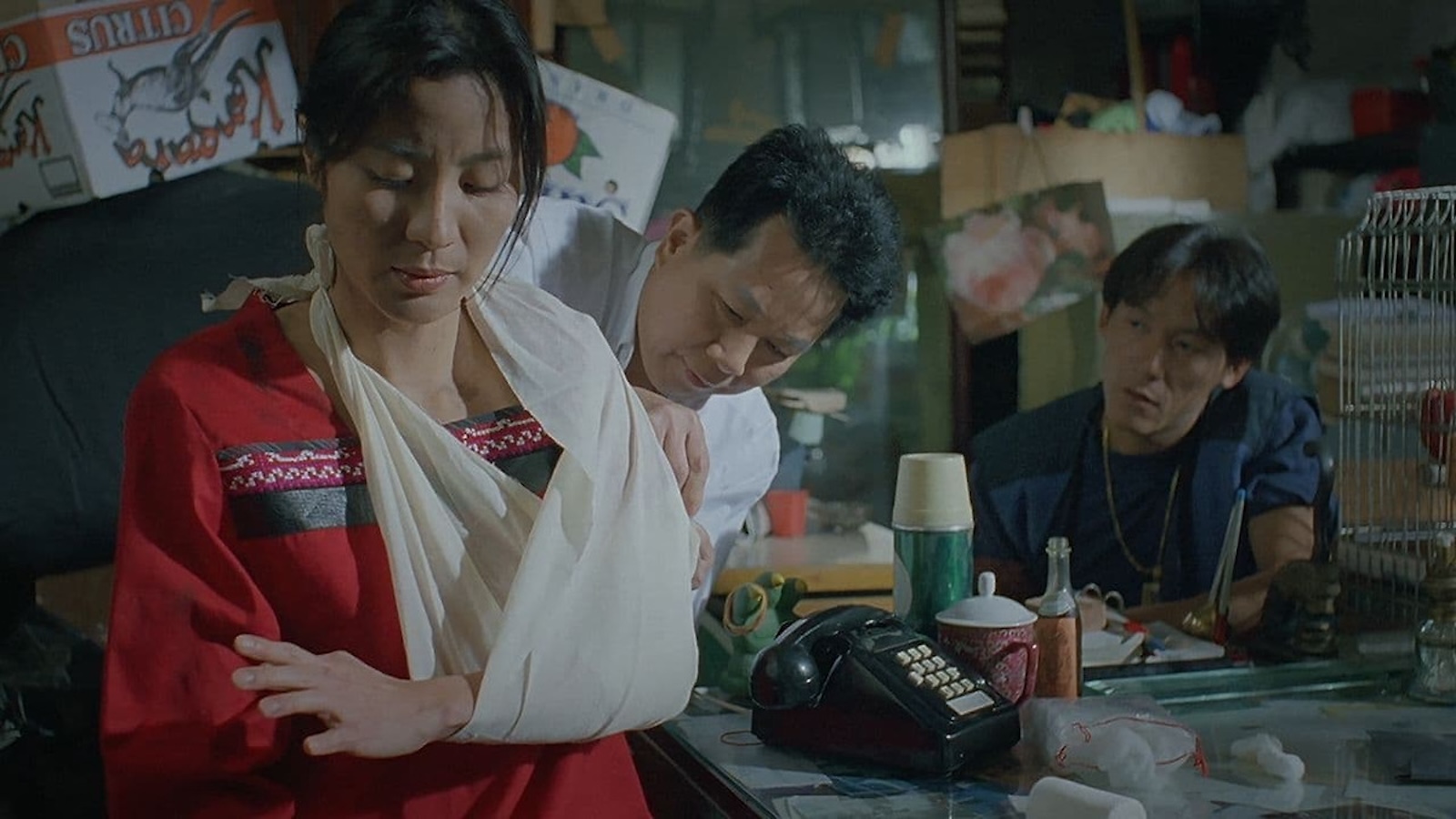
The Stunt Woman (1996)
Certain themes central to Song of the Exile—the pressures experienced by those placed in the role of caregiver, the new ways of seeing that come with passages of time and space—recur through Hui’s dramas of the next 20 years. The complexities and contradictions that arise in attempting to obey traditional rules of filial piety in a society that has drifted far from tradition in many other regards becomes the source of rueful comedy in 1995’s sublime Summer Snow—the first of her two collaborations with Hou’s prodigiously gifted cinematographer Mark Lee Ping-bing, the other being Eighteen Springs—in which Siao, reuniting with Hui for the first time since The Spooky Bunch, plays a working mother of two forced to reassess her relationship to her tyrannical father-in-law (Roy Chiao) when, shortly after his wife’s death, the onset of Alzheimer’s renders him increasingly helpless and childlike, in both the petulant and sweetly wonderstruck senses of the word. Reversals from independence to vulnerability figure also in Jade Goddess of Mercy (2003), The Postmodern Life of My Aunt, The Way We Are (2008), and A Simple Life (2011)—the last a none-too-distant relation to Summer Snow, and a film that feels like the summation of this particular strain of Hui’s work.
The figure who finds themself in the caregiver role in A Simple Life is an overworked, self-absorbed, cynical Hong Kong film producer with no personal life to speak of, played by the ever-reliable Lau. The individual cared for is not a relation by blood or marriage but a maid (Deanie Ip) who has served the Lau character’s family for decades, one of the amah domestics who poured into Hong Kong from rural China in the 1940s; after she suffers a debilitating stroke, he finds himself serving her in turn. It’s one of Hui’s most moving films, and—watching the scenes in Keep Rolling in which the director patiently feeds and otherwise tends to her nonagenarian mother in the frugal Hong Kong apartment that’s been Hui’s reward for a lifetime of service to cinema—one suspects it is one of her most personal as well.
Lau’s character, in his monomaniacal dedication to his work, has something in common with his director, though one could also make a convincing argument for Ip’s character, an antiquated throwback still fussily going about things the old-fashioned way in a Hong Kong that bears scant resemblance to that of her youth, consigned to an old-age home filled with Hui’s industry contemporaries (including actor-director Paul Chun), as being as much or more so Hui’s authorial stand-in. Leading up to A Simple Life, older women living on their own without the support of traditional family structures had already received an unusual amount of attention in Hui’s films—unusual in the sense that, unlike in most films, these women feature as characters at all. Along with Ip’s character, we have Siqin Gaowa’s stubbornly independent, single-living Shanghai auntie in The Postmodern Life of My Aunt, a film that shifts gradually from broad, candy-coated comedy to dun desolation and resignation, and the two women—Nina Paw’s single mother and Chan Lai-wun’s forgotten-by-her-family grocery store clerk—at the center of The Way We Are, a light-touch study of commonplace lives and domestic rituals with an especial emphasis on the dinner table, a favorite setting for Hui.
A portrait of old age and obsolescence, A Simple Life, intended by Hui to be her final film, instead brought her renewed attention and plaudits, and the fiction features she’s made since are among the most expensive and expansive in her filmography. All three of them—The Golden Era, Our Time Will Come (2017), and Love After Love—are period pieces set in the 1930s and ’40s, before the Japanese had been run out of Manchuria; that is, the years preceding the resumption of the civil war and the stalemate schism amongst the component territories making up Greater China that followed, a time when most everyone could identify a common, culturally alien enemy. Nevertheless, there is a sense that Hui has drifted—if by censor-imposed necessity rather than by choice—from the provocation that one feels in Boat People or Ordinary Heroes (1999), the latter historical film dealing with a more recent timeline of political protest and still-fresh outrages.
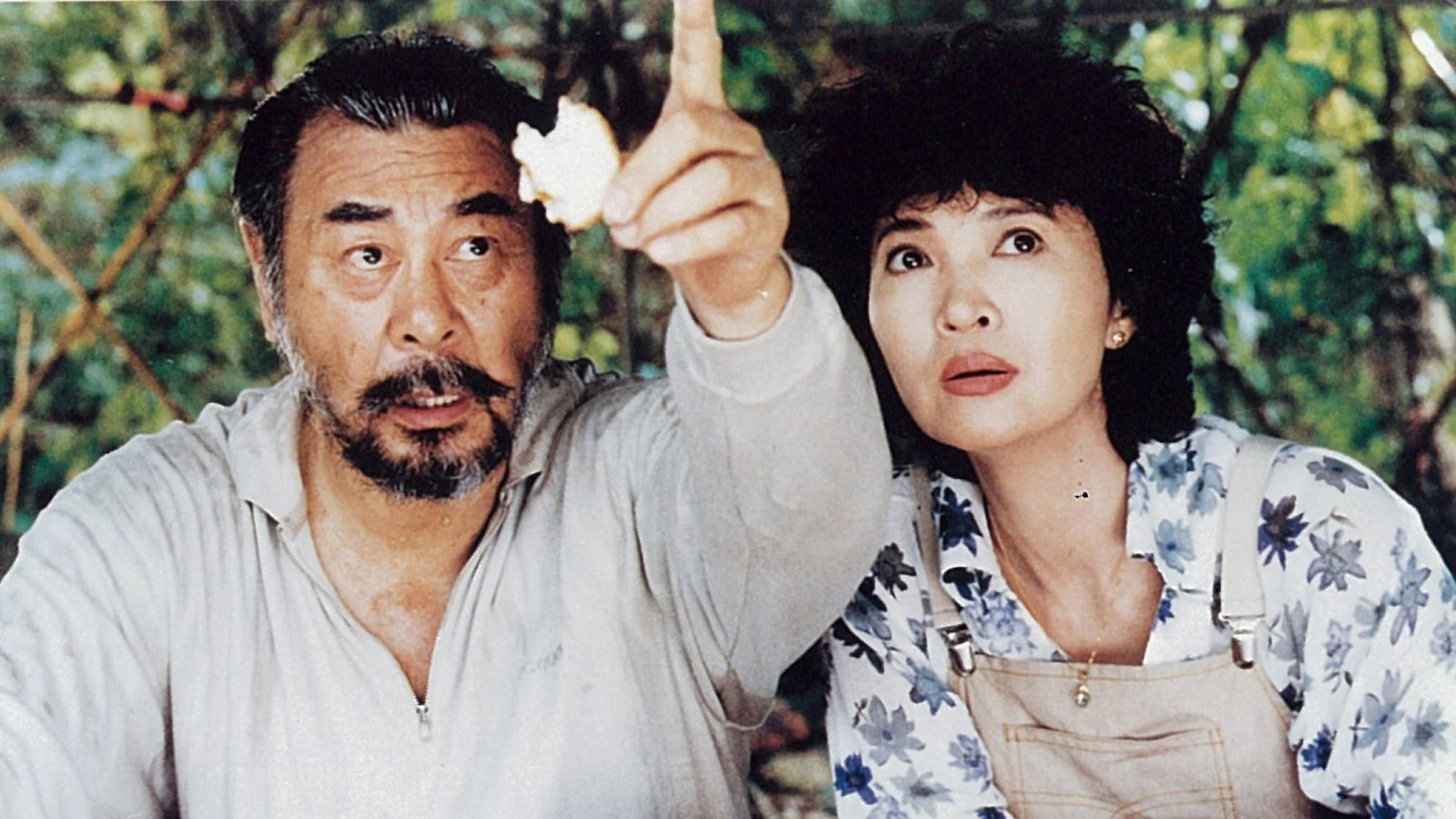
Summer Snow (1995)
Ordinary Heroes, a film of dissent and disillusion whose events span between 1979 and 1989, revolves around the lives of leftist activists involved in the cause of a different set of boat people, a community who had existed on the water of the Yau Ma Tei Typhoon Shelter since 1916 and had been continually frustrated by the Hong Kong government in their attempts to resettle in inland public housing and reunite with their spouses from the Mainland. The four would-be reformers are Loletta Lee, Tse Kwan-ho, Anthony Wong, playing an Italian priest with a Maoist bent based on the real-life Father Franco Mella, and Tsai Ming-liang’s muse Lee Kang-sheng (Hui had appeared herself in Tsai’s 1997 The River as a director who street casts Lee to play a corpse floating face down in the polluted Tamsui River). This narrative throughline is interpolated with scenes of agitprop street theater that, per the opening credits, are “based on the life of activist Ng Chung-Yin,” one of the founders of the ’70s Hong Kong New Left group the Revolutionary Marxist League and an early supporter of the democracy movement in the People’s Republic of China who was arrested and subsequently exploited by the Chinese Communist Party (CCP) following a 1981 visit to the Mainland. The film’s final images, of the annual June 4 candlelight vigil in Victoria Park mourning Tiananmen’s dead, wouldn’t escape the censure of Beijing 25 years later—the gathering itself, in fact, has been banned since 2020.
As Time Goes By acts as a companion piece of sorts to Ordinary Heroes, the conversation in the documentary occupying similar territory to that which the later film explores by narrative means, expressing a deep ambivalence towards the legacy of the colonial period and an equally profound anxiety about the CCP-controlled future—the onset of so-called “left melancholia” that accompanied the end of any hope of reunification leading to better times ahead. At least one of Hui’s old classmates announces an intention to emigrate; Hui has no such plans. “One reason I stayed was out of curiosity,” she explains. “It’s worth paying a big price. Also, it’s like my mom. I’ve known her for 50 years. I feel that I know her better than anyone… I have the same feeling for Hong Kong.”
Hui is a Hong Kong filmmaker par excellence; her filmography offers a tour of the city-state’s nooks and crannies beyond the familiar Victoria Harbour skyline: the fishing villages of Cheung Chau in The Spooky Bunch and Visible Secret; the Tin Shui Wai public housing estates, built on land reclaimed in the ’80s, in The Way We Are and its pessimistic reverse image, Night and Fog (2009); the dismal retirement home and grotty wet market of Sham Shui Po in A Simple Life… At the same time, she is a filmmaker fascinated with translocal relationships, and the border crossings, territorial expansions, and intercity commutes that fill her filmography are always laden with significance. There is the journey from Vietnam to Hong Kong in The Story of Woo Viet and its inverse in Boat People; the voyage from London to Hong Kong to Beppu—and into maternal memory and commiseration—in Song of the Exile; the tearful goodbye to Tokyo and tragedy at the conclusion of Zodiac Killers; the shuttling between 1930s Shanghai and Nanjing throughout Eighteen Springs, and the majestically despondent banishment from 21st-century Shanghai that precedes the last act of The Postmodern Life of My Aunt; significant excursions to Guangzhou in both Stunt Woman (where the city is a pool of personal and professional stagnation) and July Rhapsody (where it provides an invitation to adultery); and, perhaps most obviously, the consequences of the Japanese military’s incursions into British and Chinese territories in the wartime films.
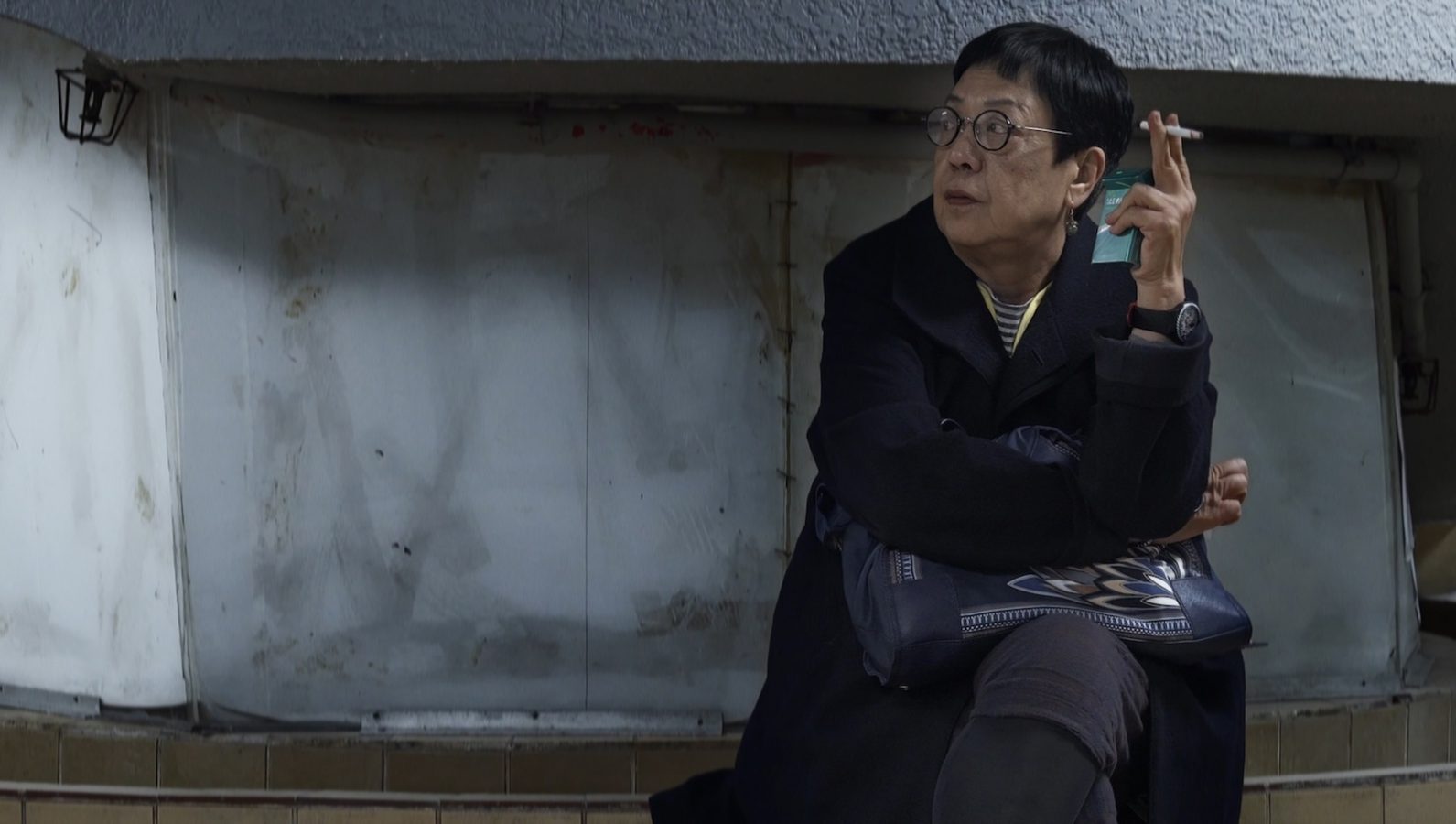
Keep Rolling (2020)
Hui’s films are hardly alone among those of Hong Kongese cineastes in their acute awareness of frontiers and perimeters; the faraway (yet so close) Mainland and the threat of its imminent encroachment looms particularly large in post-1984, pre-1997 Hong Kong cinema. But if a certain sense of liminality is intrinsic to Hong Kong identity and the cinematic expression of that identity—Hong Kong, that colonial city of immigrants without a collective precolonial memory, that Anglo-Chinese metropolis somewhere between the Commonwealth and the CCP—Hui and her films embody that marginal, threshold-like, neither/nor quality to a degree that distinguishes them from the ordinary run.
The categorization-resistant quality of her output has been, at times, a liability. Speaking of Song of the Exile in a 1991 interview, Hui described it as “something between a commercial film and an art movie, something between a statement and personal, lyrical stuff.” At home she has found more well-wishing than wealth; an unprecedented six-time winner of Best Director at the Hong Kong Film Awards, she has never enjoyed the consistent backing of any studio nor the capital to establish her own, as did Hark and producer Nansun Shi with their Film Workshop. Among her industry colleagues Hui is regarded as an intellectual anomaly, while even her most perspicacious Western admirers, such as early champions Daney and Dave Kehr, have tended to discuss her films as exemplars of the brio, vivacity, and unpretentious earnestness of the industry in which she works. (Writing of Boat People, Kehr calls it “forthrightly and uncompromisingly a melodrama,” a movie “out of the popular tradition of the bustling Hong Kong studios.”) It is true that her films, though more marked by personal idiosyncrasy than the stamp of any tradition, can be disarmingly direct in their emotional appeal—they are, as her sister says of Hui as a young woman in Keep Rolling, “not sentimental… just very sensitive.” It is likewise true that these are qualities that don’t always impress foreign arbiters of cultural prestige as indicative of seriousness of purpose; while Summer Snow, A Simple Life and The Postmodern Life of My Aunt are all superior studies of aging and physical decline compared to the solemn tread to the grave that is Amour (2012), Michael Haneke has a Palme d’Or and an Academy Award, and Hui doesn’t. (It is worth remembering here that plaudits and heaps of cash are all very nice, but the important thing is to make interesting films, odd, unexpected films, engaged and engaging.)
In the balance, then, the story of Hui’s career is far from a tragedy; it is, instead, one of plugging along, of enduring reversals and achievements as they come, of licking wounds and living to fight another day, at least so long as one has days left, as the shoulder-to-the-wheel workaday poet subjects of Elegies do. All of this is distilled into the small-scale dramas of her post–Song of the Exile output, somewhat like Sinophone equivalents to the Japanese shōshimin-eiga, exemplified by the films of Yasujirō Shimazu and Mikio Naruse, invested in the everyday struggles of middle- and lower-middle classes, the little scenes with much larger implications that unfold in market stalls and cubicles and waiting rooms and around the kitchen table. (David Thomson, writing on The Way We Are, calls Hui’s work “perhaps Hong Kong’s closest equivalent to Ozu.”) Fortunes have been made in Hong Kong cinema—Hung has his prizewinning stable of thoroughbreds, Johnny To his fabled wine cellar—while Hui has made just enough to keep herself in cartons of cigarettes and the electricity bill paid, the best that most of us can hope for from a vocation. A familiar sight strolling the city’s streets and taking exercise in its parks, she is the down-to-earth Everywoman of Hong Kong movies, her dedication to the ordinary no small part of what makes her work extraordinary.
Share:
Recommended
- Material Memories
 The ongoing effort to bring African film heritage home.
 - Minor Indignities in Moviegoing
 The two friends swap stories about their weird and wonderful experiences at the cinema.
 - Limelight: Ann Hui
 On the long, tenacious career and lyrical films of the cinematic poet laureate of Hong Kong.