

Columns
Listen Up! Mihály Víg & Béla Tarr
Metrograph’s Listen Up! column, in which we revisit movie scores and soundtracks of note, continues with a look at Mihály Víg’s haunting, signature collaborations with Béla Tarr, the Hungarian director defined master of “slow cinema,” who passed away this January.
Béla Tarr’s The Turin Horse plays at Metrograph from February 8 as part of The Year Begins in Silence, and Sátántangó is now streaming on Metrograph At Home.
Share:
WHEN BÉLLA TARR WAS PREPARING his fourth feature, the unsafe-space chamber drama Almanac of Fall (1984), sound recordist Zoltán Gazsi gave him a cassette tape by trabant, the cult Budapest bedroom band named after East Germany’s “people’s car.” Taken by their sound, Tarr invited Mihály Víg (principal songwriter for the band, alongside founder Gábor Lukin) to compose the film’s soundtrack.
Víg described this first collaboration with Tarr as “really difficult work.” Víg wasn’t used to being told what to do. Born in Budapest in 1957 to a Moscow-trained chemist and an ethnomusicologist of peasant stock, he’d left school at 15 to work in a book distribution center (“unskilled labor and a great job. You could read a lot”), spending nights between Moscow Square—fictionalized in Moscow Square (2001), Ferenc Török’s glossy tale of Trabant-crashing punks grifting, griming and sniffing glue—and the Young Artist’s Club, furtive hangout of filmmaker Gábor Bódy and all the other impossibly innovative, sexy, and, uh, secret police dudes.
It seemed that every other artist was a cop. The state “didn’t go after fools,” said Víg. “They tried to recruit intelligent and important people, individuals you’d never suspect of being informants.” They also signed and censored musicians, rigging groups with ignorant engineers, cheating them out of rights and royalties (to this day). trabant avoided censorship (and shame) by staying determinedly underground. “Just as the democratic opposition circulated their ideas through samizdat, we issued our own kind of samizdat,” he said. “Like folk songs passed on orally, our music spread via hand-copied cassette tapes.”
In 1983, the band briefly surfaced for János Xantus’sEskimo Woman Feels Cold, in which they play a band, act and perform their own songs. Film soundtracks offered more leeway in what could be expressed on record. These six tracks represent trabant’s only studio sessions: every other available recording was produced, without extensive practice or much planning, and, though possessing a defined bandleader in Lukin, the band were collaborative in a way even the most horizontal collectives might find unrecognizable. “Everyone knew everyone.” If you played, you played. These were house parties, not staged performances. Rehearsals? Pah! A four-track tape recorder. Go.
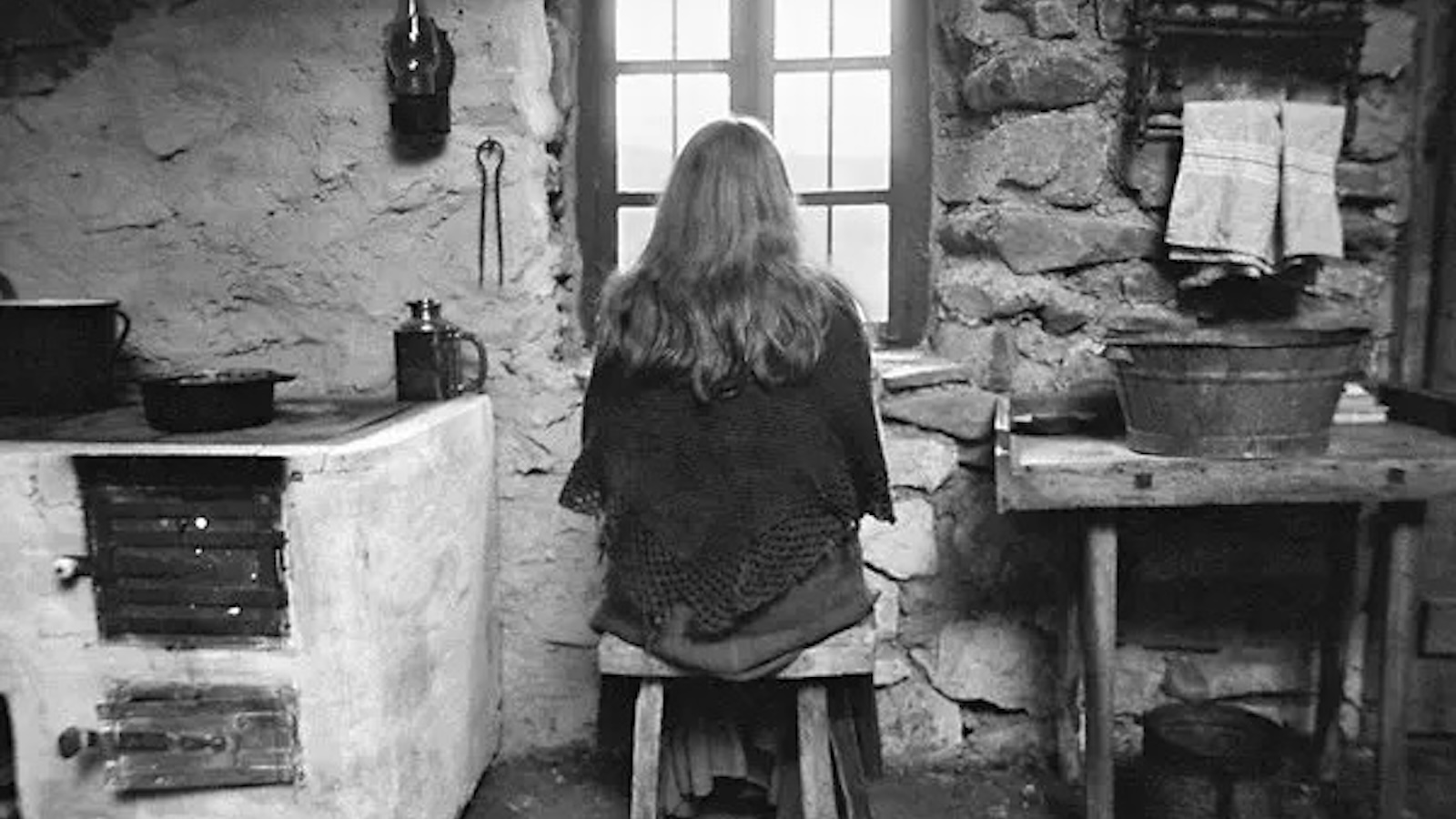
The Turin Horse (2011)
Though more deliberate, this approach persists in Víg’s score for Almanac of Fall, all keyboard and synthesized strings, an astral folk immediately identifiable as Vig sounds for Tarr pictures. When, to the composer’s “great surprise,” Tarr called again to ask him to write the songs for his next film, 1988’s Damnation—Tarr’s first collaboration with Nobel Prize-winning author László Krasznahorkai and a milestone work in his filmography, establishing what would become the signature motifs of his subsequent muddy, melancholic masterpieces—Vig described the experience as one with “much better memories.” For this soundtrack, Víg posted an ad for musicians “who played in restaurants and bars,” and a counterculturalHungary’s Got Talent produced the boozy ensemble best recognized for “Kész Az Egész ,” the consummate miserabilist pub song liberated from trabant’s catalogue (And now it is over, everything over and done. And there won’t be another, ever another, not one.)
The eschatological pull of a sketchy religious cult almost took Víg in the early’90s, only for him to emerge through the disobedient light of Tarr’s Sátántangó (1994), a seven-and-a-half-hour portrait of a commune in late Communism ground to a standstill, reanimated by the resurrection of a conniving, believed-to-be dead former inhabitant, Irimiás—portrayed by Vig himself, who also composed the film’s score. By this time, Víg was a single father of five children, and still insists that he has no idea why he was cast in the role. Tarr has described the selection as obvious; as a filmmaker, “you can only show what’s already there.” And practically, he knew he could count on Víg’s understanding of the 120-day shoot. The composer was always present on set, even if he didn’t appear in the scene. As Sergio Leone practiced with Ennio Morricone’s sound, everything was composed and recorded before the shoot, with the music an essential on-set aid to the filming.
Through his filmmaking, Tarr sought to retrieve… the whole wide world, realizing the line of Stavros Tornes’s 1977 manifesto that “cinema is the liberating application of the margins in search of the proper world (cosmos).” Constitutionally unable to lend his singular cinematic language to anything beyond his own films—i.e., the ads every other celebrated filmmaker violate whatever good things they’ve done by doing—Tarr maintained an unshakable faith in people and in art. He understood that the tools used by propagandists and advertisers to handicap and control a semi-conscious populace could instead be used by cinema to nourish and improve people’s lives.
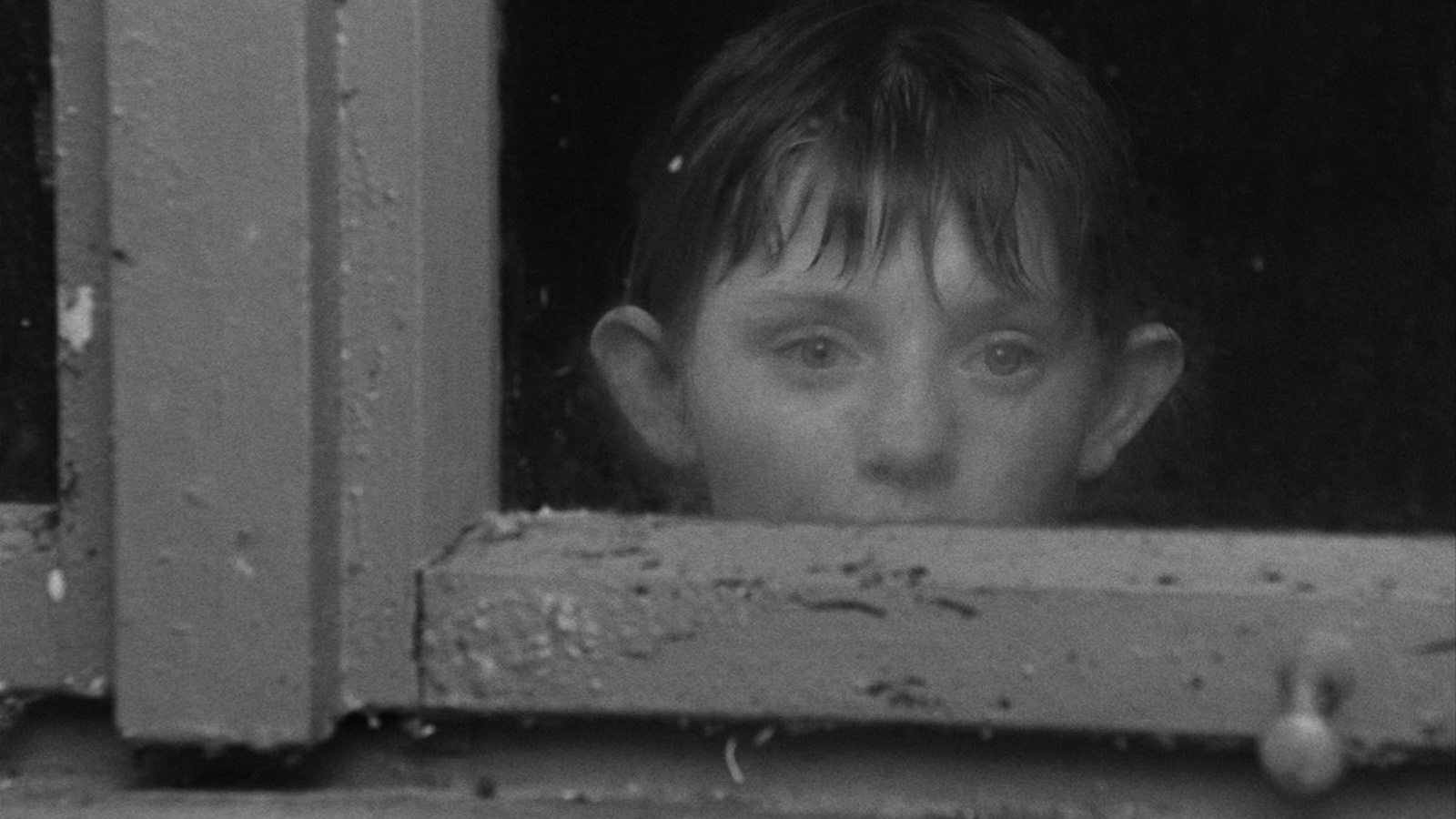
Sátántangó (1994)
Music exists to the same end. As the famous bar scene of Sátántangó (1994) implies, all there really is is the accordion and the barroom, and, per the epic opening of 2000’s Werckmeister Harmonies, all of the people gathered there really, really are the solar system (take note Mr. Musk, o’ deviant master of dead matter). Tarr’s economy is neither capitalist nor communist, but human, and Víg brings the salutary music to which the peasants (stars) dance: six steps forward, six steps back. With a deathbed sense of humor, this animist art of collapsed time insists on a hidden truth that was more palpable before 1989: that there was (there still is) a different way of doing things.
Premiering at the Hungarian Film Festival, Sátántangó was initially reviled for its attitude to time itself as a protagonist, and all protagonists, all characters, as ideological constructs. Fifteen years later, Tarr found himself on similar ground, having to repeatedly insist on the horse of The Turin Horse (2011) as a character as legitimate as any other. But his final film effectively began as early as Almanac of Fall, when László Krasznahorkai finished a theatre reading with a question: “What happened to the horse?” As Tarr explained in an interview with Jonathan Romney, “Everyone knows the Nietzsche story, and everyone’s listening to it for Nietzsche, but nobody listens for the horse. I was always curious: what could happen to the horse?”
The Turin Horse was the first score in which Víg played everything: cello, violin and piano—wind, hooves and all—recording each track separately so that an effectively never-ending, or, eternally returning, mix could be produced, emphasizing different instruments at different times. This time it took four or five takes, unlike the “Valuska” of Werckmeister Harmonies, perhaps Tarr’s most recognizable riff, with its piano recorded just once and the cello and violin twice. As was the case with all of their collaborations, the music for The Turin Horse would be further synchronized to the images in post-production, Tarr and Víg delightedly laboring together over the minutiae of the sound design, as epitomized in the opening scene.
Nietzsche once wrote that “birthdays must not be a commemoration of a past day but, like every true celebration, must be an abolition of time.” This is the cinema of Béla Tarr and Mihály Vig. It’s normal to weep on your big day. The Turin Horse, in particular, is ascendant; a lift to experience. To describe the film as nihilist, as it so often has been by critics, is (Turin) horseshit. And on that, and on the persistent need for history to be re-written from below: the word “clock” derives from the “cluck” sound of the handheld bells Christian missionaries travelled with. These announced the word of one God, the call to prayer. As the cult took hold of the land, it took time too. Bells got bigger. The sound of surveillance could be heard for miles around. The day was cut up. Can it be any coincidence that bell-founding’s secret ingredient is horse shit

Werckmeister Harmonies (2000)
Share:
Recommended
- Listen Up! Mihály Víg & Béla Tarr
 Metrograph’s Listen Up! column, in which we revisit movie scores and soundtracks of note, continues with a look at Mihály Víg’s haunting collaborations with Béla Tarr.
 - Orangey, Revisited
 A video essay ode to the inimitable feline screen star.
 - Green Snake
 On Tsui Hark’s subversive reimagining of an immortal Chinese folk tale, starring Maggie Cheung as a serpent demon.