
Columns
Listen Up! Light of Day
Metrograph’s Listen Up! column continues with a look at Paul Schrader’s love letter to Cleveland, family, and rock ’n’ roll.
Light of Day (1987) plays at Metrograph from Saturday, June 27 as part of Back to the Fox: The Early Films of Michael J. Fox.
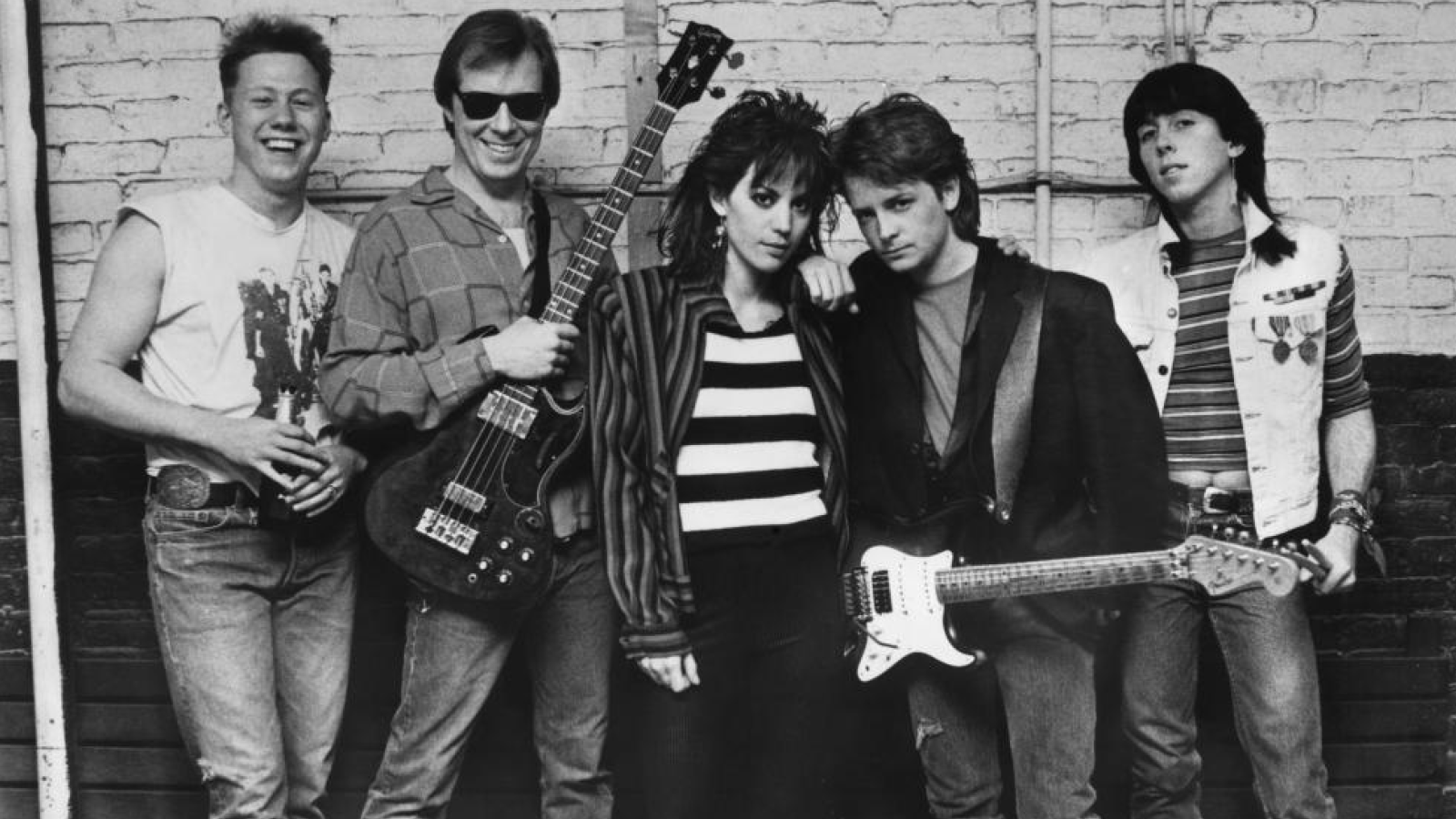
Light of Day (1987)
Share:
YOU COULD BE FORGIVEN FOR mistaking Light of Day (1987), Paul Schrader’s strangely sentimental drama about a pair of Midwestern siblings who want their band to make it big, as a straightforward music film, an homage to teased hair, cramped tour vans, and electric guitars in the lineage of Eddie and the Cruisers (1983) or Ladies And Gentlemen, The Fabulous Stains (1982). Starring a 28-year-old Joan Jett making her acting debut after more than a decade in the spotlight with the Runaways, a chart-topping solo career, and role as a producer for punk outfit the Germs, the film attempts to capture, per Schrader, rock ’n’ roll’s “day-to-day practical function in the lives of thousands of people and thousands of little bands in thousands of little cities all over the world.” When Jett, as the stubbornly fiery Patti Rasnick, cues her bandmates to say the “magic words,” they shout back: “Rock ’n’ roll! Party! Cleveland!”
It would be simple enough, and somewhat accurate, to sum up Light of Day in those three phrases. The movie follows Patti and her brother Joe, a palpably self-serious Michael J. Fox, eager to put space between himself and the squeaky-clean image he earned in 1985’s Teen Wolf and Back to the Future. Their bar band, creatively named the Barbusters, chase success—if not on a national stage, then at least in the mid-sized Ohio cities that spawned groups like DEVO, The Waitresses, and The Bizarros in the previous decade. They dream of gigging in “Erie, Akron, Mansfield,” as Patti exclaims. And for the movie’s first 10 minutes, it’s easy to imagine a fairly generic plot: a touring montage, Rolling Stone and Creem covers spinning onto the screen, groupies pouring out of a stretch limo, perhaps simmering tension from a growing drug habit.
Schrader had already attempted to portray the music industry earlier in his career. In the late 1970s, he wrote a never-produced Hank Williams Sr., screenplay—which, similar to 1985’s Mishima: A Life in Four Chapters, would have divided Williams’s life into a series of punctuated vignettes—and in 1985, Schrader flew to Tokyo to direct his one and only music video: Bob Dylan’s delightfully weird multiverse music video for “Tight Connection to My Heart.” But Schrader saw Light of Day as more than just an investigation into the industry—it was, in his words, “a Kammerspiel,” a work built out of intimate psychological portraits of ordinary people. Hidden behind the leather jackets and biker boots is a story of a downwardly mobile family struggling against a generational divide, a nuanced examination of the ways that siblings strain and strengthen each other over time. Patti, a single mother to the adorable Benji (Billy L. Sullivan), finds her dreams in conflict with her family life, struggling against her Bible-beating mother (delicately and heartbreakingly portrayed by Gena Rowlands) and eventually, her other bandmates, who lose faith in a once-shared vision of stardom. Throughout, Joe steps in to pick up the pieces: taking the fall when Patti robs a neighbor to pay for a new Peavey mixing board; caring for little Benji when Patti hits the road with a metal band called The Hunzz. And yet, Light of Day ends on something like reconciliation, progressing like a family drama inside of an episode of Behind the Music.

Production still on the set of Light of Day (1987), courtesy Ransom Center
Fox as Joe Rasnick is a paradoxically no-nonsense rocker; the only time he utters the word “hash” is in reference to breakfast potatoes. At times, his judgmental looks and jittery energy seem closer to his concurrent role on the hit sitcom Family Ties as fellow Ohioan and budding conservative Alex P. Keaton. Perhaps this coolness gap can be attributed to the fact that Fox wasn’t the initial imagined male star for Light of Day. Schrader had a very specific working-class hero in mind when he started writing the film in 1979, then just a draft with the working title “Born in the U.S.A.” To his disappointment, Bruce Springsteen turned down the role; Schrader later called him a man of “enormous integrity” and “a control freak.” But, as legend has it, Springsteen couldn’t get the name of the movie out of his head, and he borrowed it for a humble tune he was tinkering with about a down-on-his-luck Vietnam veteran (in retrospect, a very Schrader topic). In return, Springsteen offered to write what would eventually become the new title song, which the Barbusters triumphantly perform at the legendary, now-shuttered Cleveland venue Euclid Tavern at the end of the film. Jett herself contributed several songs that the Barbusters and the Hunzz perform on the soundtrack, which—of course—includes Ian Hunter’s indelible Rust Belt anthem “Cleveland Rocks.” Filling out the scenery, one can also spot the then-Cleveland-based Trent Reznor making a cameo in a fictional band, while Joe attends a concert by Austin blues rockers the Fabulous Thunderbirds.
In interviews, Schrader has called Light of Day a companion piece to Hardcore (1979)—whereas that cautionary tale of modern temptation was a slanted portrayal of his father, a deeply religious man who loses his faith through the quest to redeem his corrupted teenage daughter, Light of Day was inspired, in part, by his mother. He initially wrote a story about two brothers, only changing it later to further differentiate it from his own relationship with his brother Leonard, who collaborated with Paul on the scripts for The Yakuza (1974), Blue Collar (1978) and Mishima. Rowlands, as the siblings’ overbearing religious mother Jeanette, is the understated heart of the film: a parent caught between the deep love she has for her children and her disdain for the choices Patti has made, a sentiment she makes explicit when she singles out Patti as needing divine assistance at the end of the family’s pre-meal prayers.
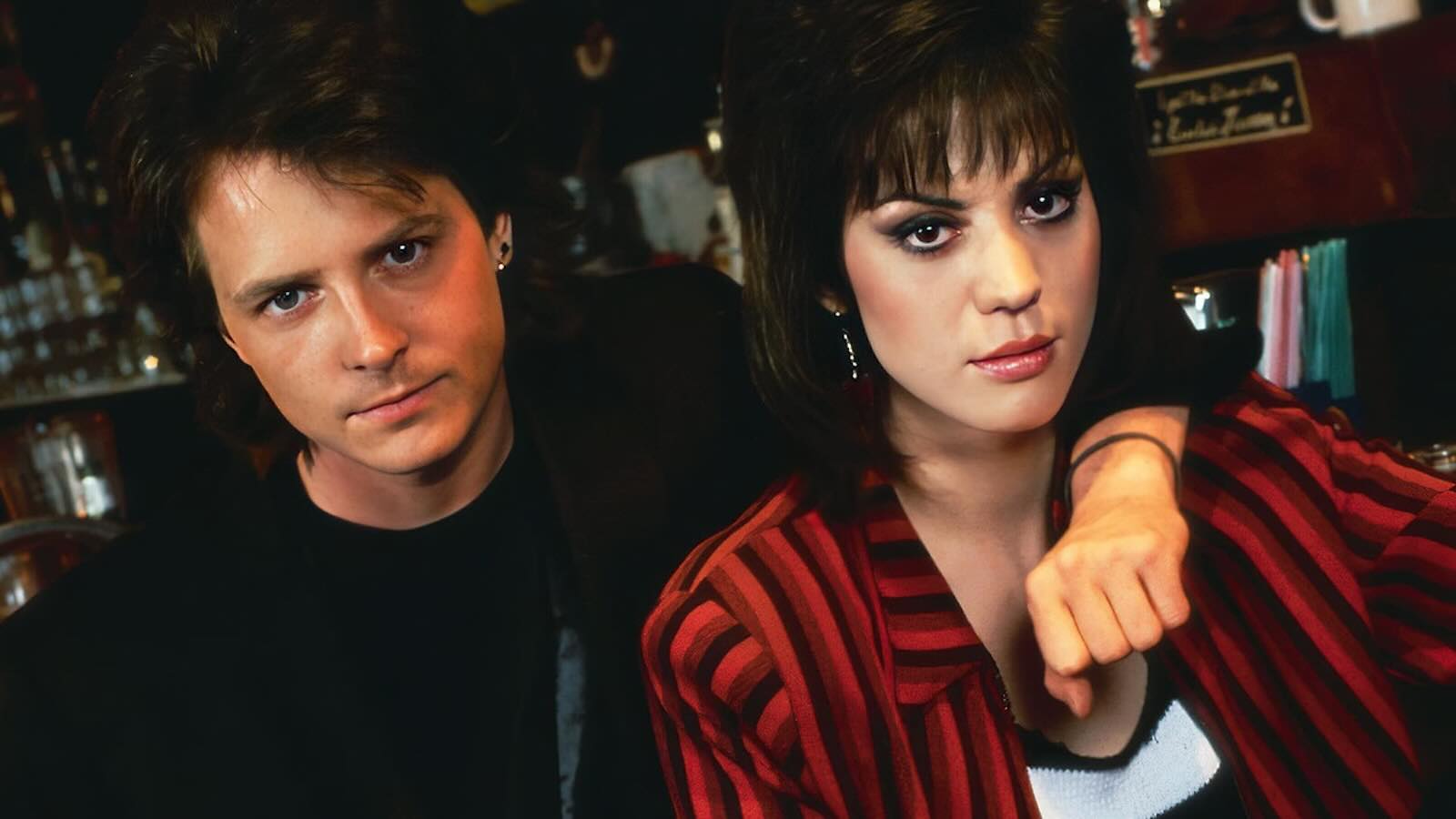
Light of Day (1987)
Later, as Jeanette’s mental and physical health declines, she wonders why Patti isn’t by her side, forgetting that her daughter had decided to leave for a touring gig. The movie’s strongest moments take place not on a stage or a tour bus, but in the cold and clinical halls of a hospital, where Joe learns (from a doctor sternly played by improv legend Del Close) that Jeannette has cancer, and later, where Jeanette painstakingly seeks reconciliation with Patti in her last moments. Rowlands, in softly lit close-up as Jeanette, is the film’s dramatic center, balancing tenderness and regret through the gritted teeth of a woman on the brink of death. That scene, Schrader said, was “more or less word for word what I went through with my mother,” who passed away a year before he started writing the film.
Schrader distanced himself from Light of Day almost as soon as the film came out, writing off its straightforward cinematography and framing as “meat and potatoes” directing. Perhaps he sensed that music, like film, had changed a great deal since he started on the script almost a decade prior. Even as the Light of Day soundtrack reached number 33 on the Billboard Hot 100 charts, electronic music, like the Giorgio Moroder score to Schrader’s American Gigolo (1980), had dethroned rock as the sound of innovation and youthful rebellion. But Light of Day works precisely because of its anachronisms: it captures the last gasp of a dying American music scene, where playing to a hundred people in Kalamazoo, Michigan, could be just as important as selling out Madison Square Garden; where pedestrian bar bands could become headliners overnight just for wearing different clothes.
The movie pokes fun at the never-ending chase for hipness—there’s a throwaway line about a band changing its name from “Sins” to “Problems” because they’re trying out a new genre called “concept rock.” But it also feels true to the stories in hyper-niche music history books like Our Band Could Be Your Life or Fargo Rock City: kids with aspirations too big for their hometowns, who wanted more than saying grace around the dining-room table. In Light of Day, Schrader turns the rock-film genre into a tragic character study, a story of the limits of passion, and a love letter to the Midwest and all of the bands it both birthed and failed to conceive.
Share:
Recommended
- Five Films About Football
 The Georgian director picks five of his favorites.
 - Listen Up! Light of Day
 Metrograph’s Listen Up! column continues with a look at Paul Schrader’s love letter to Cleveland, family, and rock ’n’ roll.
 - Orian Barki & Meriem Bennani
 The multi-hyphenate collaborators discuss their anthropomorphized, experimental, animated feature debut.